

Churches On Anglesey
Wales’ largest island is best known for its beaches, superb coastal walks and as the former home of Druids, but there are also some wonderfully evocative churches on Anglesey.
Anglesey – Ynys Mon in Welsh – is rich in Celtic Christian history, full of local saints and stories often barely known beyond the island. Of these, the only church in Wales dedicated to St Patrick, patron saint of Ireland, and the chapel dedicated to St Dwynwen, the Welsh patron saint of lovers, are perhaps the best known.
The Anglesey churches I show you in this article vary from grand 15th-century edifices to humble early medieval chapels, and a fascinating church on a tidal island to roofless ruins. Each is intriguing in its own way, revealing a little more about this fascinating island’s history.
IN this guide I’ll show you thirteen of these churches in Anglesey, describing each and advising on getting to them, and opening times. I hope that you get to see some of them when you visit Anglesey. I begin with the northernmost church in Wales, dedicated to the most familiar saint on the island, St Patrick.
St Padrig, Llanbadrig

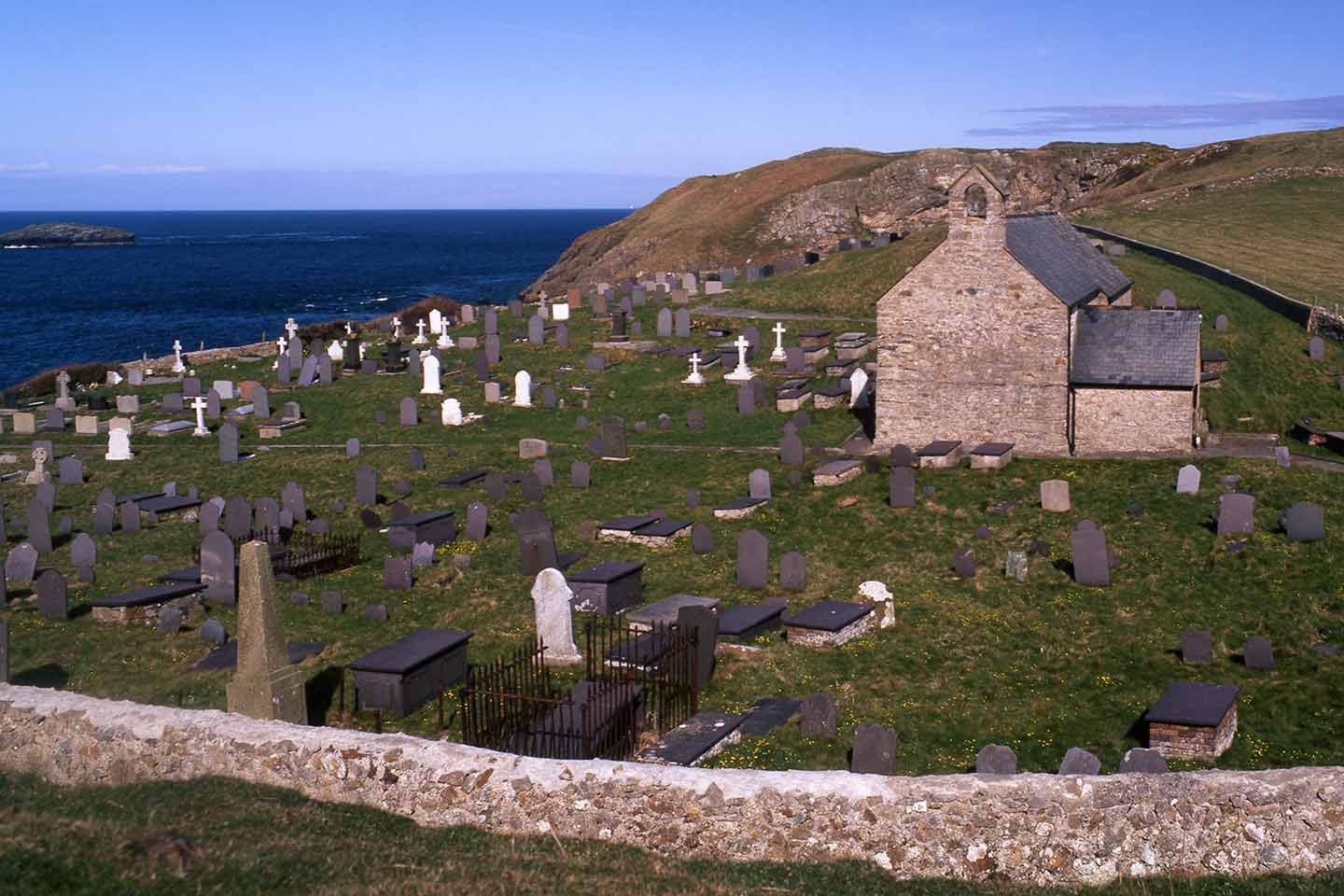
Ireland’s patron saint Patrick was born somewhere in late Roman Britain, most likely in the early part of the 5th century AD. He had been captured by Irish pirates and taken across the Irish Sea where he was enslaved for six years. He later made a three-day voyage across the Irish Sea, to a destination unknown. According to local lore, he reached land in a storm below the site of the present church at Llanbadrig.
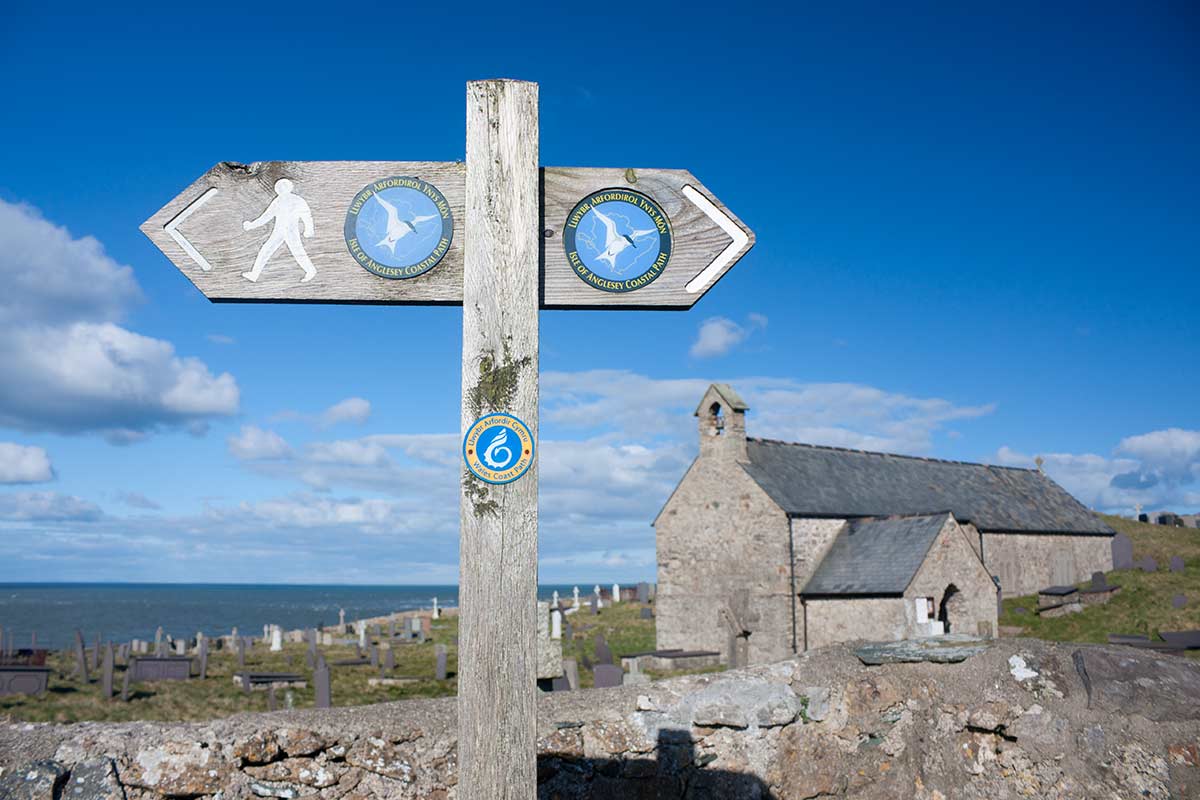
Patrick is said to have founded a church on the clifftop above where he landed, in gratitude for his life being saved. The church is in a glorious location, on the northern coast of the island, and it’s the starting (or a staging) post for one of the best Anglesey walks, between Cemaes and Bull Bay to the east. Don’t rely on me alone for how beautiful this place is – the Dalai Lama visited once, and said that it is, ”the most peaceful spot on earth”.
Nothing survives of the wooden church attributed to Patrick. The present stone church was built between the 12th and 15thcenturies, and restored late in the 19th century with funding from Henry Stanley, 3rd Baron of Alderley. He had converted to Islam, and you can see some influence in the geometric patterned stained-glass windows and the blue floral and patterned tiles decorating the lower part of the walls of the sanctuary, around the altar.
Opening times: usually all day, every day
Getting there: By minor road, signposted, off the main A5025 road. The nearest bus stop – Gadlys Hotel Turn – is a mile away on the main road.
Where To Stay – Gwesty Gadlys Hotel, Llanbadrig – boutique country house in gorgeous rural Anglesey landscape
Penmon Priory and Dovecote
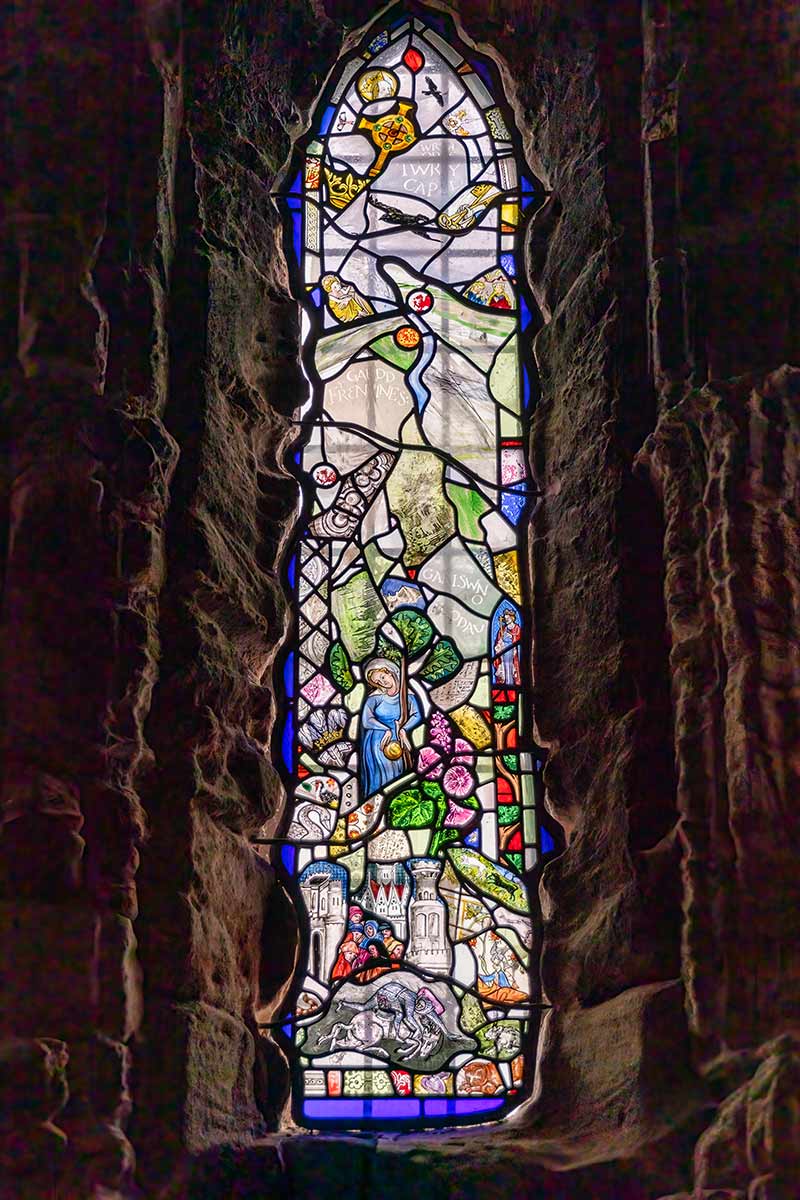
The two most prominent saints on Anglesey during the 6th century were Seiriol – who was based at Penmon on the east coast of the island – and Cybi, who lived in the northwest, on what is now Holyhead on Holy Island.
According to tradition Seiriol and Cybi were friends and would sometimes meet somewhere in the middle of Anglesey. Seiriol would walk to the meeting with the sun at his back, and likewise return with it shining on his back, so he was known as Seiriol Wyn (literally ‘White Seiriol’, but also ‘pale or ‘fair’ in this context) while Cybi faced the sun in both directions, so was known as Cybi Felyn (‘Tanned Cybi’).
Seiriol founded a church on the site of the present Priory, a mile from the eastern tip of the Isla of Anglesey, but this is believed to have been destroyed during a Viking raid. It was rebuilt in the 12th century by Gruffydd ap Cynan and his son and successor as King of Gwynedd, Owain Gwynedd. A more formal Augustinian Priory was established during the rule of Llywelyn Fawr (Llywelyn the Great, or Llywelyn ap Iorwerth) a century later.
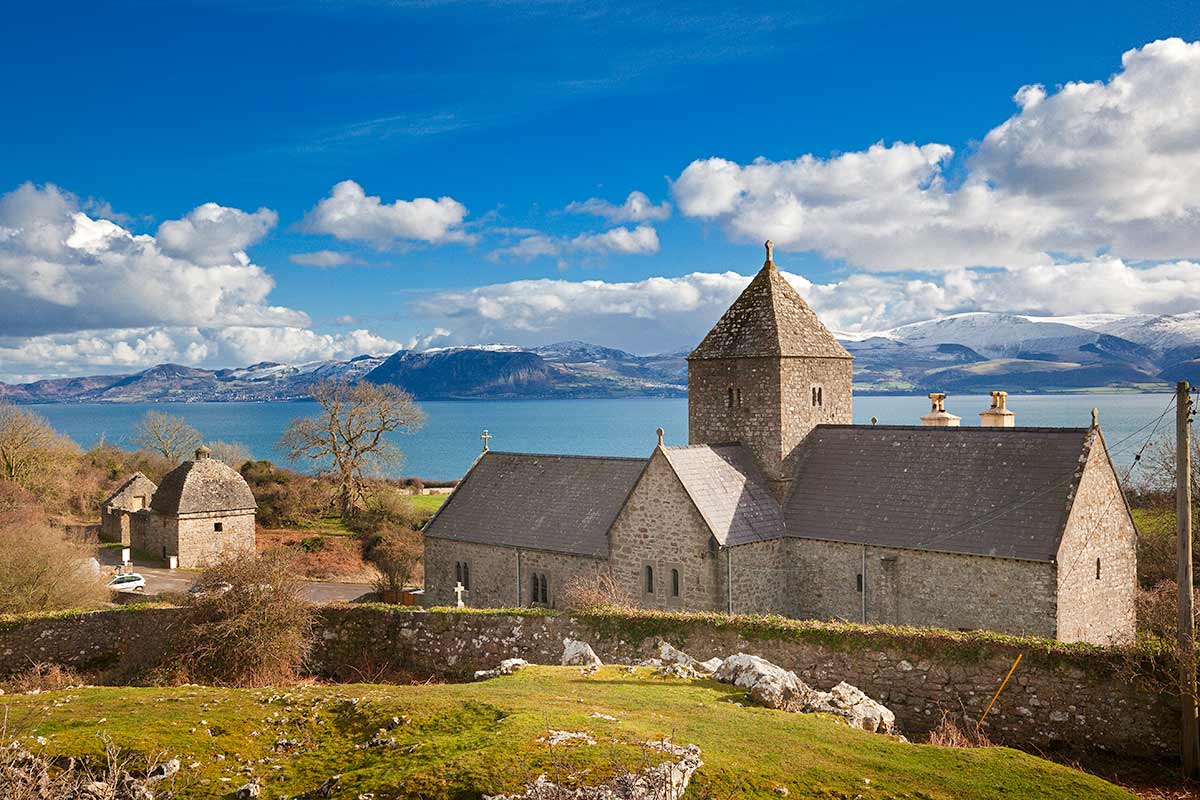
The church is one of the largest on Anglesey, but there’s a great humility and simplicity in its grandeur. There are two well-preserved Celtic crosses inside the church, which stood outside the church for centuries.
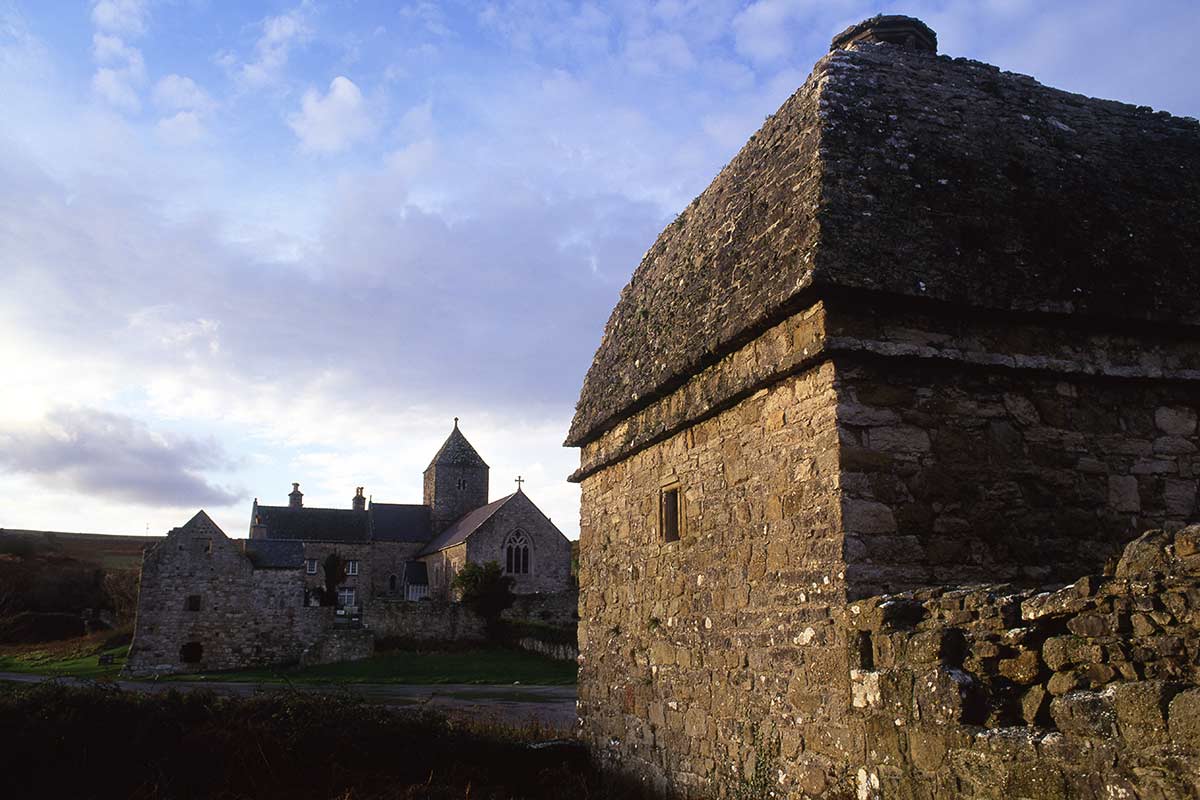
It’s well worth taking a short walk behind the church for the superb view of the church with the mountains of Snowdonia in the background. Close by, you’ll also find St Seiriol’s Well (just off to the left off the road to Penmon Pojnt, signposted) and the rare dovecote, built after the Priory was dissolved by landowner Richard Bulkeley, around 1600. It housed up to 2,000 pigeons and doves which were bred for their meat and eggs.
Nearby: Beaumaris Castle is three miles away. And Penmon Point, with its café, lighthouse and view of Puffin Island, is a mile away along a toll road.
St Cybi, Holyhead
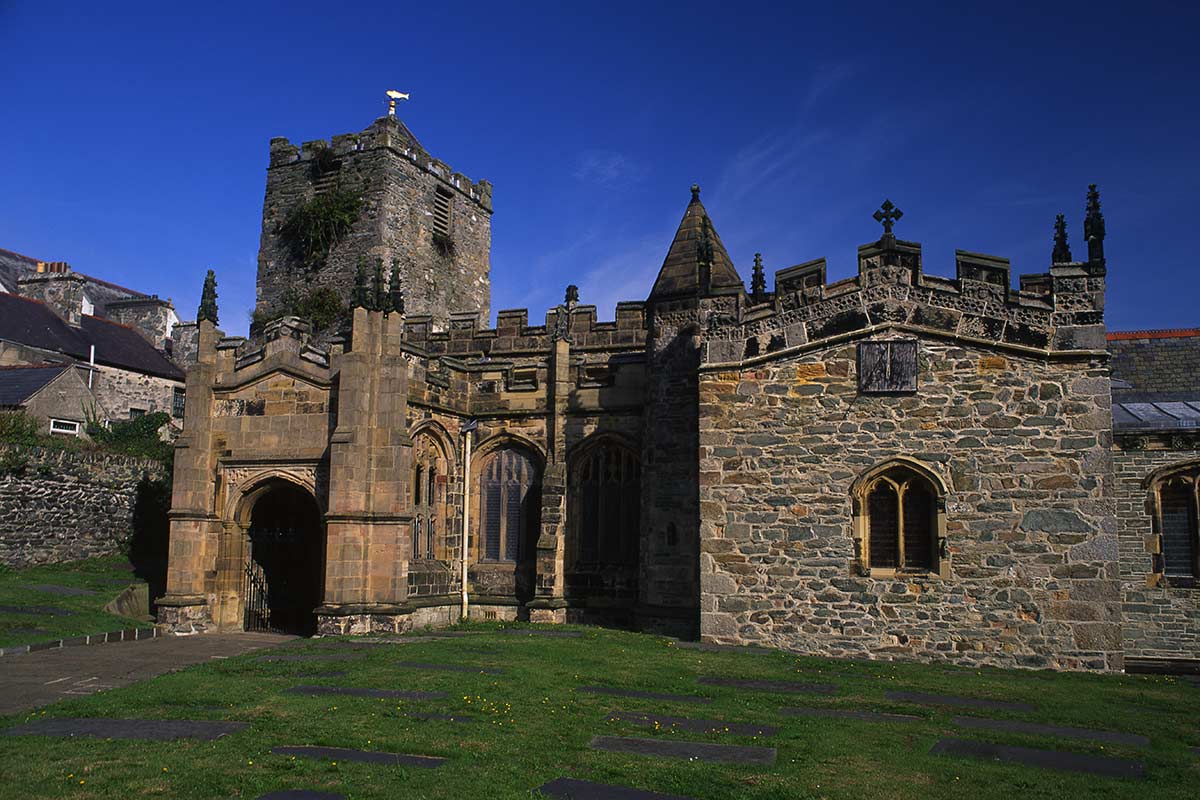
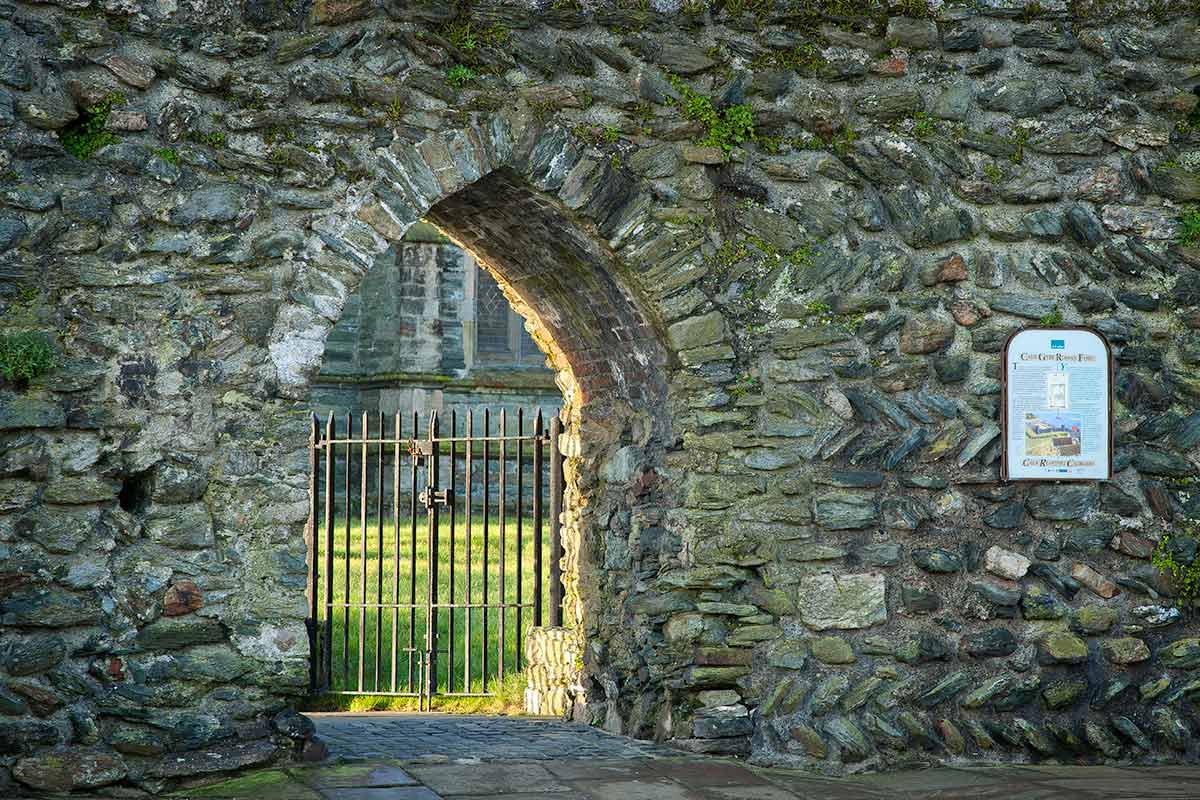
St Cybi’s Church in Holyhead (Caergybi in Welsh, meaning ‘Fort of Cybi’ is one of the earliest founded churches on Anglesey, founded in the early 6th century by St Cybi, whom we have already encountered in the Penmon Priory section above.
Cybi was a Cornish-born Christian also venerated in the Celtic country in the southwest of England. He is also said to have been a cousin of the patron saint of Wales, St David, his mother Wenna believed to be the sister of David’s mother, St Non.
Cybi ascended to the Cornish throne but refused to accept the kingship, preferring to devote his life to Christianity. After establishing churches in Monmouthshire (south east Wales) and the Llŷn Peninsula he settled on Anglesey, where he established another church and monastery within the walls of the late Roman fort now known as Caer Gybi.
The present church dates from the 13th century, though much of the nave was rebuilt in the Perpendicular style of the 16thcentury. Its predecessor had been damaged during a Viking attack in the 10th century, and the present building was also damaged by Henry IV’s army during the war against rebel Welsh Prince Owain Glyndwr. They removed St Cybi’s relics, taking them to Dublin and thereby putting an end to the flow of pilgrims to his shrine in Holyhead.
The church is open from Easter to September from 10.00 am to 3.00 pm. Don’t miss the well-preserved Roman fort which surrounds the church, and the other ancient Roman (and also Celtic) sites on nearby Holyhead Mountain.
See Also: Things To Do In Holyhead – the complete guide to Anglesey’s busy port town and the stunning coastline nearby
St Cwyfan, Llangwyfan, Aberffraw
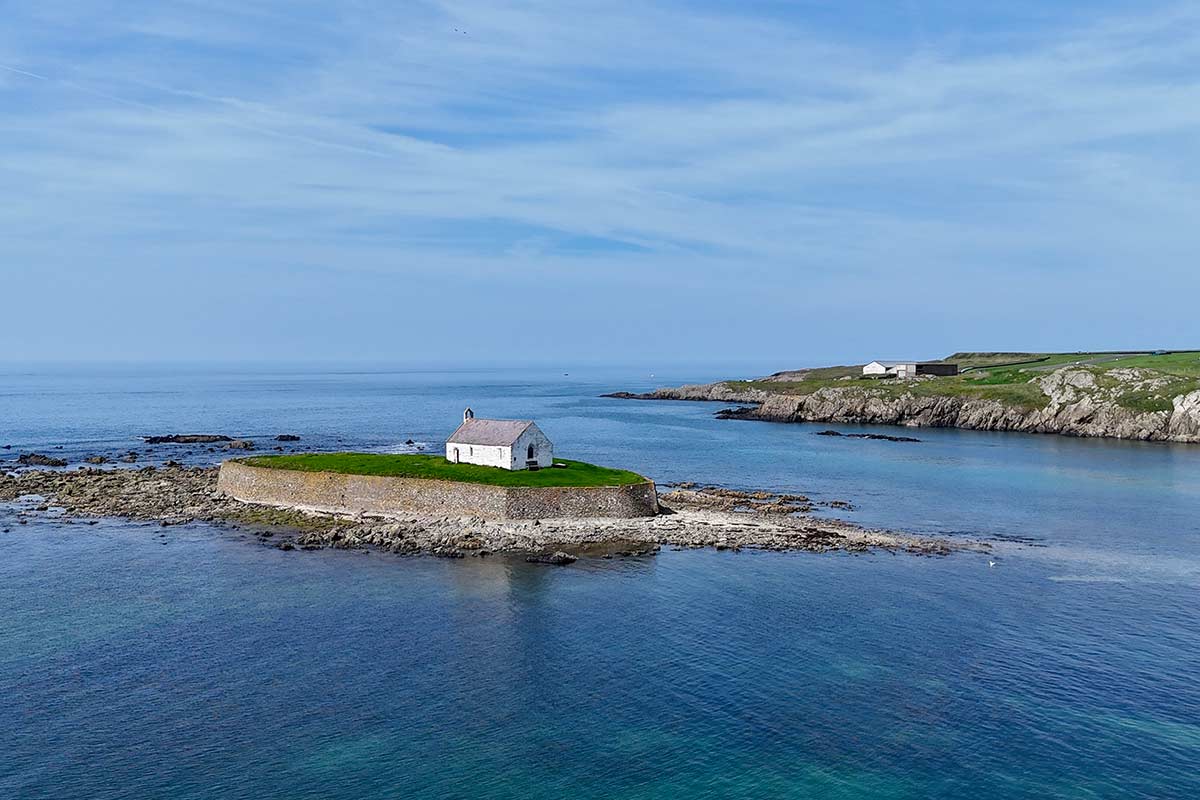
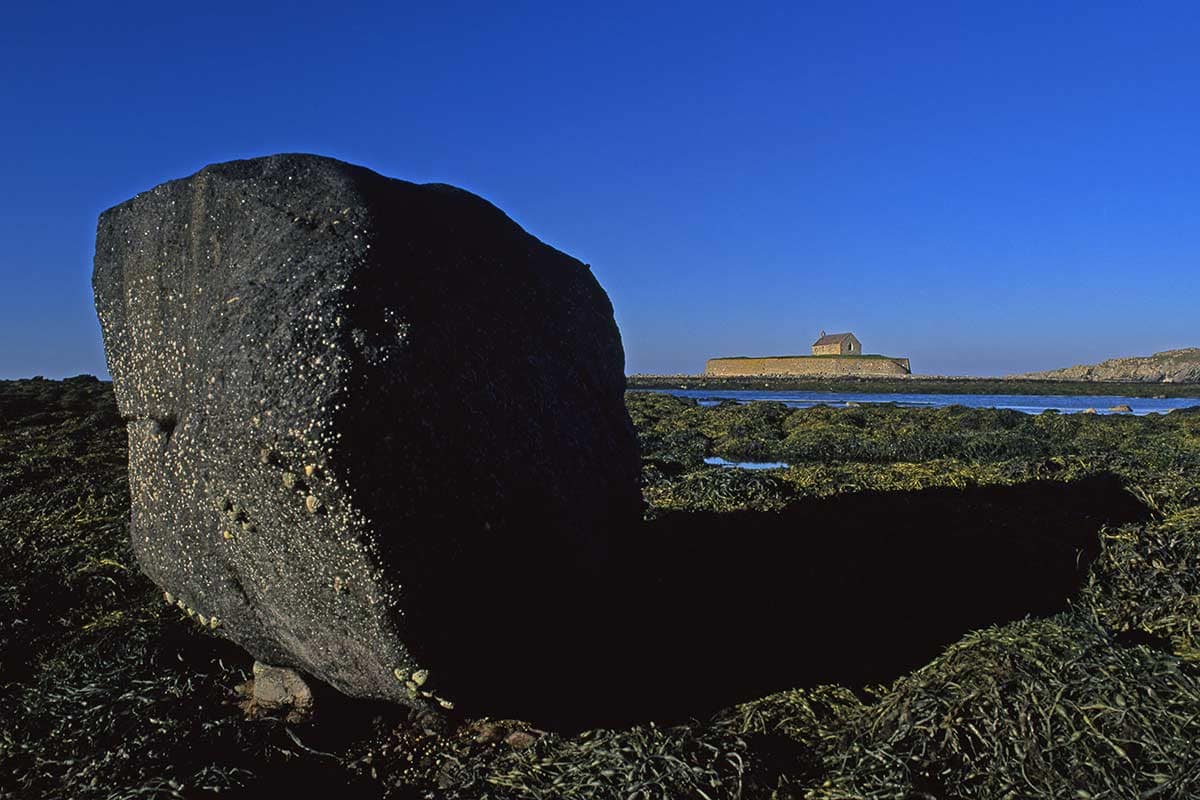
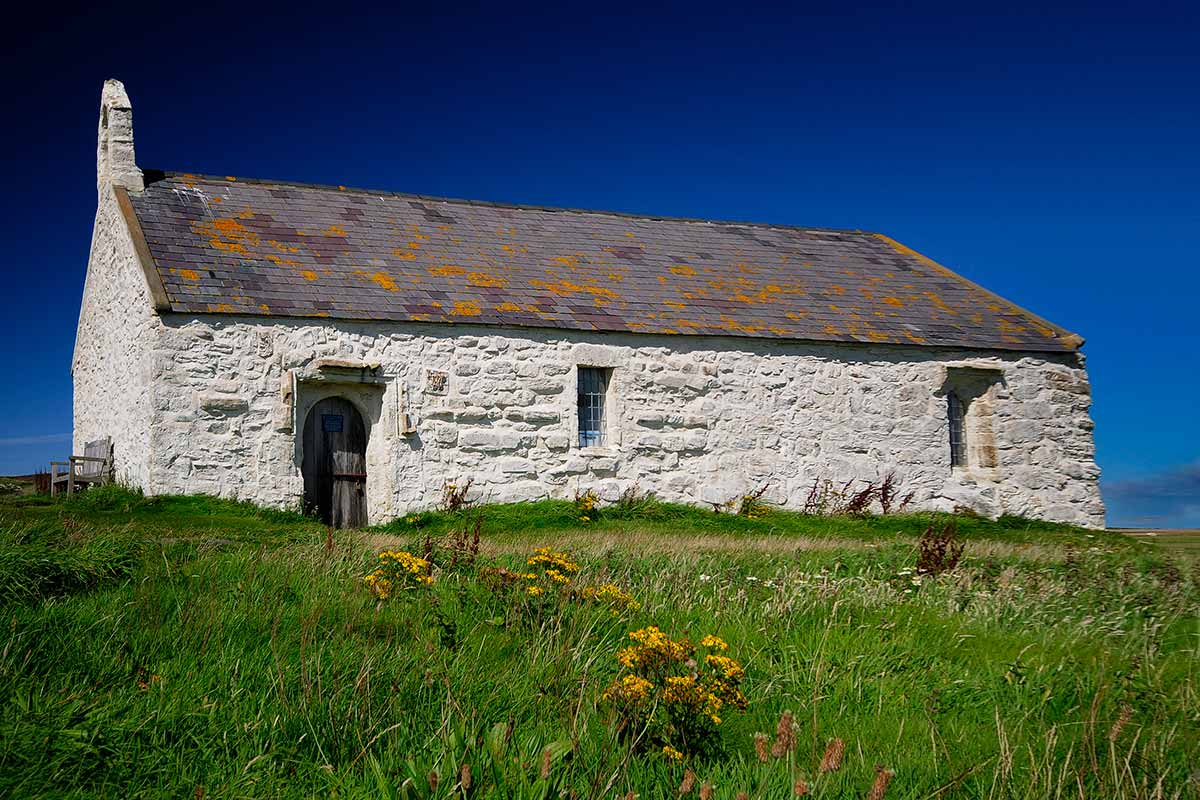
This is Anglesey’s famous Church in the Sea, located on one of the smallest Welsh islands, Cribinau, in Porth Cwyfan bay. This is two miles from the village of Aberffraw. On the southwest coast of Anglesey.
The small medieval church dates from the 12th century, and was built on what was then the end of a peninsula. Over the centuries coastal erosion meant that access was increasingly restricted, and by the 19th century a stone causeway and seawall around the church had to be built to maintain access. The church itself had fallen into decay by this point, but it was restored in the late 19th century.
Humble St Cwyfan’s Church remains in use for occasional services, but can only be accessed around high tide. It’s usually left open all the time. And from time to time it hosts weddings, including this one on the BBC Wales News website.
Where To Stay – Melin y Bont – converted windmill two miles away in Bodorgan, a great base for exploring Anglesey
St Tysilio’s Church, Menai Bridge

This small 15th-century church is on Church Island, in the shadow of Thomas Telford’s magnificent Menai Suspension Bridge, the first permanent link between Anglesey and mainland North Wales.
The church is very easy to find, as it’s on the northern shoreline of the Menai Strait, little more than a 5-minute walk from the Menai Suspension Bridge along the Belgian Promenade. This is named in honour of the local soldiers who lost their lives in the First World War – some of them are buried in the churchyard, as is Sir Albert Evans-Jones, better known by his Bardic name Cynan, a renowned Welsh war poet.
However it’s considerably more difficult to get inside the church to see it. It doesn’t seem to be used often for services, as St Mary’s Church, just up the hill in the village centre, is easier to access and frequently used.
Where To Stay – Chateau Rhianfa – one of my favourite places to stay on Anglesey, a Loire Valley-inspired chateau overlooking the Menai Strait and mountains of Snowdonia.
St Mary & St Nicholas, Beaumaris
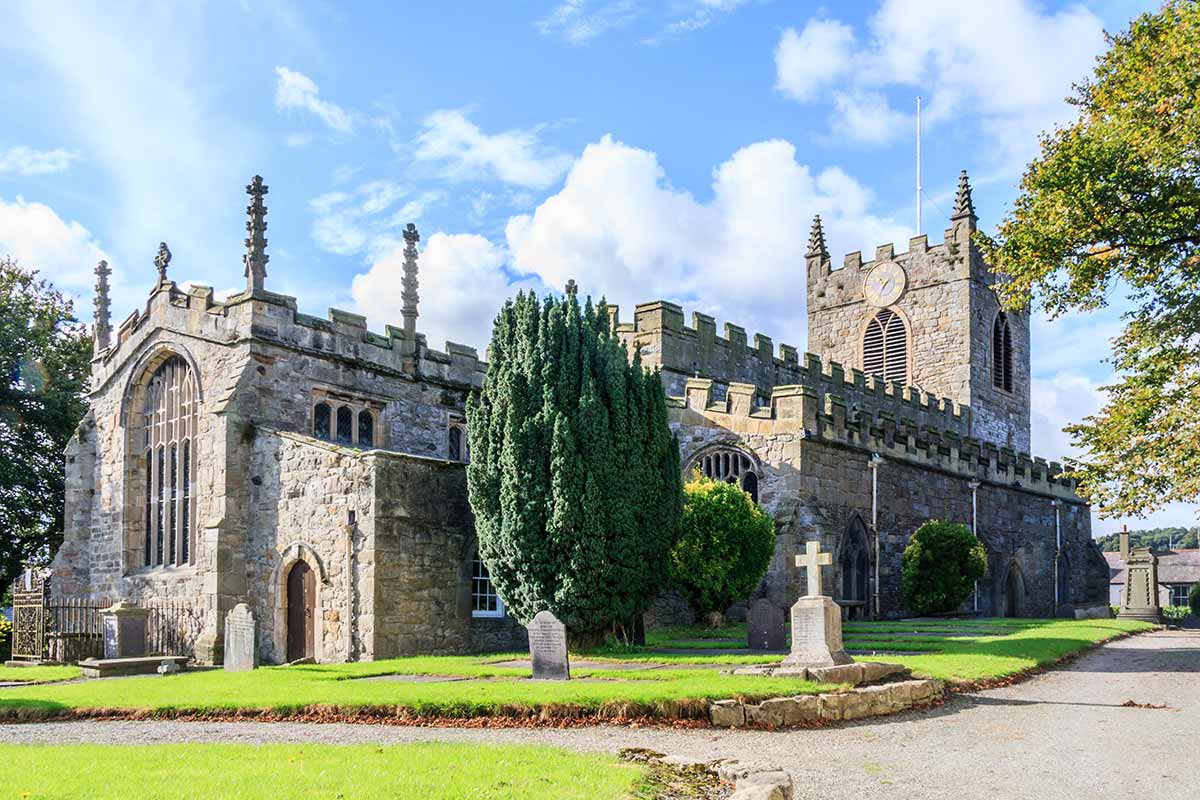
Beaumaris’ parish church is the most richly decorated and furnished of all churches on Anglesey. It was the wealthiest town on the island in the Middle Ages, and this is reflected in this fine Perpendicular (15th century) period church.
The building was begun around 1330, serving as a chapel of ease to the church up the hill in nearby Llandegfan, and the nave dates from this time. Most of the rest of the church dates from the later Perpendicular time, characterised by the detailed tracery of its many windows.
There are some fascinating things to see inside the church. There are some 15th or 16th-century misericords, humorous wooden carvings on the undersides of seats in the chancel. There is also a superb alabaster tomb from 1490, in which William Bulkeley – a deputy constable of Beaumaris Castle – and his wife are buried. Look out for the numerous 16th and 17th-century memorials on the chancel wall too.
And when visiting Beaumaris Castle, don’t miss the serene whitewashed chapel, a wonderful surprise indeed.
Getting there: Bus 57 from Bangor regularly stops in Beaumaris before continuing to Penmon. If you’re driving, take the A545 from Menai Bridge.
Where To Stay – Bishopsgate House Hotel – an old favourite of mine, a small hotel in a Georgian townhouse close to the seafront, and five minutes’ walk along the high street from the castle
See Also: 15 Best Things To Do In Beaumaris
St Dwynwen’s Chapel, Llanddwyn Island
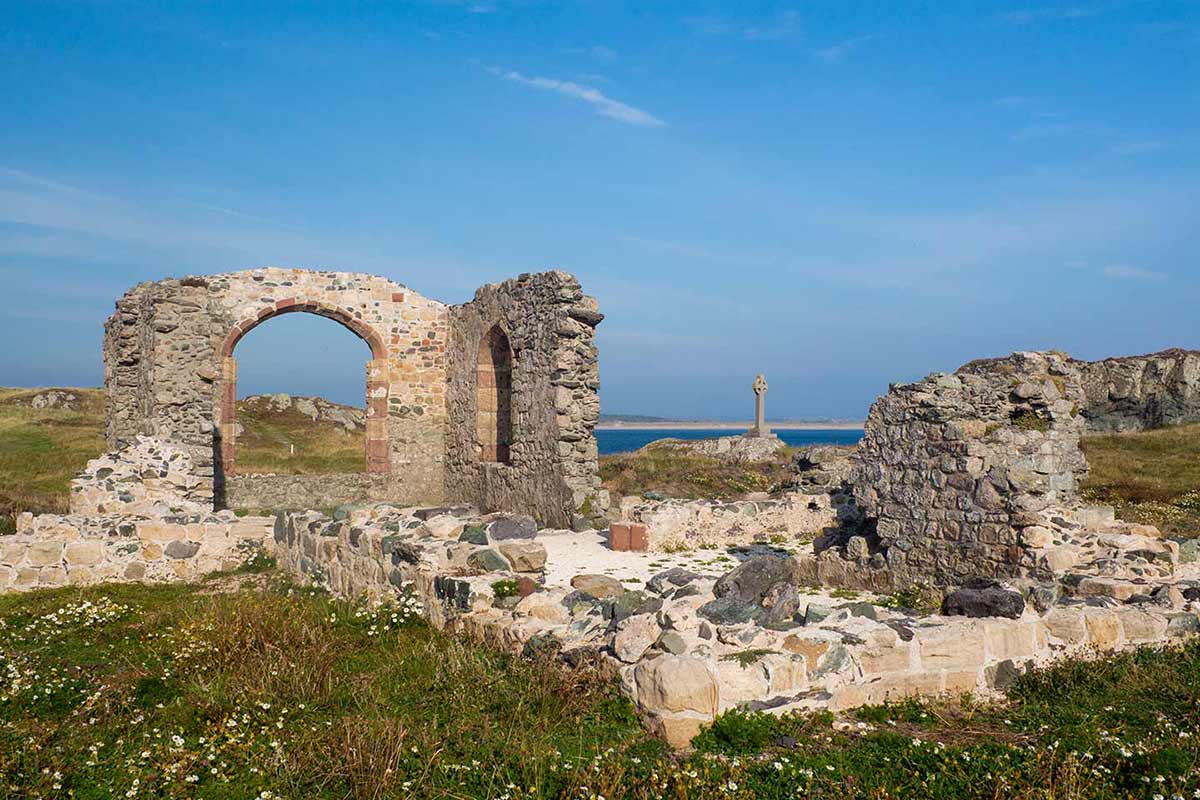
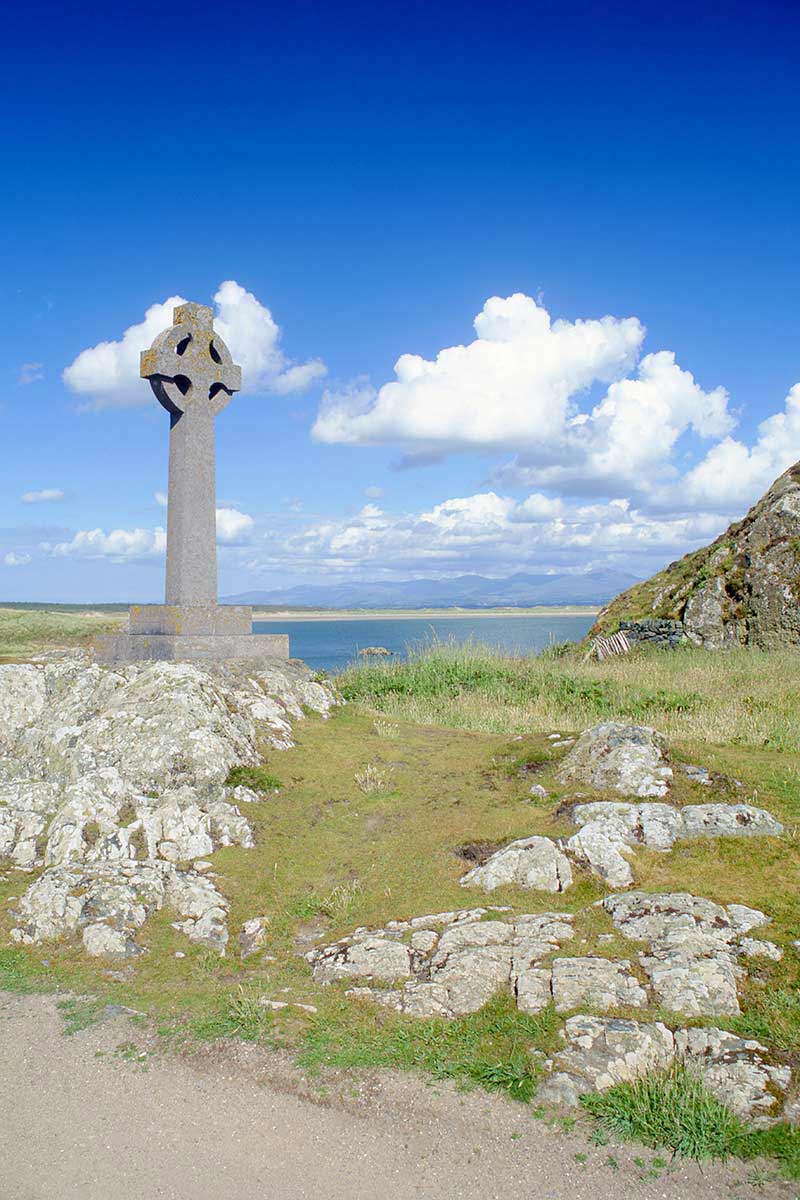
Santes Dwynwen (pronounced ‘doin-wen’) is the Welsh patron saint of love and lovers. Her feast day is 25th January, and some make the pilgrimage to the ruins of the chapel she founded in the 5th or 6th century AD on Llanddwyn Island, one of the most beautiful places to visit in Wales, on the southwest coast of Anglesey.
Santes Dwynwen has become more widely known over the last 20 to 30 years, during which I’ve seen St Dwynwen’s Day cards in shops around Wales. These are the Welsh equivalent of St Valentine’s Day cards, although the two saints’ stories are very different.
Various legends exist about St Dwynwen. The one thread of truth running through them is that she was likely a Welsh princess, the daughter of 5th-century king Brychan Brycheiniog. She fell in love with a nobleman, Maelon Dyfodrull, but Brychan had promised her hand in marriage to another man. Maelon, frustrated that she wouldn’t go against her father’s wishes, threatened her, and she turned him into ice. It’s a pity that this option isn’t more widely available, but I digress.
An angel appeared to Dwynwen, and granted the thwarted princess three wishes. The first was that Maelon was thawed out. The second was that she wouldn’t marry – she became a nun instead. And the third was that she could help other lovers suffering in sadness like herself.
The ruined chapel on the island (clearly visible to the left of the main footpath across the island) isn’t her original building, but a later construction from the Middle Ages. A Celtic-style cross nearby and a stone cross above one of the island’s beaches also commemorate Dwynwen.
Getting there: Llanddwyn Island is only accessible via Newborough Beach, one of the best beaches in North Wales.The car park – reached via a road through the forest from Newborough village – is a 30 to 40-minute walk from the island, which is tidal. Access is usually impossible 60 to 90 minutes either side of high tide.
Our Lady, Star of the Sea, Amlwch
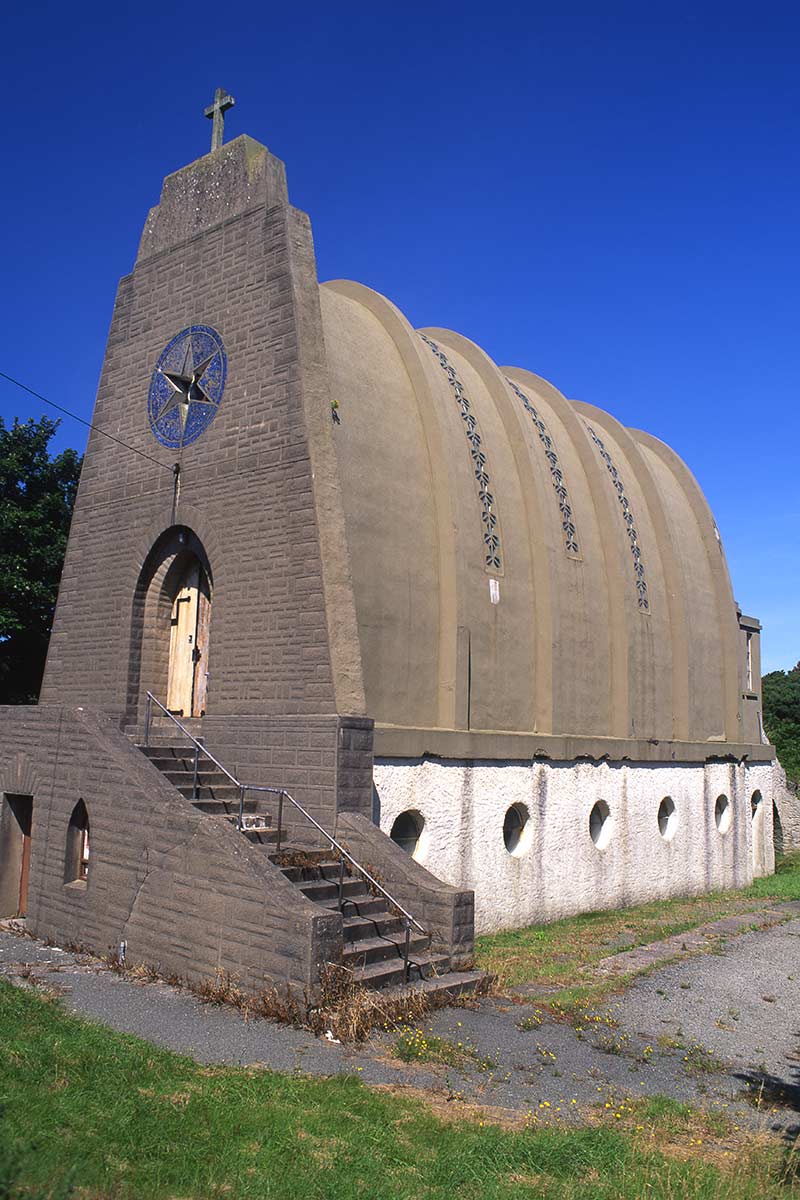
Among the ancient chapels and churches on Anglesey, this Roman Catholic church in Amlwch, on the island’s north coat, is a real outlier and eye-opener.
It was built in the 1930s by Italian architect Giuseppe Rinvolucri and the design is believed to have been based on an upturned boat, possibly a nod to the history of Amlwch as a copper-exporting port in the 18th and 19th centuries.
The church is built from reinforced concrete, with high parabolic arches. The mostly whitewashed interior is subtly lit by long narrow windows and smaller round porthole-type openings, continuing the maritime theme.
The church’s future was uncertain for some years but it was reopened in 2011, which is to be celebrated as it is one of the most radical 20th-century churches in Europe.
Getting there: If driving, via the A5025. If travelling by bus, take the 62 from Bangor via Benllech and Moelfre.
Where To Stay – Lastra Farm Hotel – excellent hotel in countryside just outside Amlwch
St Gallgo, Llanallgo
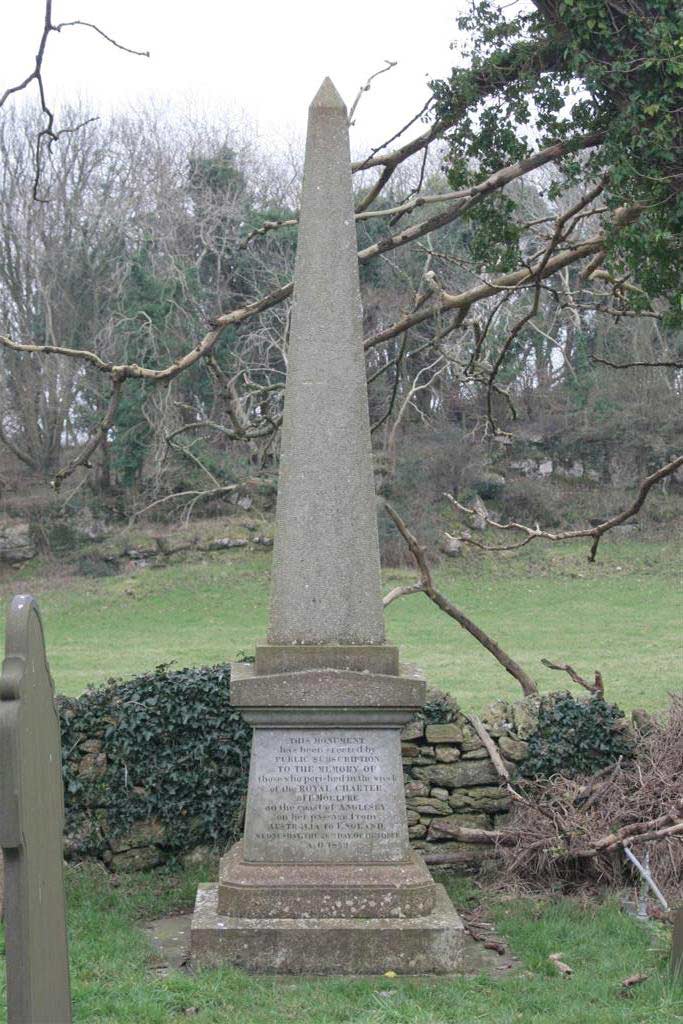
This humble church in a village near Moelfre, on Anglesey’s east coast, may be one of the oldest Christian foundations on Anglesey, dating back possibly to the early 6th century. Gallgo – a saint barely known beyond Ynys Môn.
The present church dates from the 15th century, the chancel window’s tracery the most typical of the Perpendicular Gothic style prevalent at the time. The interior is tiny and intimate – and this is after the nave was extended in the 19th century.
Llanallgo Church is most widely known for its churchyard memorial to the victims of the Royal Charter, a steam clipper en route from Melbourne to Liverpool, which crashed onto the rocky coastline north of Moelfre in 1859. At least 440 souls perished and 140 of them are buried in St Gallgo’s churchyard. It was the worst maritime disaster in Welsh history.
Hen Capel Lligwy (Lligwy Old Chapel)
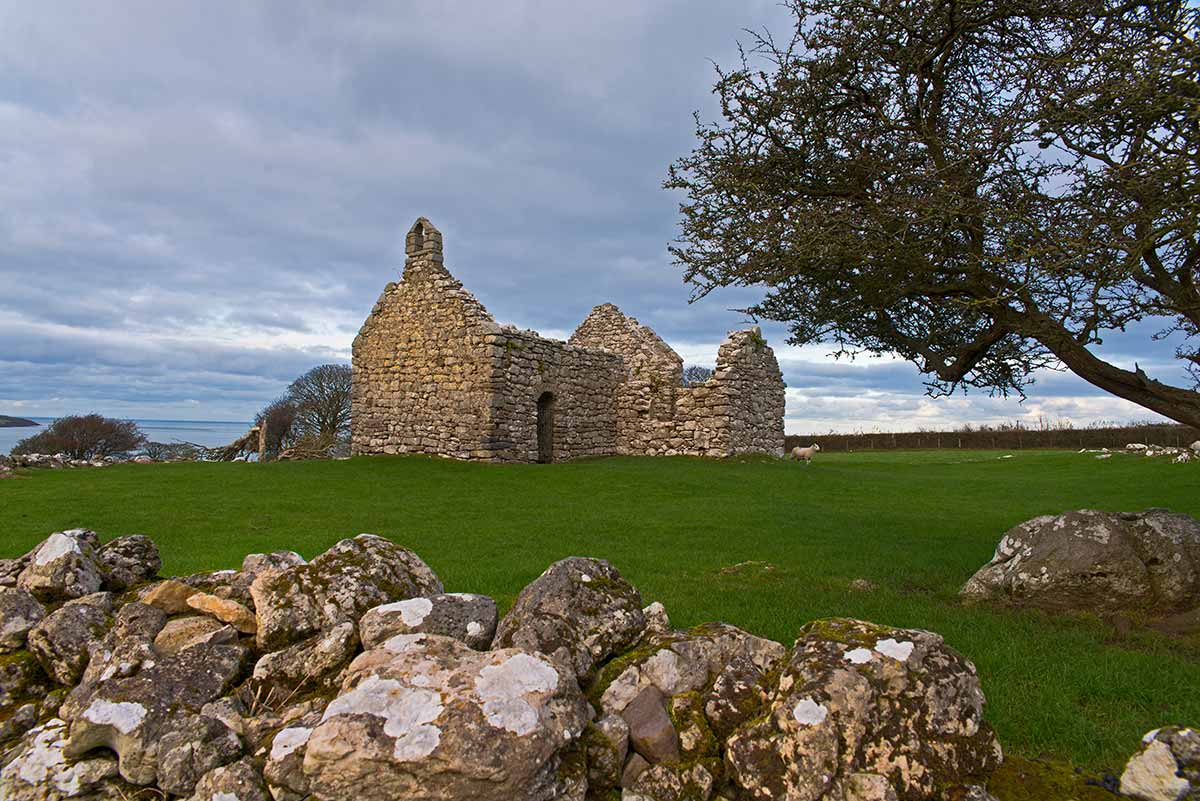
Very little is known about this ruined chapel near Moelfre. It was built from rubble masonry in the 12th century. It’s roughly a mile due north of Llanallgo church (see above) and a mile inland from the seaside village of Moelfre, and may have been built as a chapel of ease, a place of worship built for convenience if the local parish church is difficult to reach. It’s also possible that it may have been a family memorial chapel, but ultimately it’s down to conjecture, as no written sources mention it until the 18th century, by which time it was a roofless ruin.
Parts of the walls were rebuilt in the 14th century, and at some point a side chapel – with a burial vault – was also added. Human remains were discovered there when it was opened.
While visiting, it’s also worth stopping by at two of the most intriguing ancient sites in Wales, the top-heavy Lligwy Burial Chamber (up to 5,000 years old) and the Din Lligwy Hut Group. I’ve always thought this would be a great name for a late ’60 avant garde jazz ensemble, but there are actually stone foundations of huts, possibly dating back to the Iron Age, and many later fragments of Roman pottery were excavated there.
Where To Stay In Moelfre – Bryn Peris – beautiful 2-bedroom holiday home with sea views in Moelfre
Getting there – the nearest car park is in Rhoslligwy, just inland from Moelfre. Otherwise bus 62 (which runs from Bangor, stops in Moelfre village on its way to Amlwch and Cemaes.
St Peirio, Rhosbeirio
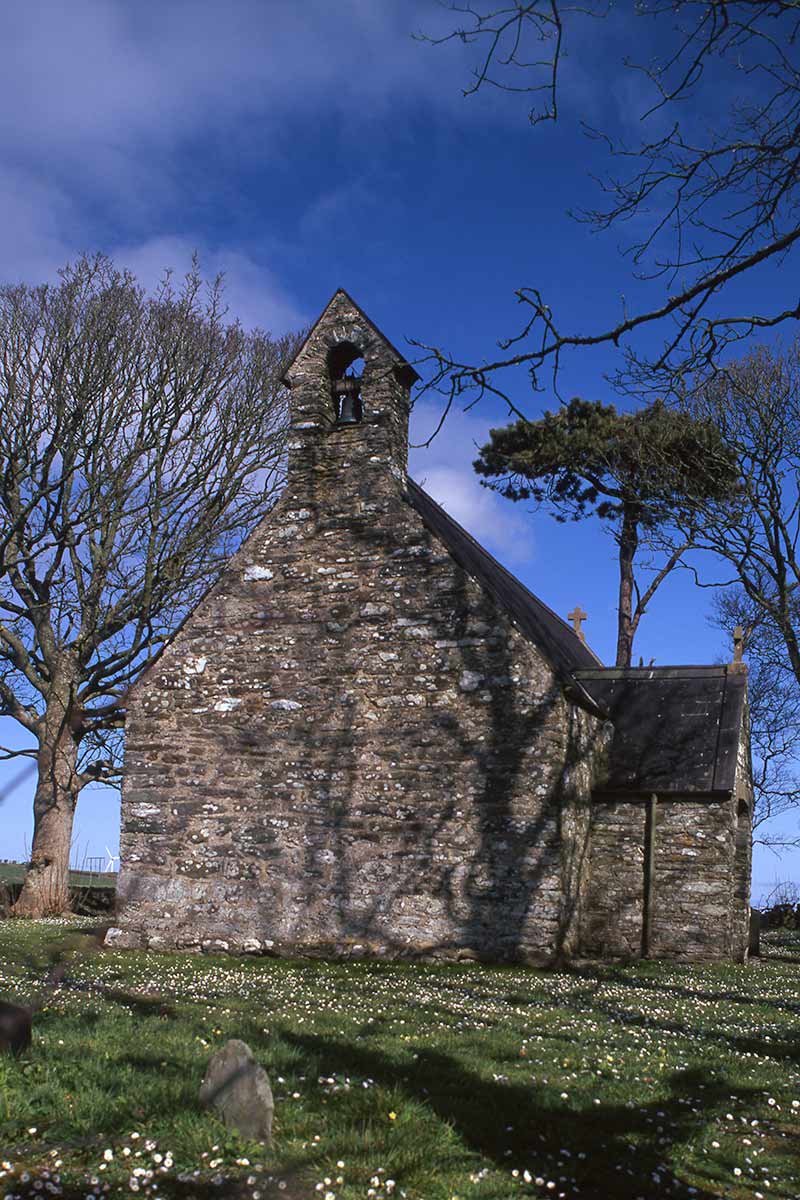
You’ll never find St Peirio’s church in Rhosbeirio in any guidebook, but it’s places like this that are the rewards for wandering off the beaten track around rural Anglesey. Faye and I were delighted to come across it some years ago, so much so that I feel it merits inclusion in this article.
St Peirio’s church is the only one in the world dedicated to Peirio, one of a great many Celtic saints of the 56th and 6th centuries AD. Very little is known about him other than he is said to have been another son of King Caw of Strathclyde in Scotland – which would make him the brother of half-brother of St Gallgo (see Llanallgo section above).
And there’s scant trace of the village or hamlet of Rhosbeirio either, just the lone church long deprived of any congregation to serve, and a farm next door.
The fabric of the church is believed to date from the 15th century, and it has been preserved and listed because it is an excellent example of a small, simple rural medieval church on Anglesey. Services haven’t been held there for many years and it’s rarely open, but it’s worth paying a short visit to acknowledge the history of this deserted but fascinating little church.
Getting there: by minor road from Llanfechell, two miles south of Cemaes off the A5025.
St Michael, Llanfihangel Din Sylwy
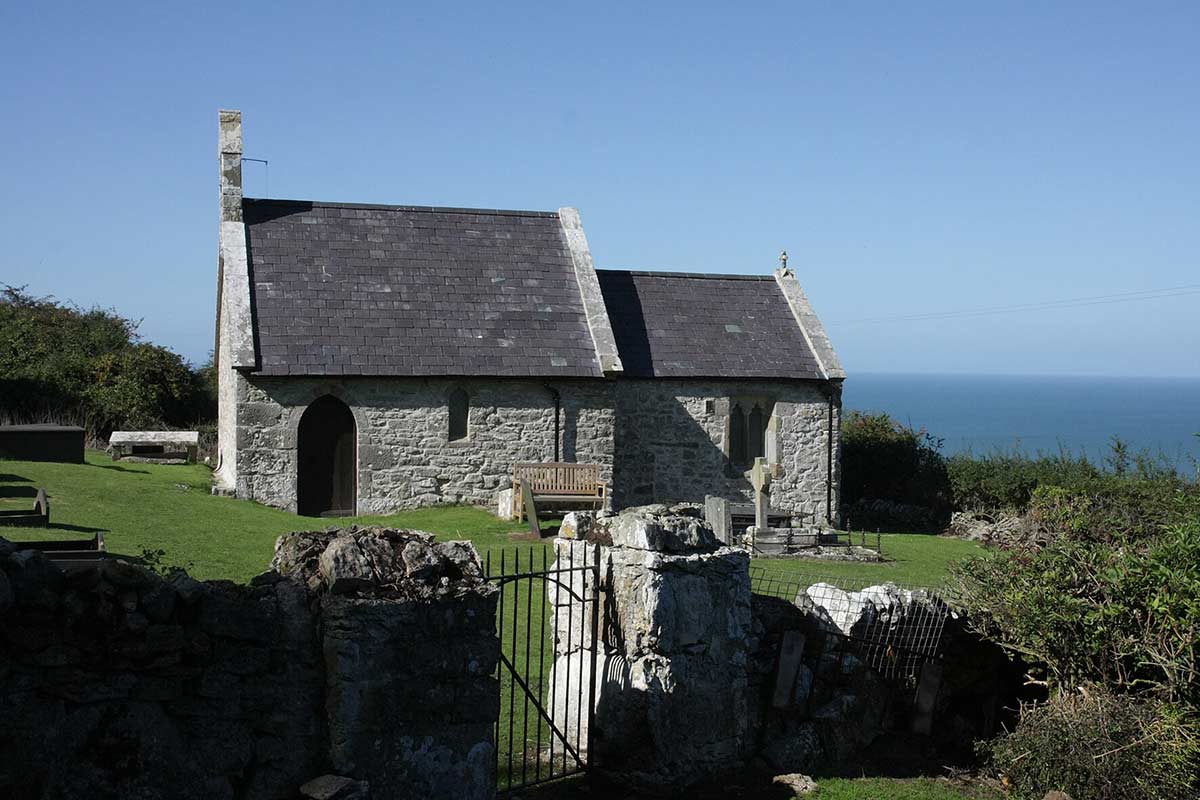
This small, simple medieval church has one of the finest settings of all churches on Anglesey, on the slopes of Bwrdd Arthur, a hill overlooking the east coast of Anglesey. Earthworks of an Iron Age hillfort can be seen around the summit of the hill, and I’d urge anyone to make the short journey from Beaumaris to make the short climb for the incredible views.
St Michael’s Church is another humble Anglesey church from the Middle Ages. Its foundation probably dates back to Celtic times, and a stone church was recorded on the site in 1254. What we see now dates from the 15th century, with some 19th-century alterations. Step back from the church a little for the view with the backdrop of the east Anglesey coastline, as in the image above.
You’re greeted in the porch by two Latin inscriptions – Pax entrentibus on one side, and Salus exeuntibus on the other. They translate as ‘Peace be upon those who enter’ and ‘Good health to those who leave’. Inside the church, you’ll find a surprisingly richly carved 17th-century wooden pulpit and several 18th-century memorial stones.
You could easily fit this in with your visit to Penmon Priory and Dovecote, or indeed a day trip to Beaumaris.
Getting there – a car gets you directly there, and the nearest bus, the 57 to Llangoed, leaves you a 2.5 km (1.5 mil) walk.
St Eilian, Llaneilian
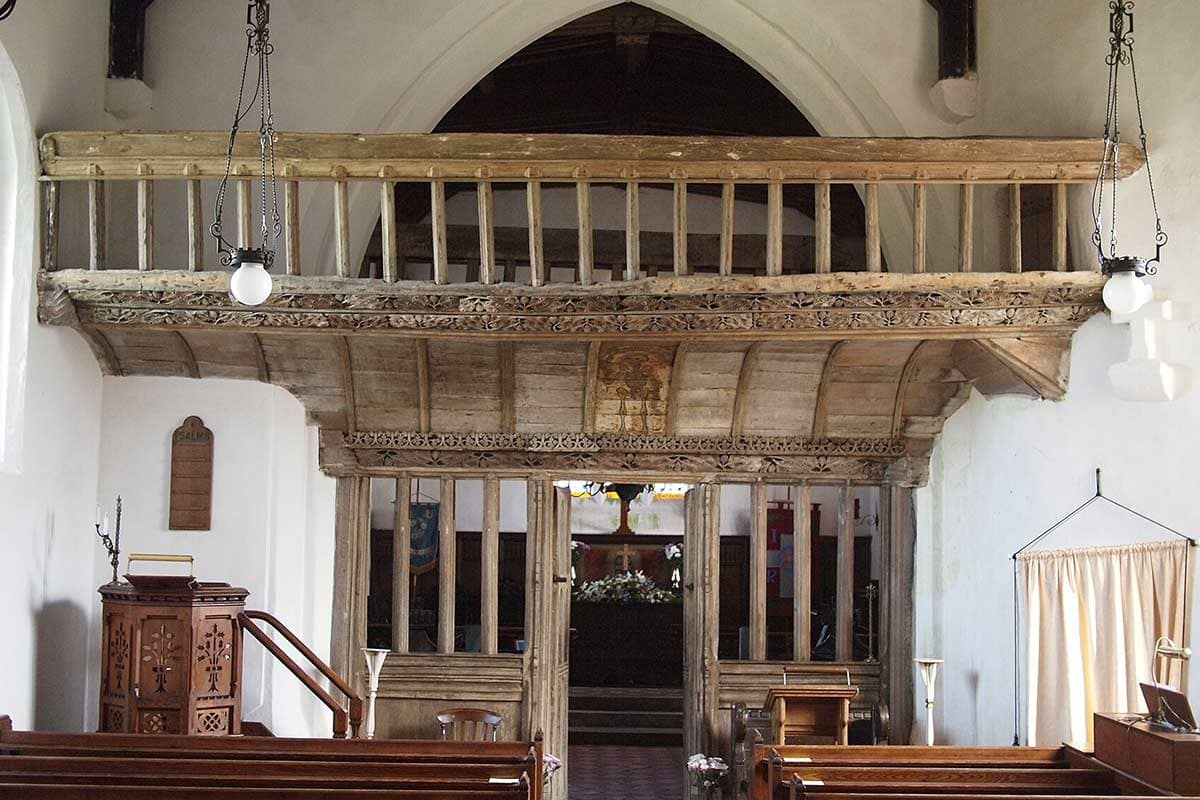
This fascinating church in the remote northeast corner of Anglesey immediately catches the eye with its rare pyramidal spire (more famous examples are the twin west spires of Southwell Minster in Nottinghamshire, England). But its interior is an even more compelling reason to head this way.
The most striking feature of the interior of St Eilian’s Church is its 15th-century rood screen, dividing the nave from the chancel and sanctuary of the church. These are very unusual to find in medieval churches in England and Wales as the vast majority of them were destroyed during the Reformation. The relatively few that have survived have done without their paintings and murals. The rood screen at Llaneilian has a remarkably preserved painting of a memento mori figure (a skeleton) with the inscription ‘Colyn angau yw pechod’ – sin is the sting of death.
The church is one of the earliest to have been founded on Anglesey. According to legend, the local nobleman seized Eilian’s oxen, and for this deed Eilian blinded him. He then suggested that he could restore the ruler’s sight in return for as much land as a deer could run while being hunted. Not the most saintly way of acquiring land, but this wonderful church survives there almost 1,600 years on.
Getting there: Llaneilian is just two miles east of Amlwch, which is on the 62 bus route to Bangor. A car gives you more options on this part of the island, especially if you’re visiting some of the more remote Anglesey beaches like Traeth yr Ora which are close by.
Where To Stay – see earlier Amlwch entry
Churches On Anglesey – Final Thoughts
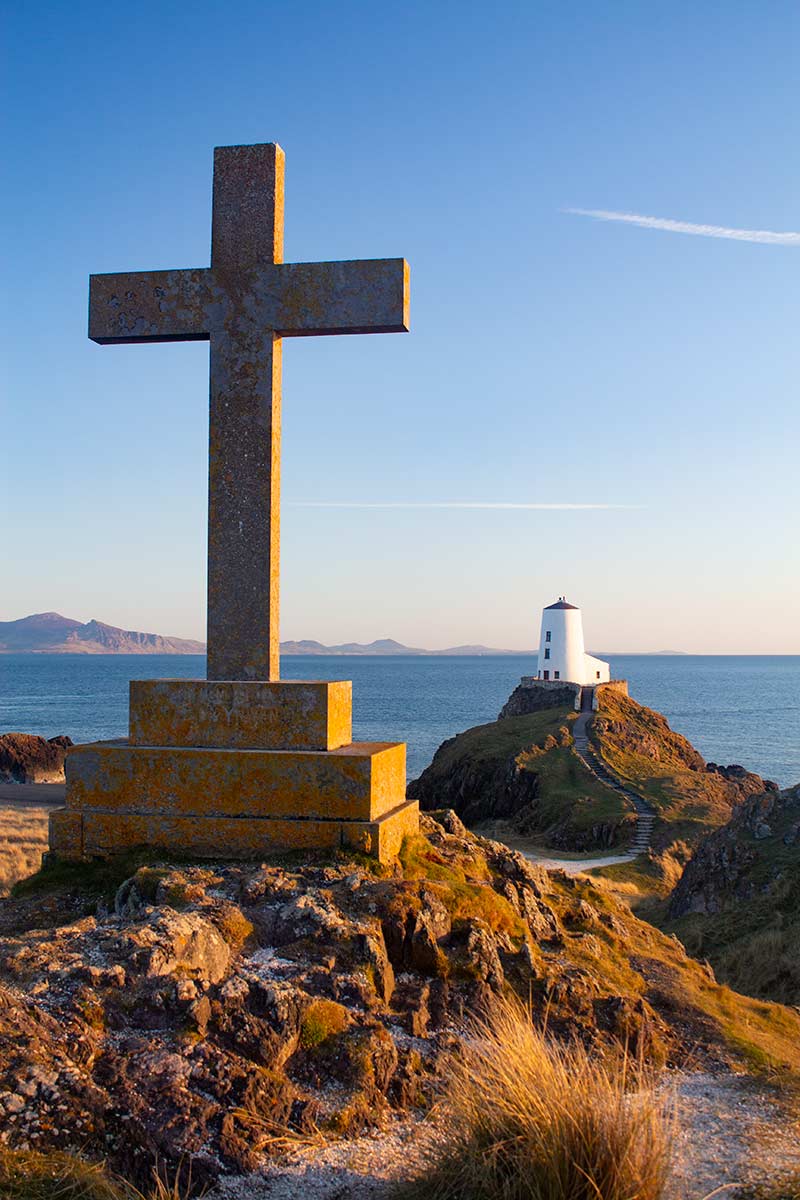
I’ve written extensively about other churches and pilgrimages in Wales, and also about the country in general. Here is a selection of articles for you to browse which will hopefully give you further inspiration:
Churches In Wales and The UK
Best Churches in Wales to visit
6 Best Pilgrimages in Wales – Bardsey, St David’s, Pennant Melangell and more
Churches In The Black Mountains Itinerary
Visiting Pennant Melangell – in search of the Welsh patron saint of hares
How To Visit St Govan’s Chapel – extraordinary tiny church at the foot of a sea cliff in South Pembrokeshire
0 Fascinating Gower Churches To Visit – ancient churches of the Gower Peninsula in Wales
8 Fascinating Churches On The Llŷn Peninsula – including pilgrim churches on the medieval routes to Bardsey Island
Visiting Chester Cathedral – one of the treasures of northwest England
25 Most Beautiful Churches In London
Visiting Westminster Abbey – London’s great royal church
9 Smallest Cathedrals In The UK
32 Most Beautiful Churches in Europe
Best Places in North Wales
Best things to do in Conwy – A stunning UNESCO Heritage town on the edge of Snowdonia National Park
Betws-y-Coed – A picturesque Welsh mountain town in the spectacular Snowdonia National Park
Things To Do In Harlech – World Heritage Castle, one of the best beaches in Wales, and much more
Things To Do In Llangollen – gorgeous riverside town, one of the highlights of North East Wales
Things To Do In Barmouth – if you find a more beautiful setting for a seaside town, please let me know
15 Best Villages In North Wales To Visit – Beddgelert, Betws-y-Coed and many more
North Wales Travel Guide – everything you need to know about travelling in North Wales
A5 Road Trip Wales – following Thomas Telford’s great historic road across North Wales
Best Shore Excursions From Holyhead – day tours and trip ideas for cruise passengers docking at Holyhead
Llanddwyn Island – One of the most special of all Welsh islands
Anglesey beaches & coastline – Home to some of the best beaches in the UK
Best things to do on Anglesey – the largest of Welsh Islands
Things To Do In Bangor, Wales – World Heritage and one of the best bases for exploring the region