

A5 Road Trip Wales
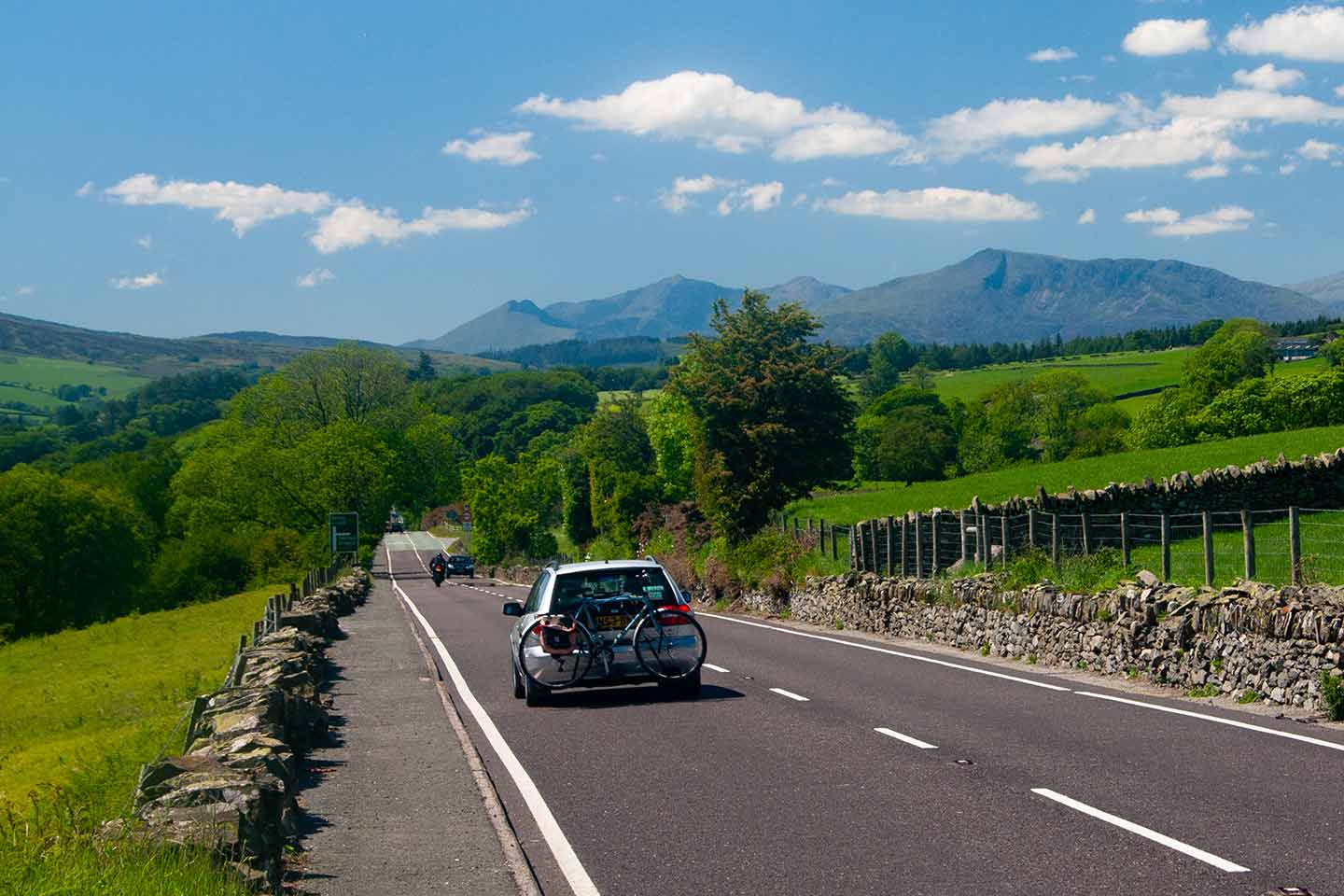
The A5 road trip through North Wales is one of the best scenic drives in Britain. The road, the final leg of Thomas Telford’s main London to Holyhead route, is a scenic delight, taking you through the stunning Dee Valley, across North Wales and through Eryri, the Snowdonia National Park. It then crosses the Menai Strait for the final run across the Isle of Anglesey to the port of Holyhead.
This article covers the section from Shrewsbury to Holyhead. In the article, I’ll describe what to see along the journey, places to stop and suggest some short detours along the way. I’ll also suggest places to stay and eat along the way.
This section of the A5 road trip could be completed in as little as two and a half hours, or you could easily do it the slow way and take a week. I hope that you find this article helpful, and that it helps you discover a few new places to visit along the way.
A5 History
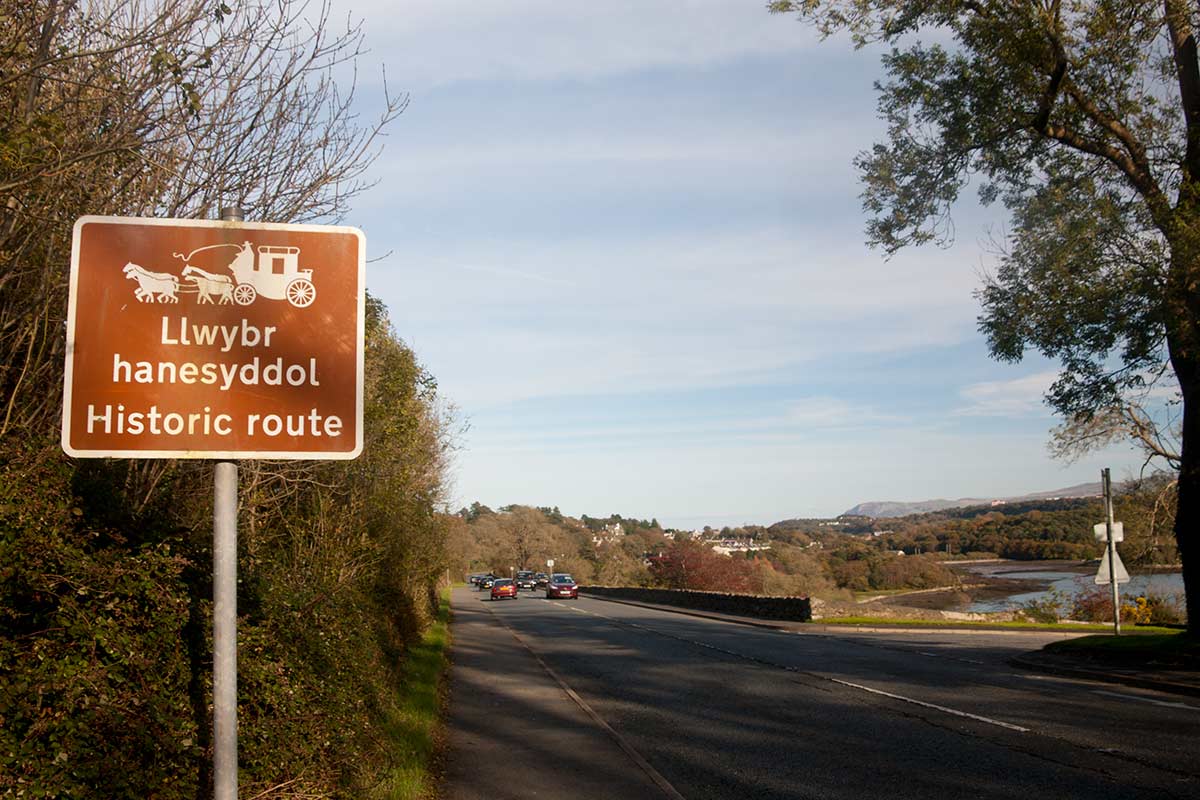
The A5 runs from London to the port of Holyhead in North Wales. It was built between 1815 and 1826 under the leadership of the ‘Colossus of Roads’, Thomas Telford.
Telford’s main responsibility was the construction of the road between Shrewsbury and Holyhead.
Much of his work on the London to Shrewsbury leg of the road consisted of amalgamating different turnpike (toll) roads into a single, national entity.
This section of the road followed the ancient Roman Iter II route from London to Viroconium Cornoviorum, the fourth largest city in Roman Britain, in the village of Wroxeter, a few miles southeast of Shrewsbury.
The same road was known as Watling Street in Anglo-Saxon times, although this also extended southeast from London to the English Channel port of Dover.
Shrewsbury to Llangollen

This first stretch of the A5 road trip through Wales takes you from the beautiful county town of Shrewsbury, one of the best places to visit in the Welsh Borders, to the enchanting Dee Valley and town of Llangollen, one of the most beautiful towns in Wales.
The county town of Shropshire is rich in architecture, from the half-timbered lanes of the town centre to the Romanesque Shrewsbury Abbey to the late 11th-century red sandstone Castle, built during the reign of William the Conqueror.

There are also plenty of places to see close by, from the remains of the Roman town at Wroxeter to the Ironbridge Gorge, one of the most important places in the birth of the Industrial Revolution, a few miles south of the A5 near Telford.
From Shrewsbury, part of the A5 is a busy dual carriageway (expanded beyond its original size) but it changes to a single lane in each direction as it enters the more confined Dee Valley and North Wales.
I chose Shrewsbury as the starting point of this A5 road tour as it’s such a natural stop if you’re travelling all the way from the beginning of the A5 in London. Shrewsbury is also an important jumping-off point for rail travellers visiting Wales, who could travel from there north towards Wrexham and Chester, southwest towards Swansea on the Heart of Wales Line or west on the Cambrian Coast Line. Trains divide at Machynlleth, either continuing to Aberystwyth or north to Pwllheli along the Cambrian Coast.
Where To Stay – The Lion & Pheasant Hotel – beautiful 16th-century building, some half-timbered rooms, excellent restaurant
Chirk Castle (Castell Y Waun)
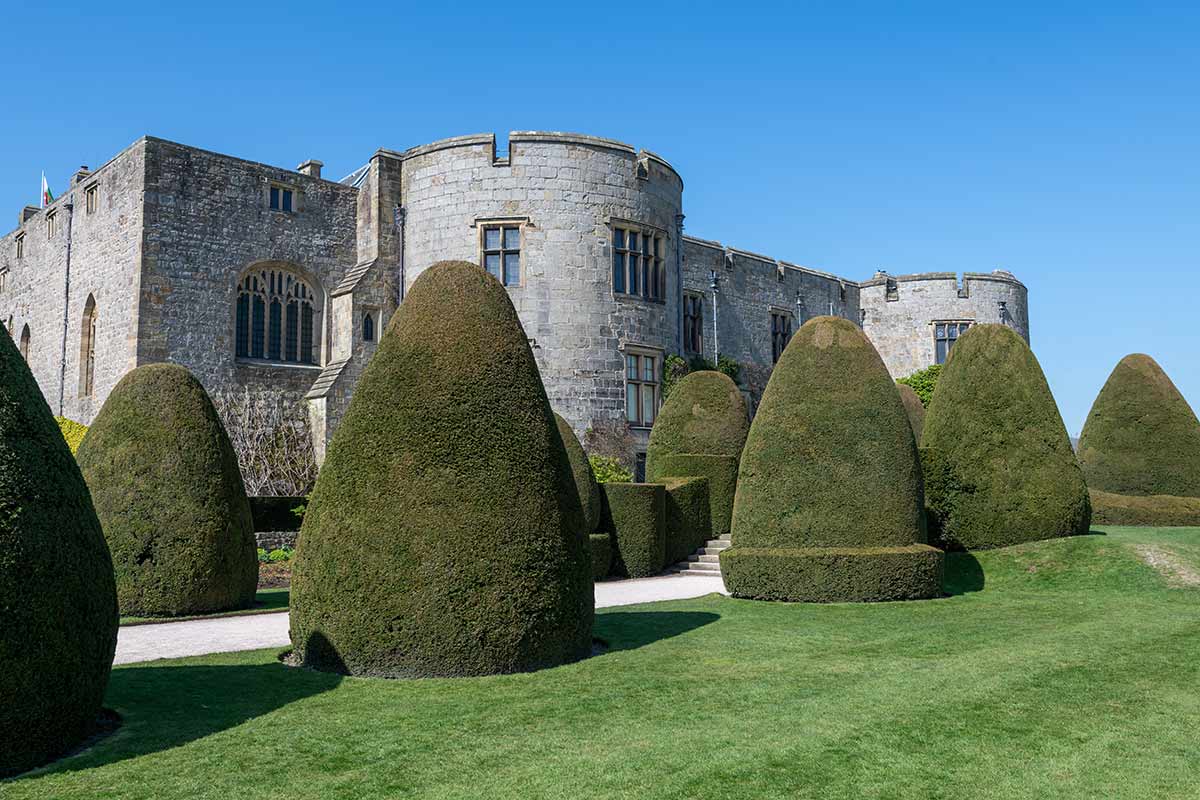
After a section of dual carriageway, the A5 crosses the Afon Ceiriog and makes the crossing into Wales. One of the finest border castles in North Wales, Chirk Castle, lies about a mile inside Wales. Like the World Heritage Castles in Gwynedd to the west, it was built during the reign of England’s King Edward I. And it occupies a strategically vital location, overlooking both the Dee and Ceiriog valleys.
Sir Thomas Myddelton acquired the still-intact castle in 1593, and over 4 years later, it remains in the family. Under their ownership this sturdy border fortress was turned into a stately home, like Powis Castle to the south.
Its formal Gardens are among the finest in Wales, with some superb yew hedges, a seasonal rose garden, woodland and superb views over the Shropshire and Cheshire countryside.
Pontcysyllte Aqueduct

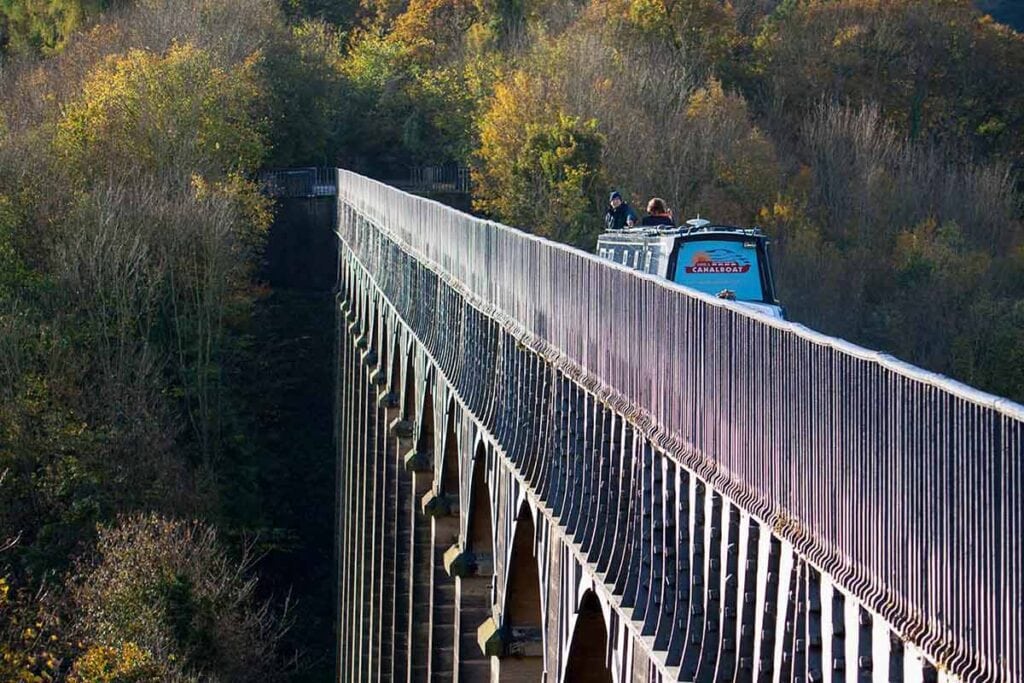

The World Heritage-listed Pontcysyllte Aqueduct, one of the most famous landmarks in Wales, is just a mile off the A5, and accessible via a mile-long drive across the floor of the Dee Valley to the village of Trevor.
Like the A5, it was built by Thomas Telford in the late 18th and early 19th century. It carries the Llangollen Canal 136 feet above the River Dee, and is a magnificent sight from afar ort up close. It’s the highest aqueduct in the world.
The Aqueduct is also free to walk across, with a towpath and railing running along the east side of the bridge. You can also ride across the Canal, either on a narrowboat or in a canoe.
The Aqueduct canoe tour is a great experience, with 2 ½ hours in the boat crossing the Aqueduct and back. The views, especially west towards Llangollen up the Dee Valley, are breathtaking.
And there’s also the longer option of a 7-hour Llangollen Canal canoe tour, which takes you over Pontcysyllte and also the nearby Chirk Aqueduct.
Llangollen


Llangollen is the best place to visit in North East Wales, a beautiful old town on the banks of the River Dee surrounded by sublime scenery. There are enough things to do in Llangollen to stay a weekend, something we have done several times over the years.
The Dee (Afon Dyfrdwy in Welsh) is one of the most beautiful rivers in Wales, and the area around Llangollen is its most beautiful stretch. The river is serene either side of the town, but crashes over a series of rapids just before the town’s medieval stone bridge. And you can join a River Dee whitewater rafting adventure, paddling your way down these powerful rushing waters.
Llangollen has plenty more to lure you, from the romantic mock-Tudor, half-timbered Plas Newydd house in a quiet corner of the town to the even more romantic ruin of Dinas Bran Castle, a medieval fort perched on a conical hill a mile above the town.
Llangollen is also home to the International Eisteddfod, where choirs and musicians from all over the world converge the first week of July each year and bring a wonderful dash of colour and brightness to the streets.
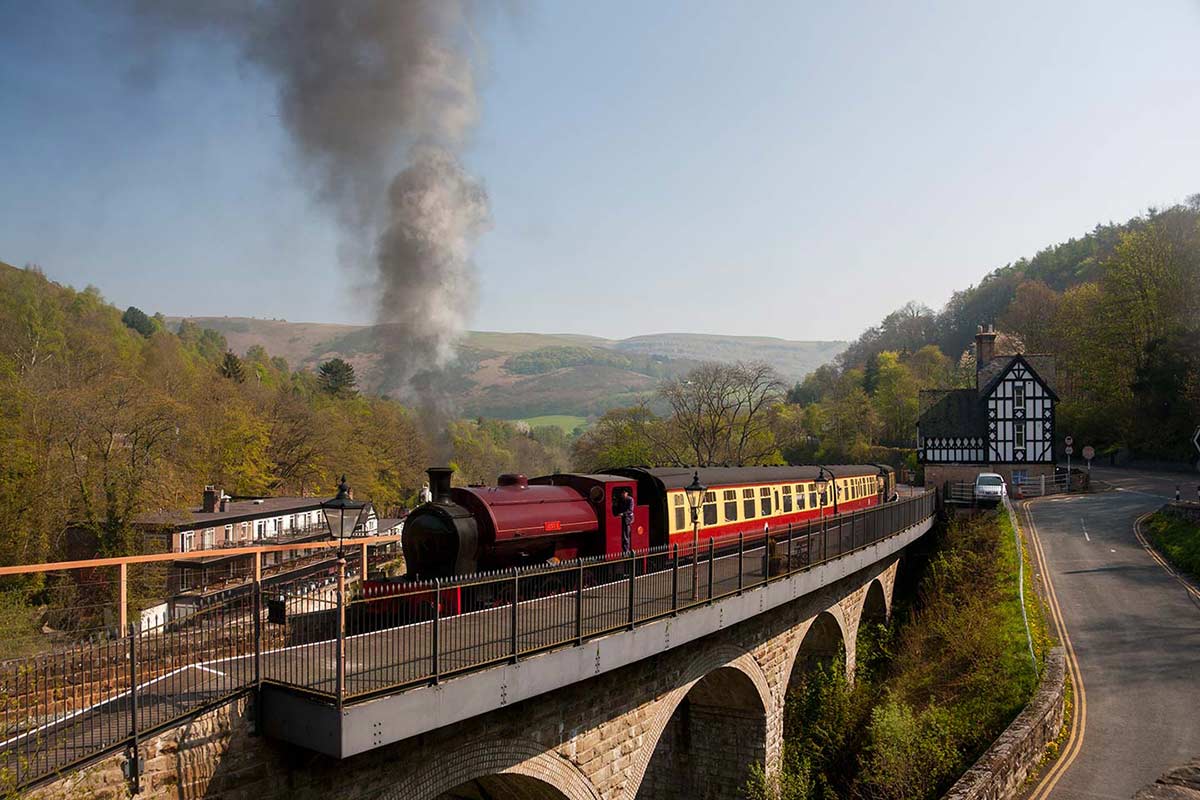
Llangollen is also the starting point of the wonderful Llangollen Steam Railway, which takes you ten miles up the Dee Valley to the nearby town of Corwen – a magical journey indeed.
Where To Stay In Llangollen
Bridge End Hotel – recently refurbished hotel dating from 1840 at the end of medieval Llangollen Bridge, overlooking the river and town and a few steps from Llangollen Canal
Hillcrest Guest House – impeccable B&B just up the hill from the town centre, near Plas Newydd house and garden
Abbey Cottage – beautiful 2-bedroom holiday home on the road from the town centre to Valle Crucis Abbey
Detour: Valle Crucis and Horseshoe Pass


The A542 takes you north from Llangollen to one of the town’s best sights, the beautiful Gothic ruin of Valle Crucis Abbey. You can explore the ruined church and some monastery outbuildings, but don’t miss the vaulted undercroft, one of only two to survive in Wales. The hill just across the road from Valle Crucis, Coed Hyrddyn (Velvet Hill) offers some of the best views in North Wales from the summit ridge, which is a straight 15-minute climb.
Beyond Eliseg’s Pillar, the 9th-century remains of a much larger stone cross, the road climbs to the Horseshoe Pass (Bwlch yr Oernant in Welsh), which is the cross-country route to the town of Ruthin. The views from the top of the pass down towards Llangollen are breathtaking.
Just bear in mind that if you’re visiting North Wales in winter and there’s snowfall, this is often the first road in the region to close.
Continue west along the A5, which runs parallel to the Llangollen Steam Railway line for some of the way. You may well spot a train at the platform at Berwyn Station (pictured)before the A5 runs through a wooded section above the river.
A mile after the village of Glyndyfrdwy, and around 400 metres before the right-hand turn for Carrog, you may just spy an artificial mound on which several tall trees are planted. This is the former Castle of Owain Glyndwr, the rebel Welsh Prince who fought against English overlords for several years in the early 15th century.
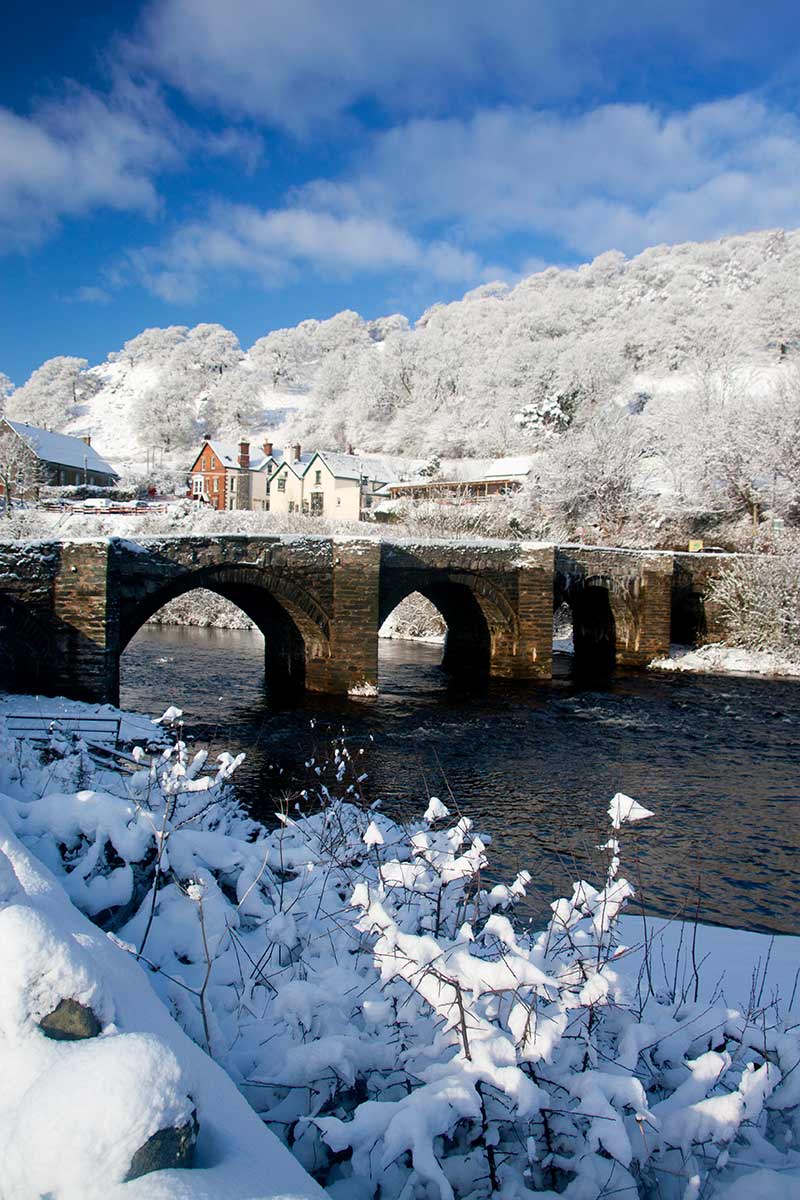

A little further on, Carrog is a tiny village, well worth a brief stop to see its 17th-century stone arched bridge over the Dee and its gorgeous railway station, still in use as one of the stops on the Llangollen Steam Railway.
Corwen is a lovely country market town two miles beyond Carrog, best-known as the home of Owain Glyndwr. However it’s just as noteworthy for three churches, one of which is in the town centre, with two in the surrounding countryside. The equestrian statue of Owain Glyndwr by Colin Spofforth dominates the market square, and there are several other interesting building around the town, including the former Victorian workhouse (on the A5, opposite the Nisa store) and the 17th-century Crown Hotel.
The town’s parish church, dedicated to St Mael and St Sulien, is a short walk off the south side of the A5. It’s a well-preserved 12th-century church, and its patron saints are most likely from Corwen or the surrounding area.
Where To Stay In Corwen – Bron y Graig – lovely guesthouse just off the main road, close to the centre of historic market town
Detour: Rug Chapel and Llangar Church


These two churches are both within two miles of Corwen, and can be visited between April and October. They are operated as visitor attractions by Cadw, the Welsh government body responsible for the care of ancient and historic monuments across Wales.
Simple, whitewashed Llangar Old Church sits picturesquely above a bend in the river Dee, just off the B4401 which runs southwest of Corwen. The interior is a wonderful surprise, with several medieval wall paintings, including a fine grinning skeletal Doom figure.
Almost three miles away, Rug (pronounced ‘reeg’, rhyming with ‘league’) Chapel is a much more ornate affair. It was the private chapel of Colonel William Salesbury, a staunch Royalist during the Civil War. He decorated this small chapel with richly decorated carved wooden figures, roof beams and wall memorials, and it’s one of the most fascinating churches in Wales to visit.
Corwen to Betws-y-Coed
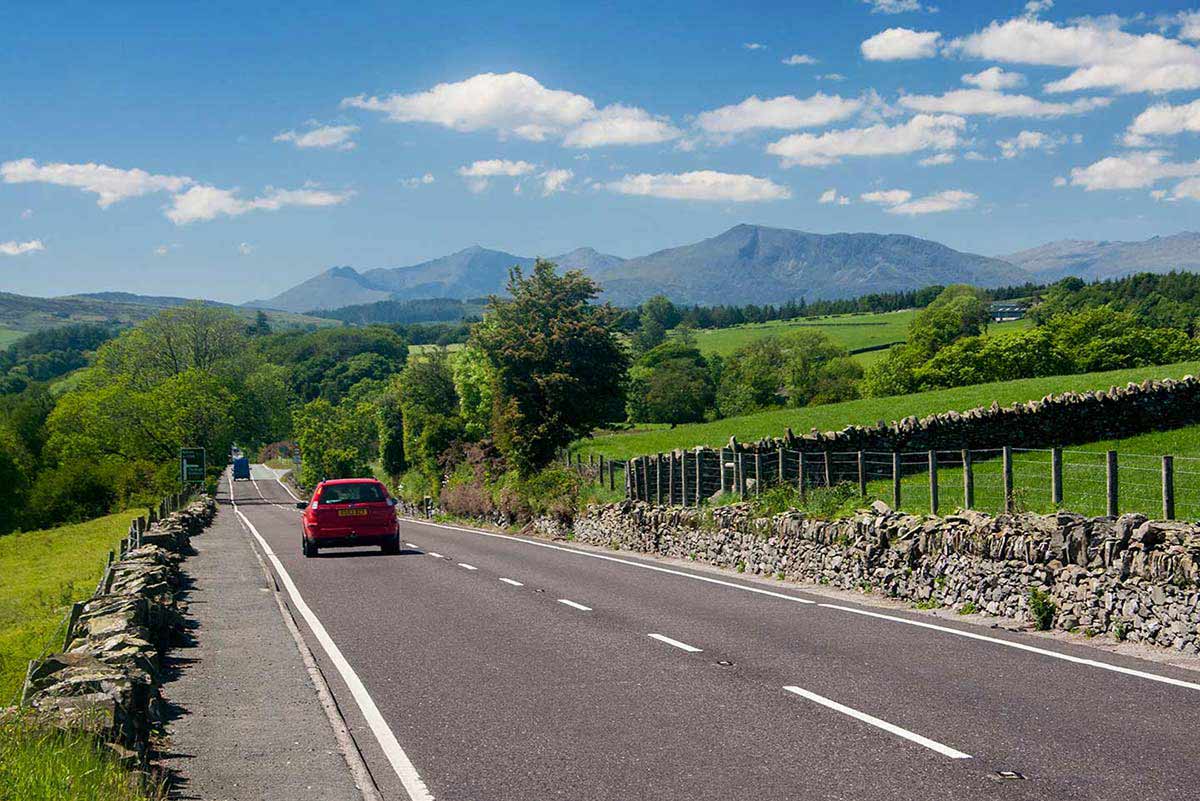
Corwen is the last town of any size for thirty miles (50 km) or so, as the A5 continues west, the fringes of the Denbigh Moors to the north and the distant peaks of the Arenigs, rarely trodden slopes of southern Snowdonia, to the southwest.
After passing the Rhug Estate (renowned for its meat, sold at a stall in Borough Market in London among many other places) it’s countryside all the way to Betws-y-Coed, with some wonderful scenic stretches, the best of which is around the turn-off for the village of Pentrefoelas. Here, the peaks of Eryri come into view for the first time.
The largest looming summit is that of Moel Siabod, a marvellous but much-ignored mountain between Capel Curig and Dolwyddelan as the crow flies. In the image above, Siabod is the mountain to the right of frame, with Snowdon (Yr Wyddfa) the second summit from the left.
Detour: B5113 Nebo Road

I wouldn’t necessarily take this detour while driving the A5 for the first time, but would file it away for further exploration later in your trip to North Wales, as it offers up some of the best views in Snowdonia.
Take the signposted right-hand turn onto the B5113 in Pentrefoelas village. The road climbs to the ridge overlooking the east side of the Conwy Valley, giving you miles of stunning views across the fields to the eastern flank of Snowdonia. From there you get mesmerising views right across the range, from Moel Siabod in the south to Tryfan and the Carneddau to the north.
There’s one large lay-by near the village of Nebo, and there are numerous other places with space to pull over.


You then continue the approach to Betws-y-Coed, passing the car park for Conwy Falls and the café, which was designed by the creator of Portmeirion village, Sir Clough Williams-Ellis. The window frames are painted the trademark Portmeirion aqua blue that you see all around the famous village, and the cakes and coffee are excellent.
The A5 then continues the last few miles to Betws-y-Coed, with one more grandstand view on this section, with a suitably large stopping area. The view is of Moel Siabod, looking high above the Lledr Valley, one of the less-frequented corners of Snowdonia that is one of the highlights of the A470 road trip between North and South Wales.
Soon afterwards, you pass the turn-off for Fairy Glen and the junction with the A470, and suddenly you’re in the leafy, sylvan netherworld that is Betws-y-Coed.


Along with Llangollen, Betws-y-Coed is the most obvious place to stop on an A5 road trip though North Wales. There has been a village in this spot where three rivers (Conwy, Lledr and Llugwy) meet since the 14th century, but things only really got started in the 19th century when an artists’ colony grew there. The Gwydyr Forest, rivers and waterfalls were the perfect place for them to appreciate the Picturesque and paint these places.
Nowadays Betws-y-Coed is the most popular base for visitors to Snowdonia, many of whom stay in the Victorian-era hotels and B&Bs along the A5, the main street called Holyhead Road. The village is a mixture of traditional shops and tea rooms and the biggest concentration of outdoor and adventure shops in Wales.
Don’t miss the walk across the Pont y Pair – the Bridge of the Cauldron – under which the Afon Llugwy roars for hours after a downpour. If you stay close by in summer, leave your window open at night, the sound of the river is wonderful for helping you to sleep.
Where To Stay In Betws-y-Coed
Royal Oak Hotel – the original home of Betws-y-Coed’s artists colony, beautiful 200-year-old coaching inn right in the middle of the village, with the busiest pub in the area (The Stables) next door
The Waterloo Hotel – great hotel in is own grounds above the river, the only hotel in Betws with an indoor swimming pool and gym
Olif – luxurious restaurant with rooms very close to the Pont y Pair, with a superb tapas bar downstairs (the name is pronounced ‘olive’, the same as in English)
Betws-y-Coed to Capel Curig


It’s only around eight miles from Betws-y-Coed to Capel Curig, and it’s a wonderful run uphill through the Gwydir Forest, passing Swallow Falls (Rhaeadr Ewynnol), one of the most popular visitor attractions in the area in the Victorian era.
Here, the young Afon Llugwy crashes down a series of channels and cascades, before continuing the rest of its brief journey to its confluence with the River Conwy after Betws-y-Coed. It’s a wonderful sight, and the old turnstiles you have to pass through (keep some pound coins handy) feel like a vestige of Victorian times. A short distance beyond Swallow Falls, you pass the Ugly House (Tŷ Hyll), one of the most unusual landmarks in Snowdonia.
This house isn’t really that ugly at all. It’s built from some very large boulders, with moss filling the gaps in between. It’s first mentioned in writing in 1853, though stories of it go back centuries further. One notion is that it was a tŷ un nos, a house built in one night, which its builders could claim to own if the chimney was emitting smoke by the morning after. But nobody really knows for sure.
It’s now a lovely tearoom run by the Snowdonia Society, and they also have a small exhibition on honeybees, some of which live in the hives in the garden.
The road continues to Capel Curig, and the views of the mountains of the main Snowdon range begin to open up.
Detour: Snowdon Viewpoint


Capel Curig is strung out along the A5 for around two miles (3 km), and near the end of the village, a left turn directs you to Plas Y Brenin, the National Mountaineering Centre for Wales, and Llanberis. This is the way to Snowdon (Yr Wyddfa), the highest and far and away the most popular (and overcrowded) mountain in Wales.
The A4086 turn takes you past Plas y Brenin, and be prepared to stop very soon after the end of the complex, where there is a large parking area. This is the most famous viewpoint of Yr Wyddfa (Snowdon), one of four summits that you can see from there. Together, this ensemble of mountains is known as the Snowdon Horseshoe, which is also the name of the traverse of these summits, including the knife-edge Crib Goch ridge (to the right of the view).
The view is wonderful from the car park, but even better from the lakes (Llynnau Mymbyr) below. Snowdon is far from serene nowadays, but from this spot it looks it, and magnificent too.
Capel Curig to Bangor
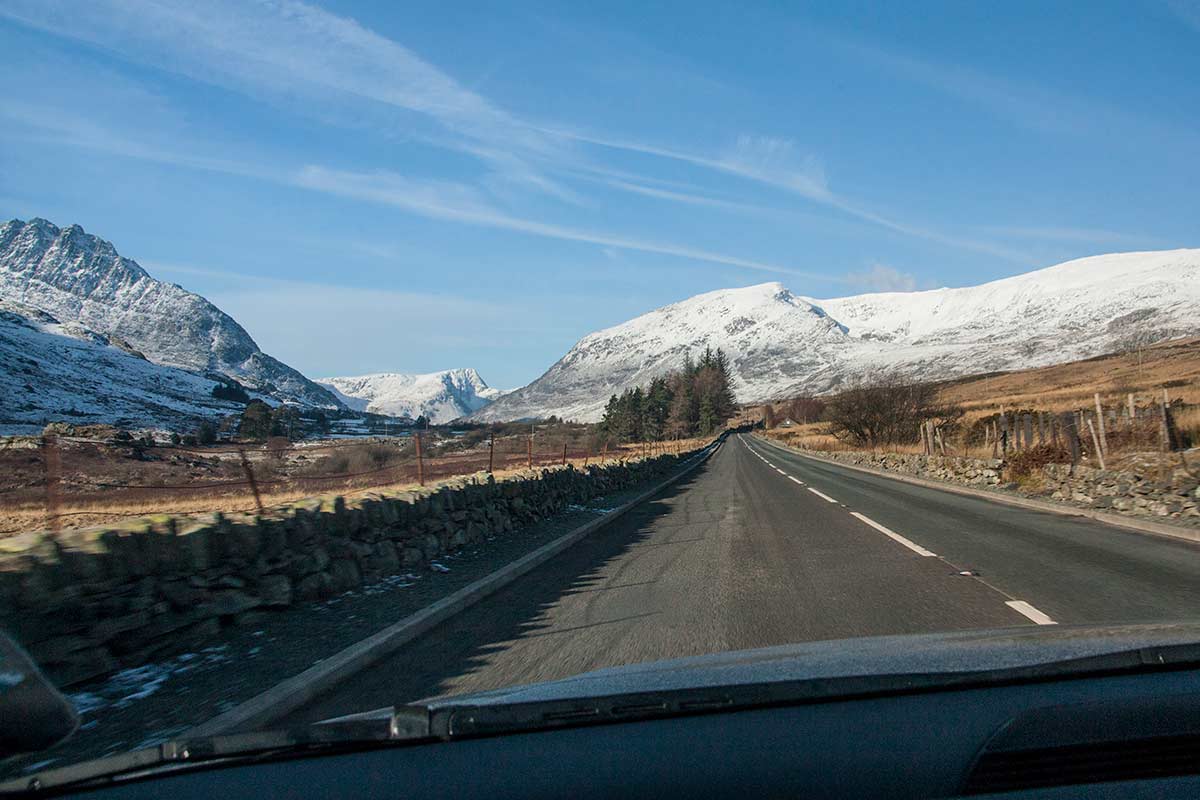


The following stretch is perhaps the best of the entire A5 road trip. As soon as you leave Capel Curig, you enter the Ogwen Valley, one of the most spectacular in Wales, with several of its greatest peaks. You could spend weeks exploring the Ogwen Valley, which has some of the best hikes in Snowdonia, but for now I’ll mainly stick to what you see from the road.
The ridge of mountains to your right are the Carneddau, the northernmost and among the least-explored of the Snowdonia National Park. They are an astonishing range of mountains, with some of the highest summits in Wales (Carnedd Llywelyn is the second highest in Wales, and you’ll scarcely see a soul there all day, even in summer). They run almost parallel to the coast, and some of the views from there are incredible.
To your left, the first major peak you see is the jagged outline of Tryfan, renowned as the toughest mountain in Eryri – indeed Wales – to climb. The ascent is one of the best things to do in Snowdonia, and requires some all-fours scrambling at several points along the way. Shortly after you pass Tryfan you reach Llyn Ogwen, one of the most beautiful lakes in Wales.

Just behind Tryfan are the mighty Glyderau, with their two highest peaks, Glyder Fawr and Glyder Fach. These are magnificent mountains, and I’ve climbed the Cwm Idwal route a few times, via the narrow Devil’s Kitchen gap, before reaching their summits scattered with ice-shattered rock formations with names like Castell y Gwynt – the Castle of the Winds.
Charles Darwin visited Cwm Idwal in 1831, and discovered that rocks around the lake (Llyn Idwal) had fossils of sea shells on them. He deduced that it would have taken immense force to project these rocks from the seashore to this location hundreds of metres above sea level.
He also noted that Cwm Idwal was largely shaped by ice, as was Nant Ffrancon, the U-shaped valley below, which stretches north towards Bethesda and the coast.

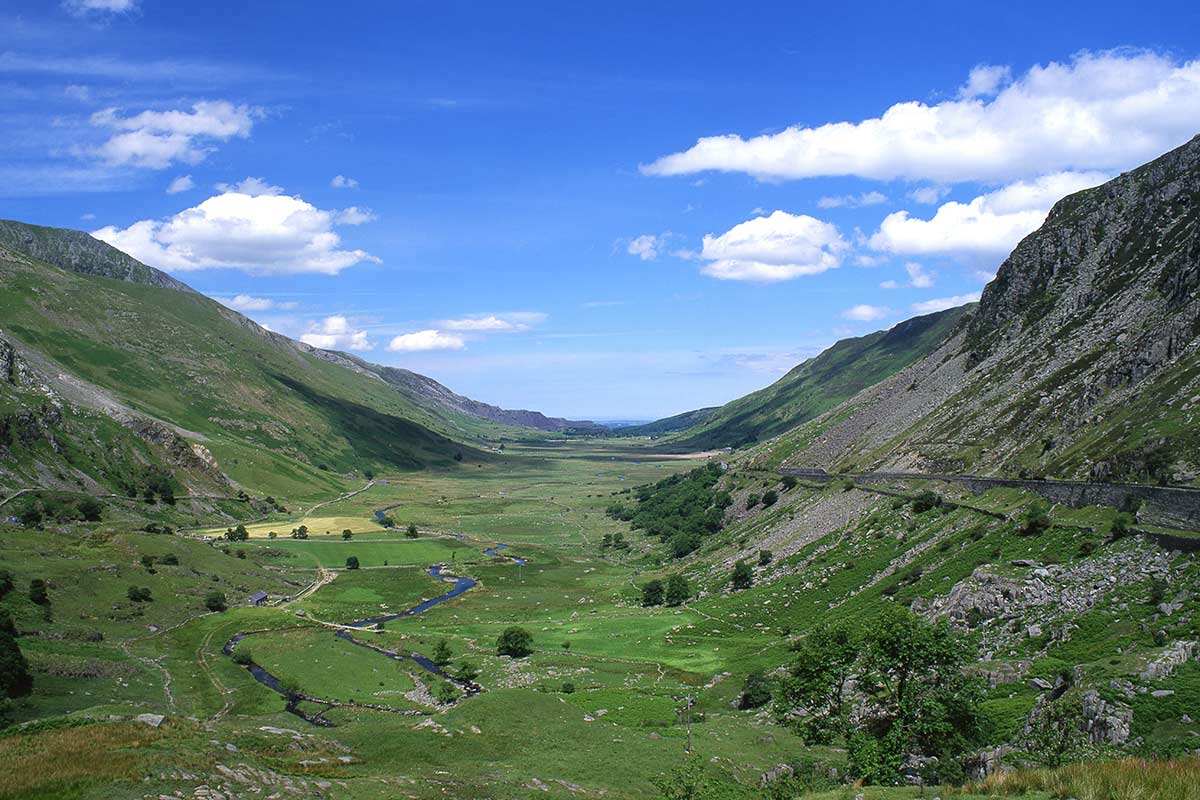
The car park at Idwal Cottage (5 GBP) or the lay-bys near Llyn Ogwen are the best places to stop and admire the scenery for a while. If you stop at the paid car park at Idwal Cottage, you can at least enjoy the sublime view down Nant Ffrancon (see above), a short walk along the track beyond the car park. It’s also a few steps from there to Rhaeadr Ogwen, the waterfall carrying outflow from Llyn Ogwen into the valley below.
As you pass the end of Llyn Ogwen, with Idwal Cottage on your left, you pass beneath the imposing peak of Pen yr Ole Wen (the peak of the bright lights) before continuing above Nant Ffrancon to the former slate quarrying village of Bethesda.
Bethesda and Penrhyn Quarry are part of the Welsh Slate Landscape World Heritage Site, which was officially inscribed in 2021. Penrhyn Quarry was the largest slate quarry in the world, and like a few other locations across North Wales, has been given a new lease of life, not just with World Heritage status, but also as the setting for exhilarating zip wire rides.
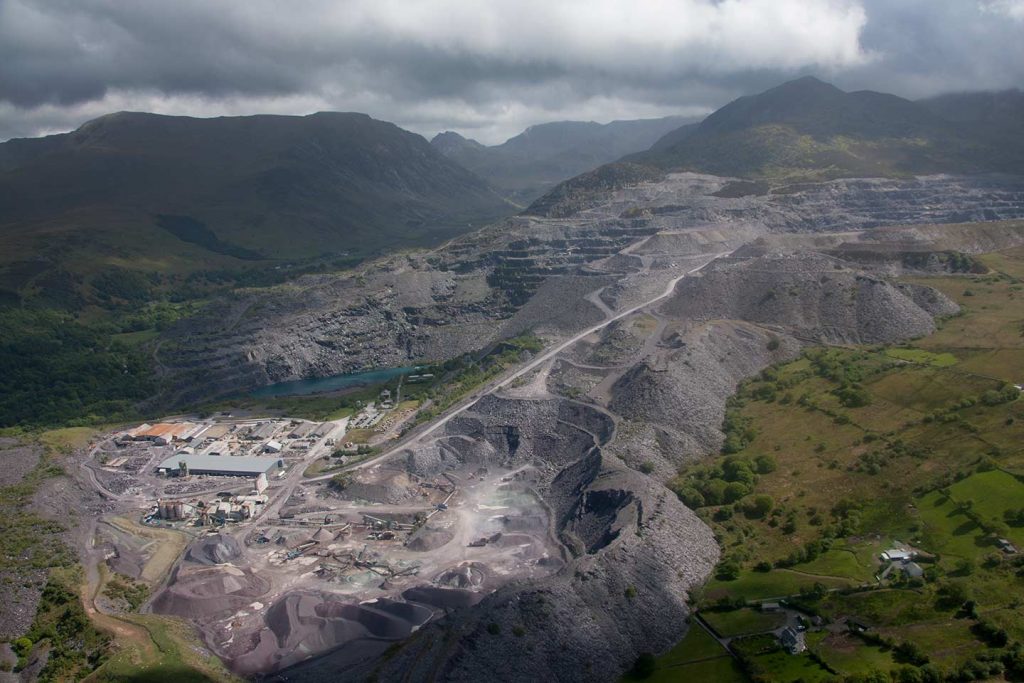
Penrhyn Quarry was the first Zip World attraction to open in North Wales, and it’s now home to Velocity, the fastest zip wire ride in the world, reaching speeds of over 100 miles per hour (160 km per hour). If you’re up for the adrenaline rush, you can book your Zip World Velocity rides here.
From Bethesda, it’s a few short miles into Bangor, the small port city from where the slate from Penrhyn Quarry was exported. As you approach the small city, you’ll see signs for Penrhyn Castle to the right. This vast, ornate Norman-style castle was built by the Penrhyn family, the owners of the Quarry of the same name. It’s a beautiful building that served an unfortunate purpose, as home to extremely wealthy quarry owners whose workers went on a three-year strike, living in appalling poverty, in a dispute over pay and working conditions.
There are enough things to do in Bangor to spend a few hours there, and the best place to head is gorgeous Garth Pier, which stretched out part of the way across the Menai Strait towards the island of Anglesey. Bangor is perhaps the most convenient base in North Wales if you intend to explore the region by public transport, with good train and excellent bus connections.
Where To Stay in Bangor and Menai Bridge

Chateau Rhianfa – Loire Valley-inspired 19th-century chateau on the Anglesey shore of the Menai Strait, with breathtaking mountain views
The Management Centre – highly-rated University-run accommodation in the centre of Bangor
The Slate – boutique hotel and restaurant on the outskirts of Bangor, close to the grounds of Penrhyn Castle
Bangor to Holyhead
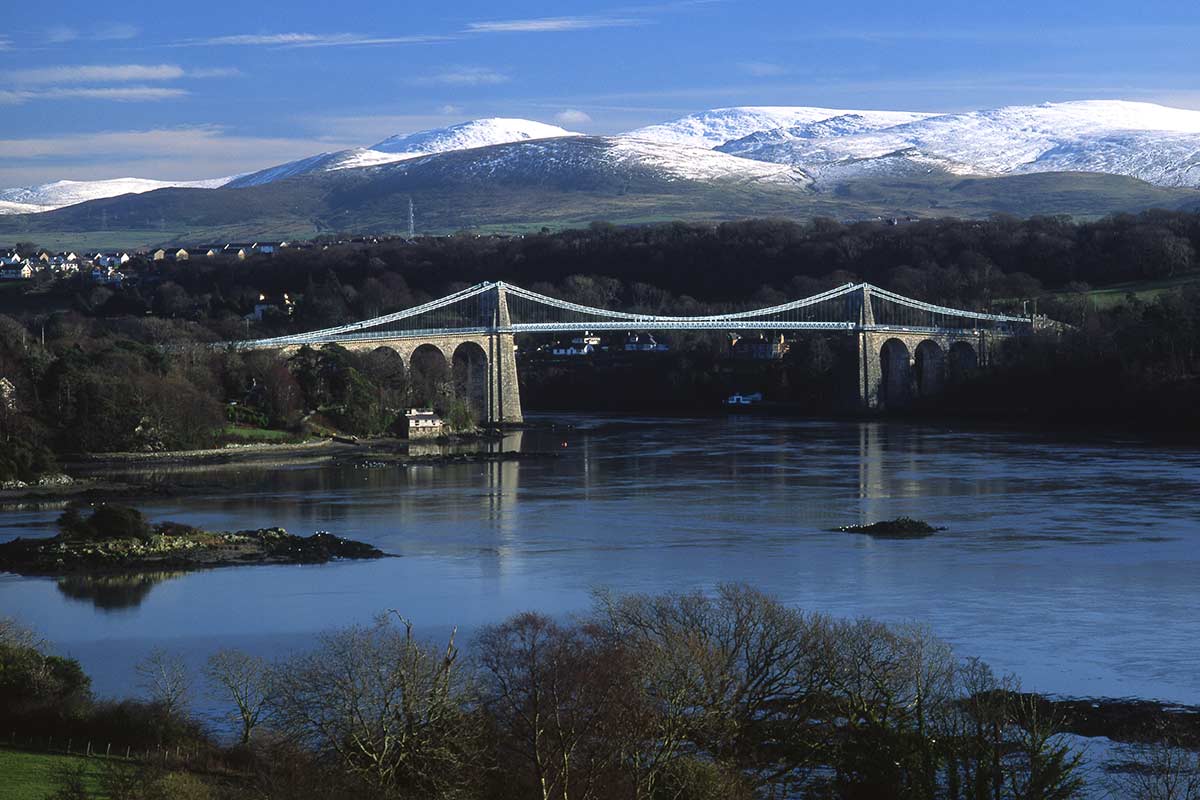


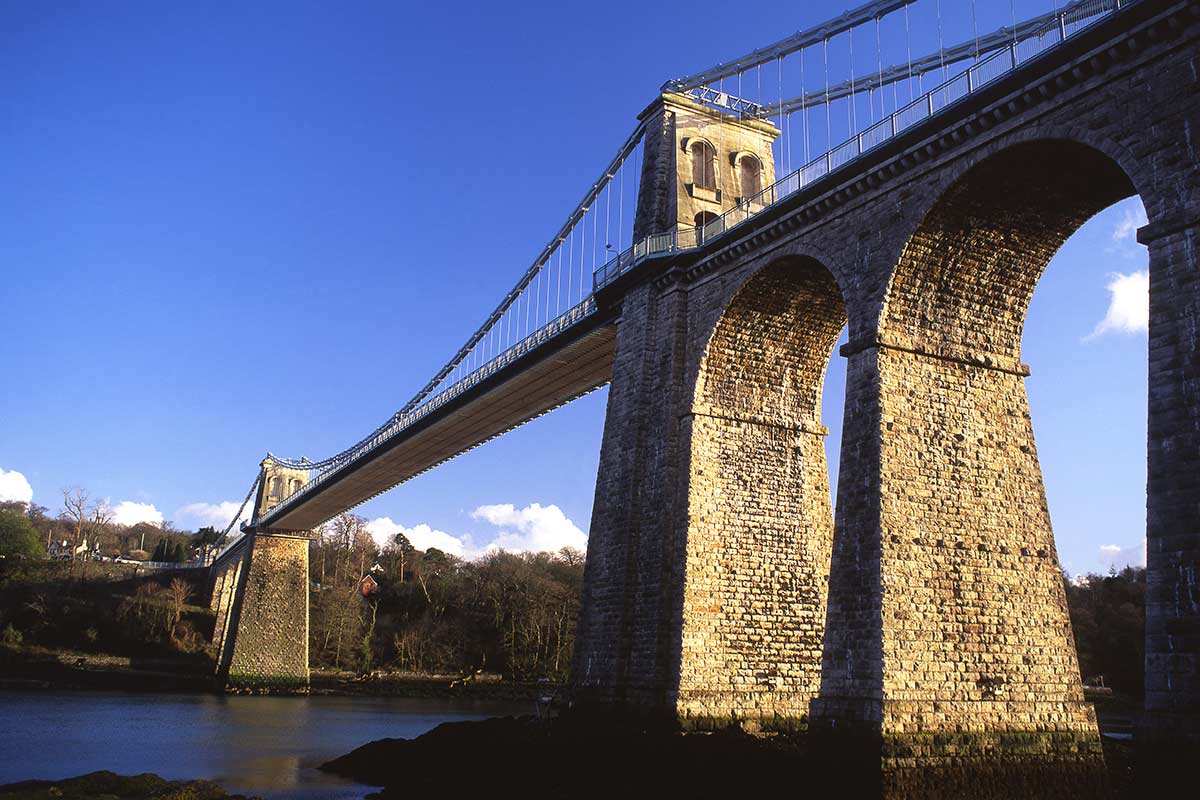
The A5 continues through Bangor, passing below its imposing University (also part of the Slate World Heritage Site as it was founded and funded by slate quarry workers) and the railway station before climbing the hill to Upper Bangor. The road then swings around, running above and parallel to the Menai Strait for around two miles before reaching the turn-off for the stunning Menai Suspension Bridge.
This wonderful suspension bridge, the first permanent link between the Welsh mainland and Anglesey, was completed in 1826 by Thomas Telford. Its completion also marked the completion of the entire A5 road, which finally linked London with Holyhead, the main Welsh port for Ireland, with its direct connection to Dun Laoighaire near Dublin.
Follow the A5 to the left from the village of Menai Bridge (Porthaethwy in Welsh). After half a mile you’ll see a large car parking area on the left. Pull over and admire the glorious setting of this bridge, beneath the mountains of the Carneddau. It’s one of the most beautiful bridges in Europe, a sight that still makes me swoon despite having seen it countless times.
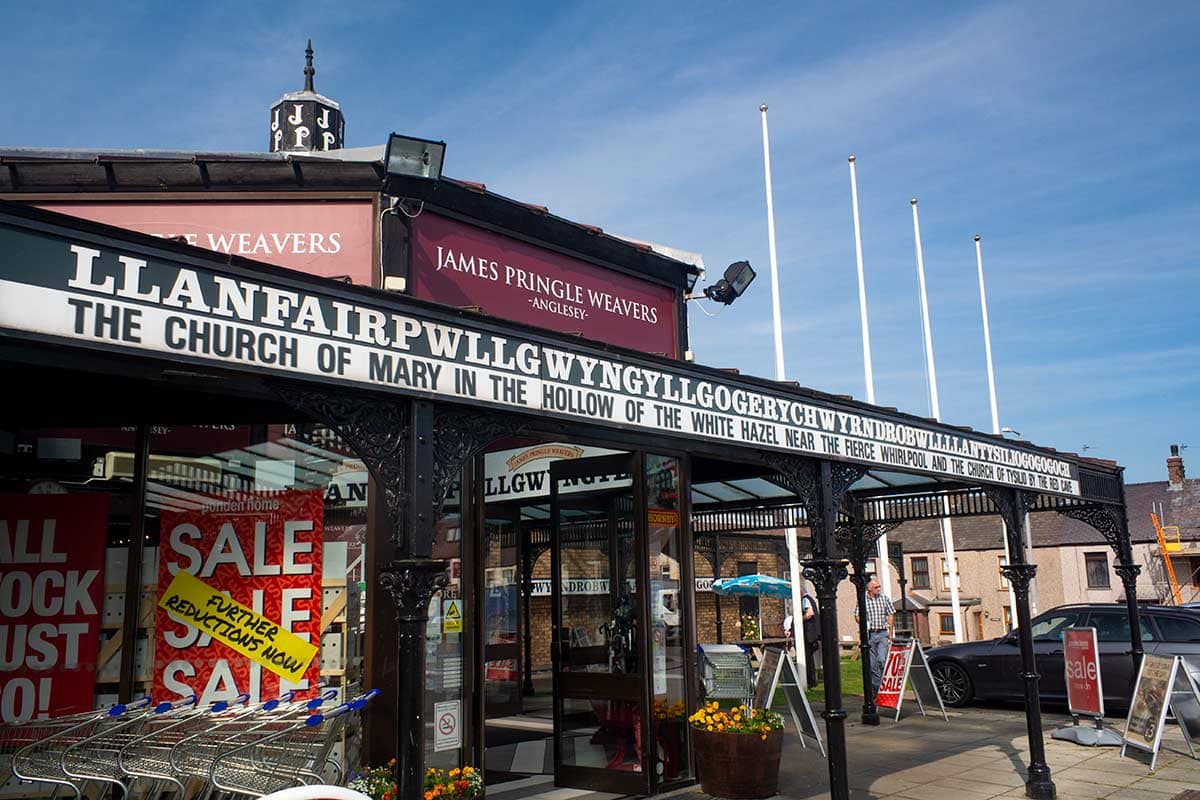
After the junction with the A55 Expressway that superseded it, the A5 continues a mile or so to one of the most famous places along the route, Llanfair PG. The name is usually abbreviated to this because its full version is 58 English (and 47 Welsh) letters long. It was originally known as Llanfairpwllgwyngyll, but it was renamed Llanfairpwllgwyngyllgogerychwyrndrobwllllantysiliogogogoch in the 19th century, possibly as a publicity stunt to ensure it had the longest station name in Britain.
There’s not a great deal to see in the village, other than the station name sign and the translated name sign outside the James Pringle Weavers shopping centre next door. It has the whiff of a tourist trap about it, but there are quite a few places of greater interest nearby.
Detour: Bryn Celli Ddu, Plas Newydd and Llanddwyn Island


As with the Nebo road (see earlier in the article) you could always save this short trip for another time rather than break your A5 road trip. However if you stop everywhere along the way, you could spend several days in this part of Anglesey.
Plas Newydd is one of the finest stately homes in Wales, and the ancestral home of the Marquesses of Anglesey. The original house was completed in the 15th century, but much of what we now see is from the 18th and 19th centuries. The Dining Room has a famous mural by Rex Whistler, and the small Military Museum with the world’s first articulated leg, made for the 1st Marquess who lost his own at the Battle of Waterloo in 1815.
Just beyond Plas Newydd, a right turn off the A4080 takes you to the remarkable chambered tomb at Bryn Celli Ddu. It’s one of the finest ancient sites in Wales, built around 5,000 years ago to precision so that shafts of light illuminate the passage within on the longest day of the year, June 21st.
Some of the most popular things to do in Anglesey can be found at Brynsiencyn, also just off the A4080, with Anglesey Sea Zoo (a great wet weather option), Foel Farm Park (brilliant for kids – Our Little Man loved it) and Halen Mon, where Anglesey Sea Salt is processed and sold.
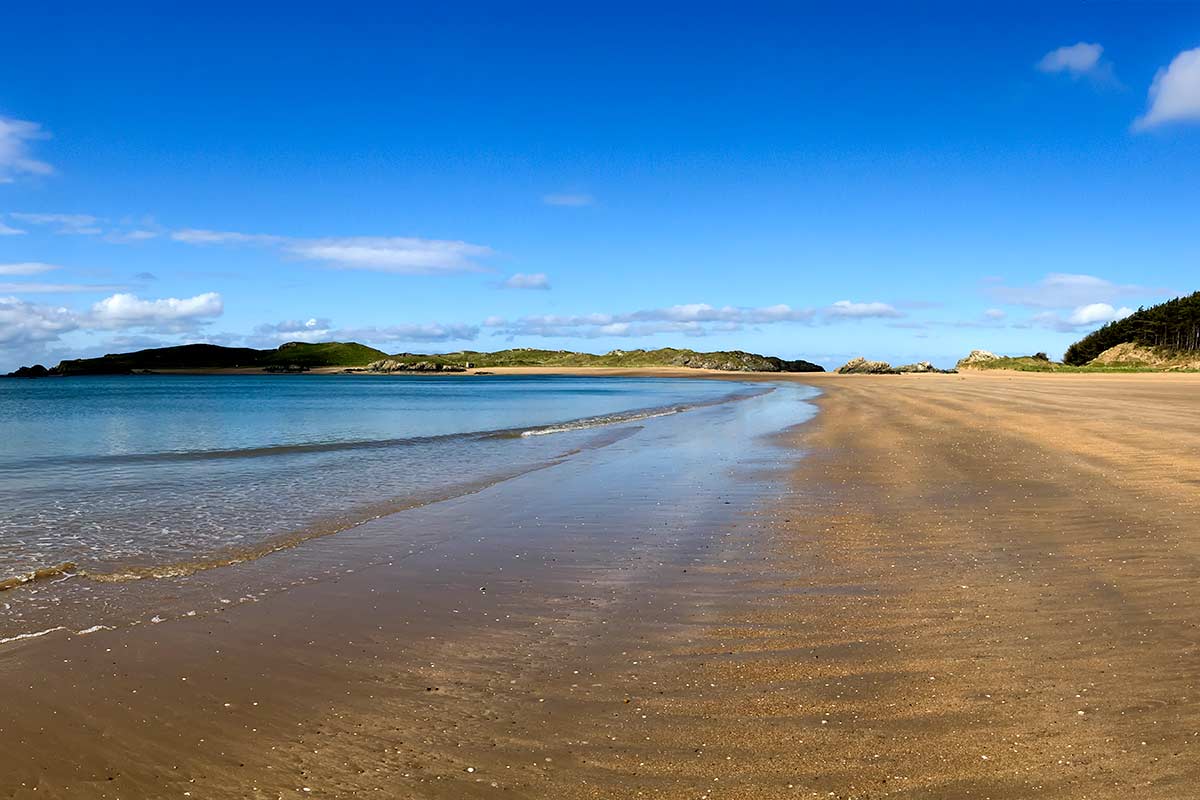
Follow the A4080 the next two miles to the village of Newborough, from which a minor road leads to some of the best beaches in North Wales. The car park (5 GBP) is just behind spectacular Newborough beach, and from there it’s a 30-40 minute walk along the sands to tidal Llanddwyn Island.
The Island, which is inaccessible an hour either side of high tide, is named after St Dwynwen, the Welsh patron saint of lovers. There’s a small ruined chapel dedicated to her soon after you reach the island, but the highlights are the views of the lighthouses and beaches from the southwest end of the island, with the peaks of the Llŷn Peninsula to the south across Caernarfon Bay.
From Llanfair PG, it’s a leisurely run across the relatively flat interior of Anglesey to Holyhead. The A5 runs alongside its replacement, the A55, for the short journey across the island, and crosses the Telford-built Stanley Embankment from Anglesey ‘proper’ to Holy Island (Ynys Gybi in Welsh) where Holyhead is located.

Holyhead is the main departure point for ferries and freight traffic from Wales to Ireland, and most points of interest are a short distance outside the town. The best of these are the cliffs and lighthouse at South Stack, two miles from the centre.
Where To Stay In Holyhead
Trearddur Bay Hotel – great traditional seaside hotel overlooking one of the best beaches in North Wales
The Haven – popular, highly-rated guesthouse in the centre of town, a short walk from the ferry and port
Orient B&B – outstanding B&B with a great in-house Vietnamese restaurant
See Also: 15 Best Things to Do In Holyhead
A5 Road Trip Wales – Final Thoughts

I hope that this guide has given you some inspiration. It’s not the quickest route into North Wales, but it is one of the best scenic drives in Wales, and far more enjoyable than the (admittedly faster) A55.
I’ve explored every corner of Wales over my first 45 years, and was especially privileged to travel the country in my role as Art Director for Visit Wales for many years. I’ve written a great deal of content on North Wales, and here’s a selection of further articles for you to peruse:
North East Wales
Best Places To Visit In North East Wales
Castles In North Wales
Best things to do in Conwy – A stunning UNESCO Heritage town on the edge of Snowdonia National Park
Best Things To Do In Caernarfon – one of the most imposing medieval castles in the world, and a great base for exploring Snowdonia and the North Wales coast
Things To Do In Beaumaris – Anglesey’s World Heritage Castle and one of the loveliest towns in Wales
22 Best Things To Do In Harlech – World Heritage Castle, a world-class beach and a superb base for exploring southern Snowdonia and beyond
12 Best Things To Do In Criccieth – step back to yesteryear in this gorgeous seaside town on the Llŷn Peninsula
Things to do in Snowdonia – North Wales’ extraordinary National Park
Llŷn Peninsula beaches – The Llŷn Peninsula beaches are among the best in Wales
Things To Do On The Llŷn Peninsula – the magical corner of Wales to the west of Snowdonia
Best Things To Do in Llandudno – the Queen of Welsh Seaside Resorts
Betws-y-Coed – A picturesque Welsh mountain town in the spectacular Snowdonia National Park
Portmeirion – A gorgeous Italianate village on an estuary on the North Wales coast
Barmouth Beach – A wonderful Welsh seaside resort
Welsh Slate Landscape – UNESCO World Heritage Site in North West Wales
Things To Do In Bangor, Wales – the best base for travelling around North Wales by public transport
Magical Anglesey – the Biggest Island in Wales
Llanddwyn Island – One of the most special of all Welsh islands
Best walks on Anglesey – Eight of the best Anglesey walks to help you discover more of this magnificent island.
Things To Do In Amlwch – the northernmost town in Wales, with a stunning former copper mine and some of the most dramatic coastal scenery in Wales
15 Best Things To Do In Beaumaris
8 Best Shore Excursions From Holyhead
Lighthouses on Anglesey – Well worth seeing & great places for walks
Best things to do on Anglesey – the largest of Welsh Islands
More Beautiful Places to Visit in Wales
Landscapes in Wales – Breathtaking landscapes in Wales you must see
Rivers in Wales – Some of the most beautiful scenery in Wales
Lakes in Wales – Where you find some of the best views in Wales
Landmarks in Wales – famous places in Wales to Explore
Fun facts about Wales