


Things To Do In Amlwch
Whether you’re exploring the other-worldly landscape of what was once the largest copper mine in the world or hiking some of the most beautiful coastline in Wales, there are some fascinating things to do in Amlwch, the northernmost town in Wales.
It’s hard to picture what Amlwch was like during its heyday in the late 18th century, when it was the second largest town in Wales. At this time it was home to a thriving copper industry, with one of the largest mines in the world just to the south of the town. The town had between 70 and 100 pubs – a far cry from the handful it has today.
As well as its industrial and maritime history, Amlwch is very close to the most beautiful parts of Anglesey’s 125-mile coastline, with exceptional coast walks and beaches both to the west and east. I’ll show you all of this, explain how to get to Amlwch and point you in the direction off some of the best places to stay nearby.
I hope you find it helpful.
Where To Stay In Amlwch – And Nearby
Lastra Farm Hotel – lovely boutique hotel in countryside just outside Amlwch, close to Parys Mountain and coast
Trecastell Hotel – comfortable hotel in great location overlooking the sea, a place I’ve stayed a few times on work assignments over the years
West Point Lynas Lighthouse Keeper’s Cottage – a wonderful escape, a 3-bedroom holiday home next to the lighthouse on a magnificent headland just east of Amlwch
Coastal Bungalow, Ideal For Walkers – great holiday home overlooking the coast just outside Amlwch, sleeps five people
Parys Mountain


Parys Mountain was first exploited for its copper seams during the Bronze Age, close to 4,000 years ago. Further seams were discovered in 1768 and 1775, propelling this quiet backwater to the forefront of the Industrial Revolution.
The copper ore was mined by two companies – the Parys Mine Company and Mona Mine Company. A new port was built by then 1780s, shipping it to the Swansea Valley in South Wales or east to Lancashire in northwest England. In these early years the mining was all open cast, with the copper close to the surface.
The mines’ fortunes fluctuated in the 19th century, and they were at the mercy of the world market price for copper ore. If it rose, things improved, whereas if it fell jobs were lost.
The initial Parys Mountain boom had a severe effect on the Cornish mining industry, so it’s ironic that a Cornishman, James Treweek, helped improve things after a decline early in the 19th century. This was partly because he mined deeper than previously, and things progressed well until 1840, by which time these seams were exhausted.
Parys Mountain is one of the most remarkable landscapes in Wales, an other-worldly multi-hued vivid patchwork of rocks and minerals gouged from the earth, with a few ponds once used to separate the copper ore.

It looks like something out of a science-fiction movie, and for years I was sure that the BBC had used it in some old Doctor Who episodes. I haven’t been able to track them down, but have discovered that the location was scouted – but not chosen – for an episode with the most recent Doctor, Ncuti Gatwa.
Underground mining ceased at the site in 1904, although there have been some attempts to mine small areas of it in recent years.
Parys Mountain is a fascinating place to walk for an hour or three, with some amazing colours, wonderful for kids with an interest in geology and natural history. There are clear paths all around the site, which you can access from either side – the east, (A5025, also via bus 62) and the west (the B5111, also buses 31 or 32).
Amlwch Port


Amlwch port was initially built to export copper ore from the mines on Parys Mountain, the narrow harbour to the east of the town completed in the late 18th century. Such was the speed of growth at one point that an Act of Parliament was required to enlarge the port, which was done by 1795.
With the subsequent difficulties caused by the falls in copper prices worldwide, the port was put to another use – as a shipbuilding centre. The completion of the railway to Amlwch in 1864 gave the industry a huge boost, and shipbuilding continued there for another 50 years thereafter.
Until 2022, the harbour was also home to Copper Kingdom, a small and excellent museum which told the story of Amlwch’s copper mining. This has closed, with a new visitor centre and museum planned for Parys Mountain in the next few years. I’ll update the article to inform you of further developments in due course.
Bull Bay To Cemaes Coast Walk


This 5-mile hike along the north Anglesey coast is one of my favourite Anglesey walks, which has as much drama as the west coast of Holy Island (near Holyhead). You could also start the walk in Amlwch, although you have to pass the unsightly former bromine extraction works just west of the town.
From the small harbour at Bull Bay, head north and west around the headland, past a few tiny coves, before you reach magnificent Porth Wen, a beautiful wide bay with a gorgeous but difficult to access beach and a fascinating 19th-century brickworks.
The Coast Path continues west, past dramatic cliffs at Porth Adfan, and the scant remains of an Iron Age hillfort at Dinas Gynfor. From here, the path descends to sea level, passing the ruined 19th-century china clay works at Porth Llanlleiana, before beginning another steep climb.
After a further mile, you reach the churchyard at Llanbadrig, another of the most beautiful churches in Anglesey. The church of St Padrig is said to have been founded by St Patrick himself, and it’s possible that the patron saint of Ireland did pass this way at some stage of his life. The humble medieval church was restored in the 19th century, with some Islamic-influenced blue patterned tiling around the altar and chancel.
Beyond here, the path continues south past more beautiful coastal scenery, especially the sea stacks around Porth Padrig, before finally reaching lovely Cemaes. The large cube-like building that you see in the final stages of the walk is the decommissioned Wylfa nuclear power station. If you don’t wish to see it, I recommend the walk in the opposite direction – from Cemaes to Amlwch – instead!
Our Lady, Star of the Sea and St Winefride Church
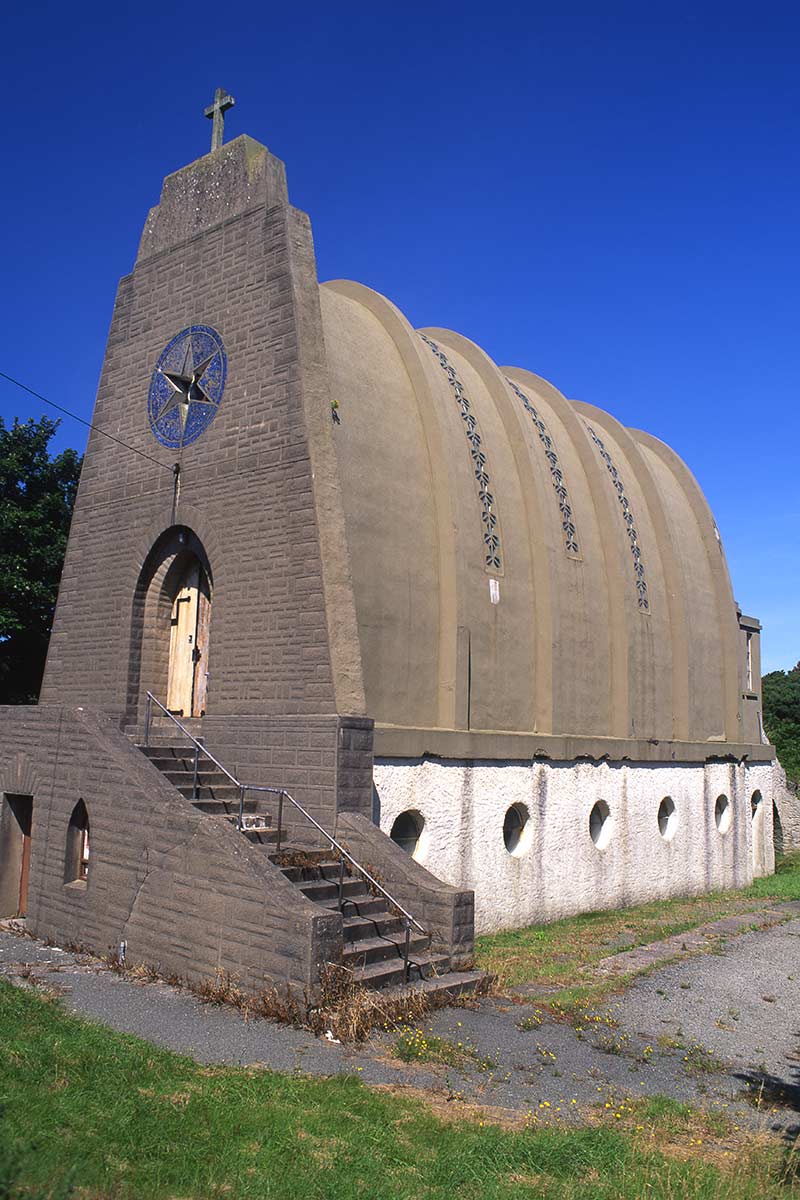
This 1930s Roman Catholic church is one of the most remarkable 20th-century buildings in Wales. As it’s in the far north of the country, relatively few will know of it, let alone have seen it, but it’s well worth stopping by to see, whether you’re exploring the north coast of Anglesey or discovering some of the most intriguing churches on Anglesey.
It is the work of Italian architect Giuseppe Rinvolucri, who had settled in North Wales in the late 1920s. He built several other churches in North Wales and the Welsh Borders, and this church in Amlwch is one of his finest works.
It’s built in what seems to be the shape of an upturned boat from reinforced concrete, with high parabolic arches. The maritime theme – reflecting Amlwch’s history – is continued with a series of low-level windows similar to portholes on a ship.
I’ve had an interest in church architecture for well over 40 years, and was staggered to find this church in such a remote corner of Wales – and was also amazed at how it isn’t much more widely known. It’s one of the most amazing 20th-century churches in Europe, well worth the detour if you’re visiting North Wales.
See Also: 30 Best Churches in Wales To Visit
Climb Mynydd Bodafon

Mynydd Bodafon, six miles southeast of Amlwch, is the highest point on ‘mainland’ Anglesey. At 178 metres (584 feet) in height it’s a short, fairly easy stroll to the area around the hill’s summits. The best time to visit is in July and August, when you would normally see purple and pink heather in bloom.
It’s an even better viewpoint than Parys Mountain, three miles to the northwest, with outstanding views over the east coast of the island and across Conwy Bay to the Great Orme and Llandudno.
It’s also a great vantage point over the patchwork of green fields of inland Anglesey, with the peaks of Snowdonia to the south.
Getting there: If driving, park in the hamlet of Penrhoslligwy and walk. If you’re relying on buses, services 32 and 63 stop at Maenaddwyn Post Office, at the southern end of Mynydd Bodafon.
Explore Porth Wen Brickworks

These 19th-century brickworks between Llanbadrig and Bull Bay are one of the most spectacular industrial sites in Wales, and if you’re visiting Amlwch to explore Parys Mountain, it is also well worth your while making the detour here.
The brickworks are located on the western side of Porth Wen, a glorious bay three miles west of Amlwch. They were built there because of the ready supply of quartzite, which is used in fire bricks, close by.
The buildings are exceptionally well preserved, with chimneys, circular kilns, a winding house, an engine house and outbuildings including remains of drying sheds.
It’s believed that brickmaking continued on the site until the 1920s, so the site was probably in operation for around 70 to 80 years.
It’s possible to visit the site, with a not-too-difficult scramble downhill from the Coast Path. There’s also a very enticing beach in Porth Wen Bay, but you’ll need a boat to access it.
Play A Round Of Golf At Bull Bay

Bull Bay Golf Club is one of the best on Anglesey, set on high ground just inland from the coast with superb views in all directions.
It’s also one of the top courses in Wales, and I visited it a few times to photograph and film it for part of the promotion of the Ryder Cup in Wales in 2010. If you’re a golfer, it’s well worth half a day of your time.
Visit Gorgeous St Eilian’s Church, Llaneilian

This delightful medieval church is two miles (3 km) east of Amlwch, proof that you never have to travel far in Anglesey to stumble upon something of interest.
Its pyramidal spire is a very rare sight in Wales, as is the 15th-century carved wooden rood screen separating the nave from the chancel of the church. Relatively few of these survived what is loosely called the ‘Reformation’ in England and Wales, which was essentially a Henry VIII-endorsed wrecking spree which destroyed centuries of priceless art across the country.
The screen at Llaneilian is especially notable because of the well-preserved memento mori painting of a skeleton with an inscription in Welsh, which translates as ‘Sin is the sting of death’.
The church is said to have been founded in the 5th century AD, when the not-so-saintly St Eilian was given some land by a local nobleman whom he had blinded for stealing his oxen. His church remains there, almost 1600 years later.
Walk The Coast Path To Point Lynas Lighthouse


Llaneilian is the starting point for a great short walk on the Anglesey Coast Path. Head north from the tiny sheltered shingle beach at Porth Eilian, along the headland to historic Porth Lynas lighthouse.
The original lighthouse was built here in 1779, an addition to a pilot station on the site 13 years later. This was at a time of increased shipping traffic in the area with the sudden growth of the Parys Mountain copper mine.
The current building replaced the original in 1835, and the lighthouse has been automated since 1989. The lighthouse keeper’s cottage is available for rental as a holiday home.
The Coast Path south of Point Lynas – as far as the vast estuary of the Afon Goch at Dulas Beach – is one of the quietest sections on Anglesey. It follows the coastline most of the way, passing clifftops, coves and caves along the way, and it’s likely you’ll just have seabirds and sheep for company. Stay on the path long enough and you’ll reach the glorious beach of Traeth yr Ora.
Discover Remote Traeth yr Ora Beach
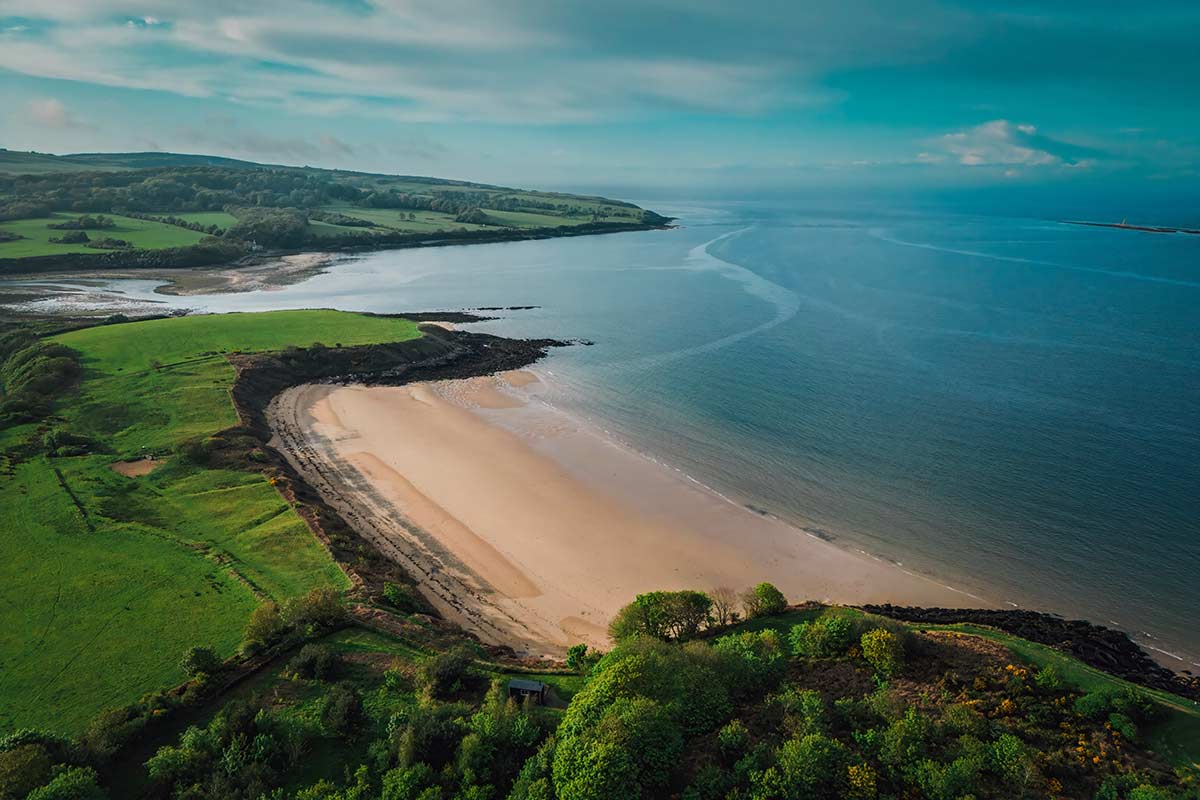
Traeth yr Ora has always been something of a locals’ favourite, a fantastic quiet beach that lacks the crowds because you have to walk around a kilometre to get there.
It’s on the northeast Anglesey coast, a few miles southeast of Amlwch, and the quickest way to get there is to park at Traeth Lligwy, head to the northern end of the beach (go left), then continue along the Coast Path for half a mile. I’ve hardly ever seen another soul there, even in summer.
One of the best hidden gems in North Wales.
Places To Visit Near Amlwch
Visit Church Bay and Swtan Heritage Museum


Church Bay – Porth Swtan – is one of the best beaches on Anglesey, a stunning west-facing sandy beach on a superb section of the Coast Path a few miles south of Carmel Head.
The beach is brilliant for families, with plenty of sand but also many rockpools for curious kids to explore when the tide is out.
The last surviving thatched cottage on Anglesey is next to the path leading down to the beach. It serves a small local history museum, restored to as kit would have been around the turn of the 20th century, earth floor and all. The residents were probably poor local farmers, but as the house had expanded, their fortunes may well have improved. A fascinating step back in time.
Explore The Beaches And Ancient Sites Around Moelfre


Moelfre, 8 miles (13 km) southeast of Amlwch, is one of the best places to visit on the east coast of Anglesey. The village has a small pebble beach in the harbour, and a mile or so north of there, Traeth Lligwy is one of the best sandy beaches on the island, with superb views to the Great Orme and Snowdonia.
There’s plenty more to see inland, including some of the most intriguing ancient sites in Wales. The 5,000-year-old Lligwy Burial Chamber is one of the most mysterious sites of its kind in the British Isles, as it’s a wonder how such an enormous capstone could have been raised onto the supporting stones, given the limited technology and resources that would have been available.
Two other sites are close by. The Din Lligwy Hut Group was built much later, most likely in the Iron Age (possibly 1stcentury BC), and many fragments of Roman artefacts – particularly items of pottery – have also been excavated there. These date from the late Roman period, the 3rd or 4th centuries AD.
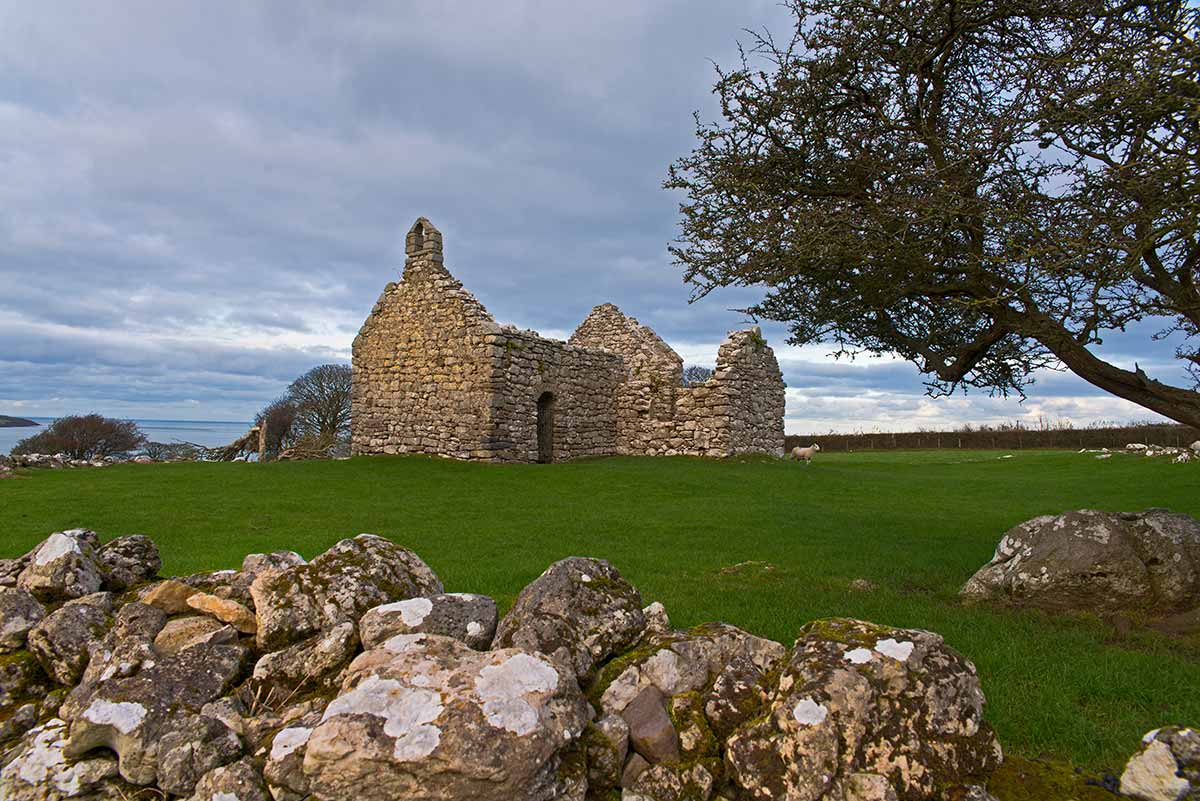
And Hen Capel Lligwy, or Lligwy Old Chapel, is a ruined church also close to Moelfre. We know that it was a medieval construction with a later vault added, but know nothing of the church’s dedication, its purpose (it’s unlikely that it was a parish church, but may have been a chapel of ease or a private chapel) or its decline.
Visit World Heritage Beaumaris Castle
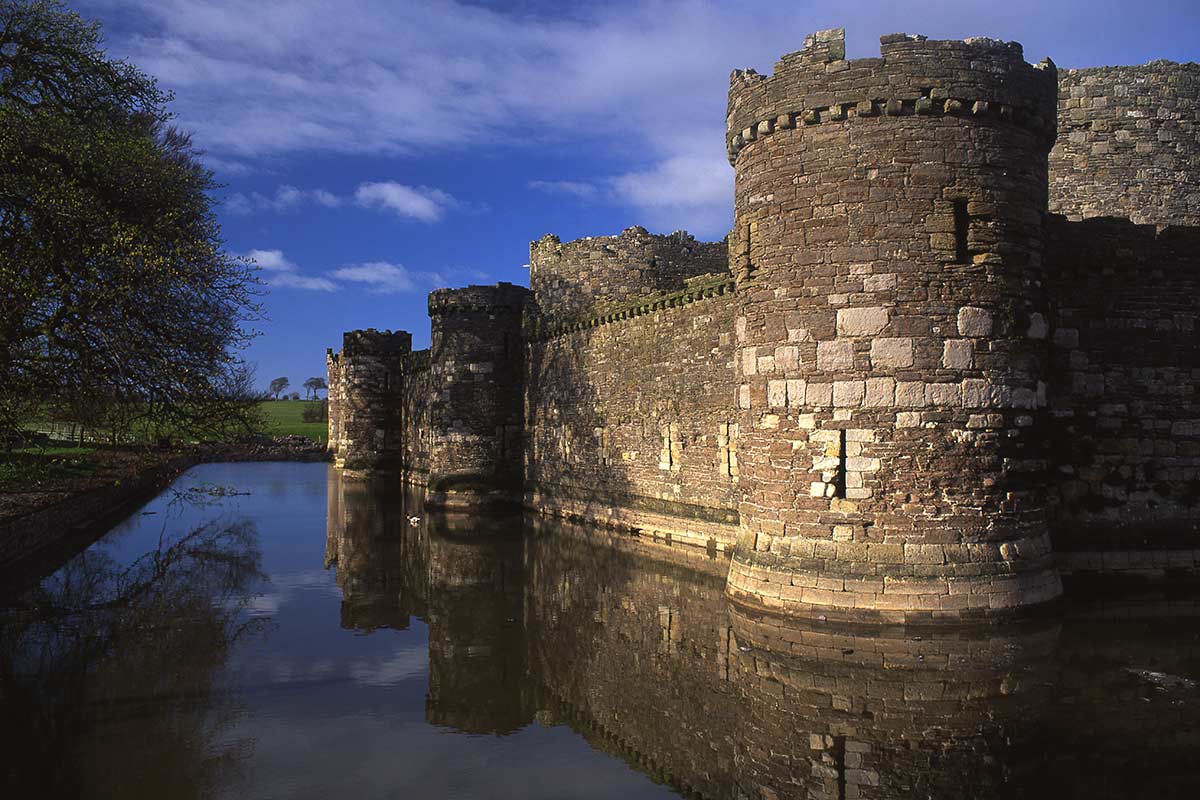
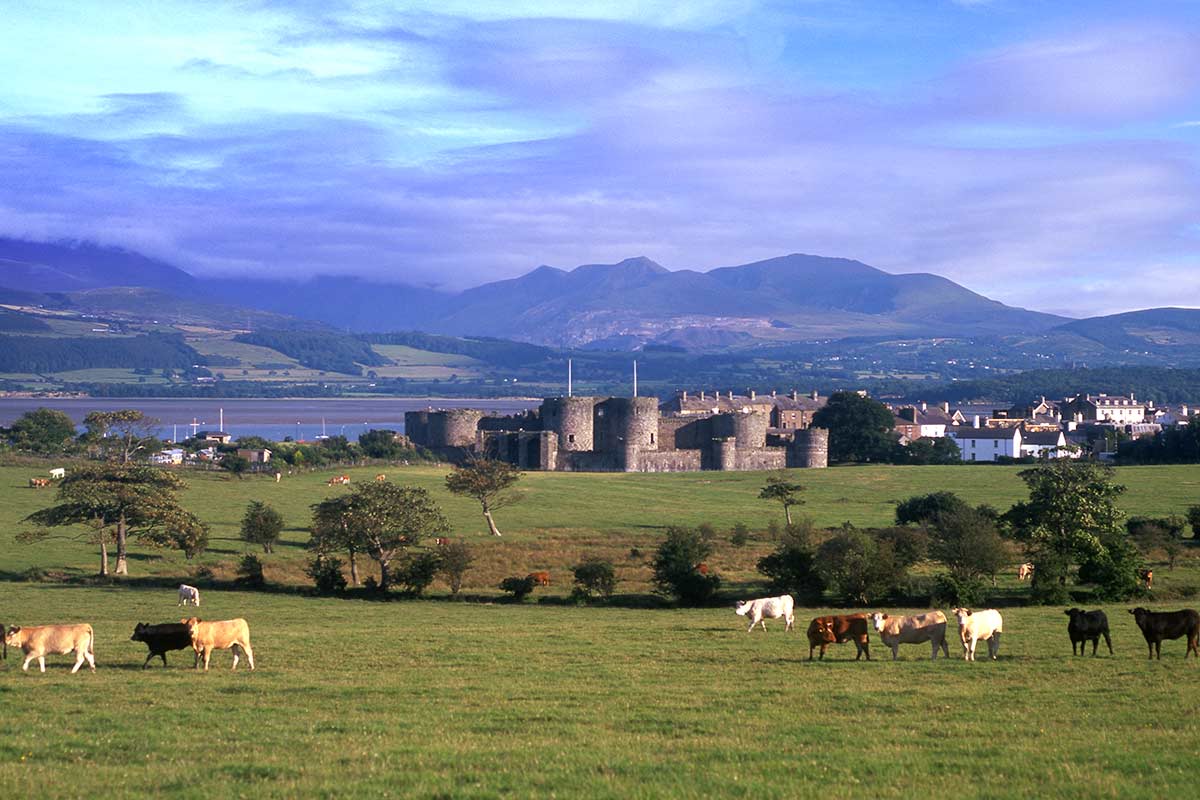
Beaumaris Castle is one of the finest Welsh castles, and one of four (along with Conwy, Caernarfon and Harlech) to constitute Wales’ first UNESCO World Heritage Site, inscribed in 1986.
It was the final component of English King Edward I’s Iron Ring of formidable fortresses, built to subdue the native and rebellious Welsh. This venture crippled him financially, and Beaumaris was never finished.
That said, Beaumaris is still considered one of the most technically advanced of all medieval castles, with a concentric design that made capturing it an exceedingly difficult and hazardous undertaking.
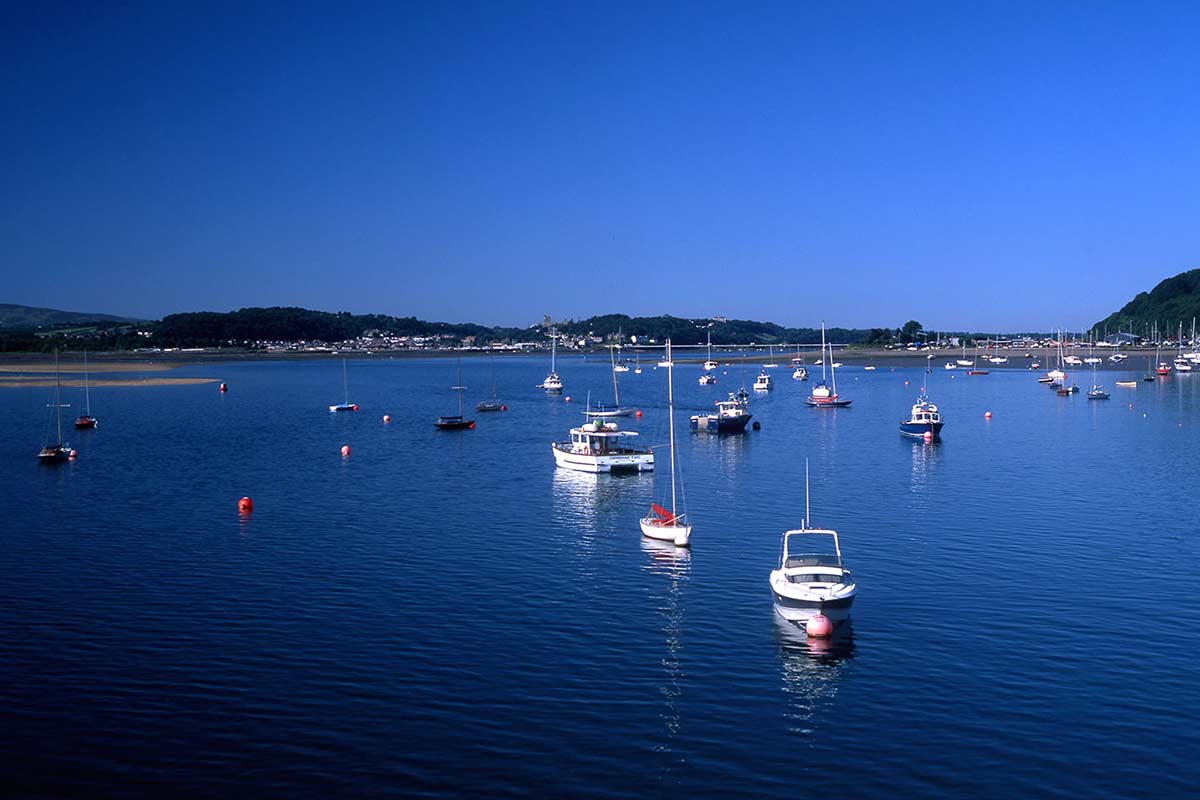
The rest of Beaumaris is a delight, with superb views across the Menai Strait to Snowdonia (Eryri), You can walk along the Pier to enjoy the view down the Menai Strait, while the High Street has several fine surviving medieval houses, including Ye Olde Bull’s Head, a 14th-century coaching inn with one of the best restaurants on Anglesey.
Visit South Stack and the Holyhead Coast


The port of Holyhead is a vital transport hub but not the most attractive town in Wales by any means. However, it’s right on the doorstep of some of the most dramatic coastline in North Wales.
Don’t miss South Stack, a reserve where seabirds nest in the cliffs every springtime, and a lighthouse on a rocky islet just offshore. There are several beaches along this stretch of coast, the best of which are rugged Porth Dafarch and nearby smooth and silky Trearddur Bay.
And further south there are some amazing coastal features, the best of which is Bwa Gwyn, a spectacular white sea arch just west of the coastal village of Rhoscolyn.
Where IS Amlwch?
Amlwch is on the north coast of the Isle of Anglesey, in the very far north of Wales.
Distances To Amlwch
Holyhead to Amlwch – 20 miles (32 km)
Beaumaris To Amlwch – 18 miles (28 km)
Bangor To Amlwch – 20 miles (32 km)
Llandudno to Amlwch – 40 miles (64 km)
Liverpool to Amlwch – 97 miles (156 miles)
Manchester to Amlwch – 116 miles (187 km)
London to Amlwch – 262 miles (422 km)
How to Get To Amlwch

Amlwch is relatively easy to reach, both by road and public transport.
If you’re driving, you can cross to Anglesey on either the A55 (Britannia Bridge) or A5 (Menai Suspension Bridge). From there, take the A5025 right-hand turn, which takes you on an anti-clockwise trip three-quarters of the way around the Anglesey countryside, passing through Amlwch before finishing near Holyhead.
There’s an alternative, slightly more direct route to Amlwch via Llangefni. Take the A5114 turn off the A55 to Llangefni, then follow the B5111 from there to Amlwch via Llanerchymedd.
If you’re travelling by public transport, take the train to Bangor. Head to the bus stop to the left of the front of the station and catch the 62 bus from there to Amlwch.
Things To Do In Amlwch – Final Thoughts

I hope that you have enjoyed this article and that it has given you some ideas on places to see in and around Amlwch. It’s somewhere you’d most likely visit on a day trip, and with several amazing places are right on its doorstep, it’s a quiet place to stay too.
For further inspiration, take a look at some of my other articles on Anglesey and North Wales:
Magical Anglesey – the Biggest Island in Wales
- Llanddwyn Island – One of the most special of all Welsh islands
- Anglesey beaches & coastline – Home to some of the best beaches in the UK
- 13 Best Churches on Anglesey To Visit
- 15 Best Things To Do In Holyhead – Anglesey’s main port and one of the main gateways to North Wales
- Best walks on Anglesey – Eight of the best Anglesey walks to help you discover more of this magnificent island.
- Lighthouses on Anglesey – Well worth seeing & great places for walks
- Best things to do on Anglesey– the largest of Welsh Islands
Castles In North Wales
- Best things to do in Conwy – A stunning UNESCO Heritage town on the edge of Snowdonia National Park
- Best Things To Do In Caernarfon – one of the most imposing medieval castles in the world, and a great base for exploring Snowdonia and the North Wales coast
- 22 Best Things To Do In Harlech – World Heritage Castle, a world-class beach and a superb base for exploring southern Snowdonia and beyond
- 15 Best Things To Do In Beaumaris – Anglesey’s World Heritage Castle and beautiful seaside town
- 12 Best Things To Do In Criccieth – step back to yesteryear in this gorgeous seaside town on the Llŷn Peninsula
Best Places in North Wales
- Best beaches in North Wales
- Best castles in North Wales
- Llŷn Peninsula beaches– The Llŷn Peninsula beaches are among the best in Wales
- Best Things To Do in Llandudno – the Queen of Welsh seaside resorts
- Betws-y-Coed– A picturesque Welsh mountain town in the spectacular Snowdonia National Park
- Portmeirion – A gorgeous Italianate village on an estuary on the North Wales coast
- Barmouth Beach – A wonderful Welsh seaside resort
- Welsh Slate Landscape – UNESCO World Heritage Site North West Wales
- Things To Do In Bangor, Wales – the loveliest pier in Wales and a wealth of World Heritage slate history
More Beautiful Places to Visit in Wales
- Landscapes in Wales – Breathtaking landscapes in Wales you must see
- Rivers in Wales – Some of the most beautiful scenery in Wales
- Lakes in Wales – Where you find some of the best views in Wales
- Landmarks in Wales – famous places in Wales to Explore