


Things To Do In Holyhead
Some of the wildest coastal scenery in Wales, superb beaches and coastal walks and a wealth of ancient Celtic and Roman sites. These are a few of the best things to do in Holyhead, Wales’ main departure port for ferries to Ireland.
Holyhead is somewhere many visitors simply pass through, either waiting for the ferry to Dublin or heading straight out of the port for destinations elsewhere. Holyhead isn’t the most attractive town you’ll visit, but the coastline around it is magnificent, and if you have time to spare it’s well worth seeing some of this for yourself, even getting up close on it and even in it.
In this guide I’ll show you the best places to visit in and around Holyhead, and give you ideas for places to visit nearby on Holy Iland, the rest of Anglesey and mainland North Wales. I’ll also suggest a few tour and activity experiences and places to stay in and around the town.
I hope that you find it useful. Enjoy.
Where To Stay In Holyhead – And Nearby

Trearddur Bay Hotel – one of the premier seaside hotels in Wales, overlooking one of the best beaches in North Wales
The Haven – one of the best options in Holyhead town, great harbourfront setting and ideal location for getting around the area
Orient B&B – excellent B&B just up the hill from the port, with an (also excellent) in-house Vietnamese restaurant
Seacroft – highly-rated restaurant with rooms also in nearby Trearddur Bay
South Stack Lighthouse


South Stack (Ynys Lawd in Welsh) is the best place to visit in Holyhead. It’s a two-mile drive, taxi ride or walk from the town centre, up past a series of ancient sites to a stunning series of cliffs and a lighthouse that’s one of the most famous landmarks in Wales.
The early 19th-century lighthouse was built in 1809 to warn shipping away from the 250-feet cliffs on this magnificent but treacherous stretch of coast. You can visit the lighthouse between mid-March and mid-September, although they have special opening days (weather permitting) before and after these dates – check out their website for up-to-date information.
It’s a fair walk down to the lighthouse from the clifftop – around 400 steps – so it’s quite an uphill return, so be prepared! Admission to the lighthouse is £10 for adults and £5 for children. You also need to pay at the car parks at the top of the hill, and the attendants will be able to advise you on whether or not the tours are fully booked.
Surprisingly, there are no buses from Holyhead to South Stack. This is very disappointing, a result of years of austerity measures forcing councils to cut back on the services that are their very raison d’être.
The height of summer – late July and August – is the best time to visit the South Stack area because this is when the pink and purple heather is usually in bloom (climate-change-induced heatwaves permitting).
South Stack RSPB Reserve


The RSPB (Royal Society for the Protection of Birds) Reserve at South Stack is one of the best in Wales.
The views from the clifftops are breathtaking. The cliffs are a major nesting site in springtime (May to early July) for razorbills, guillemots and puffins. If you visit at this time, expect quite a cacophony!
And although I’ve only recently become a dedicated birdwatcher (thanks to my son) I’ve spotted choughs circling the clifftops almost every time I’ve visited South Stack going back around 30 years. These beautiful black birds with distinctive red beaks, legs and feet are permanent residents, and there’s a very good chance that you’ll see them when you visit too.
The white, castellated Ellin’s Tower was built in the 19th century, and now hosts small exhibitions on the region’s birdlife.
The Reserve is free to visit – you just pay to park your car. There’s also a café on site.
Climb Holyhead Mountain and its Roman Fort


Dramatic Holyhead Mountain is the highest point on Anglesey and Holy Island, a 720-foot hill (technically!) with two precipitously steep sides rising up out of the Irish Sea.
Its Welsh name is Mynydd y Tŵr, the mountain of the Tower, named after the late Roman watchtower (probably built at the same time as the Fort near the Harbour). The foundations of this remain, as do the earlier remnants of a Celtic Iron Age hillfort built on the site.
The Mountain is well worth the short climb for its phenomenal views, especially over Holyhead Harbour and thee coastline of ‘mainland’ Anglesey just across the bay.
Getting there: You can access the mountain either from Holyhead town or the car parks at South Stack.
Relax on Trearddur Bay Beach

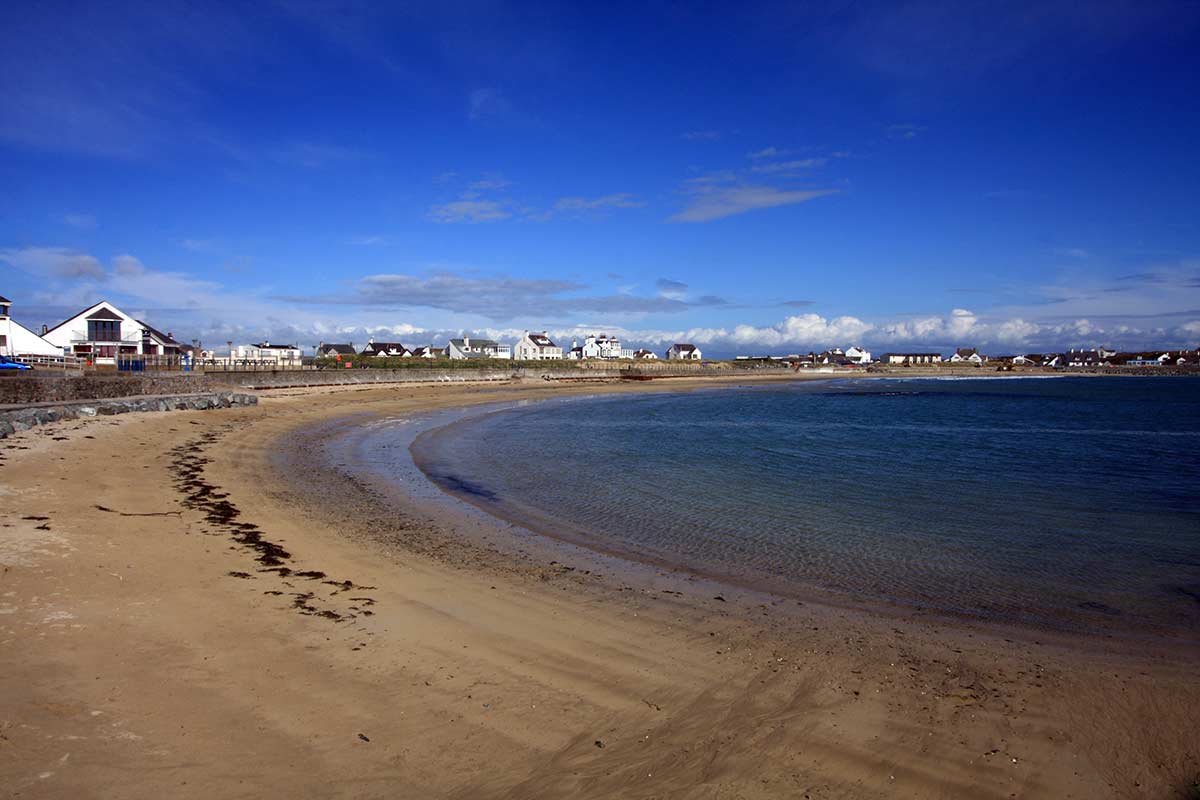
Trearddur Bay is the best family-friendly beach near Holyhead. It’s a beautiful curve of gentle golden sand, partly protected from the prevailing winds by the rocky reefs offshore, and a departure point for sailing trips along the coast.
Porth Diana is a smaller beach just to the south of the main beach, separated from it by a rocky headland.
I’ve never seen Trearddur Bay beach busy, even at the height of summer, but it has everything you could want. Trearddur Bay Hotel, overlooking the beach, is one of the best places to stay in Holyhead and the surrounding area, and it also has a restaurant and pub. There’s a fish and chip shop and an Indian restaurant just back from the beach, and plenty more places to stay.
Getting there: Driving is a definite advantage in these parts, but the regular number 4 bus to Holyhead keeps Trearddur well connected.
St Cybi’s Church and Roman Fort
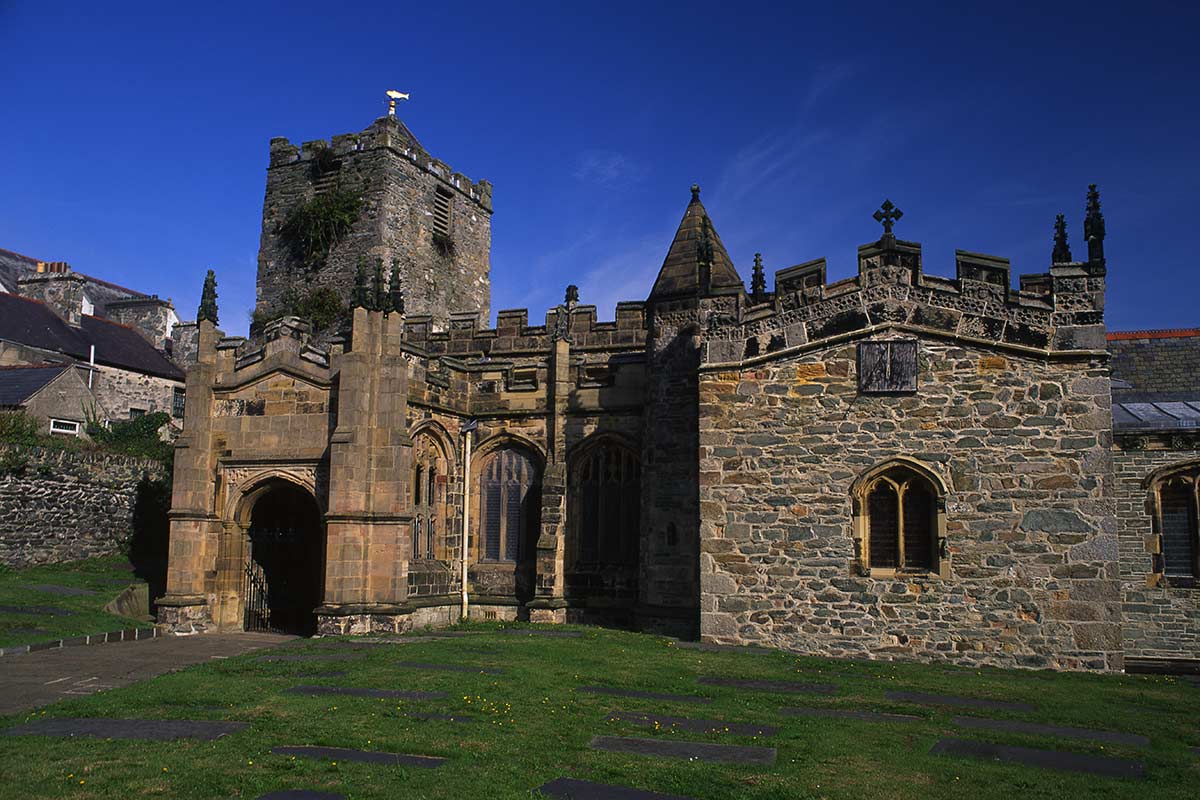
St Cybi’s Church is one of the most notable churches on Anglesey, founded by one of the island’s – and Wales’ – most important Celtic saints.
Cybi (pronounced ‘cubby’) is believed to be Cornish, and preferred to preach the Christian faith rather than assume the Cornish throne. Tahis vocation took him across the Bristol Channel to Wales, eventually reaching Anglesey where he established a church within the walls of the 4th-century AD Roman fort built at this strategically important harbour.
There is no trace of the original church, and the present building was begun in the 13th century. However, most of it is in the later Perpendicular style, the last version of Gothic architecture in late medieval Britain.
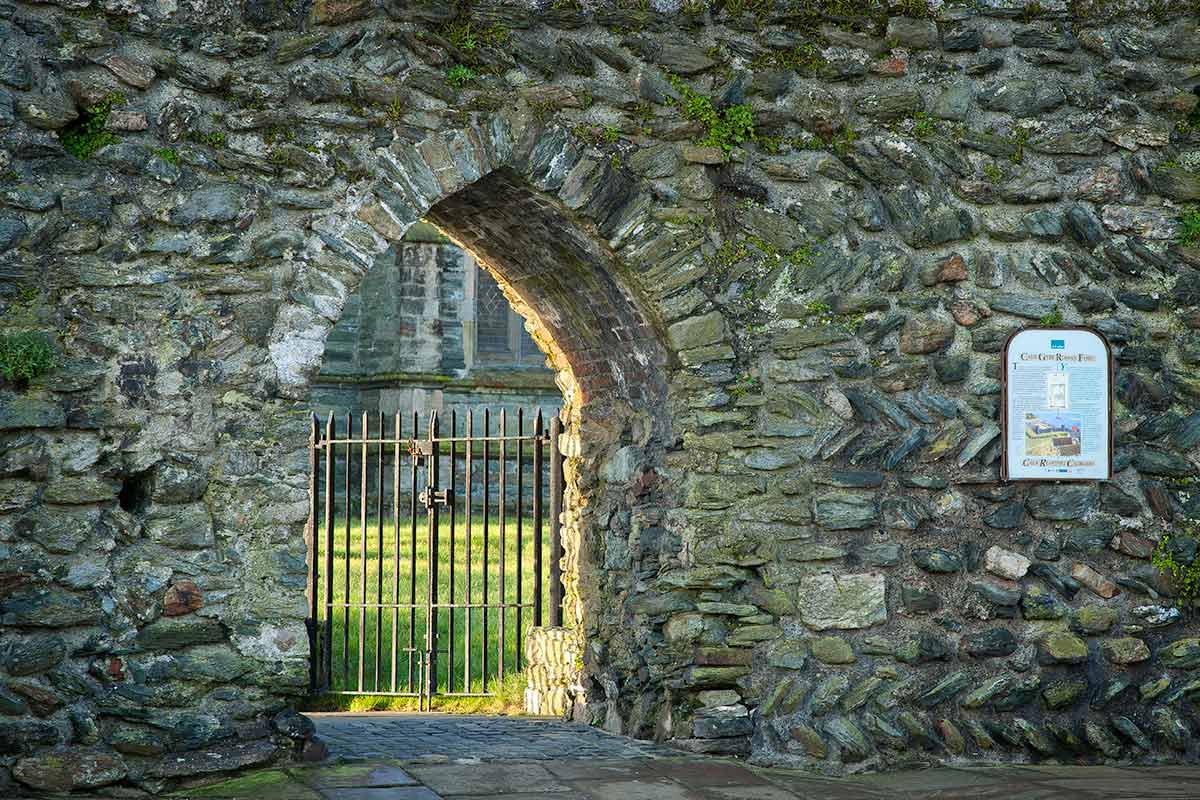
The Roman Fort, which was built adjacent to the former shoreline, is exceptionally well preserved, which is partly down to it being in use with the church within its grounds. Indeed, the church owns part of it.
Celtic Gateway Bridge

There aren’t many things to do in Holyhead town centre, and aside from the church, Roman fort and port the main landmark is the Celtic Gateway Bridge which links the town with the ferry terminal.
The striking stainless steel bridge is 160 metres long, and crosses the railway and A5154 road. Apart from the directness of the route the main reason to walk across the bridge is the view of the harbour that it offers.
And as the image above shows, it also looks rather fine at dusk and night too.
Porth Dafarch Beach

Porth Dafarch Beach is a beauty, a narrow sandy cove where you could easily while away a few hours with a good book and enjoying the fresh sea air.
Or you could do something a little more active. It attracts a varied watersports crowd, from surfers and windsurfers to sailors and jet-skiers. You can also go canoeing, kayaking and even coasteering from there.
Getting there: Drive – the nearest bus stop is a mile away in Trearddur Bay.
Go Sea Kayaking At Rhoscolyn

The coastline around Rhoscolyn is up there with the best in Wales, with long sandy beaches giving way to rocky inlets and one of the most beautiful sea arches in Wales, even Europe. And sea kayaking is a wonderful way to experience it.
This Rhoscolyn sea kayaking tour takes you right up close to this superb stretch of coast, taking you to hidden coves, sea caves and, best of all, beneath Bwa Gwyn, a stunning white sea arch that is one of the best hidden gems in Wales.
Holy Island Coastal Walk


The walk along the west coast of Holy Island (Ynys Gybi) is stupendous. I recommend going the whole hog, making your way down to Rhoscolyn and walking the length of the island to North Stack and the rest of the way to Holyhead port.
Even living in Australia, three miles (5 km) from the coastline of New South Wales and some of the outstanding beaches and coastal walks on the planet, I still yearn for walks like this.
Start at either Traeth Llydan (Silver Bay) or Borth Wen beaches on the south coast of the island, following the Wales Coast Path signs from there. You’ll soon reach St Gwenfaen’s Well, a holy well presumed to have been built there in the Middle Ages. St Gwenfaen was a local saint from the Celtic period (around the 6th century AD) with a reputation for helping to cure mental illness – two white quartz pebbles placed in the holy water is said to help the process along!
Continue north for a few hundred metres when you’ll encounter Bwa Gwyn (White Arch), which is also on the sea kayaking route mentioned in the previous section, and its neighbour, Bwa Du (Black Arch), which is also well worth a look.
The Path then passes a few coves and caravan arks, eventually reaching a gorgeous little beach at Porth Diana before reaching the wonderful curve of golden sand that is Trearddur Bay.

Beyond Trearddur, more tiny coves await, including the exquisite Porth y Post, before you reach the slightly larger Porth Dafarch and, within a mile, the South Stack RSPB reserve. From there, the Path continues along dramatic clifftops to North Stack, site of a former fog station, on to the old quarries of the Breakwater Country Park, and back into Holyhead.
Discover Some of Holyhead’s Ancient Sites
Anglesey has the biggest concentration of ancient sites in Wales, and you’ll find several of these round Holyhead and Holy Island. They are all free to visit at any time of day, and only closed over the Christmas period (24-26th December) and New Year’s Day (1st January).
Trefignath Burial Chamber

This is one of the most impressive ancient sites on Anglesey, also on the outskirts of Holyhead.
It’s a series of three burial chambers, believed to date back as far as 3000 BC, in the Neolithic (Stone Age) period. It’s possible that the second and third chambers may have been added at later dates. Little is known for certain, as the chambers were in a ruinous state before they were fully excavated.
Getting there: The burial chamber is just off the A55 on the approach to Holyhead. Take the turn for the Holyhead Premier Inn, then left at the roundabout outside the hotel. Trefignath is a short distance further away on the left. The road continues from there to Trearddur Bay.
Holyhead Mountain Hut Circles

This series of stone foundations of around ten circular huts believed to date from the Iron Age, perhaps around 1000 BC. Some artefacts discovered there, including tools and fragments of pottery, are believed to be even older, perhaps late Bronze Age (around 1500 BC).
The hut circles are the easiest site to visit as they are across the road from the lower South Stack car park operated by the RSPB Reserve.
In Welsh, they are known as Cytiau’r Gwyddelod, the Irishmen’s Huts. Some would have been homes, others possibly used for storage.
Penrhosfeilw Standing Stones
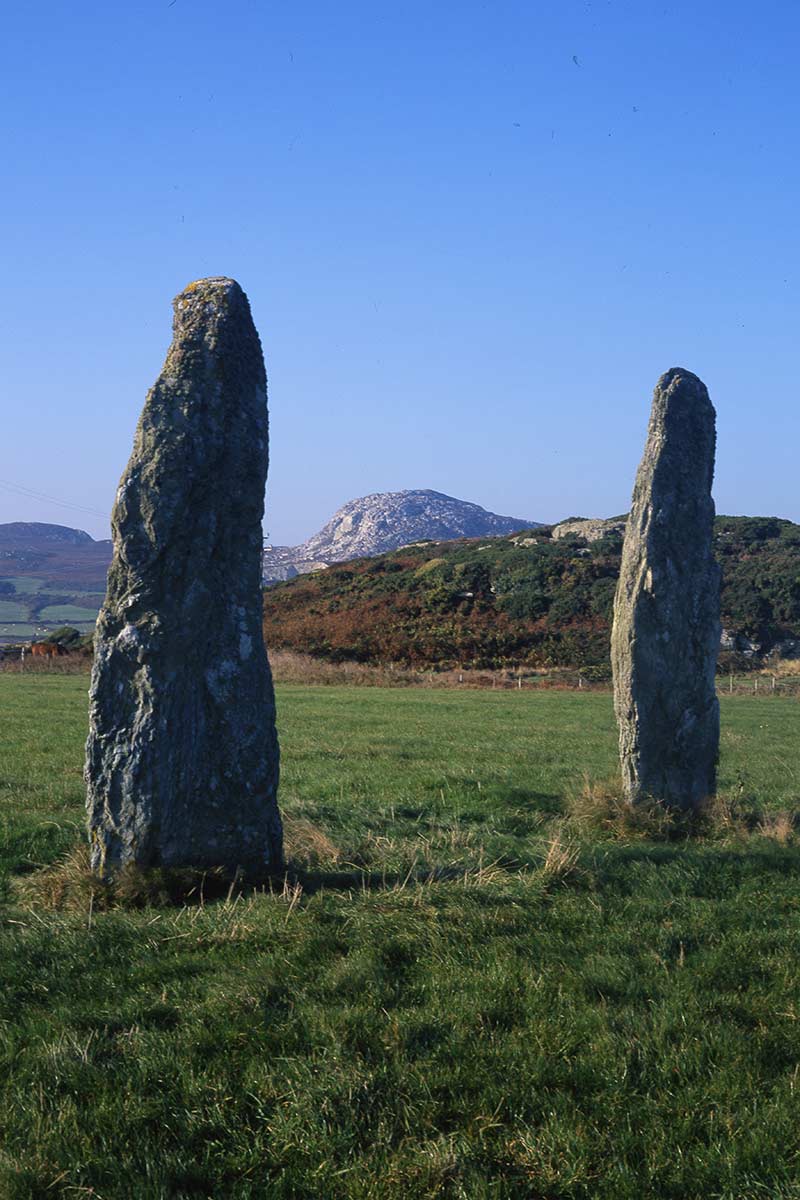
These two standing stones two miles southwest of Holyhead, and close to Porth Dafarch beach, have always perplexed historians. They are believed to date from 2,000 – 1,500 BC, but we don’t have any idea what their function or purpose was.
They are of similar height, around 3 metres (10 feet) and they’re around 2 metres apart. A single standing stone would sometimes signify a waymarker post, but a pair? One of those many ancient mysteries that you’ll find around Anglesey.
Getting there: The standing stones are off Plas Road, the turn-off from the coast road just after Blackthorn Farm if you’re approaching from Trearddur Bay and Porth Dafarch beaches.
Catch A Ferry To Ireland

The ferry connection to Dublin (Dun Laoighaire) is the reason most visitors pass through Holyhead, and many people make the journey across the Irish Sea on a day trip or longer.
Two operators – Irish Ferries and Stena Line – run the services – which take between 2 hours 15 minutes and 3 hours 30 minutes each way.
Around Holyhead
Surfing At Rhosneigr
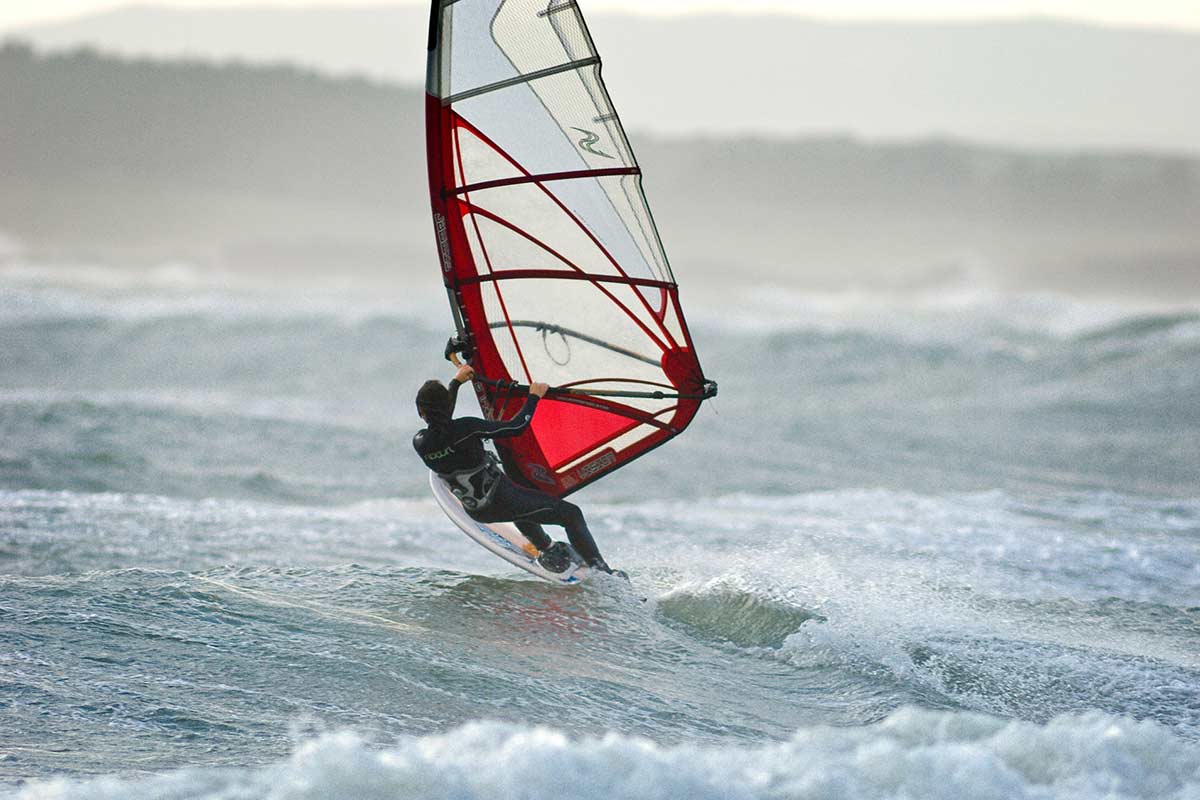
Rhosneigr, about 2 miles south of Holyhead on Anglesey’s west coast, is the island’s watersports capital.
There are two huge beaches – Traeth Crigyll (to the north and west of the village) and Traeth Llydan (to the southeast). Traeth Llydan tends to be the better one for surfing and windsurfing, partly as it faces due southwest and gets the best of the prevailing winds from that direction.
Church Bay

One of the best Anglesey beaches, Church Bay (Porth Swtan) is on the northwest coast on the main part of the island. This area tends to be fairly quiet in comparison to the resort beaches further south because it’s quite remote, and only accessible by car.
The beach is a real gem, a few hundred metres of golden sands backed by cliffs, with plenty of rock outcrops and rockpools to explore around the shoreline.
If you happen to be there between Thursday and Sundays in the spring and summer season, you’ll find the small Swtan Museum open. It’s a rural heritage museum in the only surviving thatched cottage on Anglesey, and well worth a brief look.
The coastal hike north to Carmel Head and onto Cemlyn Bay is fantastic, although public transport in the area is scant, with the nearest bus stop two miles away in Tregele, where the 61 Amlwch to Holyhead and 562 Amlwch to Llanfachraeth services stop.
Hike Anglesey’s Spectacular North Coast


My nomination for the best of all Anglesey walks is along the north coast, between Cemaes and Bull Bay, although you could also start at Llanbadrig Church two miles east of Cemaes.
This is the nearest Anglesey has to some of the legendary ‘big dipper’ coastal walks in Pembrokeshire, climbing high to clifftops, followed by steep descents, more climbs and more downward sections.
This walk takes in the lovely clifftop medieval church of Llanbadrig, which the Dalai Lama describes as the most peaceful place he had ever visited. It continues past the ruined china clay works at Porth Llanlleiana, and within a mile you reach the spectacularly sited Porth Wen Brickworks, on a rocky bay with a lovely beach that’s very difficult to access.
The Path reaches Bull Bay (Porth Llechog), from where you can catch buses to Amlwch, Menai Bridge and Bangor, or Holyhead.
Visit World Heritage Beaumaris Castle

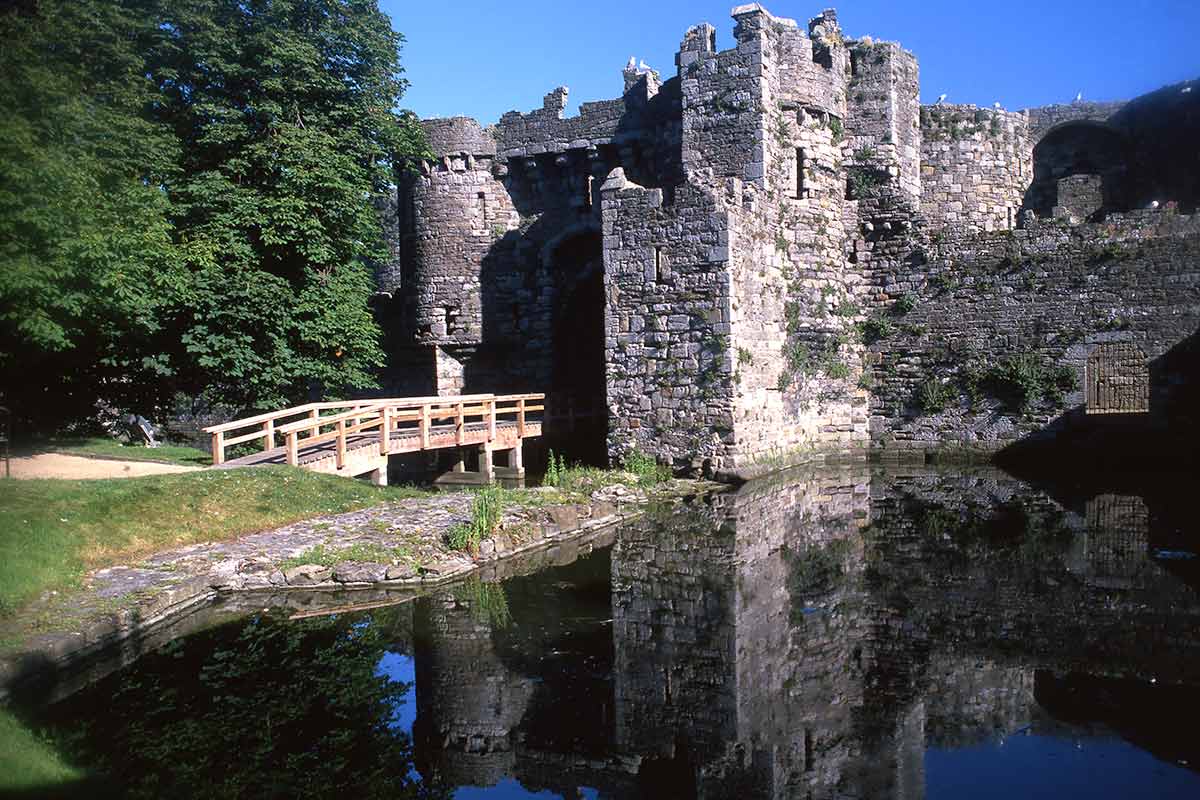
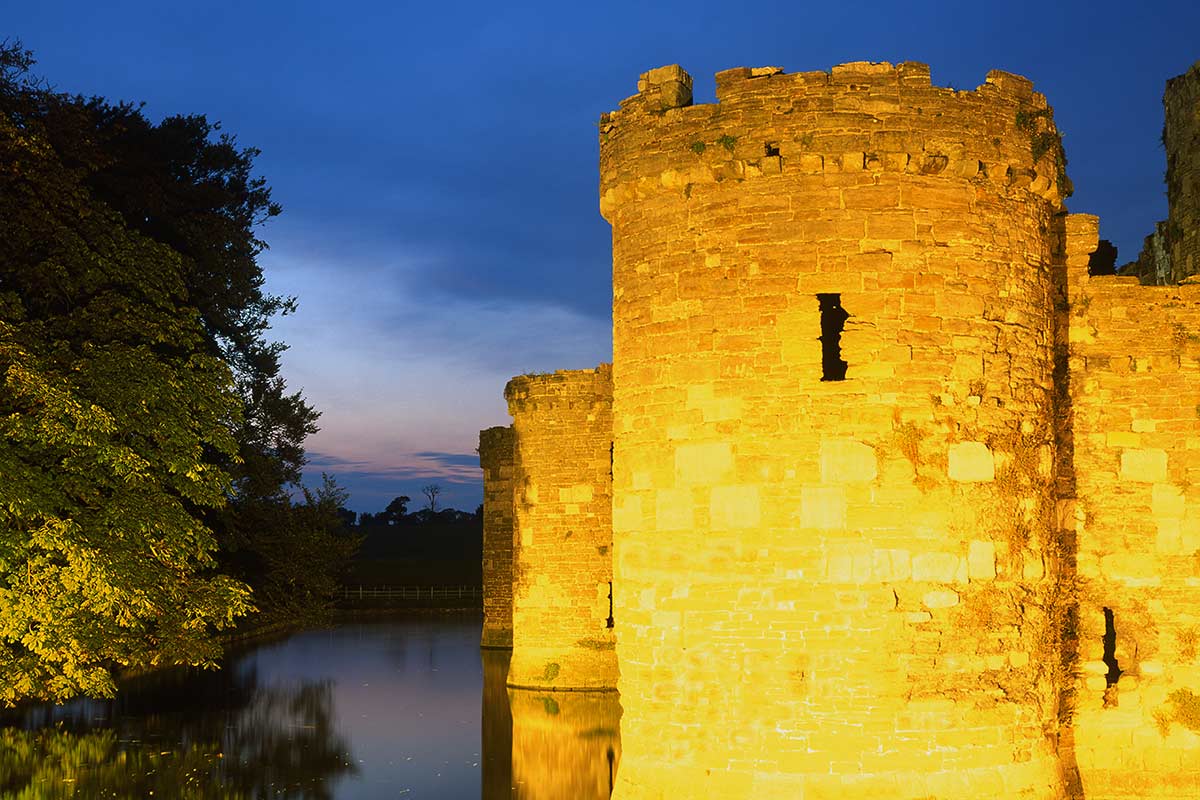
Beaumaris Castle is one of the finest castles in North Wales, and one of four that comprise Wales’ first World Heritage Site, Edward I’s Castles and Walled Towns in Gwynedd.
It was the last component in English King Edward I’s Iron Ring of fortresses meant to subdue the native Welsh, whom he had defeated in 1282. Beaumaris Castle was built – like the other three Welsh World Heritage Castles – by James of St George, the greatest military architect of his day.
However, Beaumaris Castle was never finished. These Castles, and Edward’s other major campaign in Scotland, proved to be a huge drain on Edward’s finances. Beaumaris was perhaps the most advanced of all Edward’s castles, built to a concentric plan with an exterior moat, and this is why it has long attracted so many castle connoisseurs.
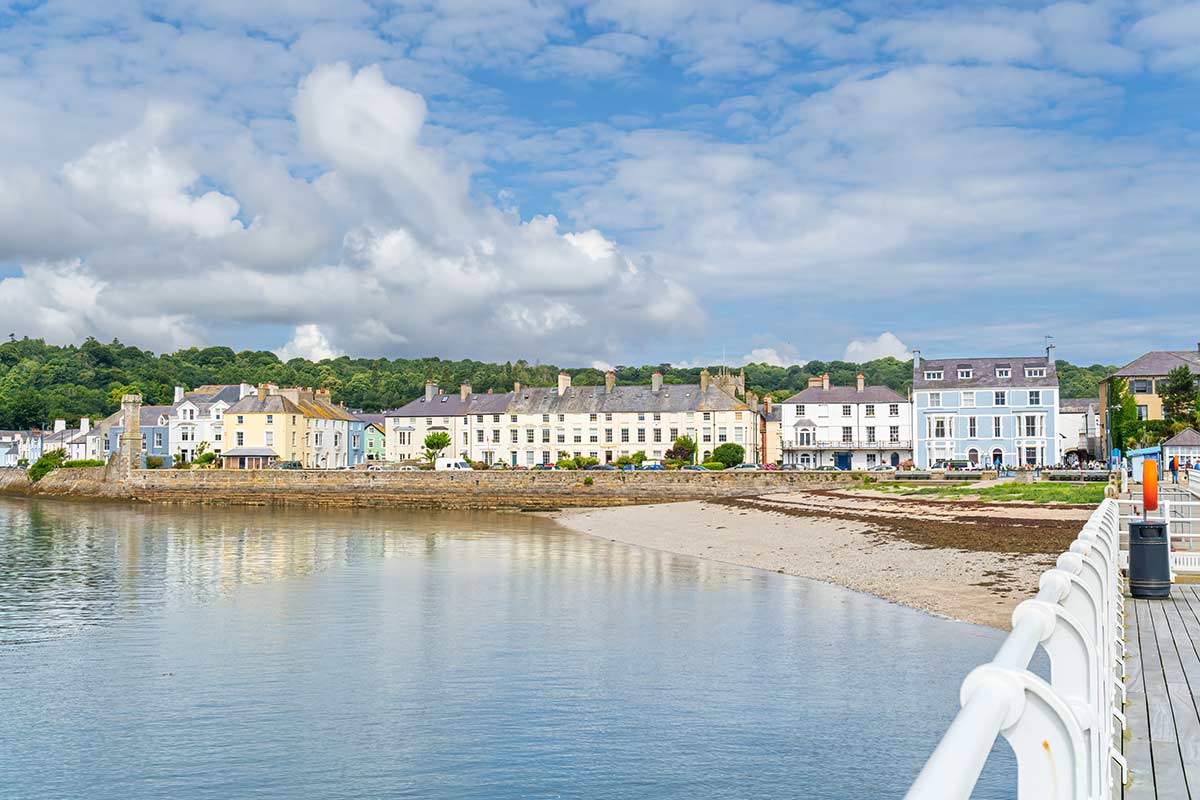
The town of Beaumaris is also a beauty, with several other medieval buildings, stunning views across the Menai Strait to Snowdonia, and a wonderful pier where you can sit with a tasty ice cream and savour them.
See Also: 15 Best Things To Do In Beaumaris, Wales
Hike To Stunning Llanddwyn Island


Llanddwyn Island (Ynys Llanddwyn in Welsh) is one of the most beautiful places in Wales, somewhere I’d tell anyone visiting the country for the first time to put near the very top of their Wales bucket list.
Llanddwyn is a tidal island at the end of one of the most beautiful beaches in North Wales, the long golden sweep of Newborough Beach. It’s accessible most of the time, except an hour either side of high tide, and the mile-long walk along its length takes you to two sublime beaches, each overlooked by a lighthouse, and unforgettable views south to the peaks of the Llŷn Peninsula.
The island is named after Santes Dwynwen, the Welsh patron saint of lovers, who lived as a hermit on the island after being thwarted in love. You can see the remains of the medieval chapel dedicated to her just after you arrive on the island. Her feast day is 25th January.
Getting there: You need a car for this one. The Newborough beach car park is around three miles from the nearest village (Newborough) , and it’s a further two-mile (3 km) walk along the sands from there to the Island.
See Thomas Telford’s Stunning Menai Suspension Bridge
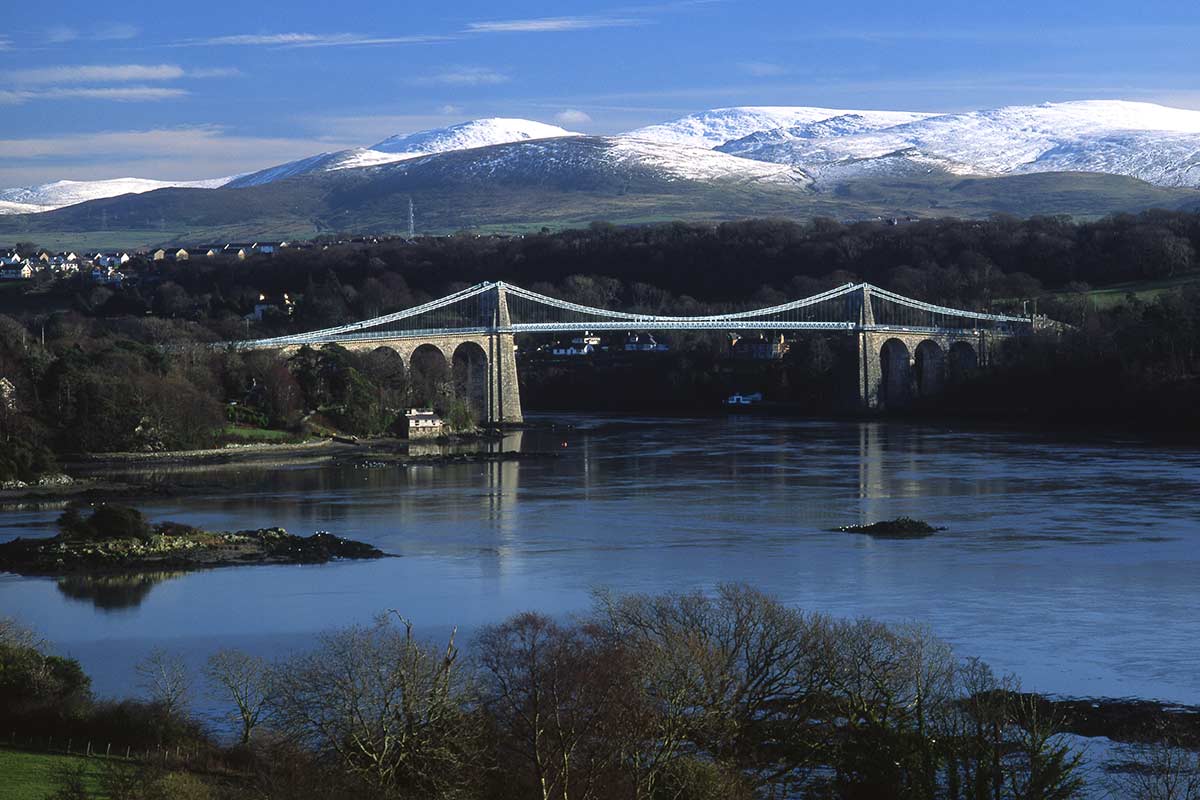
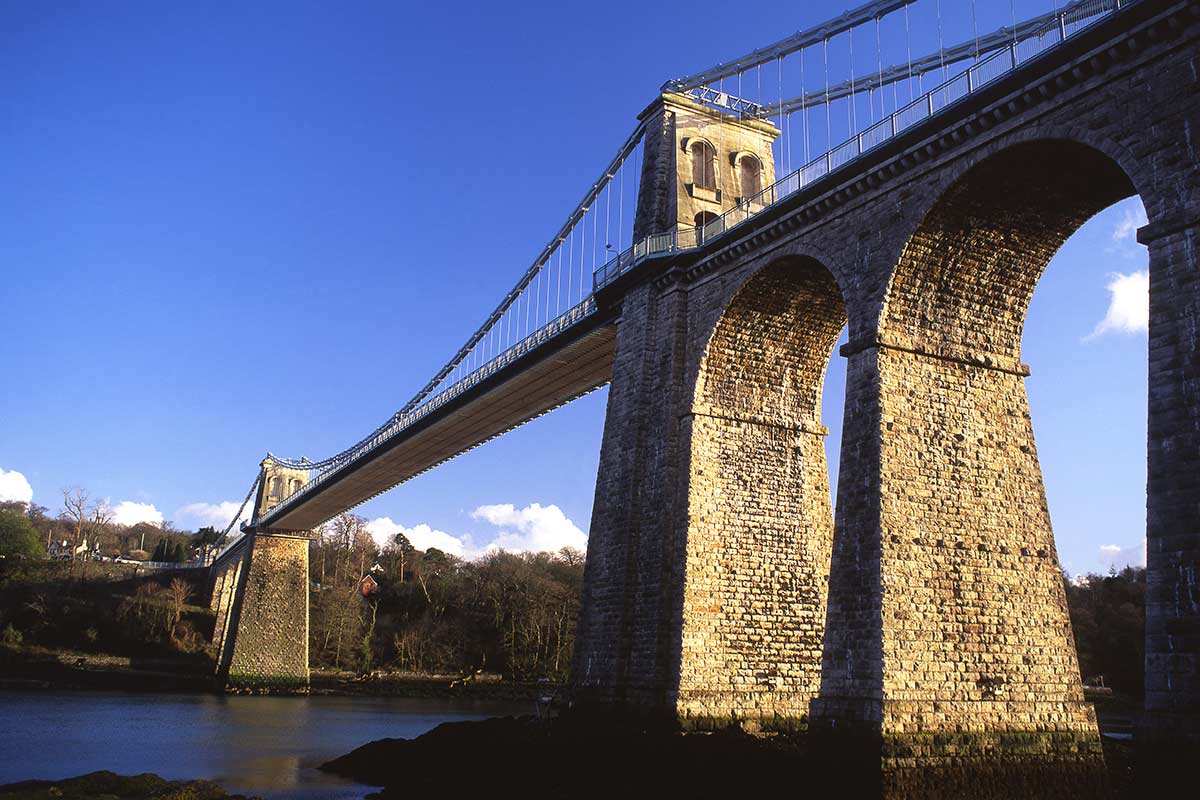
Thomas Telford’s Menai Suspension Bridge was the final component in his mammoth A5 road from London to Holyhead. It was opened in 1826, and provided the first permanent link between mainland North Wales and the Isle of Anglesey.
It has a beautiful setting, especially as it’s in the shadow of the ridges of the Carneddau range of Eryri (Snowdonia). It’s the highlight of an A5 road trip across North Wales, and the best vantage point is the large viewing area just off the A5 road between the villages of Menai Bridge and Llanfair PG.
Things To Do In Holyhead – Final Thoughts

I hope that you have enjoyed this article and that it has given you some ideas on places to see in and around Holyhead. The town itself may not be the most enchanting place in Wales, but many amazing places are right on its doorstep, and well worth seeking out, whether you’re heading to or from Ireland.
For further inspiration, take a look at some of my other articles on Anglesey and North Wales:
Magical Anglesey – the Biggest Island in Wales
- Llanddwyn Island – One of the most special of all Welsh islands
- Anglesey beaches & coastline – Home to some of the best beaches in the UK
- 13 Best Churches on Anglesey To Visit
- Best walks on Anglesey – Eight of the best Anglesey walks to help you discover more of this magnificent island.
- Things To Do In Amlwch – the stunning Parys Mountain copper mine and magnificent north Anglesey coastline
- Lighthouses on Anglesey – Well worth seeing & great places for walks
- Best things to do on Anglesey – the largest of Welsh Islands
Castles In North Wales
- Best things to do in Conwy – A stunning UNESCO Heritage town on the edge of Snowdonia National Park
- Best Things To Do In Caernarfon – one of the most imposing medieval castles in the world, and a great base for exploring Snowdonia and the North Wales coast
- 22 Best Things To Do In Harlech – World Heritage Castle, a world-class beach and a superb base for exploring southern Snowdonia and beyond
- 15 Best Things To Do In Beaumaris – Anglesey’s World Heritage Castle and beautiful seaside town
- 12 Best Things To Do In Criccieth – step back to yesteryear in this gorgeous seaside town on the Llŷn Peninsula
Best Places in North Wales
- Best beaches in North Wales
- Best castles in North Wales
- Llŷn Peninsula beaches – The Llŷn Peninsula beaches are among the best in Wales
- Best Things To Do in Llandudno – the Queen of Welsh seaside resorts
- Betws-y-Coed – A picturesque Welsh mountain town in the spectacular Snowdonia National Park
- Portmeirion – A gorgeous Italianate village on an estuary on the North Wales coast
- Barmouth Beach – A wonderful Welsh seaside resort
- Welsh Slate Landscape – UNESCO World Heritage Site North West Wales
- Things To Do In Bangor, Wales – the loveliest pier in Wales and a wealth of World Heritage slate history
More Beautiful Places to Visit in Wales
- Landscapes in Wales – Breathtaking landscapes in Wales you must see
- Rivers in Wales – Some of the most beautiful scenery in Wales
- Lakes in Wales – Where you find some of the best views in Wales
- Landmarks in Wales – famous places in Wales to Explore