


From tiny Byzantine chapels to grand Venetian monasteries, there are many extraordinary churches in Crete to discover, and this article shows you some of the very best of them.
The churches and monasteries across Crete are a huge part of the island’s identity, culture and history. As well as being places of worship they have also been places of resistance to occupation, first under the Ottoman Empire (for 250 years) and then Nazi Germany during World War Two.
You’ll find that many churches in Crete aren’t open for visits, but all the churches I’ve included in this article definitely are open, at least during the tourist season. Some are free to visit, and you need to buy tickets to visit the others.
You’ll also chance upon many more churches around Crete yourself, including little whitewashed seaside chapels, other secluded monasteries, so many treasures along the way. Please feel free to tell me of any other wonderful Cretan churches I may have missed.
In the meantime, I hope you find this guide helpful. Enjoy!
Dress Code For Visiting Churches In Crete
People are expected to dress respectably if visiting churches in Greece. For men, this generally means that you can wear a t-shirt and shorts. For women, expectations are different – they are asked to cover shoulders and legs above and including the knees.
The simple solution – offered at some churches with more visitors – is to bring a large wraparound silk or cotton scarf or a sarong to cover up where required. I have seen some people react angrily to tourists showing up dressed skimpily (in swimsuits and flip-flops!) at churches so a little planning avoids any of this.
Arkadi Monastery

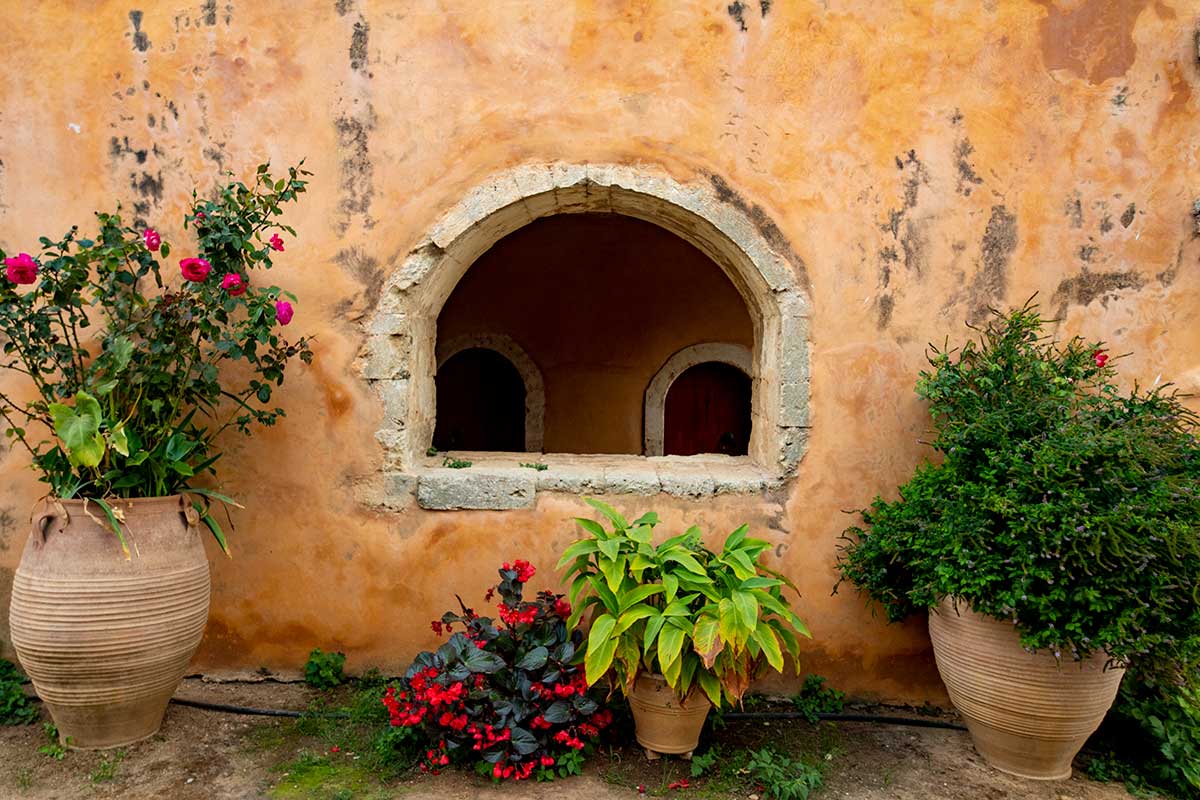
Nobody knows the foundation date of Arkadi Monastery, but we do know that the honey-coloured Venetian Renaissance-style church was built in the second half of the 16th century. Arkadi was for centuries one of the wealthiest and most prominent monasteries in Crete, and it became the best-known worldwide following the tragic events there in 1866.
The Church is divided into two naves – the north nave is dedicated to the Transfiguration of Christ, and the south nave to St Constantine and St Helen. Many of the treasures held inside the church have long since been lost during repeated attacks on the Monastery – one of the reasons it has been surrounded by fortified walls for centuries.
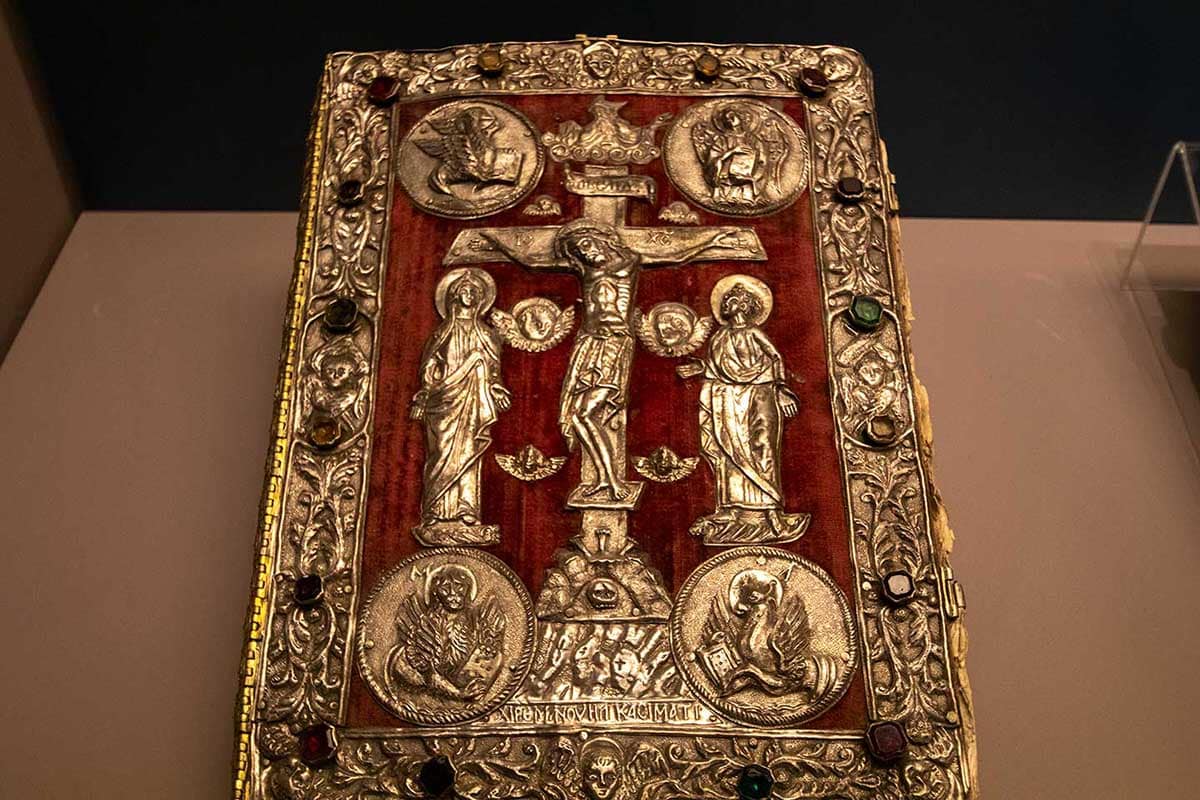
You can see some of what has been salvaged in the small Museum, including several icons and the Bible pictured. The Museum also tells the story of the massacre at Arkadi in November 1866, at the beginning of the Cretan Revolt against Ottoman Turkish rule.
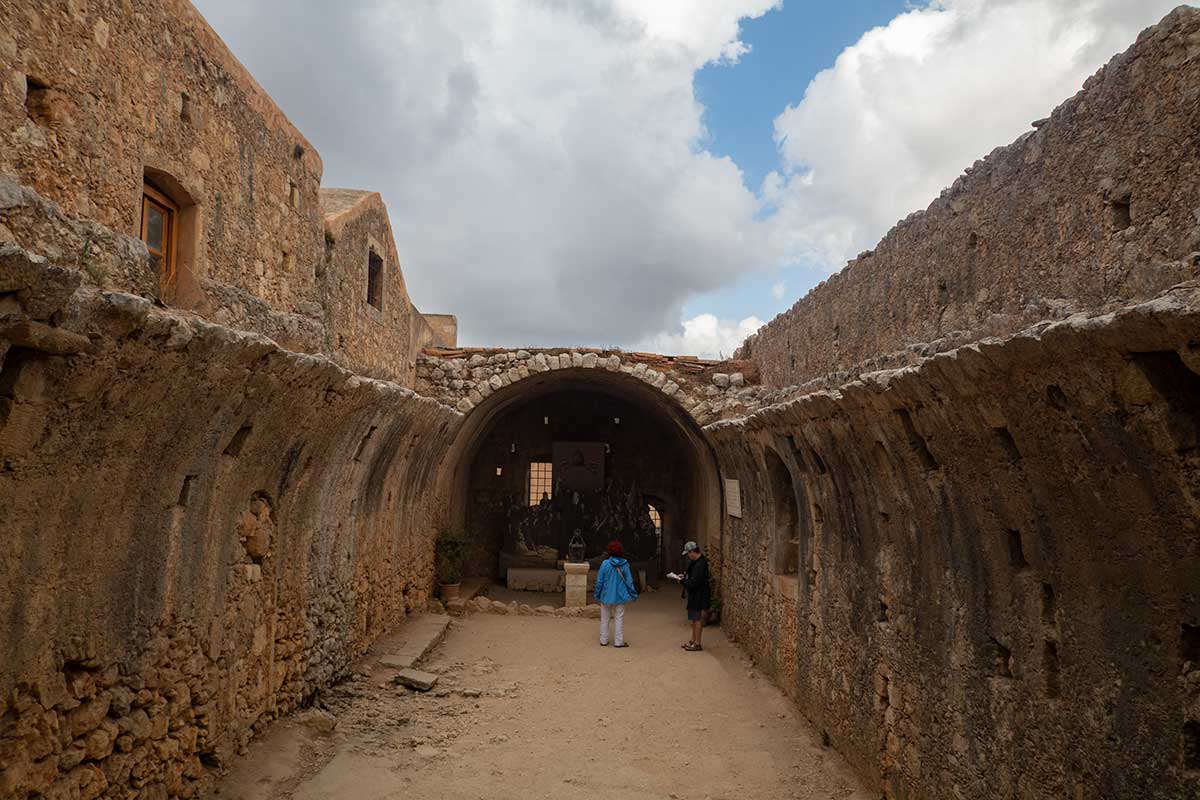
When Ottoman forces reached Arkadi on 7th November, hundreds of women and children had sought refuge in the monastery, as well as 259 Cretan fighters armed with around 200 rifles and a store of gunpowder. The Ottoman army numbered around 15,000, and 30 cannons, with reinforcements following.
By the evening of November 9th, the Cretan fighters were running out of ammunition, and Konstantinos Giaboudakis had barricaded himself and the majority of women and children in the gunpowder store. As the Turkish forces began to break through the doors, he lit the gunpowder, setting off an immense explosion killing everyone inside, as well as some of the Turkish forces. The Cretans preferred to die this way rather than face capture and an uncertain, possibly appalling fate at the hands of the Ottoman forces.
News of the tragedy spread quickly around the world, much more rapidly than similar events elsewhere, as the telegraph had recently been invented. The world learned very quickly what had happened, and public opinion tended to be sympathetic towards the Cretan freedom fighters, both in Europe and the US. However, the European and US governments chose not to intervene.
Getting there: Buses run to Arkadi from Rethymno bus station, calling at stops through the town, taking 40 minutes.
Tours: Several companies run to Arkadi Monastery – and they all have similar itineraries.
This Arkadi tour from Rethymno includes visits to a traditional pottery in nearby Margarites, one of the loveliest villages in Crete. It also includes the Melidoni Cave, one of the most beautiful on the island, which was the scene of another massacre of locals by Ottoman troops in 1823.
You can also book an Arkadi tour from Chania through this link.
Agios Titos Church, Heraklion
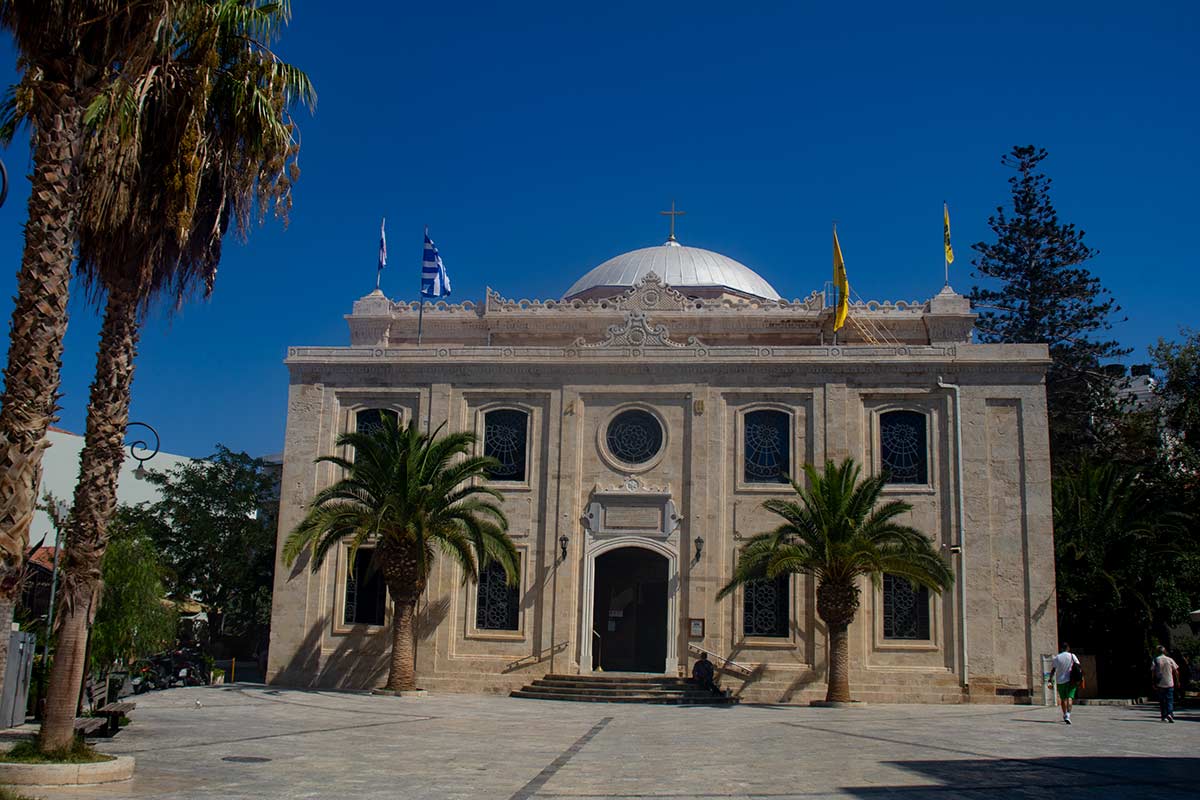
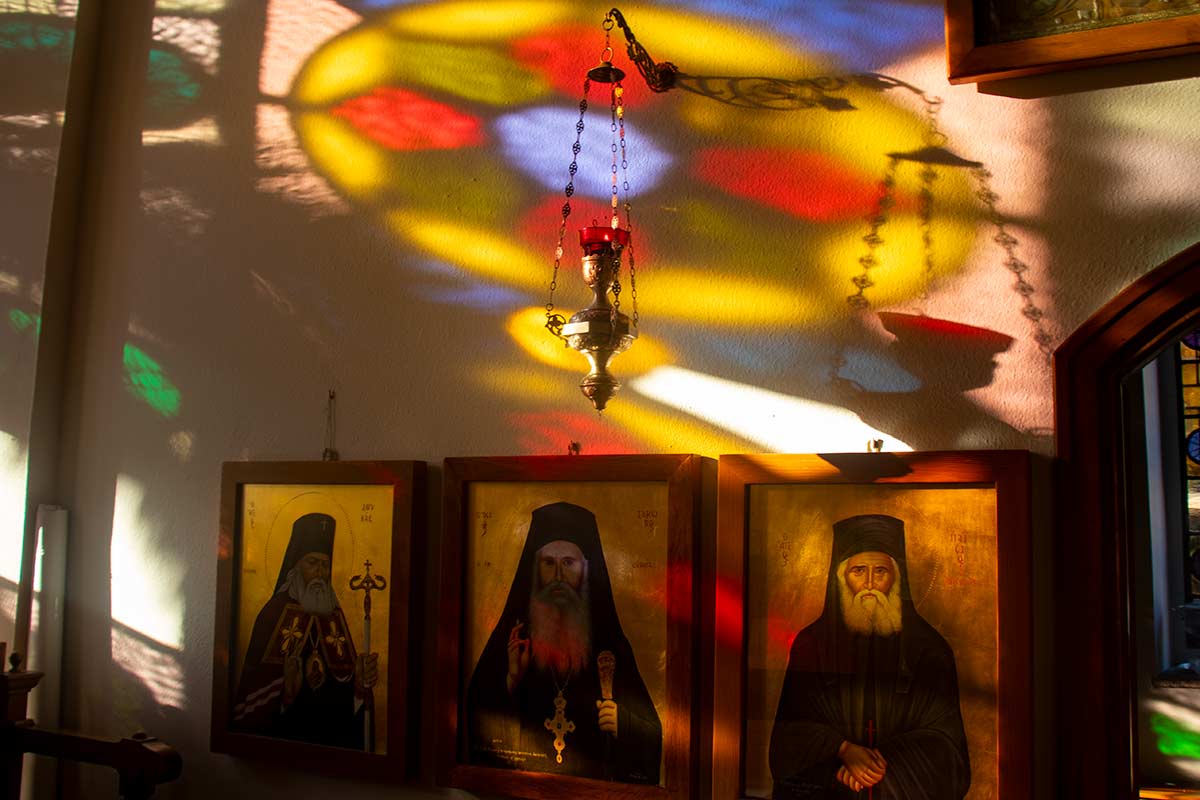
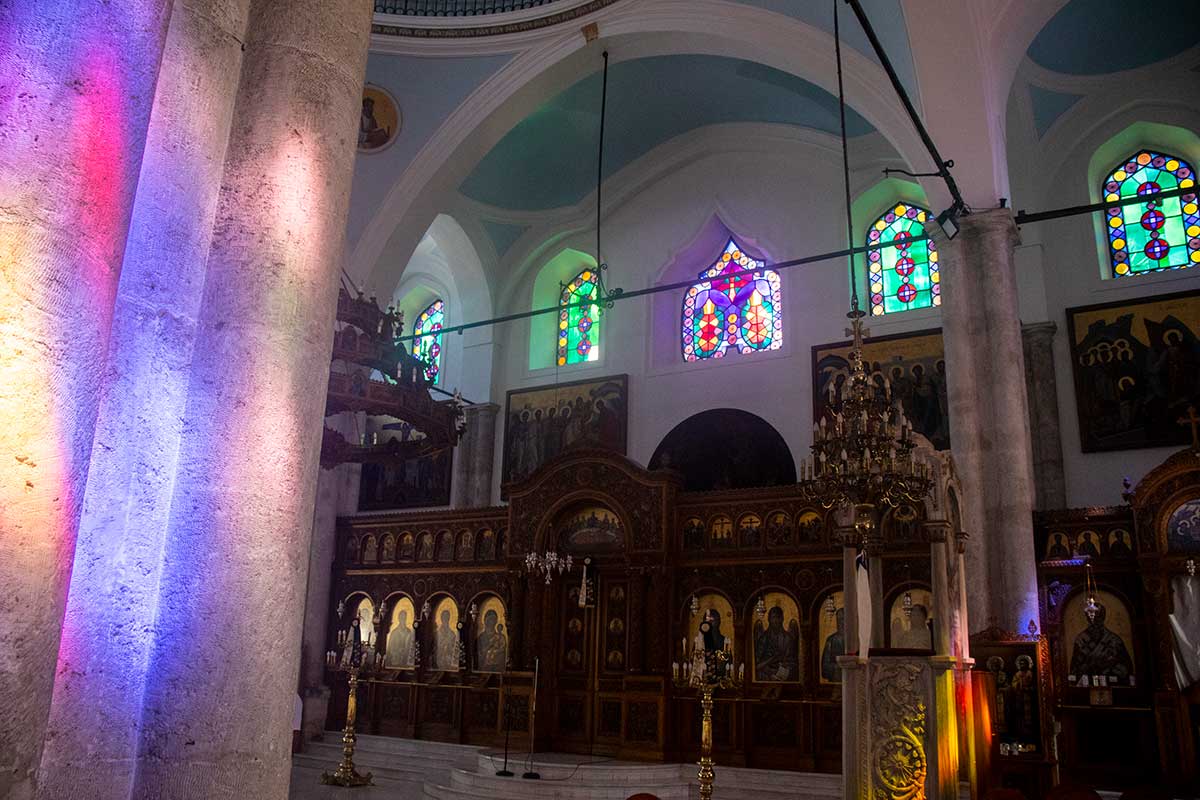
Agios Titos – St Titus – was one of the very first Christians, a disciple of the Apostle St Paul (he of the road to Damascus, the letters to the Ephesians, Philippians and much more). Titus was converted to Christianity by St Paul around 48 AD, and after missions to Corinth and Jerusalem, he was appointed the first Bishop of Crete. He was also the recipient of Paul’s Epistle to Titus, and preached Christianity to Cretans from the seat of his bishopric in Gortyn, in southern Crete.
The history of Agios Titos Church Heraklion goes back over a thousand years, to when the bishopric was moved to Chandax (later Candia, now Heraklion) by the Byzantines in 961 AD. Relics including Titus’ skull were also transferred there. These were later moved to Venice with the Ottoman conquest of Crete looming, but have since been returned to the church.
The present church is the fourth building on the site and was originally built as a mosque in the 19th century. It’s a wonderfully exotic building, an effect enhanced by the sunlight streaming through the stained-glass windows, lighting the church interior with an array of colours. Visiting Agios Titos is one of the best things to do in Heraklion, it’s a truly wondrous building.
Where To Stay – ***** – Rocca a Mare Heraklion – Handwritten Collection – luxury hotel with sea views, very close to the edge of Heraklion’s historic centre
Panagia Kera, Kritsa

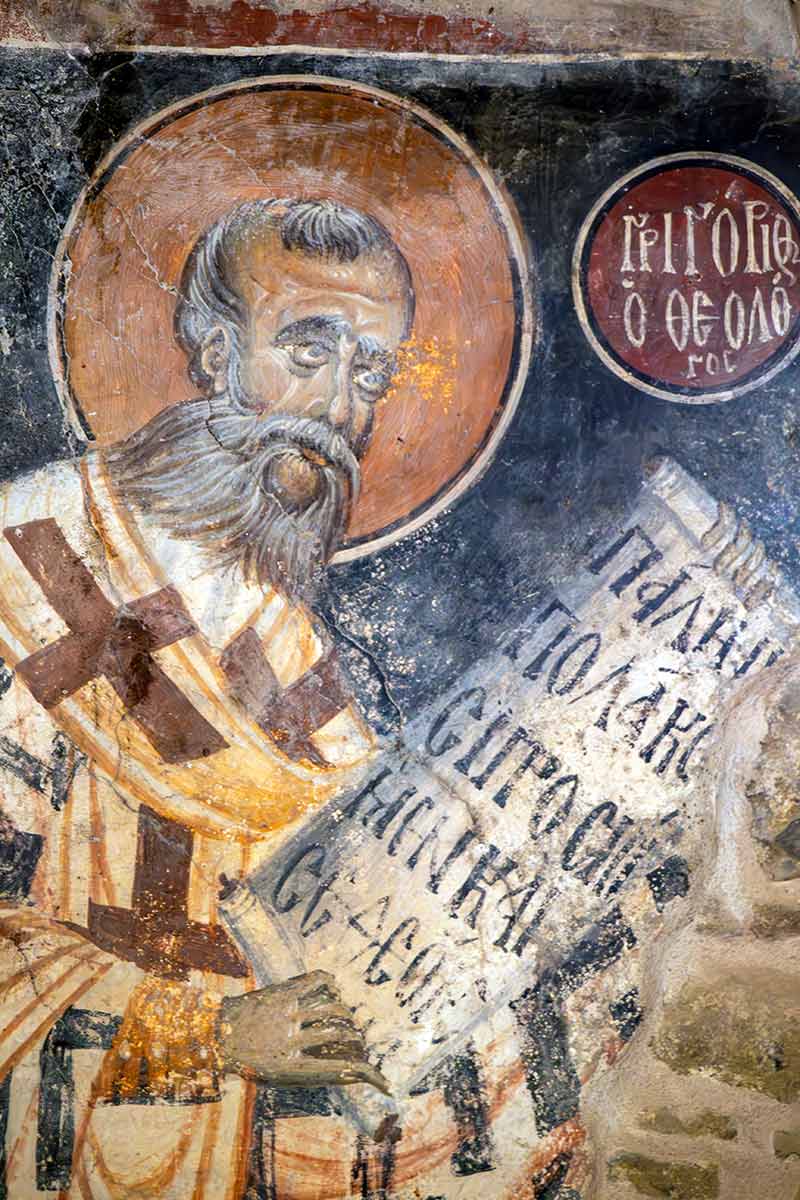
One of the most beautiful churches in Crete, Panagia Kera is just down the hill from Kritsa, one of the most beautiful villages in Crete.
The church’s name roughly translates as the Assumption of the Virgin Mary, and the building is believed to date from the 13th century.
Panagia Kera is one of the most renowned churches in Crete because of its vivid 14th-century Byzantine frescoes, from one of the richest periods in fresco painting in the Empire’s history.
As with many churches in Crete, each aisle of the church has a different dedication. So. In Panagia Kera the central aisle is dedicated to the Virgin Mary, the north aisle to St Anthony and the south aisle to St Anne. The magnificent fresco cycles include scenes from the life of the Virgin Mary, the Entry into Jerusalem, the Crucifixion and the announcement of the Resurrection by St Michael the Archangel.
Getting there: If you’re travelling by bus from Agios Nikolaos, Panagia Kera is on the approach road up the hill to Kritsa, just under a mile from the village. It’s a 15-minute ride from Agios Nikolaos bus station.
Tours: This Kritsa tour from Heraklion also includes a stop at Myrtos Beach on the south coast of Crete.
Agios Nikolaos Old Church
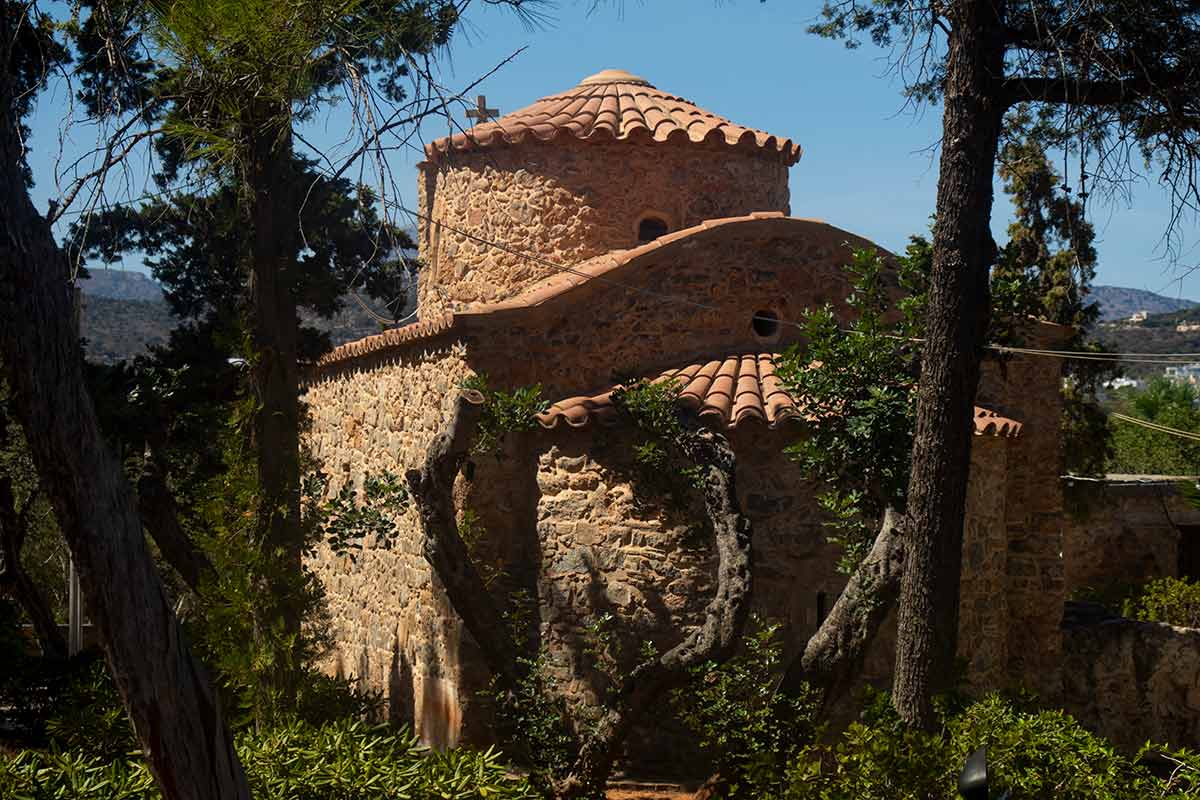
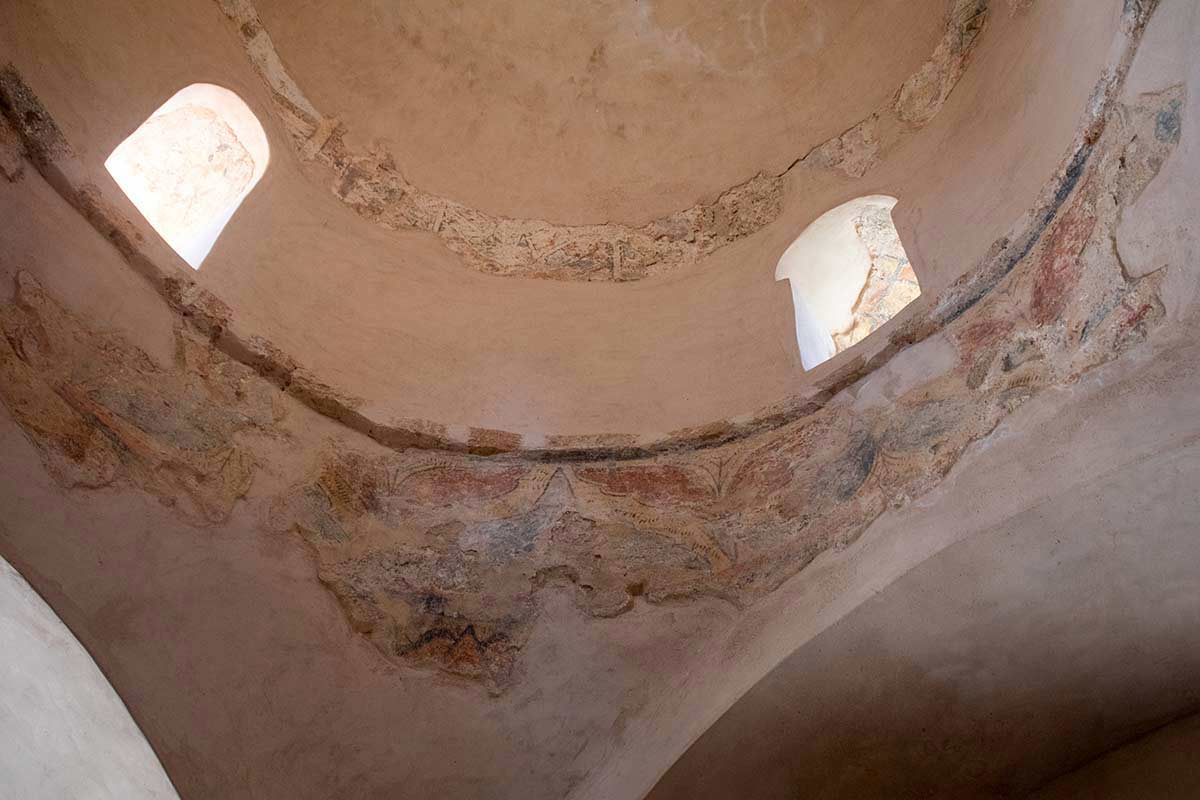
Much of the city of Agios Nikolaos, capital of Lassithi province, is modern, and there are few clues to its age and past near the centre. The one building that reveals most is hidden over a mile from the centre, close to Ormos Beach and the 5-star Minos Palace Hotel – this tiny Byzantine church, which may be as old as the 8th century AD.
It’s a very simple church, built in the shape of a Greek cross, with a central dome. Some remnants of frescoes have survived, but it’s hard to make out much detail in them.
When I visited – mid-afternoon during the May to October tourist season – the church was open and free to visit. A notice outside advised that if you should find the church closed and wish to visit, to enquire at the reception of the Minos Palace Hotel, and that somebody would let you in.
Where To Stay – Minos Palace Resort – adults-only 5-star complex on own peninsula next to this beautiful ancient church
See Also – 12 Best Things To Do In Agios Nikolaos
Agios Pavlos Church, Near Agia Roumeli
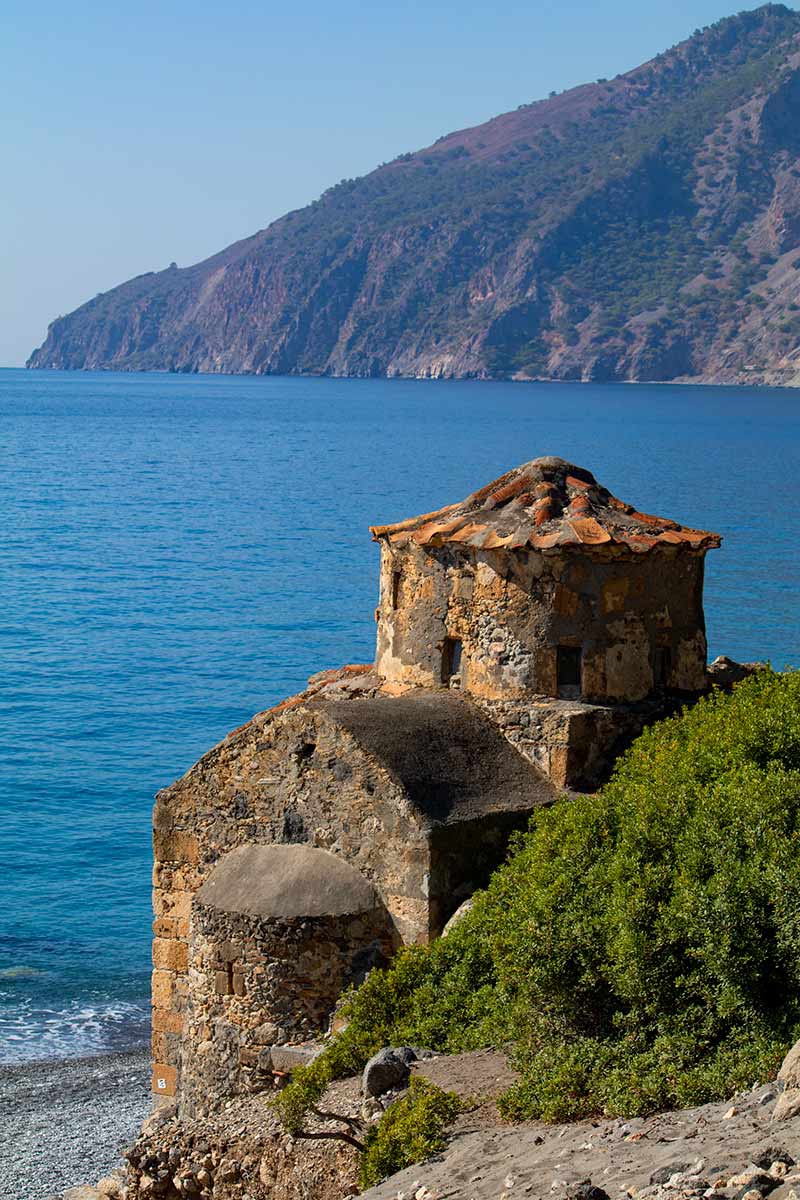
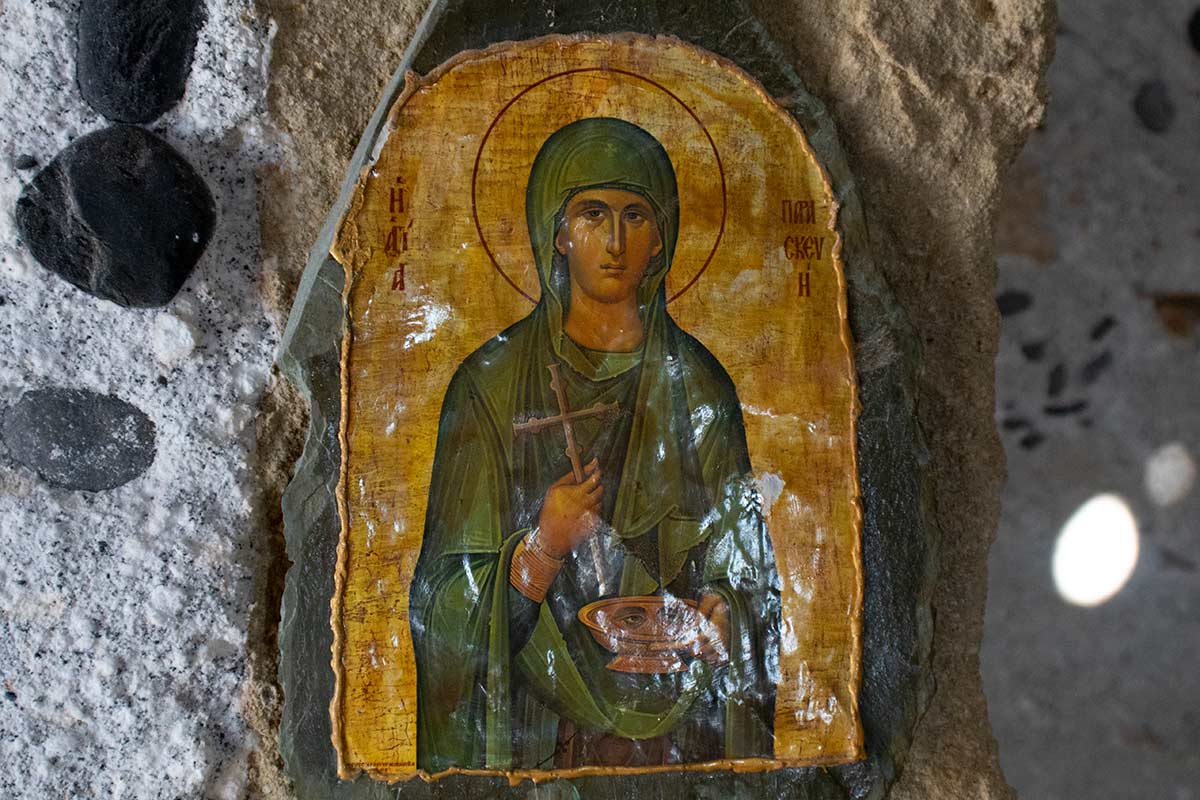
Agios Pavlos is by far the most remote of the churches in Crete in this article, and for me, it’s the most wonderful. I’m not a religious person, but I have always loved the peace – and sometimes solitude – I have found in ancient churches across Europe and the Middle East. And in this distant, wonderful place, I came across one of the most beautiful churches in Europe that I have ever visited.
Agios Pavlos – St Paul – is a tiny, weather-worn church built just above the pebbly beach which also bears its name. I was the only person to hike the section of the E4 coastal trail from Agia Roumeli that day and the moderately demanding hike (around 1 ½ hours, tough mainly because of the daytime heat) was rewarded by the sight of this extraordinary church.
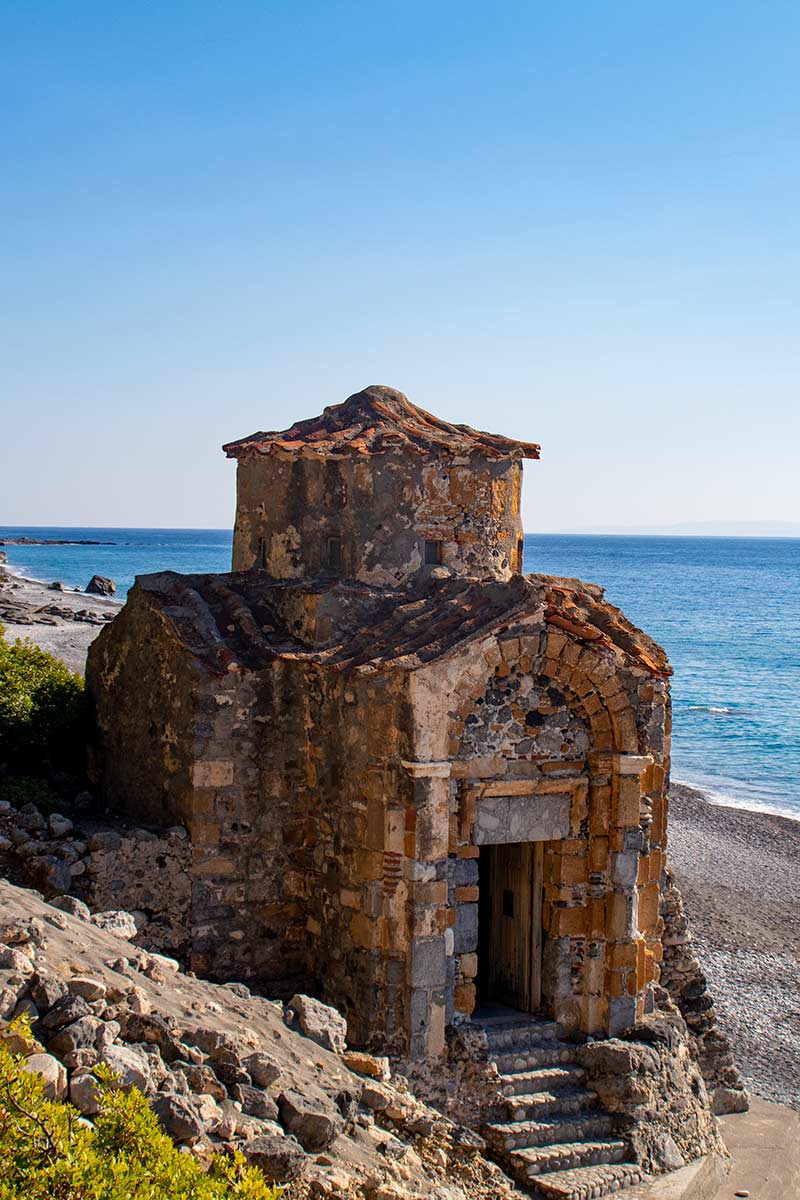
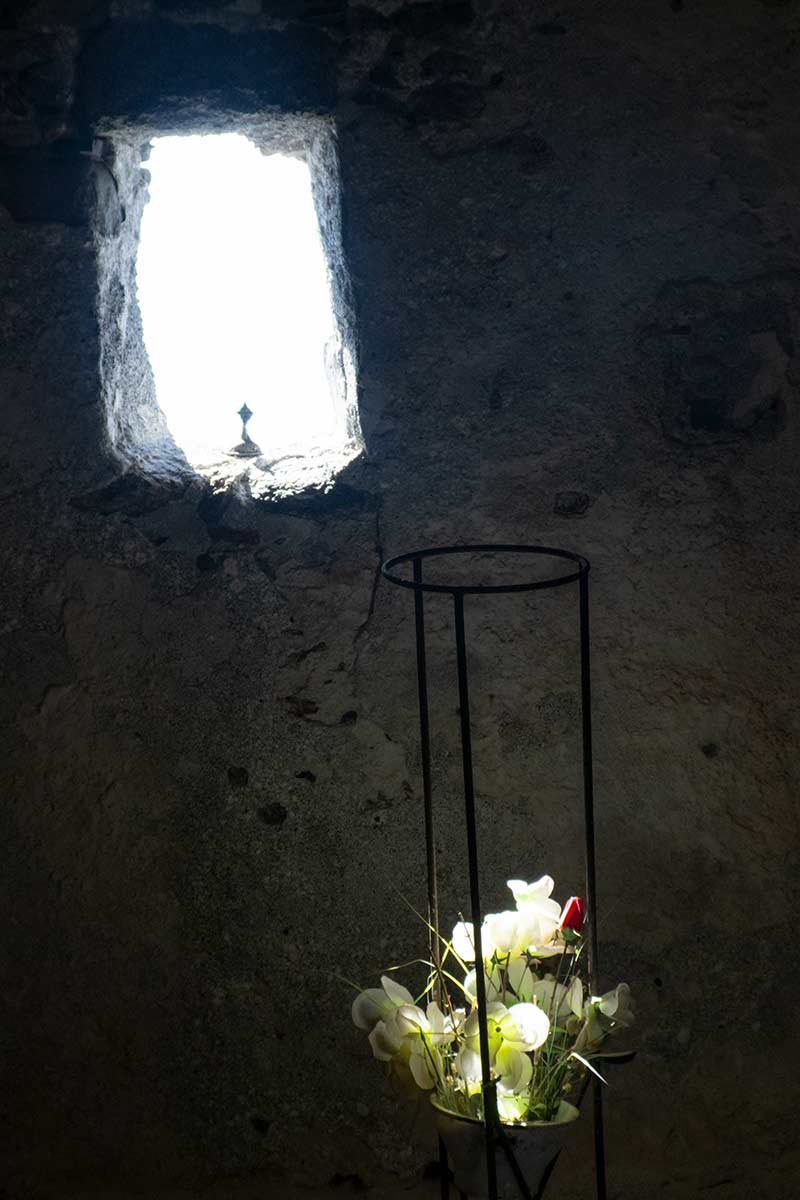
St Paul is believed to have landed at the beach on one of his visits to the island in the 1st century AD, hence its name. The church – Byzantine in form and style – dates from either the late 10th or early 11th century. It’s cruciform (a Greek cross) in shape, with a central dome, part of which, along with some of the walls, are covered with faded frescoes of undetermined age.
Getting there: I walked to Agios Pavlos Church from Agia Roumeli, and then back – quite a taxing walk in the heat, even in late October. I caught the Paleochora to Agia Roumeli ferry, then made my own way east along the E4 trail. I asked around at the harbour in Agia Roumeli, and some boats do run across the bay to Agios Pavlos in the season – it’s just a question of asking around, as there’s not much demand, and nothing online about such a service.
See Also: Agios Pavlos Beach Crete – one of the most beautiful remote beaches in Crete
Where To Stay – *** – Calypso – beachfront apartments, fantastic views, restaurant downstairs
Chania Cathedral (Orthodox)
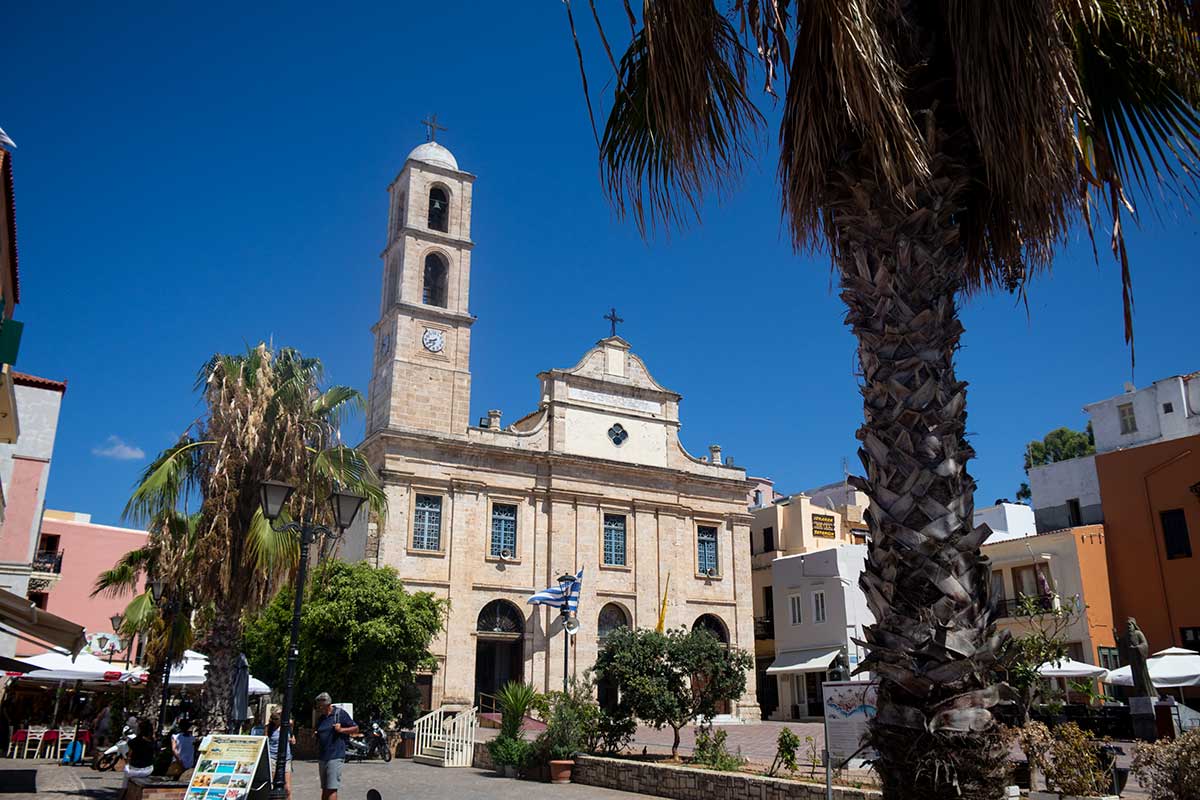
Chania has two Cathedrals – this Greek Orthodox one and a Roman Catholic one a very short walk away. The Orthodox Cathedral is the larger, more prominent of the two.
The cathedral – which resembles some churches from across the Venetian empire – was completed in 1860 and consecrated the following year. However, the site’s history goes back much further, possibly as far back as the 11thcentury. The small church built there was demolished by the Venetians, who then built a warehouse on the site. The Turkish rulers then turned into a soap factory, but donated the building to Chania’s Christian community in 1850.
An icon from the original church has been preserved, and can be seen near the entrance to the Cathedral. The iconostasis (sanctuary screen) was completed in the 19th century, and the fresco above by Nikos Giannakakis in the 20th.
Where To Stay – ***** – Ambassadors Residence Boutique Hotel – elegant 1890s house overlooking Venetian harbour
Georgioupolis Chapel
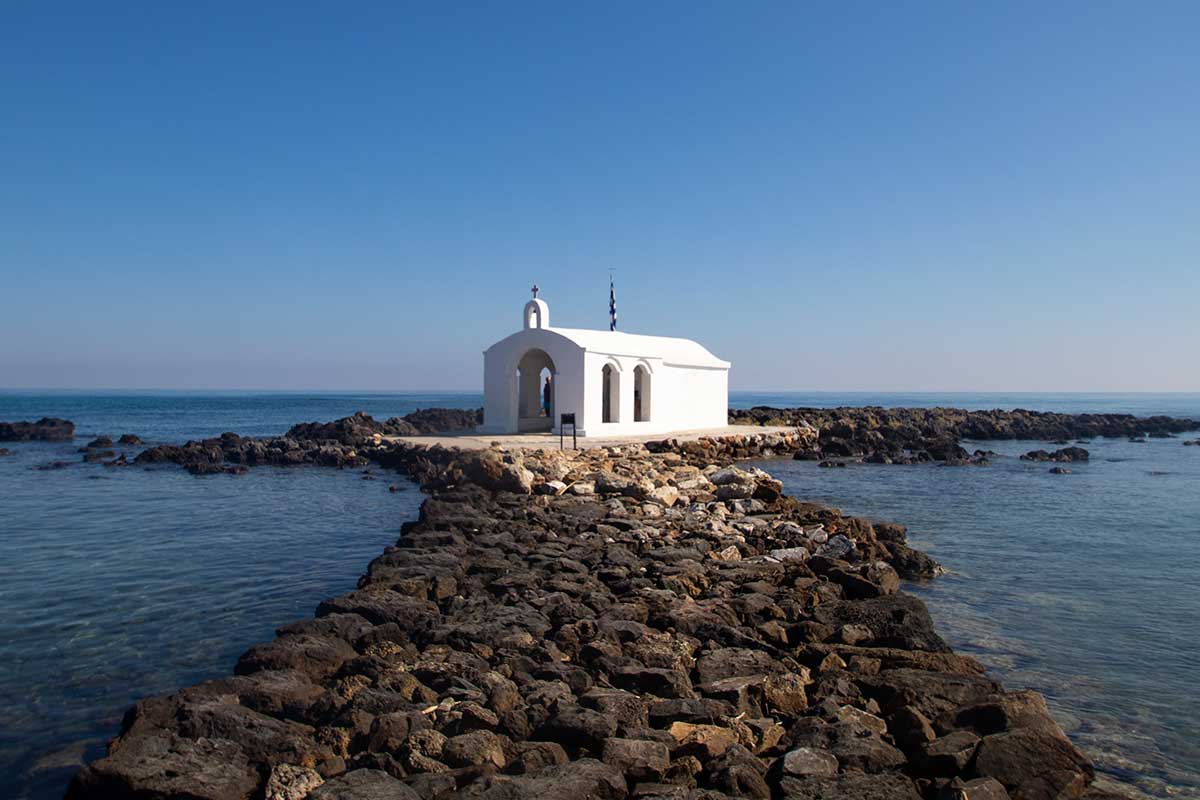
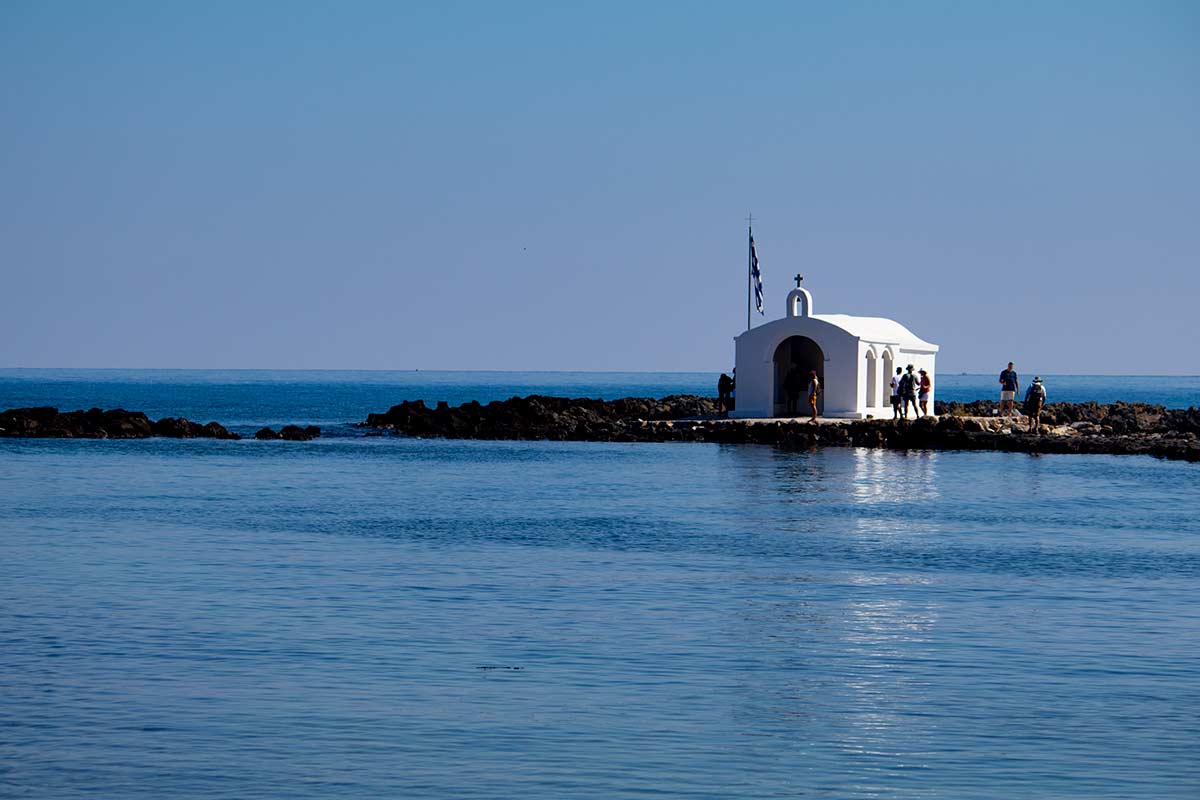
One of the best things to do in Georgioupolis is to take a walk along the causeway from the village to this gorgeous, tiny whitewashed fishermen’s chapel dedicated to St Nicholas (Agios Nikolaos), the patron saint of sailors.
It’s one of the most beautiful landmarks in Crete, and from some angles appears to be floating on the Mediterranean Sea. The village – originally home to a few fishermen and their families, now something of a tourist honeypot – was only founded in the 19th century, and the chapel, built by a local sailor or fisherman, dates from the late 19th or 20th century.
The Chapel looks better from a distance, which is worth bearing in mind if sea conditions are rough. When I visited the sea was as calm as a millpond, but even then some of the rocks on the causeway were slippery. My advice is you plan to walk to the chapel (little more than 5 minutes) is to wear good walking shoes with a good grip. Do not wear flip-flops.
There’s not much to see inside the chapel – an altar and icons of the Madonna and Child and St Nicholas – so if conditions aren’t right, just enjoy the view from the shore. Numerous reviews have mentioned the sea washing over the rocks, making conditions underfoot hazardous. So don’t take unnecessary risks.
Fodele Church

The Church of Panagia in Fodele is one of the most exquisite churches in Crete. The simple 11th-century Byzantine church – similar in appearance to those at Agios Nikolaos and Agios Pavlos – is perhaps the best-preserved of the churches in Crete dating from this period, with several of its 11th and 14th-century frescoes in good condition.
The Church is across the road from the El Greco Museum. The painter, born Domenikos Theotokopoulos, is best-known for his work in Spain, particularly in Toledo, and he was either born in Fodele or Candia (Heraklion). We know that the young El Greco grew up in Fodele, and the Museum has a recreation of his studio and replicas of some of his paintings. One of the most fascinating museums in Crete.
Getting there: the church and Museum are halfway between Fodele village and beach. Driving it is straightforward – head off the main E90 road and follow the sign to the Museum. If travelling by public transport, it’s over a mile’s walk along the minor road from the Fodele bus stop (served by buses on the Chania-Rethymno-Heraklion route) to the village, and take a short cut along another side road to the church and museum.
Agia Triada Monastery
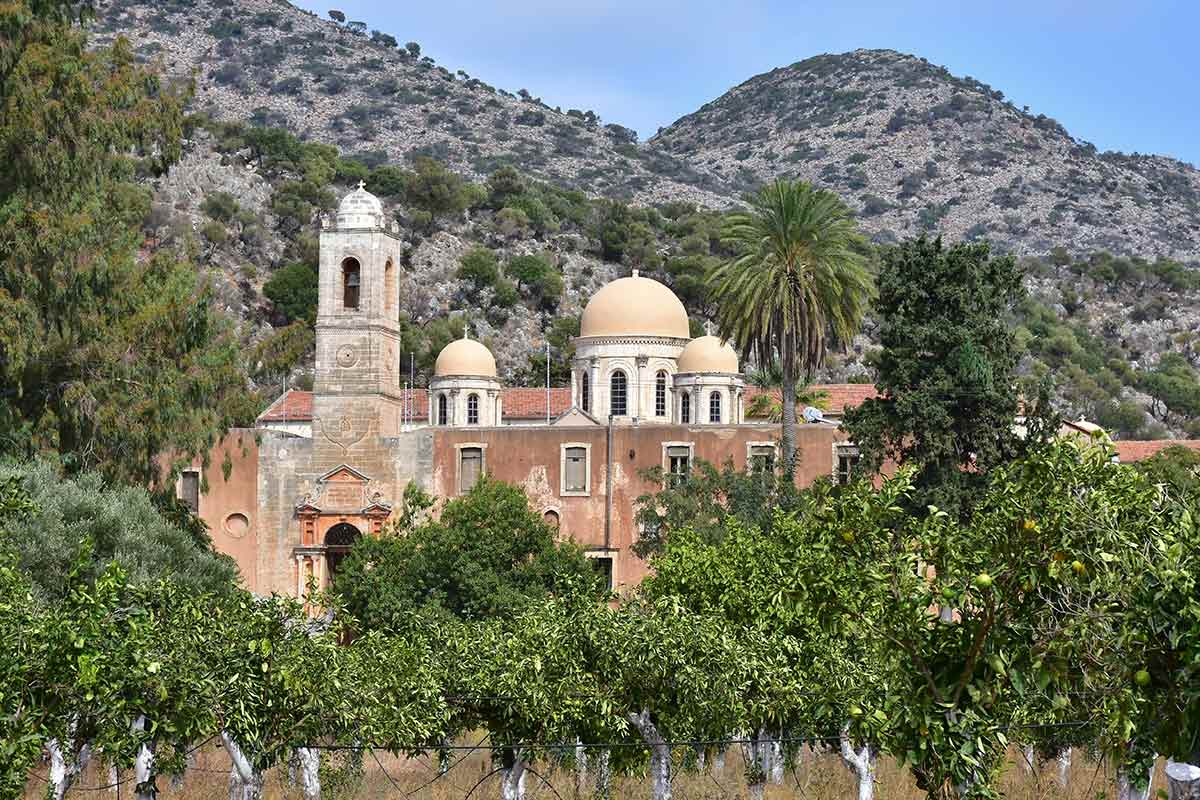
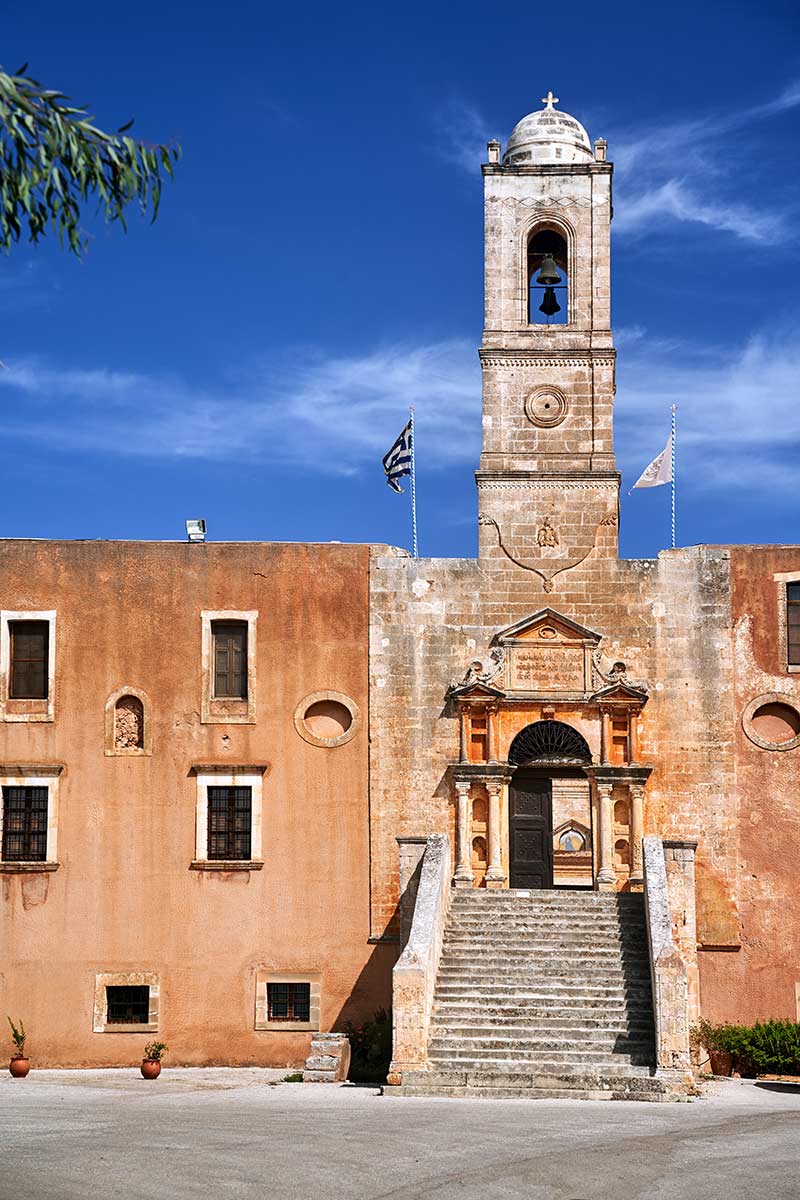
A few miles east of the city on the Akrotiri peninsula – and very close to the airport – Agia Triada Tzagaroli Monastery is one of the most intriguing day trips from Chania.
It’s one of the most beautiful monasteries and churches in Crete, a 17th-century Byzantine-style structure with three domes. Its name means ‘Holy Trinity of the Zangaroli’ – the latter is the family name of the two Venetian brothers who built the church (on the site of an earlier one) in the early 1600s.
The entrance to the monastery is very impressive, a flight of stairs leading to a Classical Greek-style doorway with an inscription above. The body (not decoration) of the church’s interior isn’t unlike something you’d find among churches in Venice on the cusp of late Renaissance and early Baroque. The decoration is very much Orthodox, with a superb ornate iconostasis.
The gardens of Agia Triada are beautiful, the shade of the orange trees giving welcome respite from the summer heat. The Monastery is also a producer of renowned (and delicious) olive oil and wine, which you can purchase at the gift shop.
Tickets cost €3 for adults – you pay at the door.
Getting there: Only one bus daily runs from Chania to Agia Triada Monastery, so either driving yourself, a taxi or tour are the easiest options.
Tours: This Chania Monasteries tour visits Agia Triada and the nearby Moni Gouvernetissa Monastery, also on the Akrotiri peninsula, with the option of either Seitan Limania or Marathi beach afterwards.
Moni Toplou Monastery
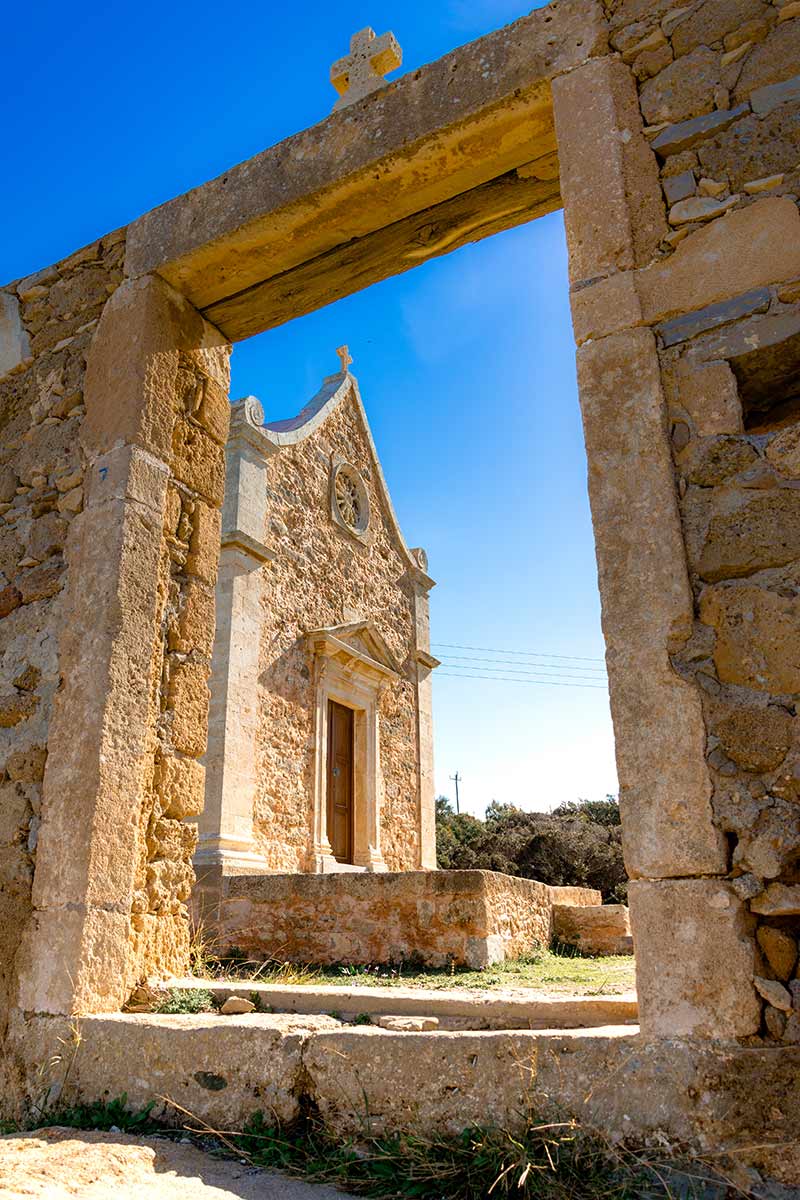
Toplou Monastery is one of the most fascinating places to visit in eastern Crete, a remote site in the far east of the Lassithi province which owns much of the land in the region. It has held this land for centuries, inheriting it from the long-lost nearby ancient city of Itanus.
As with other monasteries and churches in Crete, its origins are obscure, and the oldest features that can be discerned are its 14th century frescoes in the church within the inner courtyard.
Moni Toplou has had a particularly turbulent history, even by Cretan standards. It is fortified, which has helped its cause, having to withstand pirate attacks, a devastating 1612 earthquake, and plunder by invading Ottoman Turkish forces in 1646.
The monastery was later reconstituted, but the monks were massacred by Turkish forces during the 1821 Greek War of Independence, and it was severely damaged again during the 1866 Cretan Revolt. It also helped Cretan Resistance fighters in World War Two, who used it as a communications point. When the Nazis found out, they tortured the hegemon (abbot) and two of the monks.
As well as the basilica (church) within the Monastery, there is also a small but excellent exhibition on Byzantine icons, and a series of portraits by the renowned Cretan painter Thomas Papodoperakis.
Tours: This Eastern Crete tour from Heraklion takes in Sitia, Moni Toplou, the stunning Vai palm beach and Ierapetra.
Where To Stay – Palazzo di Sitia Luxury Suites, Sitia – boutique suites with terrace and sea views, an ideal base for exploring the far east of Crete
Agios Georgiou Selinari Monastery, Near Sissi
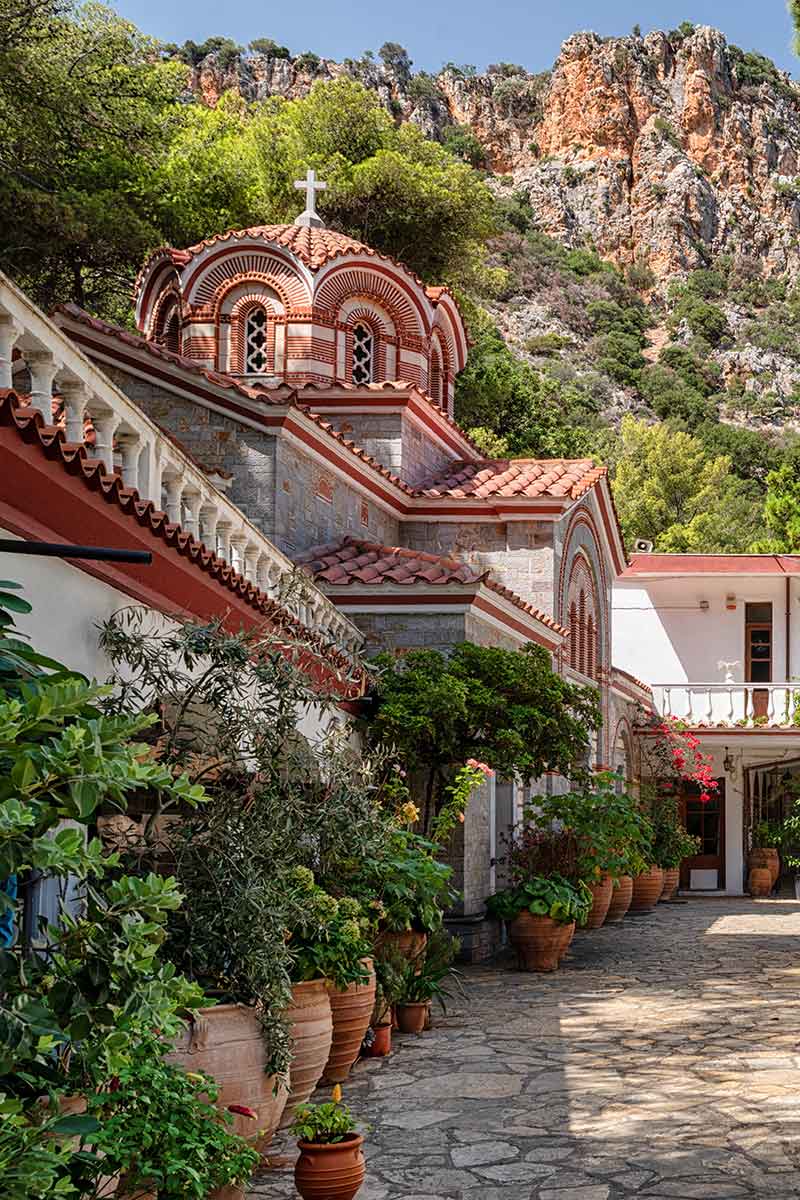
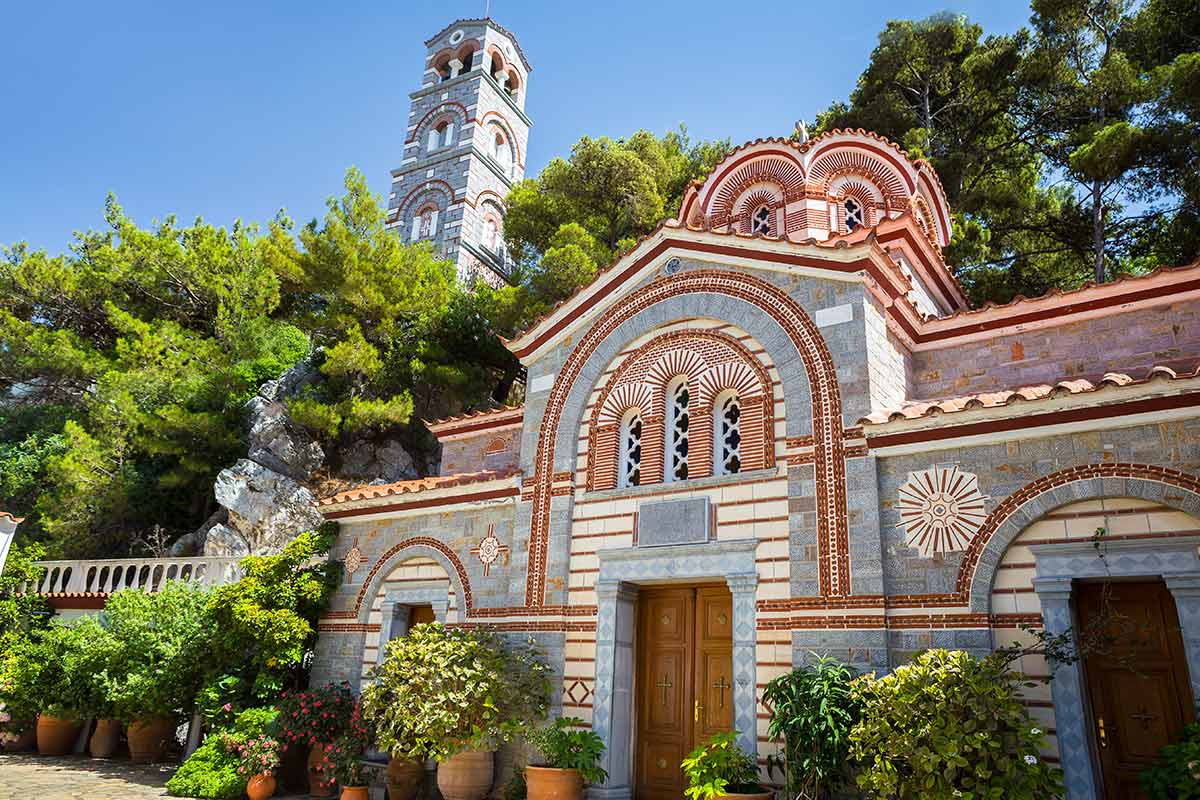
This stunning monastery near the northern end of the Selinari Gorge is just off the main road between Heraklion and Agios Nikolaos, a few miles from the pretty harbour village of Sissi.
The monastery was founded by a monk from Rhodes named Nikolaos, who found an old icon of St George (Agios Georgios) at the site, and built a chapel there around 1552. This chapel survives, although the icons and frescoes within are modern, as are the two other churches in the Monastery, which were built after 1961.
Nikolaos was buried in a cave just across the gorge from the Monastery – you can see it from the entrance to the Monastery, from which the cross marking the site is visible.
A local friend told me that it was considered bad luck to drive through the gorge without stopping at the monastery. He had stopped there more times than he could remember when travelling with his family, and as a man in his 20s he still feels a pang of guilt when he doesn’t stop.
Getting there: It’s on the main E90 road across northern Crete, between Malia and Agios Nikolaos. Buses in both directions stop there – and when you board, confirm that your bus stops at ‘Selinari Monastery’.
Preveli Monastery

Preveli is one of the most famous monasteries in Crete, with a village named after it as far away as Western Australia (and lovely it is too). There are actually two monasteries at Preveli – the empty Kato (Lower) Monastery and the Lower (Piso) Monastery which has been preserved and partly rebuilt. An engraving on a bell of the year 1594 is the earliest recorded date, so it was most likely founded (or perhaps rebuilt) in the years before this.
The Monastery has a long history of helping local rebels against Ottoman Turkish forces. Three times in the 19th century – in 1821, 1866 and 1878 – the monks helped locals against occupying forces.
A Memorial has recently been built at Preveli, commemorating the monks’ and locals’ heroic act of sheltering Allied troops trapped on the island after the Battle of Crete. They also helped them escape across the Libyan Sea to North Africa, at immense risk to themselves and their families. The Nazis destroyed the Lower Monastery in reprisal for the monks’ actions.
The Monastery occupies an astonishing site overlooking the southern Crete coast, the Kourtaliotiko Gorge and the gorgeous Preveli Palm Beach. It’s one of the most popular day trips from Rethymno and Heraklion, with buses dropping visitors between the Monastery and beach. I suggest visiting the Monastery first then walking down the beach, saving the uphill walk for the slightly cooler temperature later in the day.
Tours: Most tours only visit Preveli Beach and the Kourtaliotiko Gorge, and don’t leave much free time to hike to the Monastery (a long way – I don’t advise it if you’re not in good physical condition) and back.
This Preveli tour only picks up from Bali and Panormos (near Rethymno) but, unusually, visits both the Monastery and beach with palm forest.
Kera Kardiotissa Convent
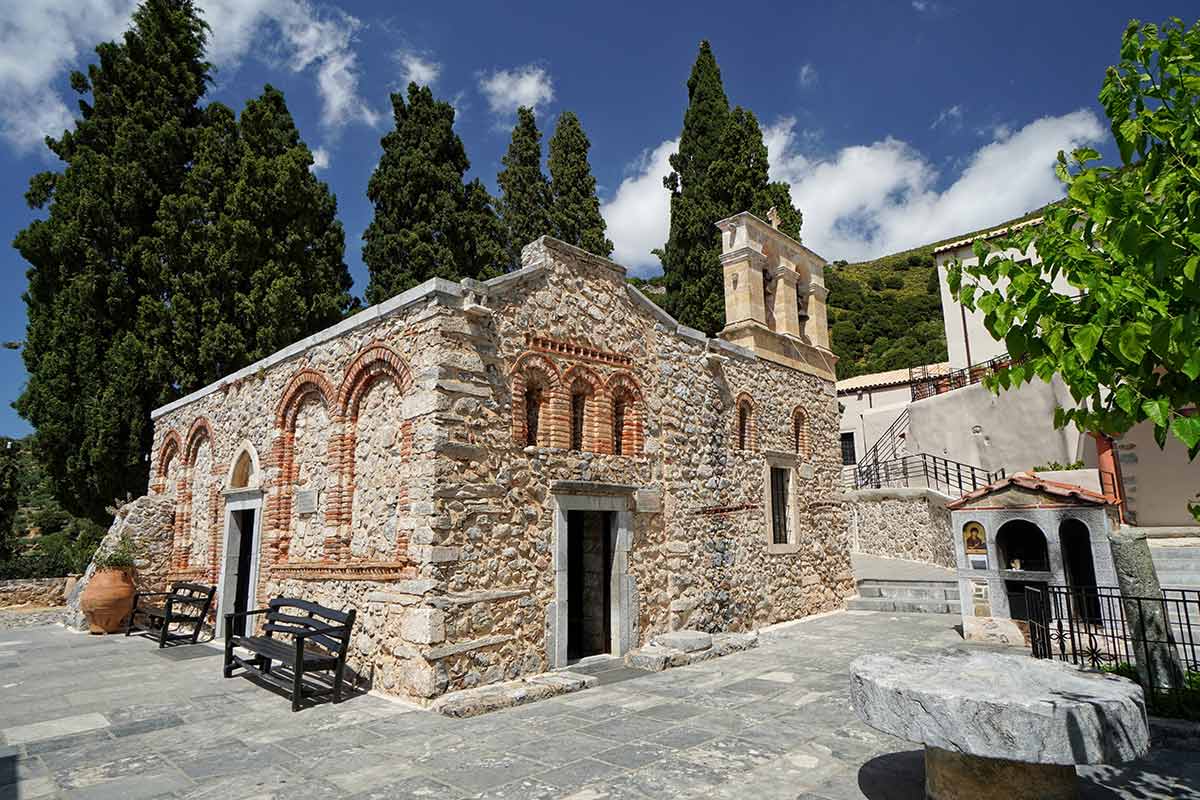
This remote convent, just north of the Lassithi Plateau, dates back to at least the 14th century, when a famous icon, Our Lady of Perpetual Help, was produced there. It was believed that the icon, painted by a monk, St Lazaros, had miraculous properties, but it was stolen at some point when Crete was under Venetian rule, and removed to the church of Sant’Alfonso di Liguori all’Esquilino in Rome, where it remains to this day.
The icon was replaced with a new one in 1735, and it too is claimed to have been the source of some miracles.
The small original Byzantine-style church (probably dating from the early 14th century) survives, albeit with an additional aisle to the north and additional space to the west. There are remains of some beautiful icons, some from the 14th century and another series from the 15th century.
As well as visiting this convent, this mountainous part of central Crete is one of the most beautiful areas of the island. There are views from close to the Monastery down the valley to the Aposelemi Reservoir and dam that, somehow or other manages to keep this sunny island watered.
Tours: Kera Kardiotissa is very close to the Lassithi Plateau, and this Lassithi, Zeus’ Cave and Kera Kardiotissa tour from Heraklion also picks up from resorts along the coast including Malia and Hersonissos.
Chrysoskalitissa Monastery
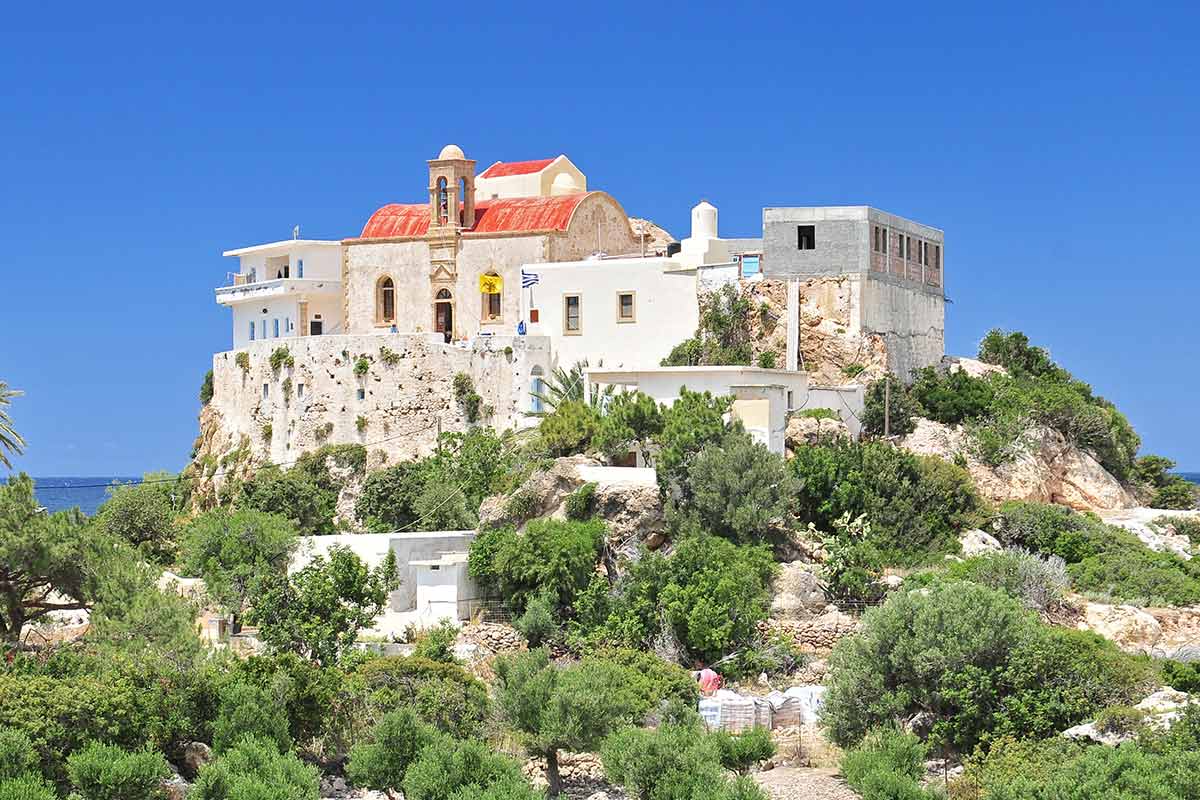
Chrysoskalitissa is the westernmost monastery in Crete, hidden away in the remote southwestern corner of the island close to Elafonissi Beach, famous for its pink sands, and the stunning Kedrodasos Beach. It would be a familiar sight to anyone who has visited Elafonissi, as it’s perched on a dramatic rocky outcrop three miles north of the pink sand beaches. And it’s well worth a stop, especially if you can time your visit so that you can still get a parking space at Elafonissi.
We don’t know when the Monastery was founded, but according to tradition it was built close to where a hidden icon was found in the 8th or 9th century AD. The present church and buildings are much later, from the 17th century.
The Monastery’s name is derived from the Greek for ‘golden step’. One of the steps on the staircase to the Monastery is supposedly golden – or at least appears golden to those who are of true, pure faith – which counted me out!
The Church has a simple, plain, whitewashed interior with icons and a fine iconostasis (chancel screen). The Museum is also home to a small Folklore and Byzantine Museum, and the room of a ‘secret school’ where children were taught Greek language and culture, which was forbidden under Ottoman Turkish occupation.
Tickets to the Monastery cost €2.50, and your visit will probably take 30 to 45 minutes. The most striking thing about Chrysoskalitissa is its evocative location, which would be astounding at sunset.
Tours: This private tour from Chania includes visits to Chrysoskalitissa and Elafonissi, and a sunset dinner, a remote beach with a taverna just to the north near Falassarna.
Where To Stay – Elafonisi Resort by Kalomirakis Family – spacious suites and apartments with restaurant on site, lose to the famous pink sand beach
Most Beautiful Churches In Crete – Final Thoughts
I hope that you have enjoyed this article, and that it inspires you to check out some of the churches around Crete as you explore the island. Check out my specific articles on Arkadi Monastery and Agios Titos Church Heraklion for more detail on each. And if you intend to do some island-hopping, I also suggest taking a look at my Churches in Santorini article.
Overall Crete Articles
Pink Beaches In Crete – the 3 stunning pink sand beaches to visit on Crete
Famous Landmarks In Crete To Visit – from Knossos to its most famous beaches, gorges and more
Castles in Crete – Heraklion, Rethymno, Frangokastello and more
Best Museums In Crete – from humble one-person collections of World War Two war memorabilia to the outstanding Heraklion Archaeological Museum
Minoan Sites in Crete – the six World Heritage-listed Minoan palace sites on the island
Heraklion and Central Crete
Things To Do In Heraklion – discover the greatly underrated capital of Crete
Visiting Knossos Palace Crete – the foremost ancient Minoan site in the world
Visiting Heraklion Archaeological Museum – the foremost museum on Minoan history
Hersonissos or Malia – which is better for you?
Bali Crete Beaches – guide to all 5 beaches in this beautiful north coast village
Kalypso Beach Crete – a fjord, of all things, in Crete – and one of the best places to swim and snorkel in Greece
Voulisma Beach – glorious golden sands in eastern Crete
Western Crete
Things To Do In Chania – discover the most beautiful city in Crete, indeed, perhaps, Greece
Balos Beach Crete – one of the most beautiful beaches in the Mediterranean
Elafonissi Beach – the most famous pink sand beach in Crete
Falassarna Beach – one of the most beautiful beaches in the world
Kedrodasos Beach– glorious pristine beach and coves in a grove of rare juniper trees
Things To Do In Rethymno – discovering Crete’s enchanting third city
Rethymno Beaches – 20 of the best beaches in Rethymno province in central and western Crete
Panormos Crete – complete guide to this charming fishing village on Crete’s north coast