

Things To Do In Honfleur
Following on the trail of Impressionist painters, exploring one of the most beautiful port towns in Europe and its medieval backstreets are among the best things to do in Honfleur in Normandy.
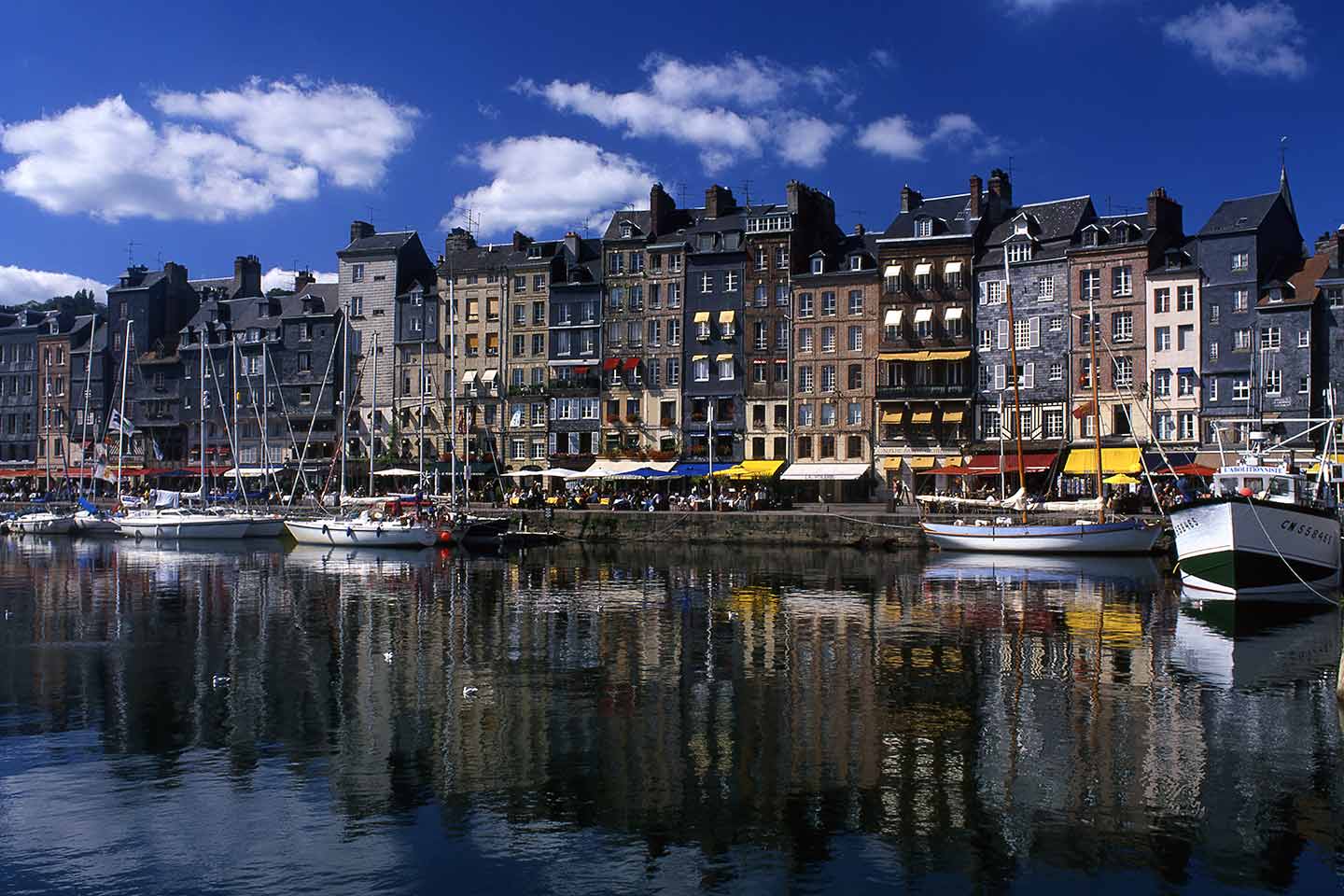
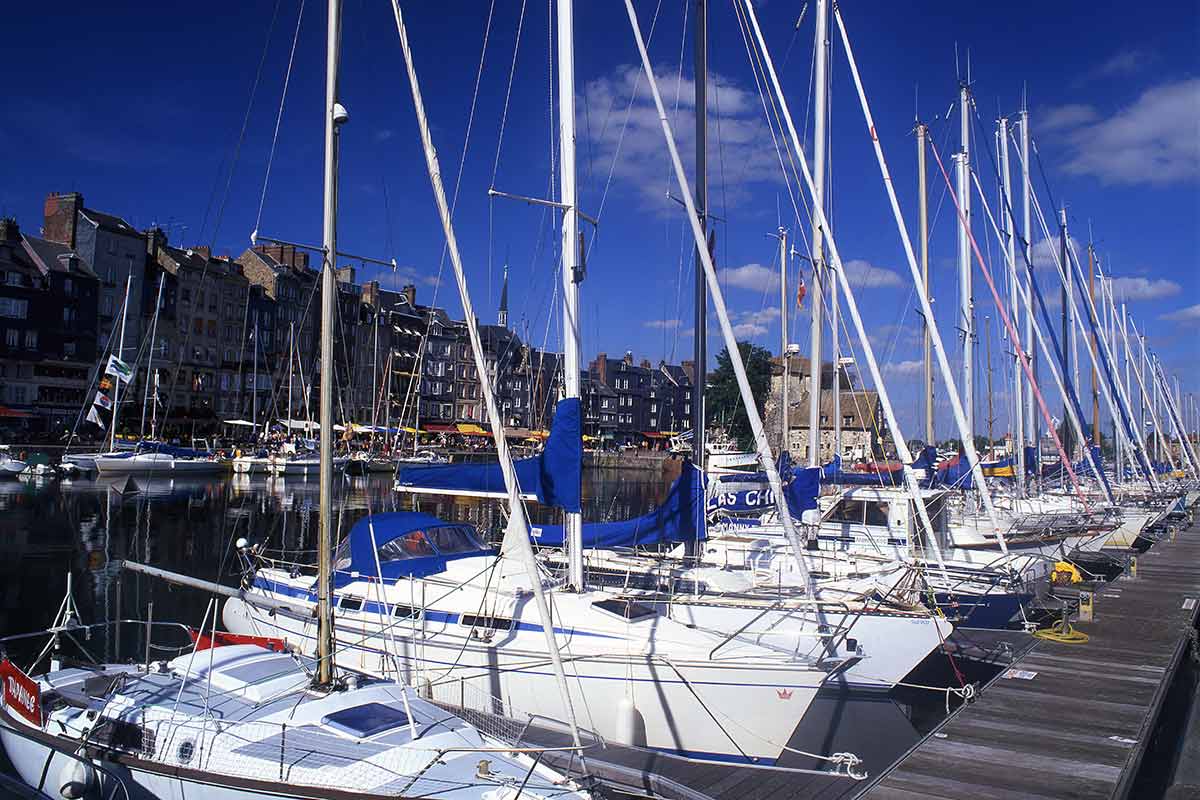
Honfleur was once one of the most important port towns in northern France, and was thriving 400 years or so before the founding of neighbour Le Havre across the Seine estuary. The town is best-known for its old harbour, the Vieux Bassin, and the tall narrow townhouses stacked tightly together along the quayside.
But venture up the hill behind the old port and you’ll discover some gorgeous medieval timber-framed houses and narrow streets, along with the largest wooden church in France, dating back to the 15th century.
Honfleur has also played a huge role in the development of the Impressionist movement in the 19th century. The town, beach and Seine estuary were a great inspiration to artists, and some of these regularly met at a hotel in the town.
As well as showing you everything to see in Honfleur, I’ll also run through the practicalities of getting there, places to eat and places to stay. I’ll also suggest day tours to Honfleur from Le Havre and Paris, and places to visit nearby in Normandy.
I hope you find my guide helpful and enjoyable.
Where To Stay In Honfleur
Le Manoir des Impressionistes – Bord de Mer – lovely 18th-0century manor house overlooking the Honfleur seafront
L’Absinthe Hotel – harbourside bolthole with superb views in a 16th-century building
La Cour Sainte Catherine – one for history lovers, a hoel in a former convent built in the 17th century
Ibis Budget Honfleur Centre Ville – reliable budget chain right in the centre of town
Tours To Honfleur
Paris to Rouen, Étretat and Honfleur – an epic day tour from the capital, taking in the ancient capital and two very different seaside towns either side of Le Havre
Paris to Étretat and Honfleur – a shorter day tour from Paris, visiting the white cliffs and beaches of Étretat and the historic port of Honfleur
Le Havre Cruise Port To Honfleur Return Shuttle – a useful return service from the cruise terminal to Honfleur
Visit Quai Sainte-Catherine and the Vieux Bassin
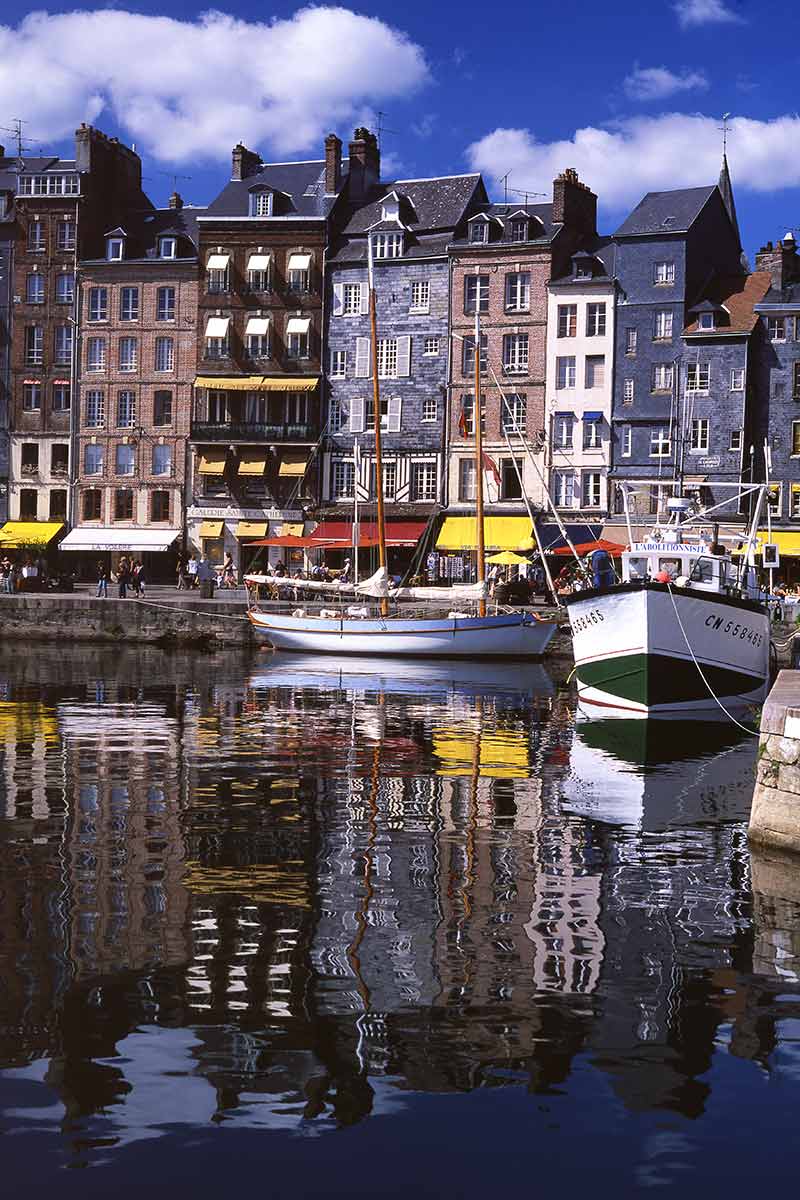
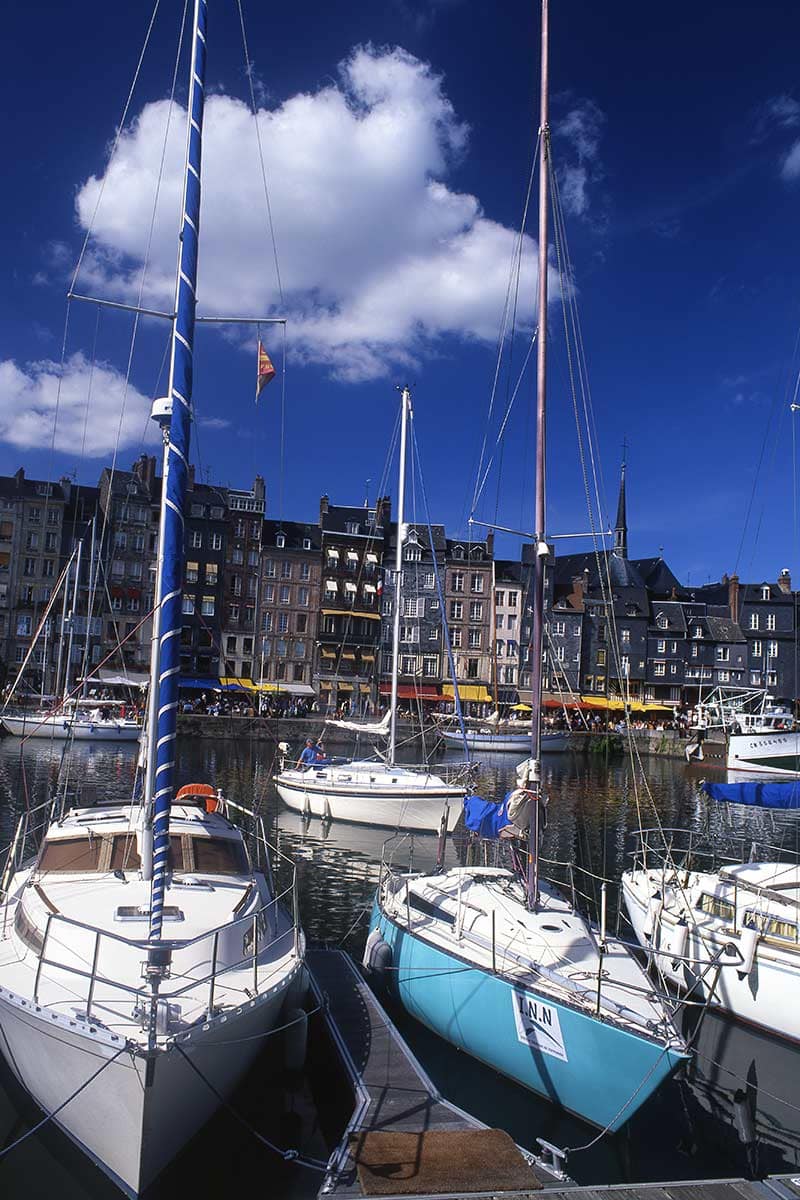
It’s one of the most beautiful streets in Europe, and one of the most picturesque harbours on the continent too. The tall townhouses of Quai Sainte-Catherine, with their steep slate roofs, are Honfleur’s main calling card, inspiring visitors today just as they did the Impressionist painters of the late 19th century.
The houses’ relationship with each other is even closer than it appears. They date from the 16th and 17th centuries, but over the years, some supporting walls and partitions have been knocked down. Two of the houses have recently shown signs of subsidence, so the Quai was closed for four months in the summer of 2026. The street has been described as a possible ‘house of cards’, and the fear is that if one house collapses, others may follow.
Quai Sainte-Catherine has since reopened with support buttresses holding up two of the houses. You can now eat at the restaurants and pavement cafes along the Quai, and enjoy the views of the Harbour once again. It’s a beautiful sight, but it’s worth bearing in mind how fragile it all is.
Visit The Lieutenance
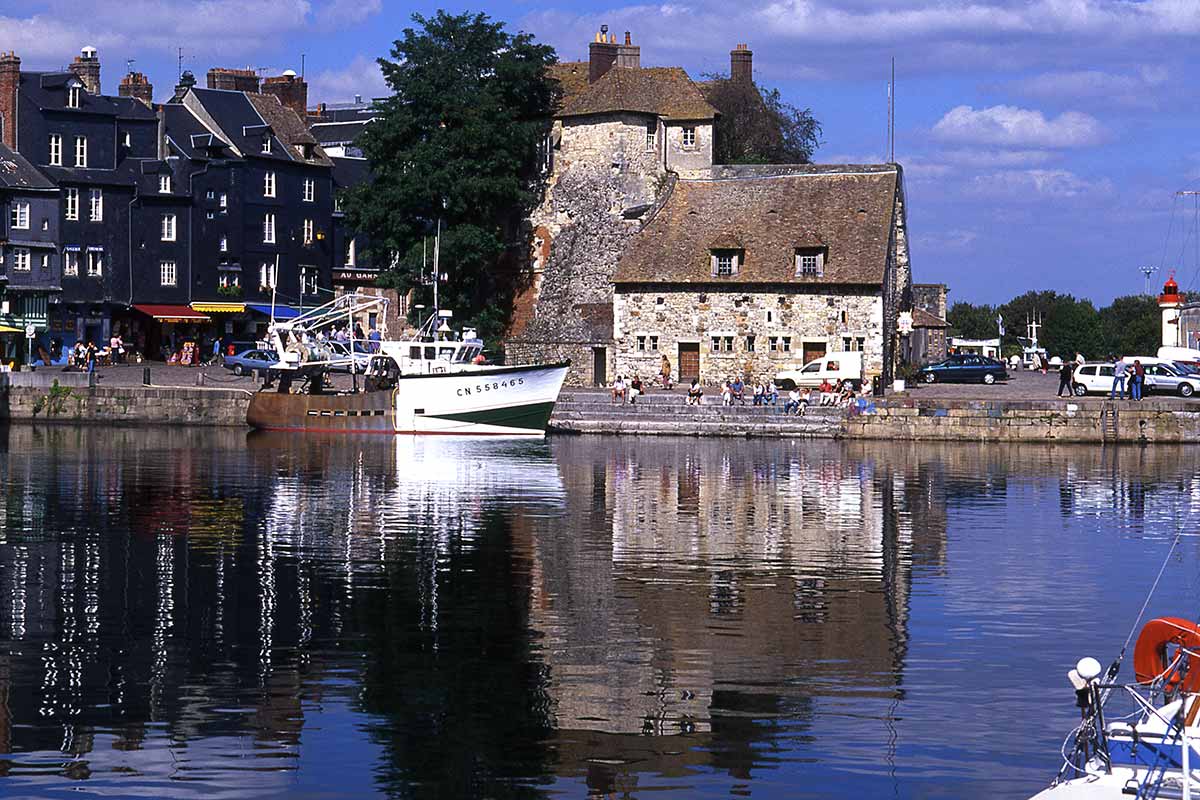
The Lieutenance, at the northern end of the Vieux Bassin, is the 17th-century residence of the King’s Lieutenant, the royal-appointed governor of the region.
If you’re visiting Honfleur with kids it’s a great place to start, as it hosts an interactive exhibition on the port’s history. And for adults, it also commands a great view of the Vieux Bassin.
Explore the Medieval Streets Of The Old Town
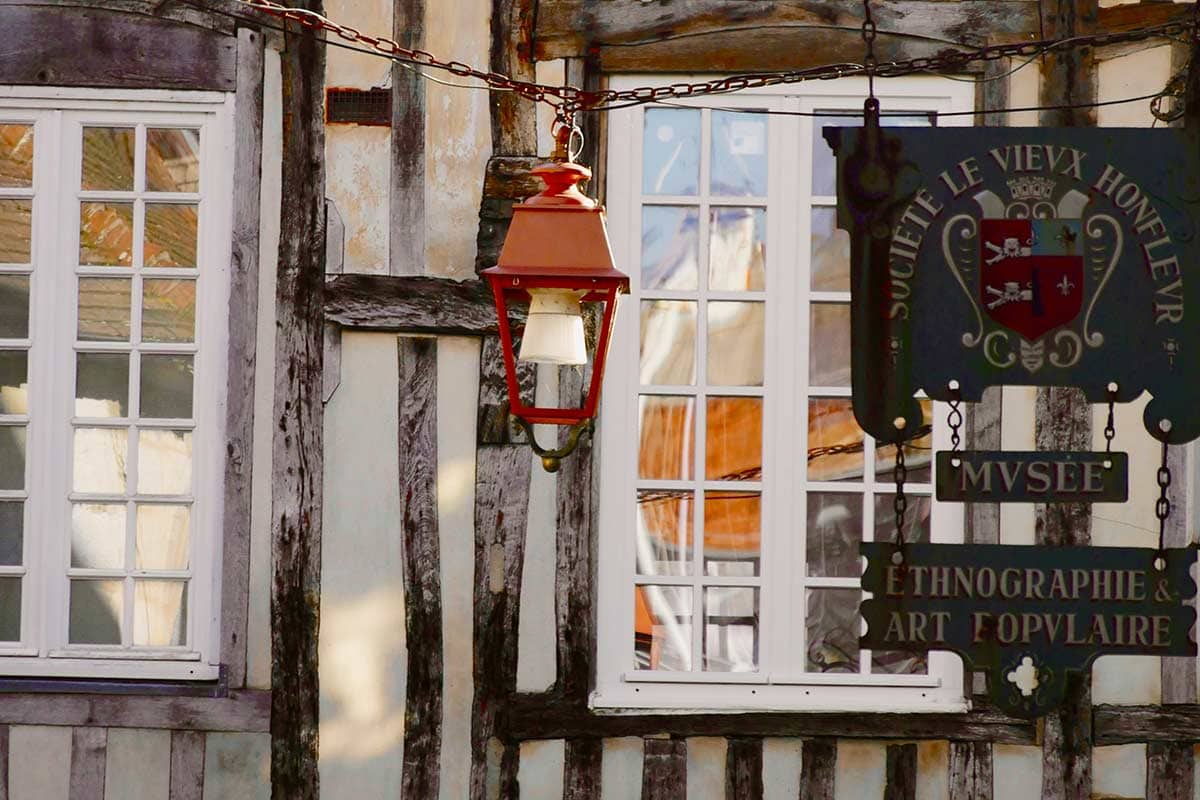
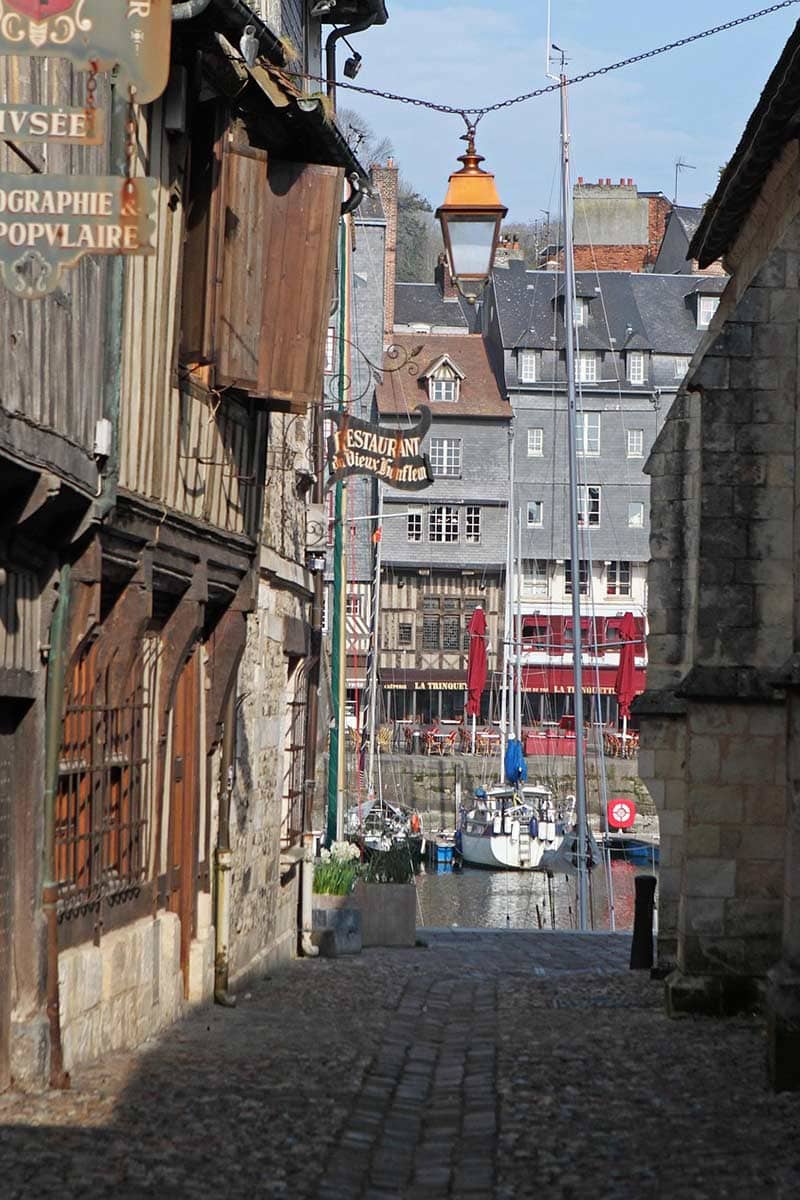
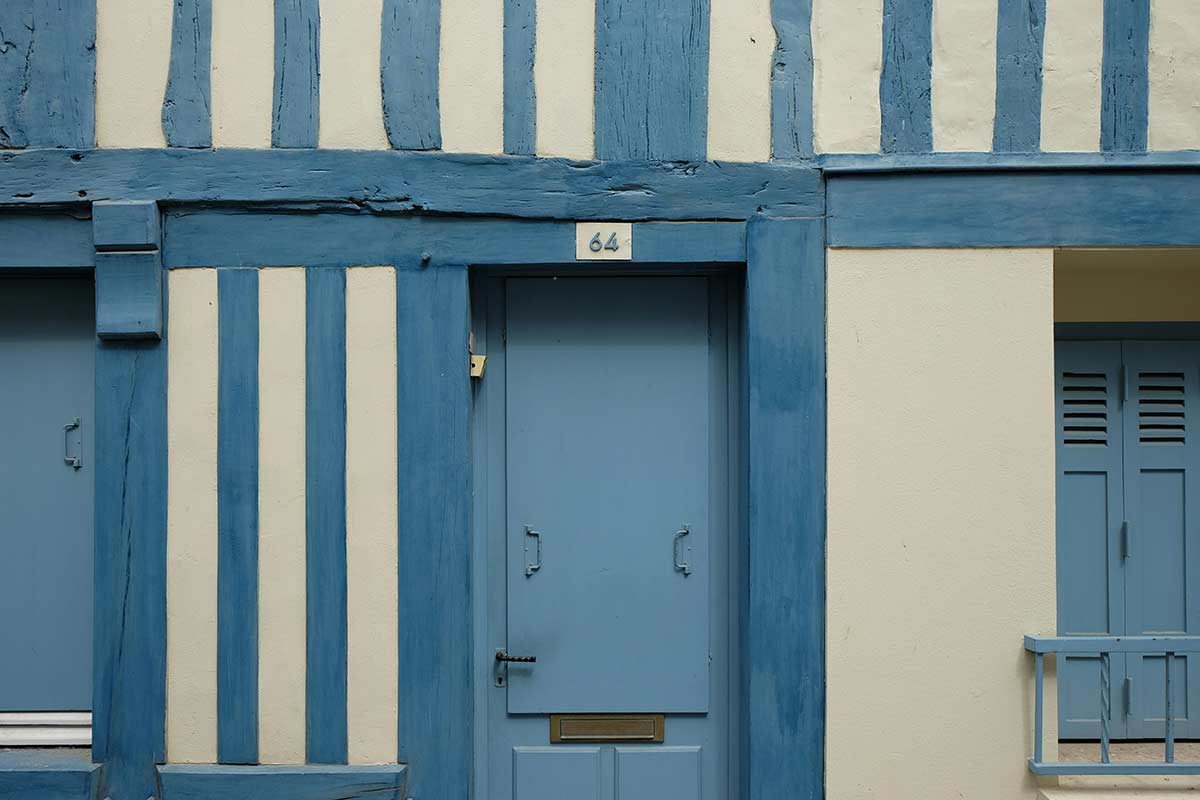
The medieval streets of the town behind the Vieux Bassin are a delight, with several fine centuries-old half-timbered houses. Honfleur is very popular – the fifth most-visited destination in France in 2025, surprisingly – but it isn’t necessarily recognised for its medieval architecture. It should be.
The best of streets to seek out are Rue du Puits, Rue des Lingots and Rue des Capucins, all of which are around Place Sainte-Catherine.
On your wanders you’ll find plenty of cafes, restaurants, boutiques, artisanal stores and art galleries.
See St Catherine’s Church – The Largest Wooden Church In France
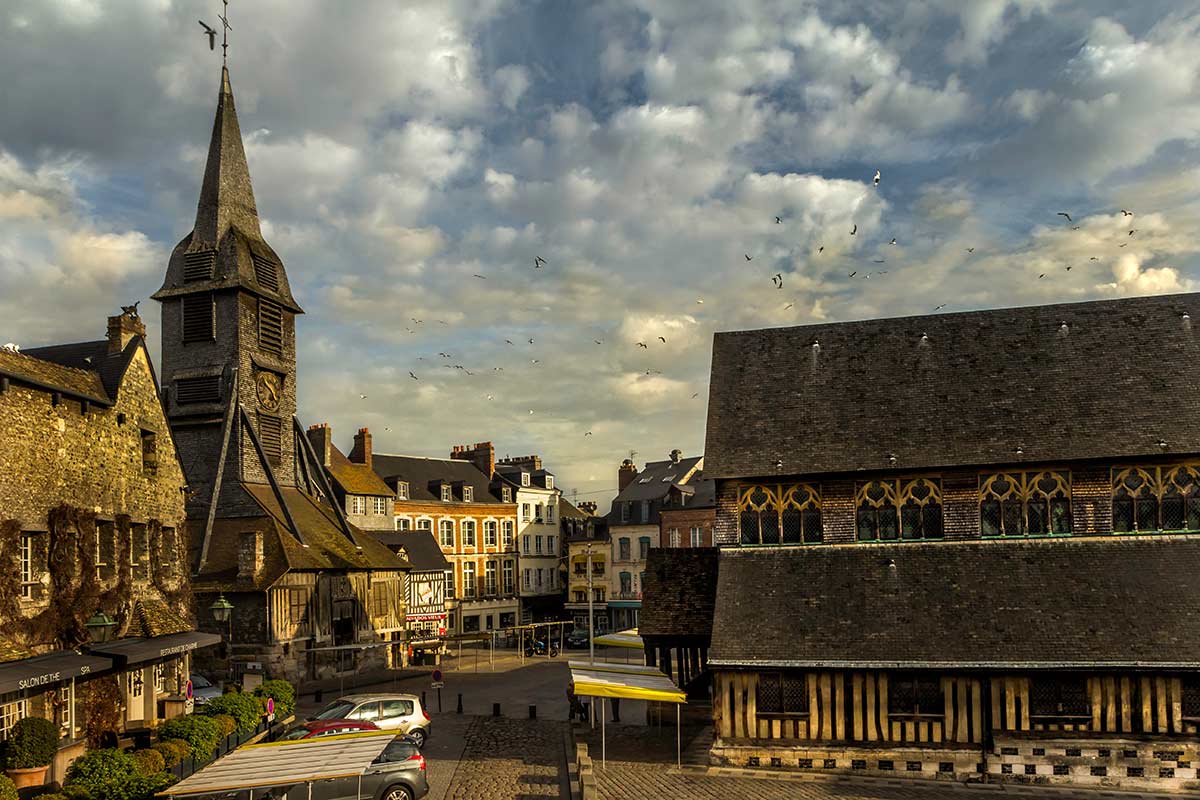
In most places you’ll find that wooden structures tended to be replaced by stone buildings, especially with the danger of fire. In Honfleur it was the other way around, with this wooden church, dedicated to St Catherine of Alexandria, replacing the earlier stone structure.
The oldest part of the church is one of the two naves, which as constructed in the 15th century. This, the later (17th-century) nave and the belltower were the work of Honfleur shipbuilders.
The belltower (Le Clocher) stands across the square from the church. It was built there to safeguard worshippers in the church in the event of a lightning strike. The tower has been struck, but has survived intact.
The organ in the church was originally in the 15th-century Church of St Vincent in Rouen, which was destroyed during Allied bombings in the lead-up to the D-Day landings.
Cross the Pont de Normandie – Or See It From Below on A Boat Trip
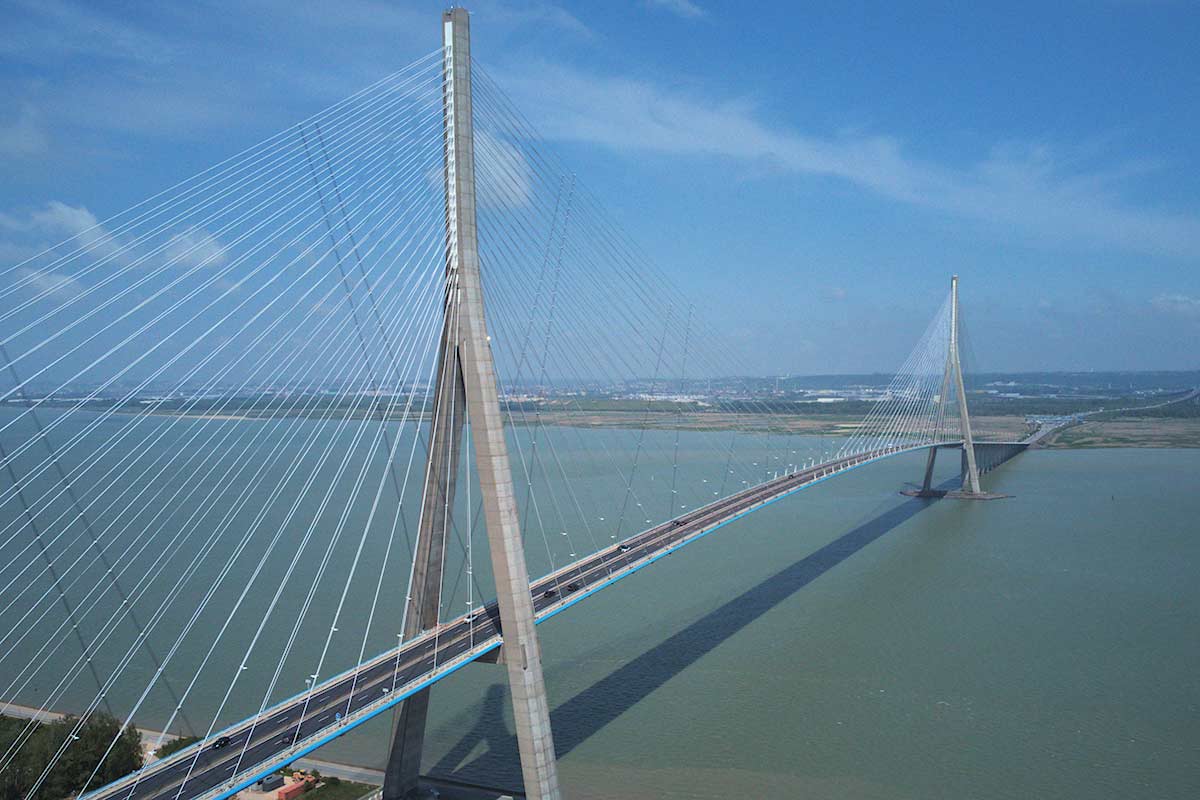
The Pont de Normandie is one of the most impressive modern bridges in France, spanning the Seine estuary and linking Honfleur with the right (north) bank of the river and Le Havre.
Crossing it (by road) is quite an experience, as the road rises to a steep apex at the centre. It’s so steep that the climb is sometimes included in the Tour de France, and it counts towards the King of the Mountains competition within the race.
You can get a very different perspective of the Pont de Normandie on this Seine estuary boat tour from Honfleur, which passes beneath the bridge. The tour commentary is usually in French.
Musée Eugène Boudin
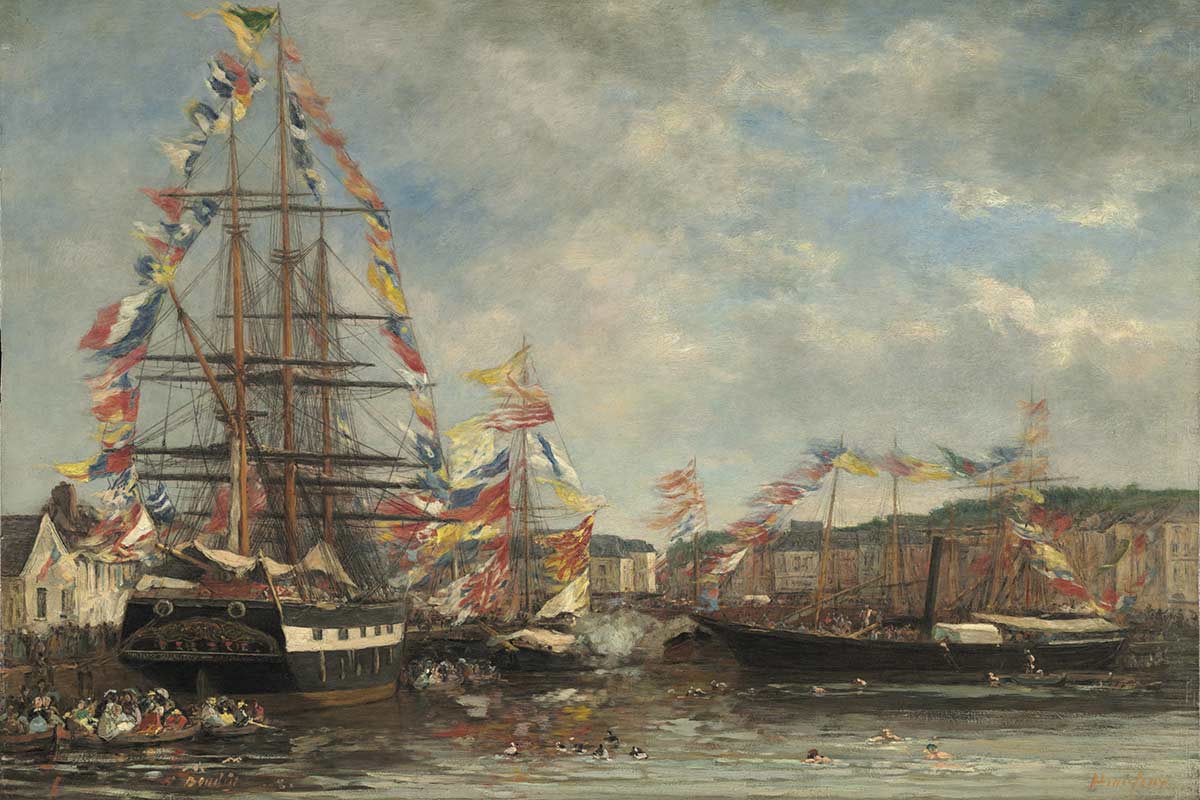
Honfleur was the birthplace and home of Eugène Boudin, one of the most significant figures in 19th century French art. It seems bizarre to say this now, 160 years on, but he was one of the first French landscape painters to – wait for it – paint outdoors. English painter JMW Turner – a big influence on this writer – visited and painted Honfleur in 1832, as part of his journey along the River Seine, but it seems that local painters didn’t take up the baton for a considerable while afterwards.
Along with contemporary Gustave Courbet, he could almost be described as a pre-Impressionist. He was a strong influence on the young Claude Monet, persuading the then-teenage artist to take up landscape painting.
Much of Boudin’s work was done close to home, around Honfleur and Le Havre, with frequent forays to the beaches of the nearby Côte Fleurie, and trips further afield to Rouen, the Côte d’Azur and Venice.
The Musée Eugène Boudin is a great introduction to his work – they hold around 90 of his paintings, and many are on display at any one time. The Museum also displays works by other artists who lived or worked in Normandy including Monet, Courbet, Raoul Dufy and co-founder of the Museum, Louis-Alexandre Dubourg.
If you enjoy this museum, then I strongly urge you to make time to visit the Musée André Malraux (MuMa) in Le Havre. I haven’t visited the Museum myself, but am familiar with many of the works held there. It covers the same period as the Boudin Museum, and is somewhere an aficionado could easily spend a few hours.
Follow In The Footsteps Of Impressionist Painters To Honfleur Beach
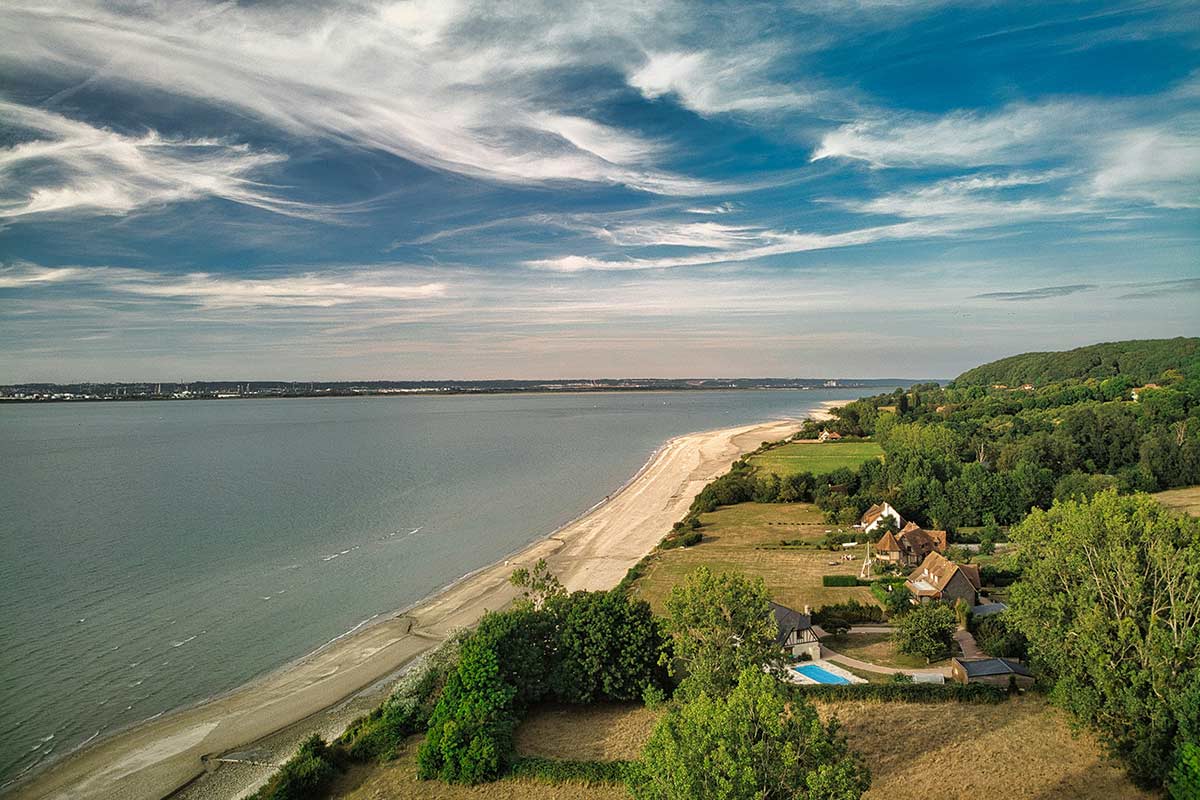
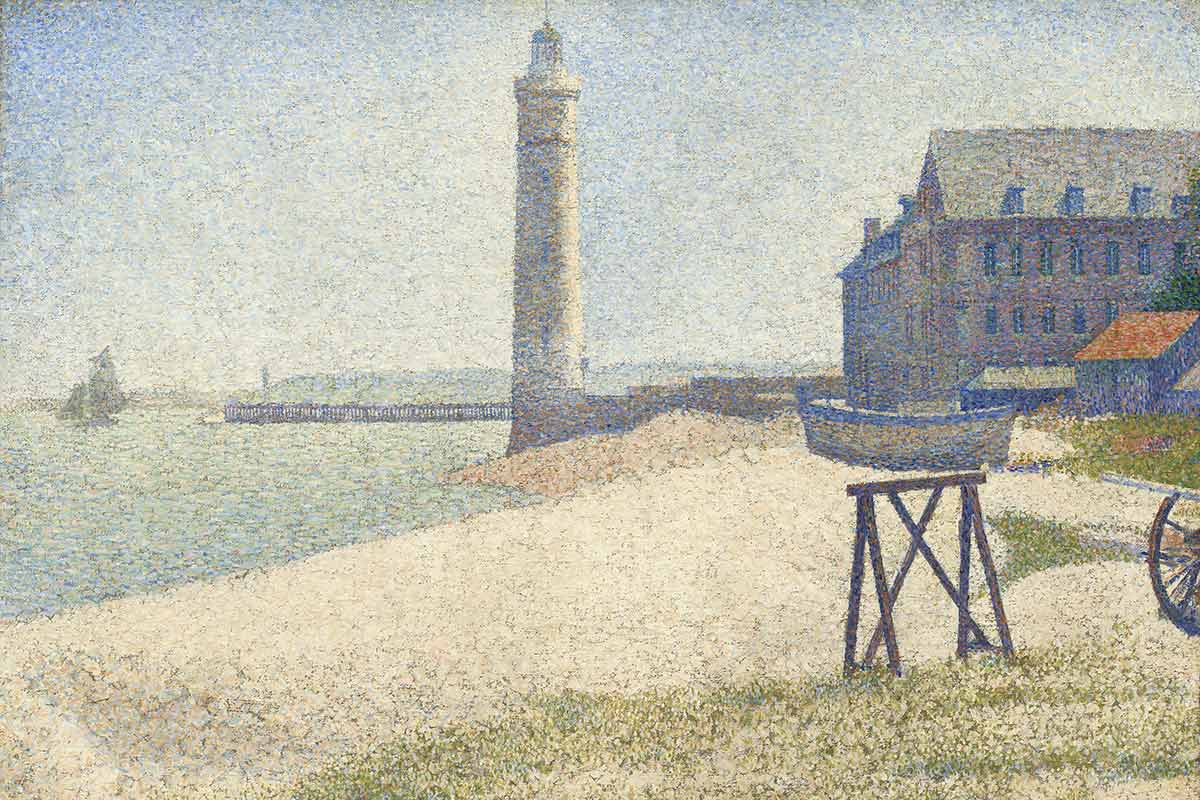
The coastline around Honfleur has changed considerably over the last few centuries due to the silting-up of the south side of the Seine estuary. The beach – like those along the Côte Fleurie to the southwest – was a major attraction for artists, particularly around the Impressionist period of the late 19th century.
Eugène Boudin often painted scenes and landscapes of the beaches and estuary, as did Monet and later the likes of Georges Seurat.
The Plage du Butin is the nearest beach to Honfleur, and there’s also a promenade along the estuary shore, with a lily pond that’s a tribute to Claude Monet.
Visit The Erik Satie Houses
Composer Erik Satie was born in Honfleur in 1866, and the houses occupied by his family through his childhood (he also spent time in Paris) have been turned into this small attraction.
It’s more of an experience than a museum, as you don a headset and walk through a series of tableaux. It’s an approach that works well, especially with younger visitors, and I’ve come across a few similar exhibitions around France (including the Maison de Nostradamus in Salon de Provence).
You can visit the Maisons de Satie as part of the DuoPass (in combination with one other Honfleur museum) or the MultiPass, which covers entry to all five.
The Satie Houses can be accessed at 67 Boulevard Charles V or 90 Rue Haute.
A Day Trip To The Côte Fleurie
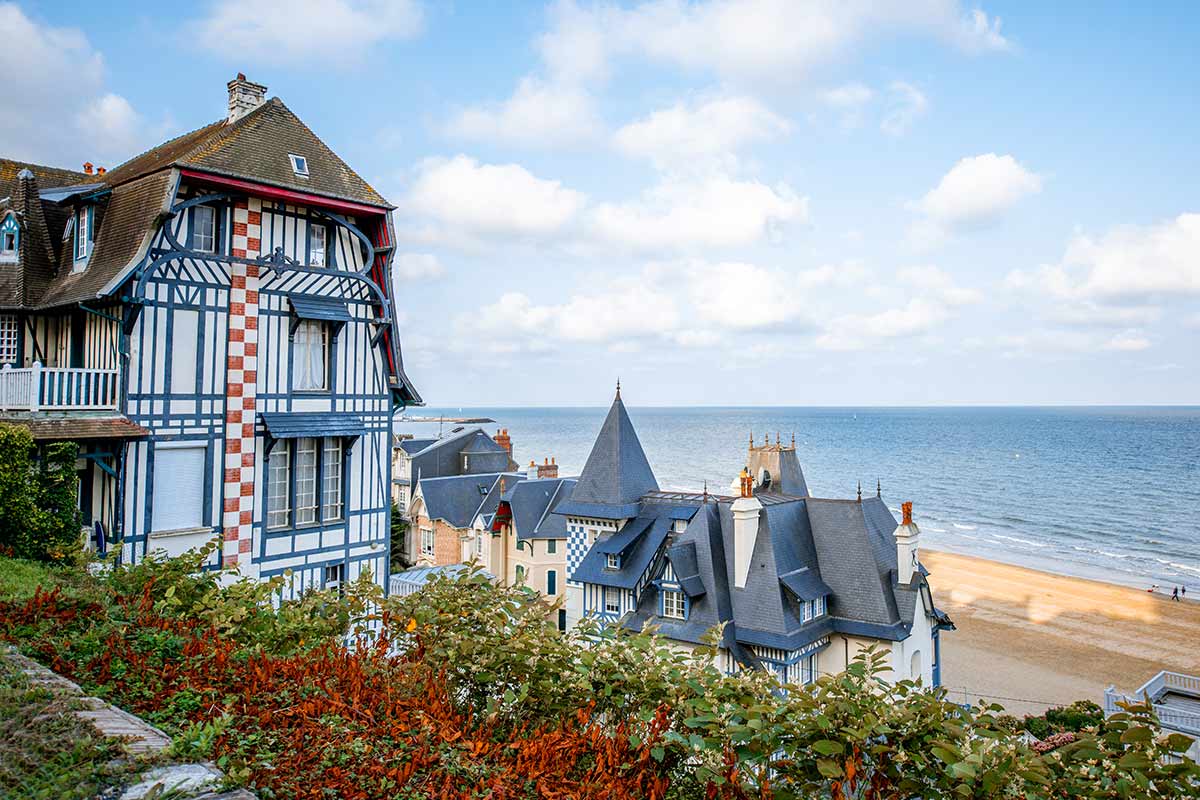
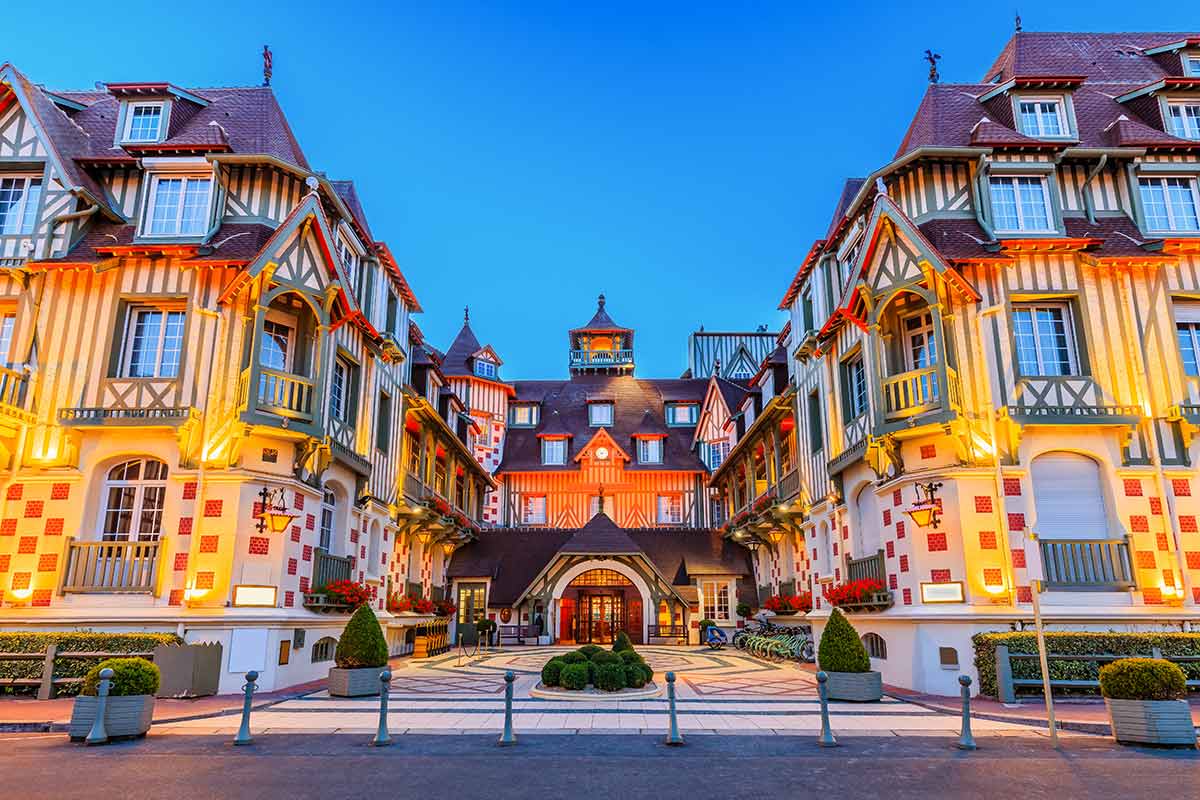
Honfleur is the gateway to the Côte Fleurie (‘the Flowery Coast’), a series of vast long sandy beaches and 19th-century resort towns and villages on the Calvados coast as far west as Caen.
As its beaches are the closest to the capital, the Côte Fleurie is sometimes called the Parisian Riviera. The most famous resort on the coast is Deauville, which really became fashionable in the 20th century with the opening of two five-star hotels, the Royal and Normandy Barrière, the racecourse and Casino. Coco Chanel also opened her first shop in the resort.
My favourite town on the coast is Deauville’s next-door neighbour Trouville, once a workaday fishing village a dash of Belle Epoque architecture like its neighbour. Most of the towns and villages along the coast have a section of beach. I also recommend Houlgate and Cabourg, both of which have a fine beach and some superb architecture, in Houlgate’s case the beautiful late medieval Villa Landry.
Visit Some Of The D-Day Beaches
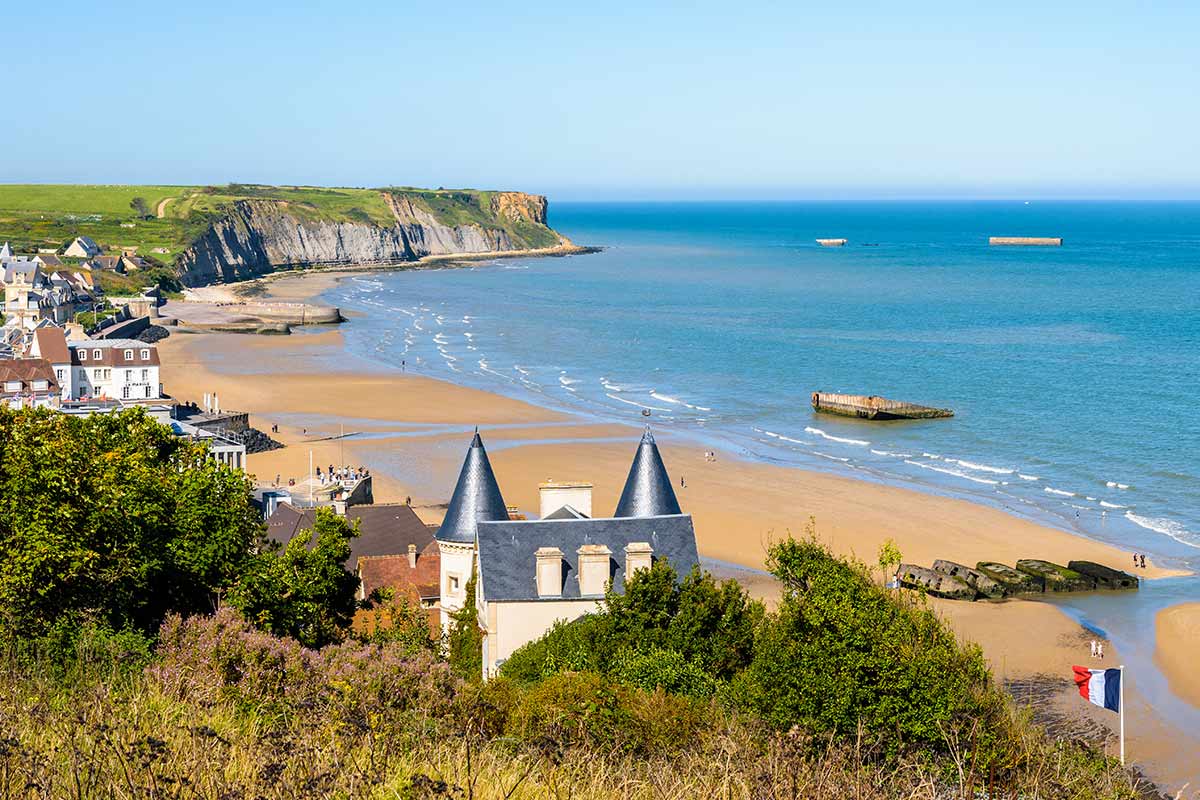

The D-Day Beaches – along the Côte de Nacre (Mother-of-Pearl Coast), west of the Orne estuary and Caen – are one of the main reasons many people visit Normandy. I first went there on a school trip over 40 years ago, and returned a few times since. You could spend well over a week visiting all of the sites (that’s how long I’ve spent there, over four trips there), and many visitors – especially those on shore excursions from Le Havre – opt to visit one area of the landing sites.
Even from nearby Caen, public transport around the D-Day beaches is somewhere between hopeless and non-existent, so you either need to drive yourself or take a tour. Hopefully, now that the Beaches have recently been designated a UNESCO World Heritage Site, this situation will improve.
Tours tend to follow itineraries depending on the nationalities of customers, with specific itineraries geared towards American and Canadian visitors.
This Canadian D-Day tour picks up at Le Havre and Honfleur, and visits Juno Beach, the Juno Centre exhibition and the Canadaian War Cemeteries at Reviers and Bretteville-sur-Laize.
This D-Day Beaches Trip from Le Havre visits the American sites at Utah and Omaha Beaches, as well as the cliffs at Pointe du Hoc. Pickup from Honfleur can also be arranged.
If you’re driving, I also recommend visiting the small seaside town of Arromanches-les-Bains, which is part of the Gold Beach British landing area. You can see significant remains of the concrete Mulberry Harbour, and artificial port transported piece by piece across the English Channel to allow the Allies to land heavy equipment and artillery in Normandy. I also recommend the excellent Arromanches Museum, which was the first Museum in the region to document the Allied landings, founded in 1954.
How To Get To Honfleur
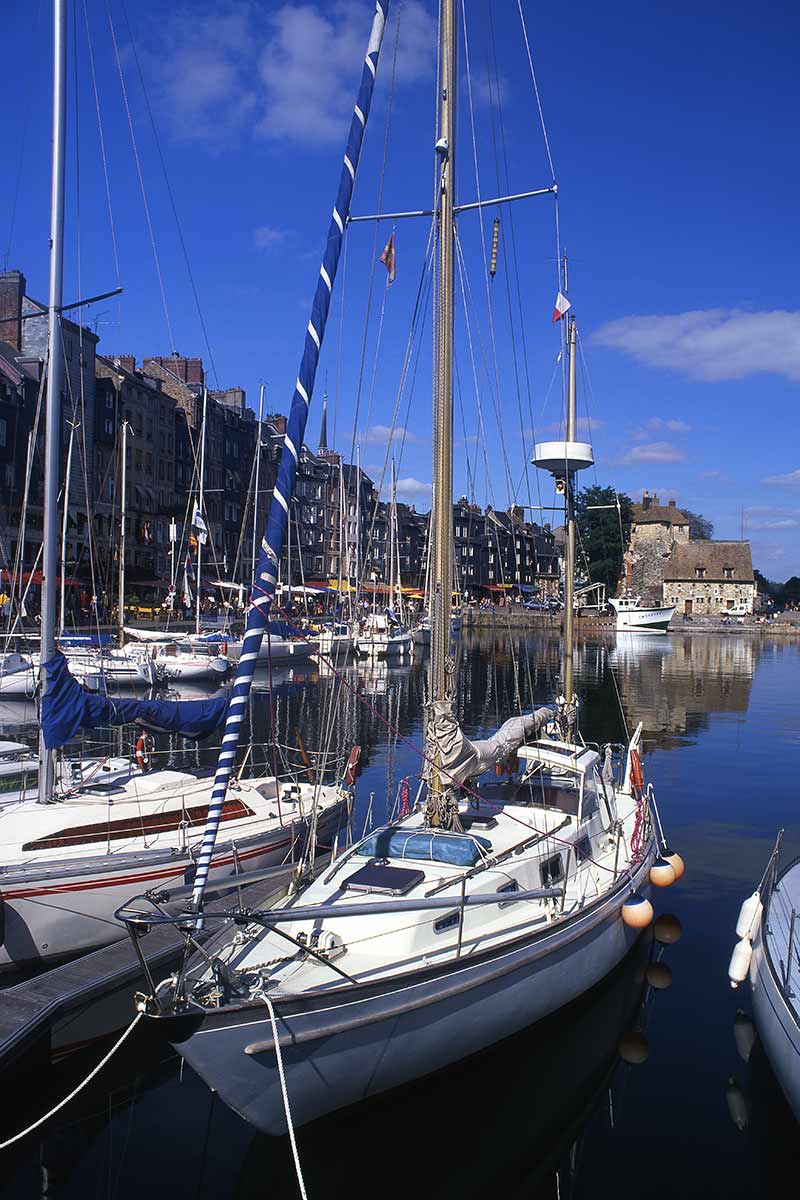
Honfleur is ten miles from the port of Le Havre, in the department of Calvados, in Lower Normandy. It’s also on the southern shore of the estuary of the River Seine.
It’s a 30-minute bus journey from Le Havre, which is where the nearest train station is.
If you’re driving, Honfleur is just off the A29 autoroute (motorway or highway) from Paris, only 3 km (two miles from the Pont de Normandie bridge.
Things To Do In Honfleur – Final Thoughts
I hope that you’ve found this guide useful. Honfleur can be seen in as little as a day, but it also makes a great base for exploring more of Normandy, particularly if you are driving, as public transport is rather limited.
I’ve travelled widely around Normandy and France, and here’s a selection of my other France articles on the site:
Normandy Articles
Things To Do In Rouen – the wonderful ancient capital of Normandy
20 Best Places To Visit In Normandy – from the well-known highlights to off the beaten track gems in the Norman countryside
Best Shore Excursions from Le Havre – including Honfleur, Rouen, D-Day Beaches, Mont-Saint-Michel and more
Paris Articles
Best Eiffel Tower Views – 28 best places to see the Eiffel Tower in Paris
Arc de Triomphe Paris – all you need to know before visiting this great Paris landmark
Things To Do In Montmartre – the hilltop village that inspired so many artists in the 19th and 20th centuries
Sunset in Paris – the 15 best places to see one
Things To Do In The Latin Quarter Paris – exploring the historic Left Bank
Visiting Place de la Concorde Paris – one of the most iconic squares in Paris
Pont Alexandre III Paris – stunning Belle Epoque Parisian bridge
Famous Churches In Paris – 22 stunning Parisian churches to seek out
Icons of Paris – from the Mona Lisa to the Moulin Rouge, the Arc de Triomphe to Art Nouveau Metro signs, and many more
La Sainte Chapelle Paris – one of the most beautiful Gothic churches ever built
Southern France
Things To Do In Carcassonne – one of the most beautiful walled towns in the world
One Day In Nimes – how to see the best of the ‘French Rome’ in a day
South of France Road Trip– a 10-day itinerary across Provence and Occitanie
Things To Do In Albi – stunning red-brick World Heritage city with outstanding Toulouse-Lautrec Museum
One Day In Arles – Roman monuments aplenty, and a chance to follow in the footsteps of Vincent van Gogh
Things To Do In St Rémy de Provence – more outstanding Roman sights and more Vincent Van Gogh locations
One Day In Avignon – 24 hours by the Rhone in the City of Popes
Best Day Trips From Avignon – 14 fantastic day trips from the City of Popes