

Icons of Paris
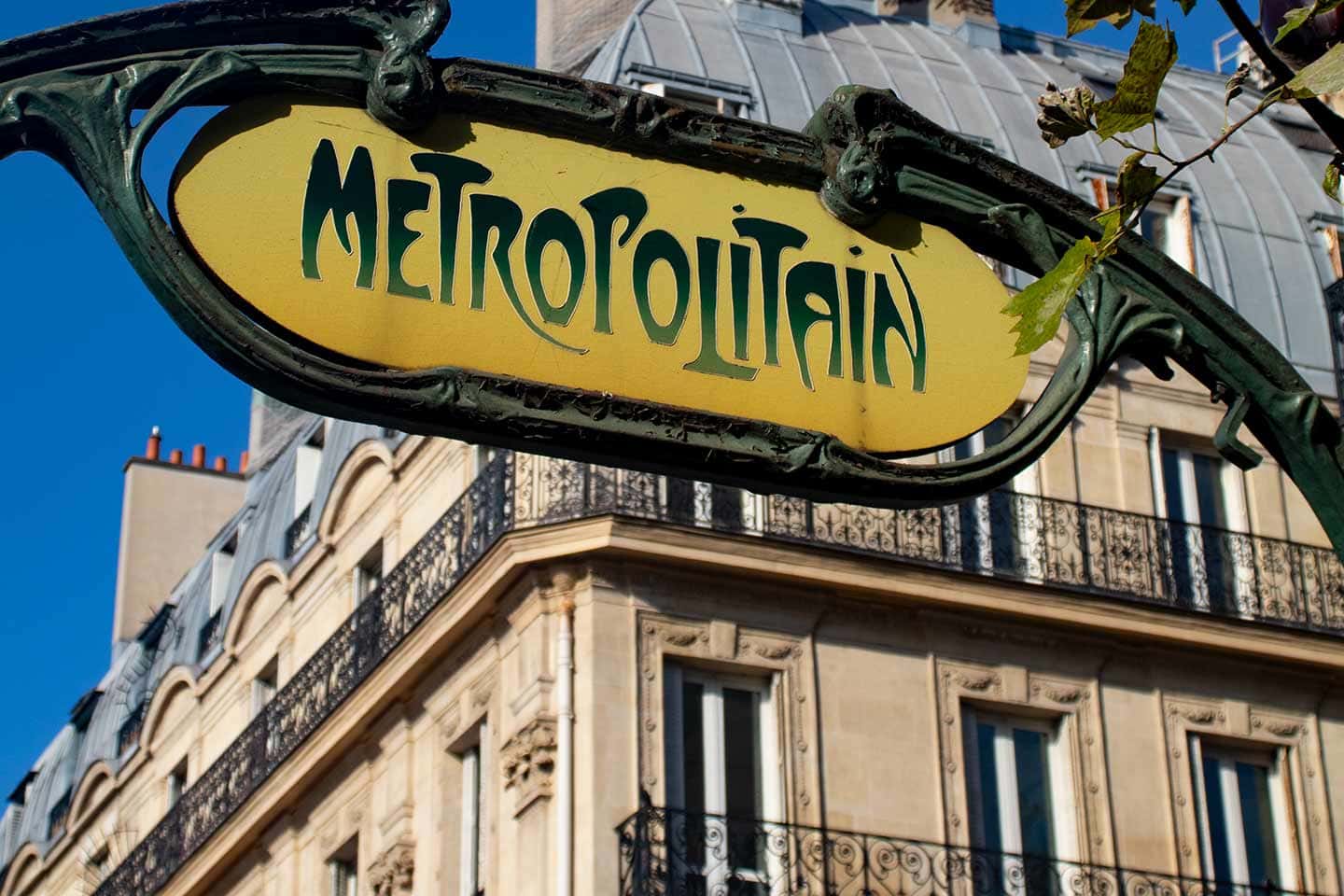
The twin towers of Notre Dame, and the unmistakable outline of the Arc de Triomphe, the Art Nouveau Metro station signs and the Eiffel Tower – these are a few of the great icons of Paris.
Paris is one of the most iconic cities in the world, and in this article I explore these and less-known icons, from the World Heritage-listed River Seine and its bridges to one of the most famous museums in the world, the Louvre, and possibly the most renowned cabaret theatre in the world.
I introduce you to each of these Parisian icons, give you tips on finding and visiting them, and suggest tours and places to stay in the city. I hope you enjoy this guide, and that it gives you some inspiration.
1. Eiffel Tower
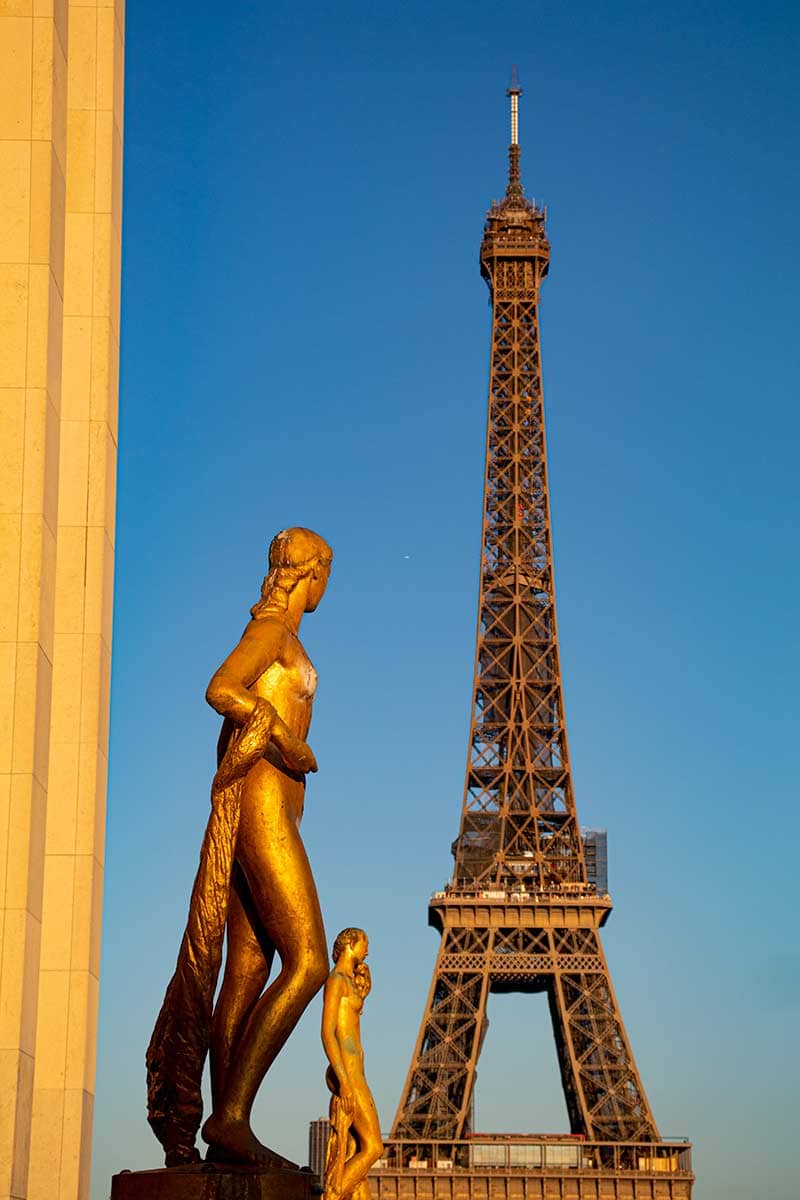
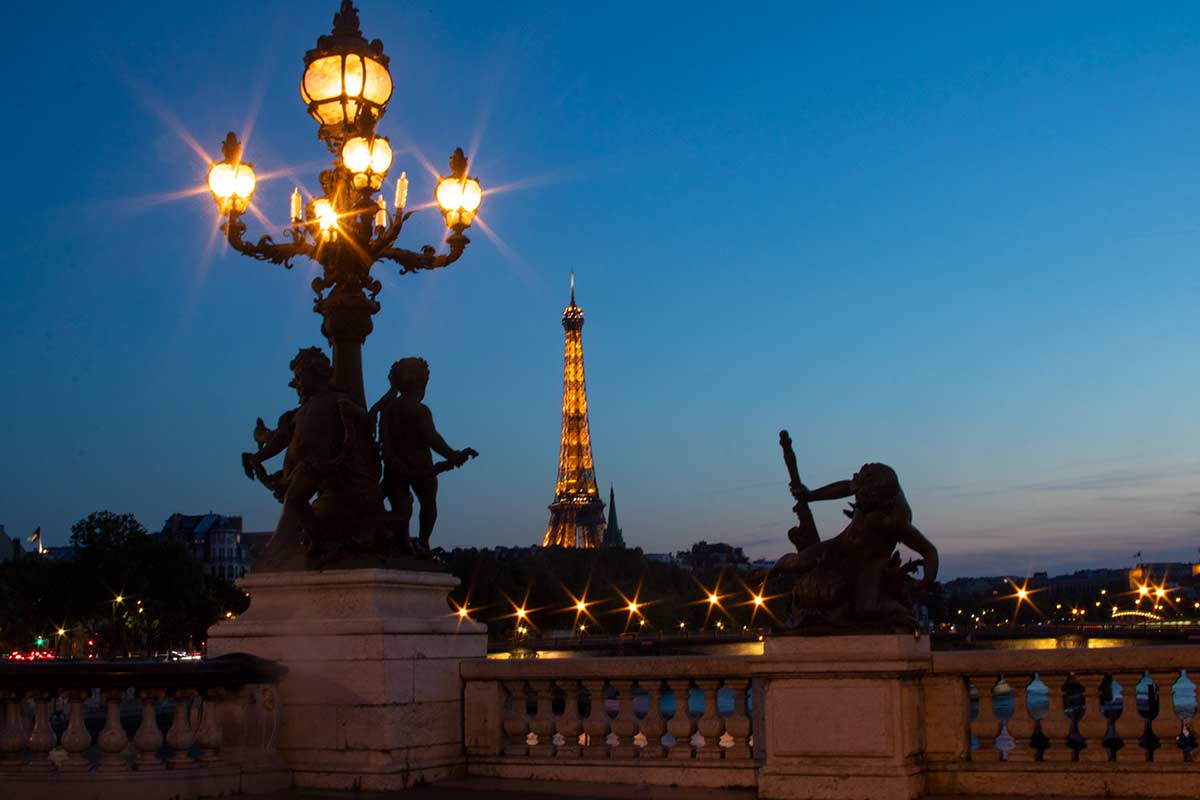

The Eiffel Tower is the most famous icon and landmark of Paris, its distinctive outline instant shorthand for Paris or France. It’s hard to imagine now, but it was only intended as a temporary structure, built for the 1889 World’s Fair (and centenary of the French Revolution) in the city, and that many Parisians were not fond of it at first.
Now the soaring Tour Eiffel is the most famous sight in the French capital, and at over 1,000 feet (330 metres) you can see it from across the city.
Climbing the Eiffel Tower is one of the most popular Parisian rites of passage, along with boat cruises along the Seine. Lifts whisk you up three floors to the top level, over 900 feet above the city, and you can also climb stairs to the first and second levels.
In early and late light, it’s easier to notice that each level of the Eiffel Tower is painted a slightly different colour. The top level is the lightest and lowest level the darkest, and this is intended to complement the shades of the sky,
Tickets: You can book your 2nd floor or Eiffel Tower summit access here.
See Also: Best Eiffel Tower Views – the best vantage points of the Eiffel Tower in Paris
2. Arc de Triomphe
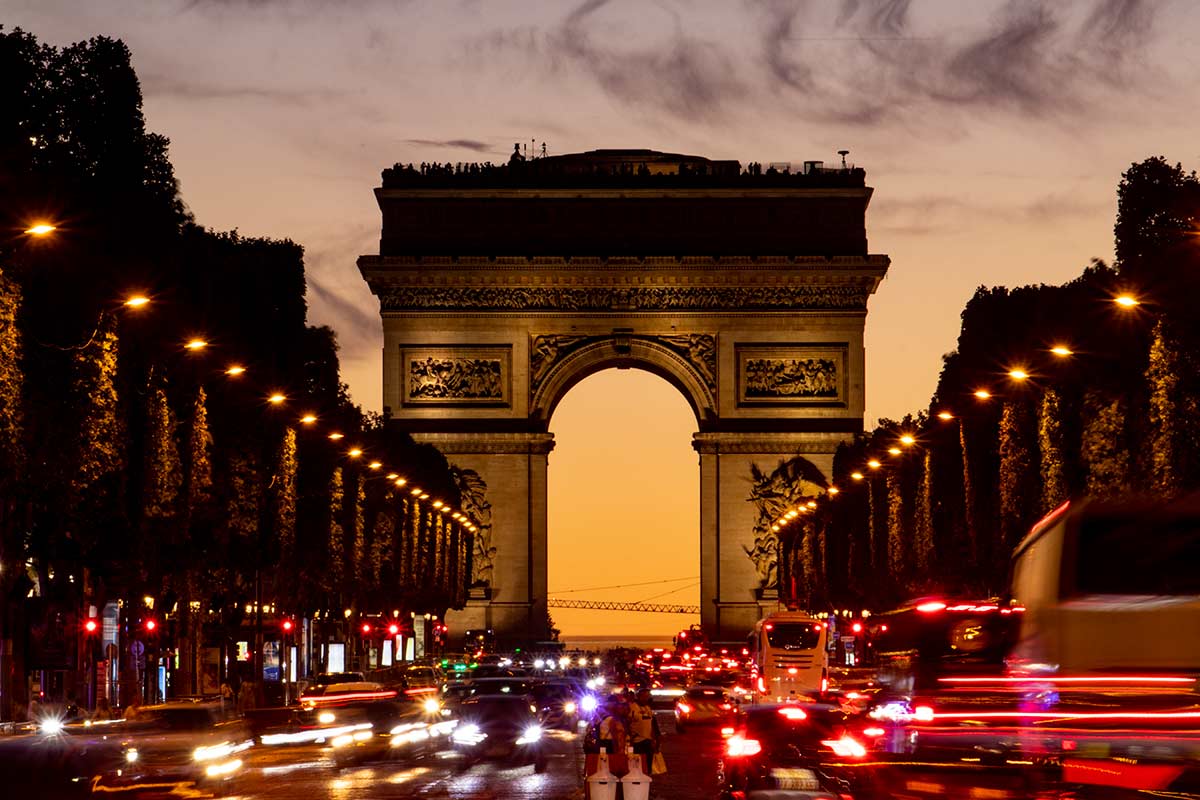
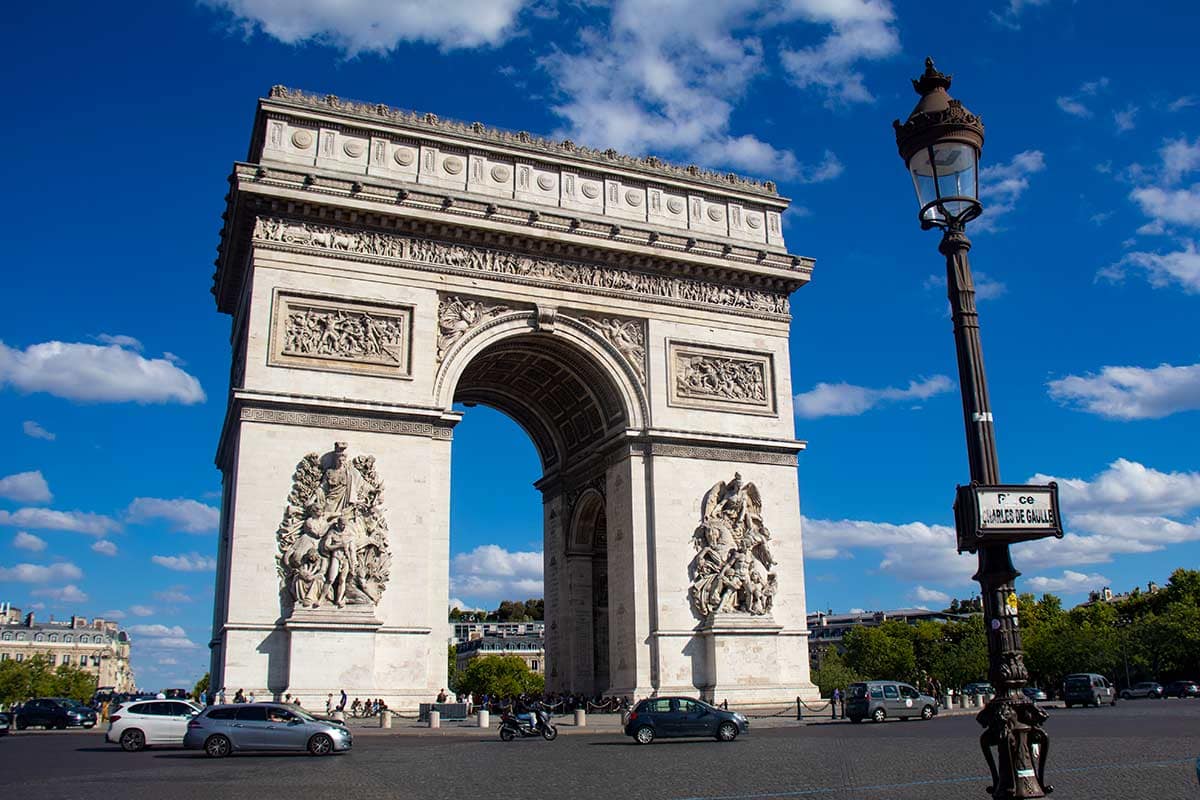
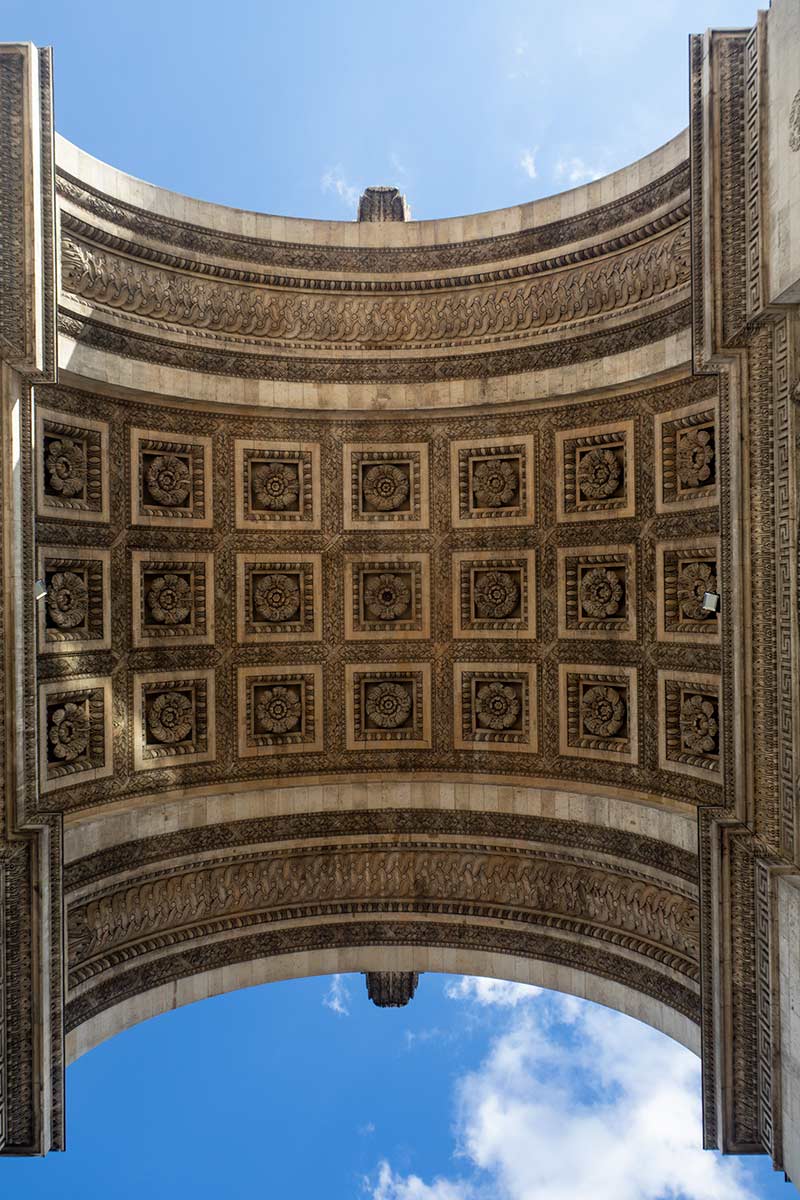
The Arc de Triomphe is one of the ‘big three’ Paris sights along with the Eiffel Tower and Notre Dame. It was inspired by the Arch of Titus in the Roman Forum in Rome, and commissioned by Napoleon Bonaparte following his victory at the Battle of Austerlitz. It stands on the summit of a modest hill, from which twelve roads radiate. This roundabout is known as the Étoile (the Star).
The most famous street leading to the Arc de Triomphe is the Avenue des Champs- Élysées, which was originally laid out a century before the Arc. It may not be the most intriguing street in Paris, but the Arc de Triomphe gives it a whole new dimension, the view up the hill to it making it one of the grandest, most beautiful streets in Europe.
Visiting the Arc de Triomphe is one of our favourite things to do in Paris, partly because it is such an outstanding viewpoint. From the rooftop gallery you have an extraordinary 360° view of central Paris, including one of the best Eiffel Tower views and an amazing view of the Axe Historique (Historic Axis), looking down the Champs-Élysées past the Place de la Concorde to the Tuileries Garden and Louvre. In the opposite direction, you enjoy a superb view of the skyscrapers and Grande Arche of La Défense business district beyond the city ring road.
The Arc is a commemoration of French victories – listed on the monument – and also those who fell fighting for France. The Tomb of the Unknown Soldier lies beneath the arch, and an Eternal Flame is kept burning in memory of him and his many comrades whose lives were lost. The exhibition inside the Arc gives you the full lowdown on the history of the Arc and its monumental sculptures.
As well as being one of the main icons of Paris, it’s possibly also the most iconic triumphal arch from the modern era in the world today. It has inspired many others, from the fine Art Nouveau Arc de Triomf in Barcelona to the Neoclassical nightmare with which Washington DC has recently been threatened.
Tickets: You can order your Arc de Triomphe tickets here – these include unlimited time at the rooftop gallery.
See Also: 32 Most Famous Landmarks in France – from the Arc de Triomphe to Arles Roman arena, Notre Dame to the Negresco Hotel and more
3. Notre Dame de Paris
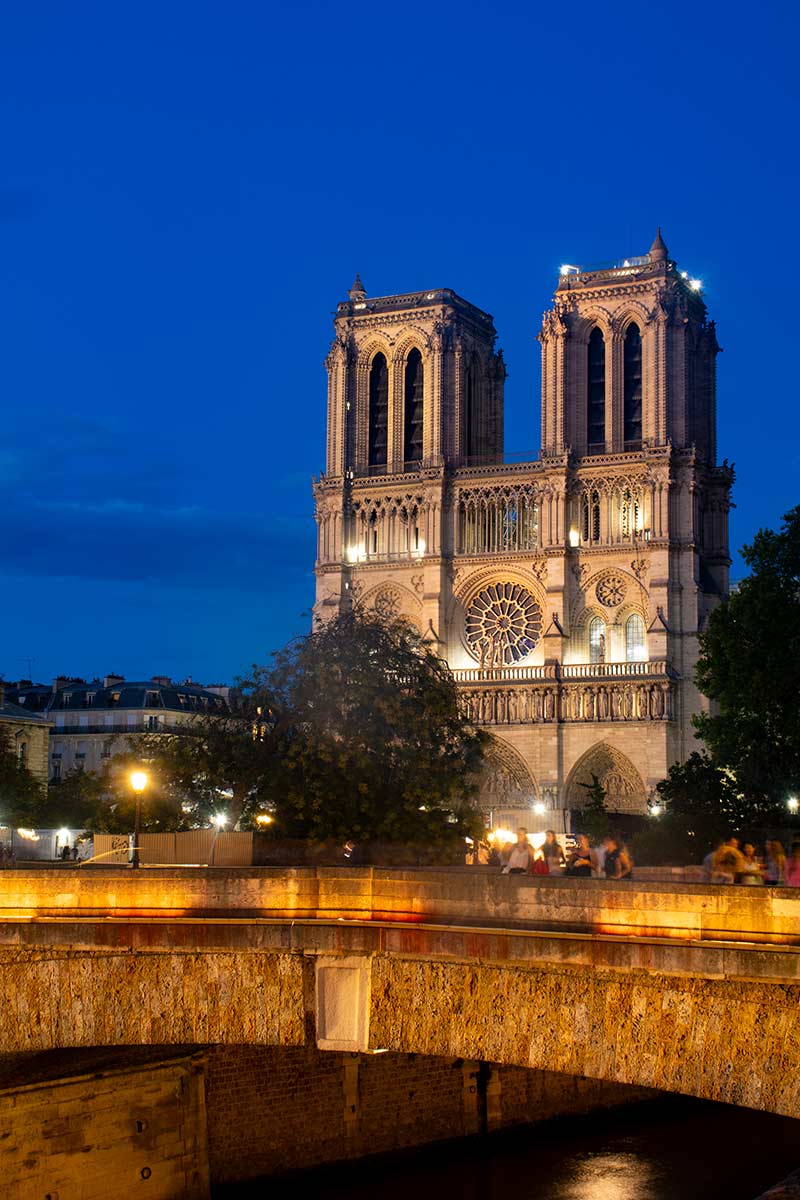
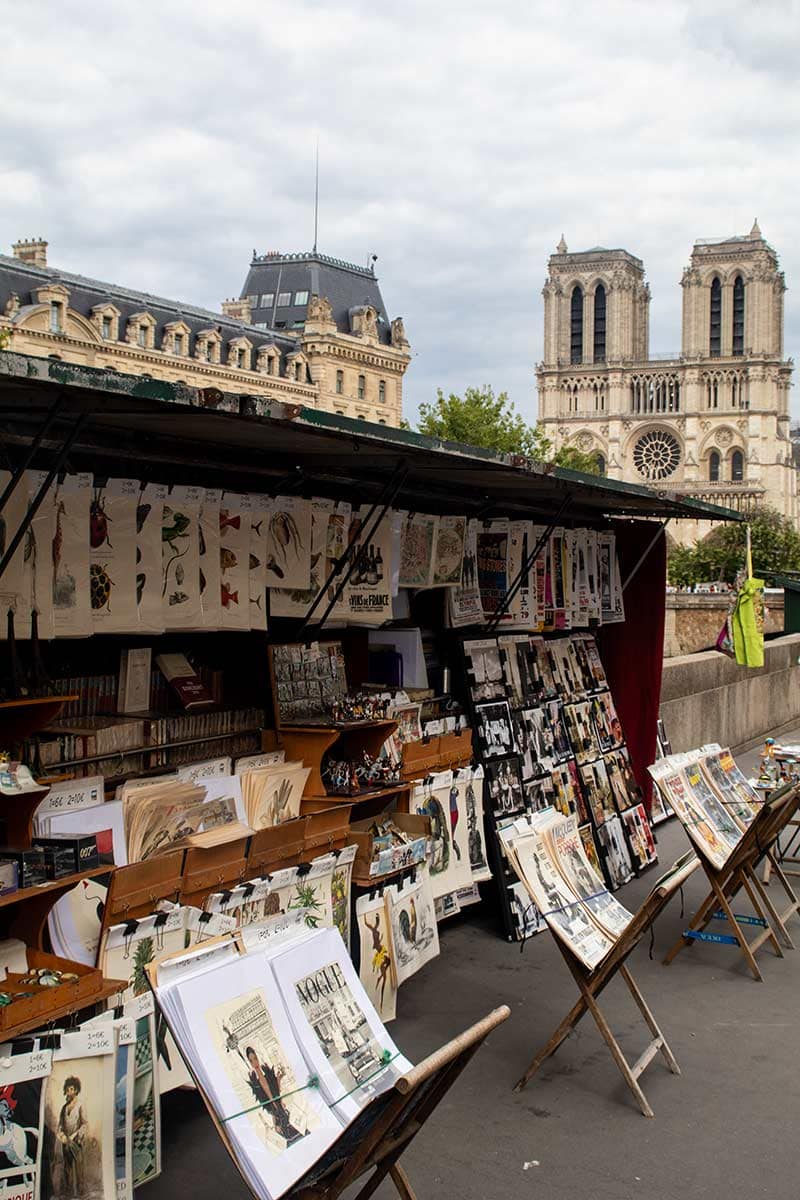

Notre Dame is the most famous of churches in Paris, the great Gothic Cathedral of the French capital also immortalised in literature through Victor Hugo’s The Hunchback of Notre Dame.
Along with Chartres, Reims, Amiens, Rouen and Bourges, Notre Dame is one of the great French Gothic cathedrals. Its location by the banks of the Seine, a backdrop to millions of photographs, is another reason it’s one of the main icons of Paris.
Notre Dame was restored and largely rebuilt following the catastrophic fire in April 2019 which caused the collapse of the spire and most of the cathedral roof. The new Notre Dame was opened in December 2024, and it’s a very different spectacle to what you would have seen before the fire. The arches and stonework are much lighter than the centuries-old stone in place prior to the fire, and this is how it would have appeared during the Middle Ages.
Tours: This Notre Dame guided tour includes the option of exterior, interior or both, and includes free entry to the Cathedral.
4. The Paris Metro
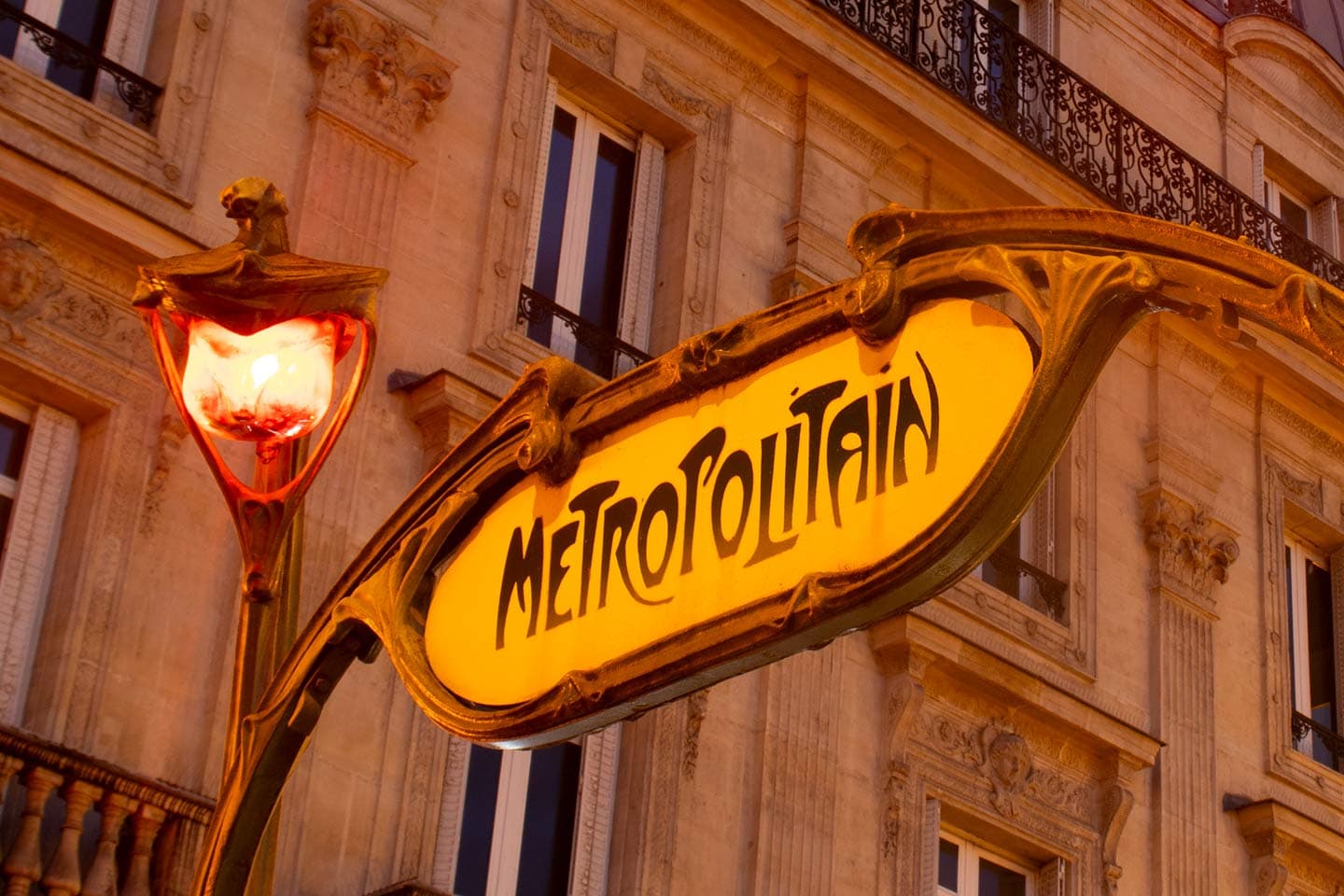
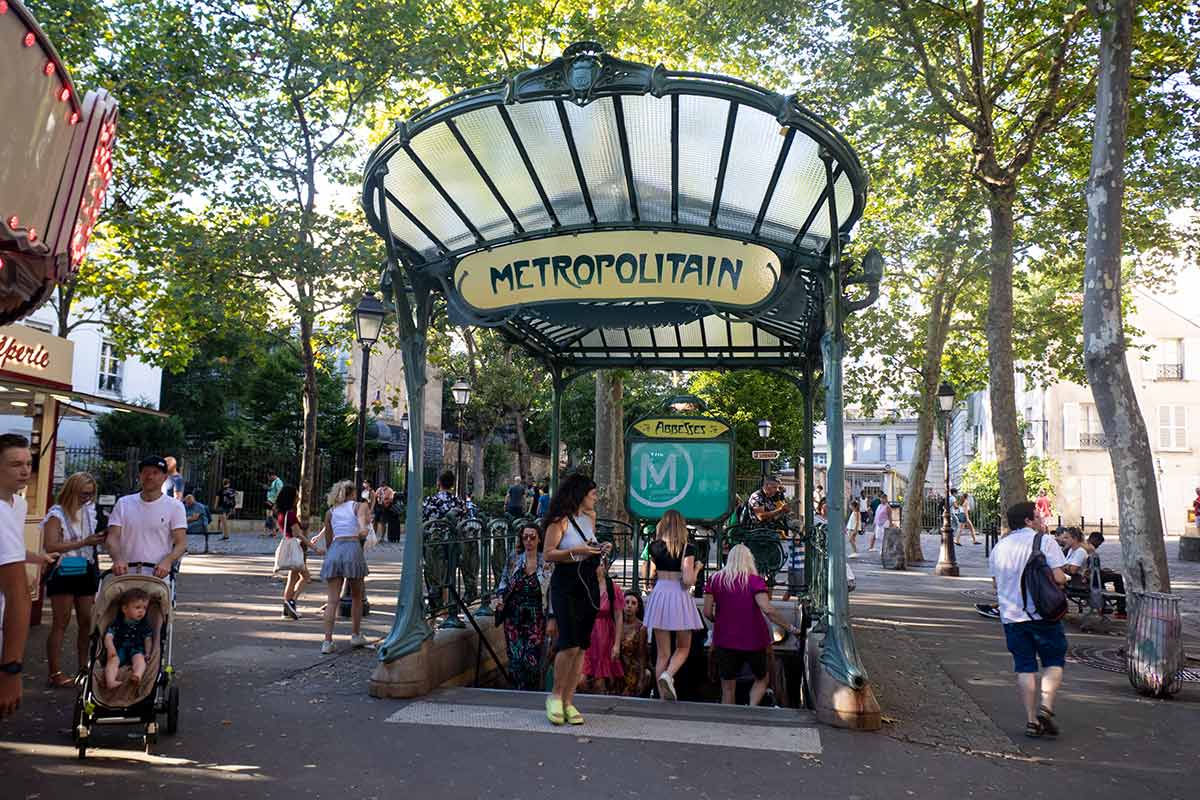
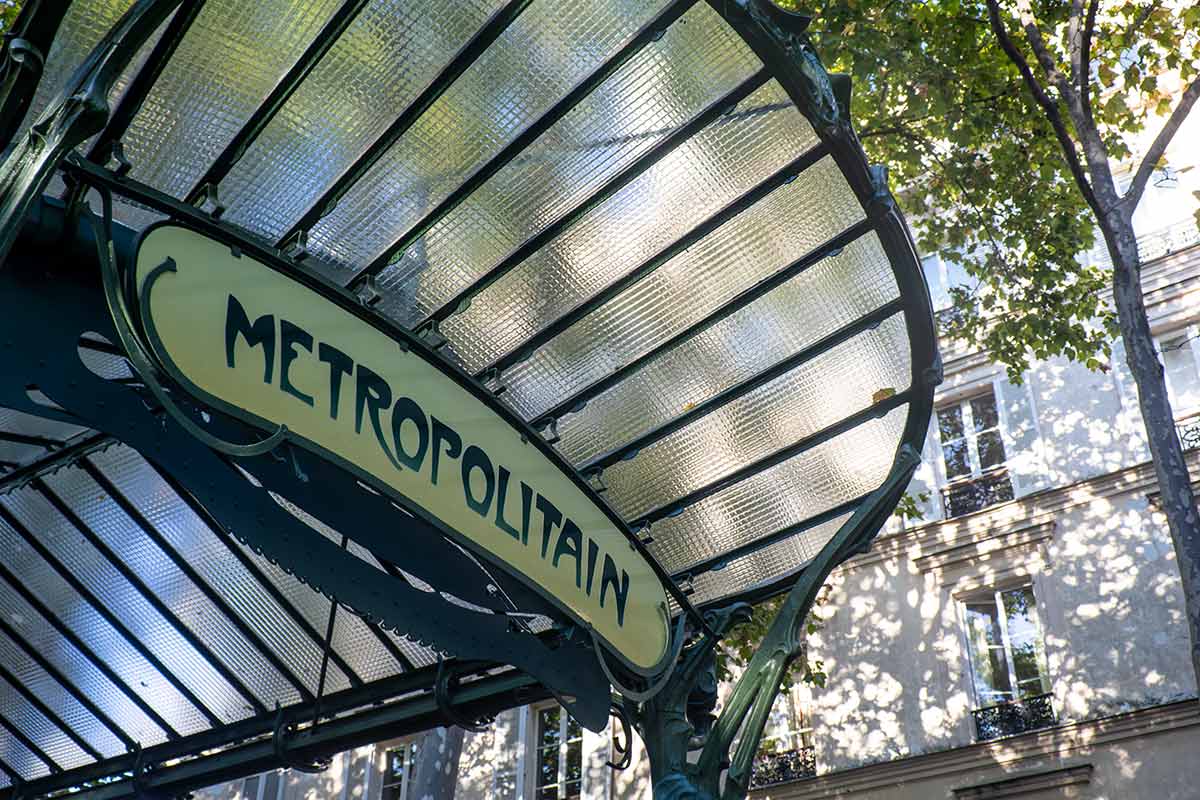
The Paris Metro dates back to the turn of the 20th century, when other great European cities (including the likes of London, Budapest and Glasgow) were also opening electrified underground railways. The company commissioned architect Hector Guimard to design station pavilions, entrances and signs, all adorned with lettering that Guimard designed himself.
Many have been lost, but over 80 of the classic Art Nouveau station signs remain, a much-loved feature of many a Paris streetscape. The pillars are cast-iron, and resemble the stalks of plats, while the lamp bulbs on each evoke the bud of a flower about to bloom.
Two of the more elaborate edicule B entrances, with butterfly-style glass canopies, also survive, at Abbesses Metro station on the lower slope of Montmartre, and at Porte Dauphine in the west of the city centre.
See Also: Art Nouveau Paris – 12 Unmissable Sights
5. Moulin Rouge
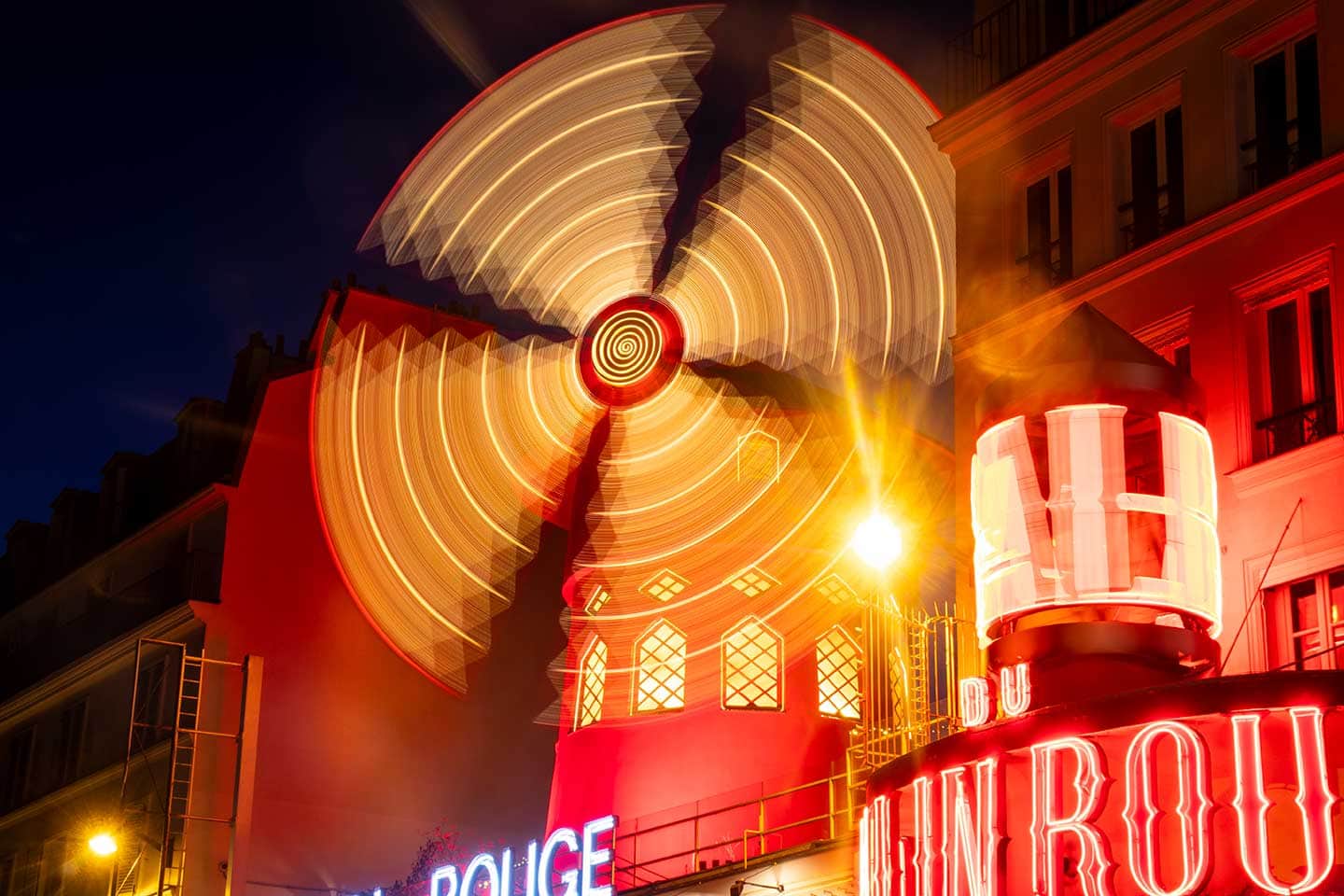
The Moulin Rouge cabaret theatre has been one of the most famous icons of Paris since the 1890s, when it hosted dancing revues (it is claimed that the famous can-can dance was invented there) and productions from operettas to Le Pétomane, a performer who could fart at will.
Its early shows were publicised through iconic posters by Henri de Topulouse-Lautrec, and its popularity grew until a devastating fire in 1915. It reopened in 1925, and has since gone on to host many dance revues and concerts. The present décor dates from a refurbishment in the 1950s.
The Féerie revue is one of the most popular shows in Paris, and includes the can-can and many other dances, with a cast of up to 100 performers each show. Tickets in clude a meal and champagne – and you can order your Moulin Rouge concert here.
6. Sacré Coeur Basilica
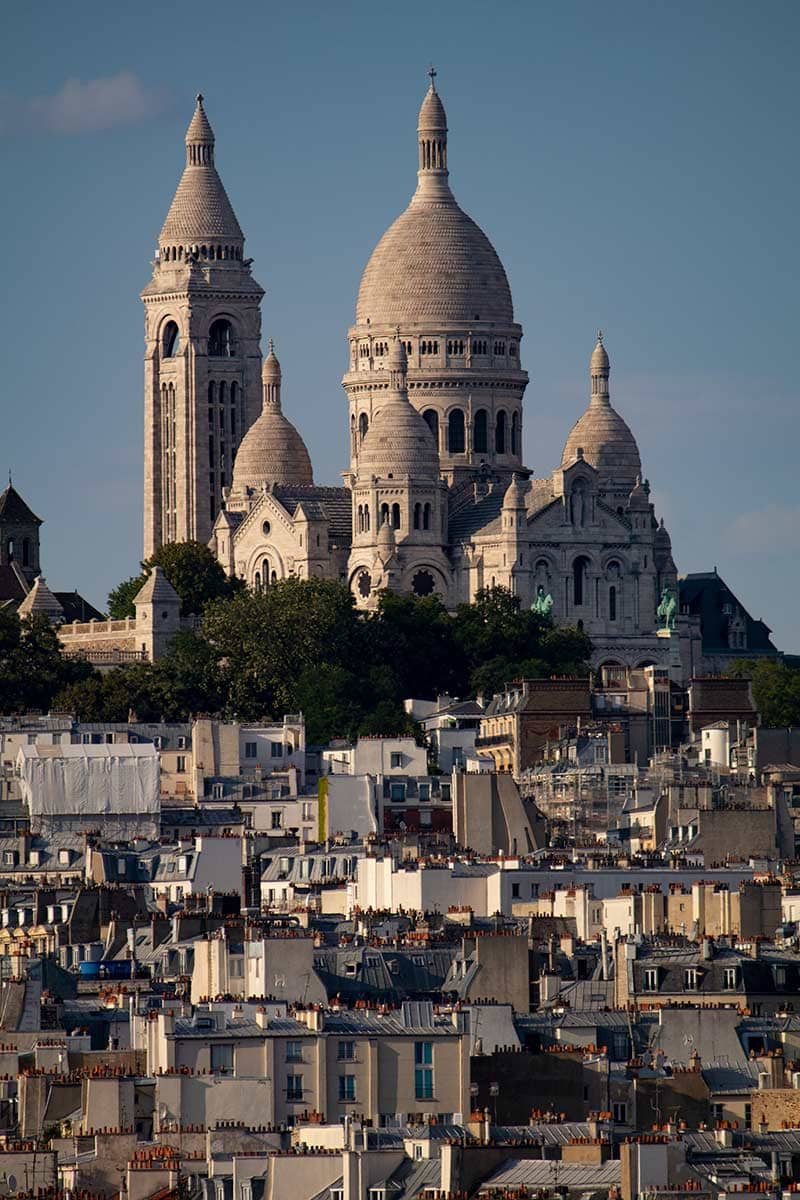
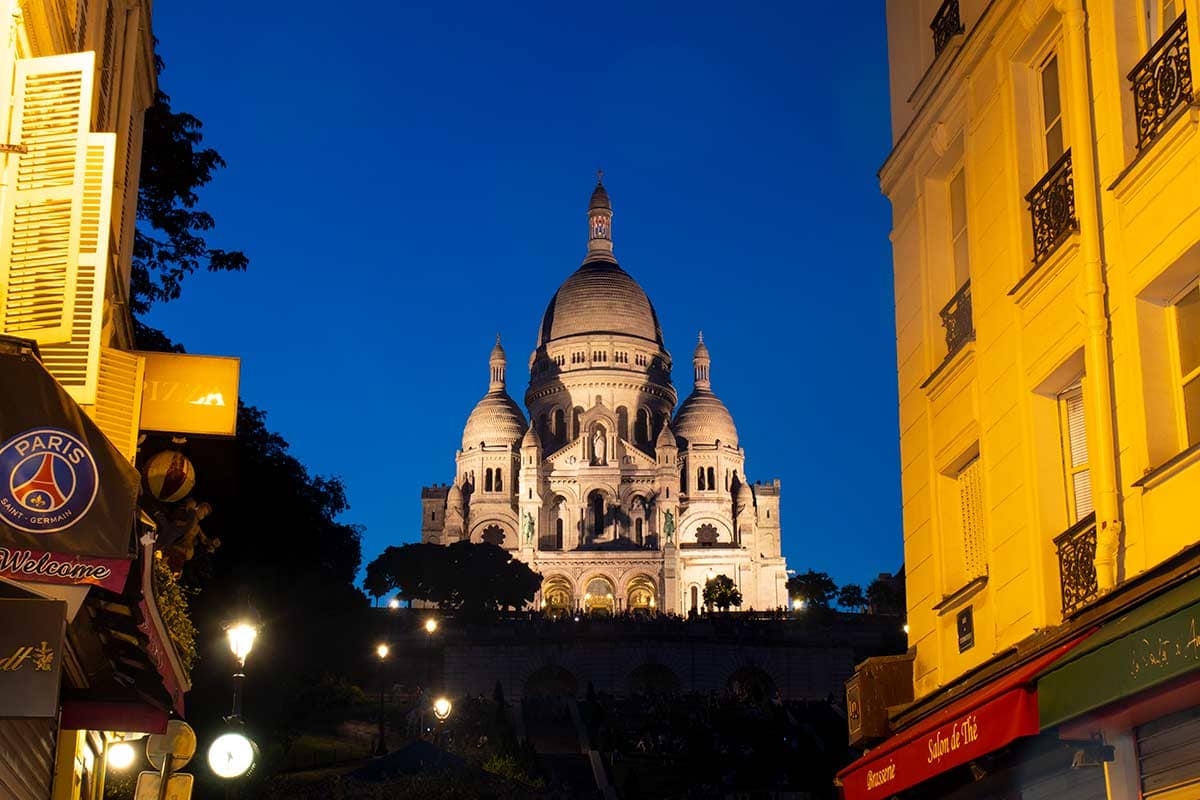
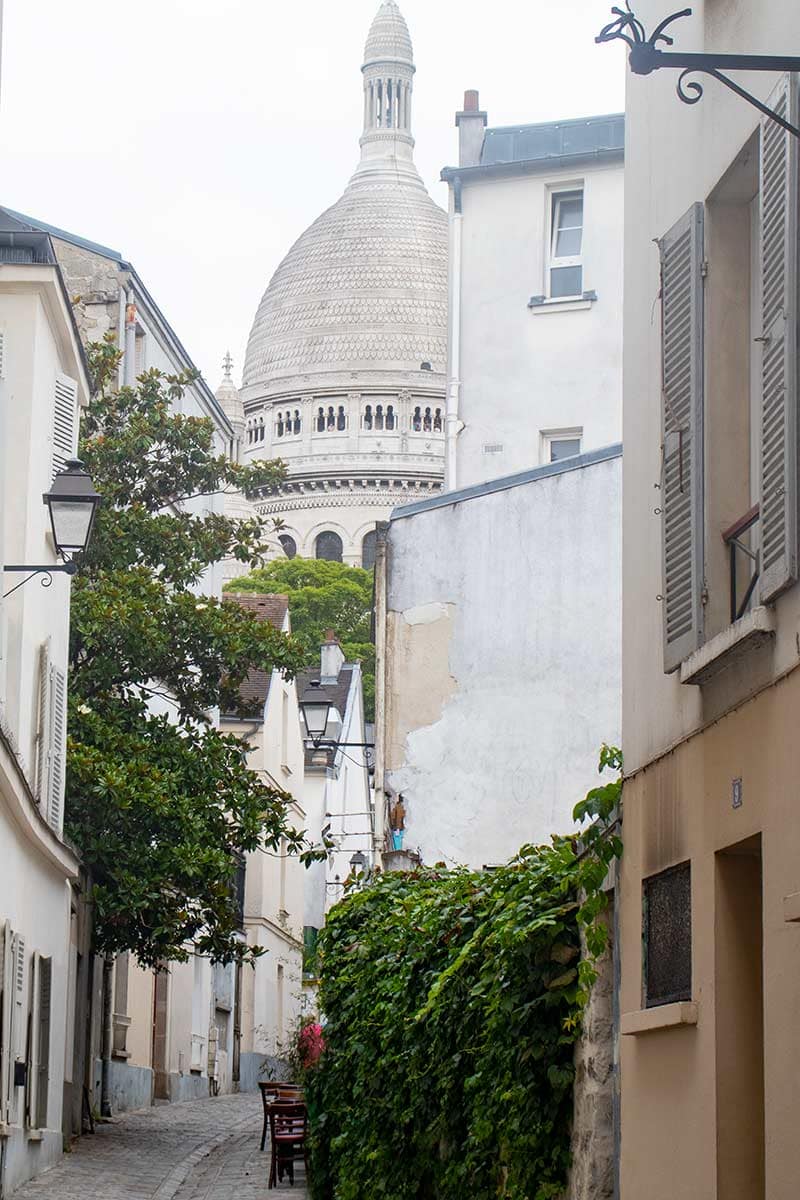
Like its predecessor the Eiffel Tower, the Basilica of Sacré Coeur didn’t take long to become one of the most famous icons of Paris. For most of my teens my bedroom wall was adorned by a painting of the nearby square, the Place du Tertre, with the domes and tower of Sacré Coeur looming above. The younger me wanted to walk past this scene in real life every day
It was designed in the late 19th and early 20th centuries by Paul Abadie, who restored – and made far more exotic – the cathedrals at Angoulême and Périgueux in southwest France. Standing on the summit of the Butte de Montmartre, it’s visible across the city, with particularly good vantage points on the Galeries Lafayette rooftop and the Pantheon dome.
Sacré Coeur is such an evocative sight, especially when it looms above narrow Montmartre streets such as Rue de l’Abreuvoir and Rue St Rustique. The tower of Sacré Coeur is also a great vantage point with superb views over Montmartre, Paris and the city suburbs.
The interior – which is free to visit – is something I’ve always found disappointing. There are some fine neo-Byzantine mosaics, particularly the Christ in Majesty mosaic above the sanctuary. However, after the exotic promise of the exterior, the interior is dim and dark, and there are numerous stalls selling overpriced souvenirs and prayer candles for €10. I’m not a religious person, but if Christ walked in there as he did the Temple in Jerusalem, he’d get rid of all this nonsense. And tell them to turn a few more lights on.
7. The Louvre
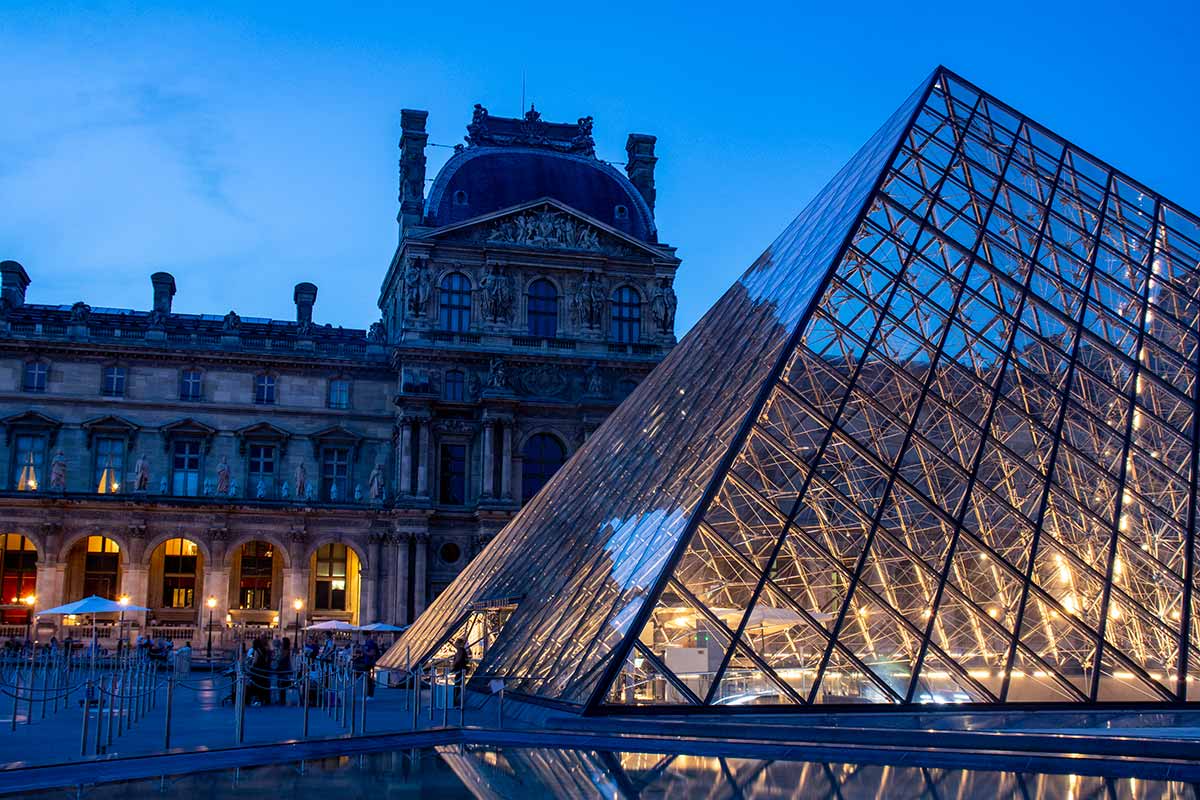
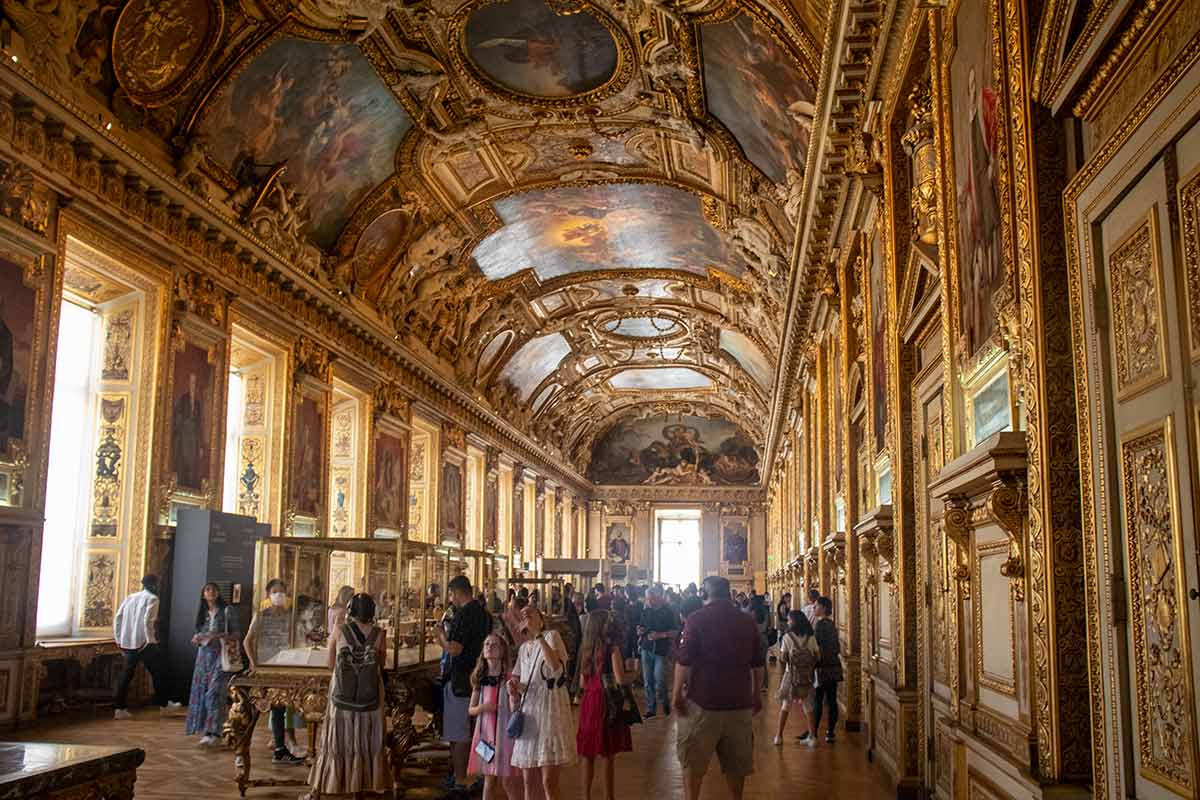
The Louvre is one of the biggest and greatest museums in the world. It’s housed in the former residence of French kings, but the main reason it’s so big is the enormous scope of its collection. It’s like London’s British Museum, National Gallery and National Portrait Gallery rolled into one, and can take half a day – even a full day – to see in anything approaching its entirety.
The exterior of the Louvre has become one of the great icons of Paris since the late 1990s, when the glass pyramid in the main courtyard was installed. The work of architect I M Pei, you descend below the pyramid to an underground reception area before ascending back to the galleries.
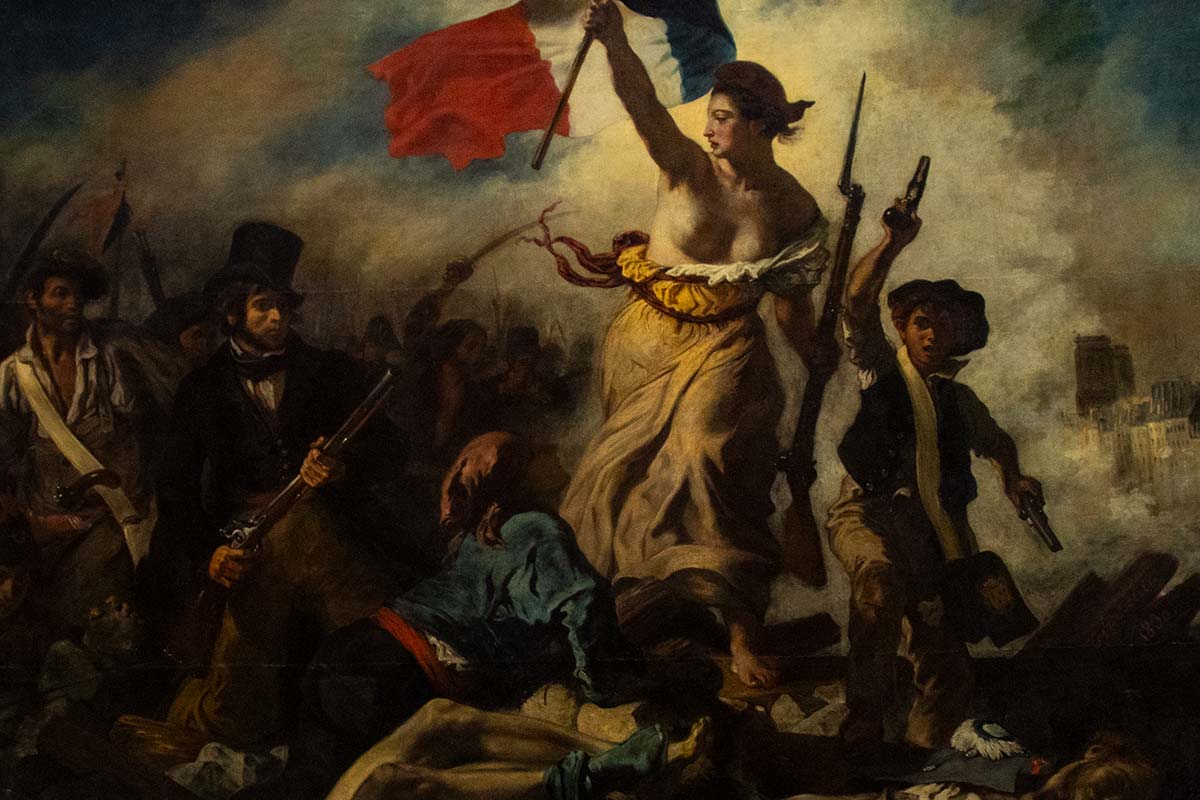
If you’re visiting the Louvre, I suggest a degree of planning in advance. The Mona Lisa (see following section) is on many people’s wish list, but there are so many other outstanding works, from the iconic Liberty Leading the People (by Eugene Delacroix) to stunning collections of ancient Etruscan, Egyptian, Greek, Middle Eastern and Roman artworks and artefacts.
Tours: A Louvre guided tour is perhaps the best introduction to the Museum, saving you a lot of time finding artworks spread across several galleries. This 2-hour skip the line Louvre highlights tour includes the Mona Lisa, Venus de Milo and much more.
8. Mona Lisa
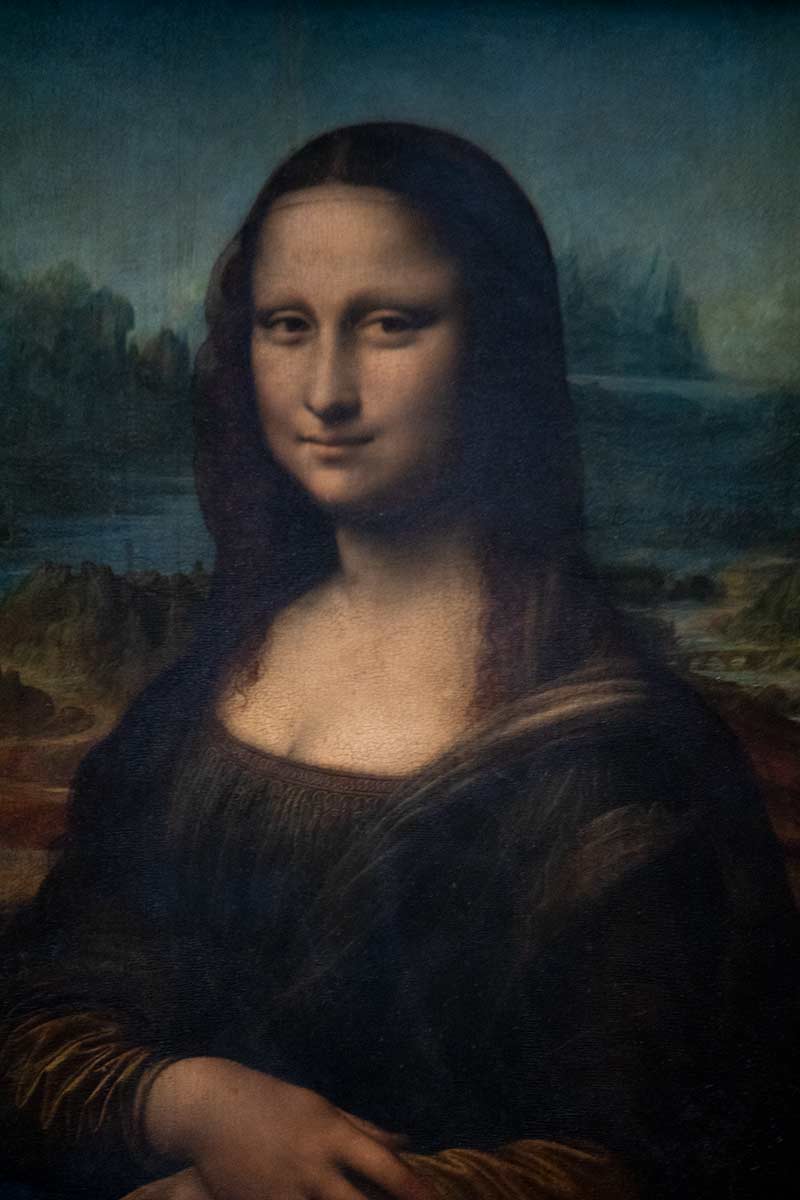
The most famous work of art in the Louvre is Leonardo da Vinci’s La Gioconda, better known as the Mona Lisa. Indeed, it’s one of the most famous works of art in the world. Which is why, whenever you visit the Louvre, it may take you a considerable time to get anywhere near it.
How times have changed. When I first saw the Mona Lisa as a 12-year-old in 1982 it was one of several paintings hung on a wall in one of the exhibition room. Nowadays it occupies a substantial part of a wall in the Salle des États in the Denon wing of the Museum.
The crowds which constantly congregate around it detract from the overall experience of visiting the Louvre, and the Museum has decided to build an underground room that will house the Mona Lisa alone. It’s intended to do away with the unseemly jostling and standing on tiptoes that’s all part of the current experience of seeing the Mona Lisa. Let’s hope it’s a great improvement.
9. River Seine
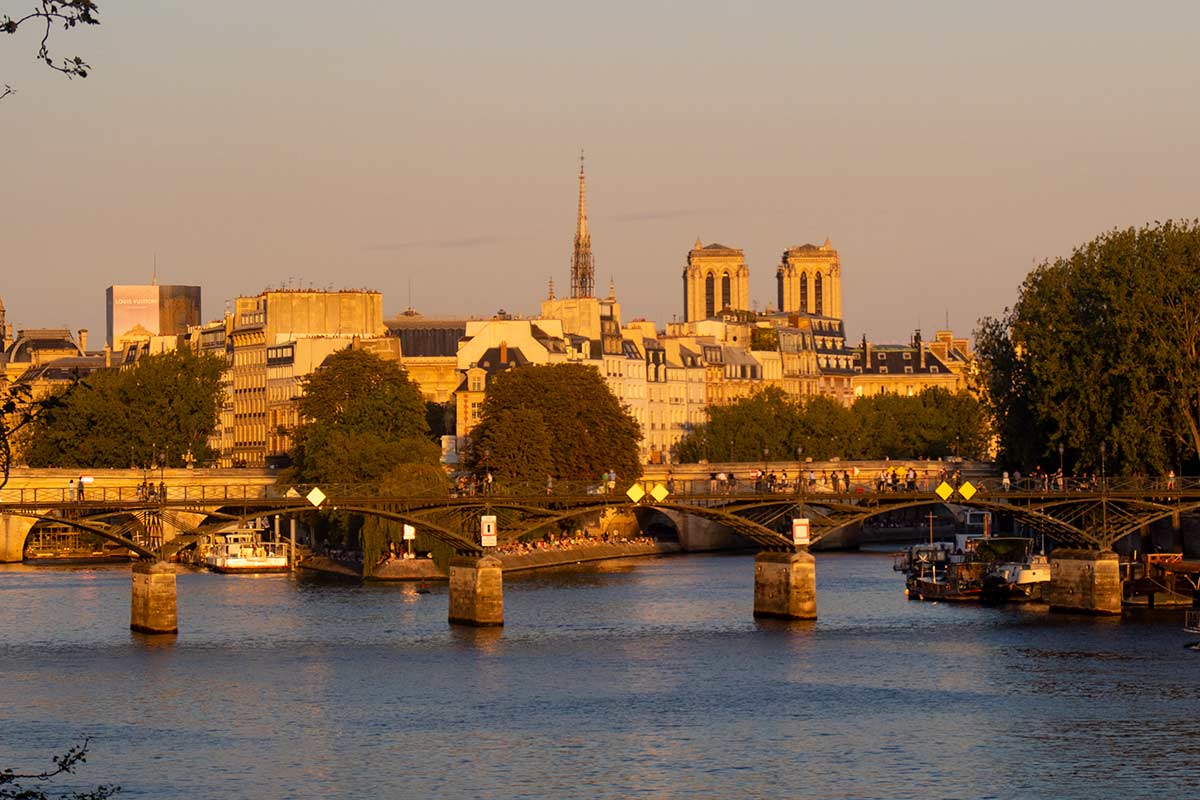
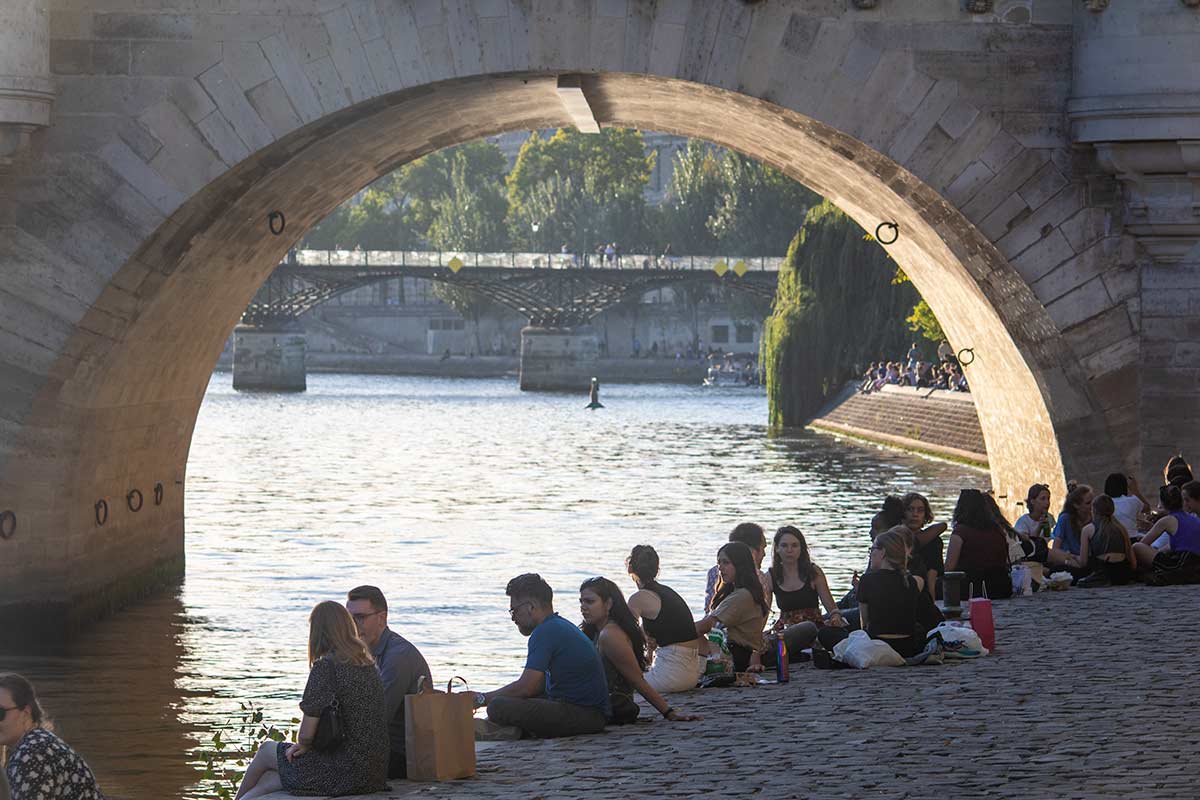
The Seine is one of the most beautiful and fascinating rivers in France and Europe, with a host of wonderful places to visit along its course either side of its journey through the French capital.
And it deserves its place as one of the icons of Paris because so many of the best places to visit in Paris are located along its length. It’s full of some of the most romantic places in Paris, it’s one of the best places to walk in the city, and of course it commands so many of the city’s best views.
Surprisingly, Paris is home to just one UNESCO World Heritage Site (whereas London has four). This is because Paris’ World Heritage Site comes under the catch-all of the Banks of The River Seine, which includes the likes of Notre Dame, the Latin Quarter, the many famous Paris bridges, the Louvre and the Eiffel Tower. And if there’s a more impressive cityscape in the world, please get in touch and tell me all about it.
If you’re visiting Paris for the first time, I recommend a walk from the Pont des Arts, next to the Louvre Palace, eastwards as far as the Petit Pont and the west towers of Notre Dame. When you reach the Pont Neuf (the so-called ‘New Bridge’ is the city’s oldest, dating from the early 17th century), cross the short distance to the Île de la Cité and take a left turn down the steps to river level and one of the most beautiful parks in Paris, the Square du Vert Galant.
The best way to appreciate the Seine – and indeed Paris – is to take a Seine river cruise at least once during your visit. They run in either direction between the Eiffel Tower and Île Saint-Louis, and here are some of the best:
Seine River Cruise With Vedettes du Pont Neuf – daytime cruise from the Île de la Cité (next to the Square du Vert Galant) down to the Eiffel Tower and back. – a wonderful introduction to Paris
Evening Lights Cruise With the Legendary Bateaux-Mouches – my family’s favourite thing to do in Paris, a magical cruise up and down the river at sunset and dusk, the lights of Paris twinkling in the evening sky
10. Paris Parks and Green Chairs
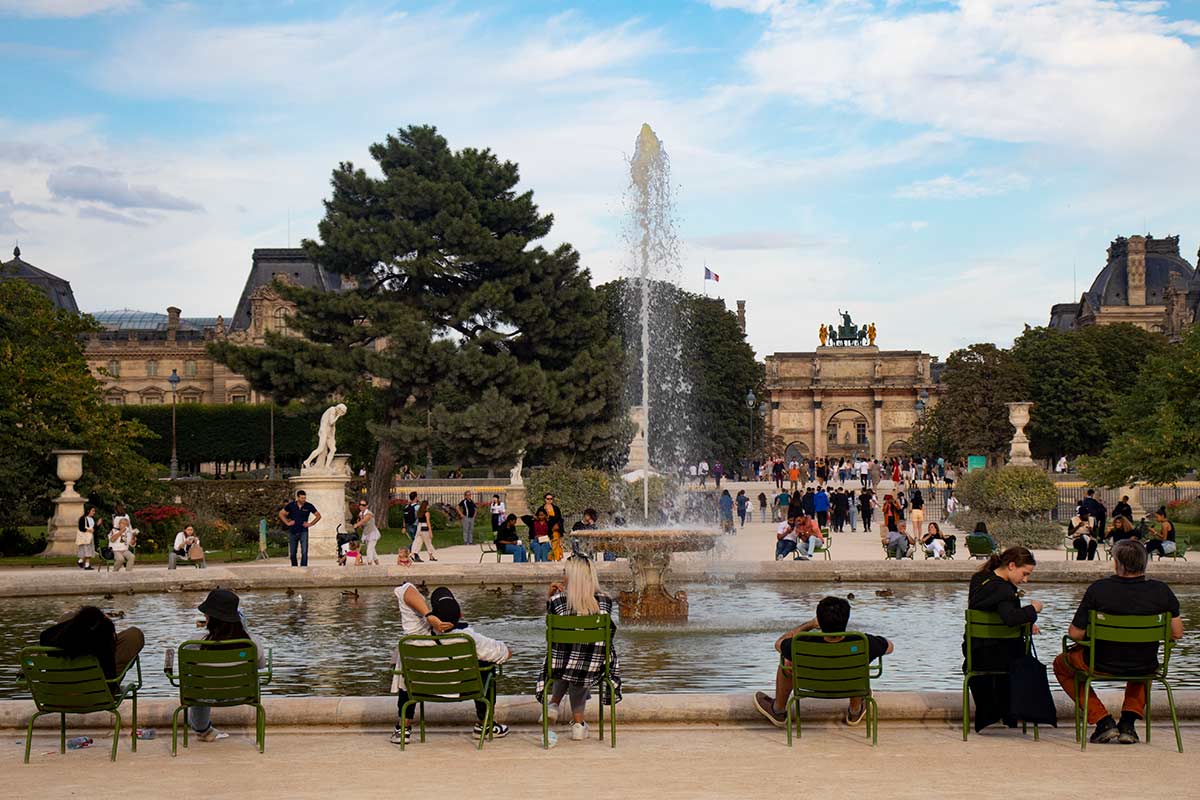
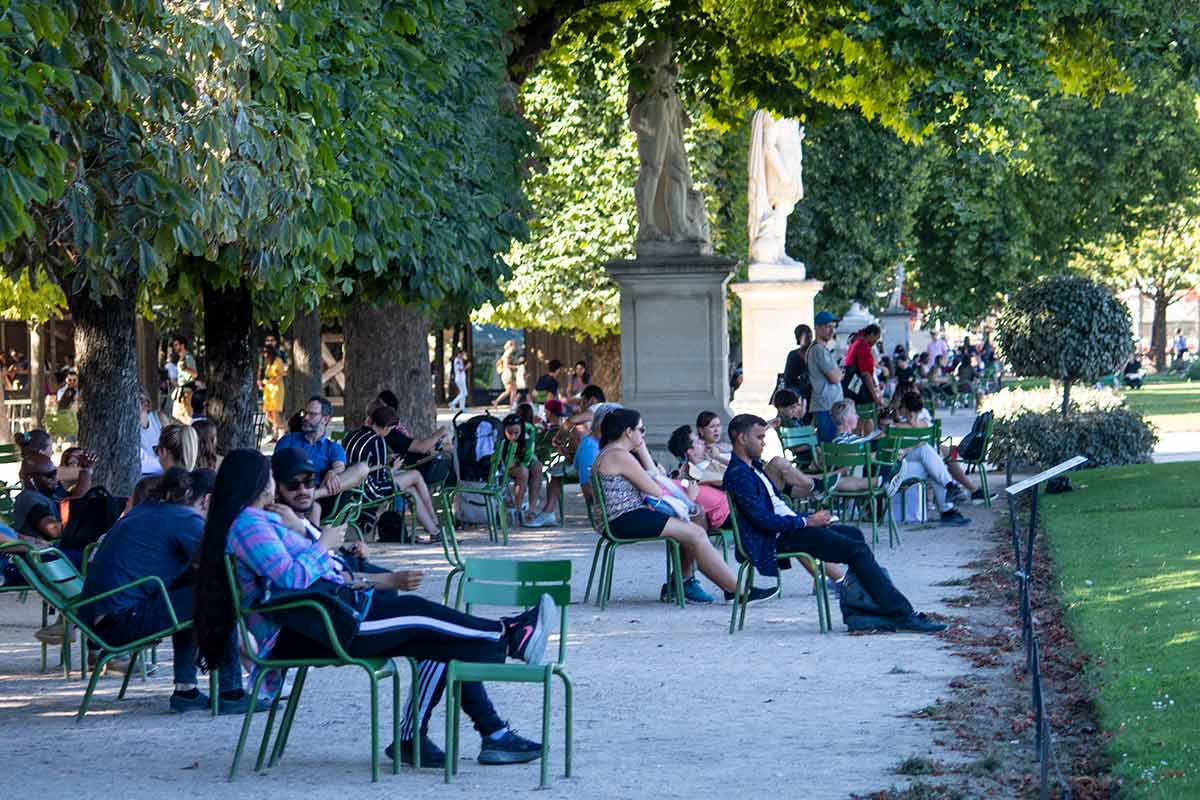
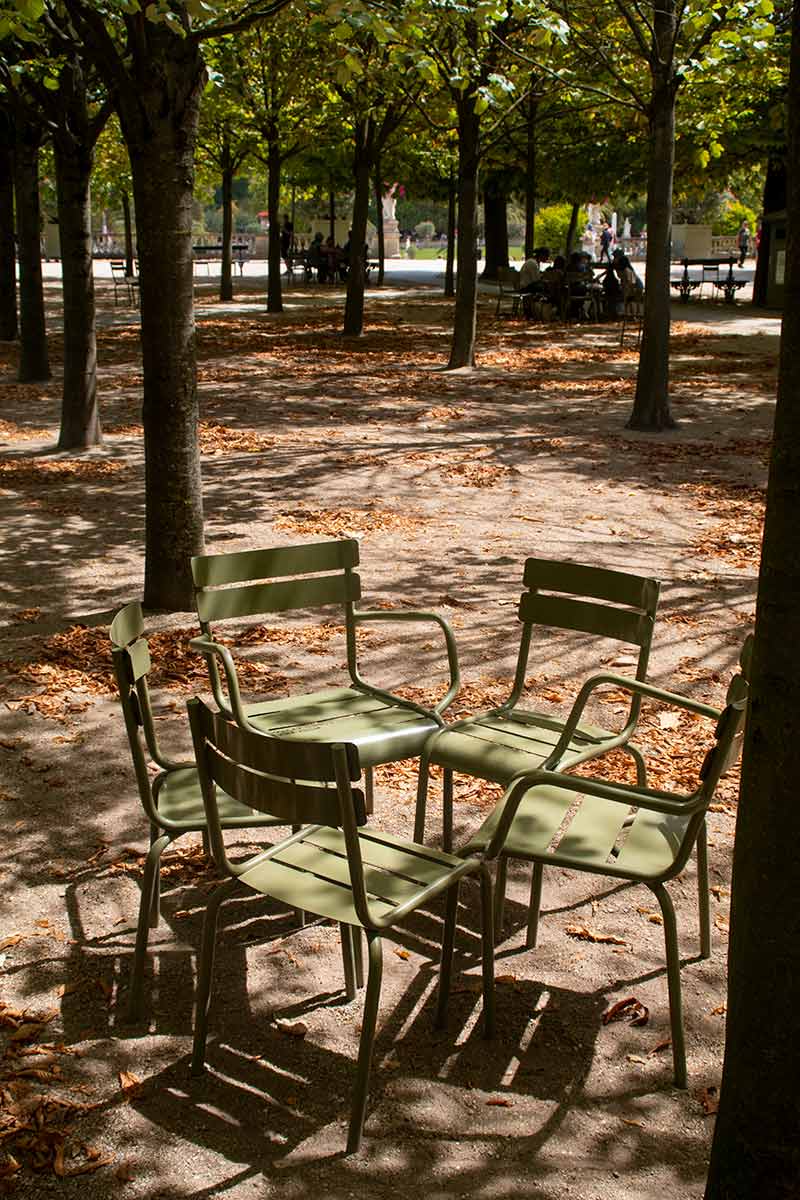
If you’re looking to sample a slice of Parisian life, my advice is to head straight for a Paris park or two. This is where people head for a rest at the end of a day’s work, where parents take their kids for a run and some fun, couples find a quiet corner to share a picnic, or you can just pull up one of the ubiquitous green chairs and relax with a book for a while.
This was one of my favourite things to do in Paris when I lived in the city in 1992, and I love it just as much 35 years on. The city’s parks are among the most romantic places in Paris, from the tiny Square du Vert Galant at the western tip of the Île de la Cité to the much larger Jardin du Luxembourg, which has everything from a late Renaissance fountain to pétanque (boules) courts to a replica of the Statue of Liberty to one of the oldest Paris carousels.
Another of the best parks in Paris is the Jardin des Tuileries. When I lived there for a few months I’d find a quiet spot under the trees with a view of the Louvre (or at least a statue or two) and break out my baguette and one of my Balzac books which I read every day I was there.
Those wonderful green chairs – officially called chaises du Senat – can be found in three of the main gardens in Paris (Tuileries, Luxembourg and Palais-Royal) to this day, and I strongly suggest finding one for yourself. If you don’t have a book to hand, just watch the world go by.
11. Pont Alexandre III
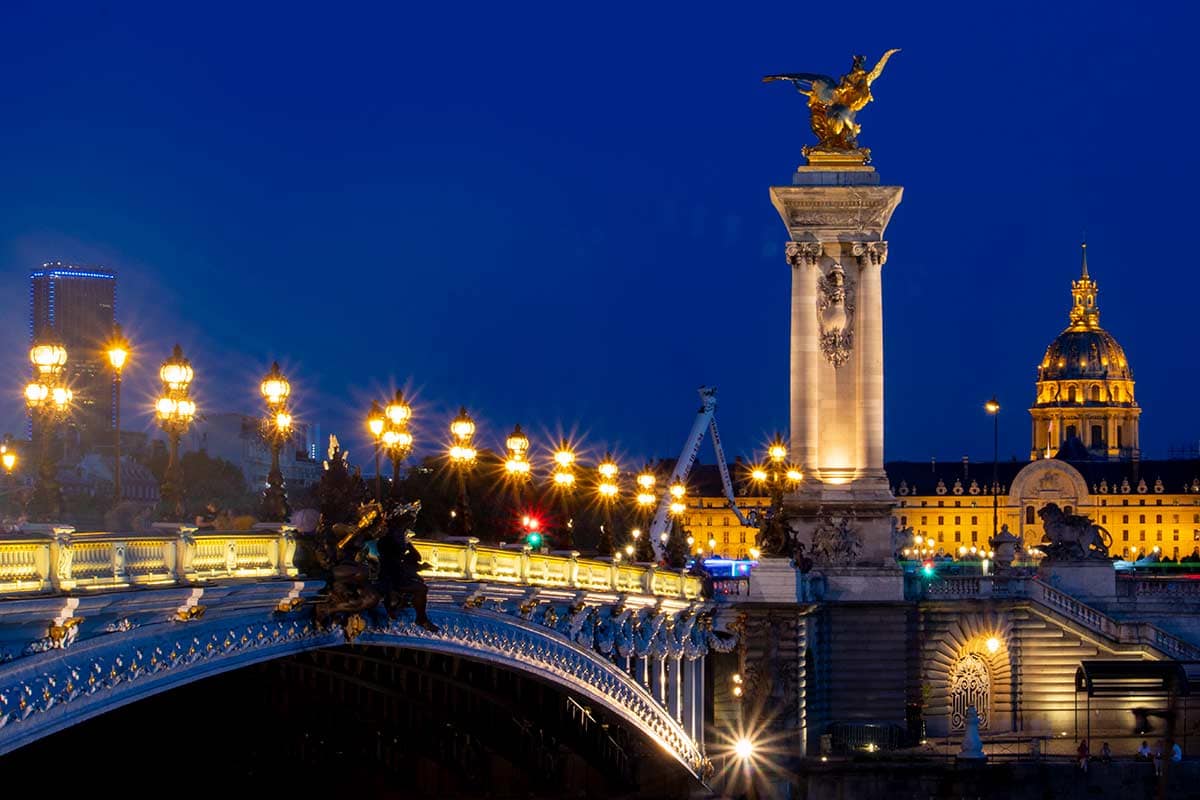
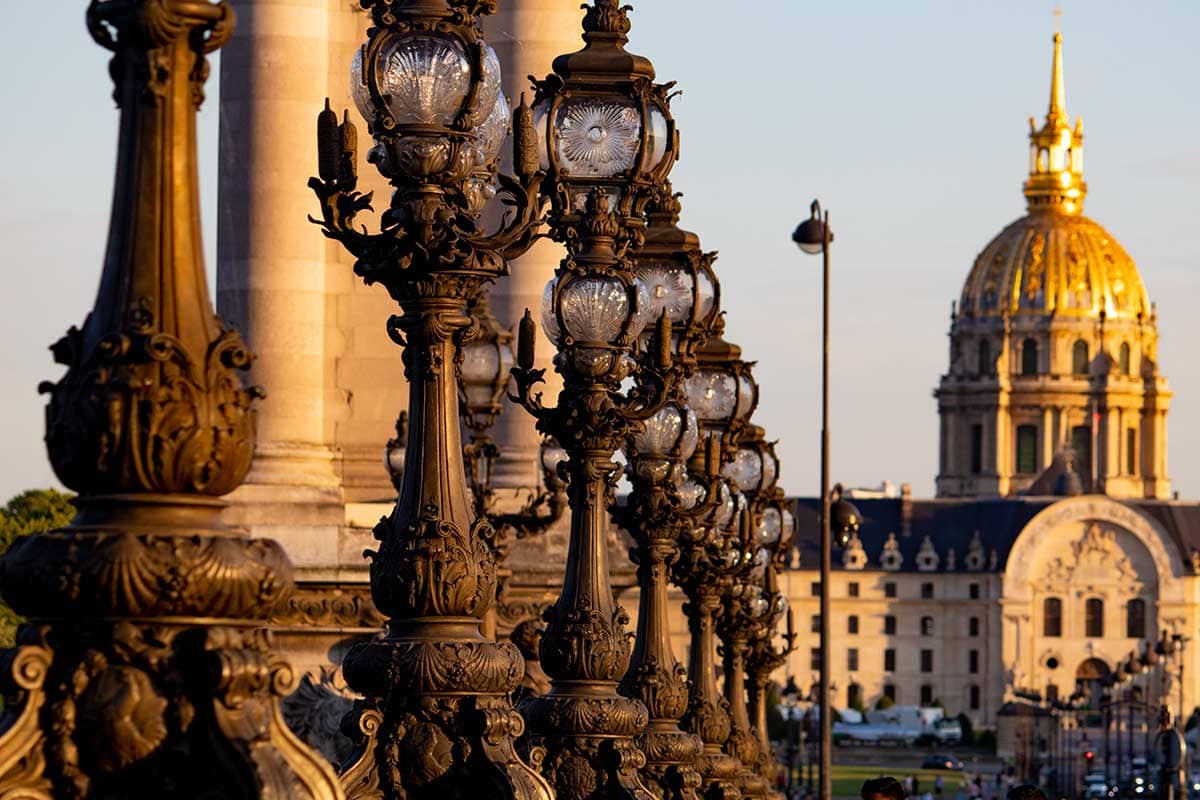
The fabulous, flamboyant Pont Alexandre III is many people’s favourite bridge in Paris, a riot of elaborate wrought-iron lamps and a cast of cherubs and nymphs along its length.
Its location also helps, with a view of the sparkling gold-painted dome of the Hôtel des Invalides in one direction and the Eiffel Tower in another. It’s also one of the best places to see the sunset in Paris, and to watch the nightly light show on the Eiffel Tower.
The bridge was completed in 1900 for the Exposition Universelle hosted in the city. It’s named after Tsar Alexander III of Russia, in recognition of the alliance between the two nations that had recently been agreed.
12. The French Flag
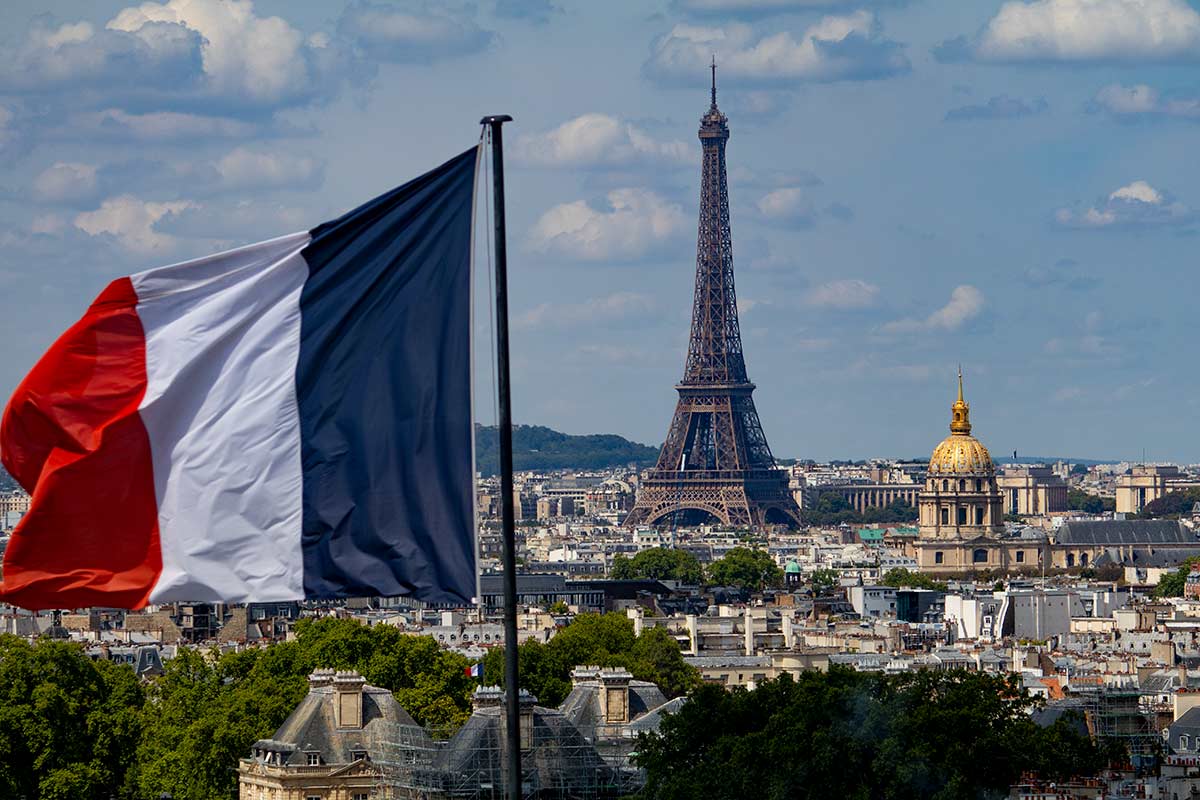
It may seem that the tricolore is more of an icon of France than of Paris, but the capital plays an important part in the flag’s symbolism.
You’ll see the flag fluttering atop important government buildings, and at locations such as the Arc de Triomphe, particularly on Bastille Day, Remembrance Day and war or battle anniversaries. However, the best place to see lots of French flags, in my experience, is the Panthéon, the national mausoleum where many important French figures from the last 250 years have been interred.
The blue and red in the tricolore are the two colours on the Paris city flag, while the white stripe is said (by the French Government website) to represent royalty. The red and blue sometimes vary in shade, but the darker or lighter versions are both correct.
13. Paris Apartment Buildings
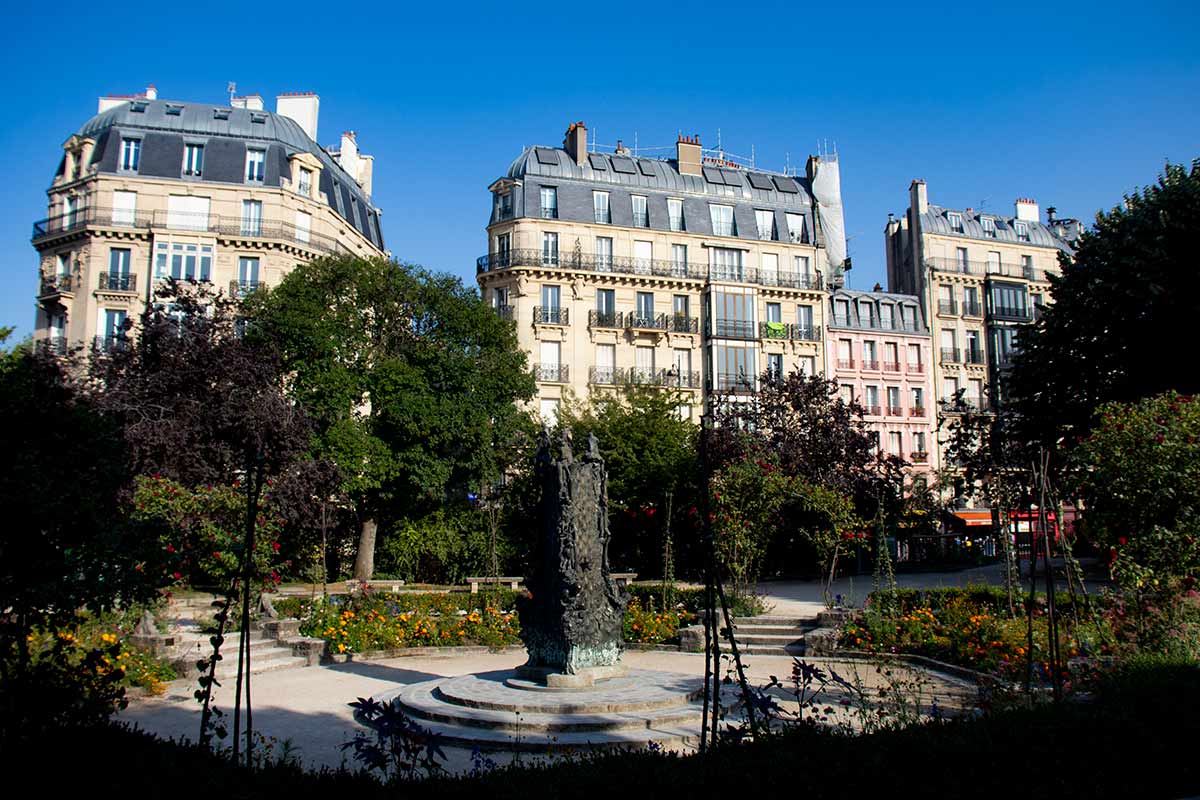
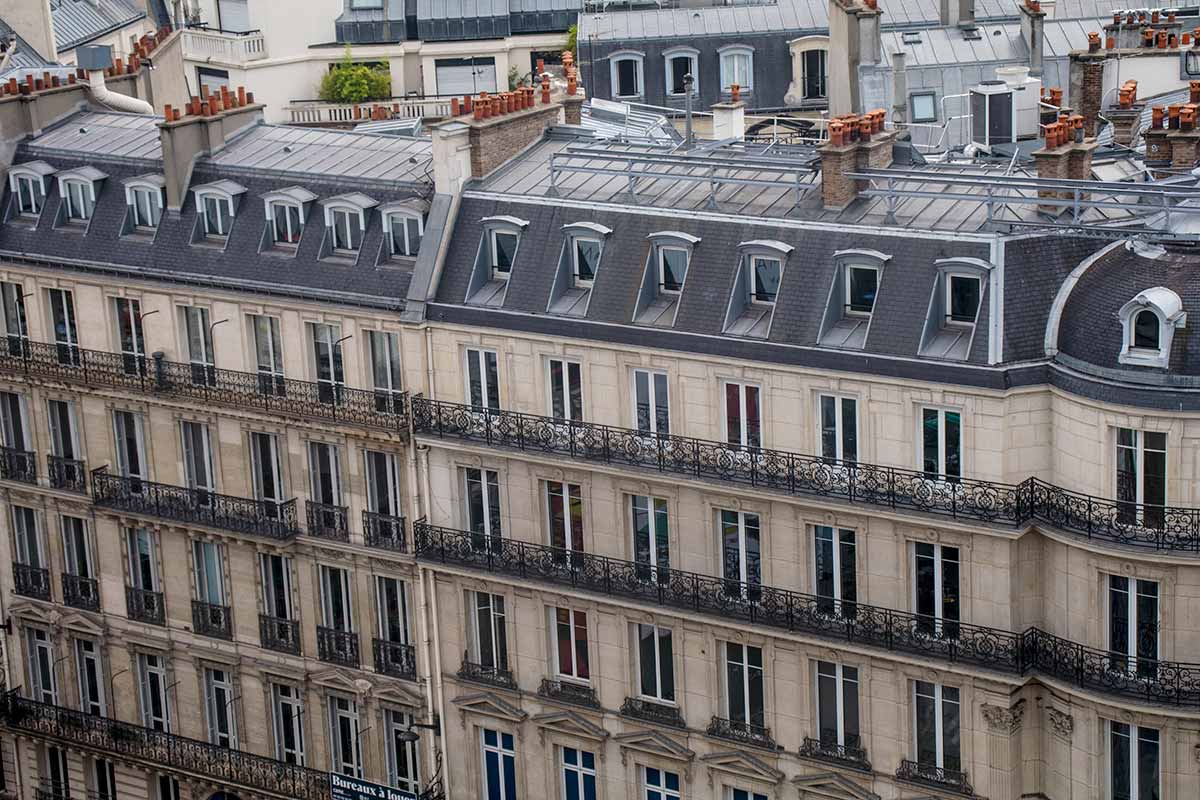
When I was working on an image of some old apartment buildings recently, my son immediately said, ‘That’s Paris!’
‘How do you know that?’ I asked.
‘It’s easy. There are hundreds of streets around Paris like that.’
‘Well done,’ I said, ’I’m impressed.’
‘It’s easy,’ he continued. ‘Lots of the buildings are like that, with the steep roof with windows above the apartments below.’
‘True,’ I replied.
‘But you often see buildings with shutters on the windows too,’ he concluded.
You’ll find these buildings all over central Paris, and the 19th-century grands boulevards built by Baron Haussmann are a great place to start. For some of the smaller houses with shutters, head for the Marais or Latin Quarter.
14. French Food and Wine
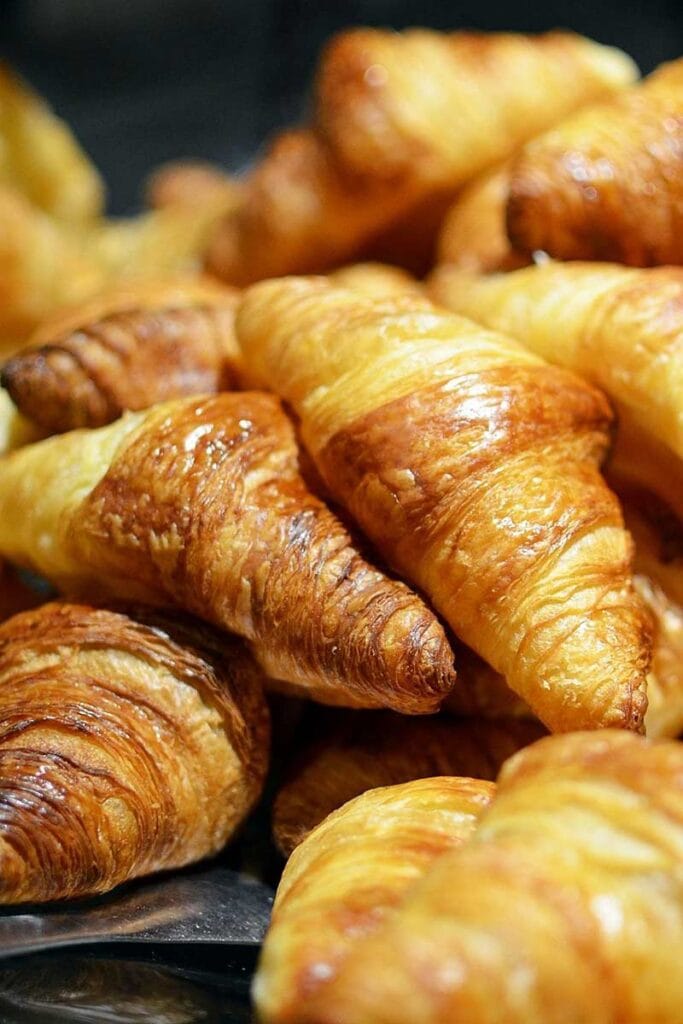

For many of us, French food is one of the most iconic things about Paris. After all, it’s often distinctive, with its unique variant on a staple like bread (the baguette), the crescent-shaped croissant pastry and crêpes, a delicious variant on the pancake, albeit much thinner and as likely to be served with something savoury as something sweet.
The French also gave the world the café, and there are countless around Paris. Whenever I pass by, I pop into the Café des Deux Moulins in Montmartre, the place of work of Amélie Poulain, the quirky protagonist of the movie Amélie.
And just up the hill from there, a vineyard opposite the Montmartre Museum is a reminder of another of France’s great contributions to the world, its many wines. You can enjoy anything from a decades-old vintage to a simple vin de table, be that at a café, restaurant, bar, show or a picnic in the park.
See Also: What Is France Famous For?
Icons of Paris – Final Thoughts

I hope that you’ve enjoyed this article on the icons of Paris, that you’ve learned something new about them and also enjoyed my photographs of them.
I’ve written numerous other articles on Paris, including some on the individual Parisian icons, so feel free to browse some of them below:
General Paris Articles
Art Nouveau Paris – 12 magnificent sights not to be missed
Best Eiffel Tower Views – over 20 superb vantage points of the most famous landmark in Paris
Sunset in Paris – the best 15 places to see one
Best Things to Do In The Latin Quarter Paris – in-depth guide to the fascinating Left Bank in Paris
Visiting the Arc de Triomphe Paris – all you need to know before you visit one of the great monuments of Paris
Paris Carousels – the best merry-go-rounds in Paris
Statue of Liberty in Paris – seek out the replicas of Lady Liberty across the French capital
Churches In Paris
22 Famous Churches in Paris – 22 ecclesiastical wonders
La Sainte Chapelle Paris – one of the wonders of the Gothic Age
Basilica of St Denis Paris – the birthplace of Gothic architecture
Saint Germain des Pres – landmark ancient Left Bank church
Saint Etienne du Mont – stunning Latin Quarter church
Saint Sulpice Church Paris – vast Neoclassical church dominating the Latin Quarter skyline
Pantheon Paris – the resting place of many famous French luminaries
Saint-Séverin Church Paris – Left Bank Gothic wonder
St Julien Le Pauvre – humble ancient church within sight of Notre Dame
Montmartre
Abbesses Metro Station Paris – one of the most beautiful Metro stations in Paris
Rue de l’Abreuvoir – one of the most picturesque streets in Paris
Rue St Rustique Paris – ancient Parisian street in the heart of Montmartre
Sacré Coeur Basilica Paris – the white-domed symbol of Montmartre
Bridges in Paris
Famous Paris Bridges – 15 of the most beautiful bridges on the Seine
Pont Alexandre III Paris – the most flamboyant, ornate bridge in Paris
Bir-Hakeim Bridge Paris – stunning double-decker bridge near the Eiffel Tower
Pont des Arts Paris – elegant iron bridge connecting the Louvre and Institut de France
Pont Neuf Paris – the venerable oldest bridge in Paris, and sometime art installation subject
Parks in Paris
Square du Vert Galant Paris – the most romantic garden in Paris
Jardin du Luxembourg – one of the most beautiful gardens in Paris
Tuileries Garden Paris – amazing garden near the Louvre
Parc Monceau Paris – gorgeous folly-filled park near the Arc de Triomphe