

Visiting Place de la Concorde
It’s part of the Grand Vista of historic monumental Paris, the biggest square in the city, and one of the focal points of the French Revolution. Visiting the Place de la Concorde Paris is an essential stop when exploring Paris, and in this guide, I’ll show you everything there is to see in this vast square.
The Place de la Concorde has changed in character in recent years, as it’s no longer home to the ferris wheel (Roue de Paris) which, when it’s in town, is set up in the nearby Tuileries Garden. It’s still used sometimes for major events, including the final stage of the annual Tour de France cycle race each July.
The Place de la Concorde (Square of Peace) acquired its name in 1795, in a gesture of post-Revolutionary reconciliation. Prior to this, the square had been renamed the Place de la Revolution, and the Reign of Terror began.
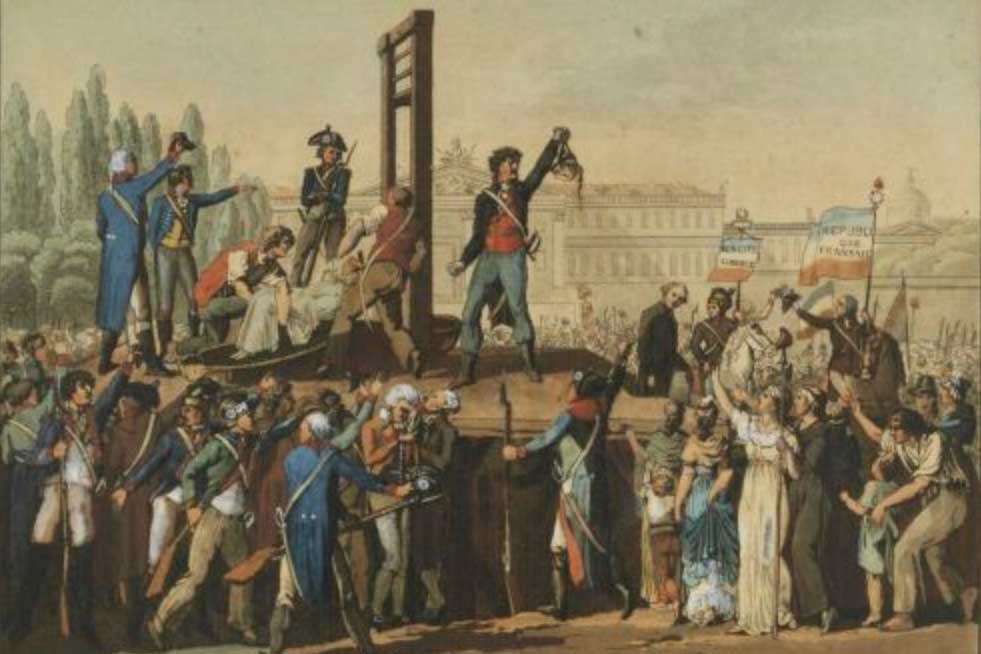
King Louis XVI was beheaded there in January 1793, and over 1,100 others were also guillotined on this square alone. His Queen, Marie Antoinette met the same fate in October 1793, as did many others from aristocratic and religious backgrounds.
Later in the article I’ll explain the practicalities of getting to Place de la Concorde and show you the best places to visit around the square. I will also suggest places to stay near Place de la Concorde, and possible walking tours in the vicinity. I hope you find it helpful.
Hotels Near Place de la Concorde
Hotel de Crillon – the ultimate in Parisian luxury, and the only hotel on Place de la Concorde – in the 18th-century palace where Louis XVI and Marie-Antoinette resided after the French Revolution
Les Jardins du Faubourg Hotel & Spa by Shiseido -5-star luxury with beautiful garden in the heart of central Paris
Hotel Opera Richepanse – fine boutique 4-star option a 5-minute walk from Place de la Concorde, and close to the Grands Boulevards
Hotel La Sanguine – a rare gem in Paris, a family-run 2-star hotel a 5-minute walk from Place de la Concorde
Visiting Place de la Concorde Paris – What To See
Luxor Obelisk
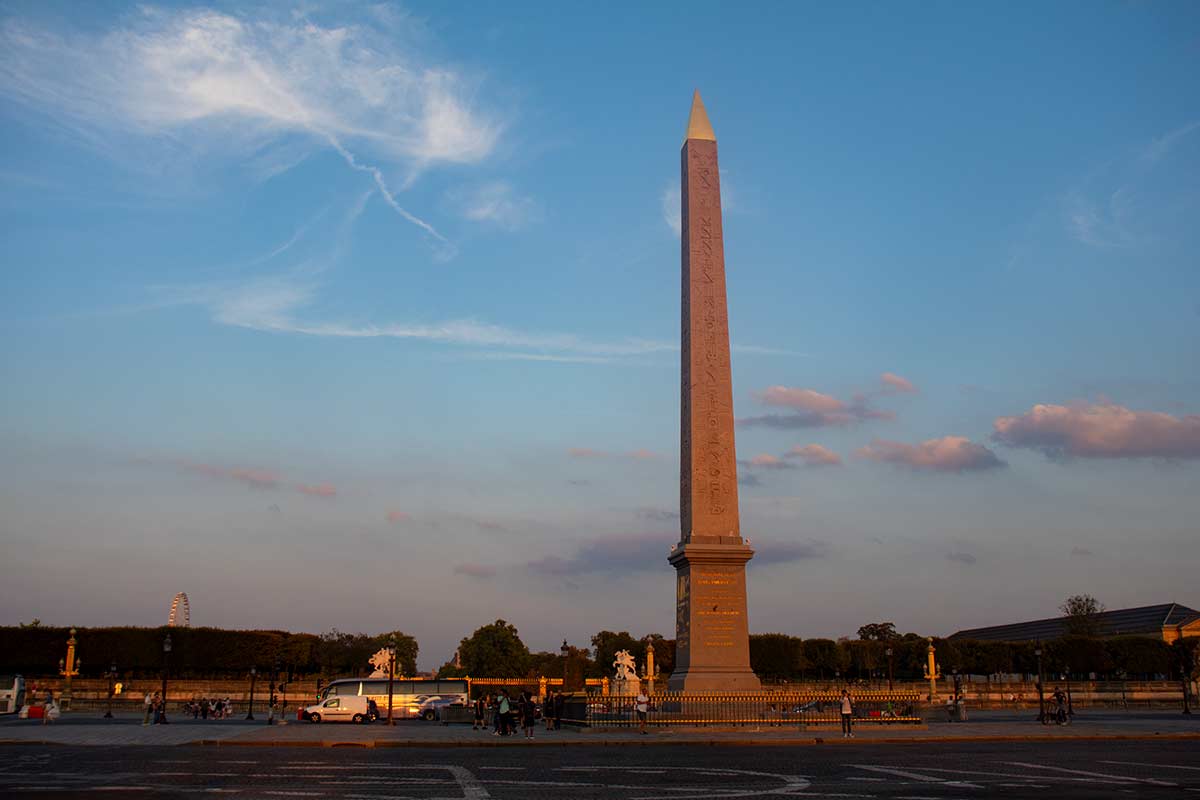
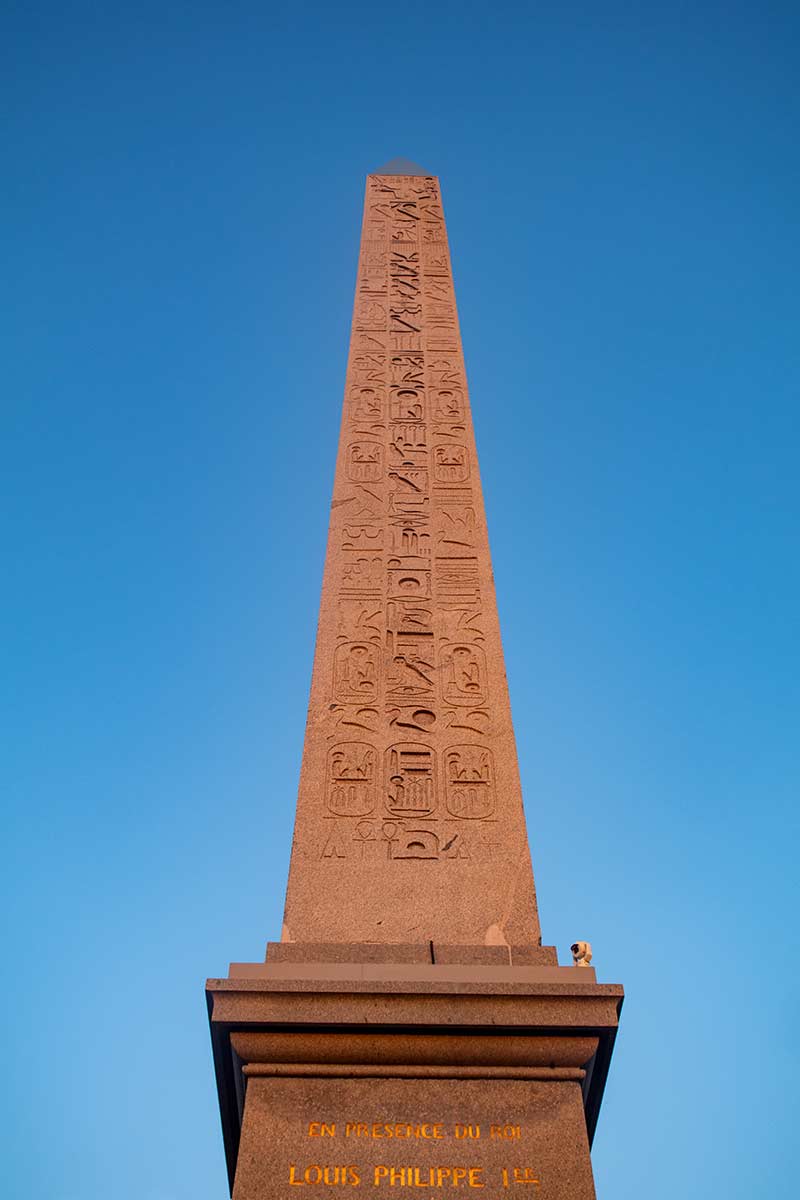
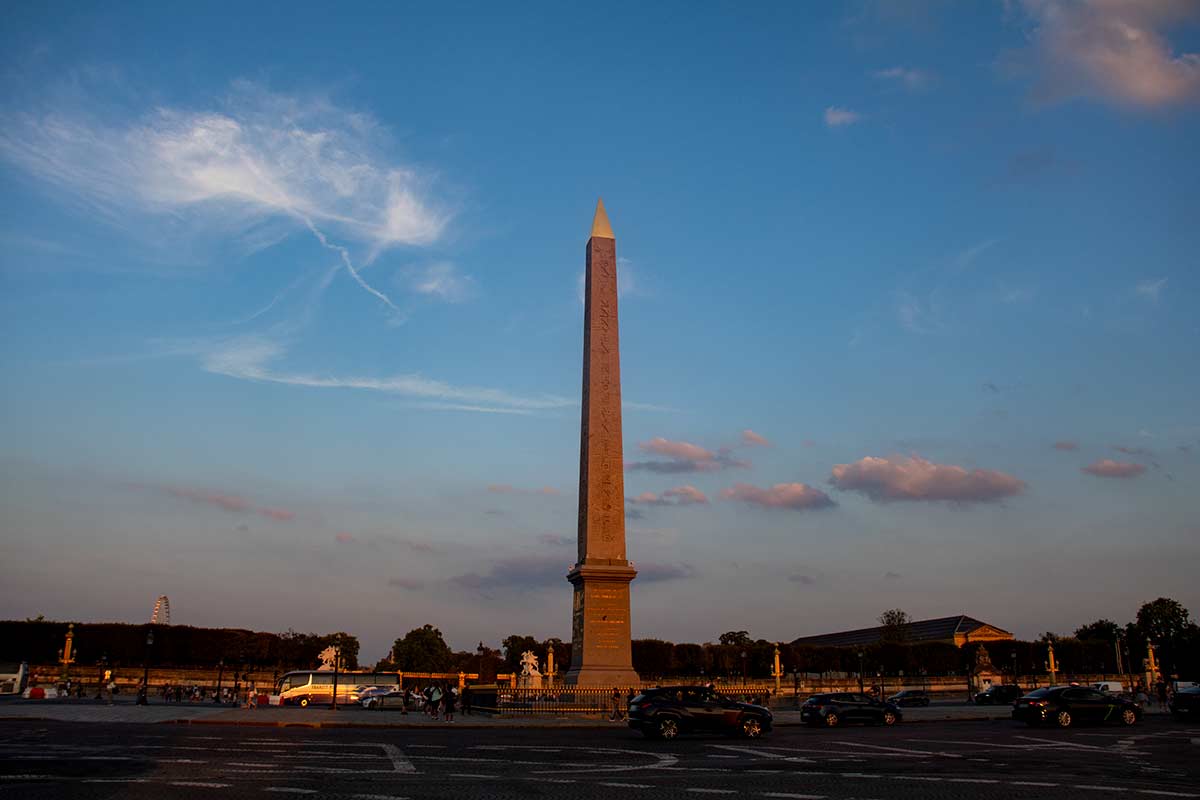
Most of what we see in the Place de la Concorde today dates from the 19th century, primarily during the reign of Louis-Philippe. The most prominent landmark in the Place is the Luxor Obelisk, which dates from 3,300 years ago.
It once stood at the entrance to the Luxor Temple, and the hieroglyphs on it glorify Pharoah Ramses II. He was one of the most powerful Egyptian Pharoahs, reigning for up to 65 years. Some accounts link him with the Exodus of the Israelites from Egypt, but this is disputed by several historians, and no mention of it is made among the inscriptions on the Obelisk.
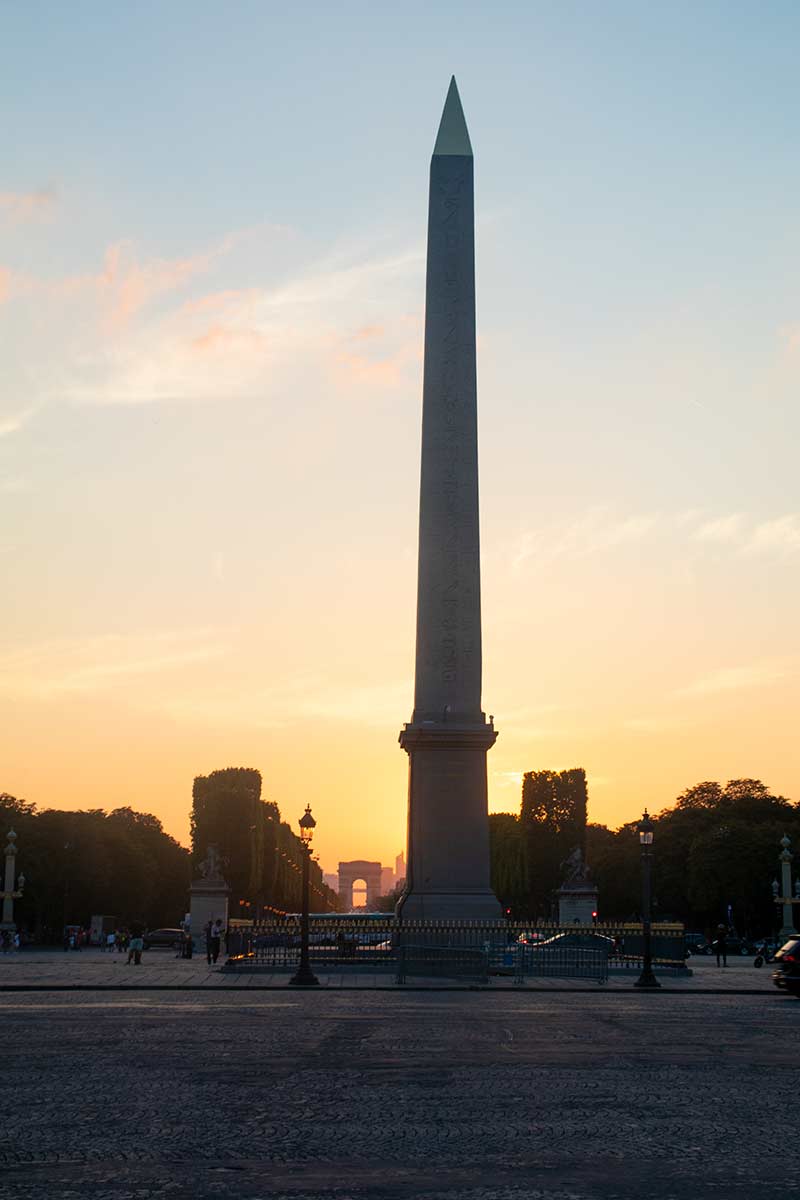
The Obelisk was the gift of Ottoman governor Mohammed Ali Pasha to Louis-Philippe, and was brought to Paris and raised at its present site in 1836.
The original centrepiece of the Place was a statue of King Louis XV, which was completed in 1763. However, with the Revolutionary fervour that was to follow, it was destined to have a shortened pedestal life.
The Historic Axis and Avenue des Champs-Élysées
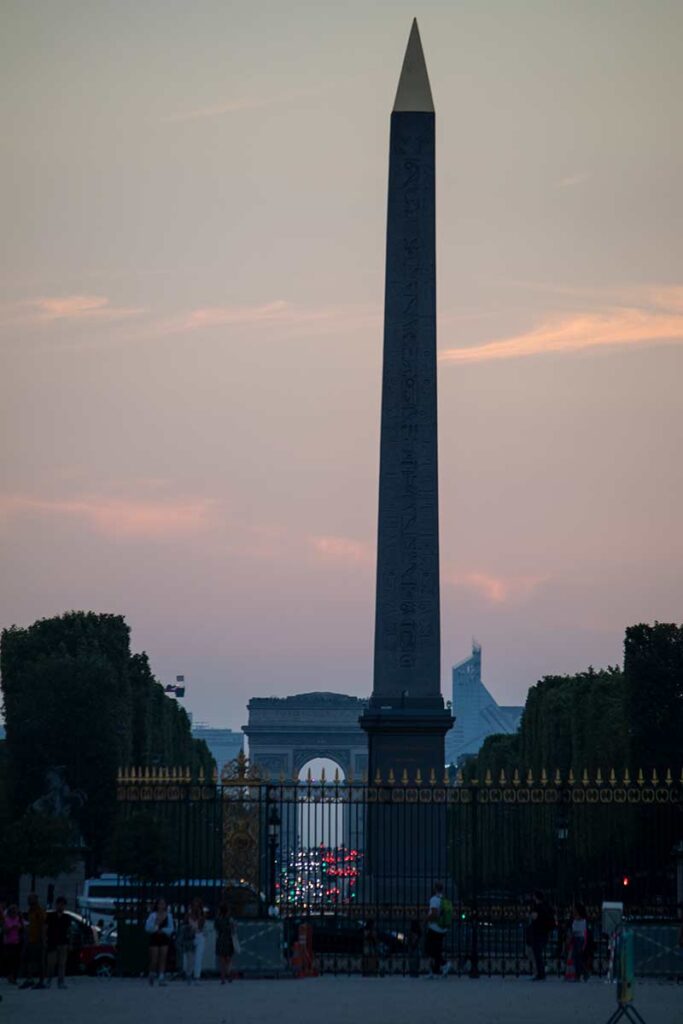


The exact spot on which the Obelisk now stands was carefully chosen. By this time the square was part of the monumental ceremonial view which extended from the Louvre (and Arc de Triomphe du Carrousel outside) to the Arc de Triomphe at the top of the Avenue des Champs-Élysées.
So the Obelisk, as the focal point of the Place, had to be in exactly the right spot so that, when viewed from outside the Louvre down the Tuileries Garden, the Obelisk lined up so that its tip was level with the apex of the arch of the (then) recently completed Arc de Triomphe.
This vista is now known as the Axe Historique (Historic Axis), and this was extended further northwestwards in the 1980 with the building of the Grande Arche de la Défense, the business district just beyond the boulevard périphérique (ring road) which runs around the city.
Hôtel de la Marine
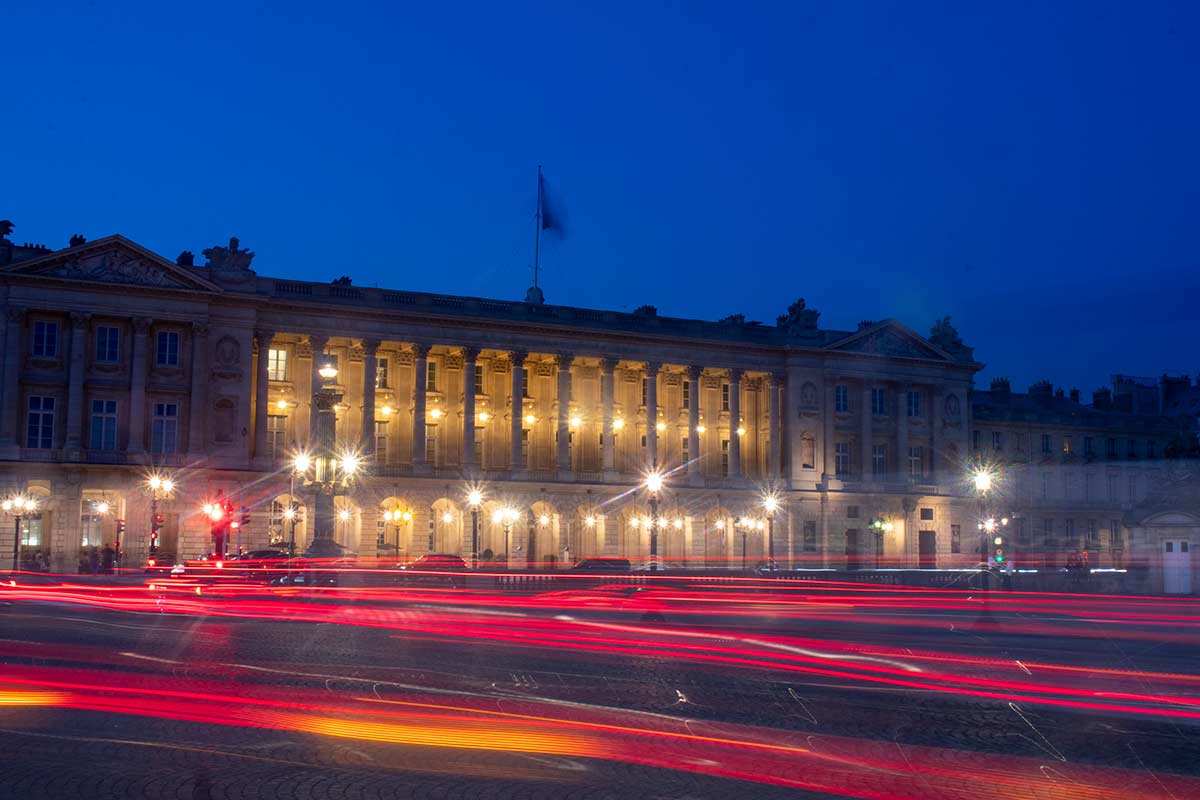
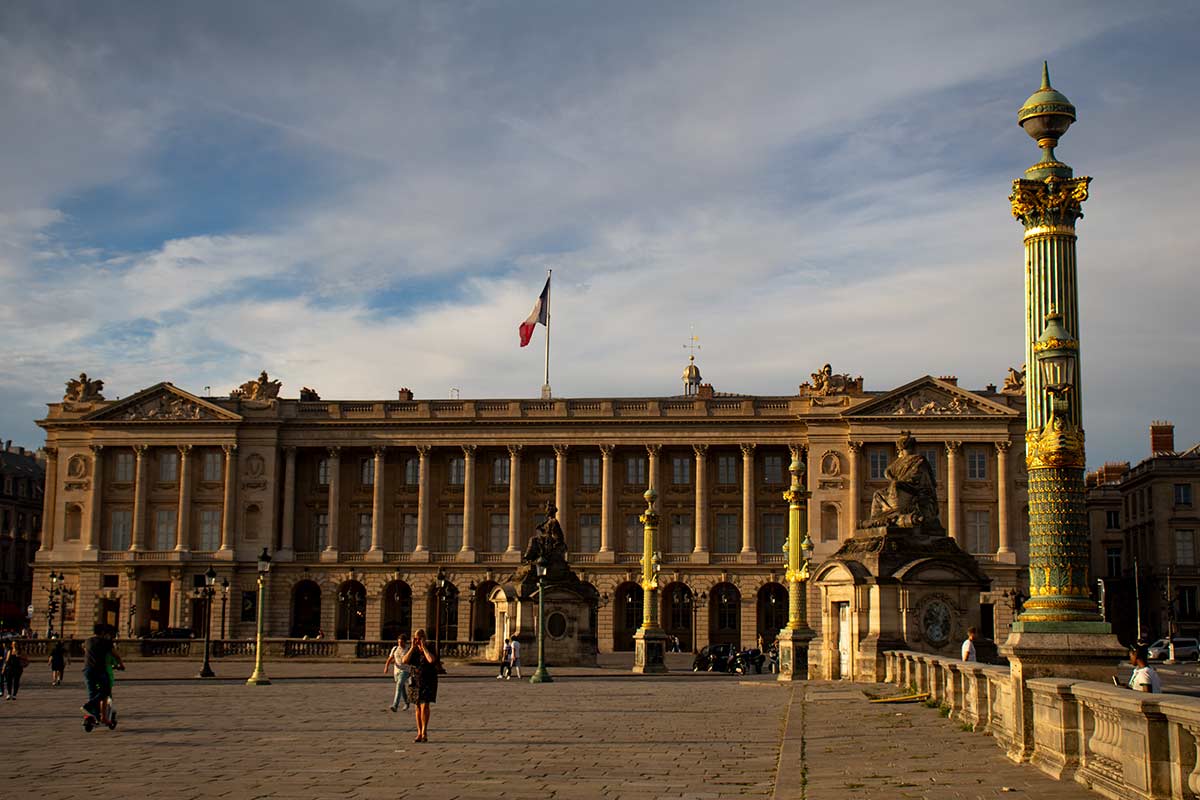
The Hôtel de la Marine is one of two identical Neoclassical buildings on the north side of the Place de la Concorde (the other is the Hôtel de Crillon). The Hotel de la Marine is the first you reach if travelling from Rue de Rivoli, and the building on the right if you reach the Place via the Tuileries Garden.
Originally, the building was called the Hôtel du Garde-Meuble, serving as the office of the Intendant, a senior official charged with storing and maintaining the vast collection of Crown-owned furniture, artworks and decorations. As you can probably imagine, the quarters of the Intendant – the last of whom was the grandly named Marc-Antoine Thierry de Ville d’Avray – was hardly a cupboard under the stairs. His sumptuous, luxurious apartments have been restored, and would grace any chateau or stately home across Europe.
After the demise of the monarchy and de Ville d’Avray, the building was taken over by the French Navy. Despite the anti-monarchist tenets of the Revolution, the lavish standards of décor were maintained. Napoleon hosted a ball there in 1804 in celebration of his coronation as Emperor, and some of the rooms – including the Salon des Amiraux (Room of the Admirals) were fitted out in a manner that would make any incognito aristo proud indeed.
If you’re curious to learn more about the French Navy, head for the Musée de la Marine, an entirely different entity which occupies part of the Palais de Chaillot on Place du Trocadéro, one of the best Eiffel Tower viewpoints in Paris.
Tickets: You can order your Hôtel de la Marine entry tickets here.
Place de la Concorde Fountains
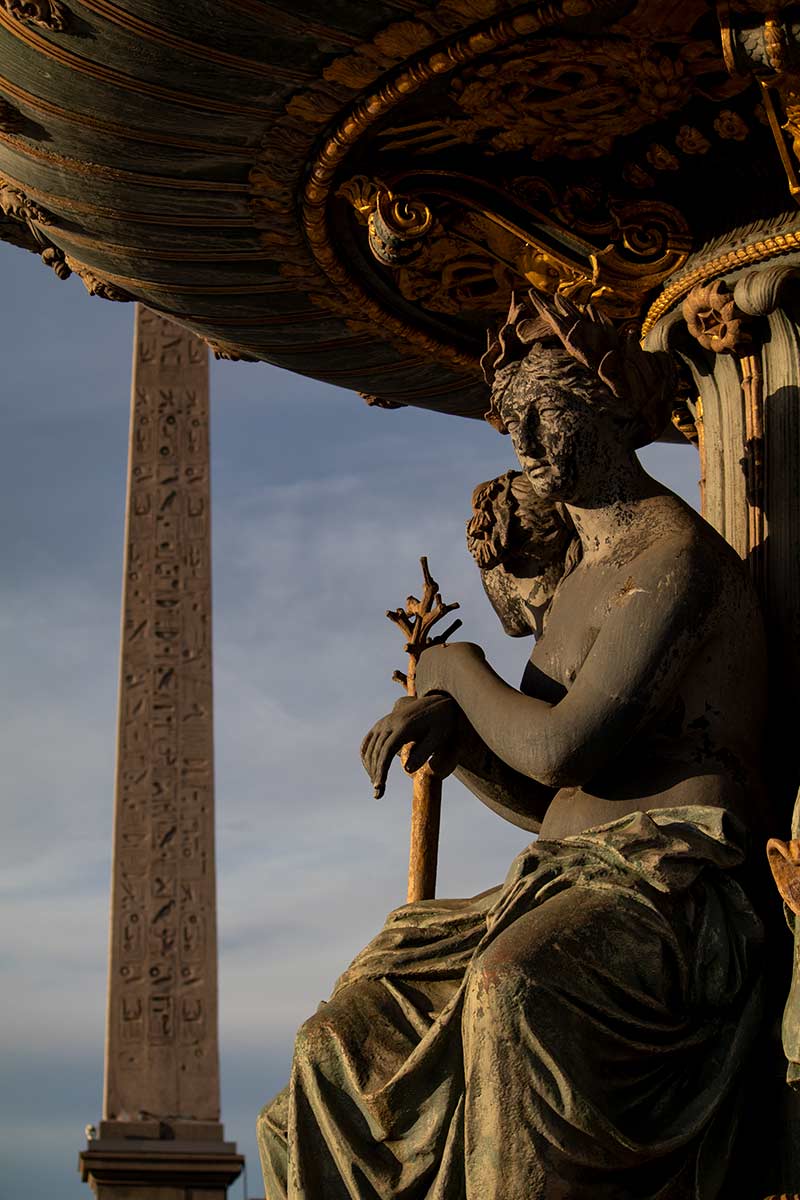
The two Fontaines de la Concorde were installed after the Obelisk was erected in 1836. The architect of the square, Jacques-Ignace Hittorff, was inspired by Piazza Navona and St Peter’s Square in Rome, both of which also have an obelisk and fountains.
The Fontaine Fluviale, on the north side of the Place, represents two of France’s main rivers, the Rhine and the Rhône, and the businesses and shipping navigation along each. Agriculture is also shown, with grapes, fruit, and wheat all portrayed.
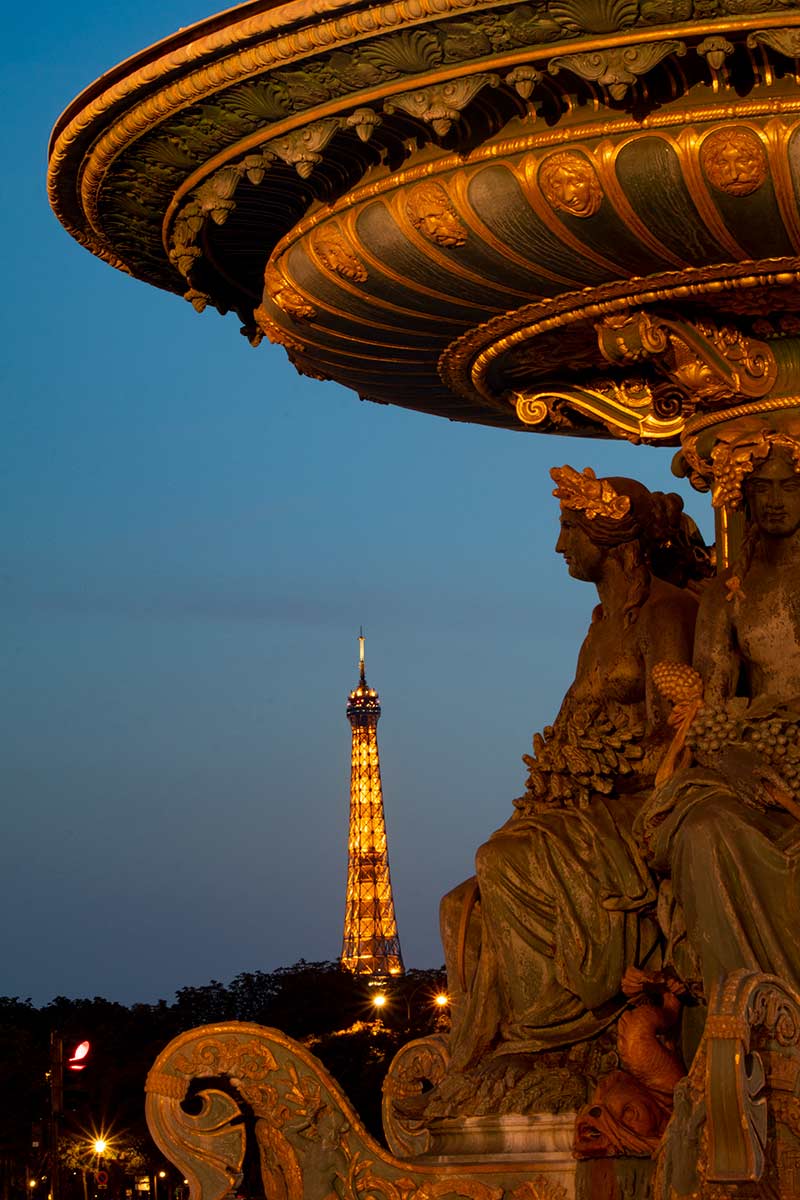
The Fontaine Maritime, (or Fontaine des Mers) on the southern side of the Place, depicts France’s maritime commercial ventures. Figures include a ship, dolphins, fish, shells and pearls, all important industries around the country’s coastline.
Some of you may have noticed the lack of water in the images of the fountains I have included here. Sadly, extremely hot and dry summers are becoming the norm in Europe, a sad consequence of global warming and climate change.
French City Statues
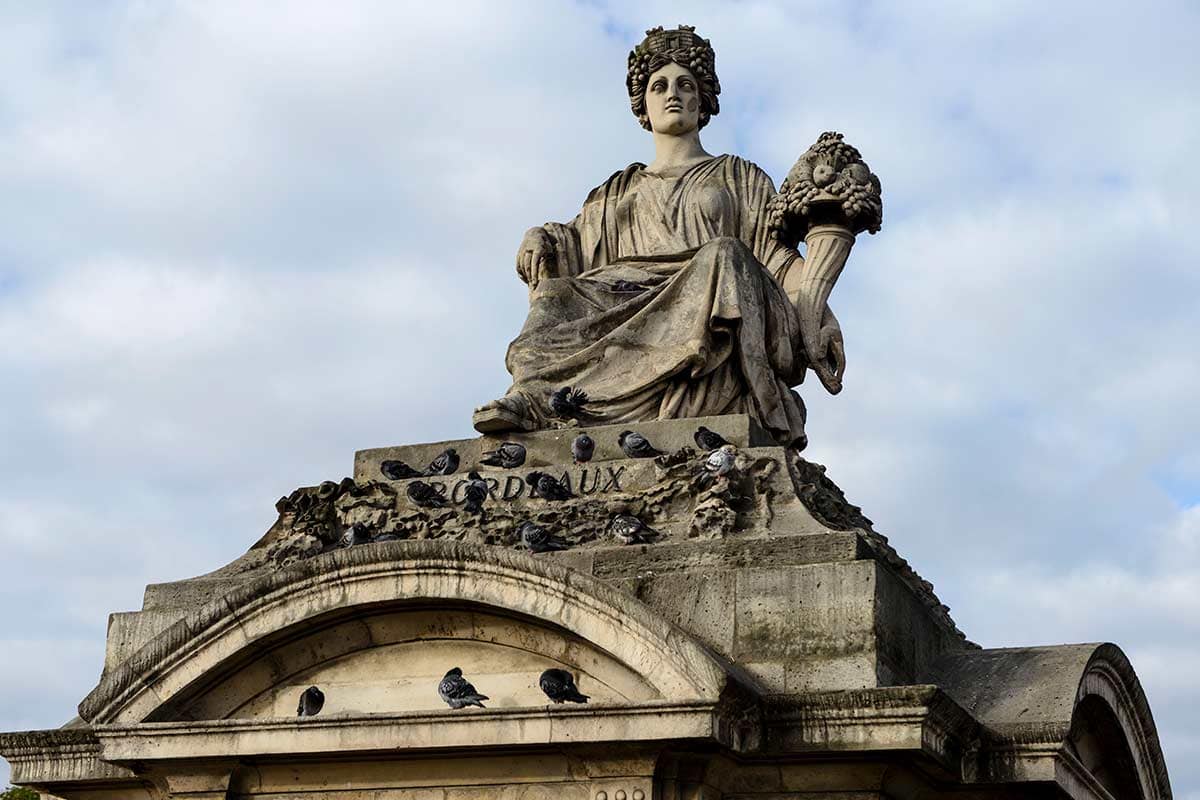
The other landmarks around the Place de la Concorde are the eight city statues, representing major cities around the country. These were erected at the time of the redesign of the Place in the 1830s.
An overhead drone view of the Place de la Concorde would show that the placement of the statues around the square almost corresponds to their locations on a map of France. The cities represented are Rouen, Brest, Nantes, Bordeaux (pictured), Marseille, Lyon, Strasbourg and Lille.
Eiffel Tower Views
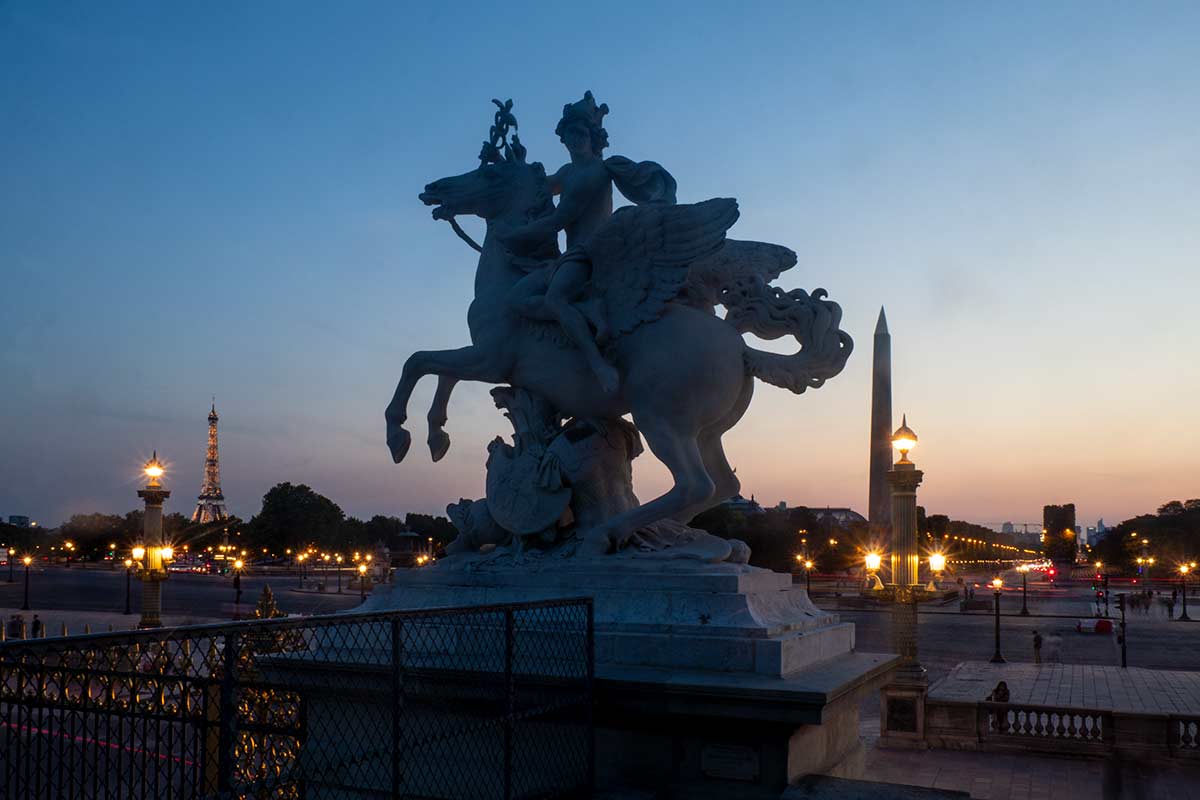
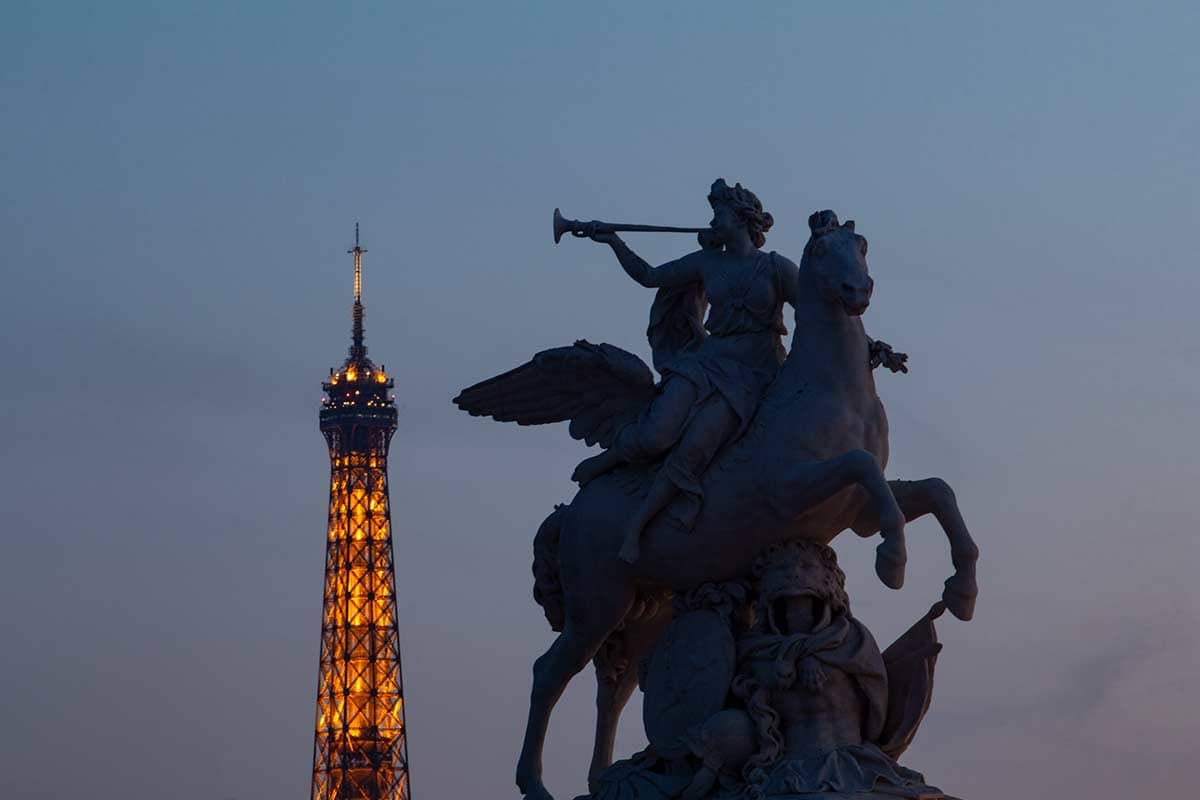
The Place de la Concorde is also renowned for some of the best Eiffel Tower views in Paris.
The Iron Lady is around 2 km away from the Place de la Concorde, but it’s still the majn feature on the skyline from there.
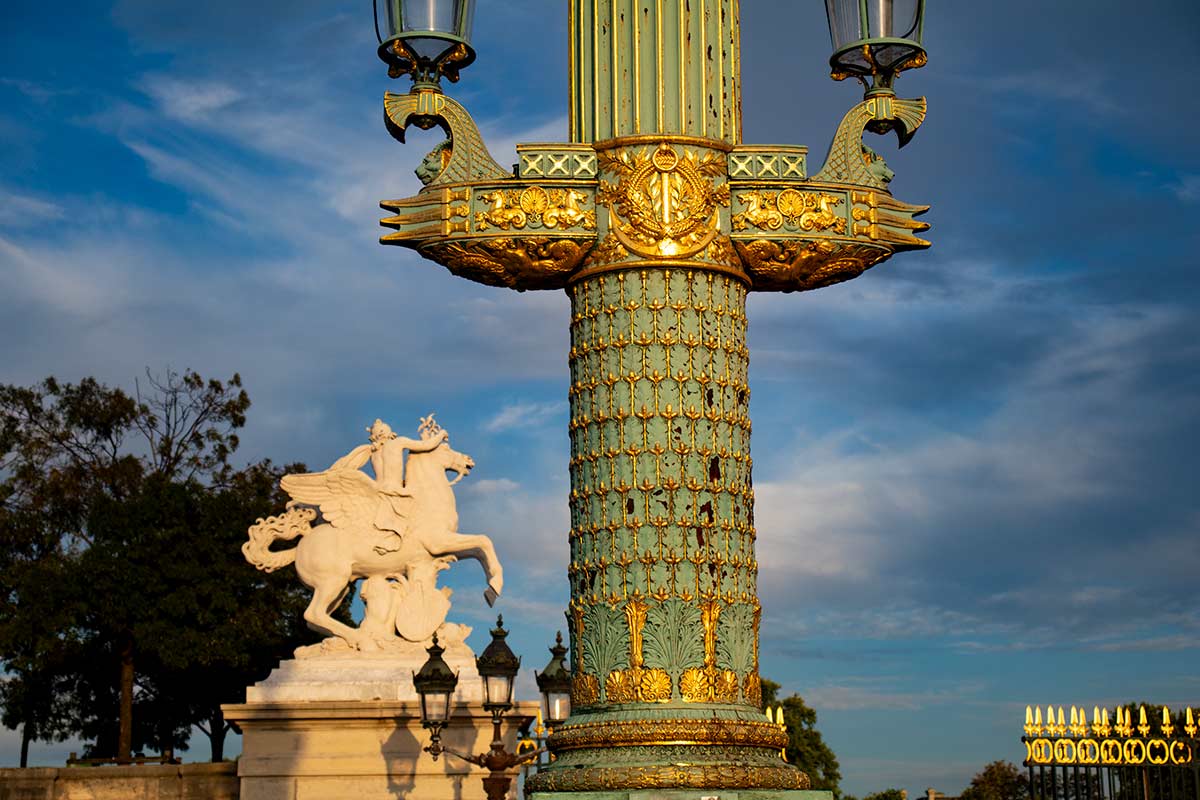
Place de la Concorde is a great vantage point for the Eiffel Tower if you’re photographing it, particularly around sunset, as there are several great foreground features to bring into play. The best of these are the figures on the Fontaine des Mers, the City Statues around the square and some of the ornate lamp posts.
It’s also a great vantage point for Eiffel Tower photos early on a late autumn or winter’s morning, as well as for a winter sunset.
Jardin des Tuileries
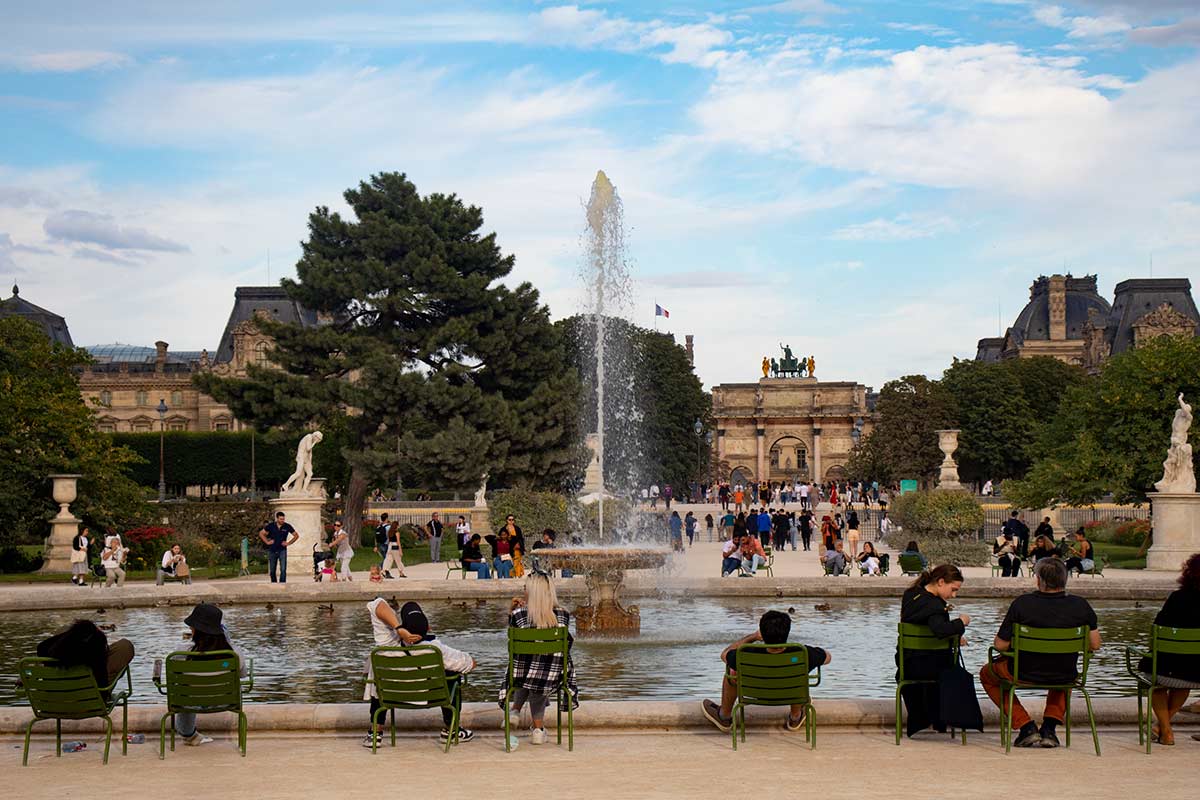
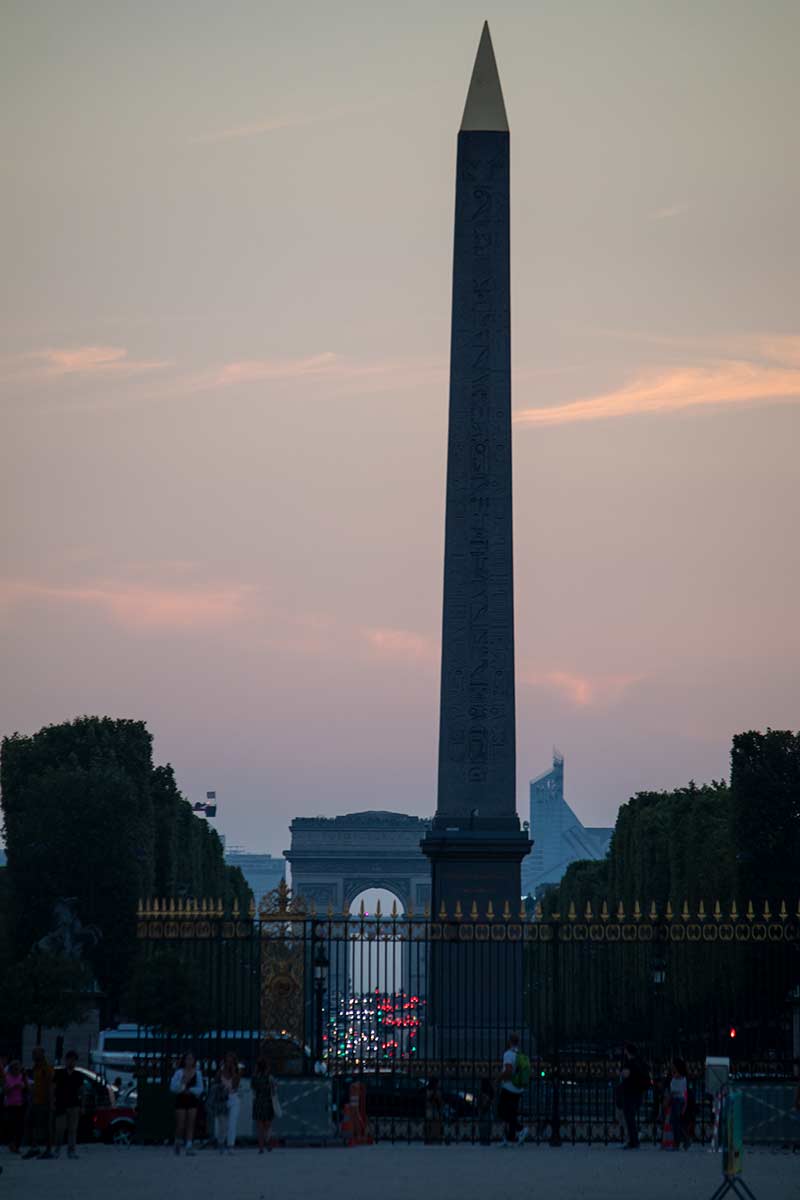
The Tuileries Garden is one or three royal parks in Paris, and one of the best parks in the city. It occupies the rea between the Palais du Louvre and its Museum and the Place de la Concorde, and is part of the forementioned Axe Historique.
It’s a wonderful place to soak up a slice of Parisian life, whether you just pull up an iconic green chair and read a few chapters of your new book or stroll through the tree-lined main avenue, with its view of the Obelisk, Arc de Triomphe and Grande Arche de la Défense in the distance.
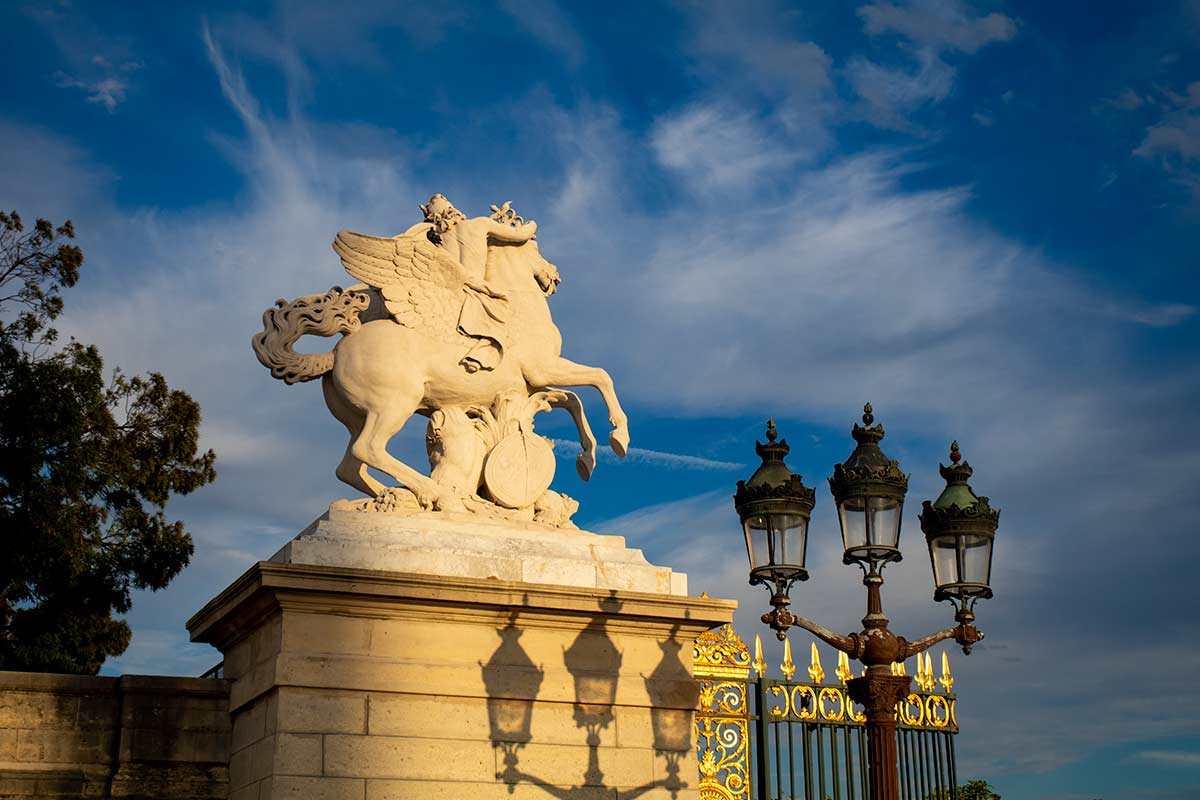
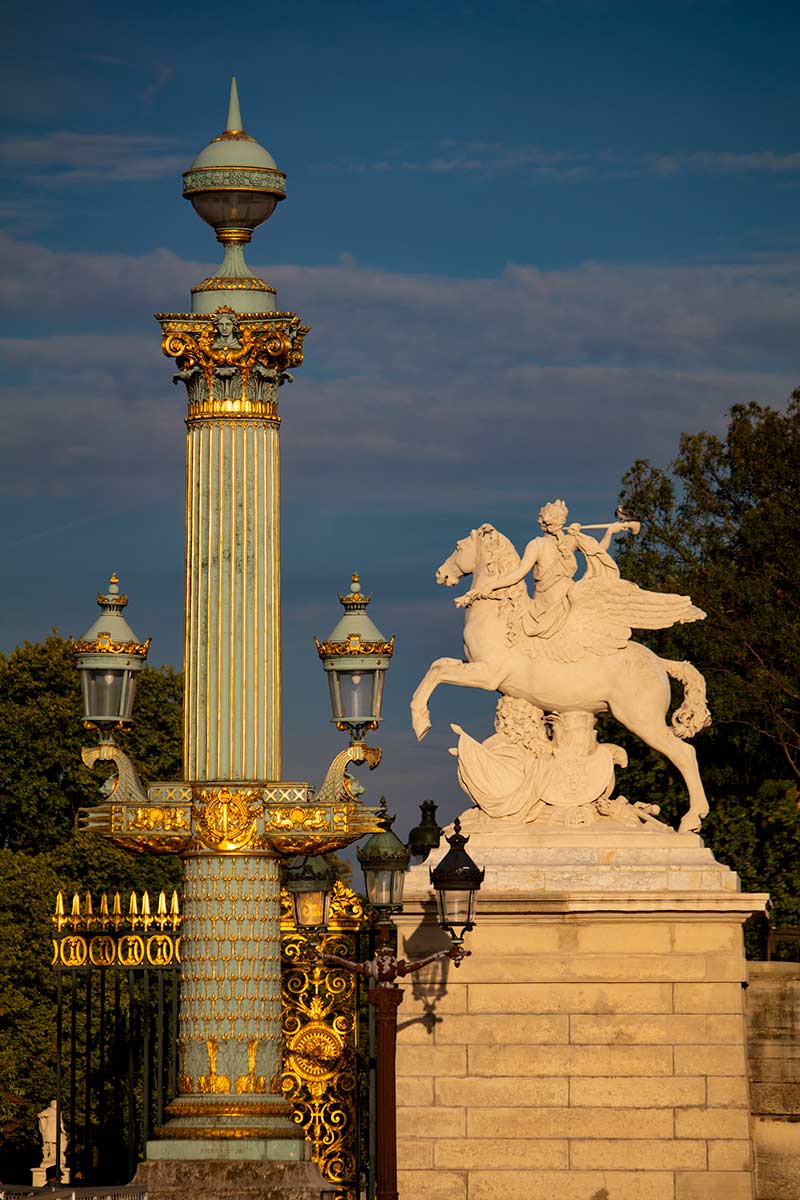
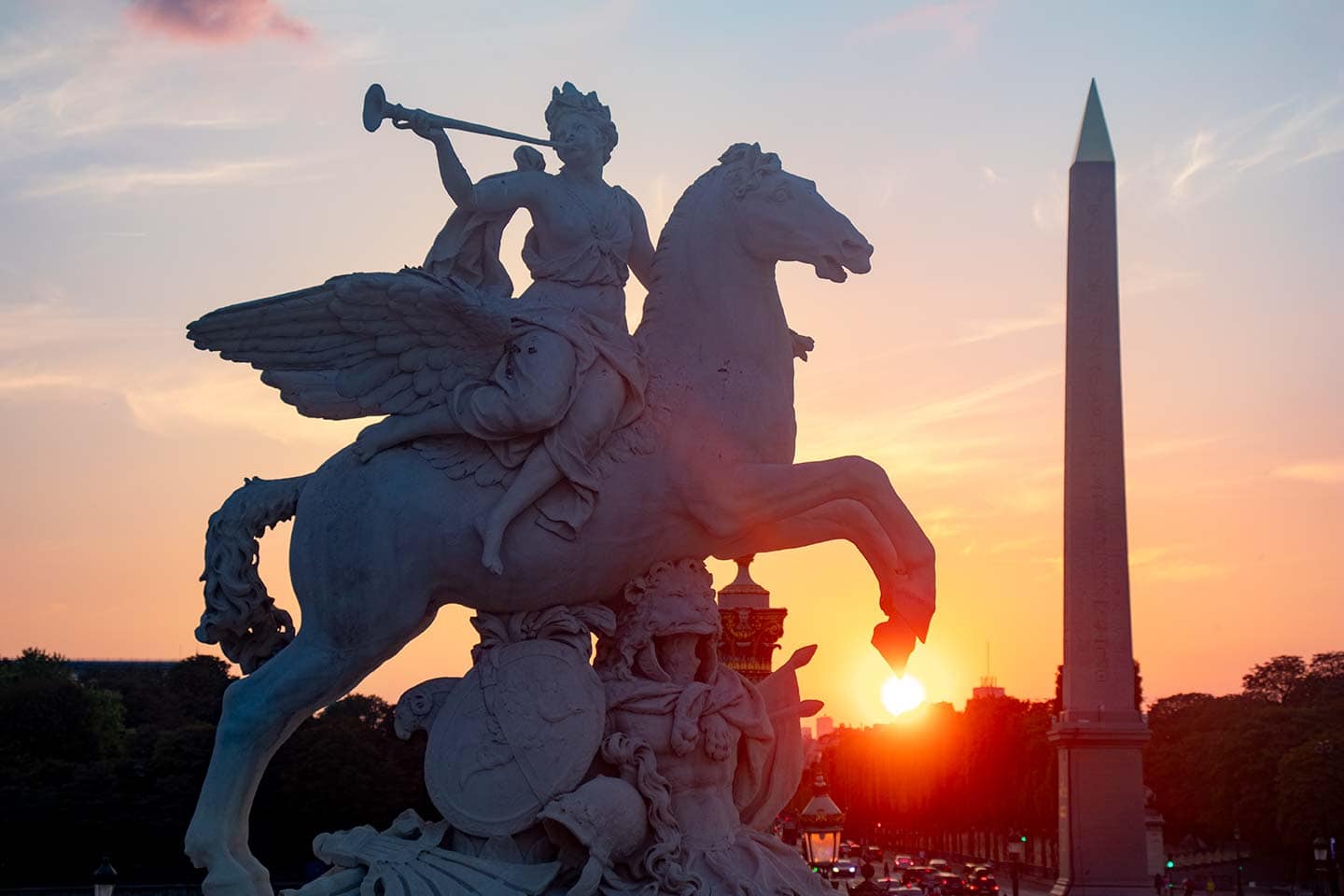
If you visit the Tuileries, take a walk to the west end of the Garden and make the gentle ascent to the terrace overlooking the Place de la Concorde, which is either side of the main west gate. The gate is flanked by two statues by Antoine Coysevox – Fame Riding Pegasus on the south (Orangerie and river) side, and Mercury Riding Pegasus on the north (Jeu de Paume) side.
Musée de l’Orangerie
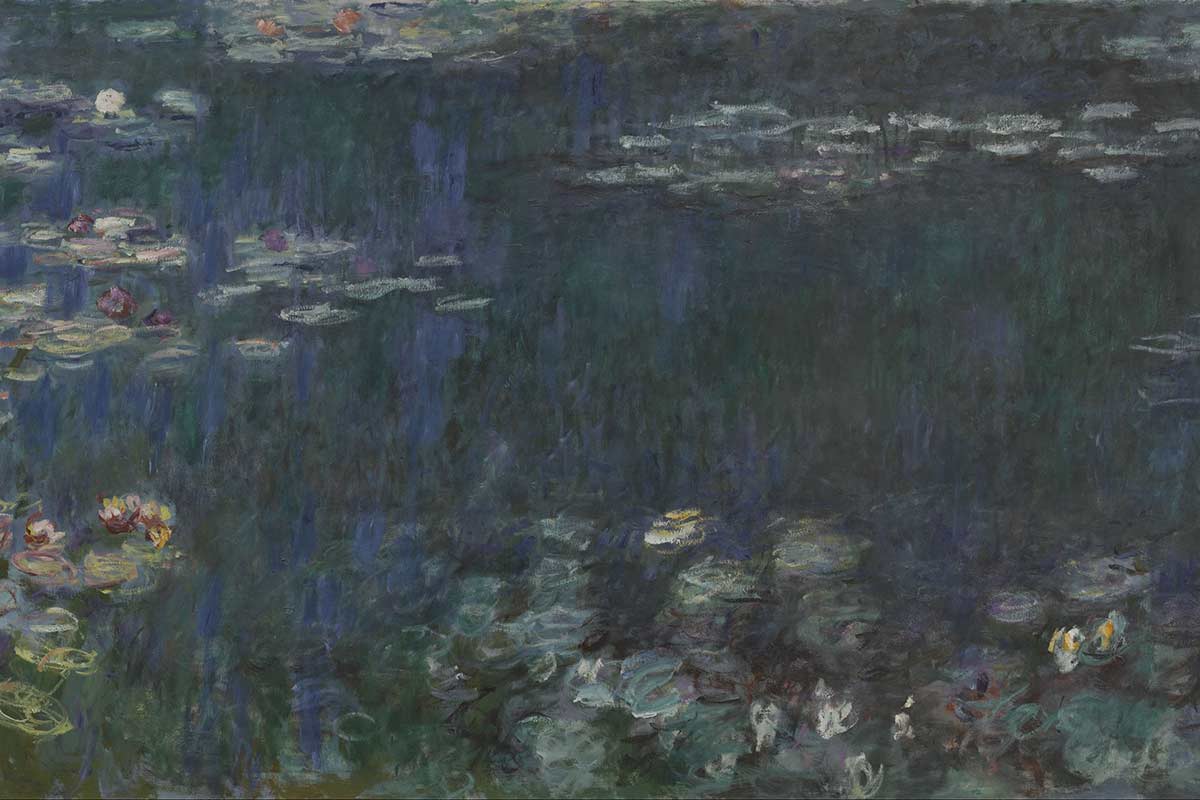
The Musée de l’Orangerie is one of the most important Impressionist Museums in Paris, and is best-known for its series of eight Water Lilies panels by Claude Monet on the upper floor of the building. The artist worked closely on the design of the two rooms which display the work, and together the eight works form an infinity symbol.
The Orangery was built in 1852 to house the collection of citrus trees from the Tuileries Garden, and it was used for this purpose until 1822. Monet was working on his Water Lilies project at this time with the intention of displaying them in the Musée Rodin, but this never came about. Former Prime Minister Georges Clemenceau – by this time President of the Council of Fine Arts, wanted them displayed at the newly-vacant Orangerie instead. And so it came to pass.
Monet’s Water Lilies are held in adjacent rooms ion the upper floor, while the ground floor hosts the Jean Walter and Paul Guillaume collection. This includes other works by Monet, Modigliani, Matisse, Renoir, Cezanne and Pablo Picasso.
Tickets: You can book your reserved Orangerie entry ticket here.
Jeu de Paume Museum
The Jeu de Paume was originally a small indoor real tennis court which was repurposed as an art gallery in 1909.
After World War II, the Jeu de Paume became the foremost museum of Impressionist art in the world, and I was greatly privileged to visit it three times in my youth. I haven’t been back to the Jeu de Paume since it became a modern art museum and later an exhibition space for contemporary photography. The Impressionist collection is mostly held at the excellent Musée d’Orsay, just across the river.
During the Second World War, the Jeu de Paume was used by the Nazis to store art which they had looted from private and public collections from around occupied France. Assistant curator Rose Valland bravely catalogued much of this, leading to the recovery of much of it, and the prevention of trainloads of art reaching Germany after the Normandy landings of 1944.
Pont de la Concorde
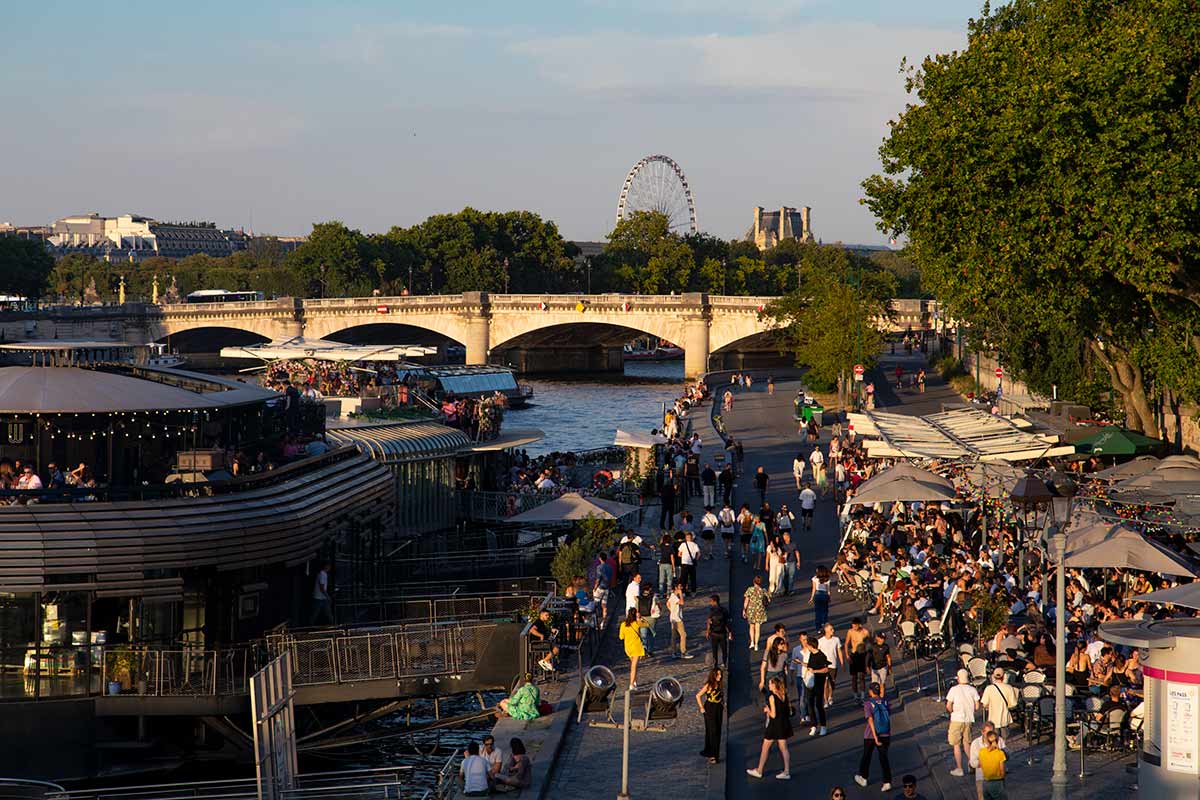
The Pont de la Concorde is the bridge which crosses the Seine just to the south of the square of the same name.
The stone arched bridge was begun in 1787, and completed in 1789, a few months after the outbreak of the French Revolution. Like the Place de la Concorde, it has its own place in Revolutionary history, as part of it was built from stones from the Bastille prison, destroyed at the outbreak of the Revolution on Juily 14th 1989.
If you’re contemplating a riverside stroll, the embankment near the Pont de la Concorde is one of the liveliest sections along the Seine, with some boat restaurants moored there and bars on terra firma.
See Also: Famous Paris Bridges – 15 To Explore
Rue de Rivoli
The Rue de Rivoli – which runs into the northeast corner of the Place de la Concorde – is one of the most famous. Streets in Paris.
It’s named after the Battle of Rivoli, which was won by Napoleon’s forces in the Veneto (northeast Italy) in 1797, against Austrian Imperial forces. It preceded his capture of Venice later that year.
Napoleon commissioned the Rue de Rivoli, which runs along the north side of the Jardin des Tuileries and the Louvre Palace complex. Most of the facades, and arcades below, are uniform in style. Much of it as completed in the 1870s, at the time Baron Haussmann was modernising the city with his grands boulevards project.
Where Is The Place de la Concorde Paris?
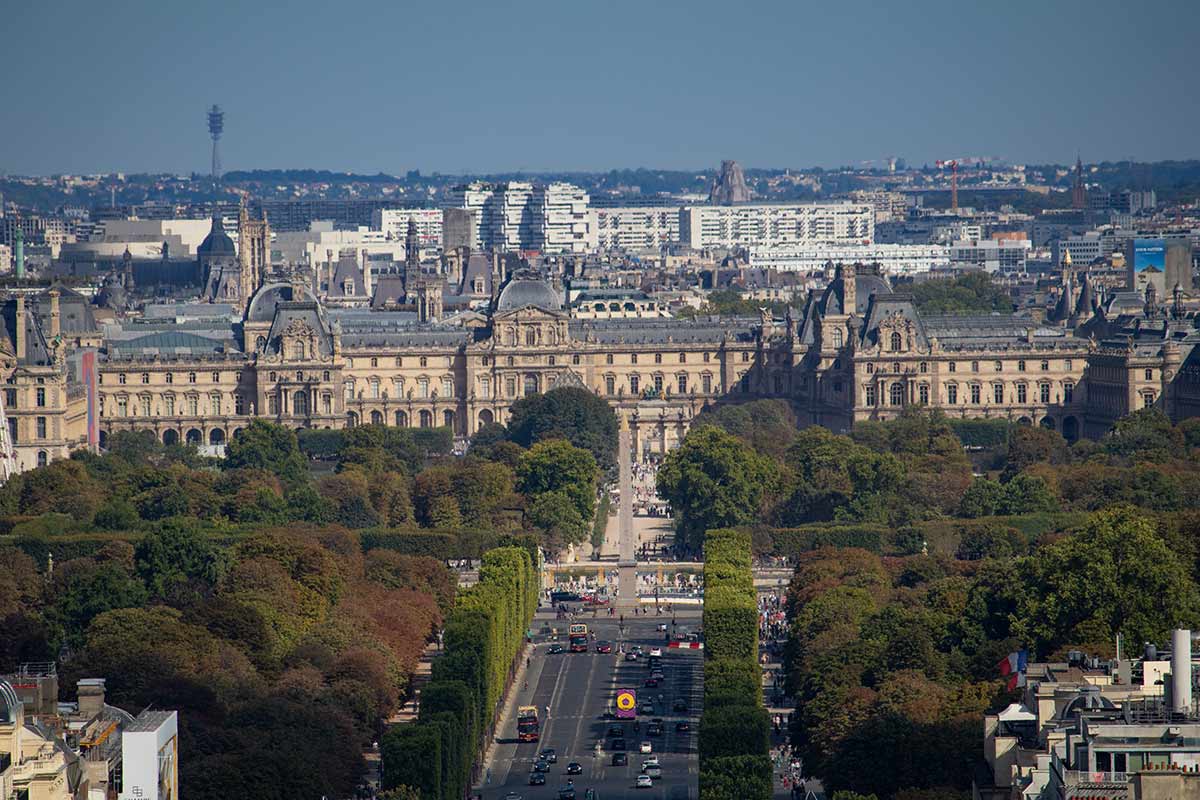
The Place de la Concorde is located in the 8th arrondissement (district) of Paris, with the Jardin des Tuileries (and Louvre Museum) to the immediate east and the Avenue des Champs-Élysées to the immediate west.
It’s also just north of the River Seine and the Pont de la Concorde, which leads to the Assemblée Nationale.
Getting To The Place de la Concorde
Three Paris Metro lines stop at the square’s station, Concorde – lines 1 (yellow), 8 (magenta) and 12 (dark green).
Buses 42 and 73 also stop at Cours de la Reine, just off the square a few metres along the Avenue des Champs-Élysées.
Visiting Place de la Concorde Paris – Final Thoughts
Place de la Concorde is somewhere most visitors pass through at some point during their trip to the French capital, and as I hope this article shows you, it’s well worth stopping by to explore for a while.
Having lived in the city for a few months and visited the city countless times, I’ve written numerous other articles on Paris, so feel free to browse some of them below:
General Paris Articles
Art Nouveau Paris – 12 magnificent sights not to be missed
Best Eiffel Tower Views – over 20 superb vantage points of the most famous landmark in Paris
Sunset in Paris – the best 15 places to see one
Icons of Paris – the most famous landmarks and symbols of Paris
Best Things to Do In The Latin Quarter Paris – in-depth guide to the fascinating Left Bank in Paris
Visiting the Arc de Triomphe Paris – all you need to know before you visit one of the great monuments of Paris
Paris Carousels – the best merry-go-rounds in Paris
Visiting the Delacroix Museum Paris – exploring the life and legacy of one of 19th-century France’s greatest painters
Statue of Liberty in Paris – seek out the replicas of Lady Liberty across the French capital
Churches In Paris
22 Famous Churches in Paris – 22 ecclesiastical wonders
La Sainte Chapelle Paris – one of the wonders of the Gothic Age
Basilica of St Denis Paris – the birthplace of Gothic architecture
Saint Germain des Pres – landmark ancient Left Bank church
Saint Etienne du Mont – stunning Latin Quarter church
Saint Sulpice Church Paris – vast Neoclassical church dominating the Latin Quarter skyline
Pantheon Paris – the resting place of many famous French luminaries
Saint-Séverin Church Paris – Left Bank Gothic wonder
St Julien Le Pauvre – humble ancient church within sight of Notre Dame
Montmartre
Abbesses Metro Station Paris – one of the most beautiful Metro stations in Paris
Rue de l’Abreuvoir – one of the most picturesque streets in Paris
Rue St Rustique Paris – ancient Parisian street in the heart of Montmartre
Sacré Coeur Basilica Paris – the white-domed symbol of Montmartre
Bridges in Paris
Famous Paris Bridges – 15 of the most beautiful bridges on the Seine
Pont Alexandre III Paris – the most flamboyant, ornate bridge in Paris
Bir-Hakeim Bridge Paris – stunning double-decker bridge near the Eiffel Tower
Pont des Arts Paris – elegant iron bridge connecting the Louvre and Institut de France
Pont Neuf Paris – the venerable oldest bridge in Paris, and sometime art installation subject
Parks in Paris
Square du Vert Galant Paris – the most romantic garden in Paris
Jardin du Luxembourg – one of the most beautiful gardens in Paris
Tuileries Garden Paris – amazing garden near the Louvre
Parc Monceau Paris – gorgeous folly-filled park near the Arc de Triomphe