

Visiting the Delacroix Museum Paris
The Delacroix Museum Paris is one of the best single artist museums in the French capital. It’s considerably smaller than the Picasso and Rodin Museums, but this small exhibition, in his final home in the Latin Quarter, is fascinating, especially if you’re familiar with some of Delacroix’s work.
Eugène Delacroix was one of the foremost French Romantic painters of the 19th century. He is perhaps best-known for his 1830 painting Liberty Leading the People, which can be seen in the Louvre. Over his career, he depicted dramatic scenes from the French Revolution to episodes from the Old and New Testaments, and Greek mythology. He also painted numerous portraits, some of which can be seen in this Museum. Some of them are of himself.
Delacroix was inspired by the great Venetian painters Titian and Tintoretto, and also Peter Paul Rubens. More broadly, Romantic contemporaries across the arts included Victor Hugo, his friend and correspondent George Sand, and painters such as Caspar David Friedrich and JMW Turner. The more conservative Neoclassical movement stood in contrast, and his greatest contemporary rival was Jean-Auguste-Dominique Ingres.
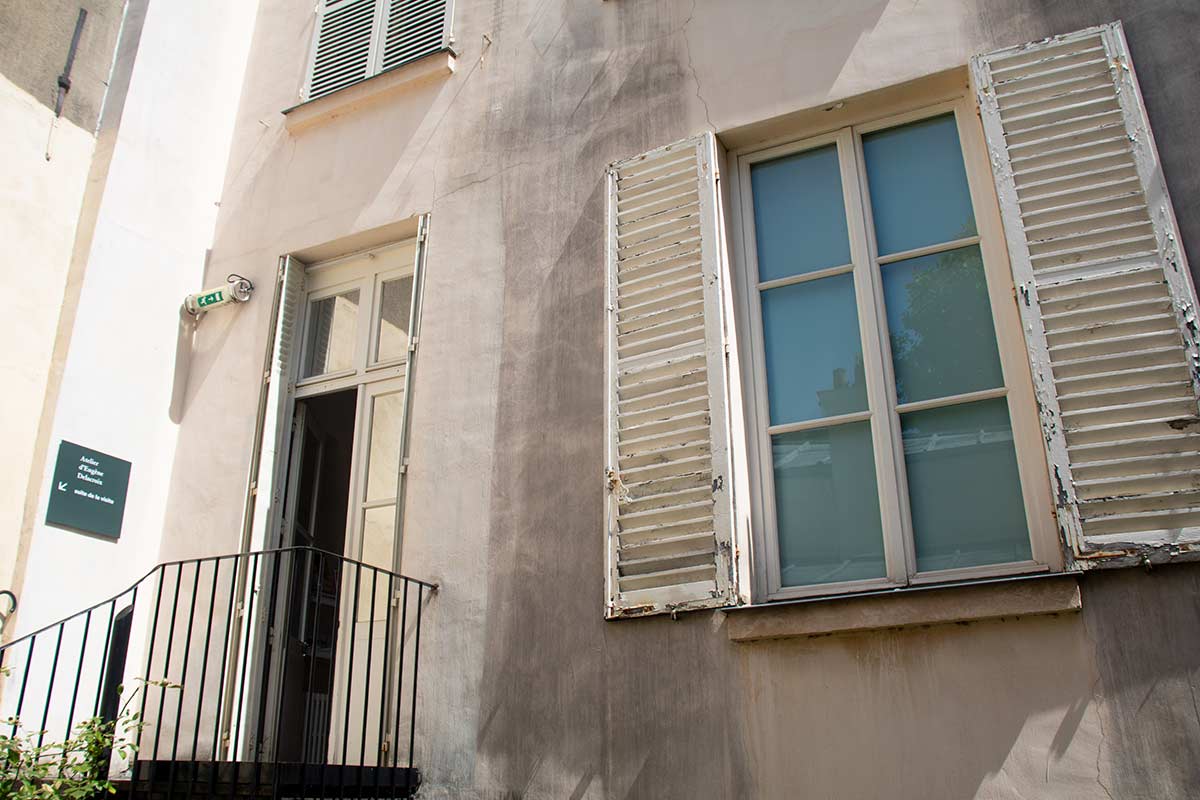
This small Museum – officially the Musée National Eugène Delacroix – is run by the Louvre Museum. It’s located in his final home, his apartment at 6 Rue Furstemberg in the Latin Quarter where he died in 1863.
In this guide I’ll explain what there is to see in the Museum, when it’s open, how to get there and where to see other Delacroix paintings in Paris. I’ll also suggest some places to stay nearby, and Latin Quarter walking tours which give you some more context on the artistic history of the area.
I hope you find it helpful.
Where To Stay Near The Delacroix Museum
Hotel des Marronniers – beautiful 17th-century hotel around the corner from the Delacroix Museum, also close to St Germain des Pres and the River Seine
L’Hotel – luxury Baroque-style hotel in the former home of Oscar Wilde
Hotel Prince de Conti – boutique hotel in 17th-century building, wonderful location close to the Seine, Pont Neuf and Latin Quarter
Crystal Hotel – popular friendly 3-star across the square from Saint-Germain-des-Prés church
What To See In The Delacroix Museum Paris
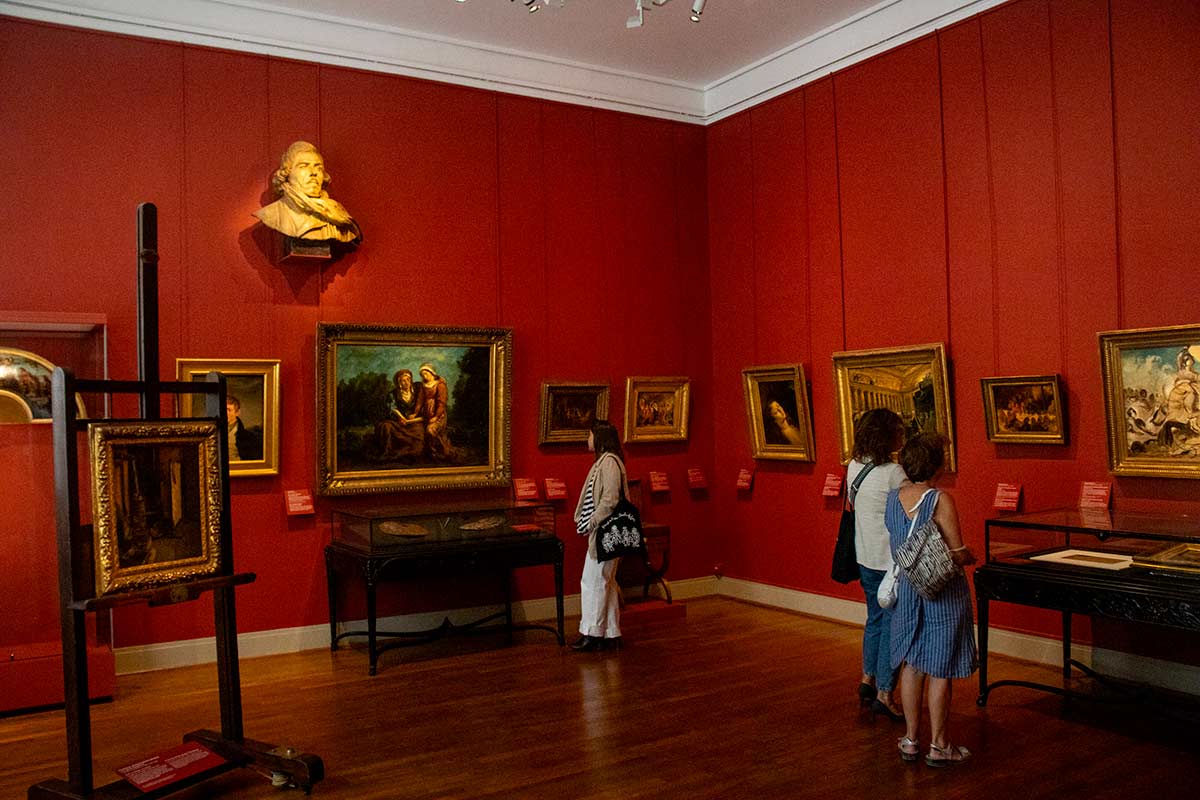
The Delacroix Museum only consists of a few small rooms and his garden, so most visits would take under an hour.
The Museum is operated by the Louvre, which loans some of its Delacroix collection to the Delacroix Museum. These tend to be early or lesser-known works by the artist, and the display is augmented by a sellection of sketches, cartoons and some of his letters.
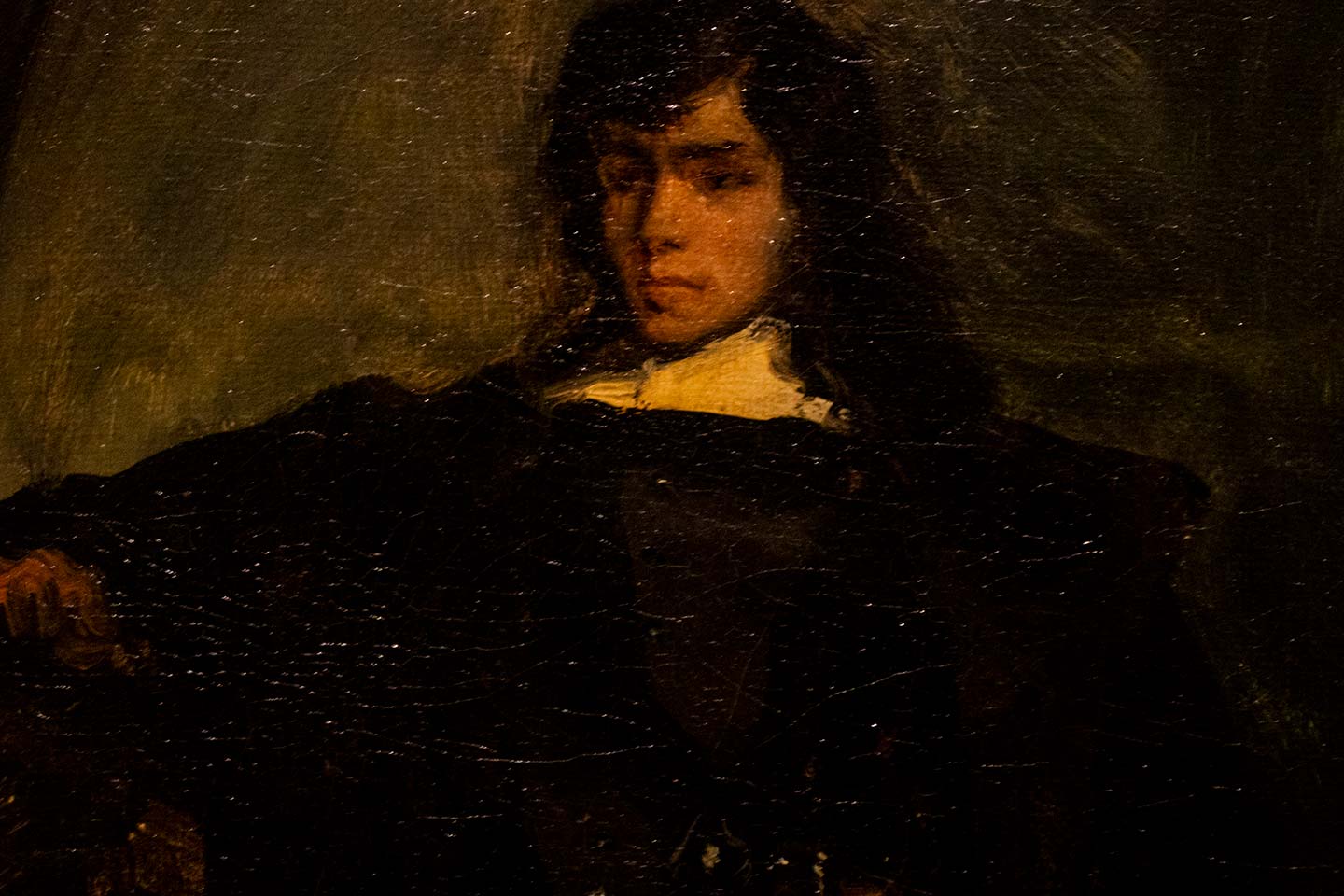
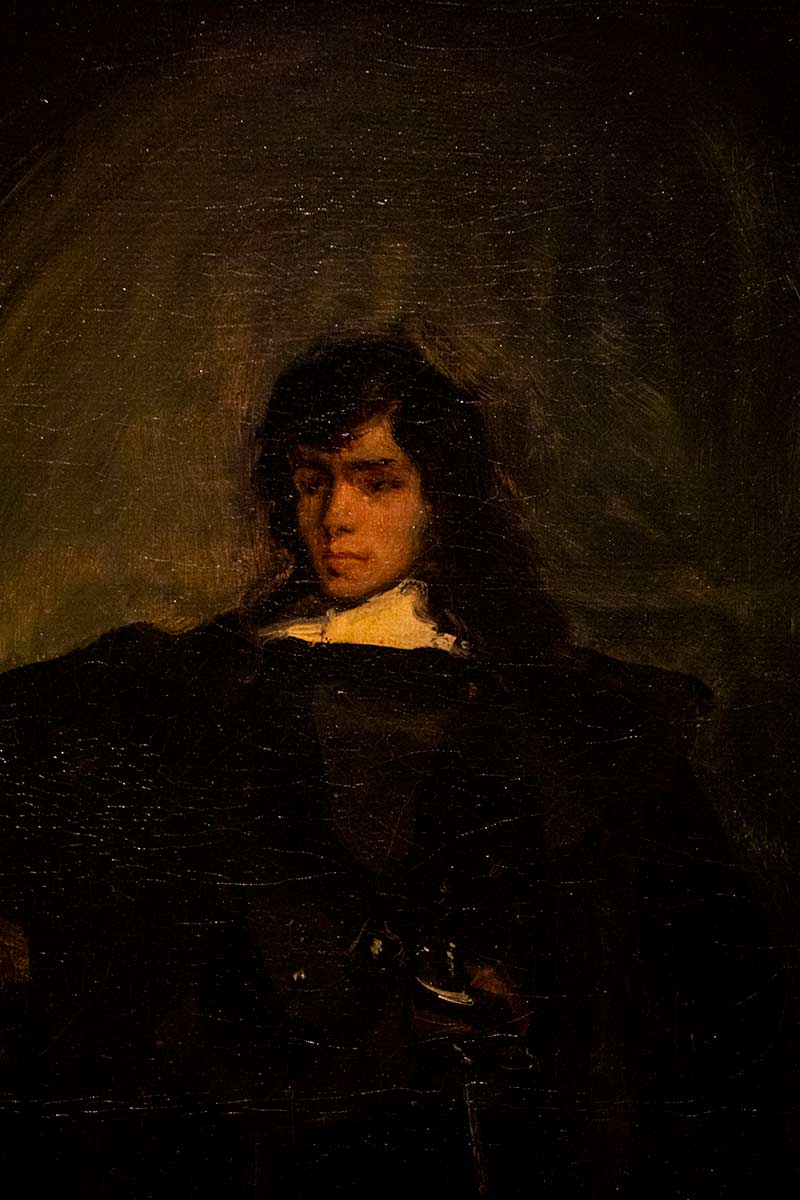
When I visited the Museum, the paintings on display included the early self-portrait in the lead shot of the article, from when Delacroix was in his twenties. He may be dressed as a character from a play – Hamlet is one that has been suggested, though we can’t be sure.
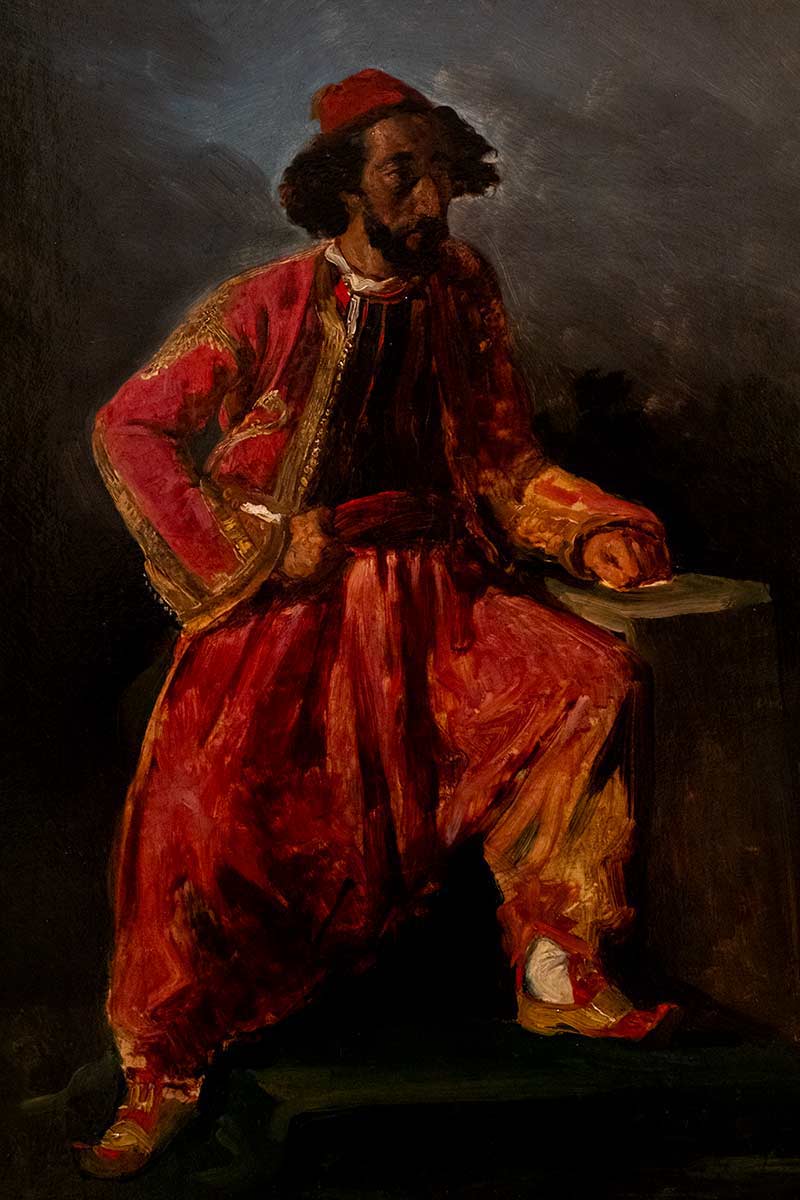
The second image shown in this section is believed to be the portrait of a lyric artist, Paul Barroilhet, dressed in Turkish garments, and the painting is sometimes called Turkish Sitting. Delacroix was strongly influenced by his travels in North Africa and the Near East, and these themes recur frequently in the first half of his career.
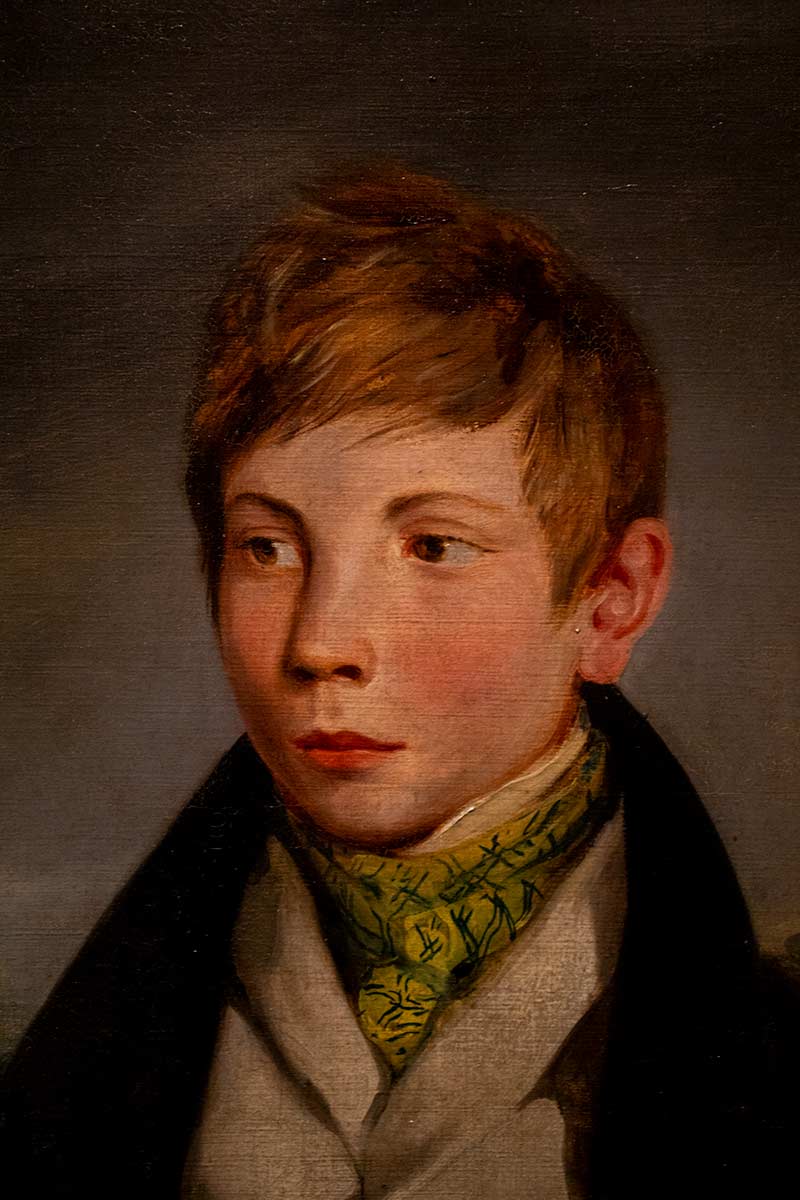
The Portrait of Auguste-Richard de la Hautière is another of Delacroix’s relatively early paintings. It’s one of a series of ten portraits commissioned for a school, where the paintings of top students would be hung in the school’s reception hall. The subject went on to become a lawyer and also became interested in socialism, which did not go down well with Parisian colleagues. He eventually left the capital and finished his legal career in Blois in the Loire Valley.
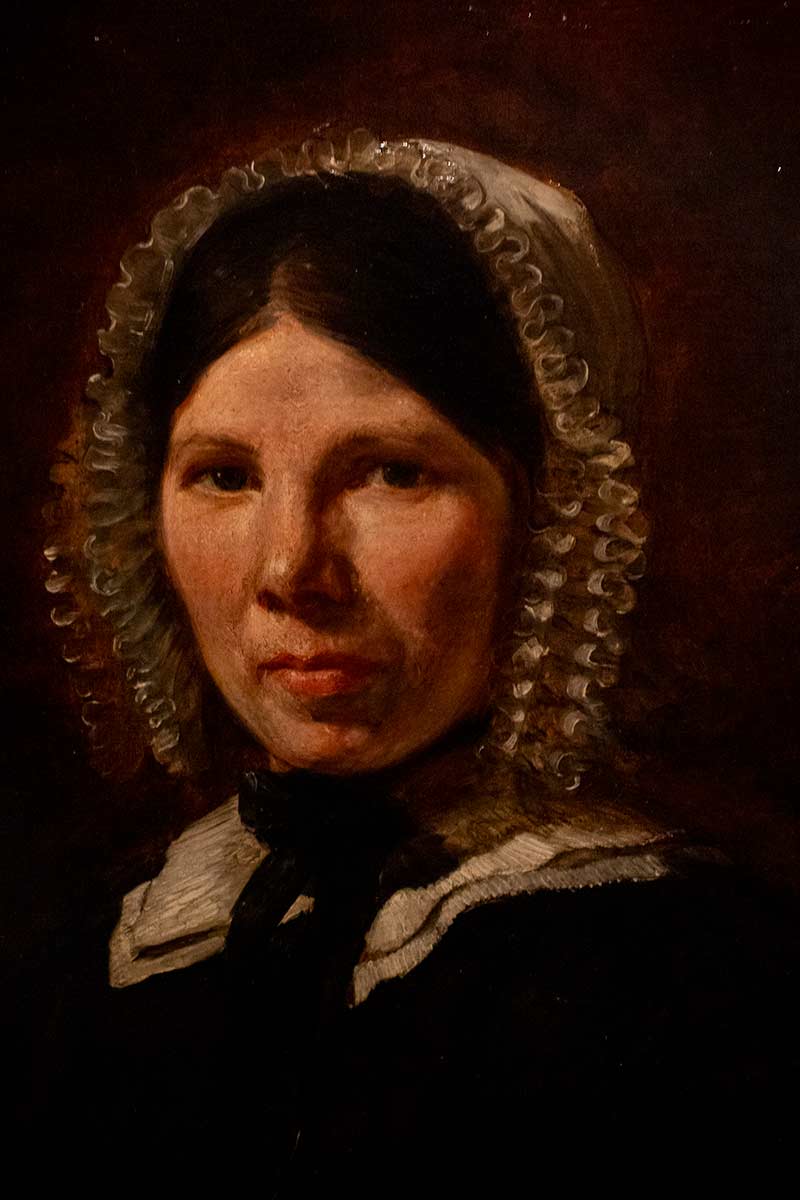
The Portrait of Jenny Le Guillou (also known as the Portrait of Jeanne-Marie) dates from 1840. She was a very important figure in his life, supposedly his housekeeper and (platonic) companion, who nursed him through his final days. There has also been speculation over whether they had a secret romantic relationship, or that they even secretly married. It’s possible, though I’d say unlikely. Delacroix also painted a relative of Jenny’s, Lucille Virginie, the same year.
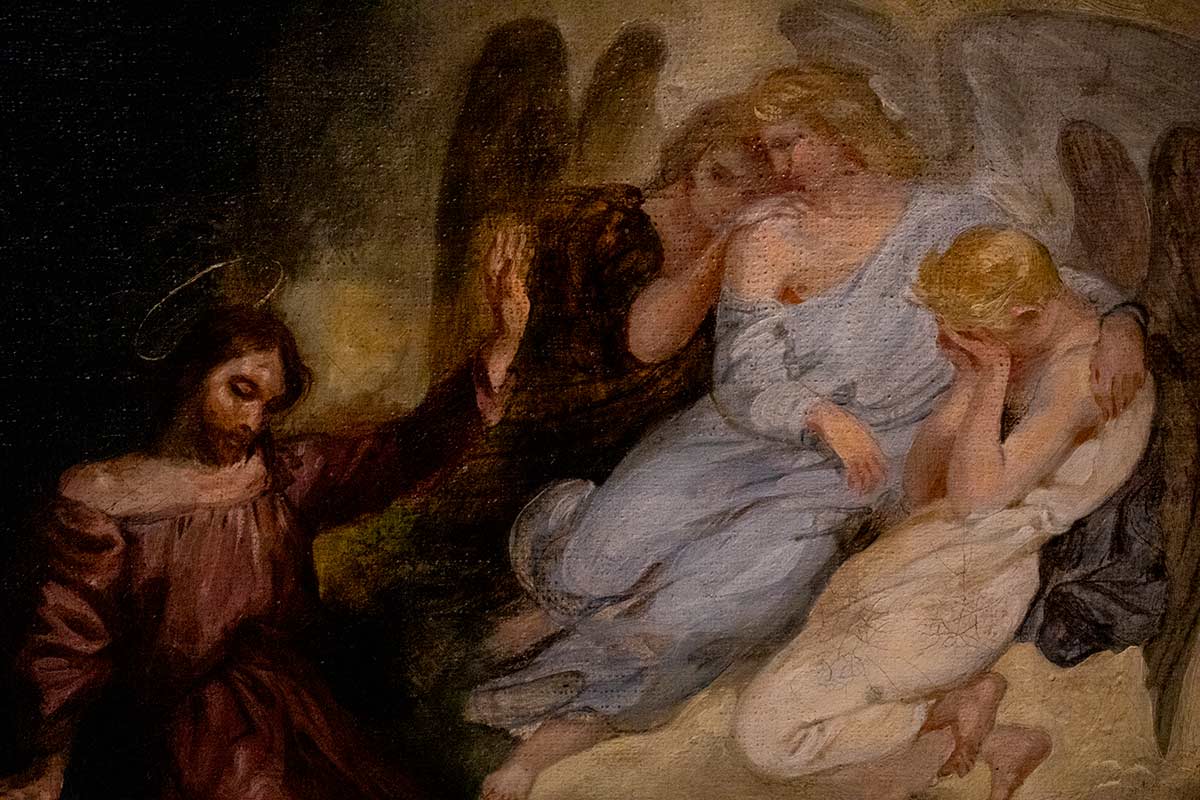
One of the most intriguing aspects of the exhibition is that you get an idea of the genesis and growth of different paintings. The image above is believed to be an early working of Christ in the Garden of Olives, also known as The Agony in the Garden. The final (and very different) version of this can be seen across the river in the Church of St Paul and St Louis in the Marais district of the city.
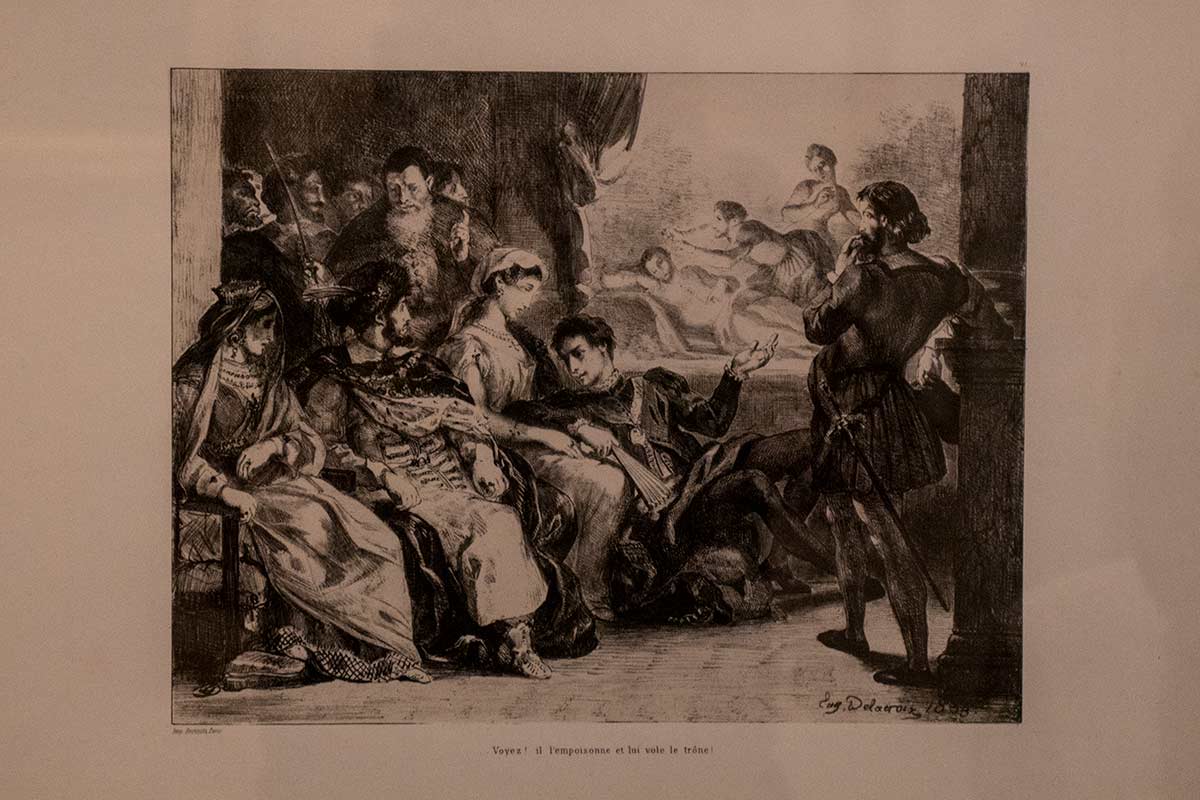
There is also a substantial collection of his drawings and sketches, and even a few cartoons, including the one shown above. It depicts actors portraying the poisoning of Hamlet’s father, with the caption,”Look! He’s poisoning him and stealing his throne!”
This cartoon is from 1835, but he had produced numerous others in the early stages of his career. These were political in nature, expressing his liberal and pro-Bonapartist point of view. He also famously caricatured his rival Ingres with a lioness, and this work is now held in the Metropolitan Museum of Art in New York City.
A small atelier (studio) has also been recreated in the Museum, with some of Delacroix’s original tools of the trade including some of his brushes and a palette.
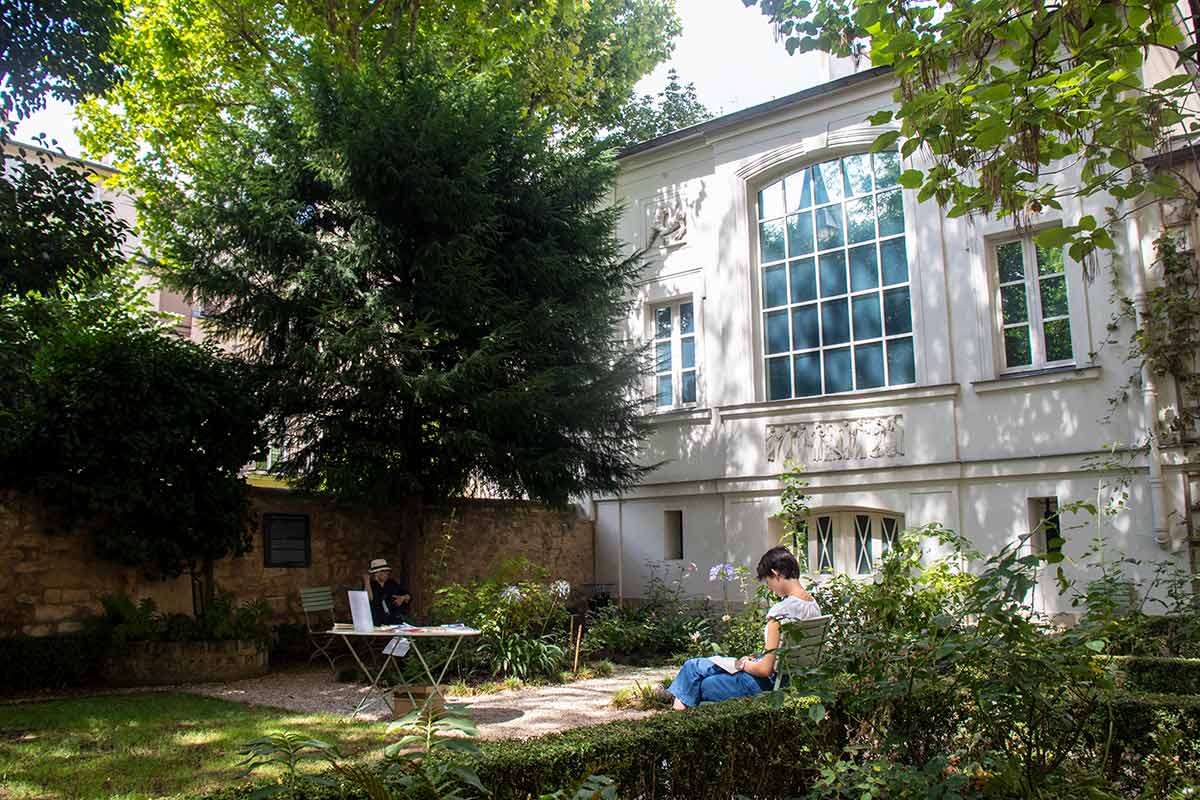
Finally, it’s a short walk downstairs from the apartment to the Garden, where Delacroix would often sit. It’s a wonderfully quiet and calm spot where several visitors paused for a contemplative few minutes’ break in the shade of the afternoon sun.
More Delacroix Artworks in Paris
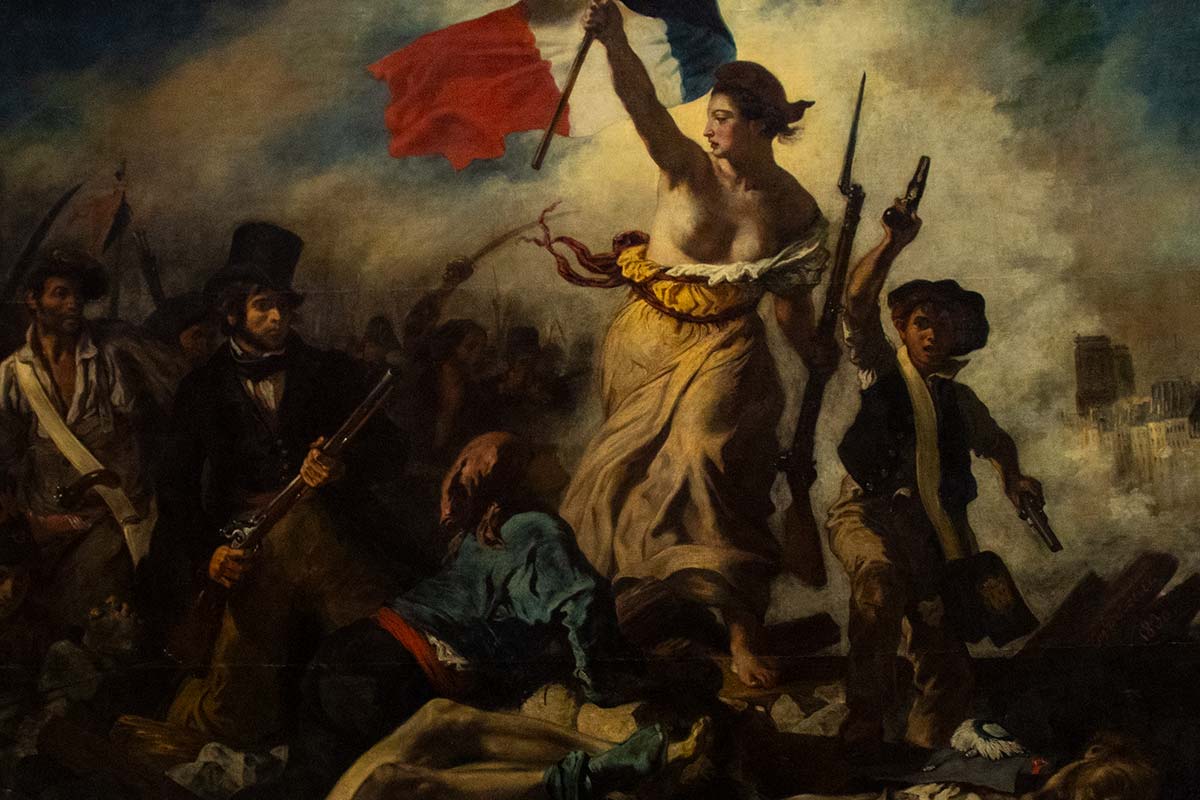
Many of Delacroix’s works can be seen just across the river in the Musée du Louvre. Around 50 of Delacroix’s paintings are held by the Museum, though they’re not necessarily all on display at any one time. The aforementioned Liberty Leading the People is perhaps his most renowned work, but many others can be seen there, such as The Barque of Dante, The Battle of Poitiers, The Bride of Abydos and one of his best portraits, the Portrait of Leon Riesener.
Delacroix also contributed to the ceiling of the stunning Apollon Gallery in the Louvre, with the epic Apollo Slaying the Serpent Python in the ceiling’s central section.
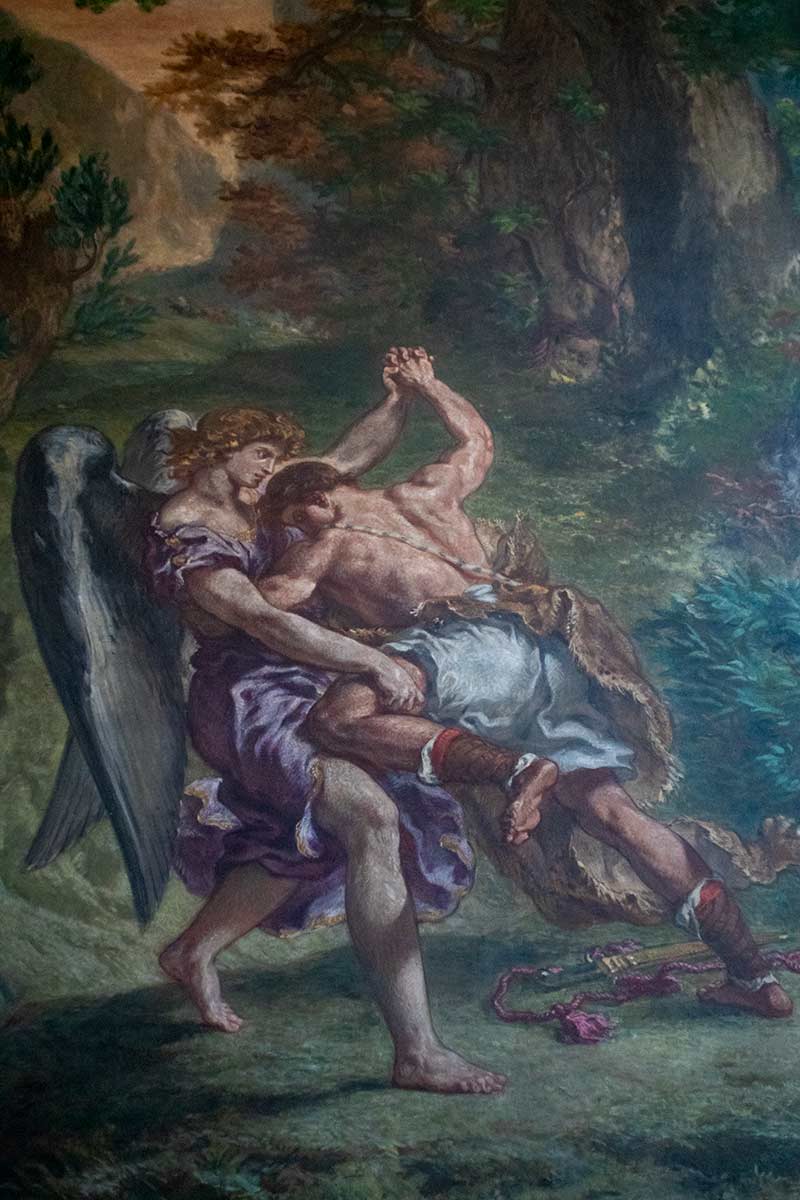
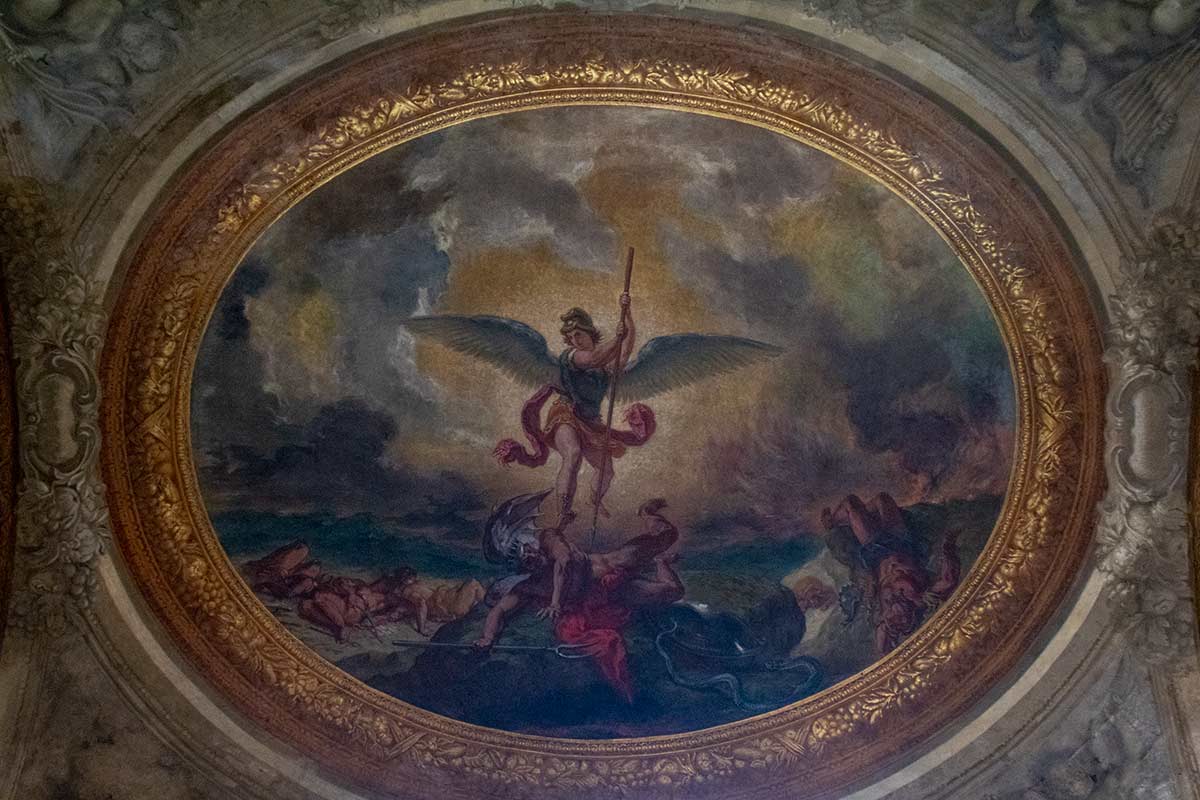
Three of Delacroix’s paintings can also be seen in Saint-Sulpice Church, between Saint-Germain-des-Prés and the Jardin du Luxembourg. They can all be found in the Chapelle des Anges (Chapel of the Angels) in the southwest corner of the church.
To find them, turn right as you enter the church through the west door, and the three paintings are in the chapel in the corner of the church. The murals of Jacob Wrestling With the Angel and Heliodorus Driven From The Temple face each other, and the fresco of St Michael Vanquishing The Devil adorns the ceiling between them.
Where Is The Delacroix Museum Paris?
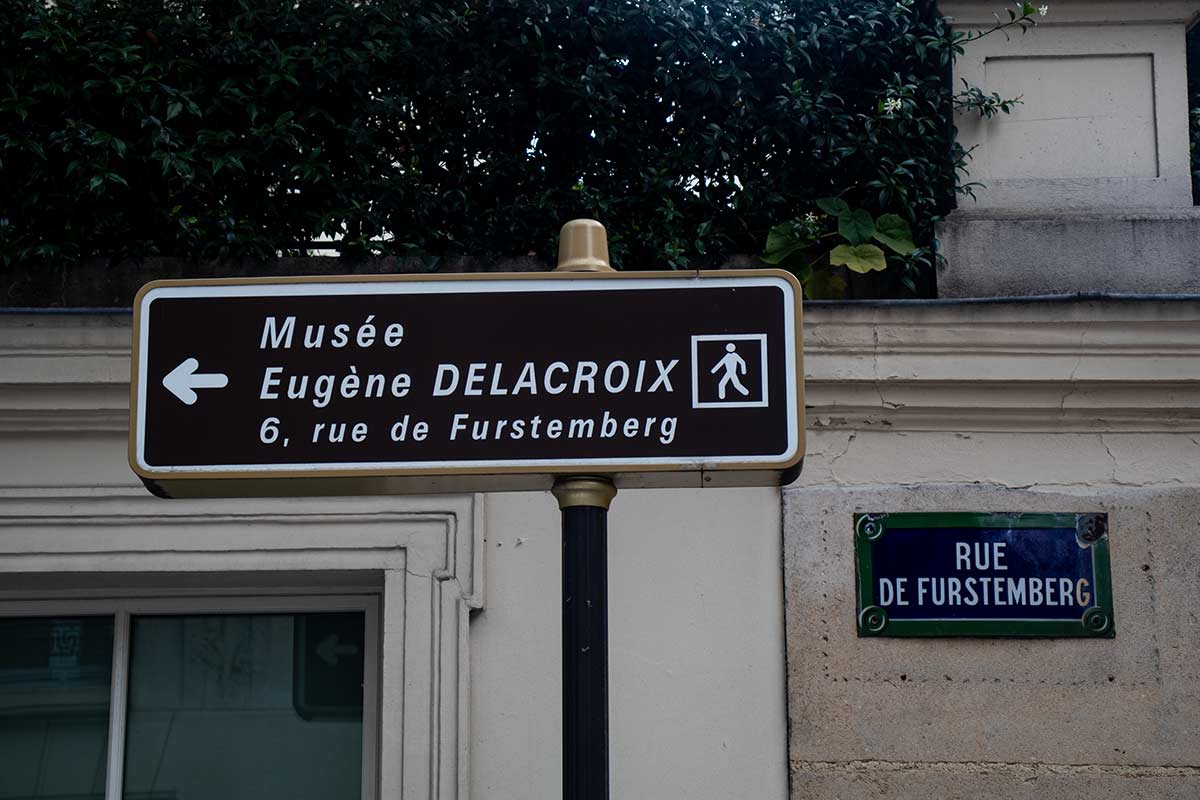
The Museum’s address is 6 Rue Furstemberg. It’s in the 6th arrondissement of Paris, part of the Latin Quarter and a five-minute walk from the church of Saint-Germain-des-Prés.
Getting There
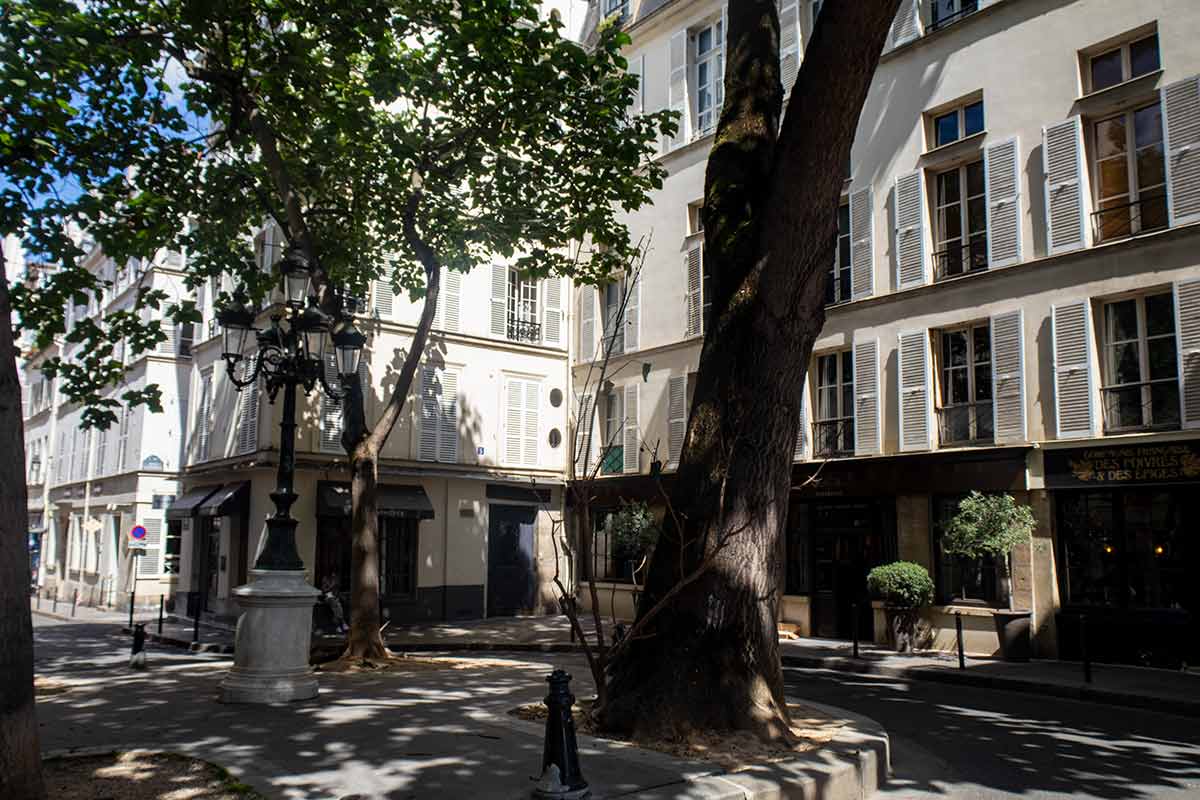
The nearest Metro stations are Saint-Germain des Prés (line 4) and Mabillon (line 10).
The Museum is around five minutes’ walk from either station.
It’s a similar distance from there to the Pont des Arts-Quai de Conti bus stop, where the 27 and 87 riverside services both stop.
Delacroix Museum Opening Hours
The Museum is open from 12.00 pm to 5.30 pm Mondays and Wednesdays to Fridays, and from 10.00 am to 5.30 pm on weekends. It’s closed on Tuesdays.
Adult tickets cost €9, but it’s worth bearing in mind that if you’re planning to visit a few Paris museums, you’ll make considerable savings with the Paris Museum Pass, available in 2-, 4- or 6-day versions.
Visiting the Delacroix Museum Paris – Final Thoughts
I hope that you’ve enjoyed this article on the Delacroix Museum, and that it has helped you learn more about the artist.
Having lived in the city for a few months and visited the city countless times, I’ve written numerous other articles on Paris, so feel free to browse some of them below:
General Paris Articles
Art Nouveau Paris – 12 magnificent sights not to be missed
Best Eiffel Tower Views – over 20 superb vantage points of the most famous landmark in Paris
Sunset in Paris – the best 15 places to see one
Icons of Paris – the most famous landmarks and symbols of Paris
Best Things to Do In The Latin Quarter Paris – in-depth guide to the fascinating Left Bank in Paris
Visiting the Arc de Triomphe Paris – all you need to know before you visit one of the great monuments of Paris
Paris Carousels – the best merry-go-rounds in Paris
Statue of Liberty in Paris – seek out the replicas of Lady Liberty across the French capital
Churches In Paris
22 Famous Churches in Paris – 22 ecclesiastical wonders
La Sainte Chapelle Paris – one of the wonders of the Gothic Age
Basilica of St Denis Paris – the birthplace of Gothic architecture
Saint Germain des Pres – landmark ancient Left Bank church
Saint Etienne du Mont – stunning Latin Quarter church
Saint Sulpice Church Paris – vast Neoclassical church dominating the Latin Quarter skyline
Pantheon Paris – the resting place of many famous French luminaries
Saint-Séverin Church Paris – Left Bank Gothic wonder
St Julien Le Pauvre – humble ancient church within sight of Notre Dame
Montmartre
Abbesses Metro Station Paris – one of the most beautiful Metro stations in Paris
Rue de l’Abreuvoir – one of the most picturesque streets in Paris
Rue St Rustique Paris – ancient Parisian street in the heart of Montmartre
Sacré Coeur Basilica Paris – the white-domed symbol of Montmartre
Bridges in Paris
Famous Paris Bridges – 15 of the most beautiful bridges on the Seine
Pont Alexandre III Paris – the most flamboyant, ornate bridge in Paris
Bir-Hakeim Bridge Paris – stunning double-decker bridge near the Eiffel Tower
Pont des Arts Paris – elegant iron bridge connecting the Louvre and Institut de France
Pont Neuf Paris – the venerable oldest bridge in Paris, and sometime art installation subject
Parks in Paris
Square du Vert Galant Paris – the most romantic garden in Paris
Jardin du Luxembourg – one of the most beautiful gardens in Paris
Tuileries Garden Paris – amazing garden near the Louvre
Parc Monceau Paris – gorgeous folly-filled park near the Arc de Triomphe