

Things To Do in St Rémy de Provence
Follow the Vincent van Gogh trail, see one of the finest ancient Roman sites in France and wander one of the loveliest country towns in Provence. These are some of the best things to do in St Rémy de Provence.
The small country town is in one of the most jam-packed areas to explore anywhere in Europe, with the World Heritage cities of Avignon and Arles both half an hour away, and the Camargue and Lubéron both a little further away.
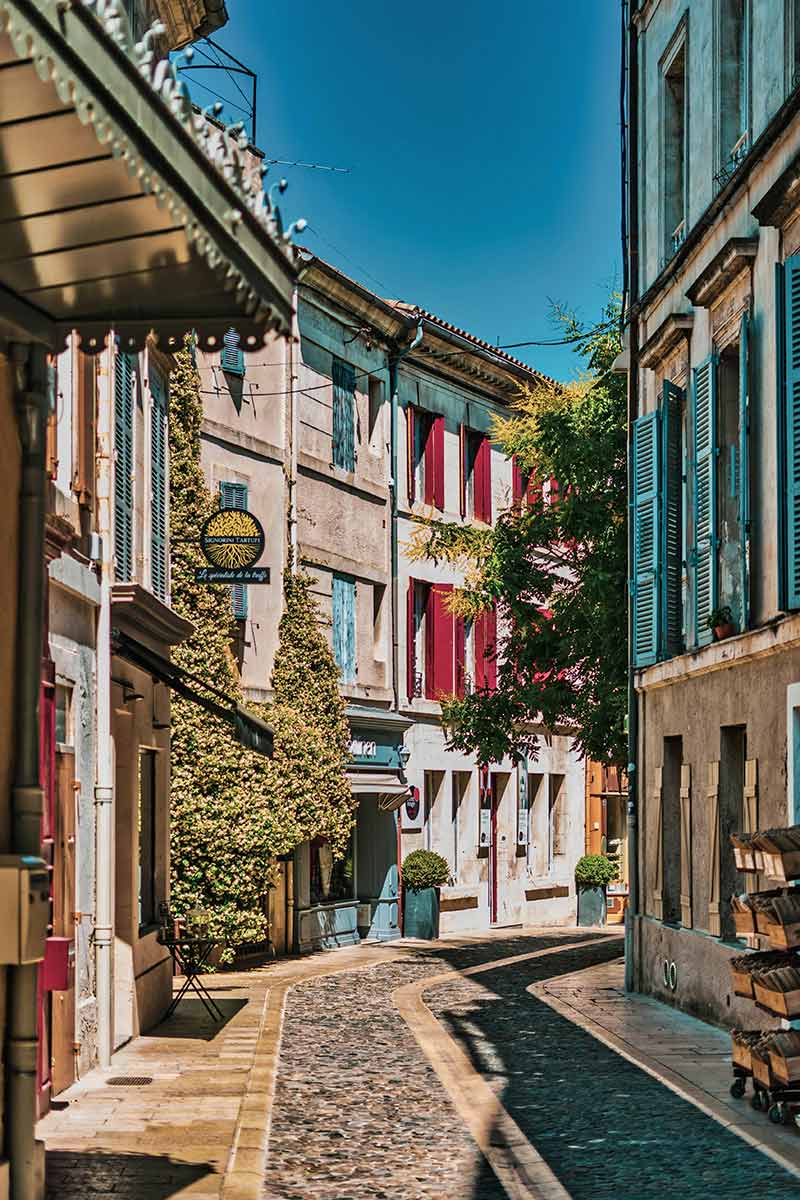
St Rémy de Provence is a gorgeous country town, full of shady squares, shuttered houses, narrow streets, cafes and boutiques. It also has a special place in art history as home to Vincent van Gogh for a year, when he produced some of his most famous works. At Saint- Rémy you can literally step into some of his paintings and savour the bright Provençal light than so inspired him.
In this article I guide you around these locations and the streets of the historic centre of the town, and suggest places to stay and eat, and places to visit in the surrounding area. I hope that you find it helpful.
Where To Stay In St Rémy de Provence
Hotel Le Saint-Rémy & Spa – exquisite small luxury 5-star hotel in the historic centre of St Rémy
Hotel Villa Glanum & Spa – quiet, relaxing hotel in countryside just outside St Rémy, close to the Glanum ancient site and St-Paul-de-Mausole
Hotel l’Amandière – quiet, relaxing bolthole overlooking a park a few minutes’ walk from the centre of St Rémy
Le Mas des Genets – beautiful 2-bedroom holiday home in countryside two miles from St Rémy
Wander The Streets and Squares Of St Rémy de Provence
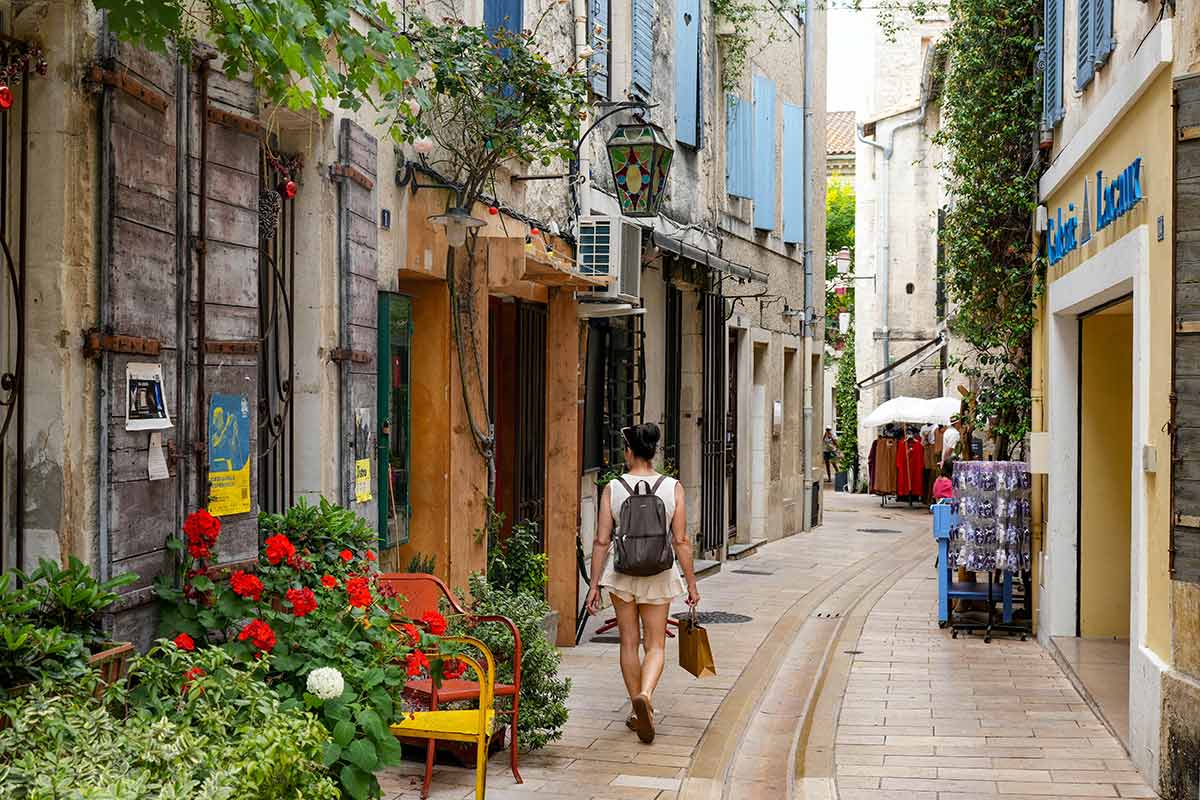
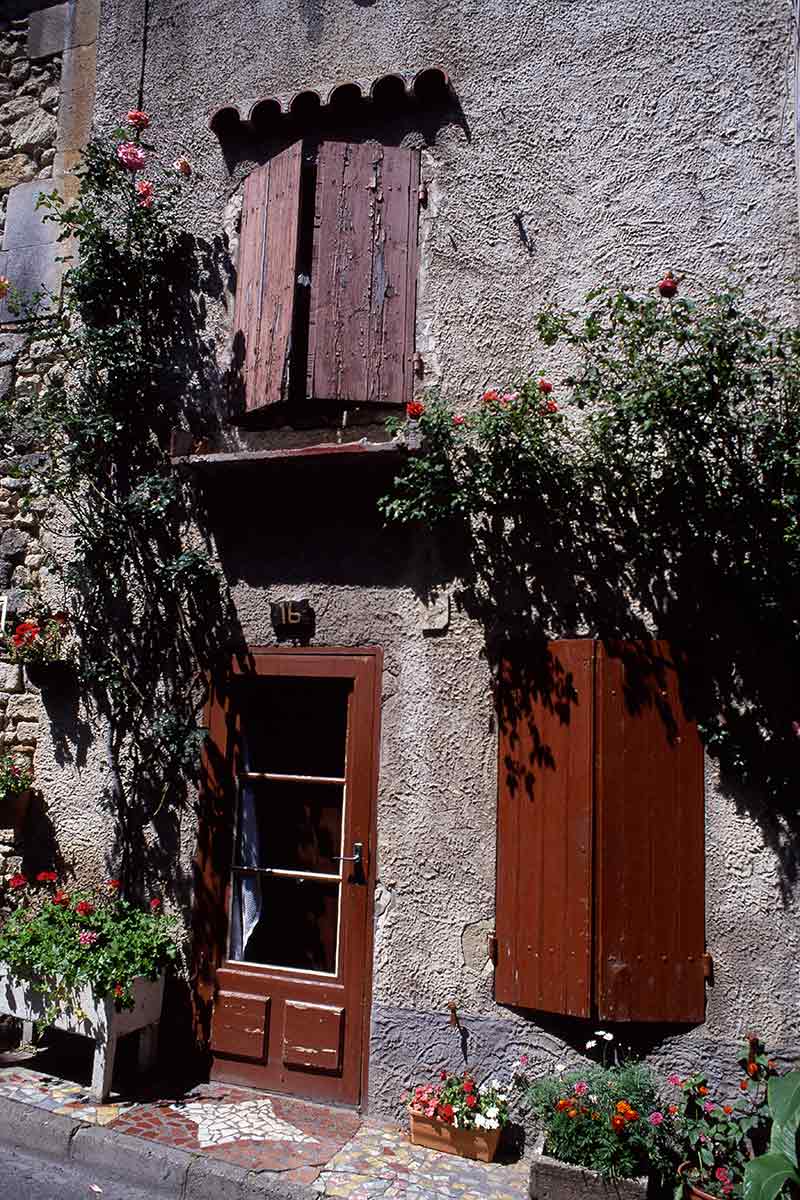
Many of you – especially those visiting the region for the first time – will want to stop at a picturesque Provençal town for a few hours – or perhaps a few days. Before visiting the area for the first time in my teens, I imagined sitting at a table in the shade of a square lined with colourful shuttered old houses and centuries-old plane trees, sipping on a glass of Côtes du Rhône or downing a shot of pastis, watching the world go by, and just loving being in la belle France. The fantasy also extended to exotic-sounding Gitanes cigarettes, sone part which I left behind decades ago.
I’ve been incredibly fortunate to have stopped by in many a city, town or village around southern France in the 40 years since that time. And for a taste of rural Provence and France, St Rémy de Provence makes a wonderful starting point, or another step on a long journey.
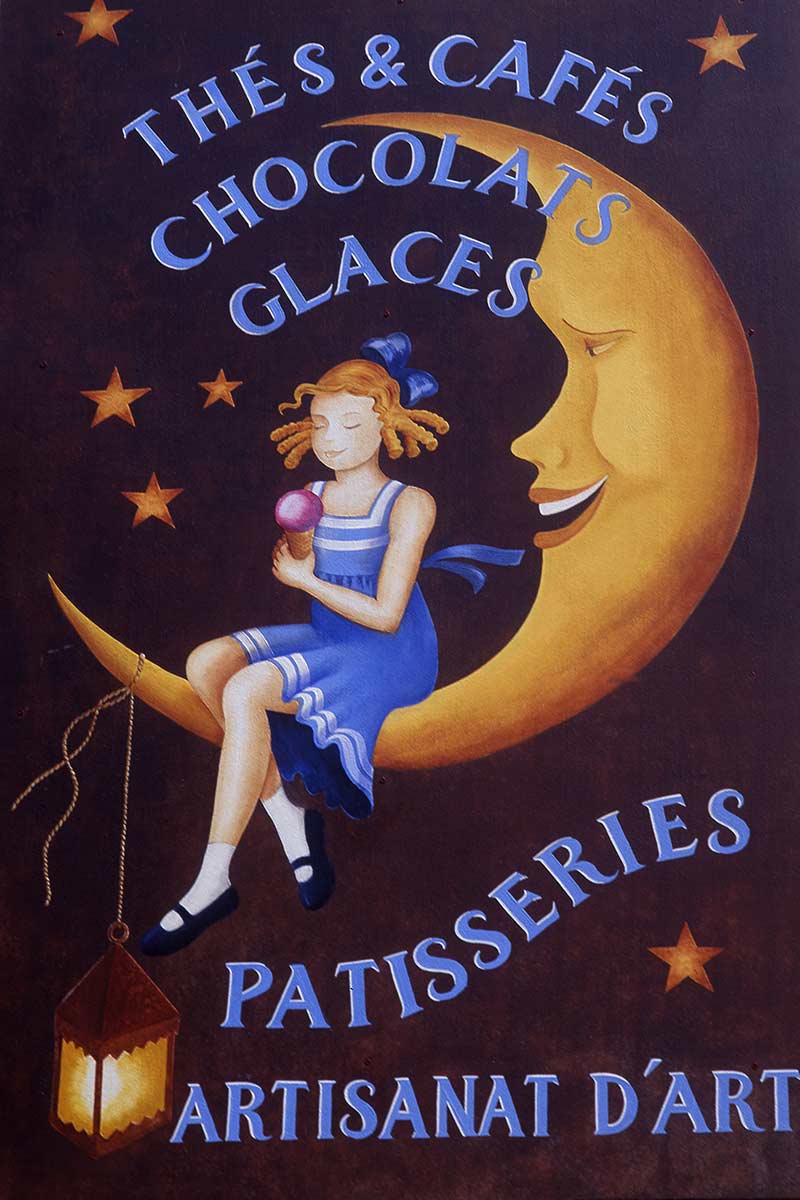
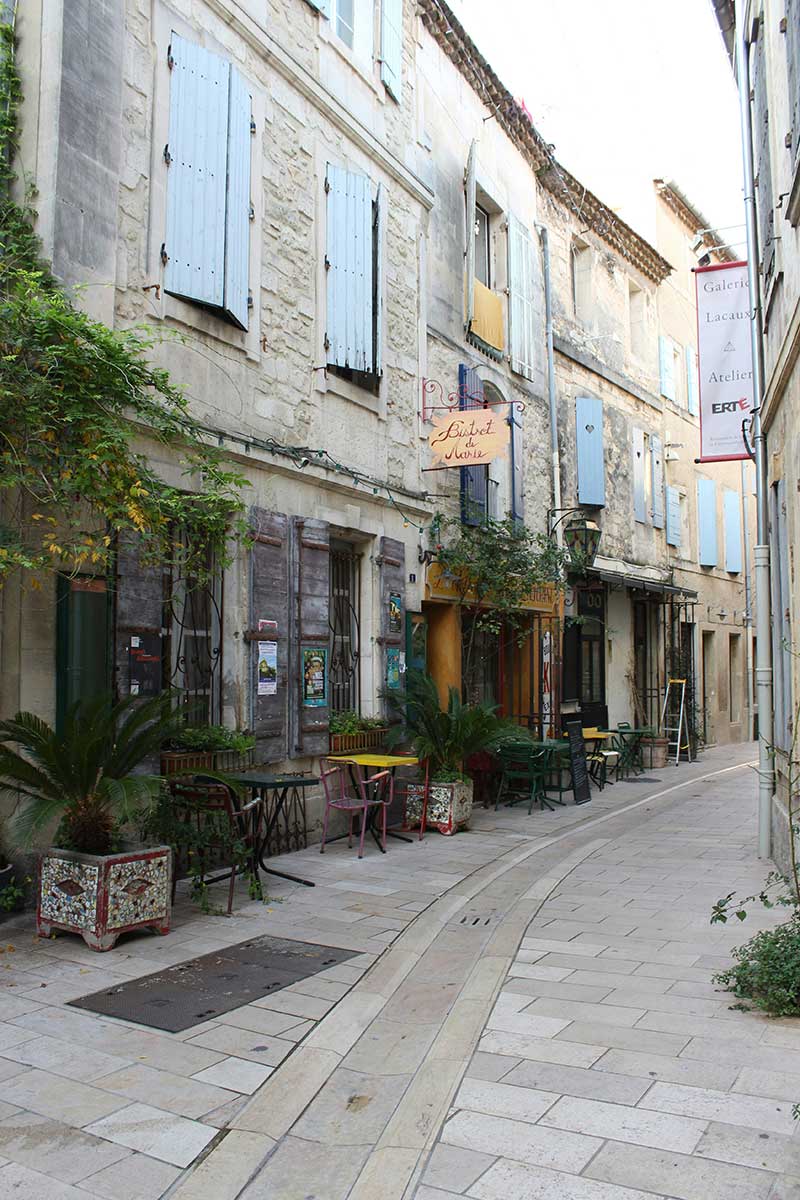
Most of what makes the town unique – especially its art history – lies outside the centre. But it’s a beautiful old Provençaltown, and it’s a pleasure just to amble and wander, find another café and linger for another half an hour or so.
The one place I would suggest heading for is the Musée Estrine on Place Philippe Latourelle. It’s an excellent starting point on the Van Gogh Route through the town, with an interpretation centre looking at the life and art of the famous Dutch artist.
Nostradamus Fountain
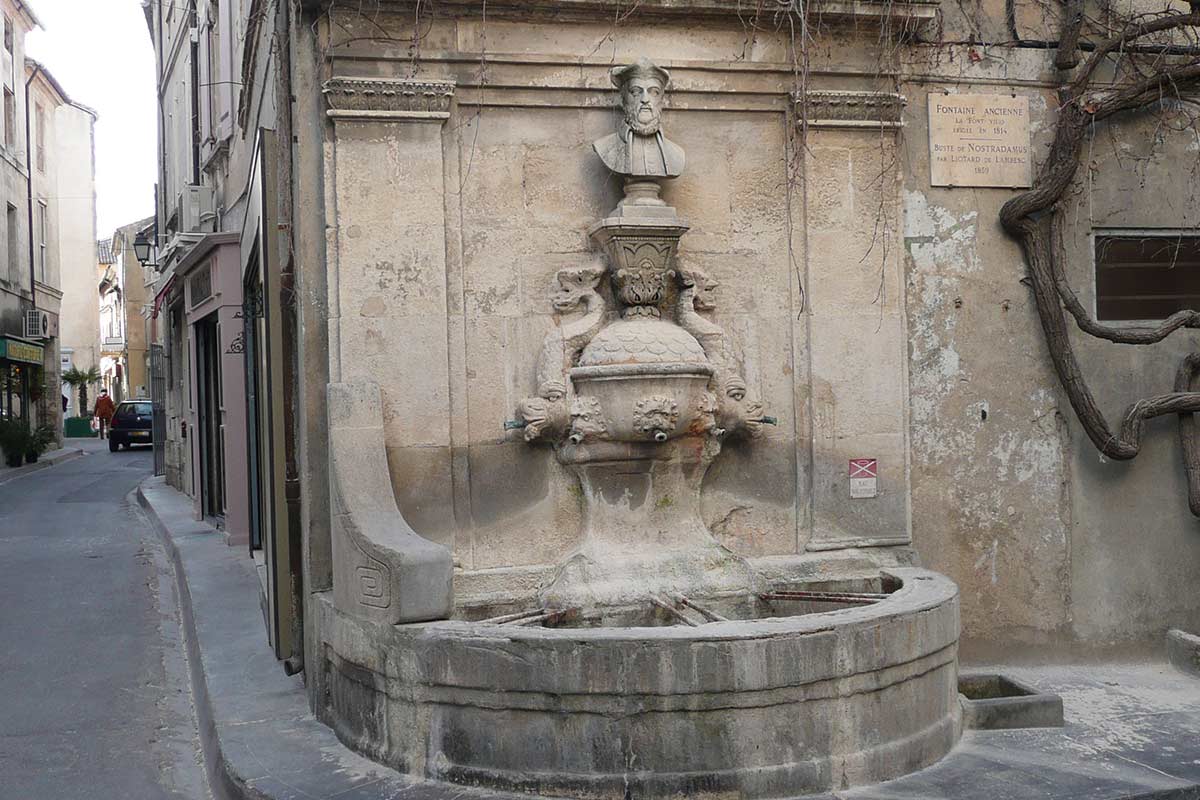
St Rémy de Provence has had a few famous residents down the centuries, and one of the oldest of these was Michel de Notre Dame, the seer better known to us as Nostradamus.
Michel de Notre Dame was born in St Rémy de Provence in 1503, one of nine children, and he lived there until he was 14, when he moved to Avignon to study at the University there. He didn’t complete his studies, but began work as an apothecary and became an astrologer, also eventually turning his hand to writing an almanac. When this proved successful he eventually followed this up with his most famous work, Les Prophéties, which he completed in 1555.
This was a series of over 900 quatrains (four-line verses) making vague predictions about the future. Many questions have been raised about the quality of translations from 16th-century French. The verses are often vague and not specific to any time or place, and open to many different interpretations. He has been credited with predicting the Great Fire of London, the French Revolution and the rise of Hitler.
A plaque marks the presumed site of his birth, and a fountain (pictured) on the corner of Rue Carnot and Rue Nostradamus is the main sight connected with him. If you’re interested in finding out more about Nostradamus, there is a small exhibition on him in nearby Salon-de-Provence, in the house where he lived the last 19 years of his life.
Saint-Paul de Mausole
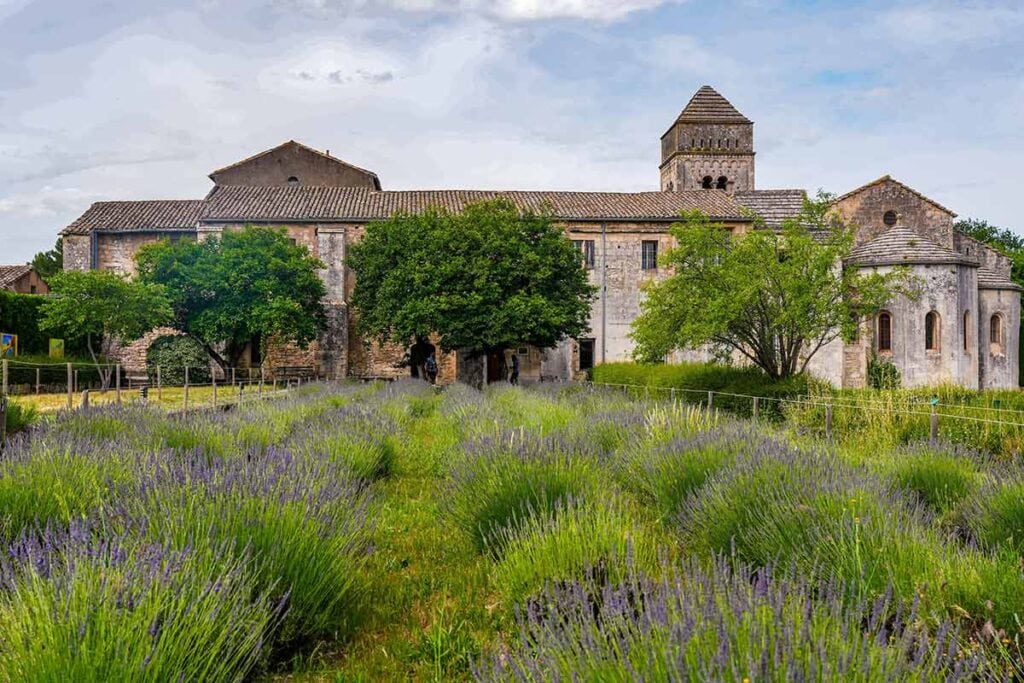
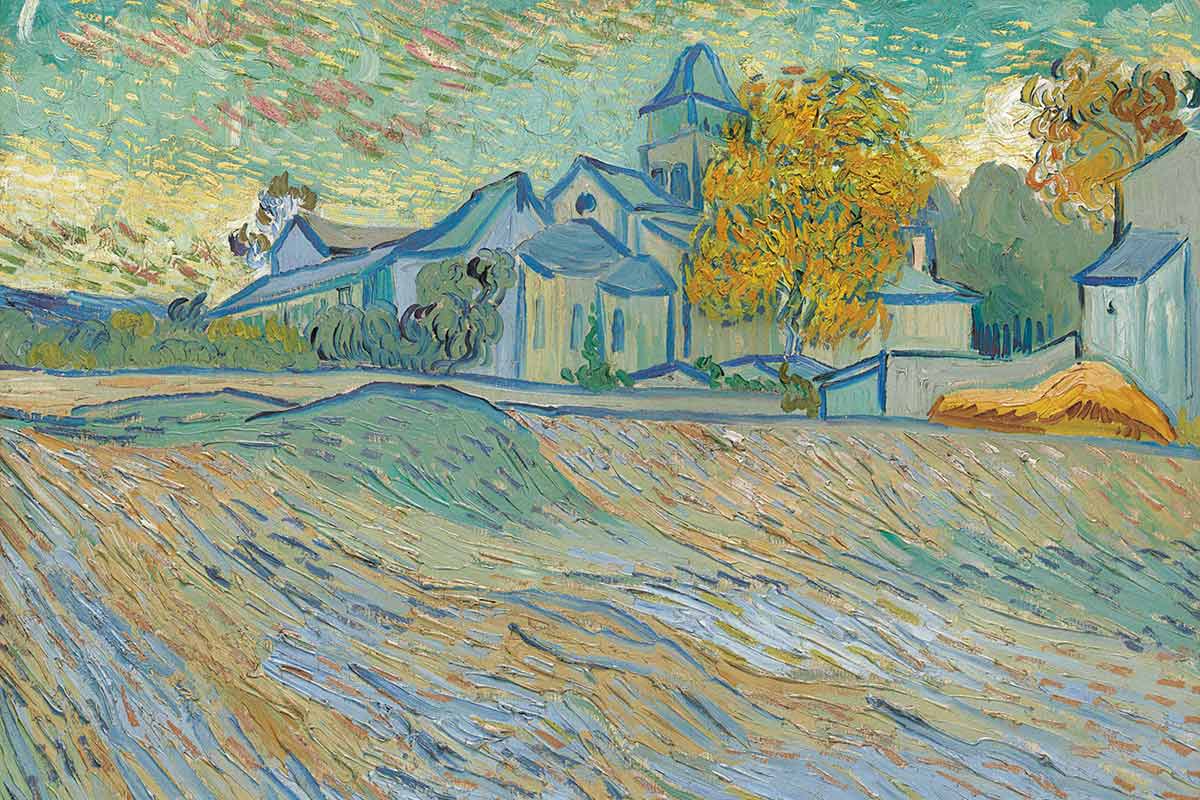
The former Benedictine, Augustinian and later Franciscan monastery of Saint-Paul-de-Mausole is a mile (1.5 km) to the south of St Rémy de Provence, just off the D5 road that runs south to the Alpilles. Even without the van Gogh connection it would be well worth visiting the former abbey to see the gorgeous garden and Romanesque cloister.
The Franciscans established a psychiatric hospital at the monastery in 1605, which it remained in 1889 when Vincent van Gogh was admitted, having recently cut off his left ear (or at least a large part of it). He stayed there for a year, until May 1890, when he moved to Auvers-sur-Oise to be near his new doctor.
Van Gogh was severely ill during this period, but was prolific in his painting. It was here that he completed paintings of the Alpilles mountains to the immediate south, the monastery and gardens, cypress trees, the olive groves outside the monastery and paintings of people including Sorrowing Old Man (At Eternity’s Gate), which is probably an accurate reflection of his own state of mind at the time.
The monastery also became a holding centre for ‘foreign aliens’ mostly Germans – during the First World War, and philosopher and doctor Albert Schweitzer was interned there for four months in 1918.
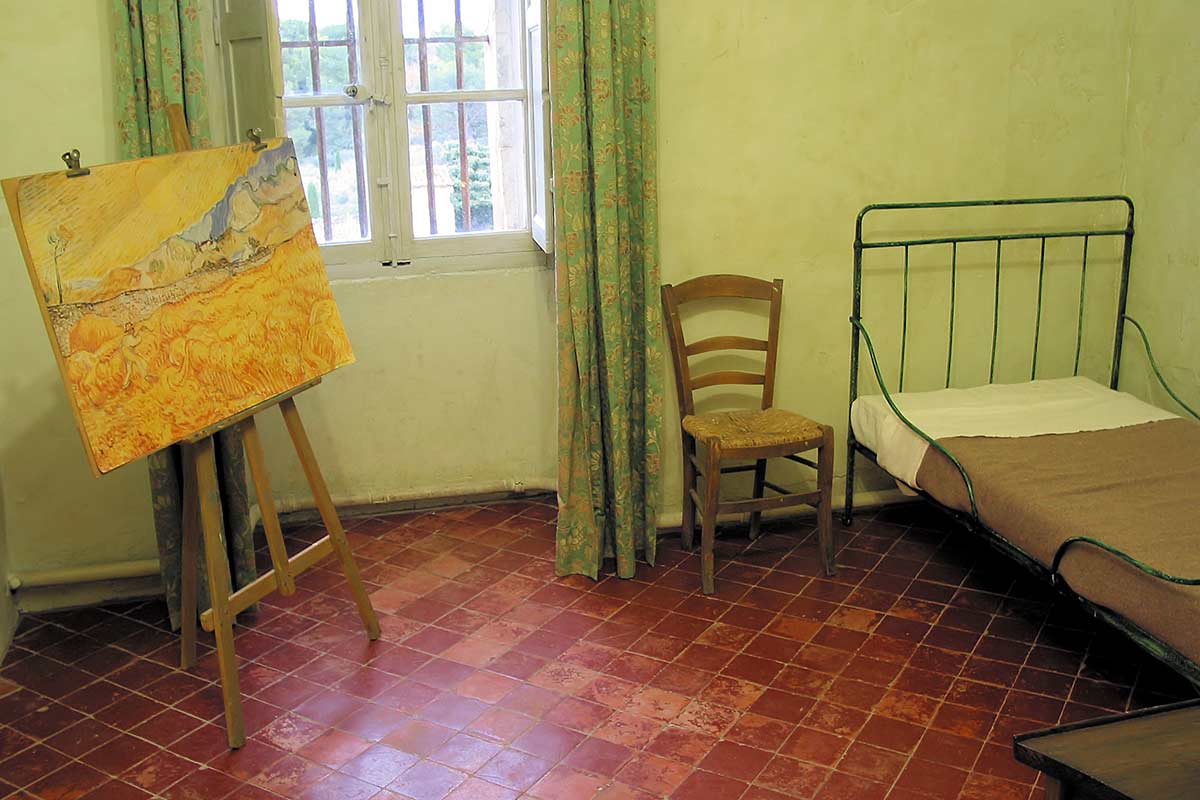
The small Vincent van Gogh Museum in the former monastery is a must-see for any art lover. It includes a series of enlargements of some of the paintings he made there, and you can also visit the tiny room where he slept and lived for twelve months, and see the window from which he painted Starry Night, with its famous swirling sky.
See The Olive Trees Painted By Vincent van Gogh
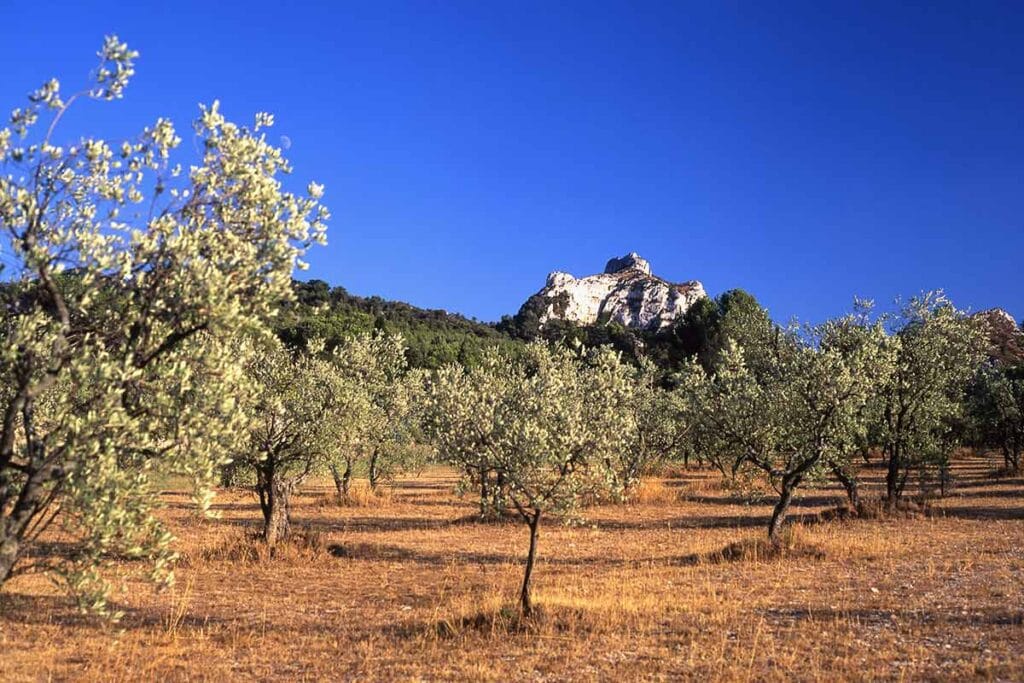
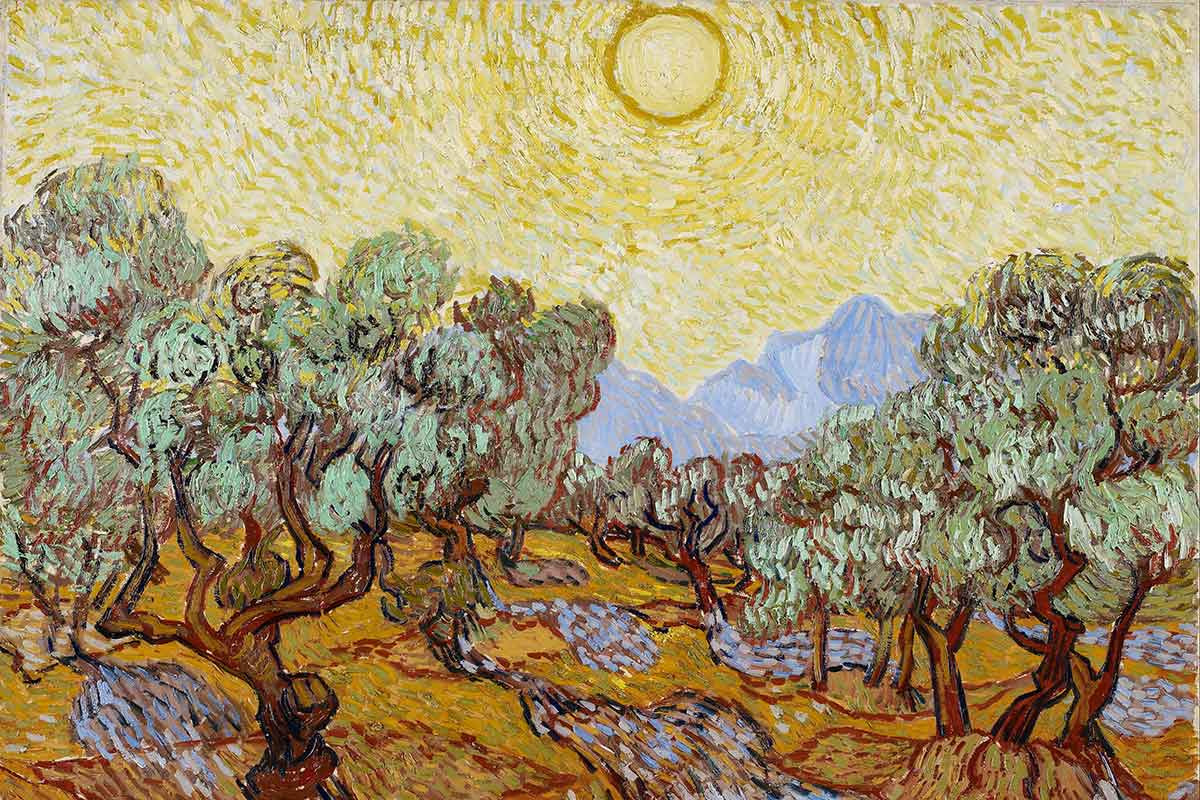
Van Gogh made several paintings of olive trees from the vicinity of Saint-Paul de Mausole, and one of the joys of this location is that you can walk around the very olive groves that he painted.
You are literally walking through his paintings, just as you are when you walk through Monet’s Garden in Giverny. There are groves of olive trees accessible next to the hospital and also along the D5 road south. You’ll also find some almond trees there which blossom in early February, should you be in the area at the time.
See Les Antiques Arch and Mausoleum
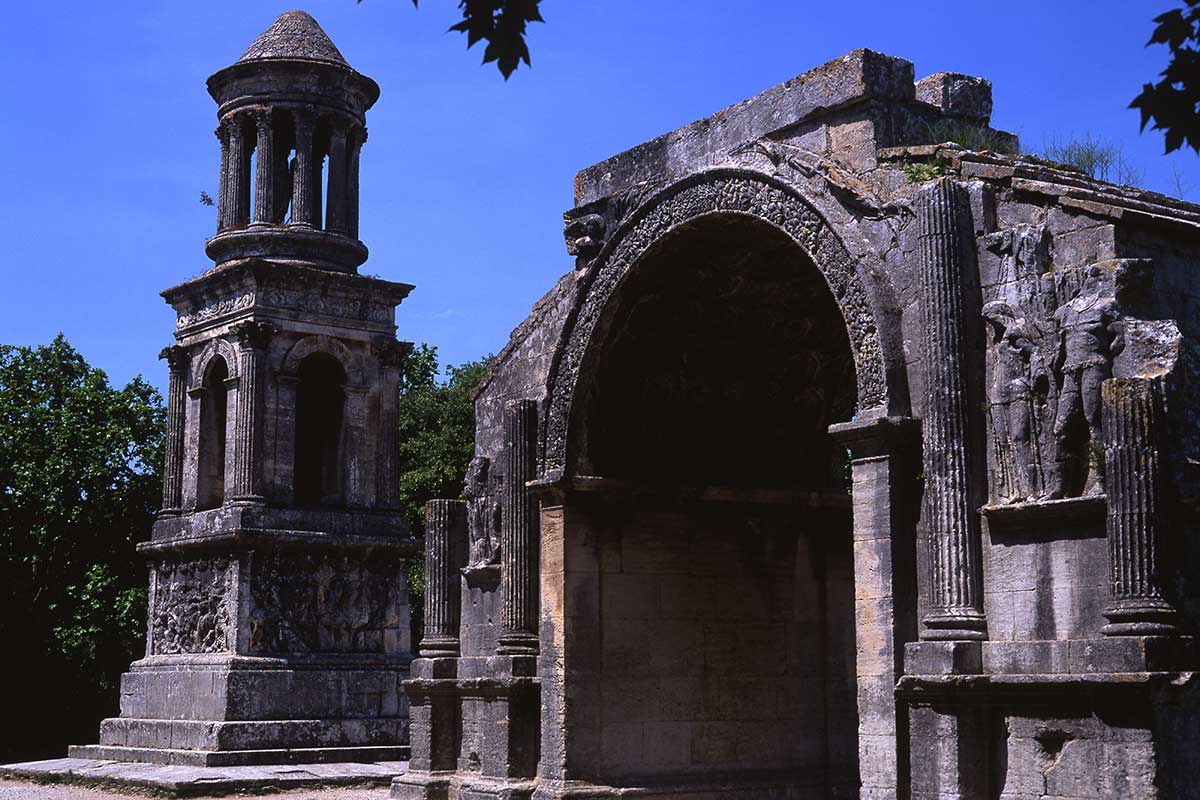
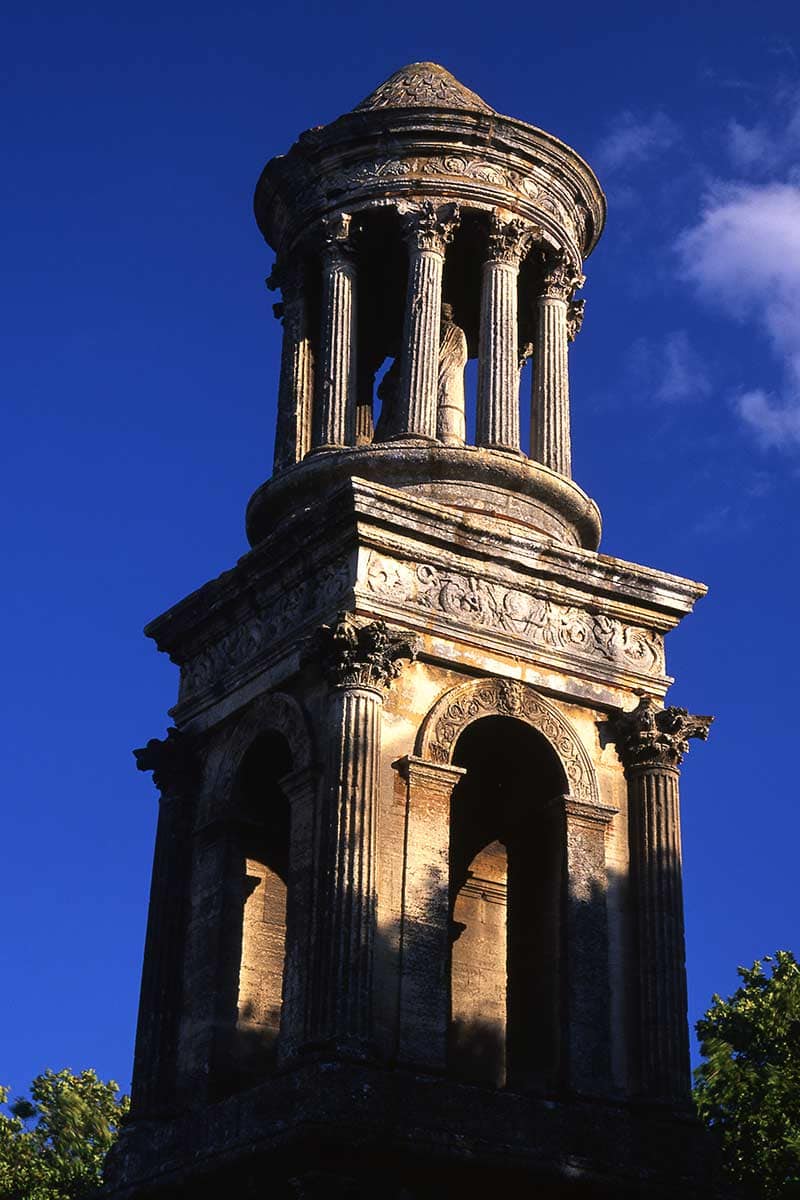
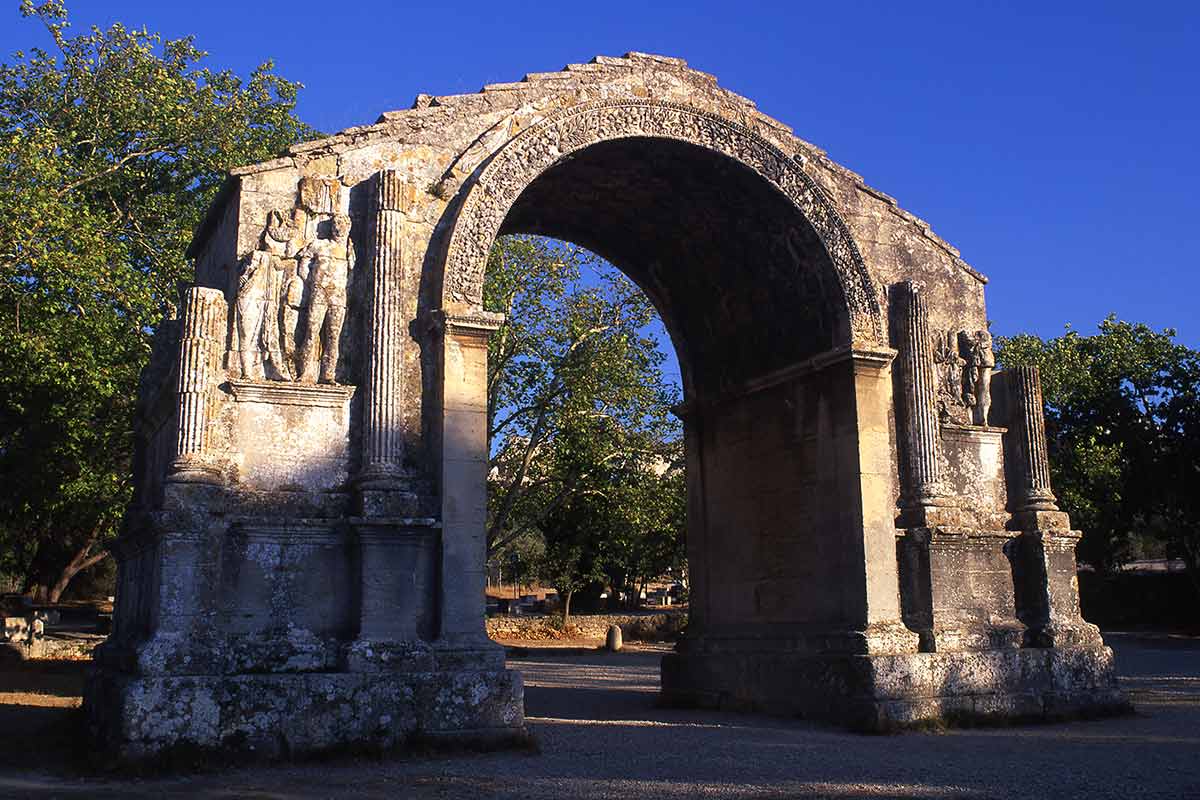
The Glanum Archaeological Site is less than a mile south of the town centre of St-Rémy-de-Provence, and the main part of the site is quite easy to miss.
Follow the Avenue de Vincent van Gogh south from the town, and you’ll see a sign pointing to a Glanum car park site on the right, just after the turn-off for Saint-Paul-de-Mausole. As you turn into the car park, two striking monuments are visible through the trees on your right.
I’ve visited the site twice, and both times fellow visitors have been a bit confused, assuming that these two monuments are the Glanum site. They are part of it and a prelude to it – the main site is across the road from there.
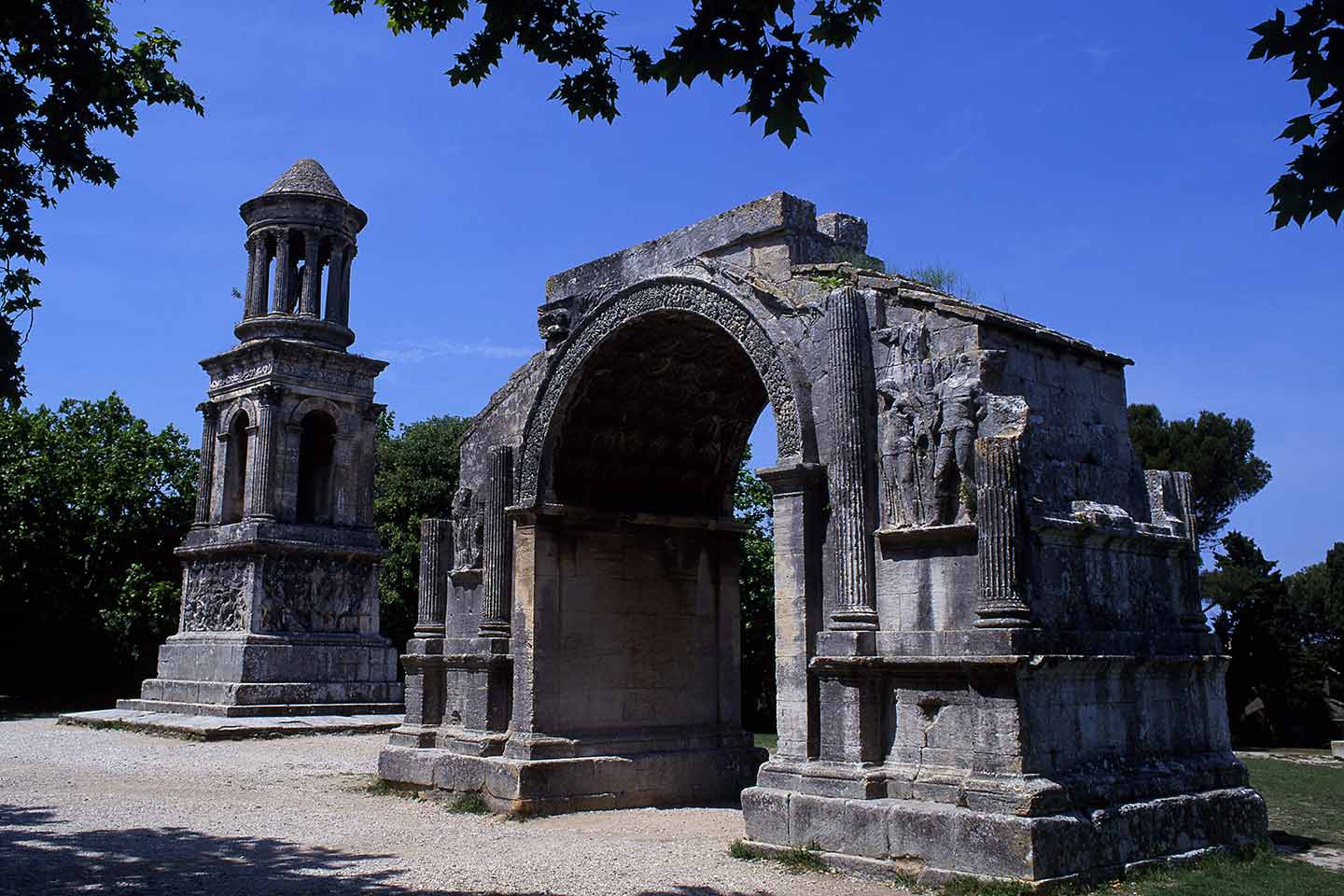
Nonetheless, the triumphal arch and mausoleum – known as Les Antiques – are the most impressive part of the Glanum site, and are among the most impressive Roman monuments in France and Europe.
Inhabitants of Glanum automatically became citizens of Rome, and the mausoleum was created some time between 40 BC and 20 BC – on the cusp of the end of the roman Republic and the foundation of the Roman Empire. It’s a memorial to three brothers of the Julii family, and the bas-reliefs around the base of the structure are still clearly visible.
The triumphal arch was added around thirty years later, during the reign of the first Emperor, Caesar Augustus. It may be the first triumphal arch that the Romans erected in their province of Gaul. Its bas-reliefs depict Romans dominating their defeated opponents, a warning to others not to challenge them.
Visit The Rest Of The Glanum Archaeological Site
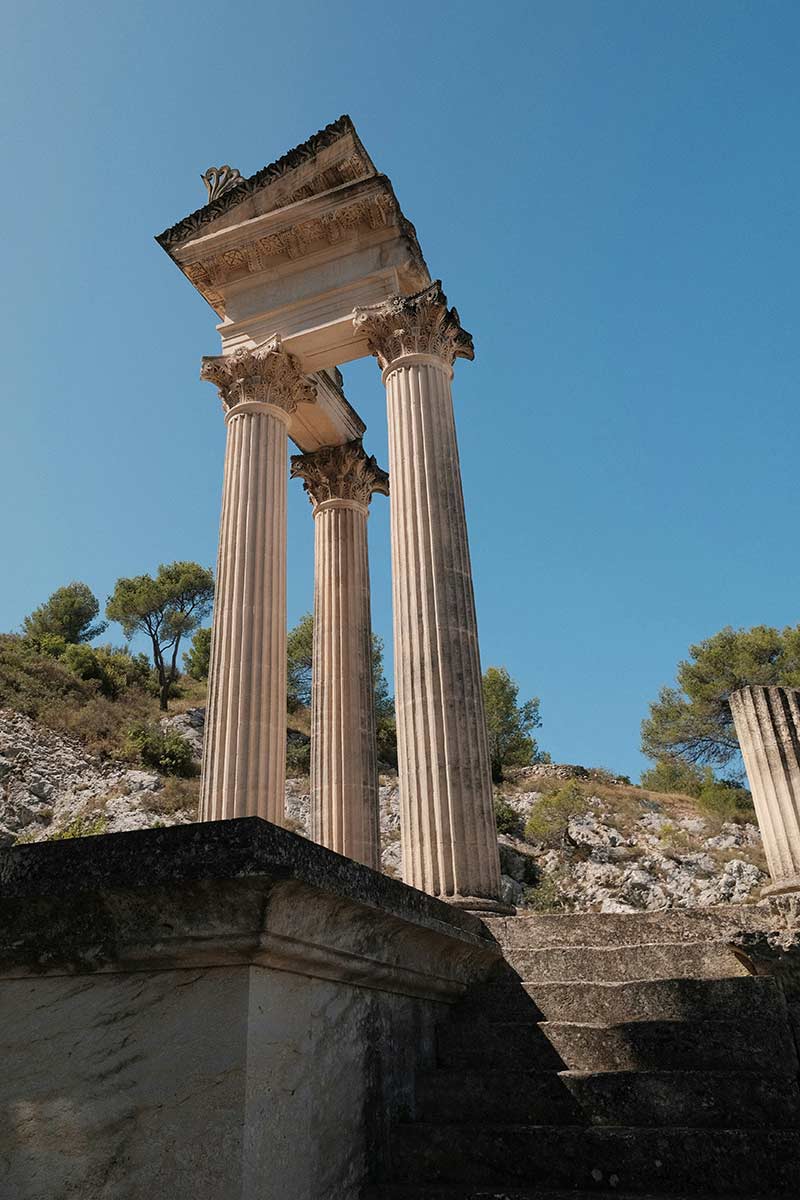
Les Antiques are free to see, while entry to the rest of the Glanum archaeological site across the road is ticketed.
The city – known as Glano or Glanon – was founded by Celts and later grew through trade with and influence from Greek settlers in the western Mediterranean. In the 2nd century AD a fortified town was built around a spring dedicated to the Celtic god after whom the settlement was named. It fell under Roman rule following the defeat of the region’s forces, and the Romans later built Via Domitia – their main route across southern France – next to the town that they renamed Glanum.
The new Glanum had many features typical of a Roman town, including a central forum area, temples and public baths. It wasn’t as wealthy as other Roman towns in the vicinity including Arles (Arelate) but the town survived into the second half of the third century AD, when it was ransacked and destroyed by the Alemanni.
You can still see the spring around which the town initially grew centuries before the Romans arrived. The corner pillars of a temple are the most substantial remains within the main site – though not perhaps as impressive as Les Antiques.
The ticket to the main Glanum site costs €9, and if you’re looking to save on costs, this might be one to consider skipping. I’m glad I got to visit the site, but my friend who accompanied me on that trip chose not to see the main site, opting to wait at. Les Antiques instead.
Explore the Alpilles
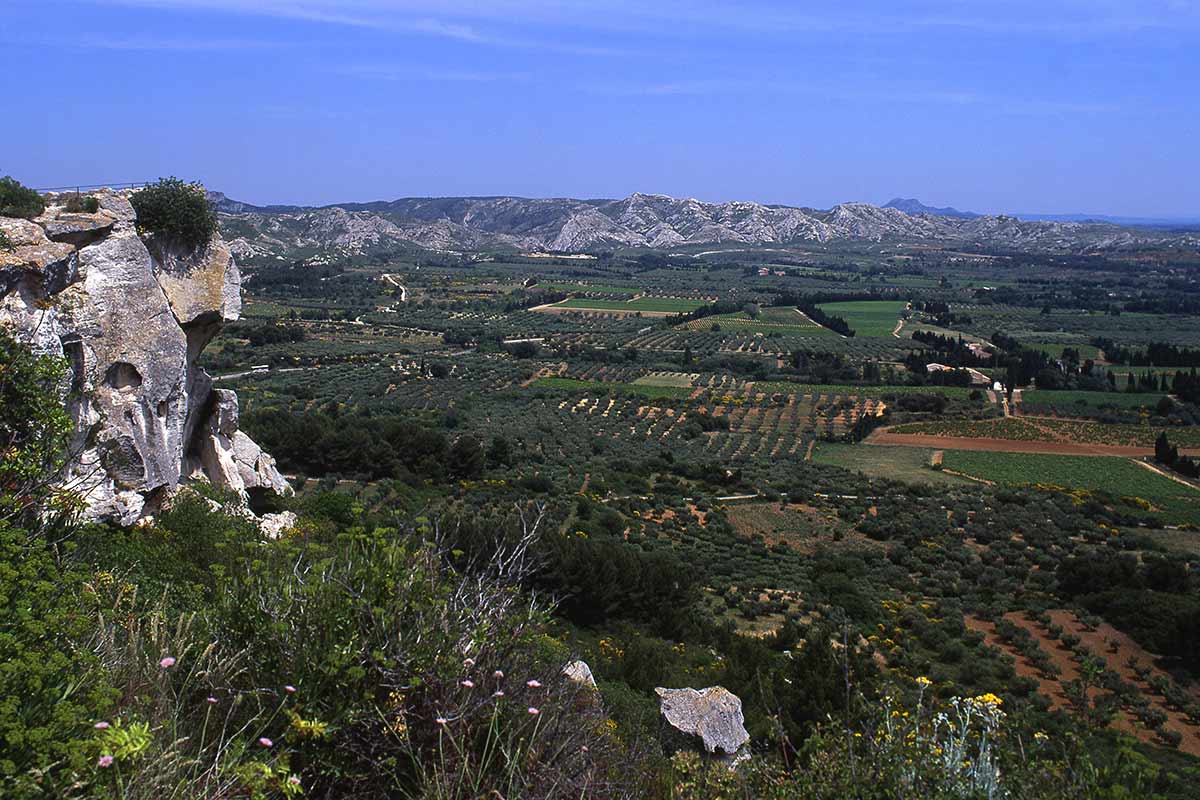
The Alpilles are the small range of low-lying but rugged mountains around two miles south of St Rémy de Provence. The short gentle climb over the pass through the peaks on the D5 towards Maussane and Les Baux de Provence reveals a more dramatic drop to the vineyards of the coastal plain below.
There are a few walks in the area, the best of which that I have found is the Randonnée de la Caume, near the top of the ridge and right next to the D5.
The Alpilles also have their own niche in art history, as they were the subject of several paintings by Vincent van Gogh when he resided at Saint-Paul-de-Mausole.
He painted Starry Night from his barred bedroom window, with the ridge of the Alpilles visible in the distance. Other well-known paintings which feature the mountains include some of his Wheat Fields series, his painting Les Alpilles, completed in 1889 while still living at St-Paul-de-Mausole.
Les Baux de Provence
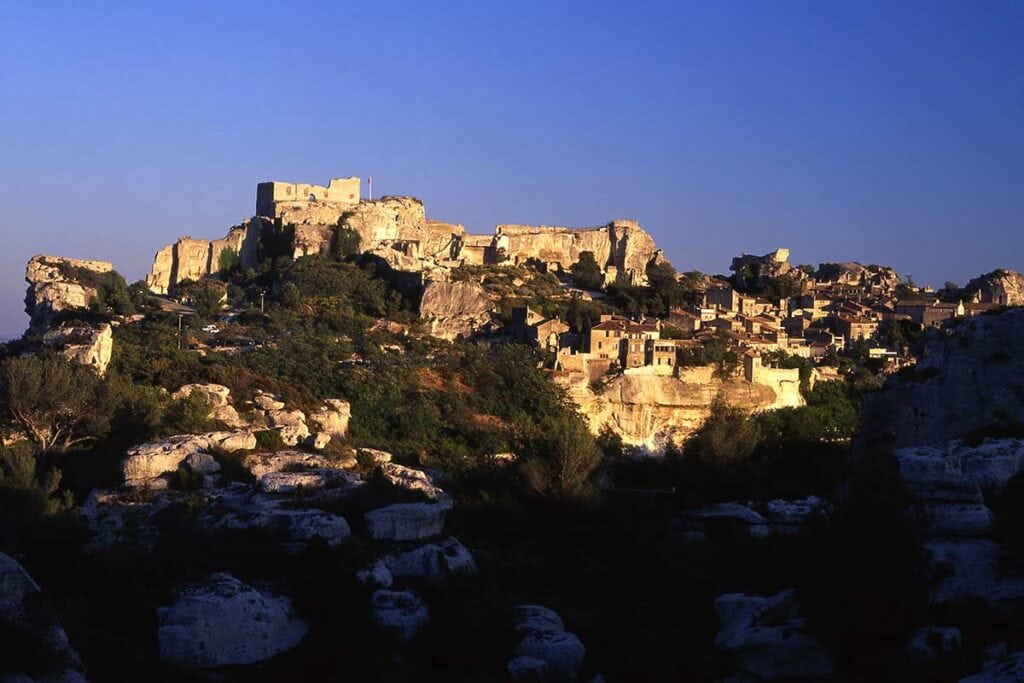
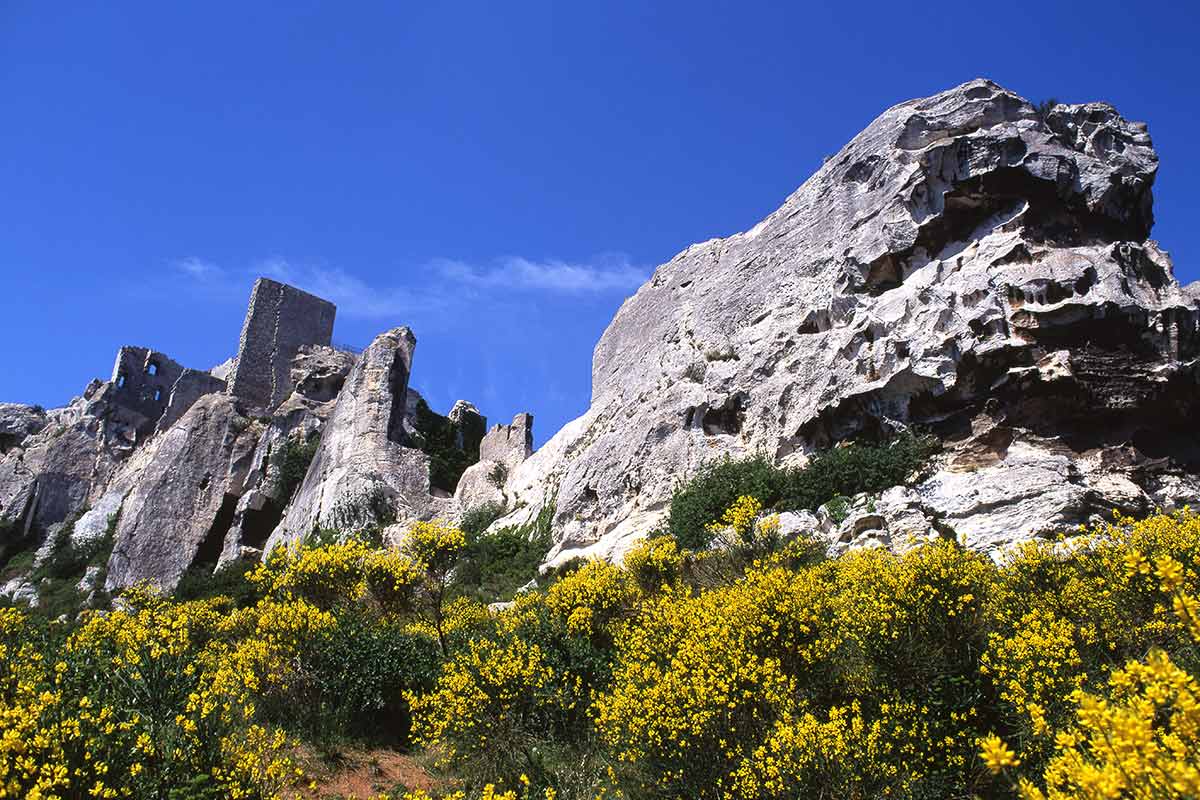

If you were a French feudal lord looking for somewhere to build a fortress – whether a military expert or novice – this is where you would build it. The mountaintop site on the western side of the Alpilles was fortified by the Celts before the Romans arrived in the region, and the castle we see today was built between the 11th and 13th century. It’s difficult to see where the mountain part ends and the castle wall begins, but even now, especially up close, it’s a formidable sight.
Les Baux de Provence occupies a superb strategic location, overlooking the coastal plain towards Arles in the west and Marseille to the east. It’s an outstanding vantage point, the best in the Alpilles even though it’s not the highest point of the range.
Les Baux is a member of the group of Les Plus Beaux Villages de France, the Most Beautiful Villages In France, with a small old centre of narrow streets and centuries-old stone houses, and the charming church of Saint-Vincent in the centre of the village. The Chateau (Castle) is well worth a visit too, with amazing views and an impressive collection of siege engines including trebuchets and catapults.
Just to the north of the village, in the Val d’Enfer (Valley of Hell) is the Carrières des Lumières, a magnificent exhibition space hewn out of the inside the mountain. Then exhibitions within tend to focus on individual artists, with canvases by the likes of Monet, van Gogh, Klimt and Matisse projected onto vast limestone walls. Well worth seeing if you’re interested in the artist on show.
Tours: This Les Baux and Pont du Gard tour from Marseille is a great way to see the village, and also includes a few hours in the World Heritage-listed city of Avignon.
Where Is St Rémy de Provence
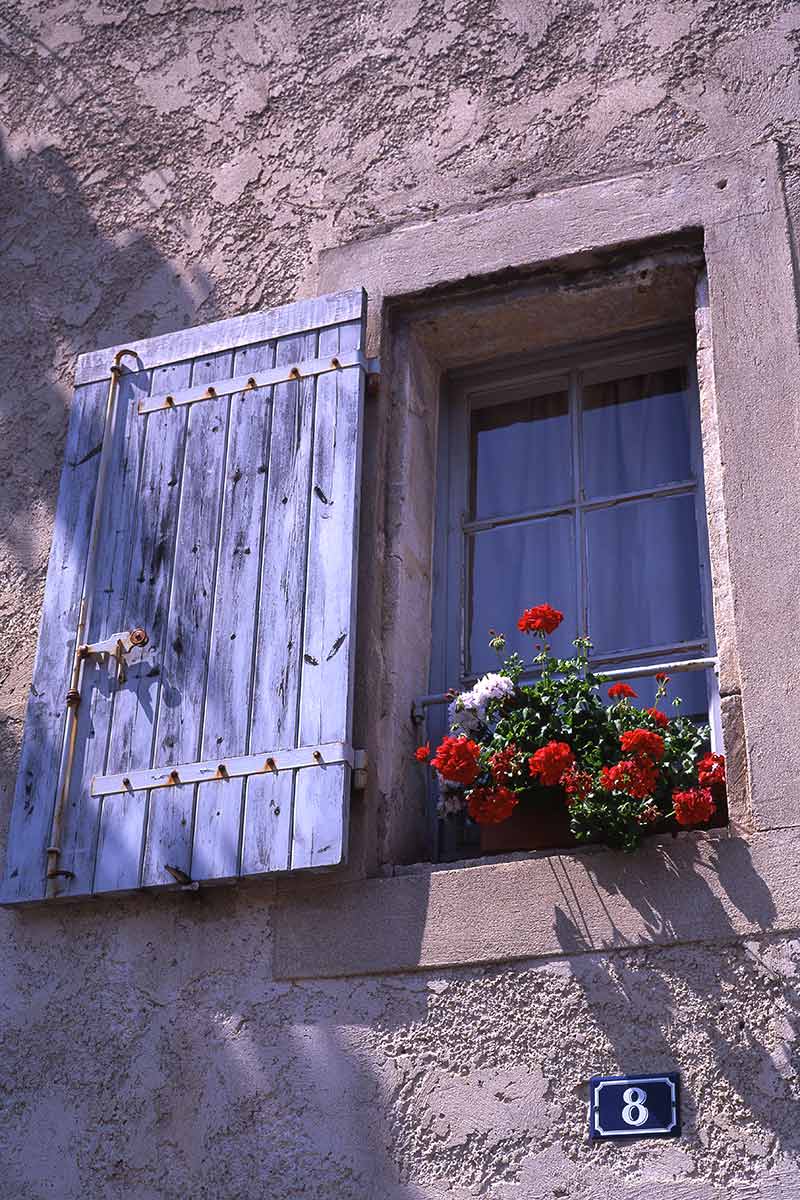
St Rémy de Provence is in the Bouches-du-Rhône département in the Provence region of southern France. It’s a few miles east of the River Rhône, and here are a few sample distances from nearby cities and towns:
Avignon to St Rémy de Provence – 20 km (13 miles)
Arles to St Rémy de Provence – 20 km (13 miles)
Nimes to St Rémy de Provence – 45 km (28 miles)
Aix-en-Provence to St Rémy de Provence – 71 km (45 miles)
Marseille to St Rémy de Provence – 87 km (55 miles)
Nice to St Rémy de Provence – 244 km (152 miles)
Paris to St Rémy de Provence – 705 km (438 miles)
How To Get To St Rémy de Provence
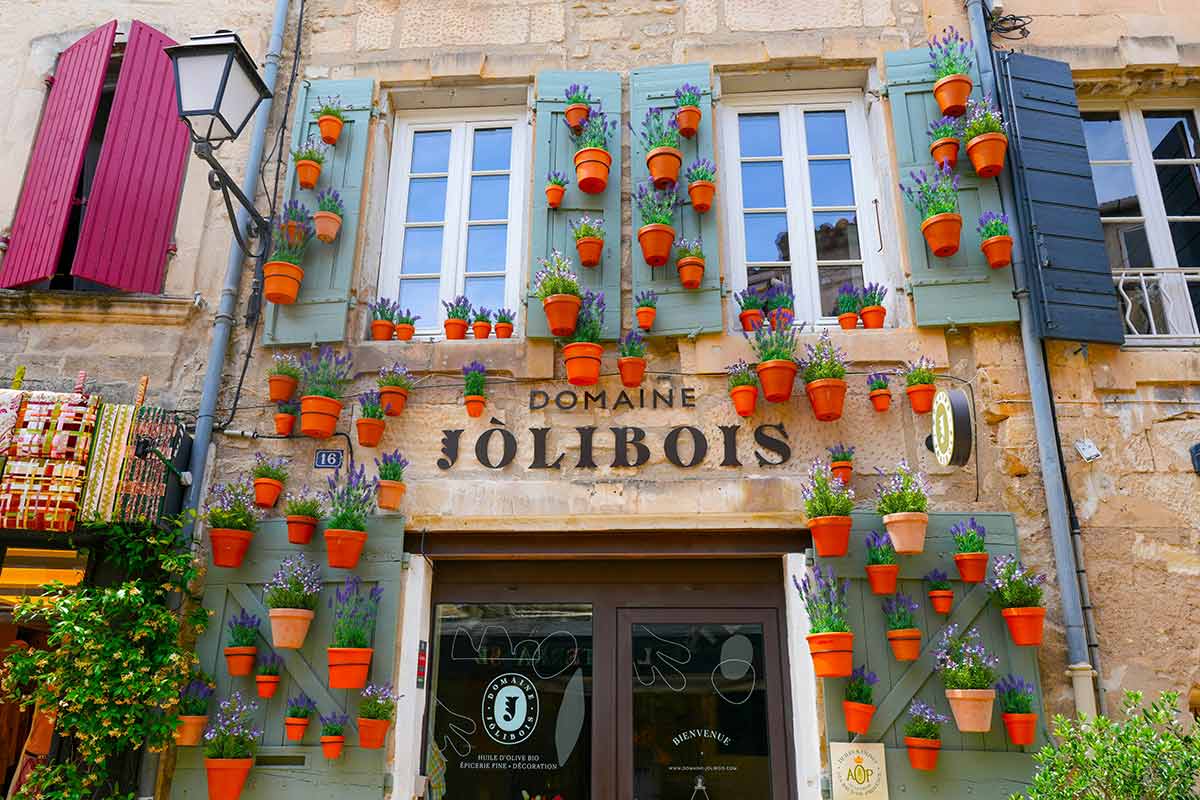
St Rémy de Provence isn’t on the SNCF train network, so if you’re not driving, you’ll need to travel to one of the nearby cities or towns with bus connections to reach the town. Just bear in mind that the services (except those from Avignon) are not as frequent as many of you would like.
I’ve driven there (the easiest option, especially if you’re staying out in the countryside) and also caught the bus from Avignon. The 707 bus on the local ZOU network takes 53 minutes to the centre of St Rémy de Provence, and you can get tickets from machines at the gare routière (bus station) a 5-minute walk from Avignon-entre train station.
Arles is also very close to St Rémy but bus services only run every three hours during the daytime. The 704 service leaves Stalingrad stop in Arles, calling at Beaucaire station – worth bearing in mind if you’re travelling from Nimes, as you can connect there.
If you’re travelling from further afield without a car, my advice is to get yourself to Avignon and to take the bus from there.
Things to Do In St Remy De Provence – Final Thoughts
I hope that you’ve enjoyed this guide to St Rémy de Provence. It’s a beautiful old town with an amazing Roman site and a must for anyone with an interest in Vincent van Gogh. It’s also a wonderful base for exploring this part of rural Provence, with a few small cities close by too.
I‘ve visited southern France many times, and written extensively about the region and country. Here’s a selection of my articles to browse at your leisure:
South of France Road Trip– a 10-day itinerary across Provence and Occitanie
Things To Do In Albi – stunning red-brick World Heritage city with outstanding Toulouse-Lautrec Museum
Things To Do In Carcassonne – one of the most beautiful walled towns in Europe – and the world
One Day In Arles – Roman monuments aplenty, anda chance to follow in the footsteps of Vincent van Gogh
One Day In Avignon – 24 hours by the Rhone in the City of Popes
Best Day Trips From Avignon – 14 fantastic day trips from the City of Popes
Paris Articles
Best Eiffel Tower Views – 28 best places to see the Eiffel Tower in Paris
Arc de Triomphe Paris – all you need to know before visiting this great Paris landmark
Things To Do In Montmartre – the hilltop village that inspired so many artists in the 19th and 20th centuries
Sunset in Paris – the 15 best places to see one
Things To Do In The Latin Quarter Paris – exploring the historic Left Bank
Visiting Place de la Concorde Paris – one of the most iconic squares in Paris
Pont Alexandre III Paris – stunning Belle Epoque Parisian bridge
Famous Churches In Paris – 22 stunning Parisian churches to seek out
Icons of Paris – from the Mona Lisa to the Moulin Rouge, the Arc de Triomphe to Art Nouveau Metro signs, and many more
La Sainte Chapelle Paris – one of the most beautiful Gothic churches ever built
General France Articles
Famous Landmarks In France – 32 of the top sights to tick off your France bucket list
14 Most Amazing Bridges in France – from the Millau Viaduct to the Pont Neuf, and many more