

Visiting Czech Republic In Winter
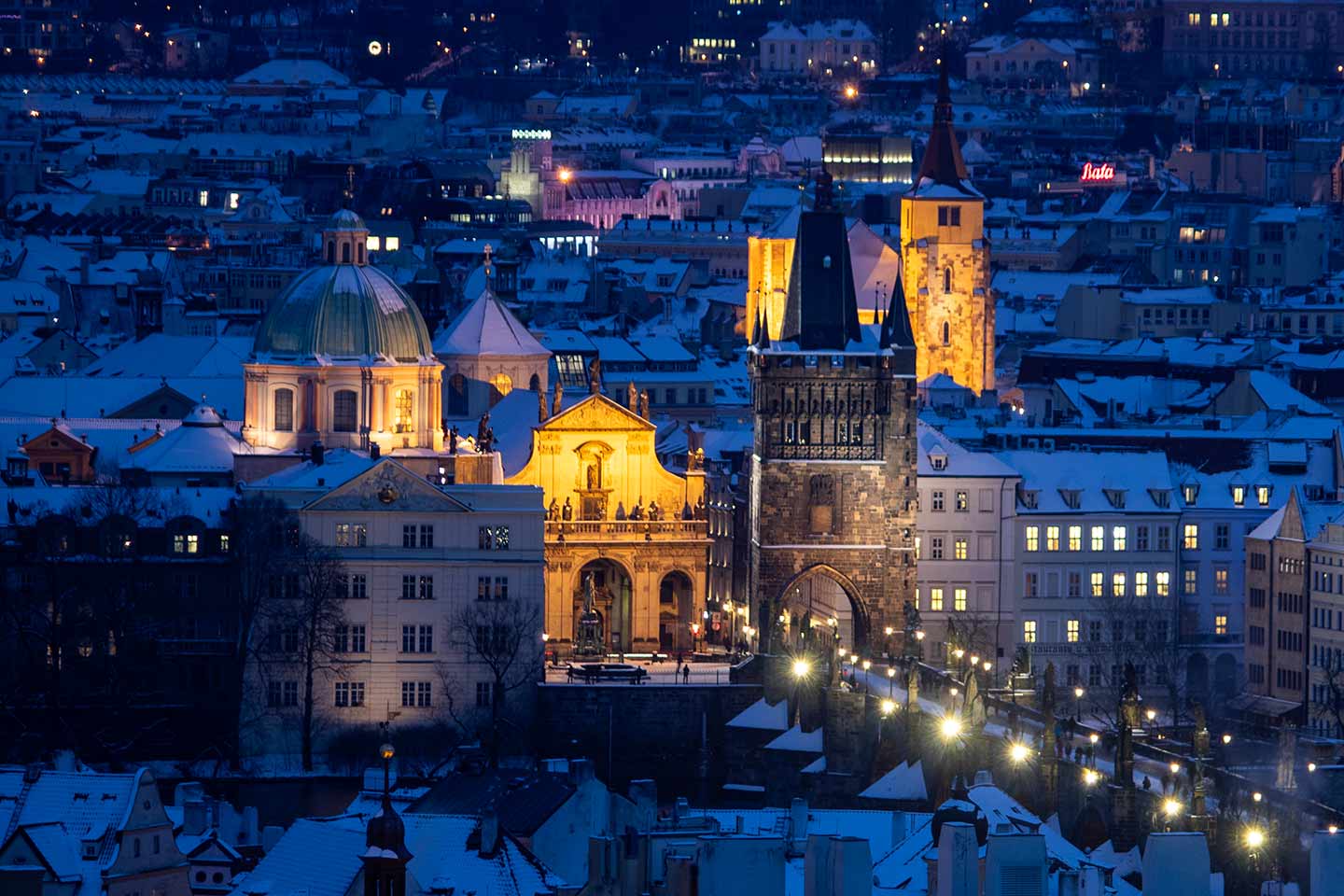
Fairytale old towns, Christmas markets, cosy restaurants, stunning countryside and mountains. These are what you’ll get in abundance if you visit the Czech Republic in winter.
We lived for over four years – including five winters – in the Czech Republic, spent mostly in Prague. In this time I got to explore much of the country, not just in the winter but also in the snow. And I have to say that it’s up there with the most magical winter destinations in Europe.
In this guide I explain what’s best about visiting the Czech Republic in winter, with experiences ranging from visiting Prague and the many picturesque historic towns around the country to exploring the outdoors, including the best of the country’s National Parks and mountains.
In the second part of the article I tell you more about specific places to visit around the country. I also describe Czech winter weather for you, and give you a very good idea of what to expect when you visit, including the possibility of snow. I hope you find it all helpful and informative.
Experiences In The Czech Republic In Winter
Beautiful Historic Czech Cities and Towns


I’d tell anyone considering a visit to the Czech Republic: absolutely do not miss Prague. it is one of the most beautiful cities in the world (not to mention overcrowded at times). But you’re missing out if you don’t go beyond the capital, and it’s the small historic towns that probably captured our hearts as much, if not more, than our former home city of Prague.
As I mention elsewhere, there’s almost a bewildering abundance of these places. In this section, I’m going to limit myself to just three.

Telč, a small country town in the Vysočina region of western Moravia, is one of the most beautiful small towns in Europe, graced with one of the most beautiful squares in Europe.
The exquisite Renaissance houses of this square – and much of its superb Castle – were built by local ruler Zachariaš of Hradec in the 16th century, and although it never grew beyond a small provincial country town, it survived intact and had been a UNESCO World Heritage Site since 1994.


Kutná Hora, in the eastern part of Central Bohemia, is also a designated World Heritage Site. The town grew wealthy in the Middle Ages thanks to the silver mined there, and this is reflected in its two outstanding Cathedrals, its beautifully preserved Old Town and the fascinating Kutná Hora Bone Church, also known as the Sedlec Ossuary.
Kutná Hora is one of the most popular day trips from Prague, an easy one-hour train ride from the capital. You can also join a guided Kutná Hora tour from Prague, which includes tickets to all the main sights and a walk around the Old Town.

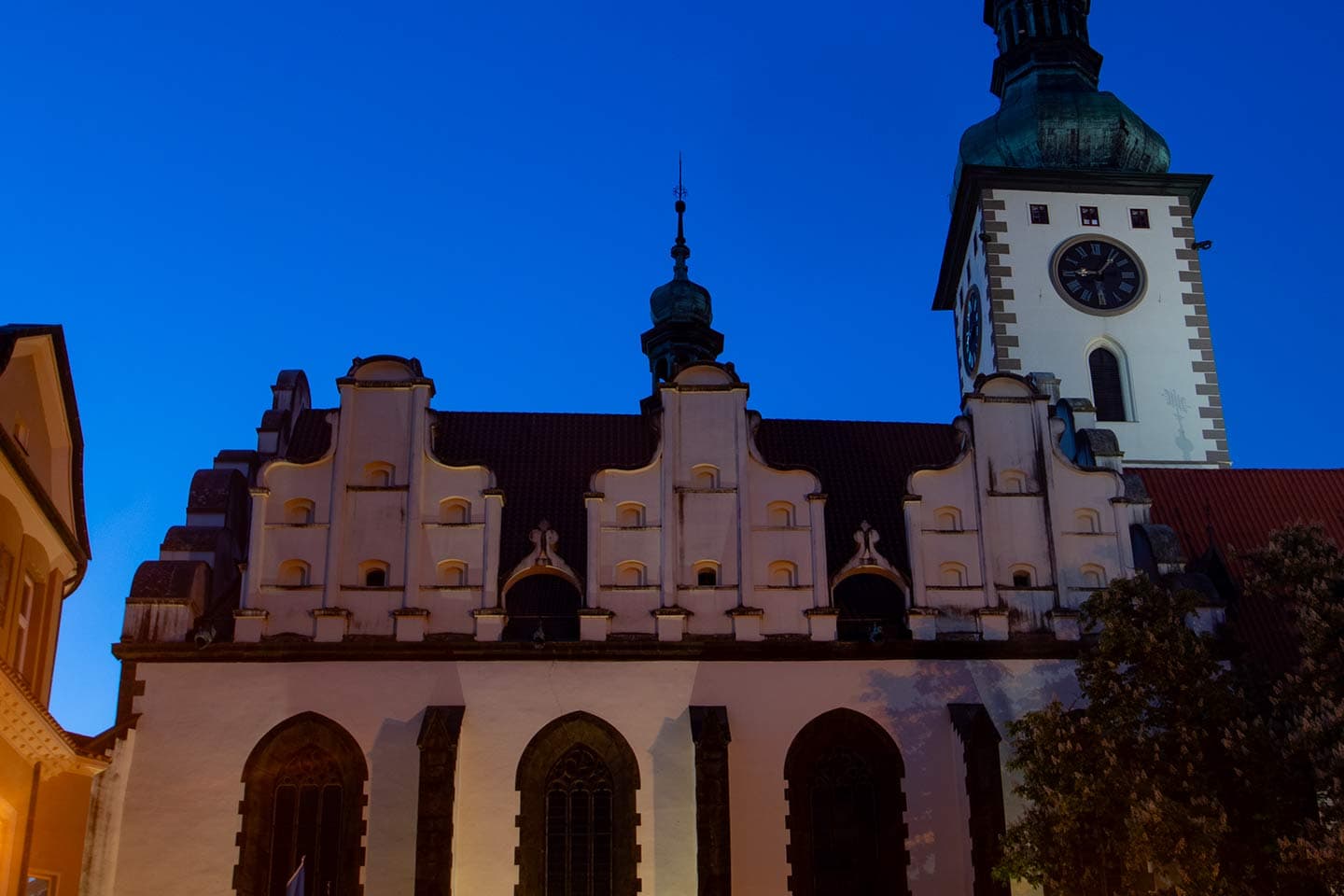
Tábor, in South Bohemia, is more off the beaten path, but easily reachable on the main train line south from Prague to České Budějovice. It was one of the main bases of the Hussite rebels (it wouldn’t be wrong to describe them as the first Protestants in Europe) in the 14th and early 15th centuries.
It’s full of beautiful cobbled streets and stunning buildings from the medieval to Baroque period, and its main square is dominated by the soaring spire of the Dean’s Church, one of the most impressive churches in the Czech Republic.
National Parks, Mountains and Hiking In The Czech Republic
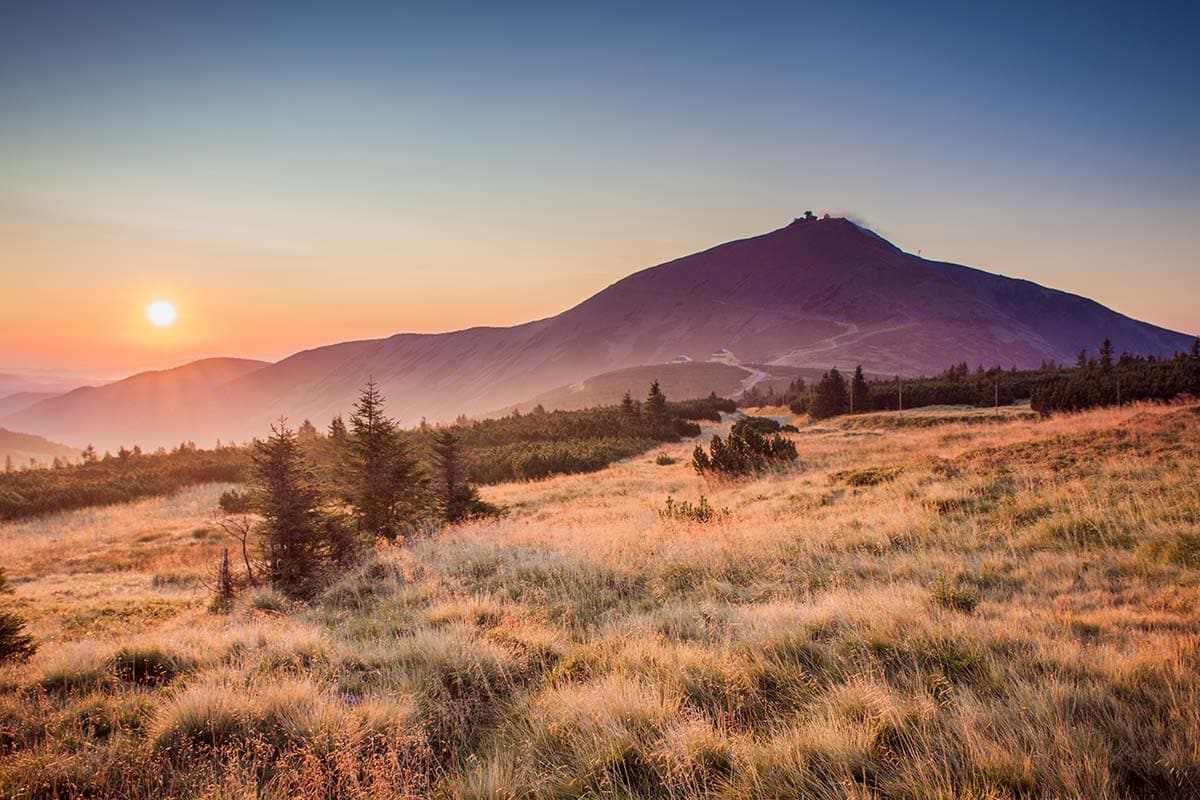
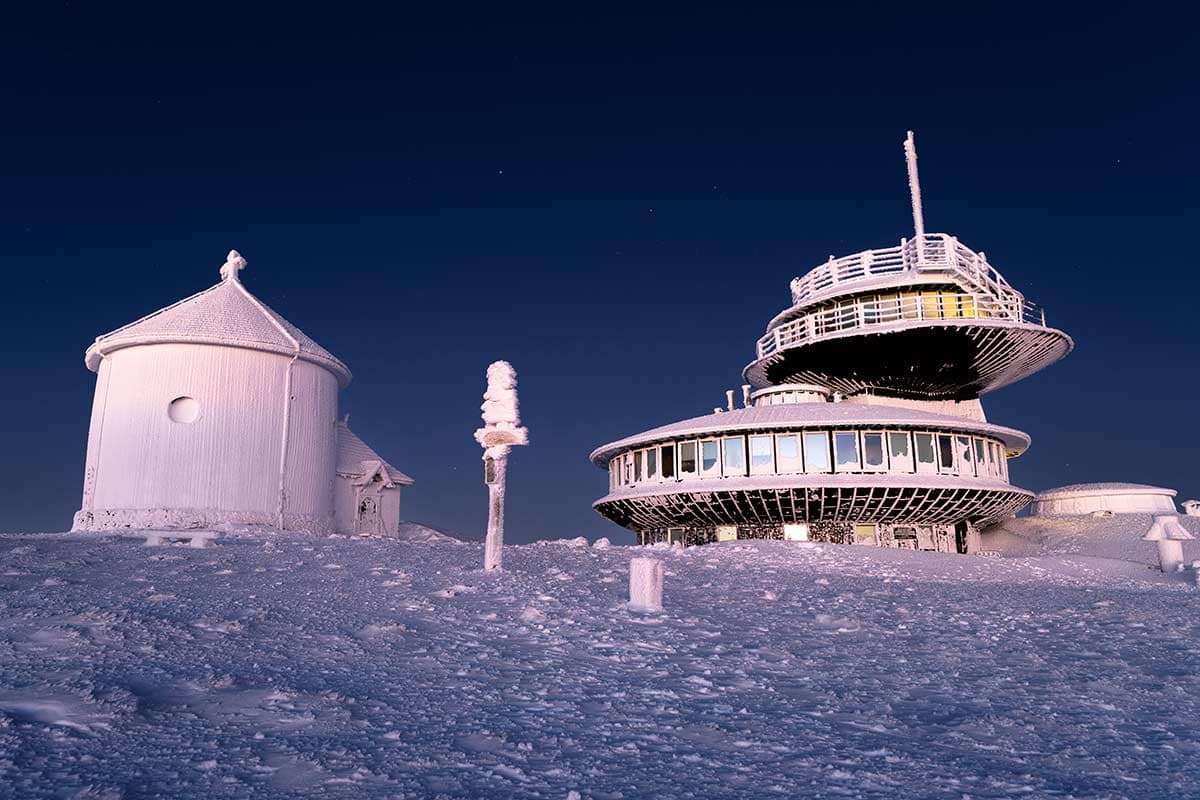
We adored visiting the Czech countryside, particularly our hikes in the mountains and rock cities of Central and North Bohemia. These are very much year-round destinations, with skiing popular in resorts like Harrachov and Špindlerův Mlyn, both of which are in the Krkonoše Mountains close to the Polish border and the country’s highest mountain, Sněžka.
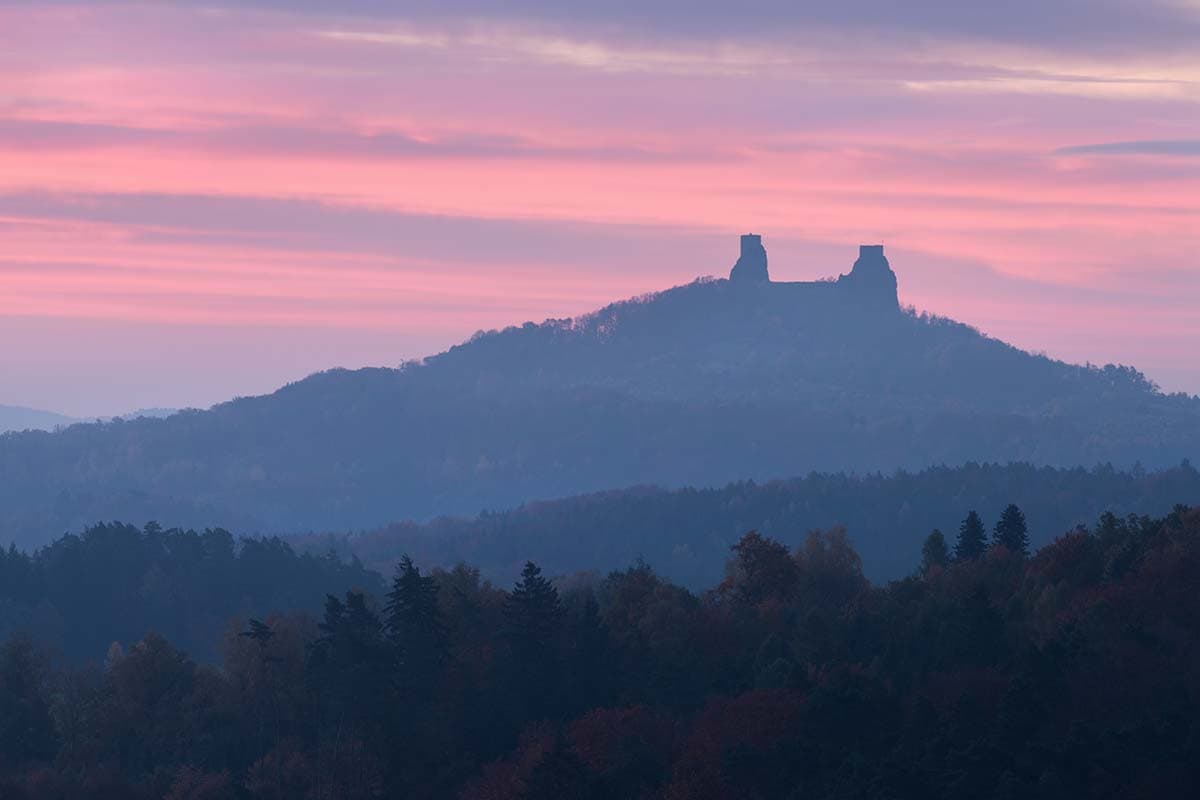

If you’re hoping to go hiking in the Czech Republic in winter, it would be remiss of me not to suggest visiting Bohemian Paradise, a gorgeous area of countryside 90 minutes east of Prague full of sandstone rock labyrinths (the Czechs call them ‘rock cities’), enchanting forest, beautiful rural towns and fairytale castles. In Czech, the area is called Český ráj.
The best hike in Bohemian Paradise is from Turnov south to Hrubá Skála, a medieval castle that’s now a luxury 4-star hotel on the edge of one of the most spectacular rock cities in the Czech Republic. It’s a wonderful ridge walk through a forest passing Valdštejn Castle on the way.


As winter days are short, if you’re not staying in the area I suggest a Bohemian Paradise tour from Prague, which includes a hike in the magnificent Prachov Rocks which also includes a lunch stop at a Castle and a brewery visit nearby.
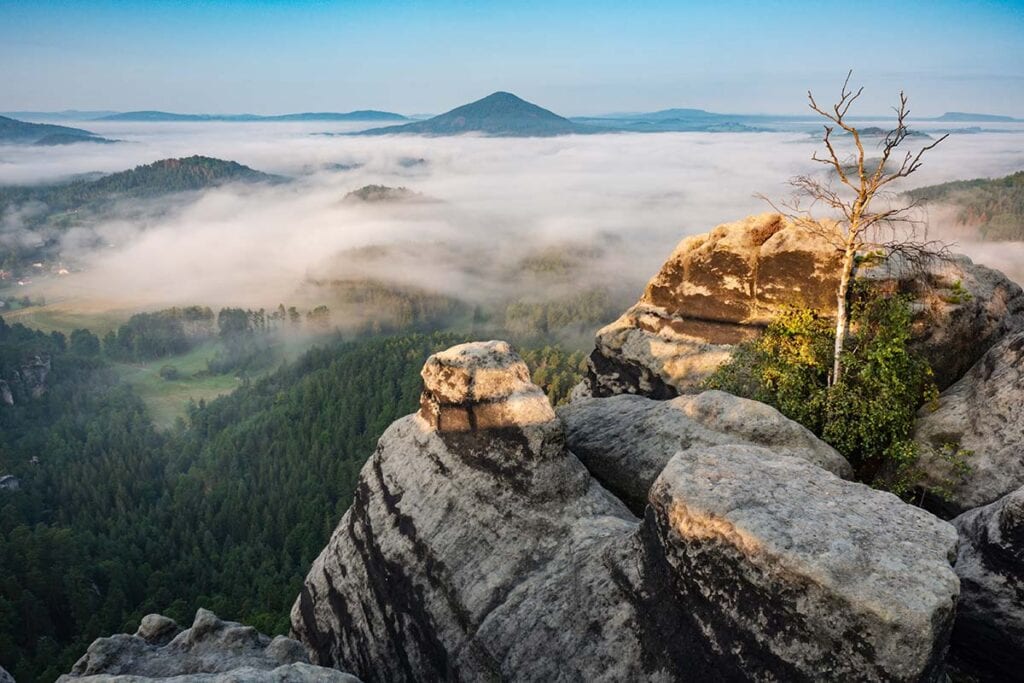
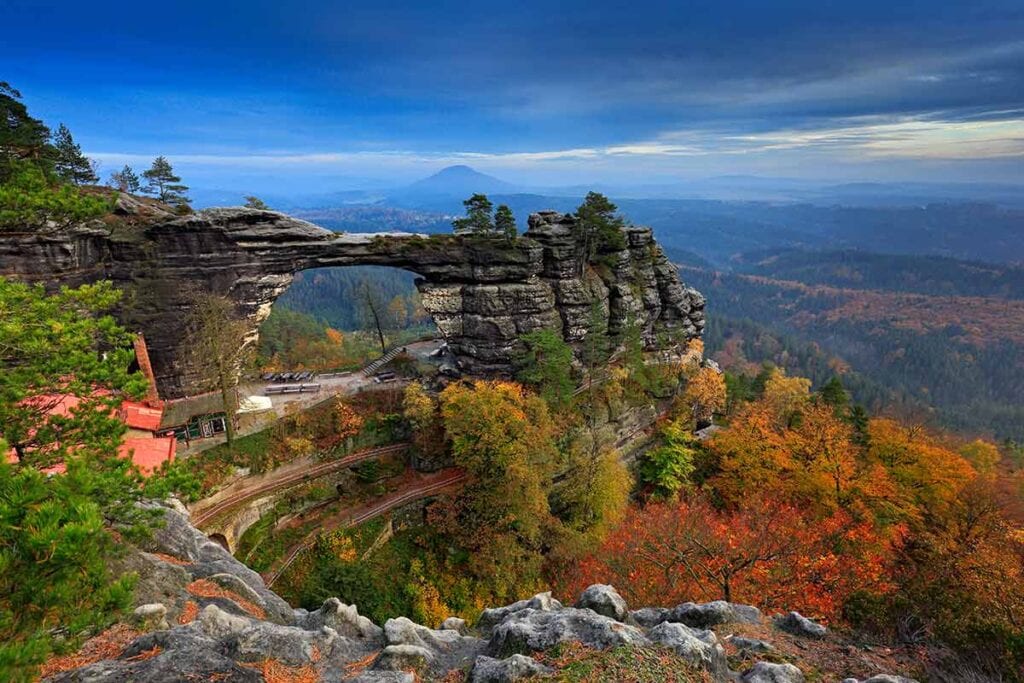

Finally, the Elbe Sandstone Mountains, straddling the Czech-German border, is split between the Bohemian Switzerland National Park (Czech Republic) and Saxon Switzerland National Park (Germany).
It’s one of the most beautiful landscapes in Europe, with more rock cities to explore, and the stunning Kamenice Gorge near the gateway village of Hřensko. Its signature sight is the Pravčická brána (Pravčická Gate), a magnificent natural mountainside rock arch overlooking the north Bohemian forests.
The area is easy to reach by car, otherwise this Bohemian and Saxon Switzerland tour from Prague introduces you to both National Parks. It includes a visit to the breathtaking Bastei Bridge on the German side of the border, with incredible views over the Elbe Gorge 200 metres below.
Christmas Markets
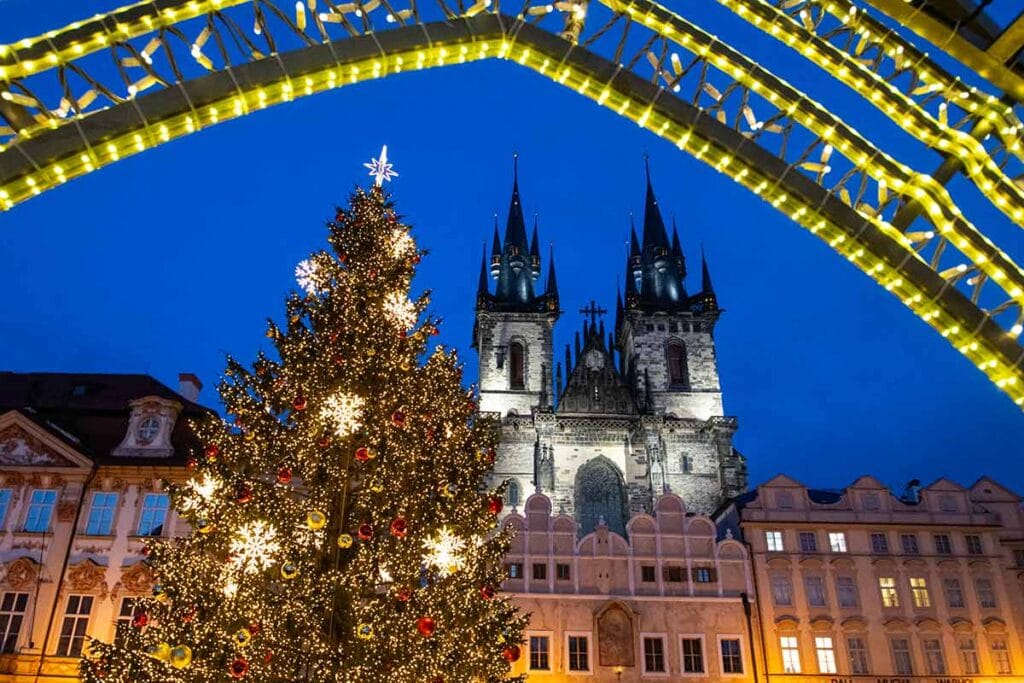
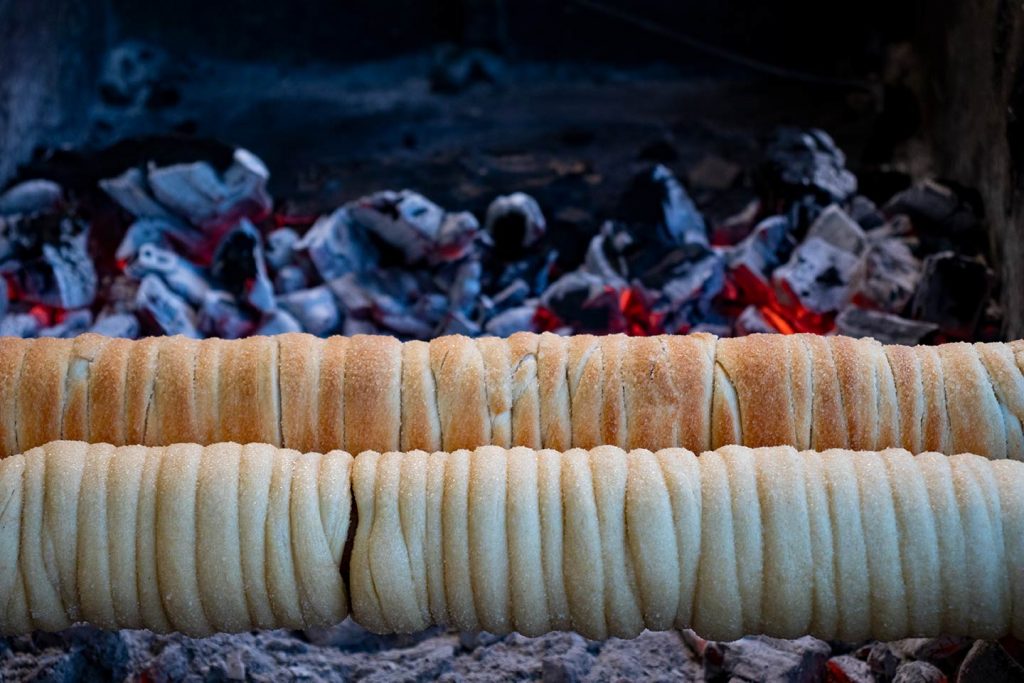

Czech Christmas Markets are similar to those in Germany and elsewhere in Central Europe, and as is the case with each city and country, there are a few local twists. So as well as traditional treats like mulled wine you have the colder but just as tempting Czech beer in abundance. You also see trdelník stalls with rows of chimney cakes – originally from Hungary – cooking over hot coals. You can eat these a variety of ways – my son always loved his coated in chocolate and filled with ice cream.
The Prague Christmas Markets are by far the most popular in the country, and also the most expensive. I can’t think of a more beautiful setting for a Christmas Market than Prague Old Town Square, in the shadow of the Old Town Hall and the fairytale spires of the Týn Church. But it’s very expensive these days, and many locals feel priced out of it.
Many Praguers head for the Market on Náměstí Mírů, the square in nearby Vinohrady below the spires of the Basilica of St Ludmila. Everything is less expensive and there’s. better choice of local craft stalls than in Old Town Square or Wenceslas Square. There are also some great small neighbourhood Christmas Markets in the likes of Dejvice and Karlin. Check out my Prague Christmas Markets guide for more detail.
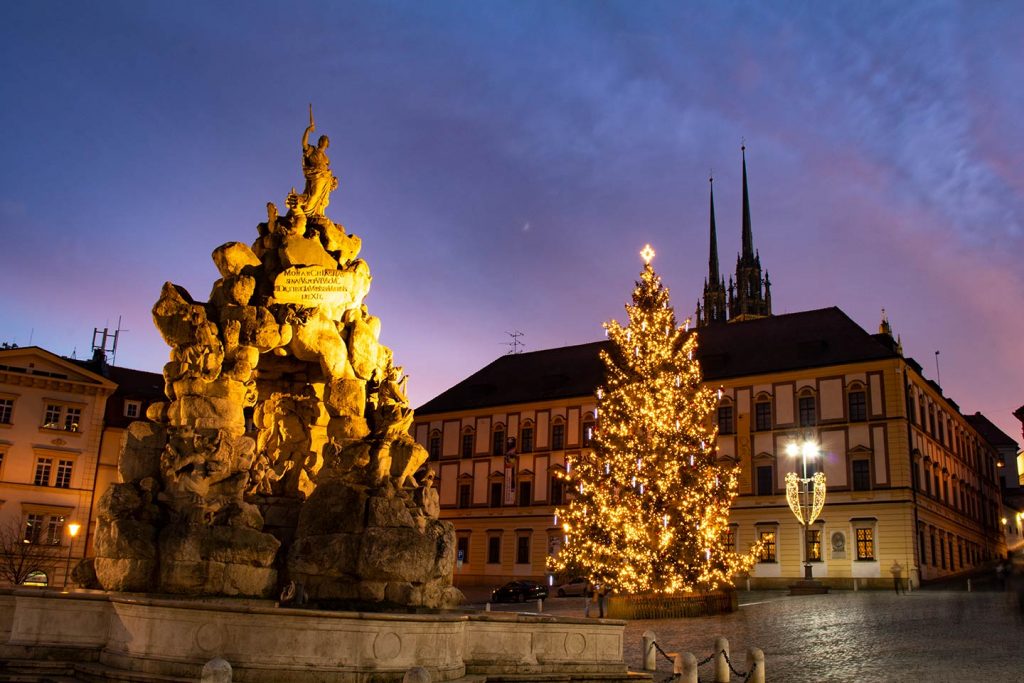
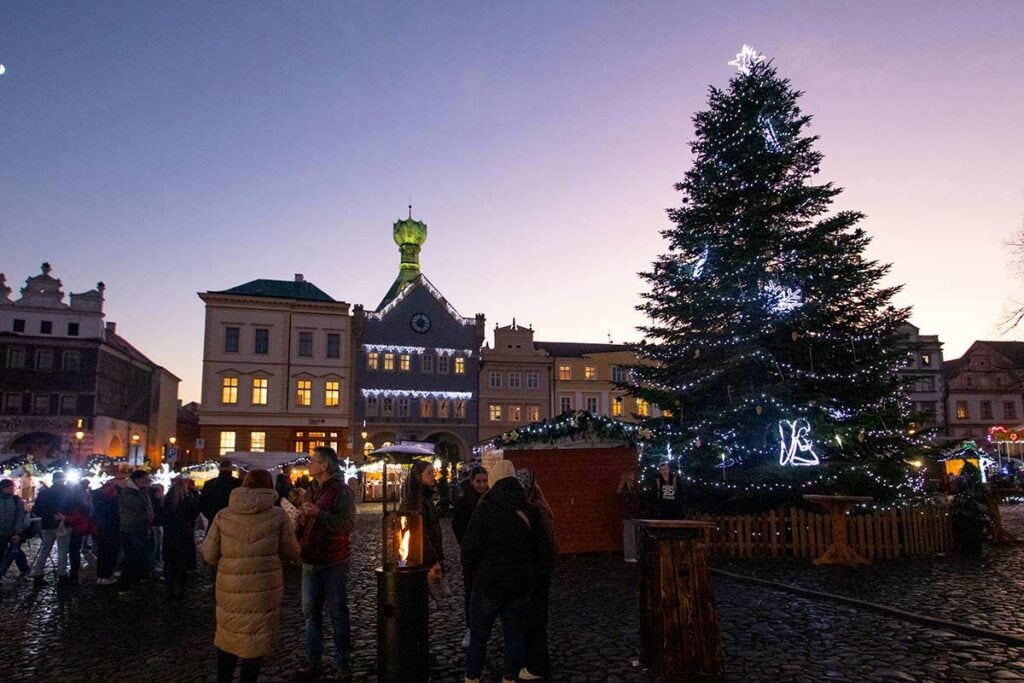
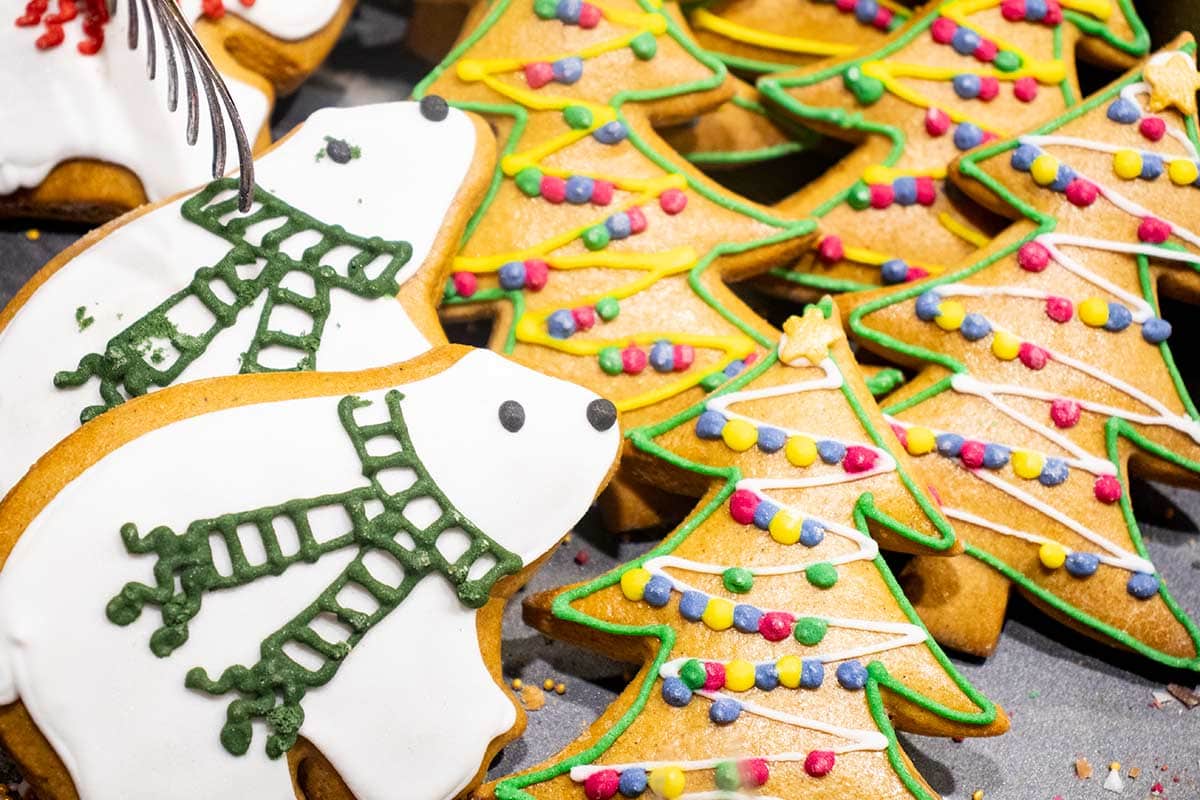
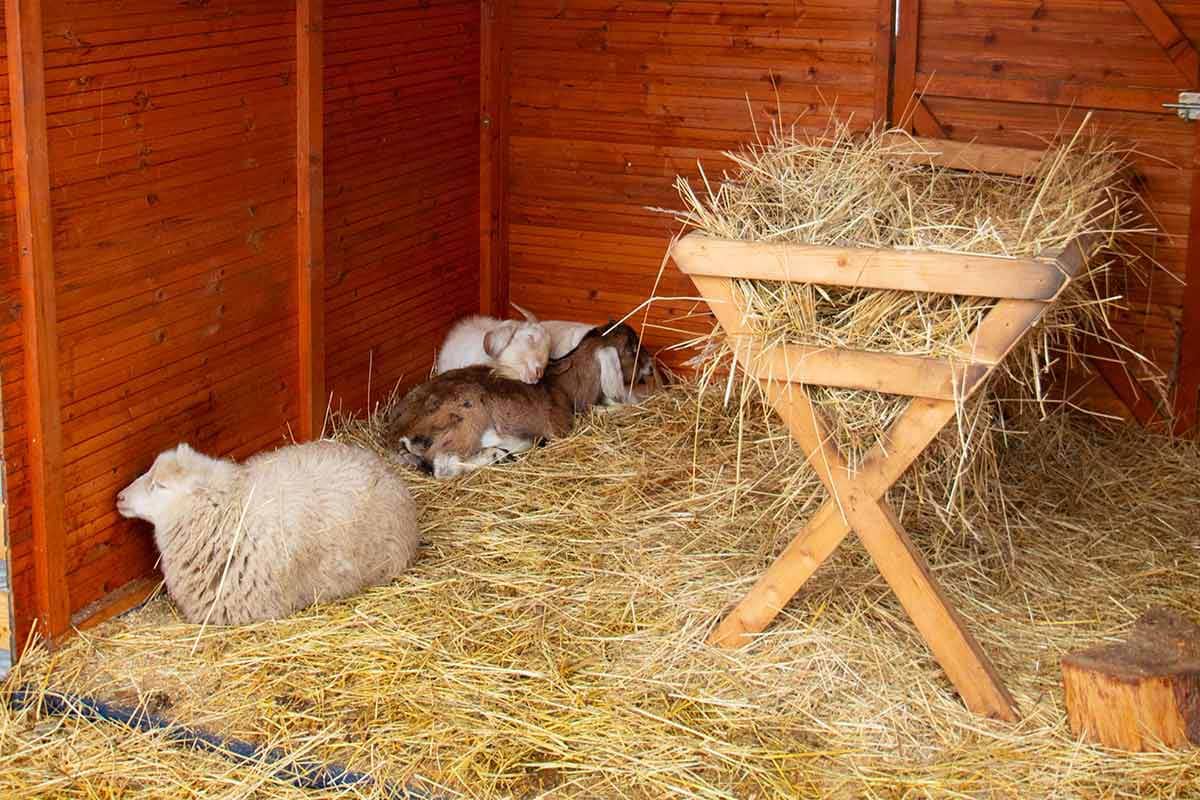
There are many more Christmas markets in the rest of the Czech Republic. After Prague, the largest is in the country’s second city, Brno, and all the other larger cities, including Plzeň, Olomouc, České Budějovice and Karlovy Vary host Christmas markets, usually through until around 23rd December.
Many smaller towns do the same. I mention the Christmas market in Litoměřice later in the article in more detail, and there are similar small markets in the likes of Český Krumlov, Kutná Hora and Mělník, to name just a few.
Most Czech castles are closed between November and March – a great pity as many people would love to visit them over the winter period. However, a few of them, including Karlštejn and Křivoklát host small markets on certain weekends.
Czech Food
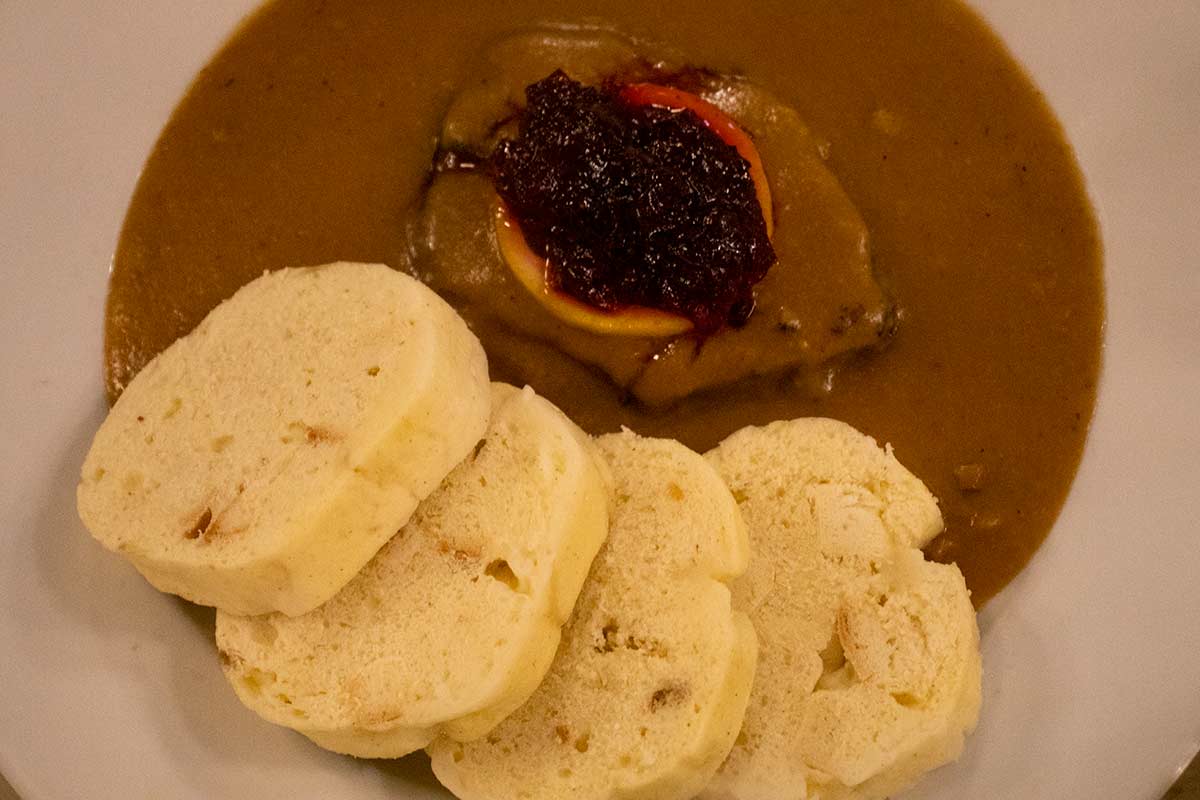
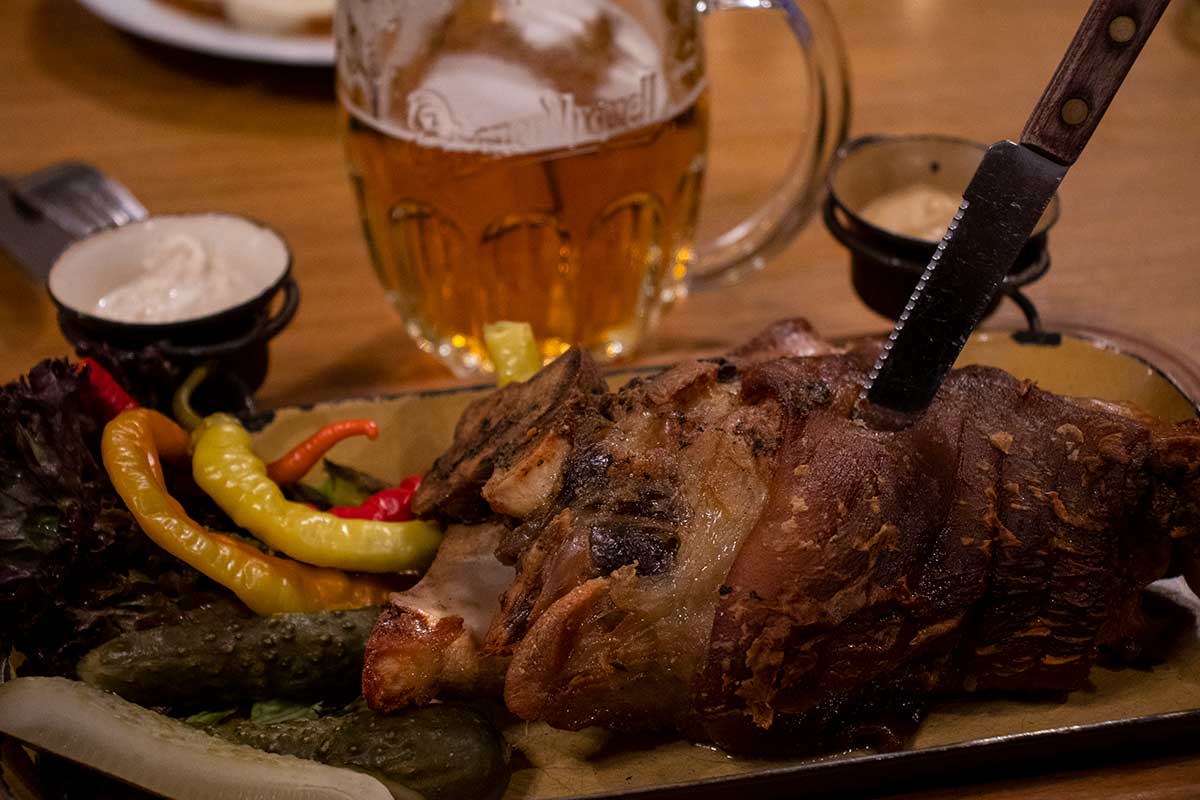
Czech cuisine, like those of its neighbours in Central Europe, is based on simple, hearty food that does a brilliant job of filling you up and keeping you warm and healthy in winter. And sitting in a cosy corner of a Czech restaurant with a fire roaring on a winter’s evening is the best way to enjoy and experience it.
So expect plenty of meat on the menu, from svičková – a small piece of sirloin in a creamy sauce with dumplings – to vepřové koleno, a whopping feast of pork knuckle with pickles on the side. If it’s not enormous, you’re in a tourist rip-off restaurant.
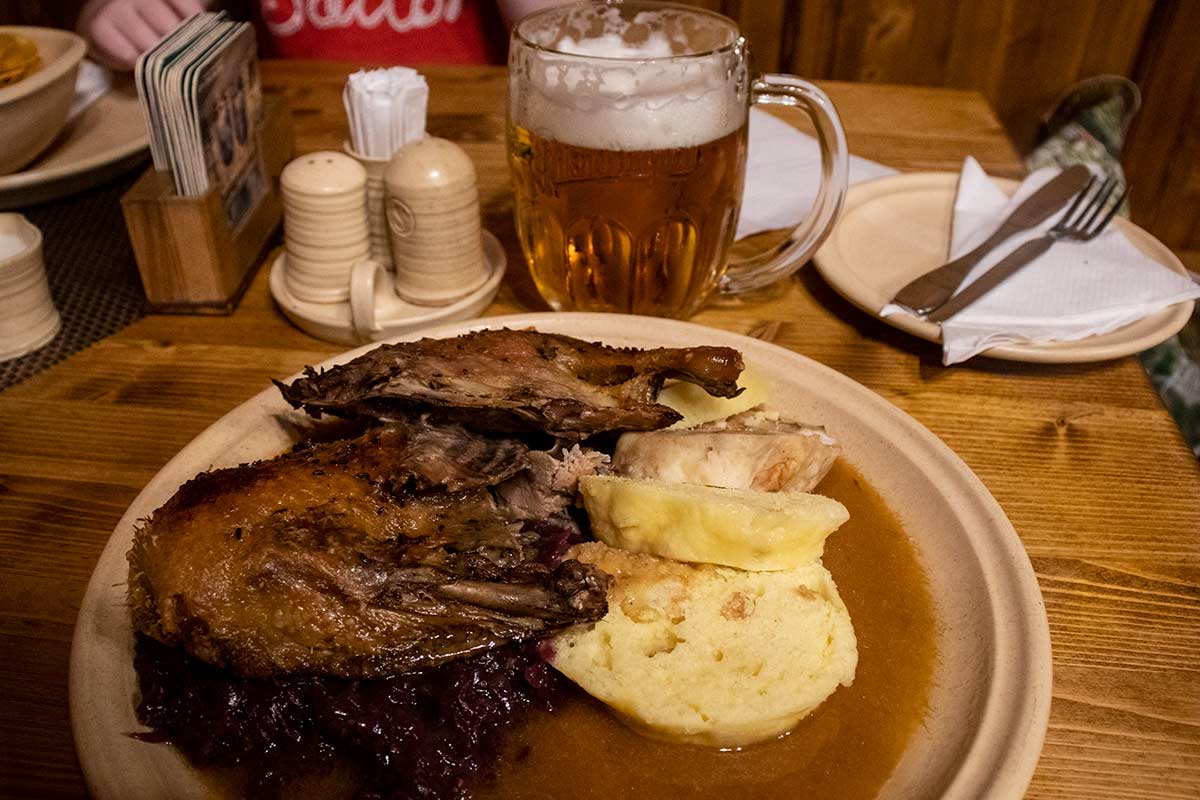

Other classic dishes include pečeni káchna, a quarter (sometimes a half, as pictured) of roast duck, which is usually accompanied by red cabbage and two types of dumplings. This was my most frequently eaten dish while living in Prague, without a doubt.
I also recommend Moravský vrabec – Moravian sparrow – tender marinated pork thighs served with potato dumplings and either sauerkraut or red cabbage.
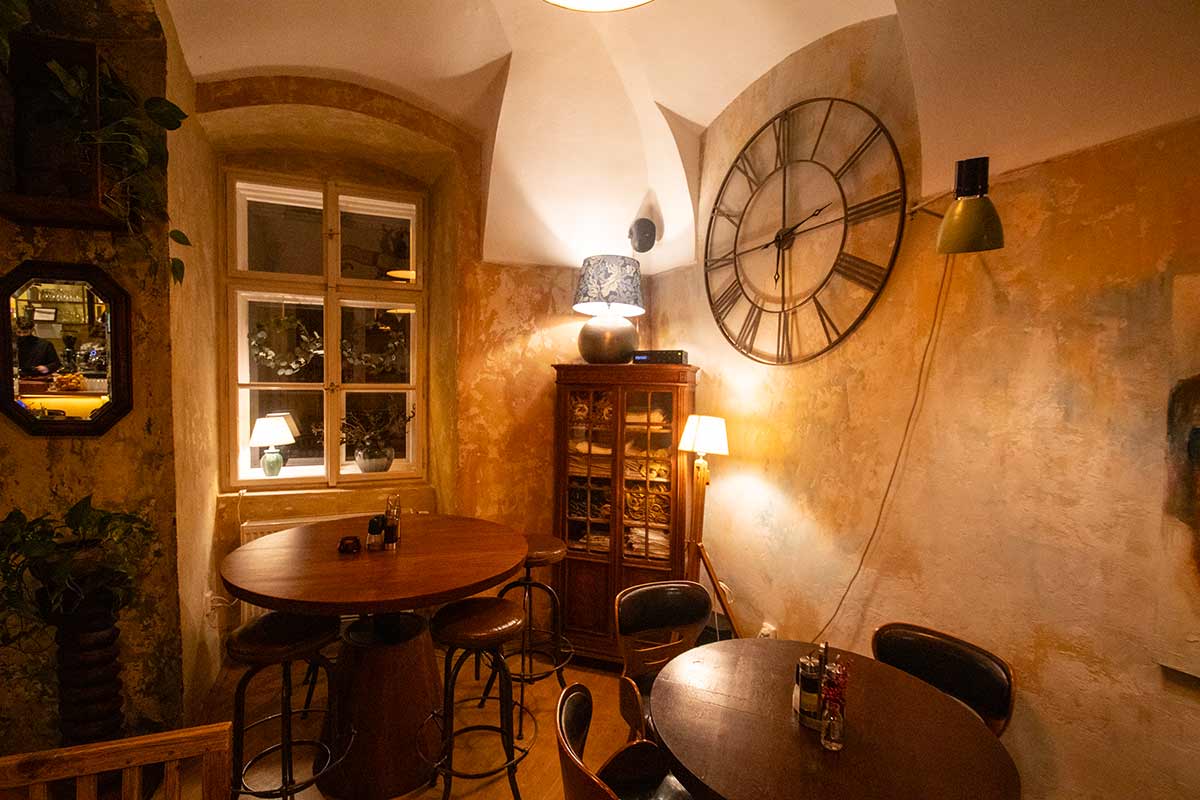
Czech dessert menus are often full of tempting delights. We particularly miss větrník, a delicious chop bun with caramel and fresh cream, and borůvkový koláč, a tasty blueberry brioche to which I am particularly partial.
Czech Beer

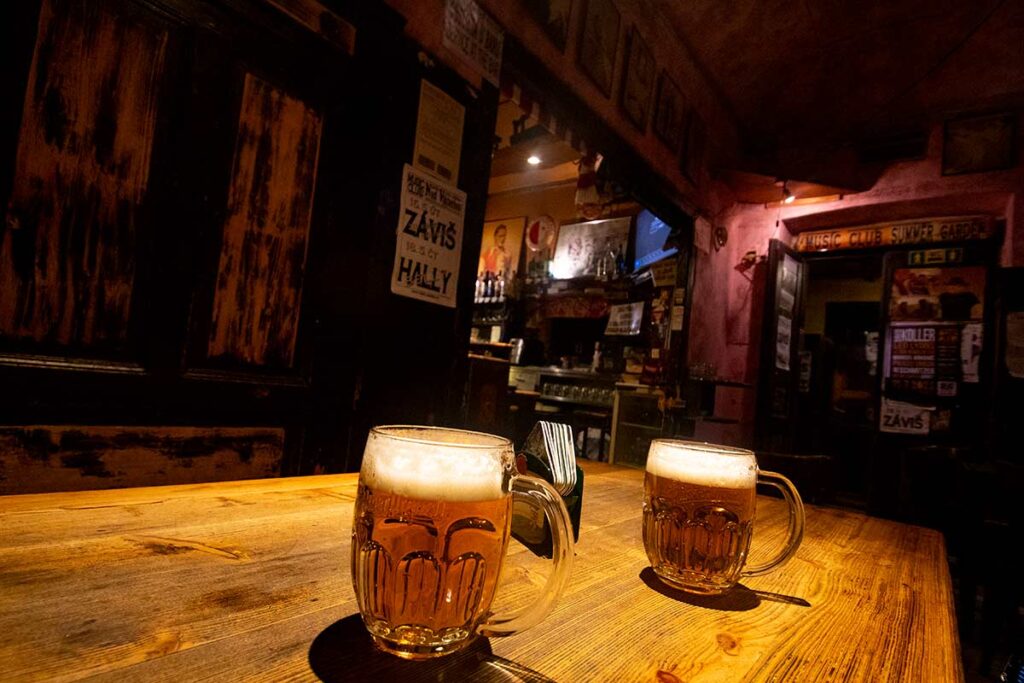
Czech beer is up there with the best on the planet – and just possibly takes the top place on the podium ahead of allcomers.
The country is the home of pilsner beer, a form of lager which was originally brewed in Pilsen (Plzeň) in Western Bohemia. Bohemia is home to far more beers than Moravia, which is more wine country. And even in Prague, which has long shed its label as a ‘budget’ destination, it’s one of the few things you’ll find that’s noticeably less expensive than Western Europe. A pint of beer in London will set you back more than £6 (€7), whereas in Prague a half-litre serve of the most expensive brew will cost around €3.
The most famous brand is the ubiquitous Pilsner Urquell (Plzeňský Praždroj), though I’d recommend Gambrinus, also brewed in Plzeň, over it. Staropramen is one of the wider-known Czech brands internationally, and their headquarter brewery is in Smichov, the Prague 5 district. It’s ok, but not on a par with Gambrinus.
One of the most popular day trips from Prague is the Pilsner Urquell brewery tour in Plzeň, an intriguing city 90 minutes west of Prague on the train. There are also Staropramen brewery tours in Smichov – it’s easy to reach on the 5, 12, 15 and 20 trams.
Best Places To Visit In The Czech Republic In Winter
Winter In Prague
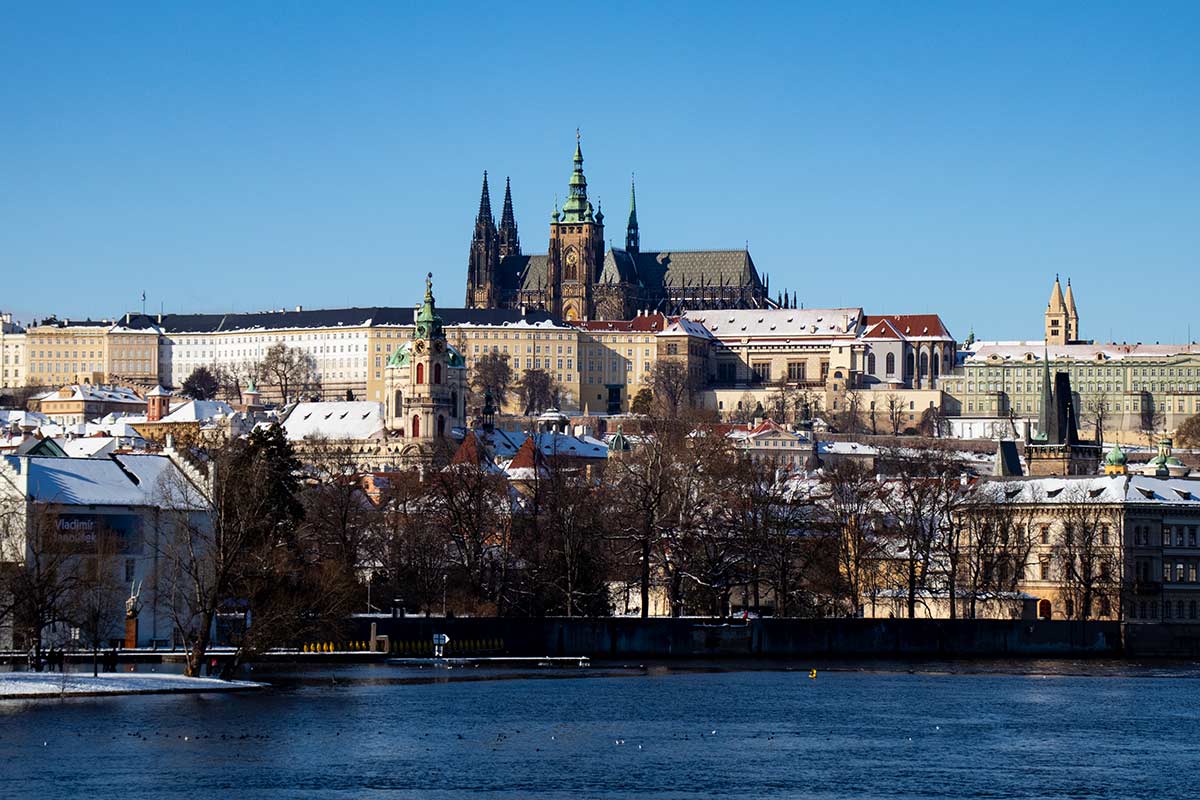
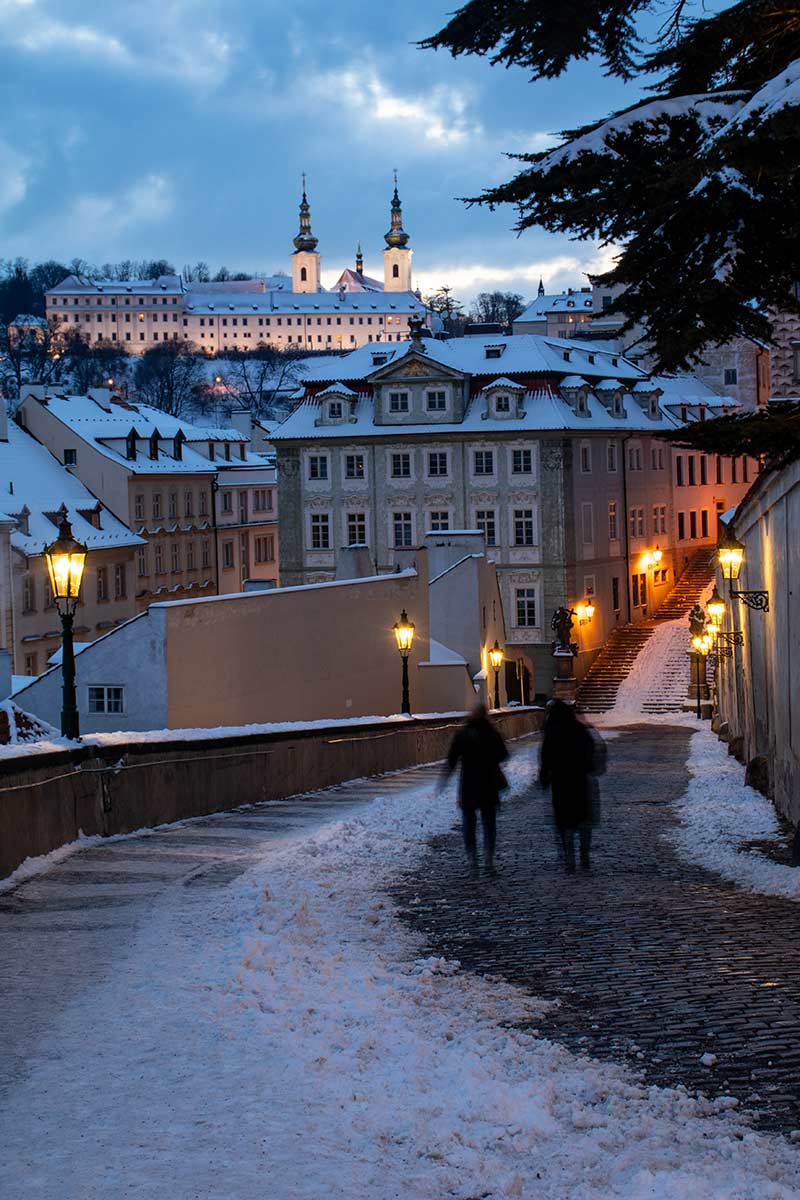
Prague is where most people begin their exploration of the Czech Republic, and is where I’d suggest any first-timer begins. Prague’s biggest problem is overtourism, and this still applies in December, with the Christmas Markets in full swing. However, January and February are considerably quieter, and if you don’t mind some guaranteed grey sky (and chilly temperatures) for some of your visit, winter is the best time of yar to discover Prague and what makes it so magical.
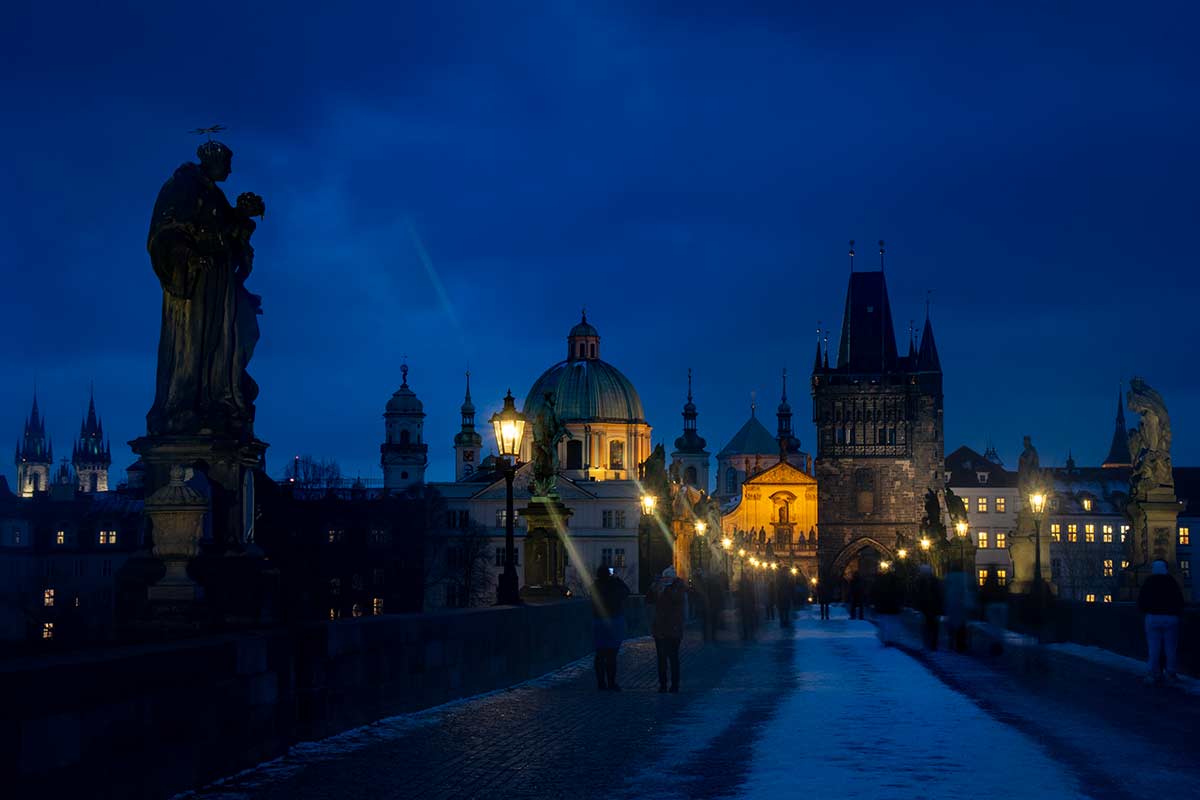

We’ll start with the main sights. The Charles Bridge is often (too) busy with visitors, but early morning on a winter’s day you’ll be able to savour this wonderfully evocative place almost by yourself, the silhouettes of the statues of saints and the domes and spires of the Old Town silhouetted beyond.
Prague Old Town is also overly popular these days, especially around Old Town Square which, regardless of the constant flow of people, is one of the most beautiful squares in Europe. There are a few quiet corners of the Old Town which are reminiscent of how it would have been 50 years ago, and the best of these is around St Agnes Convent, home to the National Gallery Prague’s superb collection of medieval religious art.


There are plenty of fascinating corners of the Old Town to seek out, from the world’s first Cubist building, the House of the Black Madonna. It houses the Museum of Czech Cubism, and also the only two Cubist cafes in the world, the better of which is the Grand Café Orient upstairs. In the northwest corner of the Old Town is Josefov, Prague’s main Jewish quarter with the Jewish Museum, a concentration of synagogues and kosher restaurants. They’re all fascinating, but the most popular place to see there is the Old Jewish Cemetery, behind the Pinkas Synagogue. Graves were literally built on top of each other because of the restricted burial space permitted to Jews for centuries, and it’s a very poignant sight.
You’ll also have plenty of company if you visit Prague Castle (which I wouldn’t miss). St Vitus Cathedral, which dominates the western skyline of Prague, is outstanding, one of the greatest Gothic churches in Central Europe. You can walk through the Castle precinct without having to buy a ticket, but don’t skimp on it. You need the ticket to visit most of St Vitus, the main exhibition, St George’s Basilica and the Golden Lane, an exquisite street now full of cottages housing craft shops. And you can book your Prague Castle ticket here.
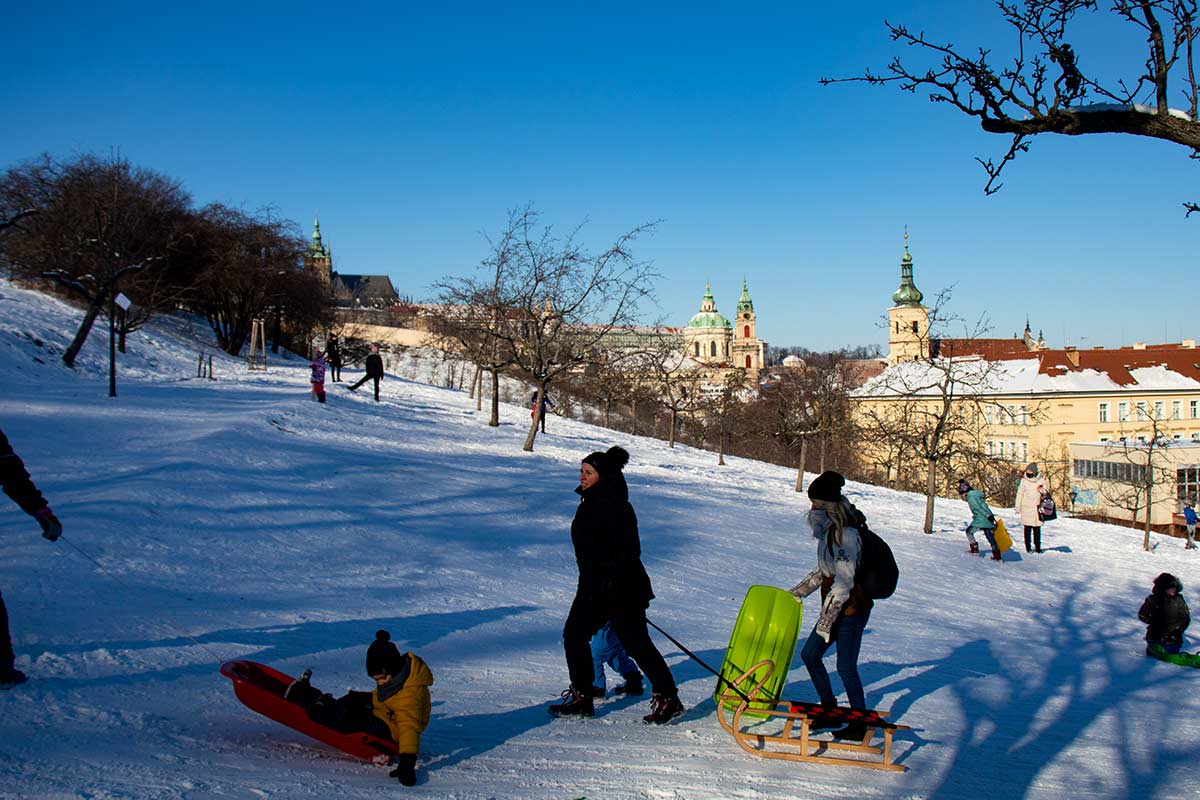
One of the best Prague parks to visit in winter is the lower part of Petřin Hill, within sight of Prague Castle. If there’s a lot of snow on the ground, the park is used by Praguers for sledding. If you pick one up for a few hundred koruna at one of the nearby shops around Újezd, you can join in, as my son did. It’s brilliant fun.
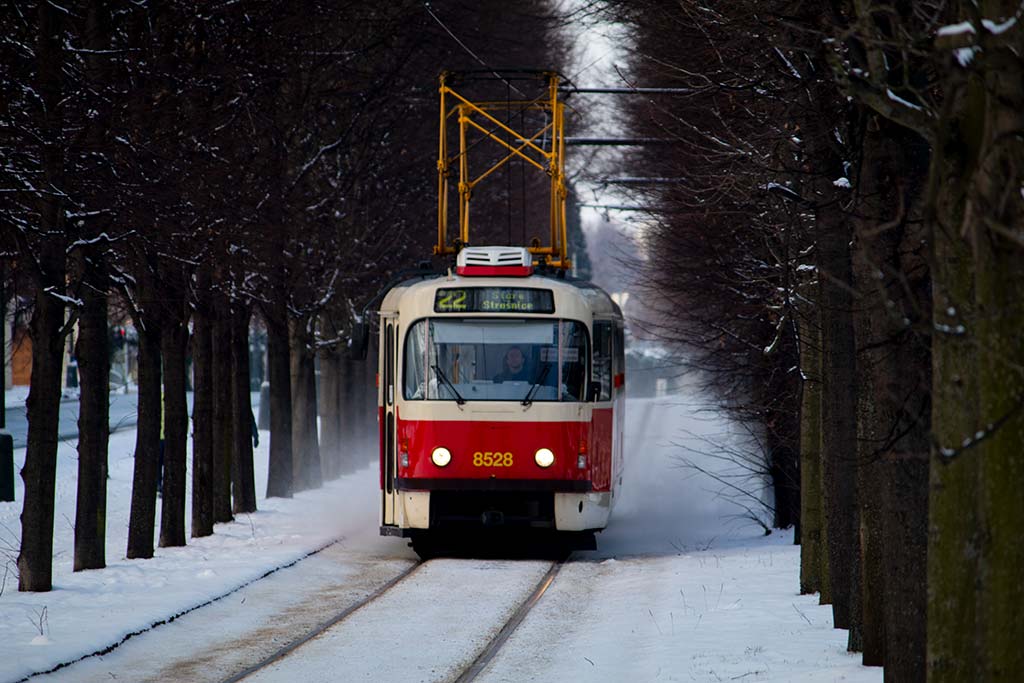
There are also many places to eat out in Prague, and likewise pubs where you can sample the wonderful Czech beer. You wouldn’t have to walk far in the Old or New Town to find a pivnice (bar or restaurant). You could be more adventurous and take the 22 tram to Břevnov monastery, where you could sample the superb beer brewed there for over a thousand years. And the restaurant within the monastery, Klášterni šenk (reservations required) is one of the very best in Prague.
Where To Stay

Art Nouveau Palace Hotel – excellent 5-star hotel in New Town Prague, close to Wenceslas Square and Prague main train station
Hotel Nerudova 211 – stunning Baroque townhouse with restored painted ceilings, halfway up the hill to Prague Castle – where we stayed on our honeymoon in 2011
Hotel Adalbert – 18th-century building in the Břevnov Monastery complex, blissfully quiet area, but quick tram connection to Prague Castle and city centre
Winter In Český Krumlov
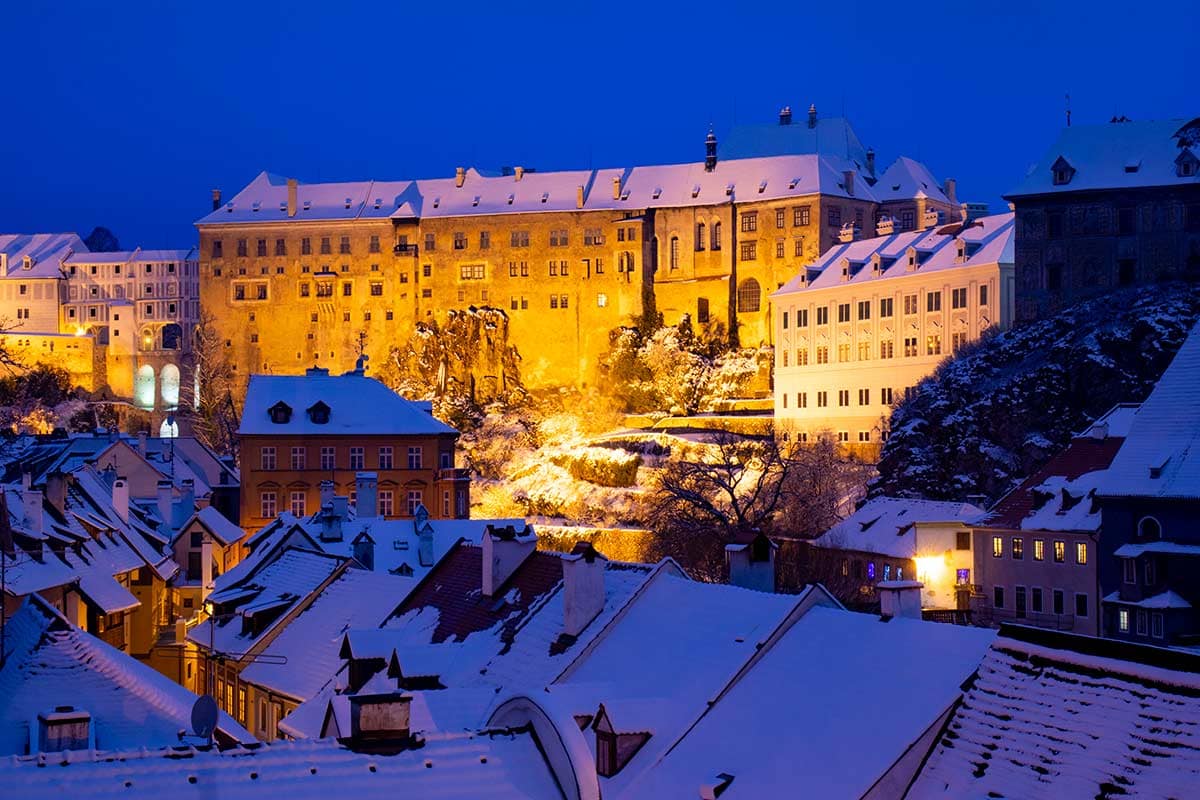
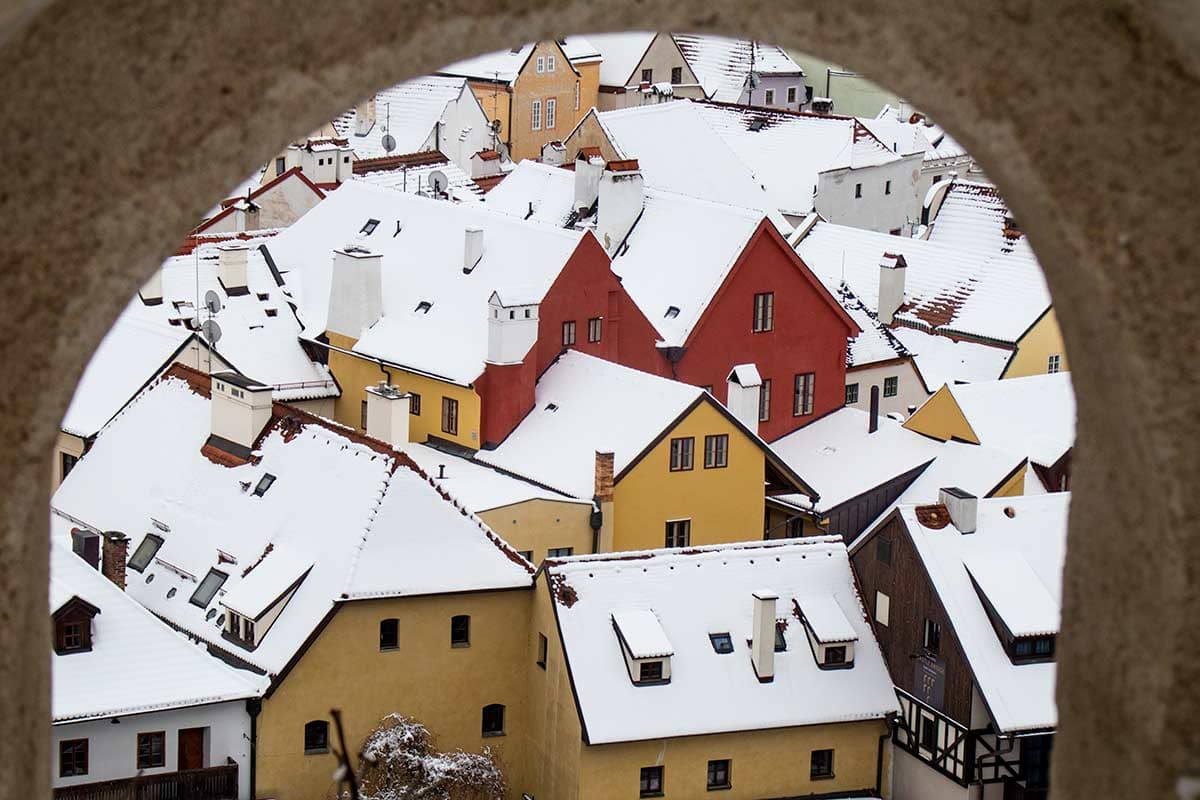
World Heritage-listed Český Krumlov is one of the most beautiful small towns in Europe, up there with the likes of Rothenburg, Colmar, Goslar and Gubbio. And Český Krumlov in winter is such an inviting prospect because it’s the one time of year that you can experience it without the crowds that clog the place in peak season.
Český Krumlov is a small town in South Bohemia, around 20 miles south of the regional capital, České Budějovice, itself an underrated gem. I remember a tour guide telling me (when I first visited over 35 years ago) that the reason it is so well preserved is that nothing of great significance ever happened there. So a lot of it is a medieval and Renaissance time capsule, with a few later gems that have also come to light in recent years.
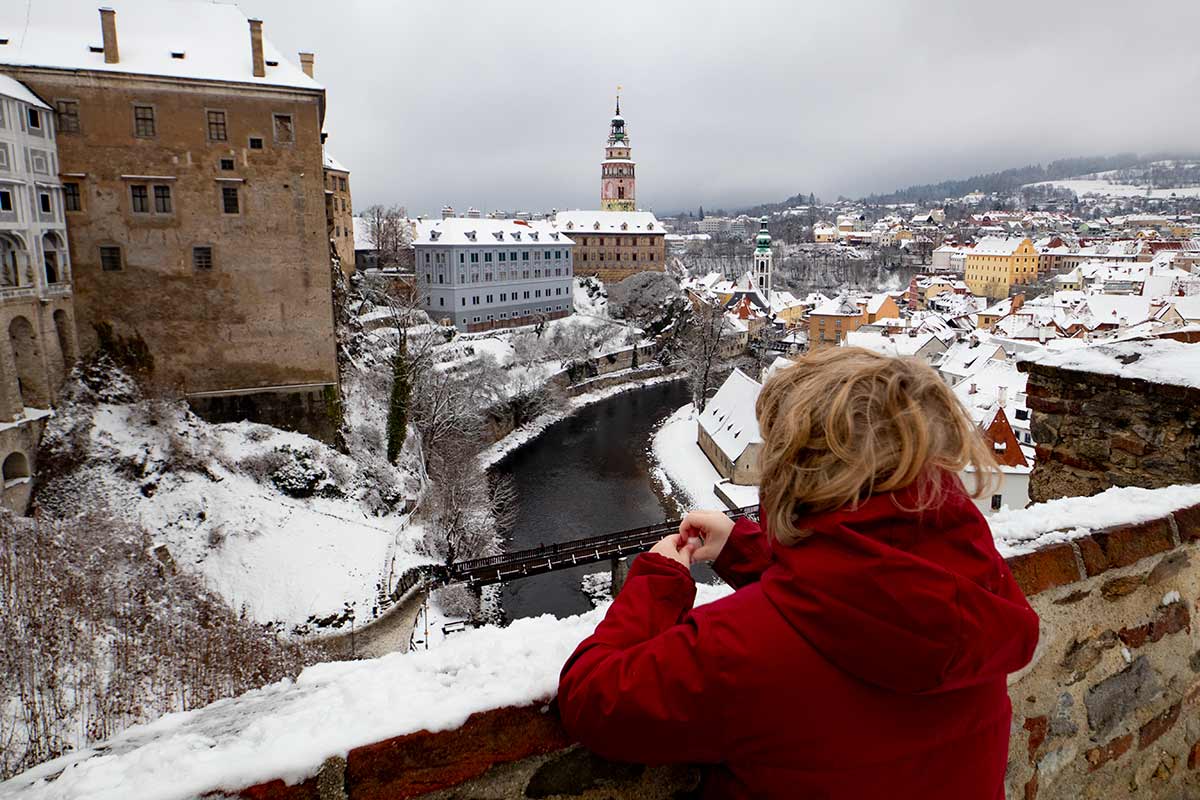
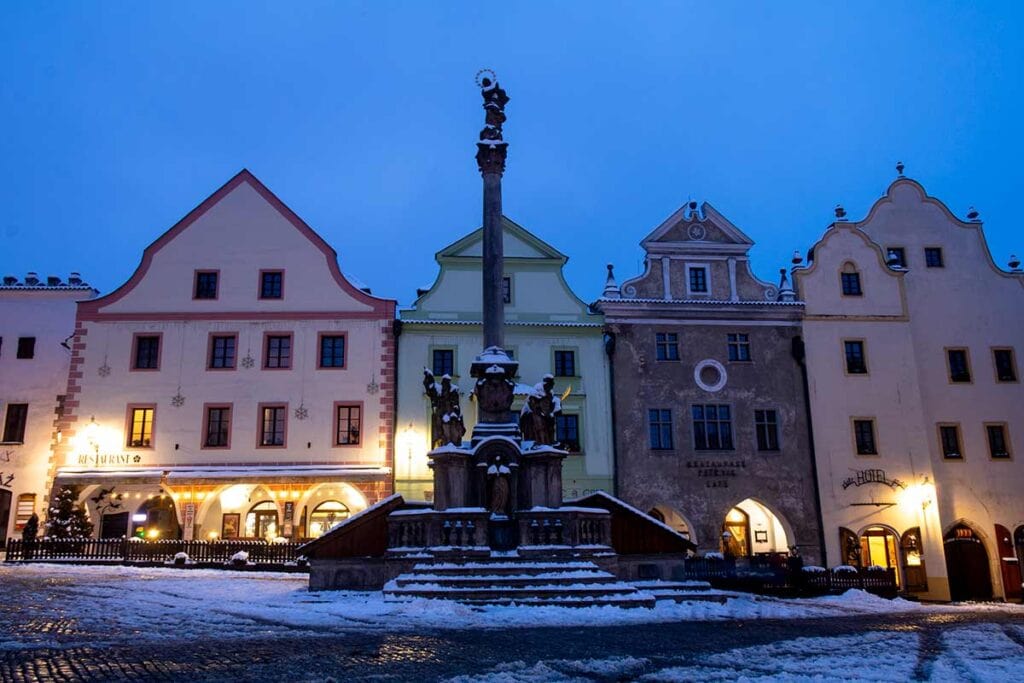
Český Krumlov remains my son’s favourite place in Europe, six years after our first visit there, and he was determined to join me on a day trip there from Prague when I knew that there would be snow on the ground. After the near-three-hour bus journey and the mother of all snowball fights, we spent the following six hours exploring every back street of this gem of town, just as we had on our first visit. The streets were a little more slippery, but we loved every second of it.

The one drawback of visiting the Czech Republic in winter is that Český Krumlov Castle is closed. You can walk through the grounds, from one end to the other, but the interior tours don’t run between early November and late March. However, if you’re hoping to visit a Museum, I recommend the Museum Fotoatelier Seidel, one of the best museums of 20th-century Europe that I’ve ever found. It’s the former house and studio of the town’s leading portrait and landscape photographer, Josef Seidel, and his son František, who took over the business after his father died.
It’s a wonderful social history museum, giving you great insight into life in early 20th-century small town Central Europe. And it’s also full of amazing photographic paraphernalia, the attic full of boxes of glass plates giving you a thrilling glimpse of photographic history too.
Whatever you do, head up the hill to walk through the Castle grounds, where you reach some superb viewpoints over the town and Vltava River. Aim to stay until nightfall, and witness the lights bringing the centuries-old building to life again. It’s magnificent without snow, and utterly beguiling and wondrous with a coating of the white stuff, as my images show.

The rest of South Bohemia is fascinating, and if you’re based in the area for a few days, I’d also suggest visiting Holašovice. This uniquely preserved rural village is built in the folk Baroque style prevalent from the mid-18th to early 19th centuries. All the farmsteads have survived intact around the long village green, and it’s another wonderful step back in time, with hardly another visitor in sight. But the pub will be open, for sure. You can reach it by bus in around 40 minutes from České Budějovice.
Where To Stay – Hotel Dvorak Cesky Krumlov – unbeatable location next to the Vltava River, and opposite the stunning Castle
Brno In Winter
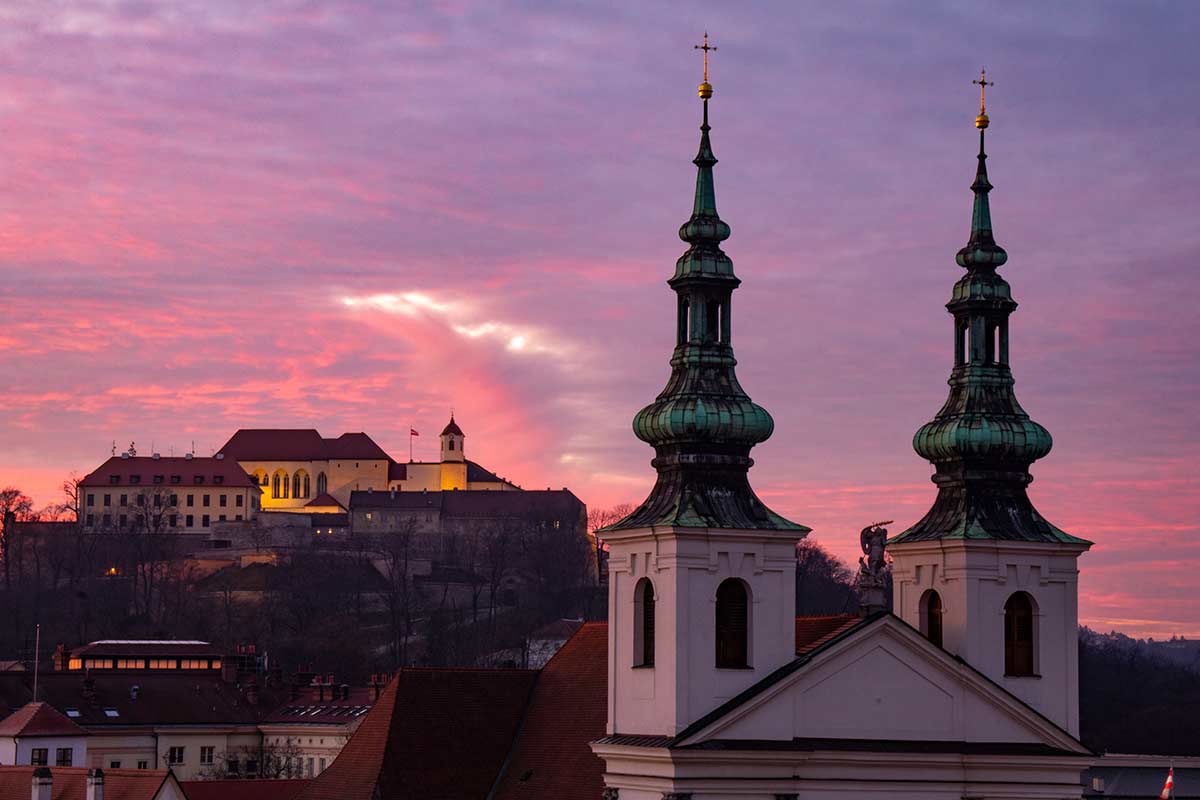
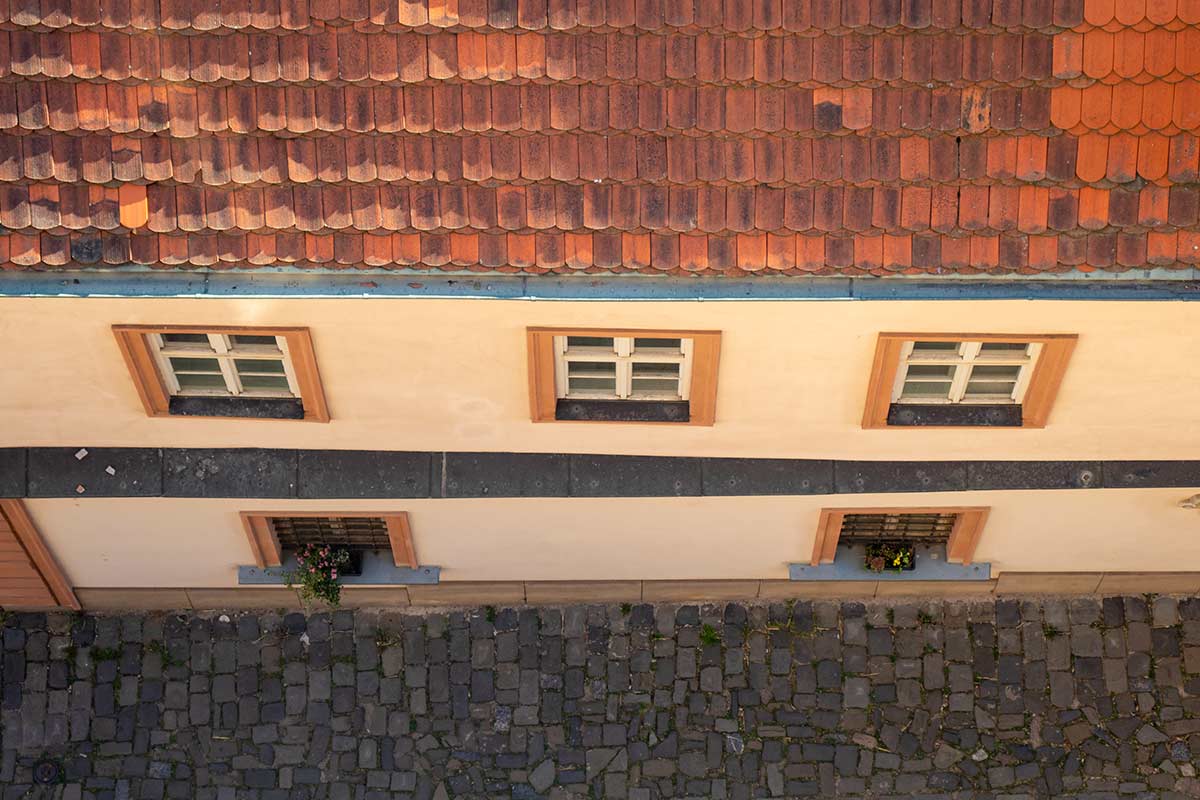
Brno is the Czech Republic’s second city, and one of the most underrated in Europe. I was tipped off it by a Kiwi friend who visited many years ago, and I’ve stayed there twice in recent years – once in late summer, and the other time in winter.
We timed our first visit partly to coincide with the Brno Christmas Market in mid-December, but also as we were keen to experience it without the crowds.
Brno would fit nicely into a Prague-Vienna-Budapest itinerary, squeezing in for a day or more between Prague and Vienna. It’s in South Moravia, just north of wine country and the Austrian border, and just about works as a day trip from Prague or a day trip from Vienna, which is slightly closer.
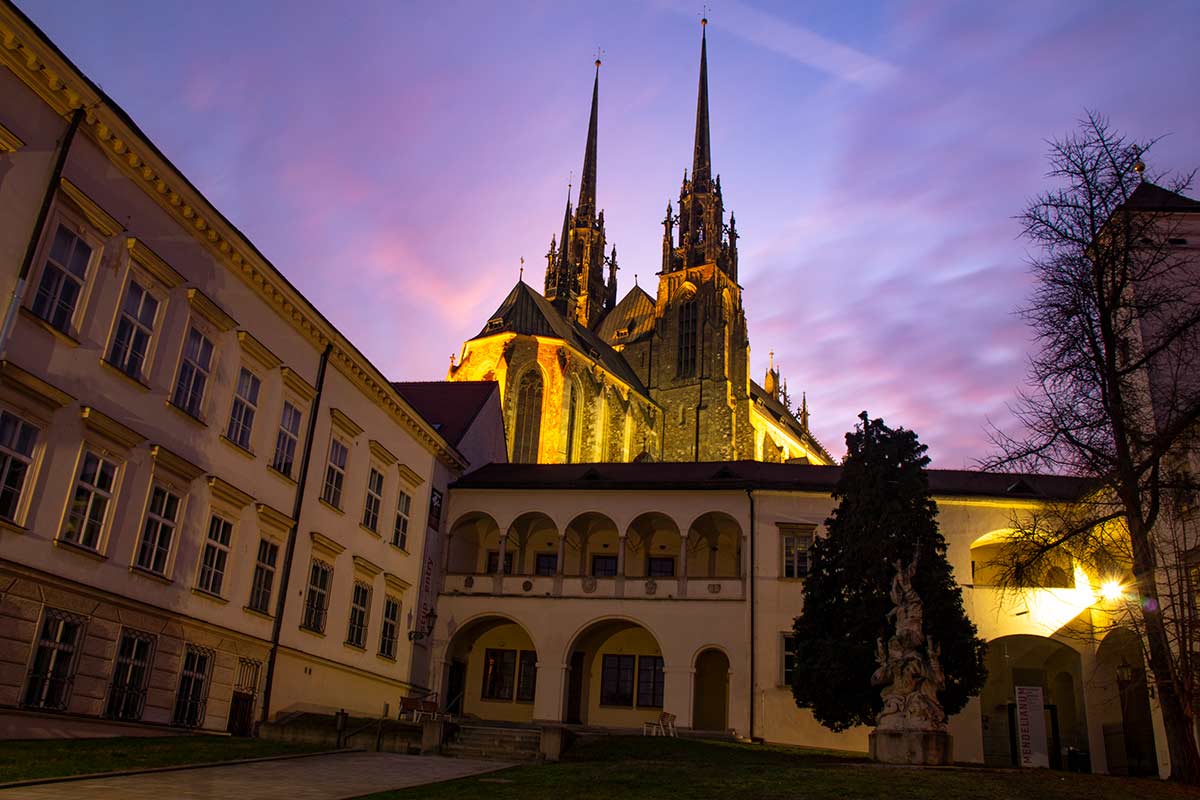
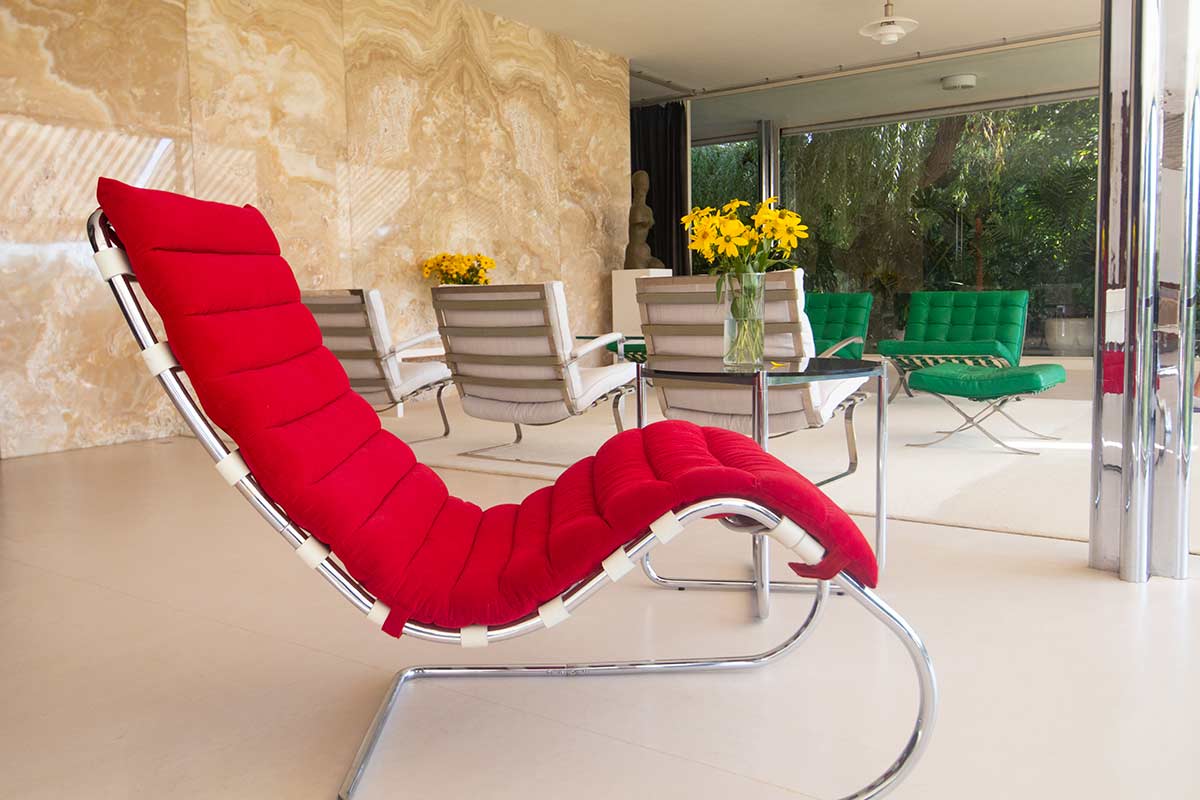
Brno’s historic centre is filled with historic gems like the Gothic Cathedral on the hill, some fine Baroque churches and some wonderful early 20th-century Functionalist buildings. One of these, the World Heritage-listed Villa Tugendhat, was designed by Bauhaus and Functionalist master Mies van der Rohe, and when it was completed around 1930 it was the most expensive private house in the world.
Add in the city’s many cosy restaurants, bars and cafes and you have one of the best cities in Europe that most people haven’t heard of. Winter or summer, we loved it both times.
Where To Stay: Grand Hotel Brno for the Habsburg-era elegance, Hotel Avion for a marvel of Functionalist design that will have lovers of Bauhaus style swooning.
See Also: One Day In Brno – 24 hours in the Czech Republic’s second city
Small Town Czech Republic
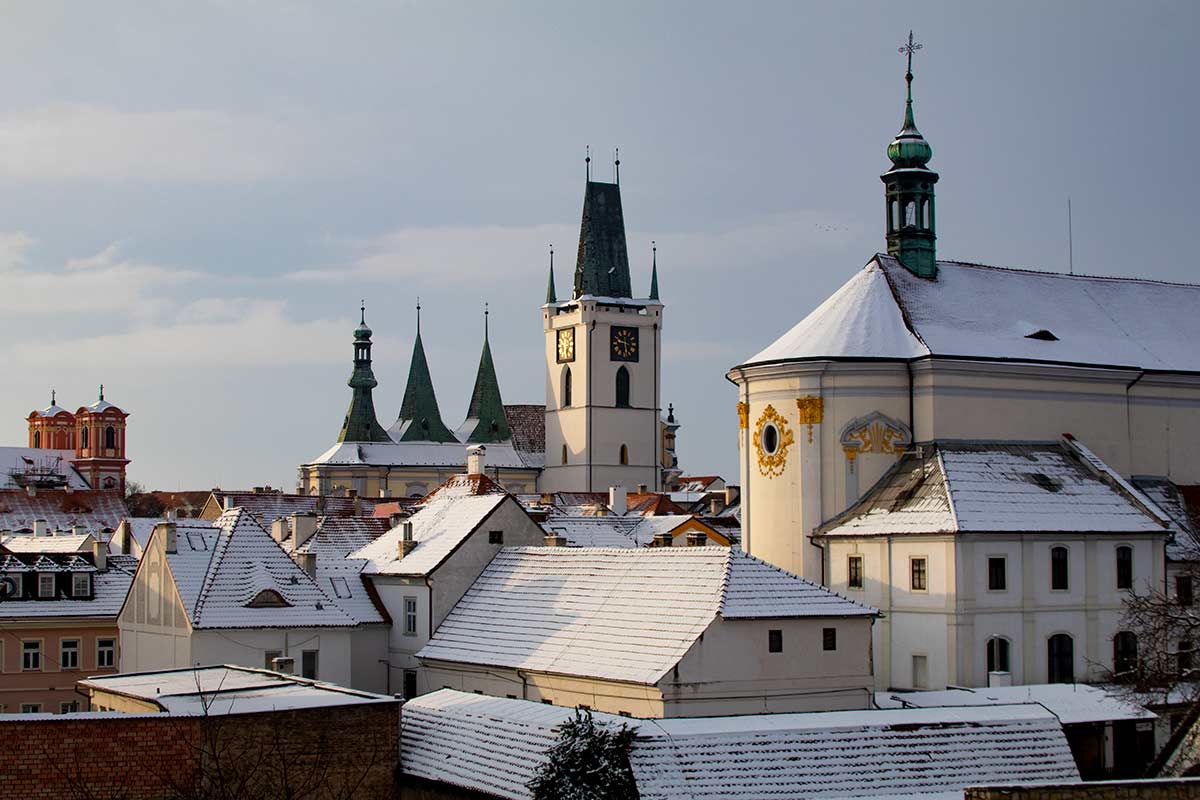
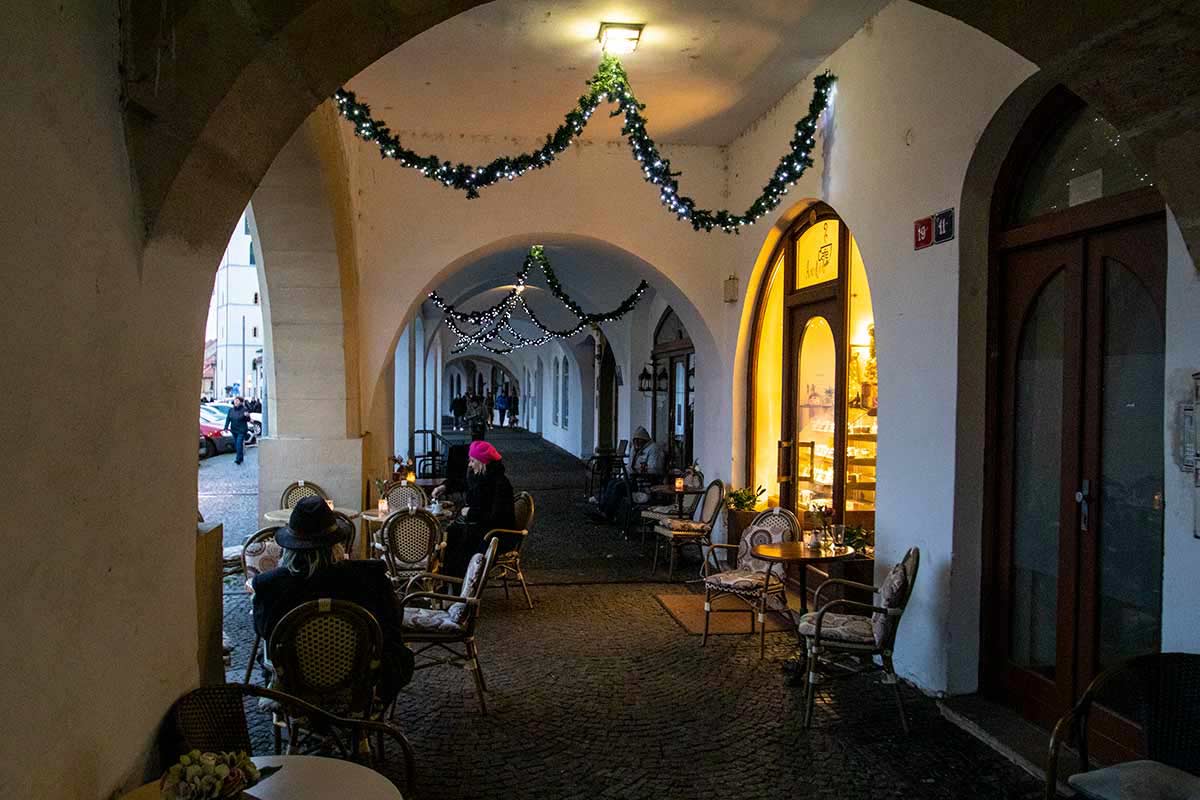
The Czech Republic is blessed with hundreds of beautiful historic towns. Many of these have similar highlights, with churches from the Gothic to Baroque periods, fine town squares with splendid town houses, castles and other centuries-old heritage.
The sheer number of these places surprised me hugely. At one point, while living in Prague, I bought a couple of books and borrowed some more from the library and made a ‘short’ list of well over a hundred such towns that I’d like to see around the country. Even living in the country for over four years I didn’t get near finishing my wish list. But I’d recommend that anyone who visits the country ventures beyond Prague for at least a day to see one of them for themselves.
We needed to stay somewhere for a few weeks before a planned trip to Germany, and opted for Litoměřice, a town an hour north of Prague on the River Elbe. We ended up spending a month in a hotel there, with the final two weeks alone there, essentially hotel-sitting.
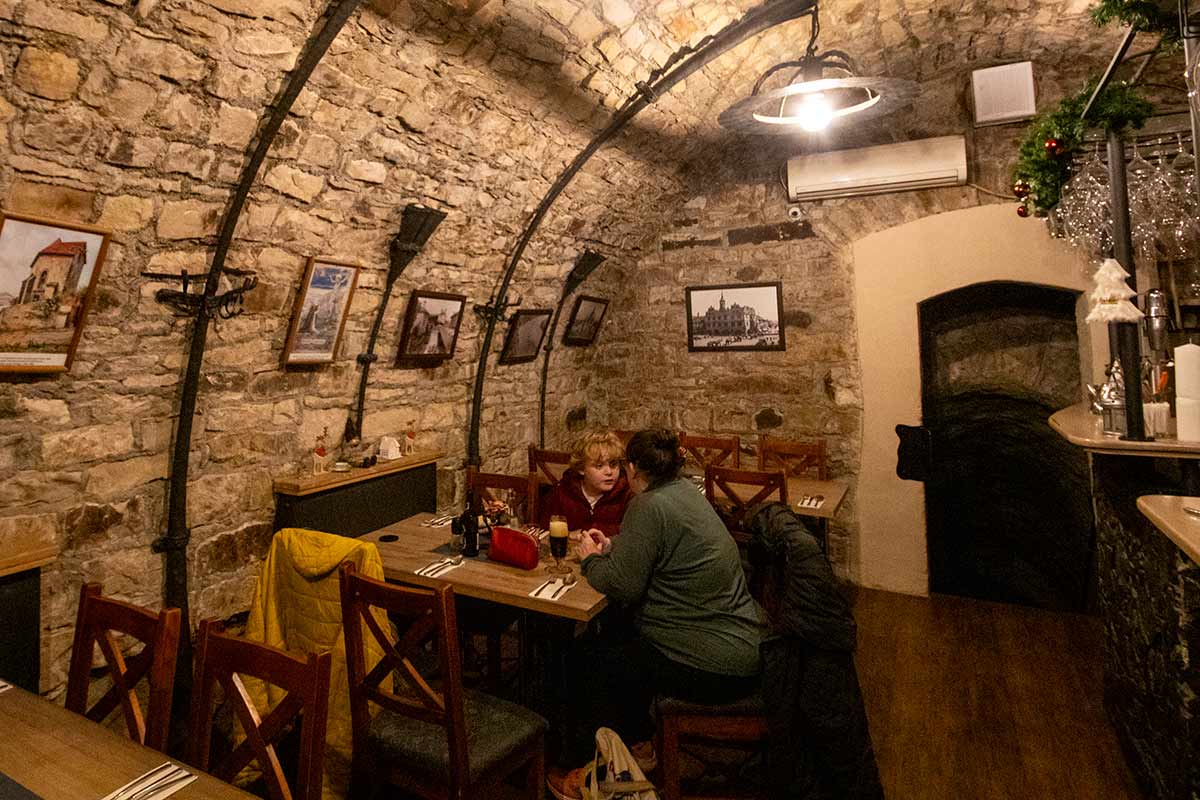
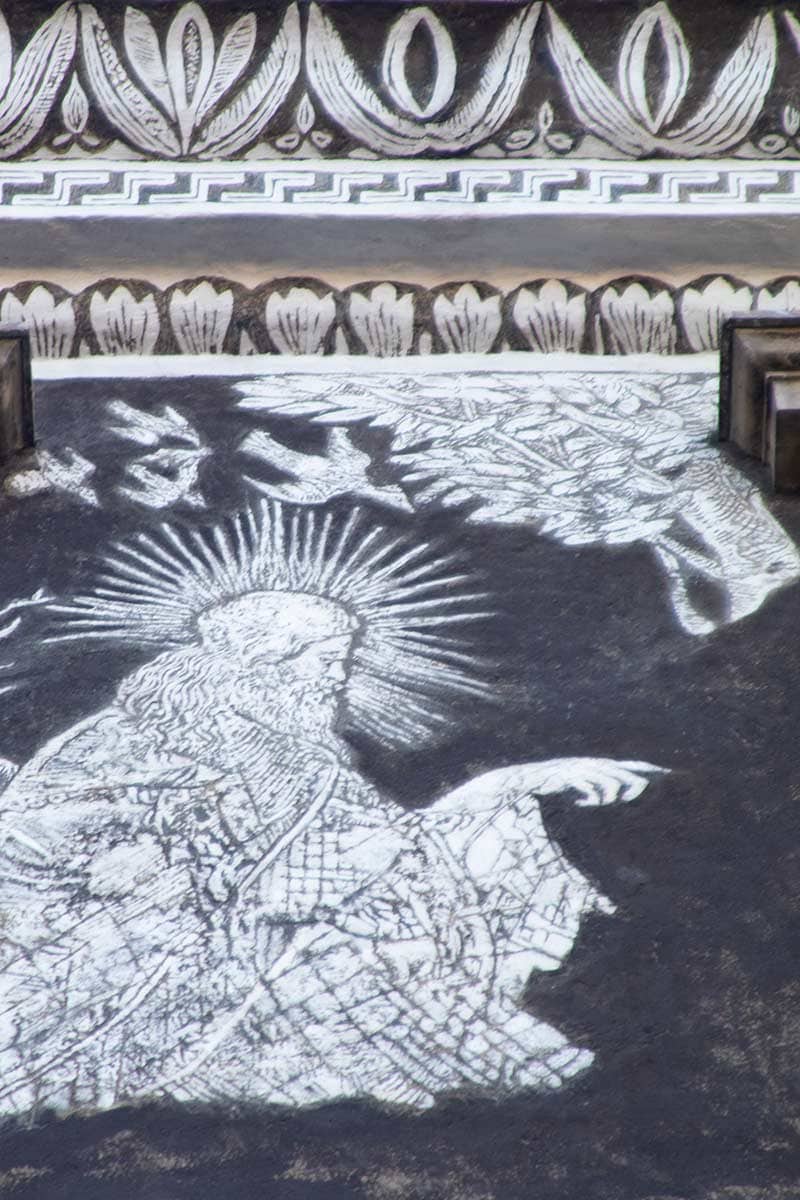
The town has all the features I’ve mentioned above, a wealth of architecture from the 13th to the 18th centuries, including a striking Gothic and Baroque church with an unusual tented-style roof, medieval arcades and even cellars below the town square, and a beautiful Renaissance house on the main square decorated in superb sgraffito etchings.
We were an hour from Prague, but the Bohemian metropolis felt a million miles away. We were the only tourists in the whole town, endlessly tramping the snowy cobbled streets, stopping for coffee and cake under the medieval arches in the town square, or at the former railway station near the River Elbe with a steam train parked outside.
We originally stayed in Litoměřice so that my wife could recover in warm surrounding from pneumonia and sepsis, and from these difficult beginnings absolutely fell in love with this town. It has much of the magic of Prague architecturally, and none of the crowds whatsoever. If you spread even a small fraction of the overtourism overspill from Prague around the hundred towns I mentioned earlier, these places would benefit greatly and still be untouched by the crowds that have blighted the capital over the last fifteen years or more.
Where To Stay – Apartman U Gotickeho Dvojcete – amazing restored apartment in a quiet courtyard, with a medieval vaulted ceiling, ideal for couples
See Also: A Czech Country Christmas – A Short Story
Terezin Memorial Theresienstadt Ghetto)


A grey winter’s day might not strike you as the best time to visit a Nazi internment and holding camp. It’s a grim but, I think necessary, undertaking, and I think it’s better to do it in the cold, grey depths of winter than on a hot summer’s day.
Visiting Terezin concentration camp was something I had planned for years and kept putting off. I almost have to build myself up for places like this, knowing it’s going to be a day of overwhelming sadness. I also happened to visit in winter, on a bitterly cold day where the temperature didn’t get near reaching freezing point, the ice on the streets of Terezin resolutely not melting all day.

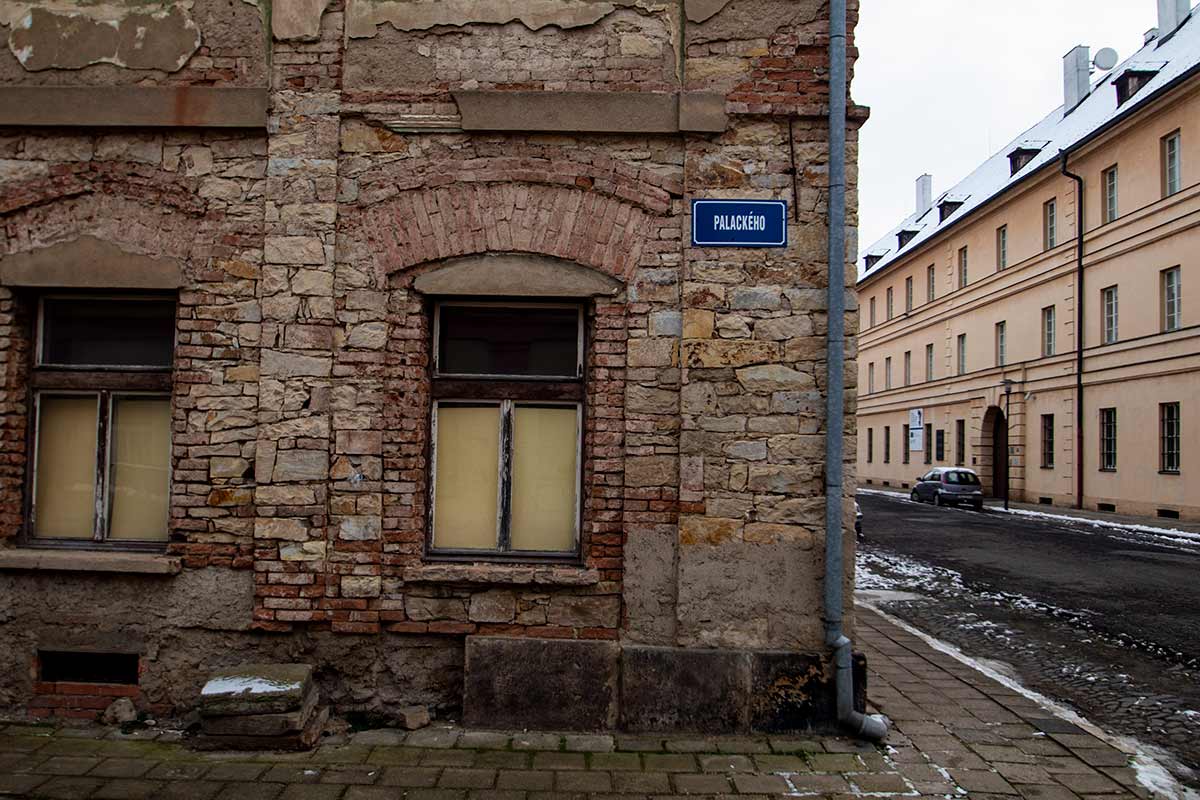
You could spend a whole day visiting the main and outlying sites around Terezin, or just opt for the three main sites, which take around four hours to cover. These are the Small Fortress (Mala Pevnost) on the outskirts of the town, and the Ghetto Museum and Magdeburg Barracks Museum in the town, a 10-15 minute walk away.
Theresienstadt was used by the Nazis as a ‘model’ camp for cynical propaganda purposes. Films were made there, and the Red Cross also visited the site in 1944 to observe how well the Jews interned there were supposedly being treated. All the while the Nazis were gassing thousands a day at Auschwitz, and had already murdered millions.
Visiting Terezin is an intense and very moving experience. You can easily do it all yourself, catching a bus from Letňany bus station, next to the northern terminus of Prague’s Metro A line (alight at Pamatnik Terezin).
Alternatively, this Terezin tour from Prague is the best of several options, as it al\so gives you time in the Ghetto Museum and town, which others don’t. Pickup is from Prague Old Town.
Weather in Czech Republic In Winter
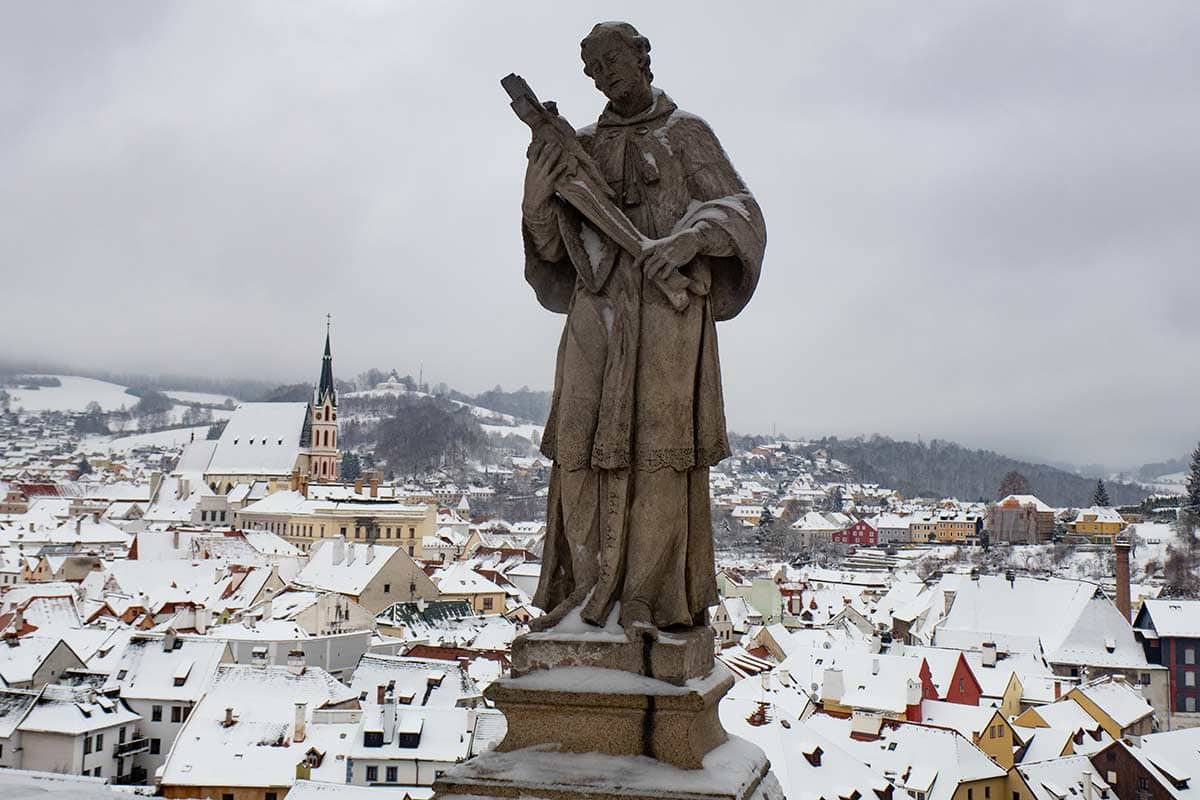
You can expect plenty of cold, dry, grey, overcast days if you visit the Czech Republic in winter. From our years of experience you can expect one bright and sunny day per week at this time of year, and this applies right across Central Europe – we have also ‘wintered’ in Germany, Austria, Hungary and Poland in the past, and had similar experiences weather-wise. On average, you’re also likely to get one day’s rainfall per week in winter in the Czech Republic – though this will be snowfall in higher areas.
Temperatures will mostly be around 5-7°C in the daytime, dropping to around freezing point (0°C) at night.
From my experience, January is the coldest month, but there really isn’t much more than a degree or two in it.
Snow In Czech Republic In Winter
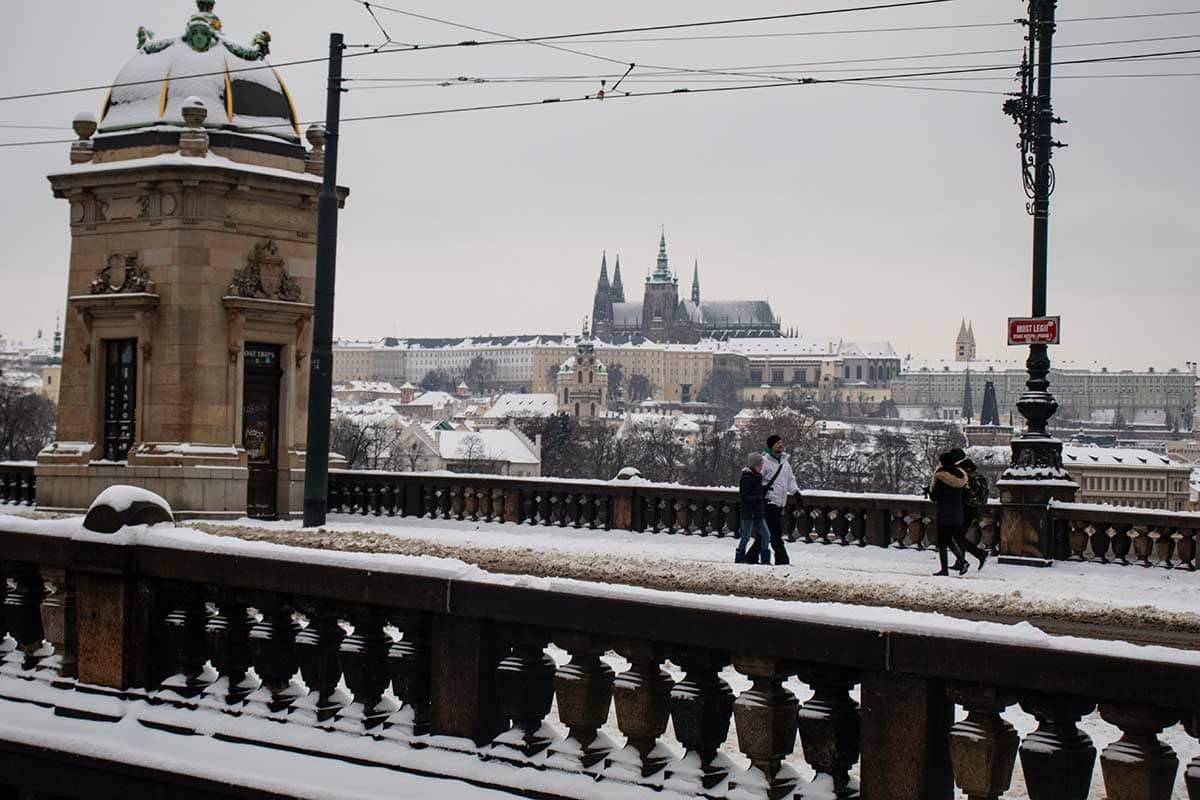
We lived in the Czech Republic for four years and five winters, and after a near-snow-free preceding decade, we were treated to five prolonged, sustained snowfalls during our time living in the country. On each occasion snow was on the ground for a week or more. There was also another prolonged snowfall in 2025.
However, this is one of those things that you can’t predict. It’s simply pot luck whether you get snow or not.
What To Wear And Pack For Winter In The Czech Republic

Wherever you travel in Europe in winter, you should always bring a thermal base layer with you. You’ll need both a top and leggings, especially if the temperature is likely to drop to around zero – which it does over much of the continent at this time of year.
After that, it’s all a question of layering, and adjusting according to whatever winter coat you’re planning to wear. I’ve found wearing a pair of combat trousers or jeans (plus the thermal layer) have kept me warm enough during the Czech winter. On top, I’ve found that two t-shirts – one long-sleeved – plus my thermal layer and greatcoat – kept me as warm as toast through five Czech winters. Add a scarf or two and a warm hat, and you’re done.
As for a coat, I bought a fantastic calf-length winter greatcoat from a thrift store elsewhere in Brno, and this lasted me four cold Czech winters. It was very high quality, incredibly warm and perfect for anywhere in Europe in winter. This option wouldn’t be available for everyone, so one of your main considerations when you visit Prague in winter should be a suitably warm coat.
If there’s a forecast for snow in the Czech Republic, or there’s a chance of icy weather during your winter trip there, the cobbled streets can be uneven and slippery, so it’s well worth having a pair of ice grippers to hand. These have rubber soles with around ten spikes, and they stretch over your shoes.
The spikes give a great grip in the snow and ice – you’ll walk a lot more comfortably and confidently with them than without. Essentially they’re a mini-crampon, and ideal if you’re travelling in Europe in the snow.
Czech Republic In Winter – Final Thoughts

I hope that you’ve enjoyed this guide, and that you get to experience winter in the Czech Republic at some point. Prague is the best place to start, but so much more of the country deserves your time, especially in this era of overtourism.
Here’s a selection of additional articles on Prague and the Czech Republic for you to browse:
Top Sights In Prague
55 Amazing Things To Do In Prague – By A Former Local
Charles Bridge Prague – one of the most beautiful bridges in the world
Old Town Square Prague – one of the most beautiful squares in the world
Týn Church Prague – stunning Gothic church with fairytale spires
Landmarks of Prague – 22 unmissable sights in the city
Jewish Prague – all Jewish sites in Prague, including those beyond the Josefov district
Hidden Gems in Prague -27 off the beaten track sights to seek out
How To Visit Prague Zoo – one of the best in Europe
National Museum Prague – the biggest, best Museum in the Czech Republic
Prague by Area
Old Town Prague – one of the most captivating old towns in Europe
New Town Prague– the modern heart of the Czech capital – but a taste of the old is never far away
Malá Strana Prague – the enchanting Baroque ‘Lesser Quarter’ below Prague Castle
Kampa Island Prague– the most beautiful and intriguing of Prague’s islands
Vltava River in Prague– everything there is to see along the river in the Czech capital
Žižkov Prague – the former working class renegade and artists’ hangout, as quirky as ever, with some of the best pubs in Prague
Holešovice Prague – Prague 7, one of the best modern areas to explore in the city
Themed Articles On Prague
Churches in Prague – 20 wondrous churches from St Vitus Cathedral to a modernist masterpiece in Vinohrady
Communist Prague – 18 Fascinating Places To Explore
Sunsets In Prague – the 10 best places to see them
Prague Streets – the city’s most beautiful streets
Prague World War 2 Sites – including the Heydrich Assassination Site and more
- Prague in Snow
- Brno Christmas Markets
- Things to do in Cesky Krumlov
- Cesky Krumlov in Winter
- Lednice Castle – stunning World Heritage chateau near the Austrian border
- Kutná Hora Bone Church – the amazing art of the Sedlec Ossuary
- Best Places To Visit On The River Elbe
- Visiting Terezin Concentration Camp
- Regions of Czech Republic
- Czech Republic Travel Guide