

Things To Do In Carcassonne
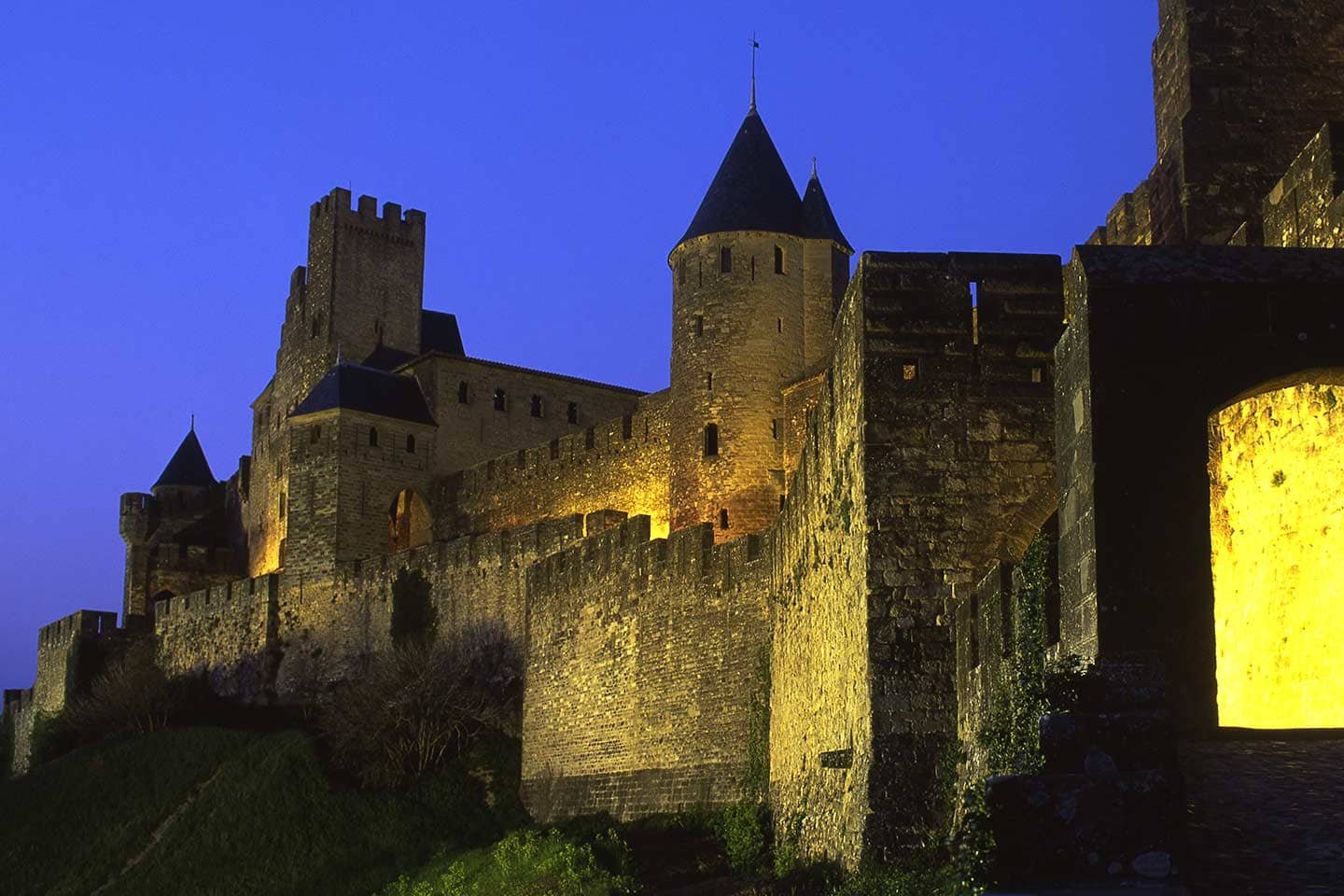
Two World Heritage Sites, one of the finest walled towns in Europe and the world, its towers and turrets straight out of a fairytale. Most things to do in Carcassonne are within the walls of its astonishing Cité, a fortress town that once guarded the border between France and the Kingdom of Aragon, part of modern Spain.
Carcassonne is one of the most complete medieval citadels in Europe, restored to its glory in the 19th century after hundreds of years of neglect. It doesn’t take long to see Carcassonne, but many visitors I’ve met have gone a long distance out of their way to spend a day – and usually a night or two – there.
The city is also close to another World Heritage Site, the 17th-century Canal du Midi, which passes close by en route from Toulouse to the Mediterranean Sea. It’s also a base for exploring the many castles – including those of the Cathars – in this corner of Occitanie, in southwest France.
In this article I’ll show you what there is to see in Carcassonne, with a full lowdown on logistics, ticketing and opening times. I’ll also suggest places to stay in Carcassonne, and a few day trips from Carcassonne to the surrounding region.
I hope that you find it helpful.
Where To Stay In Carcassonne
Hotel de la Cité Carcassonne – MGallery Collection – the luxury place to stay in Carcassonne, right next to the ramparts, incomparable views
Hotel du Pont Vieux – great mid-range option halfway up the hill, between the Pont Vieux and the Cité
Pont Levis Boutique Hotel – fine small hotel 100 metres from the Porte Narbonnaise entrance to the Cité, with a swimming pool and shaded garden to relax in
Hotel Espace Cité – excellent budget option less than five minutes’ walk down the hill from the Cité
Le Couvent Hostel – superb location in a former convent from the 17th century, in the heart of the Ville Basse
Explore the Cité de Carcassonne
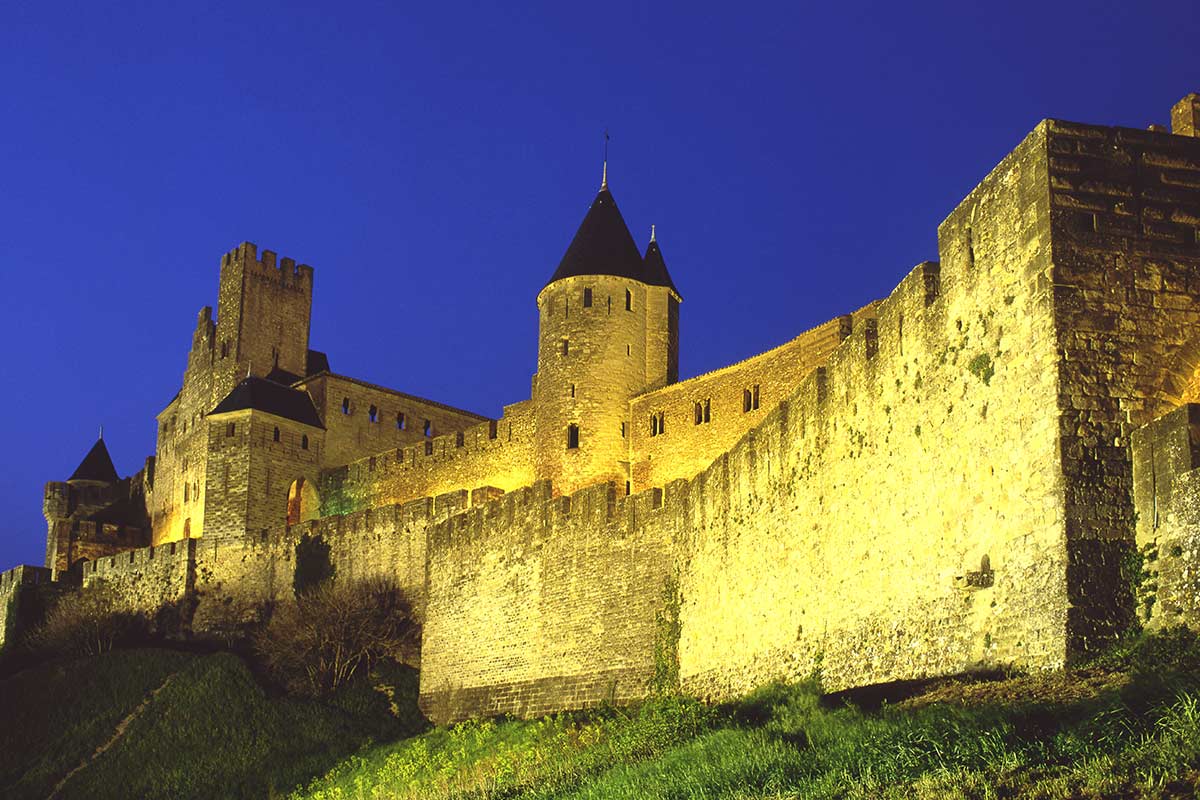
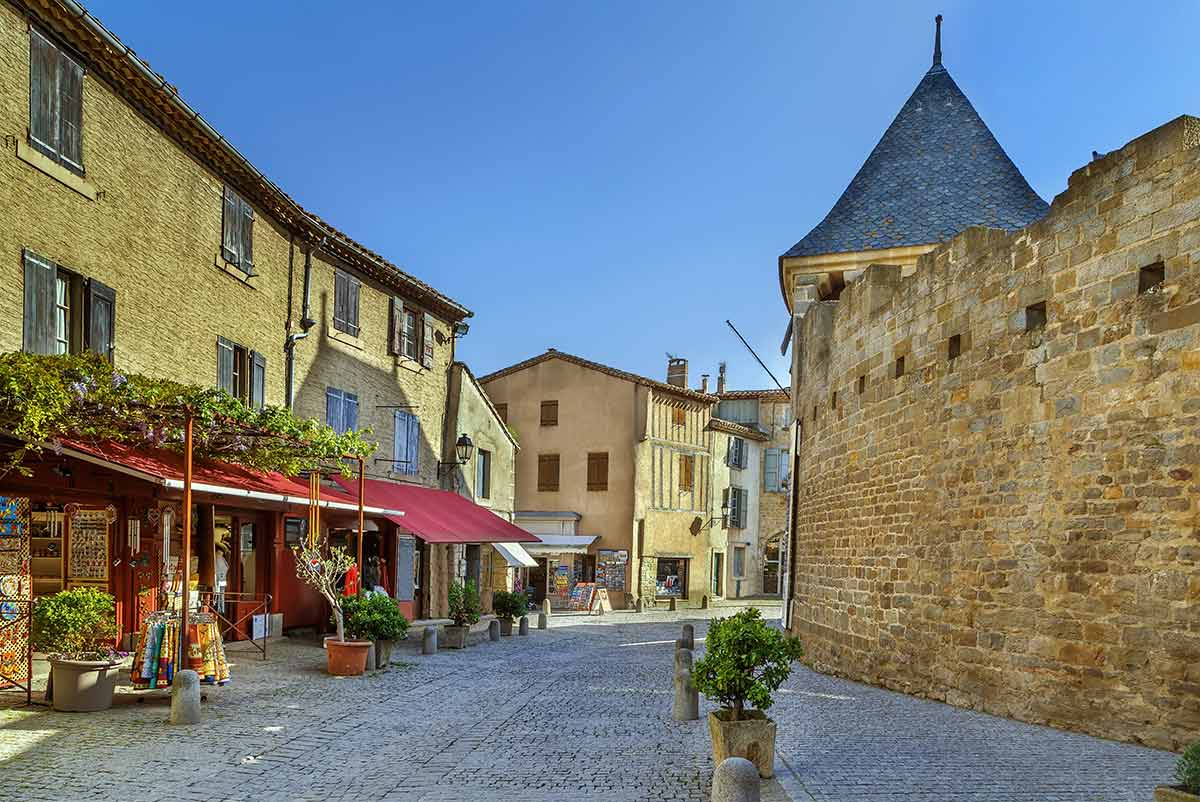
Carcassonne is divided between the Cité, the restored walled town, and the Ville Basse (Lower Town), most of which is across the river and includes the Bastide Saint-Louis. The old Cité is where most visitors spend the vast majority of their time in Carcassonne.
There has been some sort of fortification on the site since Roman times, and the Visigoths also occupied the site in the 6thcentury AD. Most of what we see today was built in the 13th and 14th centuries under its rulers, the Trencavel dynasty. It fell into ruin after 1659, when the Roussillon region to the south was incorporated into France from Aragon. This greatly reduced its strategic importance, and Napoleon stripped the fortress bare in 1793.
Demolition was seriously considered, but it was eventually decided to restore the entire city under the auspices of architect Eugene Viollet-le-Duc. The restoration continued after his death to the late 19th century.
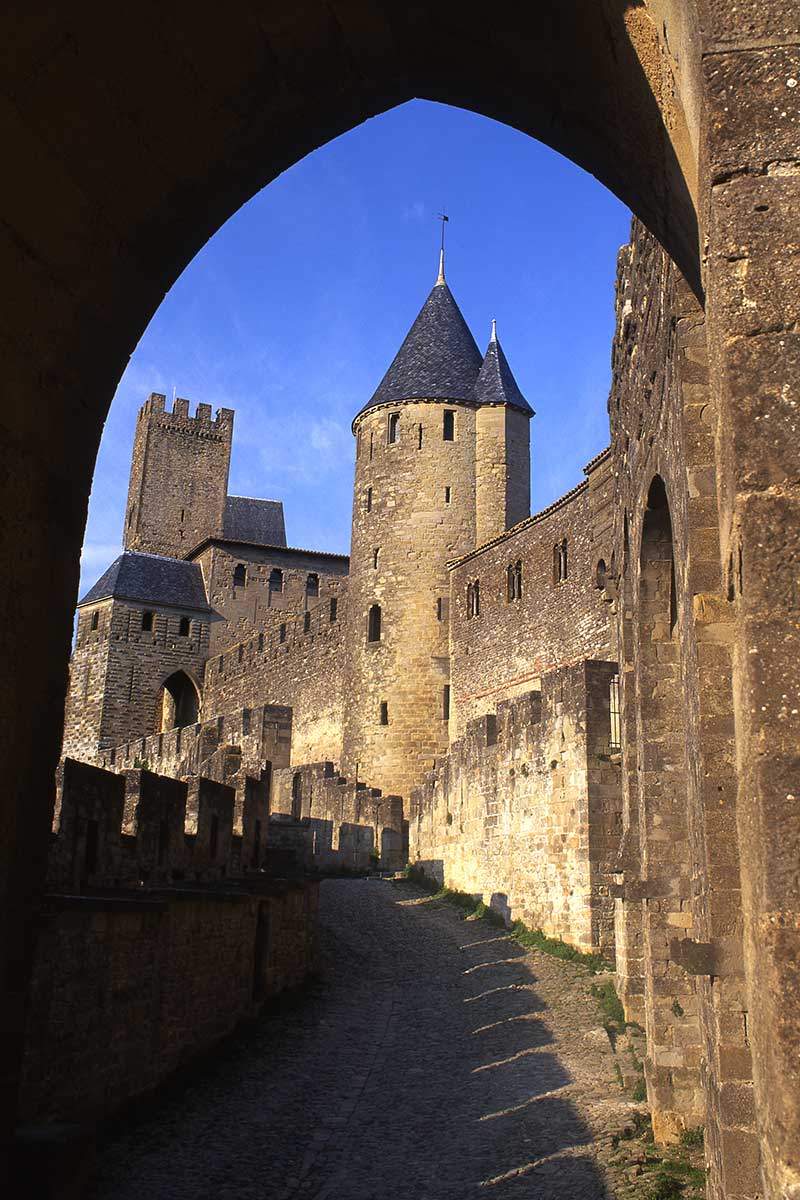
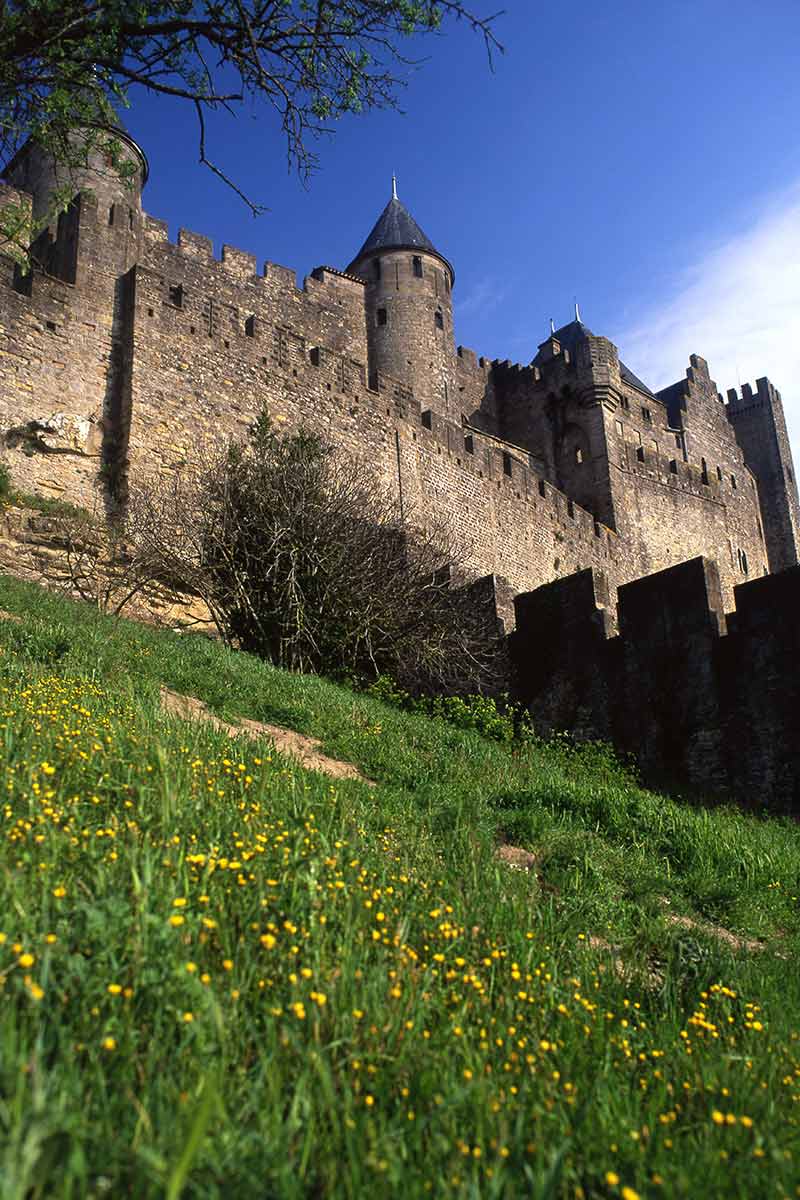
His restoration wasn’t exactly faithful to the original. The turrets would have had terracotta roof tiles, but Viollet-le-Duc’s have slate roofs, which you are far more likely to find in Normandy and Brittany.
The Cité is vast, with two outer series of walls and an incredible 52 towers and turrets in the complete circuit. You can enter the Cité and walk around most of it for free. Only two parts of it require a ticket – the Chateau Comtal and the Ramparts Walk.
Chateau Comtal
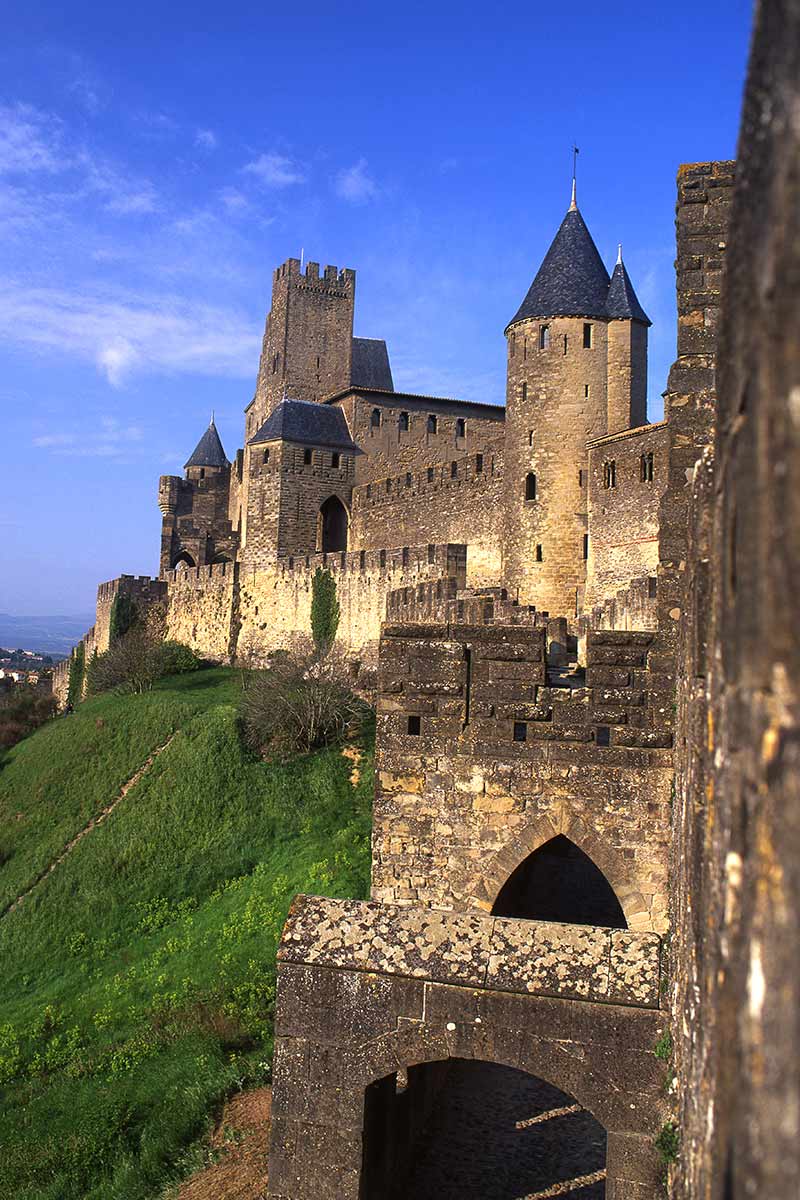
The Chateau Comtal – Viscounts’ Castle – is on the western side of the Cité, just up the hill from the Porte d’Aude.
This castle within a castle was exceedingly well-protected – an attacking force would have to pass through the outer set of walls, only to be confronted with this moated castle.
After the Kingdom of France, the royal-appointed seneschal (governor)took up residence there, and it was fortified to protect the ruler in the event of any protests or attacks by enemies.
Entry to the Chateau Comtal is ticketed – and you can book your combined Castle and Ramparts ticket here.
Walk The Ramparts of Carcassonne
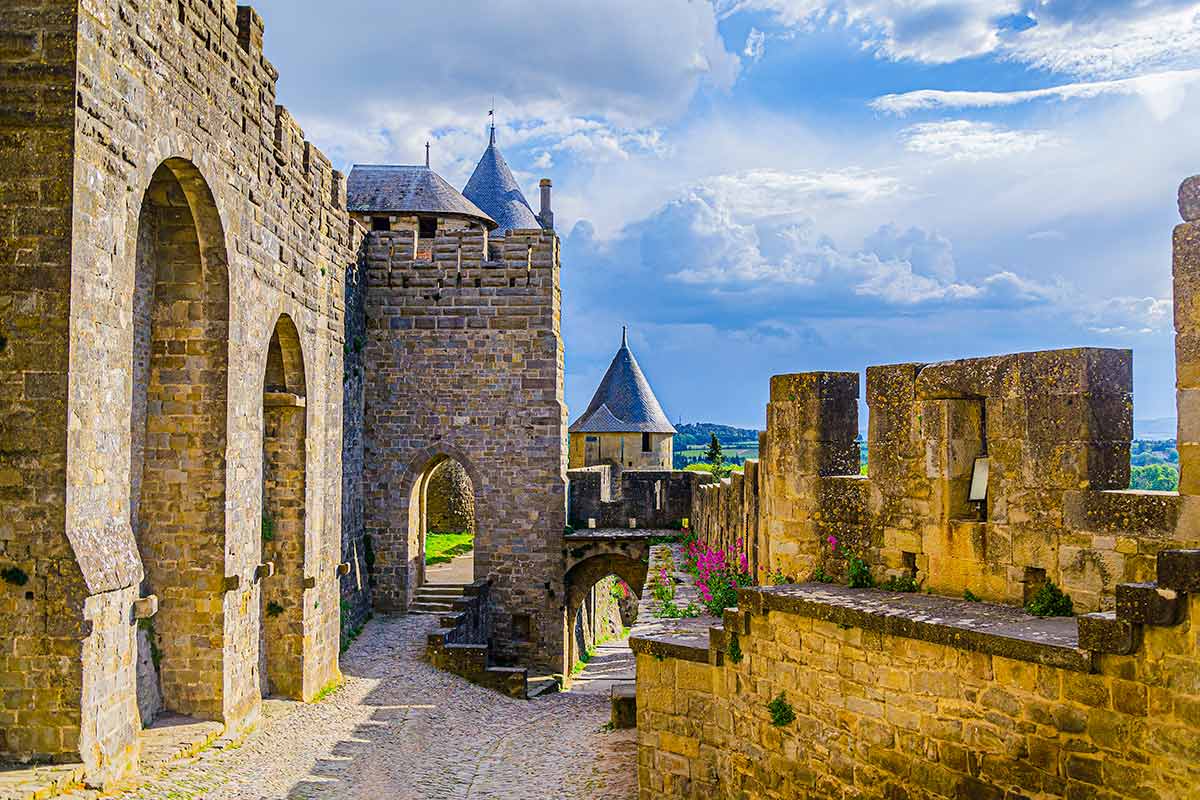
The circuit of restored medieval ramparts around the Cité is one of the essential things to do in Carcassonne. It’s included in the joint ticket with the Castle (see above), and the walk takes you around the outer walls of the Cité.
The main reasons to explore the ramparts are the incredible views. You have a bird’s-eye view of the other towers and interior of the Cité, the remains of the Gallo-Roman walls outside the ramparts, and the modern city of Carcassonne below. On a clear day you get superb views of the vineyards in the surrounding countryside, and in good conditions the distant peaks of the Pyrenees to the south.
Porte Narbonnaise
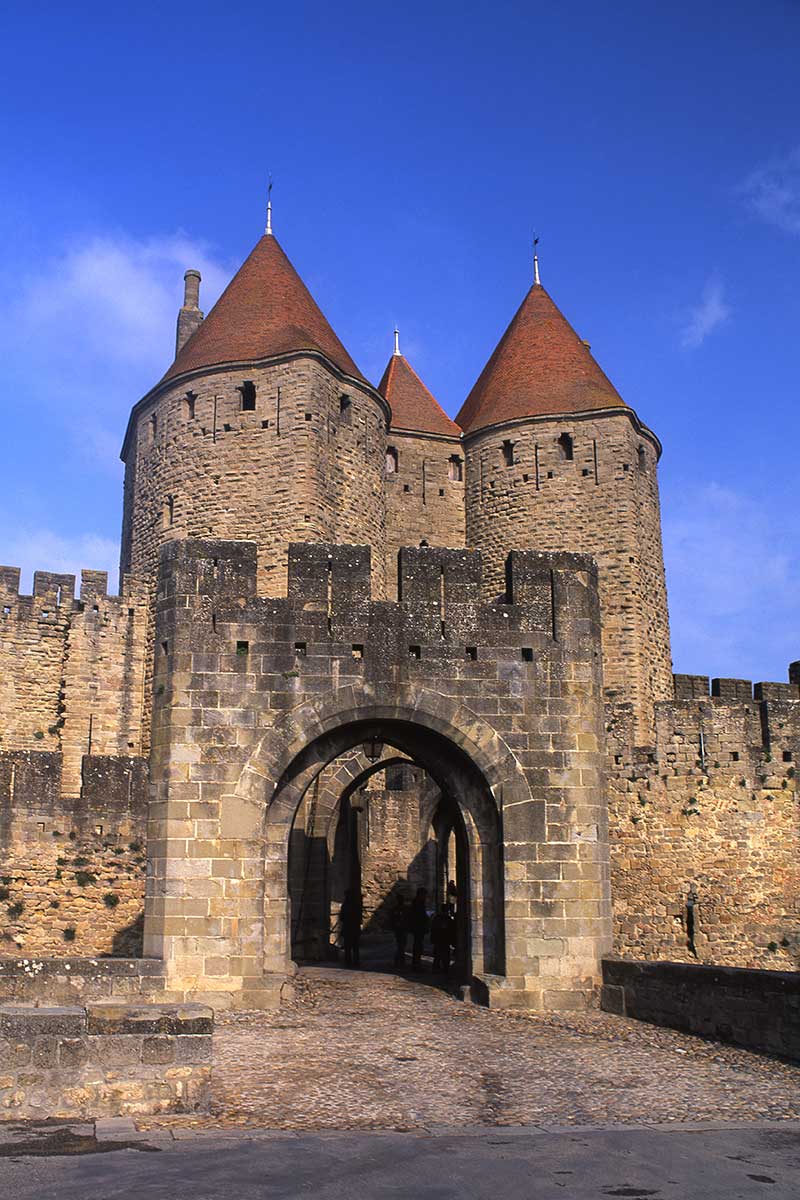
The Narbonne Gate on the eastern side of the Cité was the main entrance to the citadel of Carcassonne.
It’s the more imposing gateway of the two (the other is the Porte d’Aude, see below), with an arched entrance, a footbridge and another archway below stout twin towers.
It was one of the first parts of the Cité to be restored under Viollet-le-Duc after he took over the project in the 1850s.
Porte d’Aude
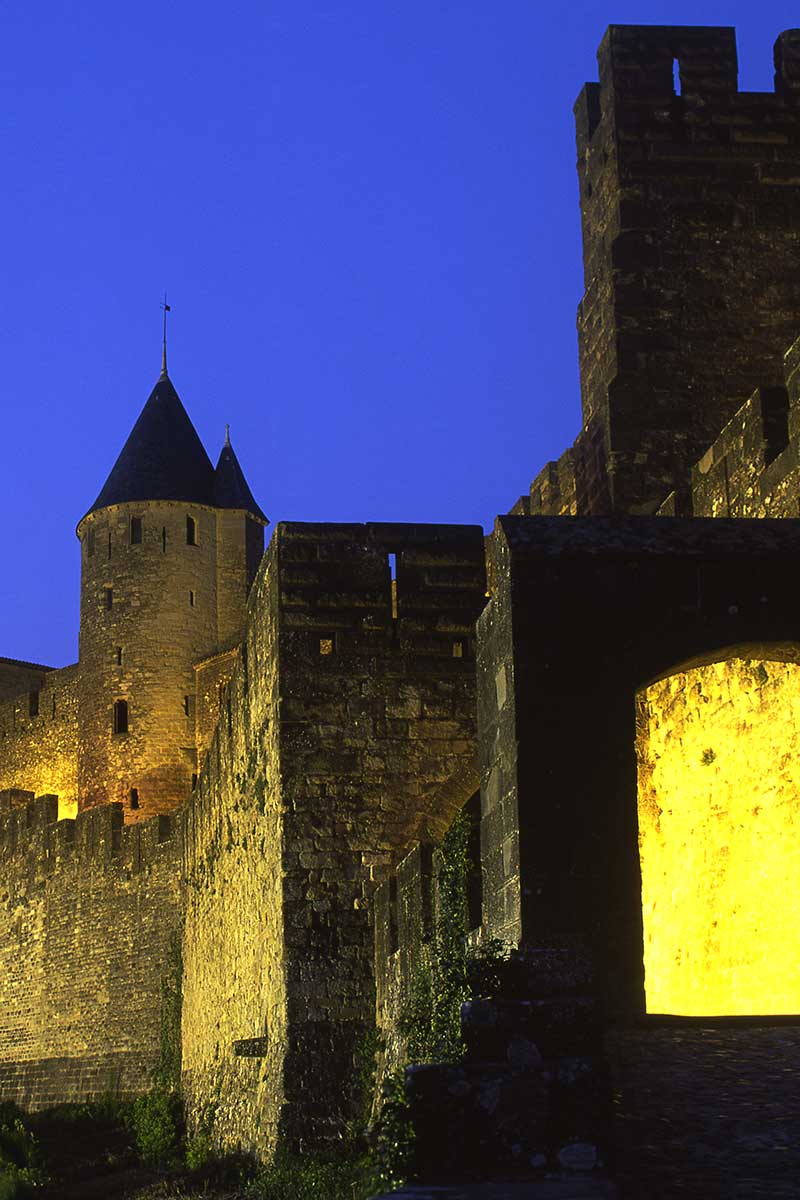
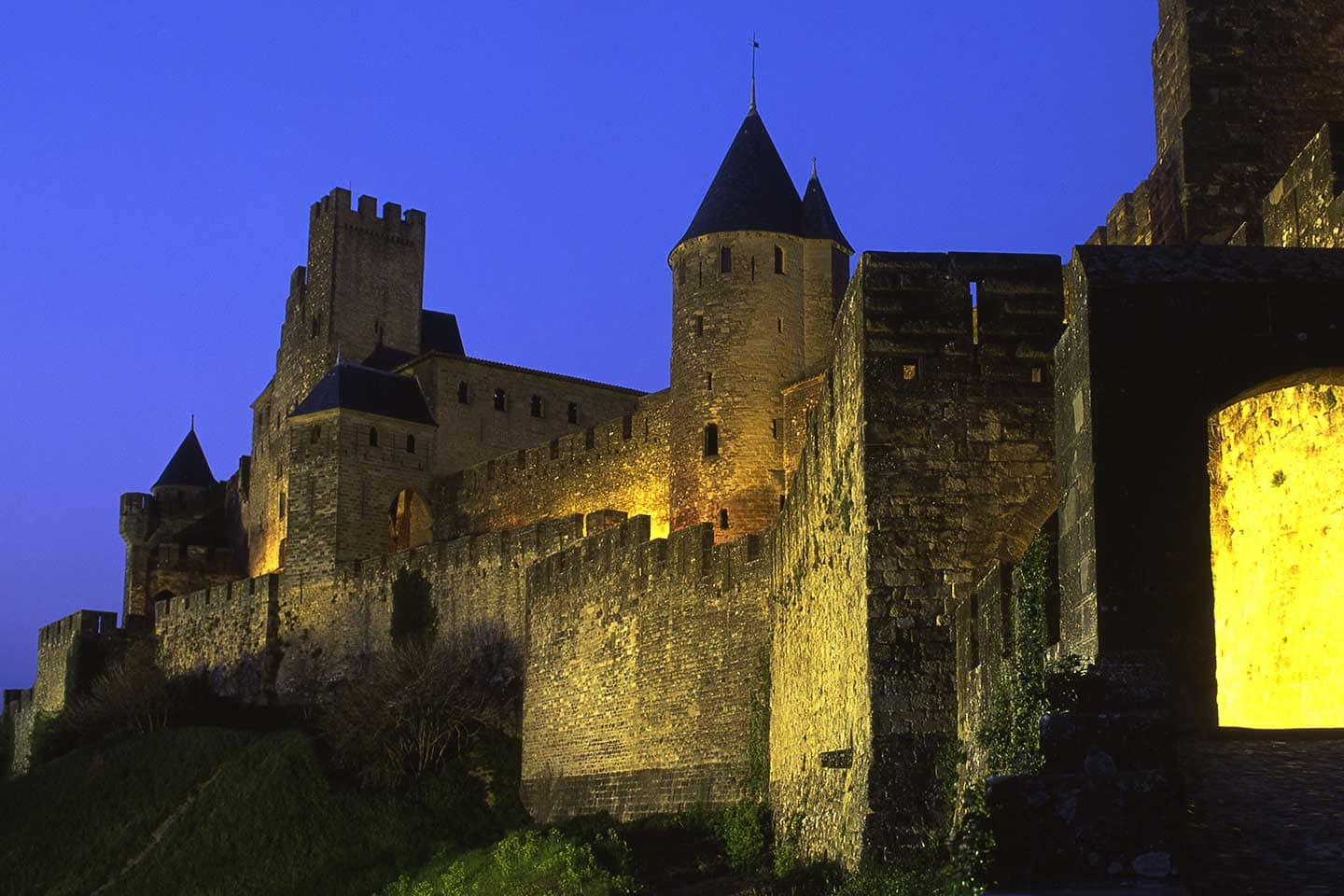
The Porte d’Aude (pictured) is the gateway on the west side of the Cité. It’s named after the Aude river a short distance downhill from the Cité. I think that it’s the more atmospheric entrance of the two. After entering the Cité, you follow a narrow cobbled street a short distance up the hill to the Chateau Comtal.
If you’re planning to photograph Carcassonne, I suggest that the Cité looks better from the west – i.e. the Porte d’Aude side – and most of the images that I shot for this article are from this side.
Pont Vieux
There is another great view of the Cité of Carcassonne close to – and including – the Pont Vieux (Old Bridge) over the River Aude. It’s the most scenic and enjoyable crossing of the river and route up to the Cité.
The present stone bridge dates back to the 14th century, though two of its arches had to be replaced around a hundred years later.
There is also a great view of the Cité from the nearest bridge, the taller Pont Neuf (‘new bridge’. From there the arches of the Pont Vieux fit nicely into frame with the Cité, on the hill above.
Visit Saint-Nazaire Basilica
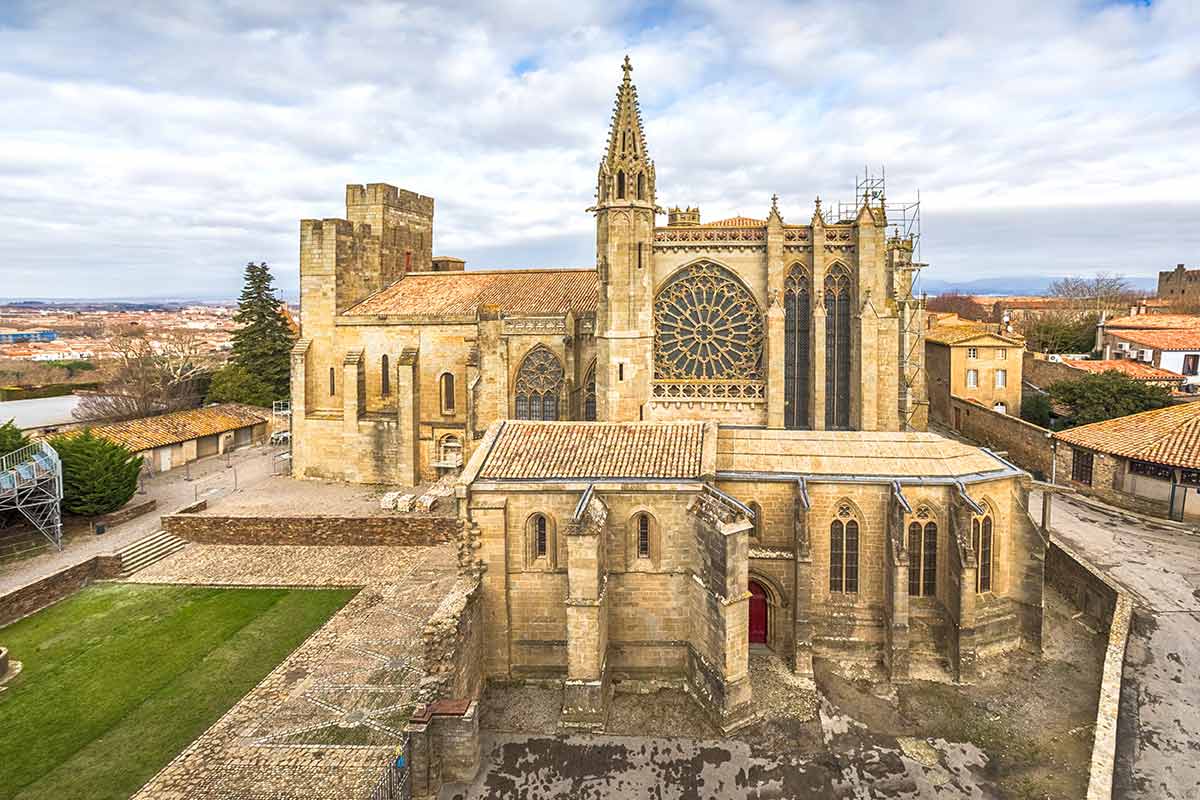
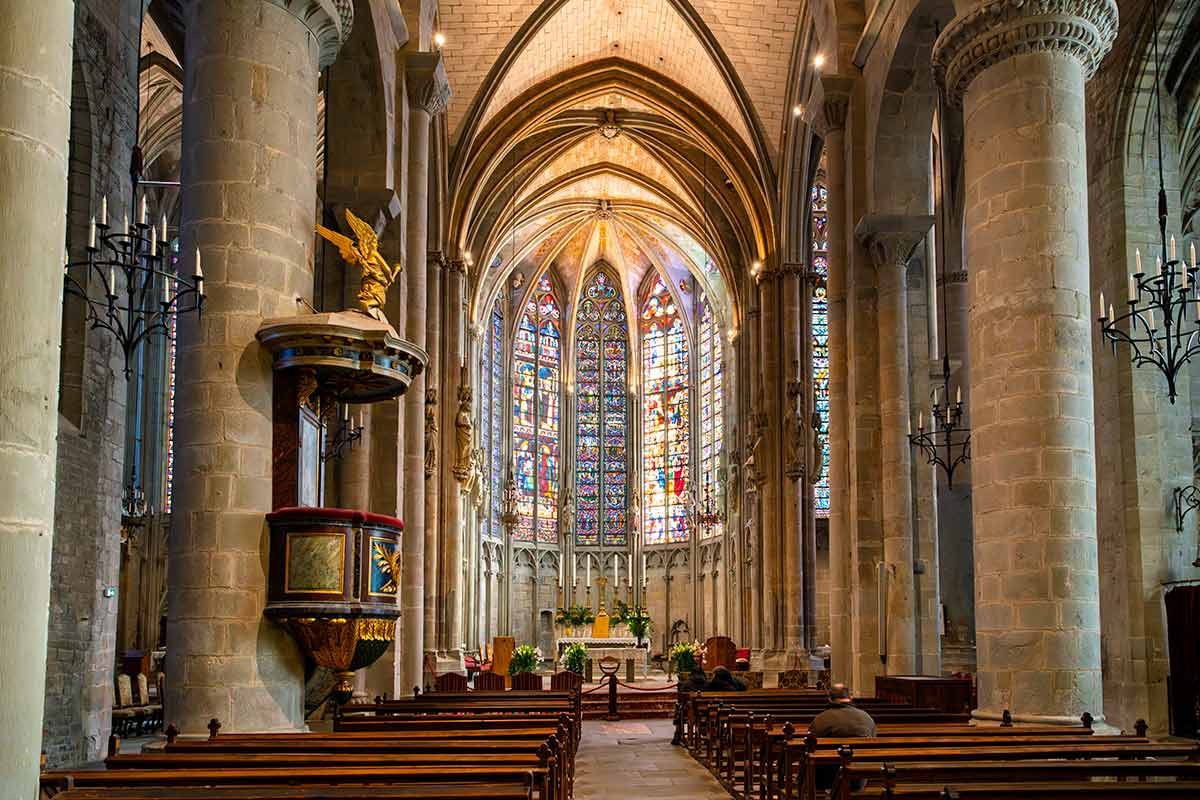
The Basilica of St Nazarius and St Celsus was founded when the Visigoths ruled the region in the 7th century AD. However, what you see today is from the 12th to 14th century, with a Romanesque (sometimes referred to as Norman) nave and Gothic chancel (altar area) and transepts.
It remained the Cathedral of Carcassonne until 1803, when the seat of the local bishop was moved to the Church of St Michel, which is in the modern Ville Basse. The Basilica is the more impressive of the two, and one of the stained-glass windows in the choir dates from the late 13th century.
During the Middle Ages Carcassonne was effectively the capital of the Cathars, a Christian movement that believed in the idea of the existence of both a ‘good God and an ‘evil’ one, Satan. The Roman Catholic Church viewed them as heretics, and persecuted them in the 13th century through the Albigensian Crusade. This explains the fortified appearance of the church, particularly the west front, which resembles a castle rather than a church.
Meet Carcas – The Legendary Founder of Carcassonne
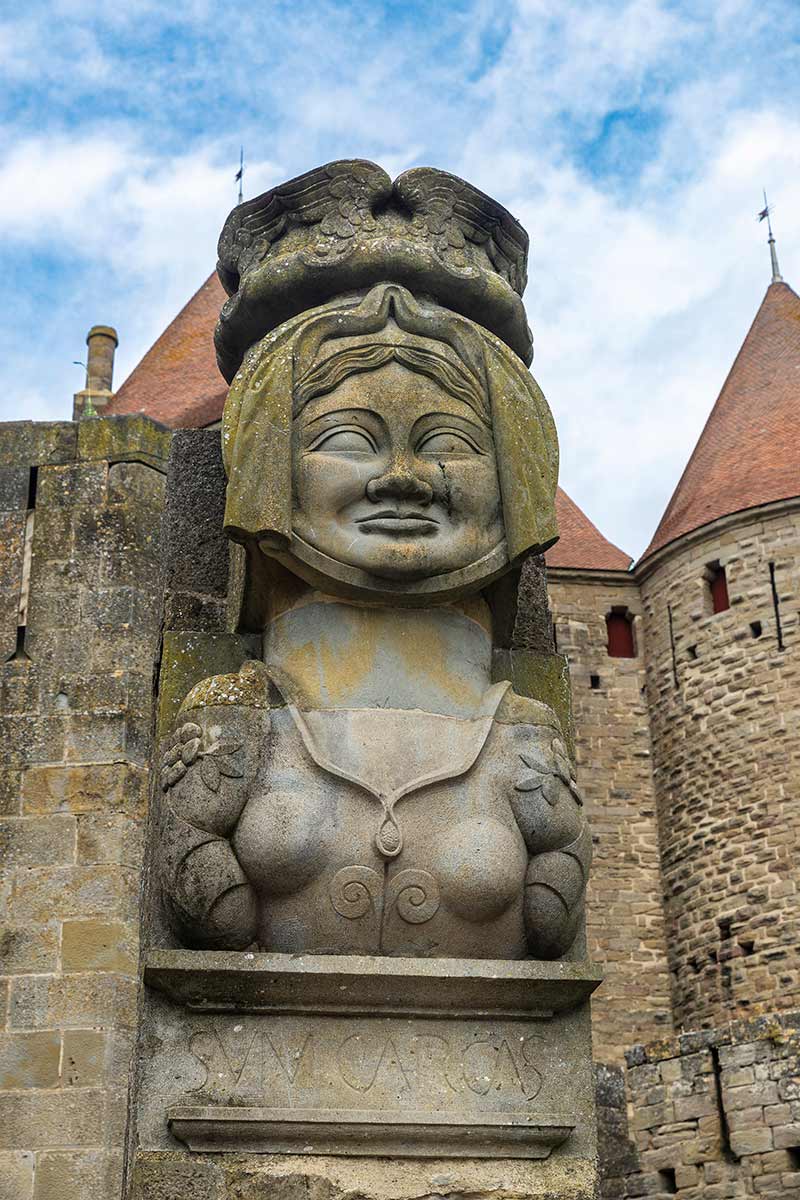
Carcas, a Saracen princess and ruler, is the legendary figure after whom the city is named, and you can see a bust of her near the Porte Narbonnaise, on the east side of the Cité.
According to the folk tale, she ruled the castle which was besieged by the forces of Holy Roman Emperor Charlemagne for five years. Following the pattern of similar stories, a pig was fattened up and then thrown from the ramparts, convincing Charlemagne’s army that the fortress was still well-supplied and that it was pointless continuing the siege.
One detail of history which rather undermines the tale is that Charlemagne never besieged Carcassonne – as it was captured by his father Pepin in 759 AD.
Nonetheless, it is said that when the forces retreated, Carcas ordered that all the bells of the city be rung. The French word for ‘to ring’ is sonner, so it’s said that someone from Charlemagne’s army exclaimed,”Carcas sonne’ – meaning that Carcas is ringing.
And this is how the city supposedly got its name.
Enjoy The View of Carcassonne From Afar
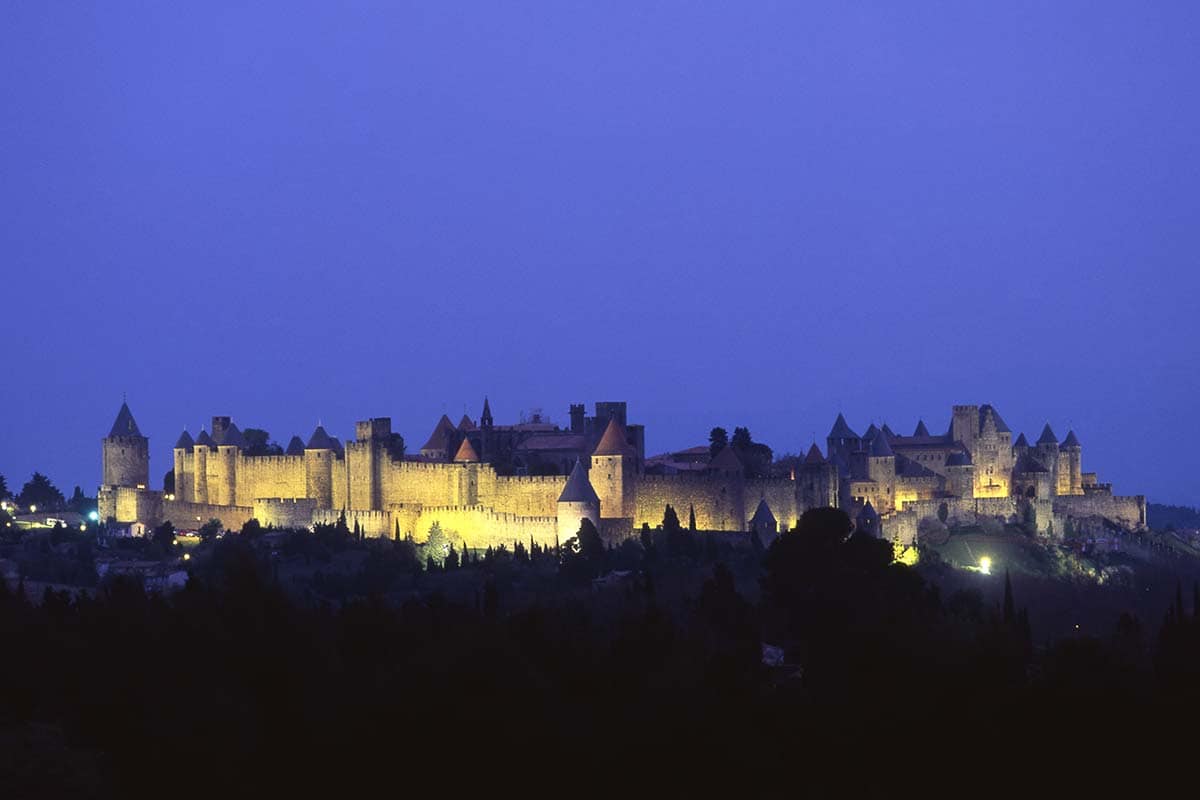
The Cité of Carcassonne is a magnificent sight from the river, the Ville Basse and up close, but the most evocative and dramatic views of it are a little further away.
I was on a South of France road trip with an old friend on my most recent visit, and one evening we decided to seek out a vantage point outside the city, somewhere we could see the Cité in its entirety.
We found a few viewpoints to the southeast of tbe Cité, simply by following the D6161 ring road around d the city. We found the location for the shot above along this road, with a vineyard in the foreground. We would have returned the next morning but a pea-soup fog meant we could barely see the vines in front of us, never mind the Cité!
Explore the World Heritage Canal du Midi
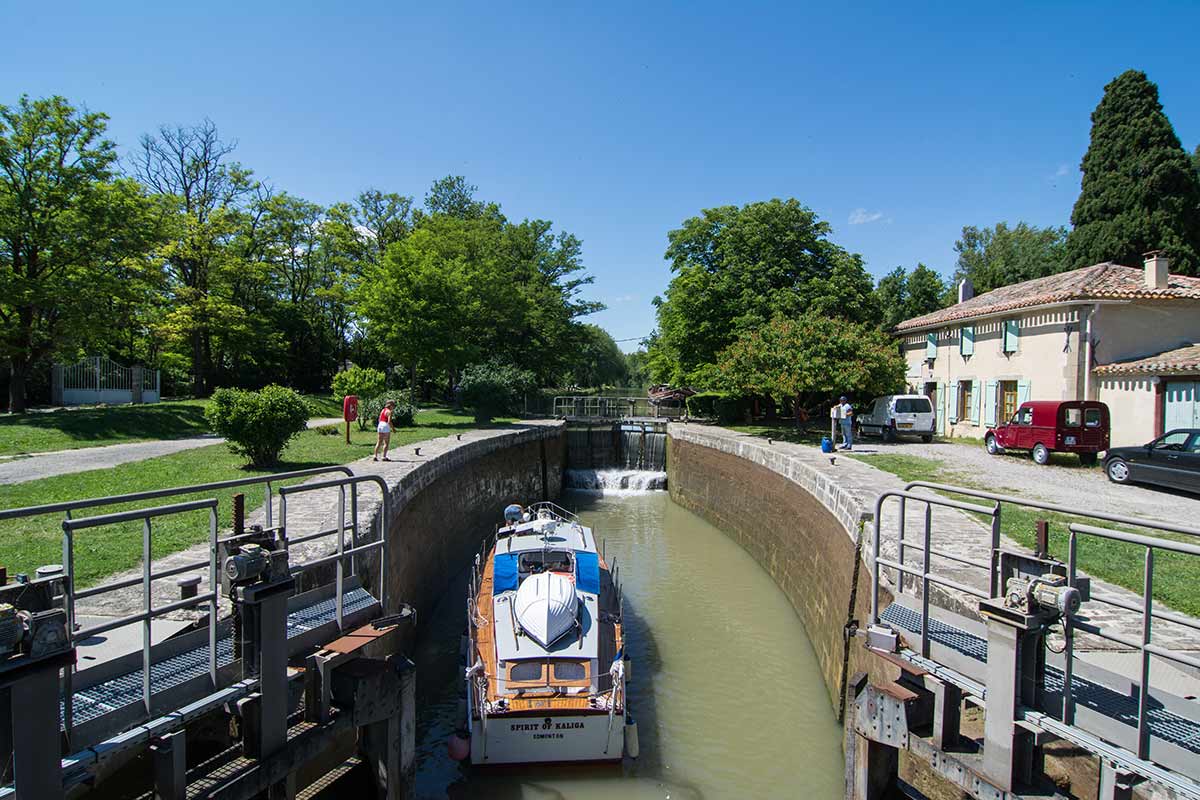
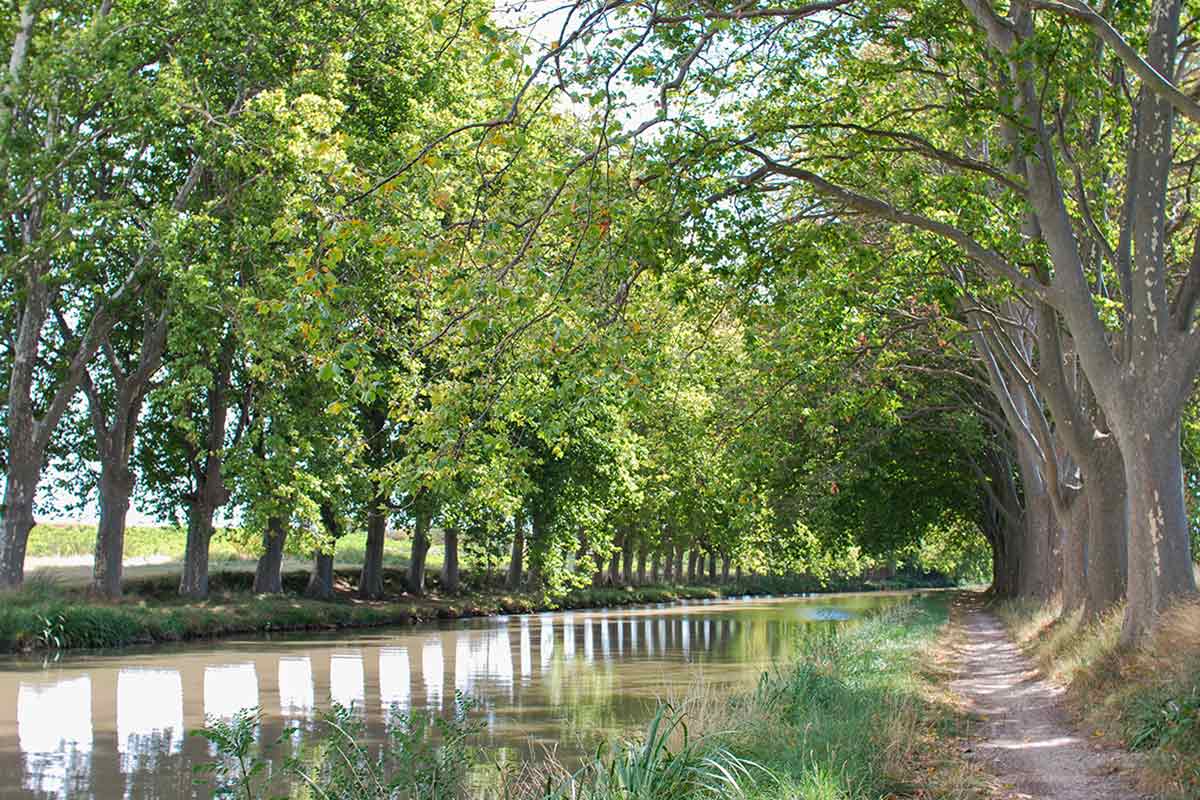
The Canal du Midi links Toulouse with the Mediterranean Sea, and the Canal in turn links with the Canal de Garonne, creating a waterway that runs directly from the Mediterranean to the Atlantic Ocean.
At the time it was built, it was intended as a trade route, a purpose it served for centuries. However, its main business is now tourism, and cruises, cycling and walking along the Canal are very popular.
The Canal du Midi passes close to the centre of modern Carcassonne, a short distance to the north of the Bastide Saint-Louis and flowing right past the gare SNCF (railway station).
Boat cruises along the Canal du Midi depart from the quay outside the front of the station, taking between 1 ¾ and 2 ½ hours, costing up to €14 per adult.
Where Is Carcassonne
Carcassonne is the capital of the département of Aude, in the southwestern French region of Occitanie. It’s around 60 km (40 miles) north of the eastern Pyrenees mountains.
Here are some sample distances to Carcassonne from nearby major cities and places of interest:
Toulouse to Carcassonne – 95 km (59 miles)
Albi to Carcassonne – 107 km (66 miles) via Castres
Perpignan to Carcassonne – 117 km (72 miles)
Biarritz to Carcassonne – 377 km (234 miles)
Montpellier to Carcassonne – 152 km (94 miles)
Barcelona to Carcassonne – 302 km (188 miles)
How To Get To Carcassonne
Carcassonne is easy to reach, and this is largely because it’s an important Ryanair hub. The budget carrier flies there year-round from London Stansted, Manchester and Charleroi (near Brussels). Additional flights from the UK, Ireland, Portugal, Sardinia and Tangier arrive there in the summer months.
Carcassonne is also well-connected by rail, with both regular and TGV services taking you to the city.
If travelling by road, Carcassonne is on the A61 autoroute (motorway or highway) between Toulouse and the Mediterranean coast, where it links up with the A9.
Places To Visit Near Carcassonne
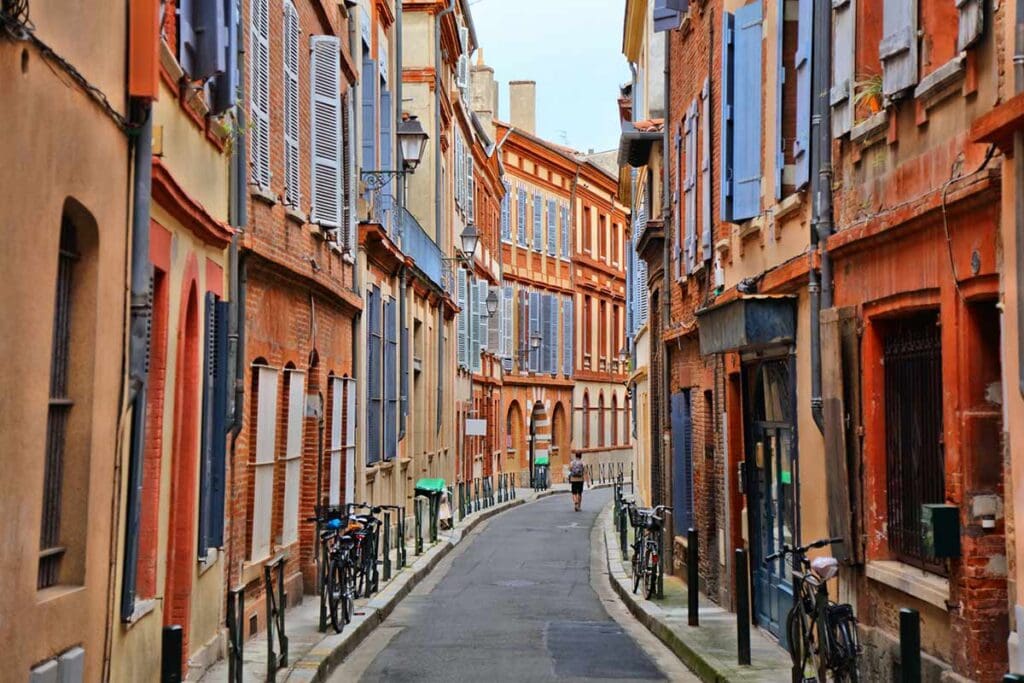
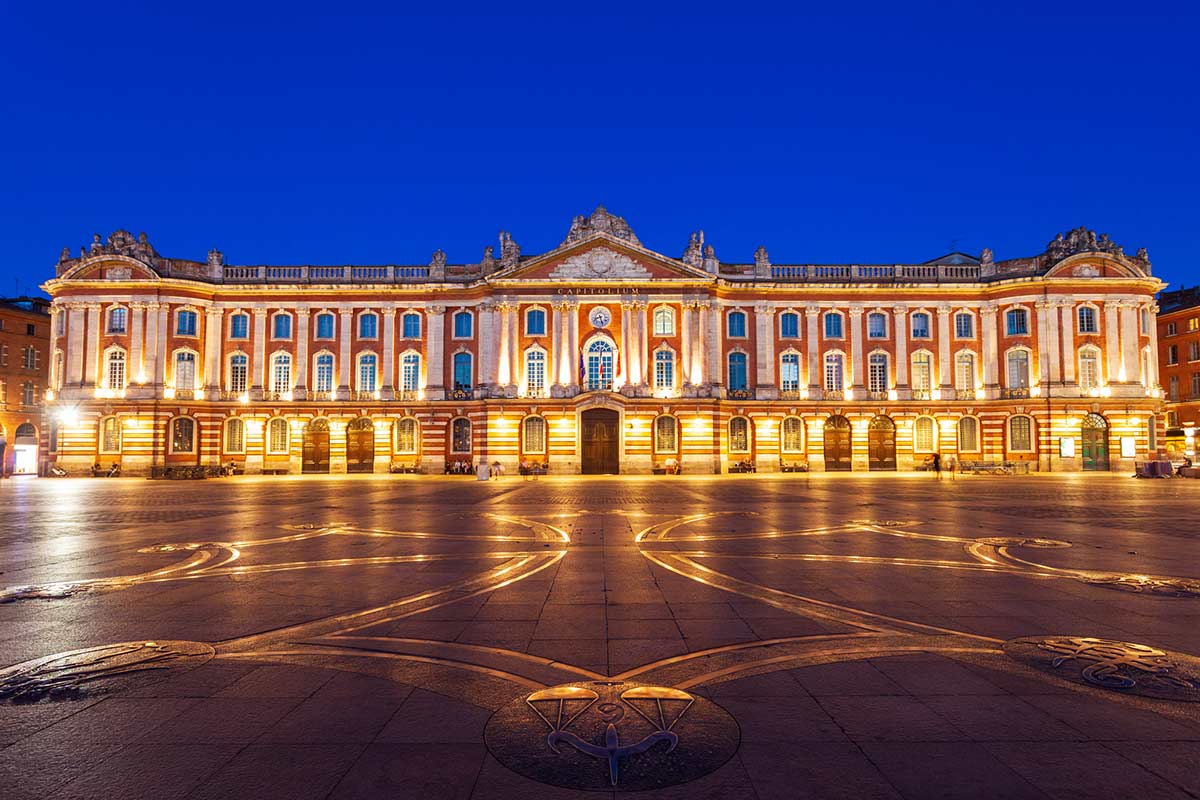
Carcassonne is close to many fascinating places to visit. Its location means that the Mediterranean coast, the Pyrenees, Albi and Toulouse are all within reach if you’re planning day trips from Carcassonne.
The closest attractions of note are the Cathar Castles, a series of remote castles in the foothills of the Pyrenees. Four of them – the Chateaux des Lastours – are a short drive north of Carcassonne, and it’s a two-hour-hike to visit all four castles.
The larger, better-known Cathar Castles are to the south of Carcassonne. They are all located at the summits of remote rocky mountains, in locations that were difficult to access and attack – an excellent choice at the time. They include the fortresses at Montsegur, Queribus and the only one I’ve visited, Peyrepertuse. The only way to reach them is by car or this tour from Carcassonne.

The nearest major city to Carcassonne is Toulouse, an hour’s train ride or drive northwest. La Ville Rose – the Pink City – has always been rather underrated, but it’s one of the most picturesque large cities in France, with many of its main buildings constructed from the local pinkish stone.
Of these the Basilica of Saint-Sernin is the most prominent, a simple, austere Romanesque church with a magnificent wedding-cake-like central tower. It’s one of the greatest churches in southern France, and listed by UNESCO as part of the Routes of Santiago de Compostela in France World Heritage Site.
Toulouse is also the European leader in aircraft manufacture (it’s the headquarters of Airbus) and European space exploration. The Envol des Pionniers Museum looks at the first attempts to build aeroplanes in France, and the Cite de l’Espace is a superb science museum. Next door to the Envol des Pionniers Museum, the Halle des Machine is a spectacular, partly steampunk-inspired exhibition with two extraordinary mechanical creatures – one a Minotaur, the other a giant spider.
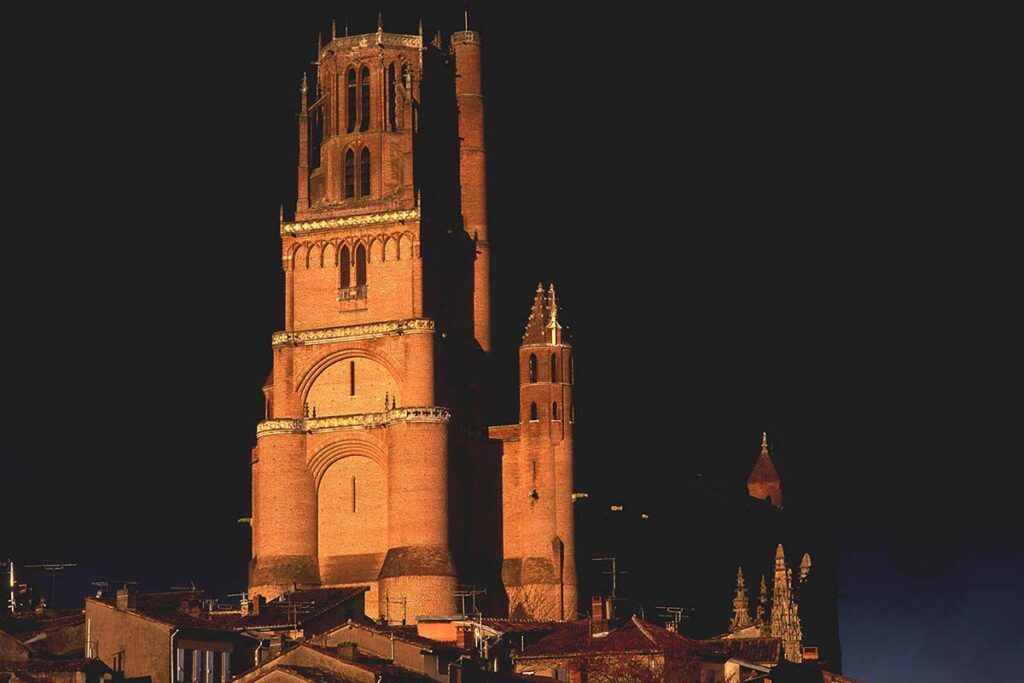

Two hours north of Carcassonne, or an hour from Toulouse, the much smaller city of Albi is one of the most captivating in France. Mirroring the fortified churches of Carcassonne, the Cathedrale Ste Cecile looks more like an impregnable castle than a church. It’s built from red brick – as is much of the city – and it’s a forbidding sight, with narrow slits for windows. So it’s a great surprise to enter and discover a relative riot of colour with and blue and golden ceiling vault and artworks galore.
Next door to the Cathedral, in the Palais de la Berbie, the former Archbishop’s Palace,
Things to Do In Carcassonne – Final Thoughts
I hope that you’ve enjoyed this article, and that you manage to include Carcassonne in your France itinerary. A full day is enough to see everything, but it’s worth considering staying longer should you wish to explore the region in more depth.
I’ve written many other articles on France, and here are a few for you to browse:
Southern France
South of France Road Trip– a 10-day itinerary across Provence and Occitanie
Things To Do In Albi – stunning red-brick World Heritage city with outstanding Toulouse-Lautrec Museum
One Day In Arles – Roman monuments aplenty, anda chance to follow in the footsteps of Vincent van Gogh
One Day In Avignon – 24 hours by the Rhone in the City of Popes
Best Day Trips From Avignon – 14 fantastic day trips from the City of Popes
Paris Articles
Best Eiffel Tower Views – 28 best places to see the Eiffel Tower in Paris
Arc de Triomphe Paris – all you need to know before visiting this great Paris landmark
Things To Do In Montmartre – the hilltop village that inspired so many artists in the 19th and 20th centuries
Sunset in Paris – the 15 best places to see one
Things To Do In The Latin Quarter Paris – exploring the historic Left Bank
Visiting Place de la Concorde Paris – one of the most iconic squares in Paris
Pont Alexandre III Paris – stunning Belle Epoque Parisian bridge
Famous Churches In Paris – 22 stunning Parisian churches to seek out
Icons of Paris – from the Mona Lisa to the Moulin Rouge, the Arc de Triomphe to Art Nouveau Metro signs, and many more
La Sainte Chapelle Paris – one of the most beautiful Gothic churches ever built
General France Articles
Famous Landmarks In France – 32 of the top sights to tick off your France bucket list
14 Most Amazing Bridges in France – from the Millau Viaduct to the Pont Neuf, and many more