

Welcome to Burano, a picturesque island village in the north of the Venetian lagoon that is unlike anywhere you’ve ever seen. With its gravity-defying wonky bell tower and the most colourful streets you’ll ever lay your eyes on, Burano is truly a feast for the senses.
In this guide, I’ll take you on a tour of the best things to do in Burano. So, whether you’re a first-time visitor or a seasoned traveler, buckle up and let’s go explore the wonders of enchanting Burano!
A visit to Burano island is one of the best day trips from Venice. It is one of the most memorable Venice islands because of its brightly coloured houses. Many say that the star Venice attraction is the city itself rather than any of the main sights, and the same could be said about Burano.
There are plenty of things to do in Burano and the surrounding islands, but seeing the vivid colourful Burano houses is the best.
The boat to Burano only takes half an hour from the city, and it’s a world away from Venice. Burano is an island in the north of the Venetian lagoon, a familiar Venice landmark identifiable from miles away by its leaning tower.
It started out as a fishing village, with some women making intricate Burano lace to supplement their husbands’ incomes. It’s one of the most beautiful villages in Europe, the houses are wonderful, but what to do in Burano besides?
Staying in Burano
Burano makes a great base, especially as it’s halfway between Venice and Punta Sabbioni, giving you access to both the city and the nearby beaches. Here are some of the best places to stay in Burano:
B&B Carmen Garden – exceptional-rated B&B in traditional house on the island, a few minutes from the boat jetty
Casa Burano – accommodation in rooms in various houses across the village of Burano
Venissa Wine Resort – excellent choice on the neighbouring island of Mazzorbo, surrounded by vineyard and orchards, connected to Burano by a footbridge
Burano and Murano Tours

Burano should not be confused with Murano. Despite their similar sounding names, they are very different places. Murano is much closer to the city of Venice than Burano, and is a much bigger island. It’s where Venice’s glass industry is concentrated.The city’s glass workshops were moved there en masse in 1291 because they posed such a fire risk to Venice.
Several tours are available combining Murano and Burano, which are about 15 minutes apart by boat. Here are the best options:
Murano, Burano and Torcello tour – my recommendation – includes a glass-blowing demonstration in Murano, almost an hour too walk around Burano, and the same on the remote island of Torcello with its superb Cathedral
Murano Glass and Burano Colours Tour – as per the first option, without the short hop to Torcello, leaving more time on each of the two islands
Murano, Burano, Sant’Erasmo and Lagoon Islands Tour – I also strongly recommend this tour, as it takes you to two well off the beaten track lagoon islands (Sant’Erasmo and San Francesco del Deserto), showing you a rarely-see side of the city
Things To Do In Burano On A Day Trip

Most people tend to visit Burano on a day trip from Venice. If you’re only spending two days in Venice, I’d suggest sticking to the city itself. If it’s your first visit, you’ll be missing a lot of Venice in order to getting to Burano.
However, if you’re planning to spend 3 days in Venice, you’ll have plenty of time to make the day trip to Burano. Many make a full day of it, squeezing in some other islands around Venice as well.
One of the most popular Venice day trips is the Murano Burano Torcello run. This also includes the cathedral island of Torcello, which is close to Burano. If you’re travelling independently I’d suggest leaving Murano for another half day if you have the time available.
If you join a Murano and Burano tour you’ll be whisked around fairly quickly but get a good grasp of both places. As mentioned in the previous section, some tours cover Murano, Burano and Torcello.
If, on the other hand, you opt to travel by yourselves, seeing Burano and Torcello together is the easiest option.
The Best Things To Do In Burano
Wandering and Photographing the Colourful Houses


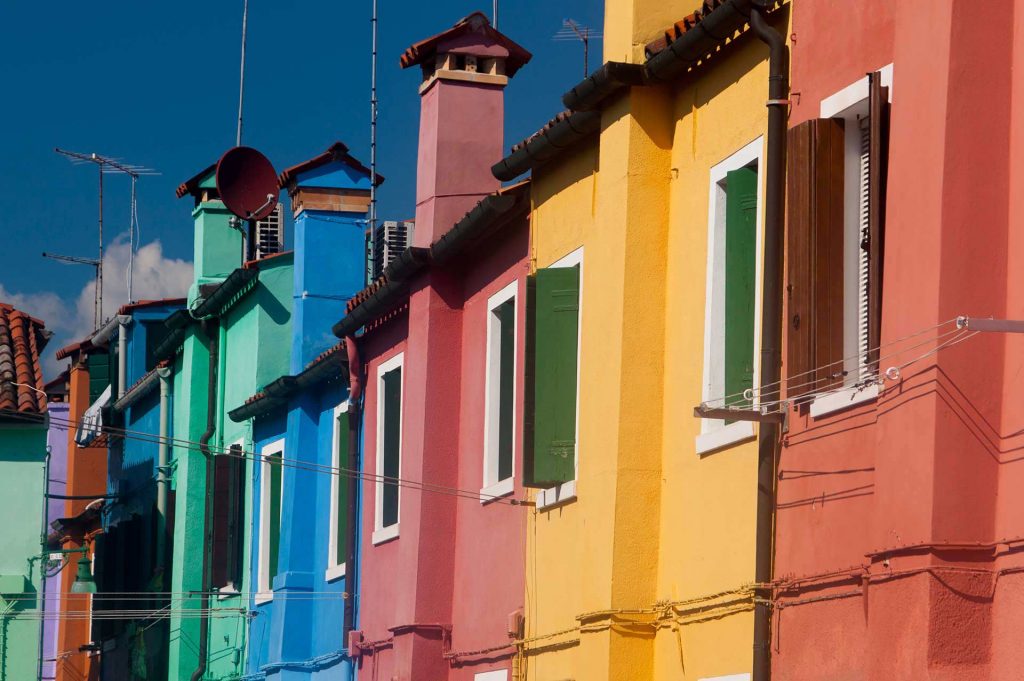
As you arrive on the island, the first thing that hits you is the sheer brightness of the myriad colours of Burano. It is absolutely ablaze with colour, every single one in the rainbow and most of the shades between.
The Burano houses are an incredible sight, and a dream for a photographer like me. The colours are an ongoing, endless, joyous serotonin hit right between the eyes. I love it, and every time I return to Venice I make sure I have time to visit Burano again.
Burano is very small, barely 500 metres across at its longest point. It doesn’t take long to walk around the island, but don’t rush.
Explore the many alleyways and courtyards. Wherever you look, you see rich, bright colour. Make sure your camera battery is fully charged, because you’ll need it. You’ll find that photographing Burano can take quite a while.
Sometimes it’s something simple like a white window surrounded by a vividly painted wall. It could be washing hanging from a line outside some brightly coloured houses. Or it could be the wonky bell tower of the local church between some houses.
Perhaps it could be intense bright colours reflected in the still waters of a canal. Take your time. The compositions will soon flow. If you prefer painting to photography, you’ll have just as much inspiration.
It’s an amazing place to photograph at any time of year. If you visit Burano and Venice in winter you might not get the flower baskets but you do get low light all day, as in the shot above.
If Venice is one of the most beautiful cities in the world, then its neighbour Burano is one of the most beautiful islands in Europe and one of the most picturesque places on the planet.
Casa Bepi

One of the best-known houses in Burano is Casa Bepi, after its former resident, Giuseppe Toselli.
He worked as the cinema operator in Burano, and after it closed down he sold candy from a stall on the island. He became known as Bepi Suà – Bepi Candy – as a result.
Bepi kept the cinema tradition alive by screening films onto a white sheet in front of his house.
When he wasn’t showing films he was busy painting it, constantly trying new patterns, shapes and ideas. The front of Casa Bepi has been left as it was when he died in 2002.
The house is on Calle del Pistor. Turn off the main street, Via Baldassare Galuppi, at Girani Caffe Venezia, and it’s on the left.
The Leaning Tower of Burano

Apart from the houses, the most prominent landmark in Burano is the leaning tower of the church of San Martino.
It’s an amusing sight, leaning several degrees out of the perpendicular. You can see its lean from miles away in the lagoon, from the moment you glimpse it.
The church dates from the 16th century, and the highlight inside is Giambattista Tiepolo’s painting of the Crucifixion.
You can also visit the Oratorio di San Barbara chapel next door to the church.
Baldassare Galuppi Statue

Burano’s most famous resident was the 18th century composer Baldassare Galuppi, and his statue is in the Piazza bearing his name.
Nicknamed Il Buranello, He was best known as a composer of comic operas, but also composed religious music.
He held prestigious positions as Maestro of the Doge’s Chapel in St Mark’s Basilica in Venice, and the court composer for Catherine the Great in St Petersburg, Russia.
The Love Viewing Bridge

One of the best views in Burano is from the Love Viewing Bridge at the confluence of two canals. There are actually two bridges, one over each canal.
The view down the canal, with the campanile of San Martino and the houses of Fondamenta della Peschiera, is incredible.
Burano Lace

Tourism aside, the two industries that have sustained Burano through the centuries are fishing and lace making. The lacemaking tradition originated in Cyprus, one of Venice’s dominions in the eastern Mediterranean.
It began in Burano in the late 15th or early 16th century, continuing until the 18th century. It then enjoyed a revival in the late 19th century. The lace was traditionally made with needles, but the process is notoriously laborious and slow.
The time involved in this made the end product very expensive. Very few people now make the lace the traditional way. Sadly, the fishing industry on Burano has also declined in recent times, with only around twenty fishermen left.
You can buy lace from Burano in several shops around the island. The Burano Lace Museum – the Museo del Merletto – occupies a medieval palazzo on Piazza Galuppi, and is well worth a visit. They have samples of lace made back in the 17th century – it’s a fascinating glimpse into the island’s past.
Burano Restaurants
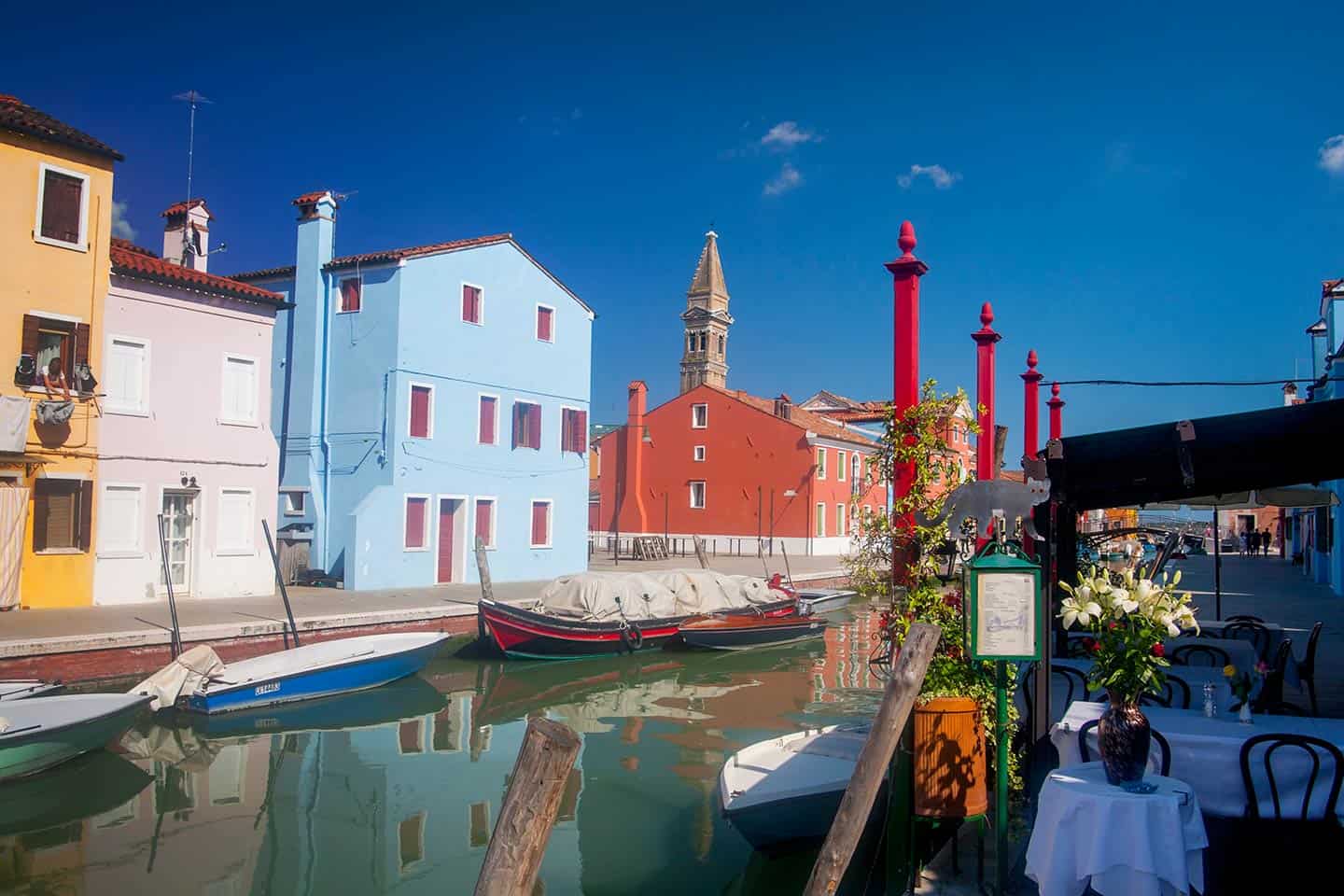
Burano is almost a different world compared to Venice. One of the differences is the prices of the restaurants in Burano which are significantly lower than those in Venice.
As Burano is still a fishing village, the journey from port to plate is a very short one indeed. So there’s a strong emphasis on seafood, which is as fresh as it gets.
The one place I can recommend is Trattoria Da Primo, which is on Via Galuppi. I enjoyed sarde in saor, a Venetian classic there, followed by a tremendous grigliata mista (seafood mixed grill).
I know several people who have dined at Trattoria da Romano, which is further down Via Galuppi, closer to the leaning tower.
One of their specialities is risotto di gò, a traditional Burano dish made with the lagoon bed-dwelling black goby fish. Everyone I know who has been there loved the restaurant, and we’ll be checking it out at some point.
Other Things To Do In Burano – A Quick Boat Trip To Torcello

Torcello Island is where the story of Venice began. This remote backwater was one of the first lagoon islands to be settled, first in 452 AD. In 638 the island became the seat of a bishop, which it remained for over a millennium.
Much of what was built on Torcello, a thriving small town with a few thousand inhabitants, was eventually dismantled and put to use in Venice. All that remains is the Cathedral of Santa Maria Assunta, the church of Santa Fosca, a palazzo and a restaurant, all close to a single canal.
It’s one of the oldest and most amazing churches in Venice. The apse mosaic in the Cathedral is breathtaking, and Santa Fosca next door is also well worth a visit. Also look out for the stone chair in the courtyard, which is popularly known as Attila’s Throne. Nobody believes that it actually was.
You can also climb the Cathedral tower for an intriguing view over the rest of the island and the lagoon. It’s only from there that you can see that most of the island has reverted to its natural state. It’s a low-lying, marshy bog, and this is how all of Venice once looked.
San Francesco del Deserto
San Francesco del Deserto is another of the lagoon islands to visit in Venice. It’s one of the islands in close proximity to Burano.
A Franciscan monastery was founded there in the 13th century, soon after St Francis visited the island. It was deserted (hence the name) for some years during the 15th century. The monastery was re-established in the 19th century.
This is Venice off the beaten path, with no vaporetti stopping there. In order to get there, you’ll either need to charter or join a private boat from Burano, or join a guided tour of Burano and the island.
Expect peace, tranquility and a way of life unchanged in centuries. It’s as far removed from the mass tourism in Venice as you could possibly get.
Best things to do in Burano Map
To make your visit to Burano easier I’ve created this map showing all the best things to see and do.
To use this map, simply use your fingers or mouse to zoom in and out, and click on the icons to see more information about each location.
How to Get to Burano


Tip: You can easily get to Burano yourself, using Venice’s waterbuses, or vaporetti. The #12 vaporetto regularly departs from Fondamente Nove, on the northern side of the city.
It’s usually referred to as F.te Nove on timetables. Depending on where you set out from, you can either walk through Cannaregio or Castello to the vaporetto stop.
Otherwise you can get a 4.1, 5.1 or 22 waterbus there. The vaporetto to Burano currently leaves from Fte Nove Terminal D.
Where To Stay in Venice


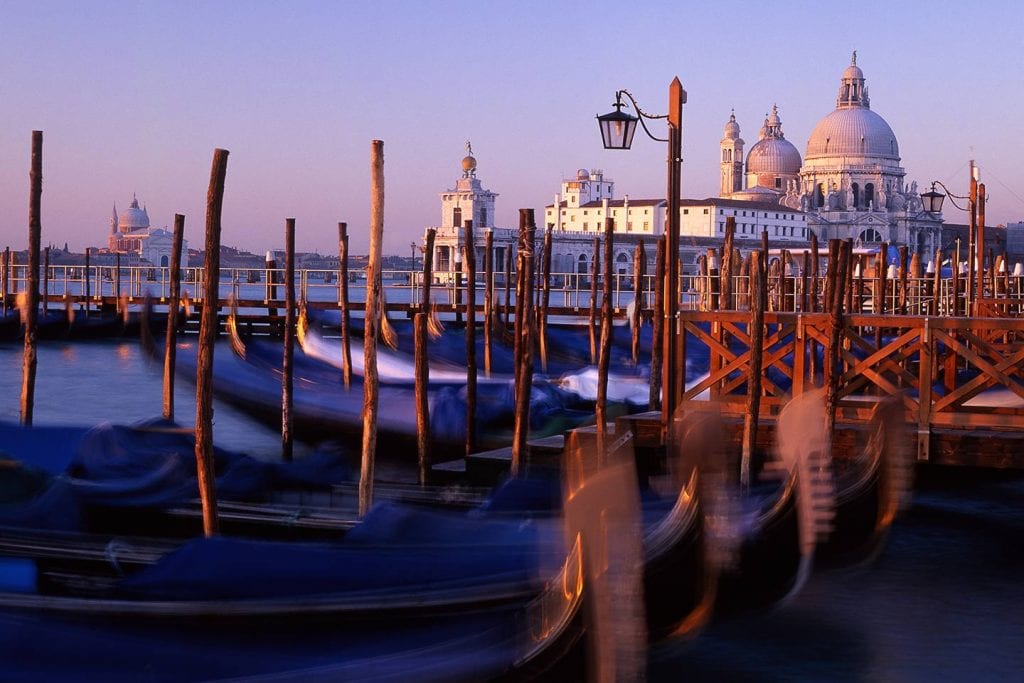
We’ve written extensively about choosing the best area to stay in Venice elsewhere on our site. If you’re planning a day trip to Burano, it shouldn’t really matter where you stay in Venice.
The likelihood is that you’ll have a bit of a journey to Fondamente Nove to catch the Burano vaporetto. You’ll either need to walk it or catch a connecting vaporetto there. This should be easy enough, with connections from San Marco and the Ferrovia (railway station).
Hotels Near San Marco
Hotel Al Codega – elegant 4-star near Rialto
Hotel Palazzo Priuli – gorgeous 14th-century Venetian Gothic palace a 5-minute walk from San Marco
Hotel Bel Sito e Berlino – superb 3-star on one of the most beautiful squares in Venice, opposite one of the city’s outstanding churches
Hotels Near Venice Train Station
Hotel Gardena – 3-star just across the Grand Canal from the station in Santa Croce
Hotel Guerrini – highly-rated 2-star a 5-minute walk from Santa Lucia train station
Things To Do In Burano – Final Thoughts
I hope that you’ve enjoyed this article and that all the colour in these photographs entices you to Burano one day.
I’ve visited Burano several times, and Venice many more. I’ve photographed and written about it extensively over more than 25 years. Here are more of my articles on Venice for you to browse:
- Is Venice worth visiting?
- Sunrise In Venice – best places to watch the sunrise in Venice
- Sunset In Venice – the 10 best places to see it
- Grand Canal Venice – Visual Guide To The Most Beautiful Street In The World
- 14 Most Beautiful Churches in Venice
- 34 Wonderful Venice Landmarks – the unmissable sights of La Serenissima
- Bridges In Venice – from the Bridge of Sighs to lesser-known sights including the Bridge of Fists and the Bridge of Tits
- Venice Off The Beaten Path – 18 Hidden Gems In Venice
- 12 Most Beautiful Venice Squares – San Marco, Campo San Zanipolo and more
- 16 Best Day Trips From Venice – Burano, Verona, Padua and More
Areas of Venice
- Cannaregio Venice – complete guide to the largest sestiere (district) in Venice
- Things To do In Torcello Venice – the remote island where Venice began in the 8th century
Venice Itineraries
- Day Trip To Venice Itinerary – how to spend one day in Venice – and avoid the crowds
- Weekend In Venice – how to spend the perfect two days in Venice
- 3 day Venice Itinerary – how to spend a magical 3 days in Venice