

Everyone knows the Leaning Tower of Pisa, but there are many other leaning towers in Europe also worth a visit. And there are quite a few crooked churches too.
They range from a church spire which has become warped by the expansion and contraction of its tiles on one side, to a Czech Baroque church that has gone wonky because of mine shafts dug close by. There are also leaning towers from the Adriatic coast to the Atlantic, and from fortified towers in Bologna to a leaning tower in the largest Castle in Wales.
The leaning towers and churches in this article weren’t built to tilt, so I’ve excluded modern office towers (such as those in Madrid and Pankrac in Prague) with intentional leans. I hope you find this virtual journey enjoyable.
Leaning Tower of Pisa
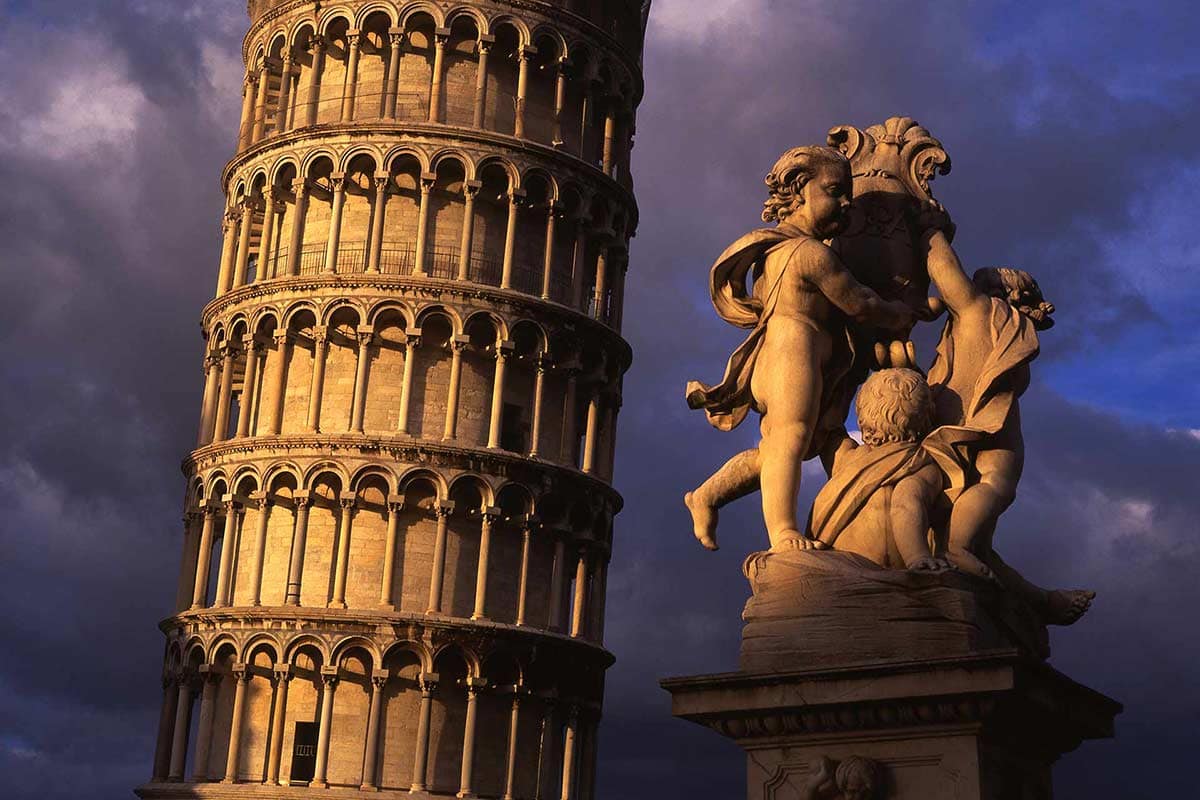
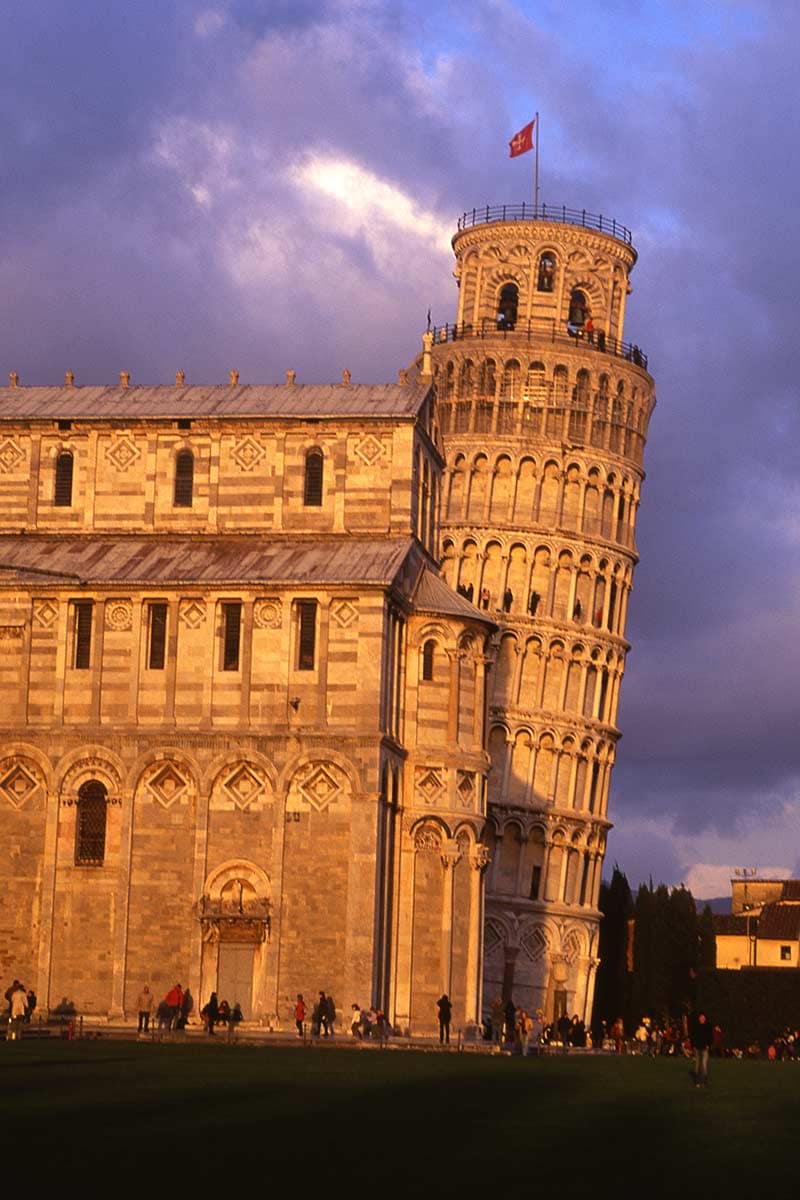
It’s by far the most famous leaning tower in Europe and the world. It’s one of the most iconic landmarks in Italy, and along with a select few including the Eiffel Tower and Big Ben, one of the most recognisable icons of Europe.
You’ll encounter some pretty admirable leaning towers in Europe in the course of this article, but the Leaning Tower of Pisa (Torre Pendente di Pisa in Italian) is in a league of its own. It’s by far the most famous of all leaning towers, but it’s also the most spectacular.
The Leaning Tower is the Campanile, or belltower, of the Duomo (Cathedral) of Pisa. It’s one of a complex of stunning buildings that make up the Campo dei Miracoli, the Field of Miracles, three of which were built in the distinctive Pisan Romanesque style. Pisa was one of the great maritime republics of medieval Italy, and the Campo was where its rulers really wanted to show off its power, might and wealth.
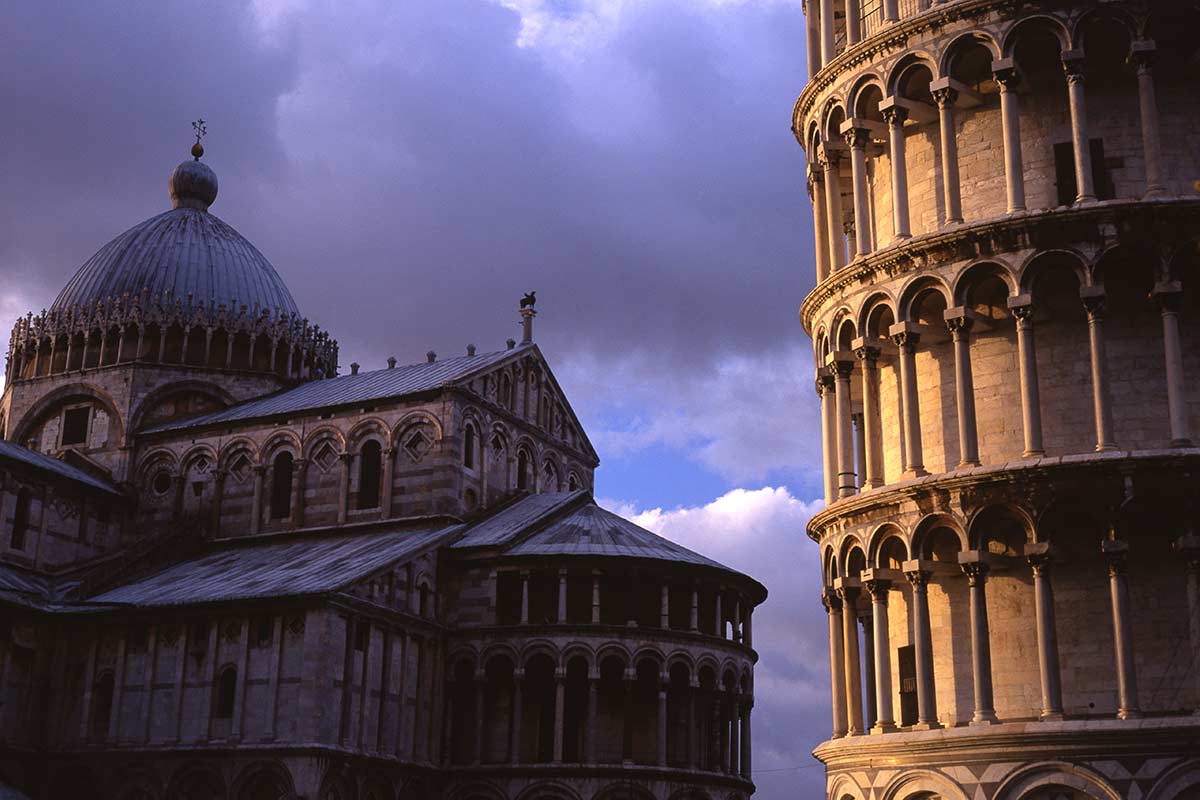
And this is what makes the Leaning Tower of Pisa so special. It’s not just that the tower itself is leaning, but the multitude of pillars on each storey of the tower is also leaning. So at any one time you’re not just looking at a leaning tower, but a leaning tower with hundreds of pillars also leaning.
The Leaning Tower was begun in 1172, but architects soon realised there was a problem with subsidence in the soft sand soil on which it was built. It took 200 years to complete, and at one point lean4ed by 5.5 degrees – correctional work in the 1990s and 2000s corrected this to less than 4 degrees.
The Leaning Tower is one of the most popular places to visit in Italy, and you can climb it – you just need to book your ticket in advance., which commits you to a specific time. You can book your Leaning Tower timed ticket here.
See Also: One Day In Pisa – the Leaning Tower and much more.
Caerphilly Castle, Wales
The most famous leaning tower in Wales – but there are others too
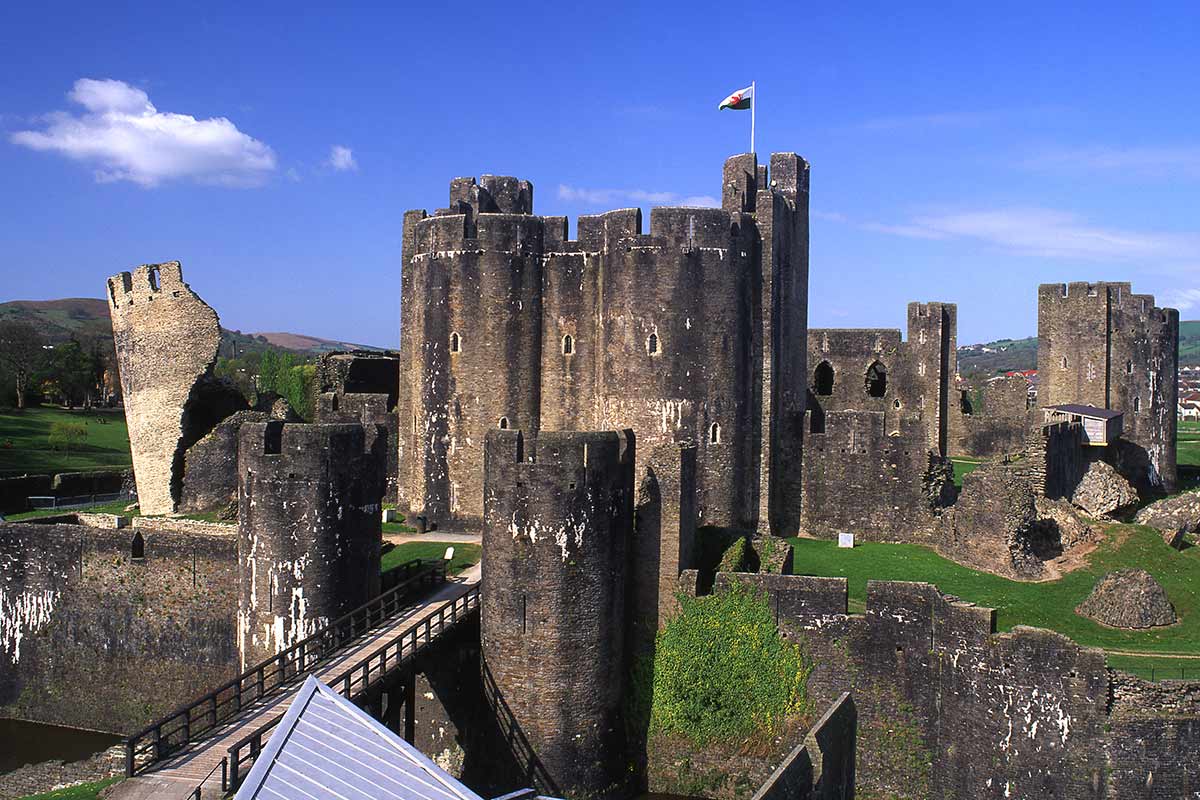

While looking through my files for images of leaning towers and crooked churches for this article, it completely slipped my mind that I walked past a famous one tens of thousands of times in my hometown in Wales.
The Leaning Tower of Caerphilly Castle was one of the town’s main claims to fame. Apart from being the birthplace of a mild, salty cheese, it is home to a magnificent 13th-century Castle with a tower that outleans that of Pisa. It’s a claim that could be made for several other towers in this article.
The tower is on the southeast corner of the inner ward of the Castle, and leans 5 degrees out of the perpendicular.
Nobody knows why the tower leans so much. When I grew up in the town, our teachers told us that Oliver Cromwell blew it up in the Civil War – a theory dismissed long ago. Subsidence – the cause of the majority of tower leans – is another possibility. Likewise, the use of the Castle as a free local quarry may well have contributed to the tower’s lean. Thomas Lewis, a local nobleman who built Y Fan Manor House (known locally as the Van) was one of the chief culprits, as one look at the restored house and columbarium on the nearby hillside will confirm for you.
Getting there: Regular trains run from Cardiff Central to Caerphilly, taking 20 minutes. From the station, it’s a short walk down the hill to the Castle.
See Also: 14 Best Things To Do In Caerphilly
Church of Our Lady of the Mountain, Bad Frankenhausen, Thuringia, Germany
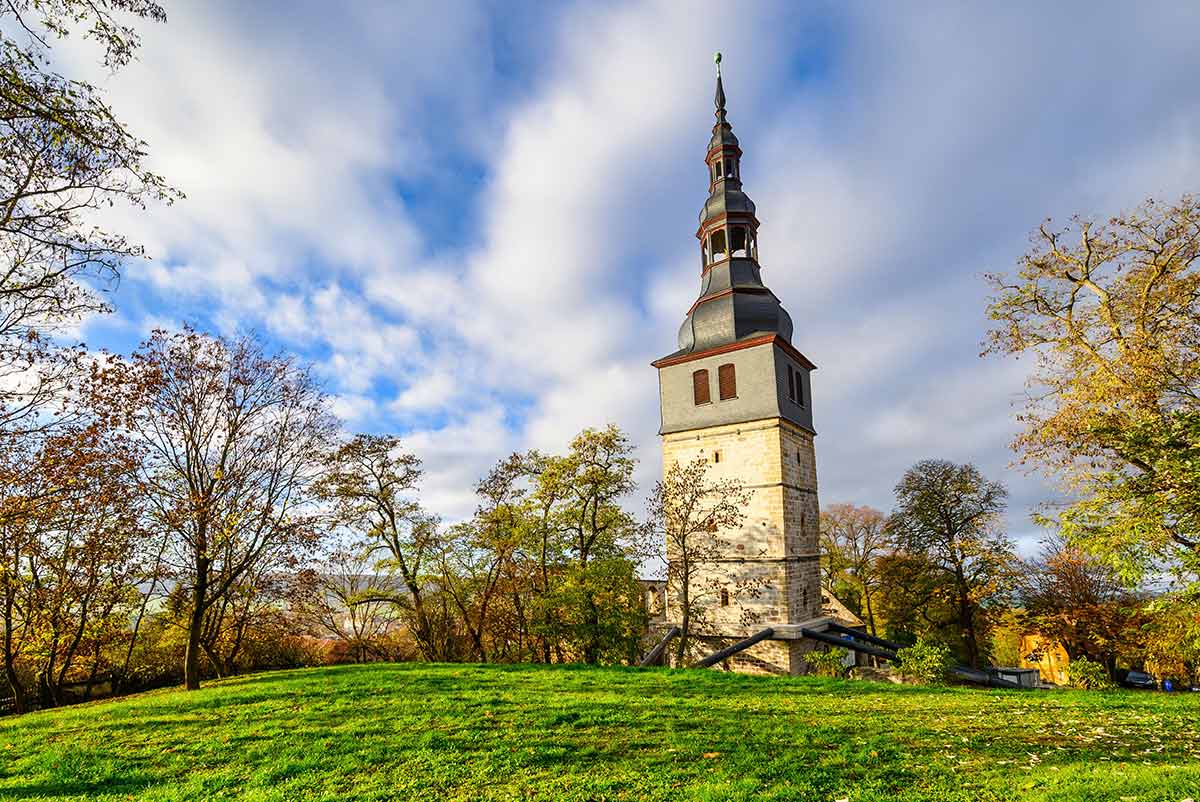
This Gothic church has one of the most amazing leaning towers in Europe, a 56-metre structure with a Baroque spire that leans a massive 4.6 metres from the vertical. Architecturally it’s possibly the most spectacular of leaning towers after that of Pisa, its stone base contrasting with the metallic Baroque upper section.
Also known as the Oberkirche (Upper Church), the subsidence is caused by sinkholes from nearby salt mines. The tower was stabilised, so now it’s possible to visit and climb the tower, and enjoy the museum exhibition in its lower levels.
The town is also known as the Barbarossastadt, after Holy Roman Emperor Frederick Barbarossa, who is commemorated at the nearby Kyffhäuser Monument, near the southern edge of the Harz Mountains.
Getting there: the closest major hub is Erfurt, from which the RE10 and RB59 regional services take one hour.
Where To Stay – Hotel-Restaurant Thüringer Hof – historic 16th-century hotel in the heart of beautiful mountain spa town
Asinelli and Garisenda Towers, Bologna, Italy

These twelfth-century twin towers (well, almost) are among the best things to see in Bologna. Built between 1109 and 1119, they are named after the respective families that built them, and they’re among the most prominent landmarks in the city. They were once connected by a footbridge, which was destroyed in 1398.
The Asinelli Tower is the taller of the two, at 319 feet (97 metres), and can still be climbed. It was used as a watchtower by the Visconti who ruled Bologna, and wanted to suppress any possible revolt against them. It was later used as a vantage point from which Allied bombing raids were directed during the Second World War.
The shorter Garisenda Tower is in a much more precarious state. Its lean is more pronounced, and authorities closed it in 2023 fearing it was about to collapse. It has been under scaffolding ever since, and is likely to be this way well into the 2030s. The tower was mentioned a number of times by Dante Alighieri in his Divine Comedy.
Getting there: The Two Towers are located at the junction of Via Rizzoli, Strada Maggiore and Via San Vitale. Buses 11, 14 and 30 stop a few metres away on Rizzoli.
Tours: This Bologna guided walking tour is a great introduction to the historic World Heritage-listed city.
See Also: 15 Best Things To Do In Bologna
San Martino Church, Burano, Venice


The campanile (belltower) of San Martino in Burano looms across the Venetian lagoon like a rickety rocket. Whenever I took the motoscafo (lagoon ferry) to the island I half-imagined it being launched skywsrds, spluttering midair before dropping back into the lagoon, possibly with a parachute to slow its descent.
Burano is one of the most beautiful villages in Europe, every house mandatorily painted a bright colour – no pebbledash greys here, thankfully! The hundreds of fishing cottages are a joy to see, giving a real lift to the senses. And the crooked church campanile adds a lovely touch of quirk too.
The church was founded around the 11th century, but the present building was built in the late 16th and early 17thcenturies, with its consecration held in 1645. The tower was once topped by an angel, which fell during a storm in 1867, and was replaced by a cross. It leans almost 2 metres due to subsidence – a problem widespread in Venice, as we are about to discover.
Getting there: Waterbus 12 runs there from Fondamente Nove (F.te Nove on timetables) via Murano and Mazzorbo.
See Also: 10 Best Things To Do In Burano
Suurhusen Church, Lower Saxony, Germany
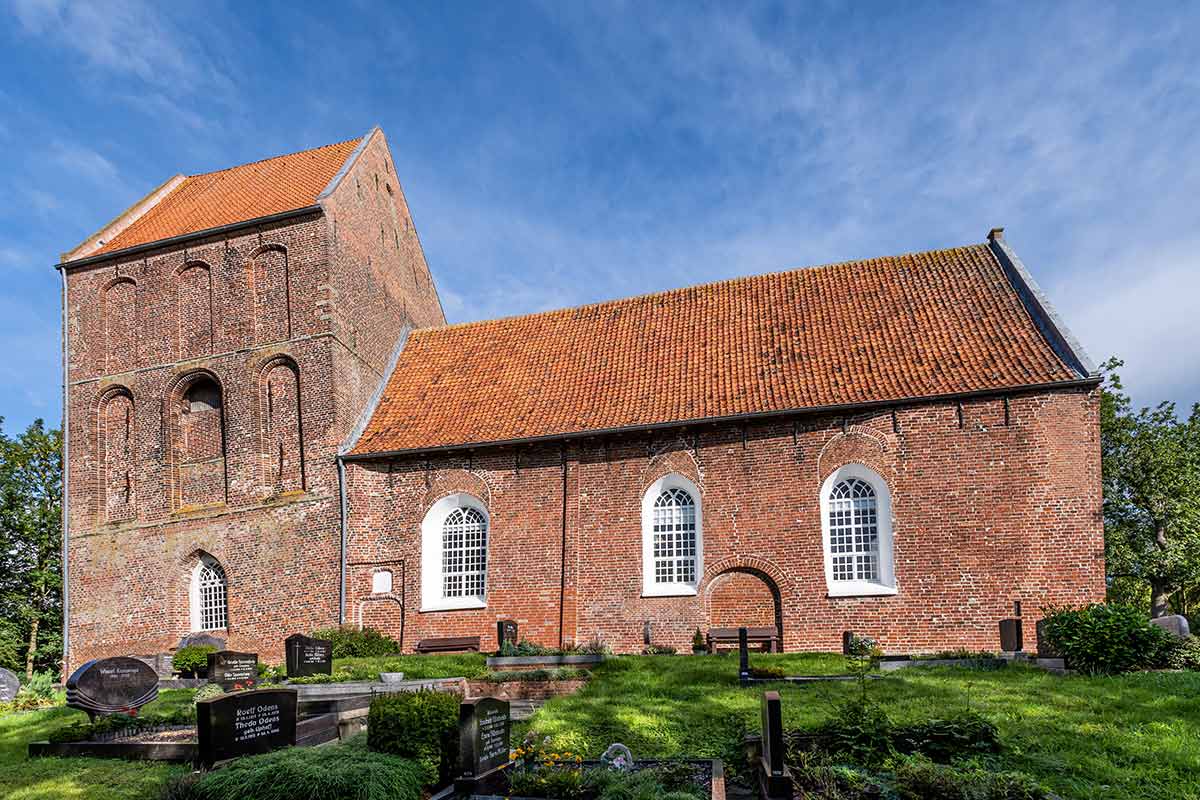
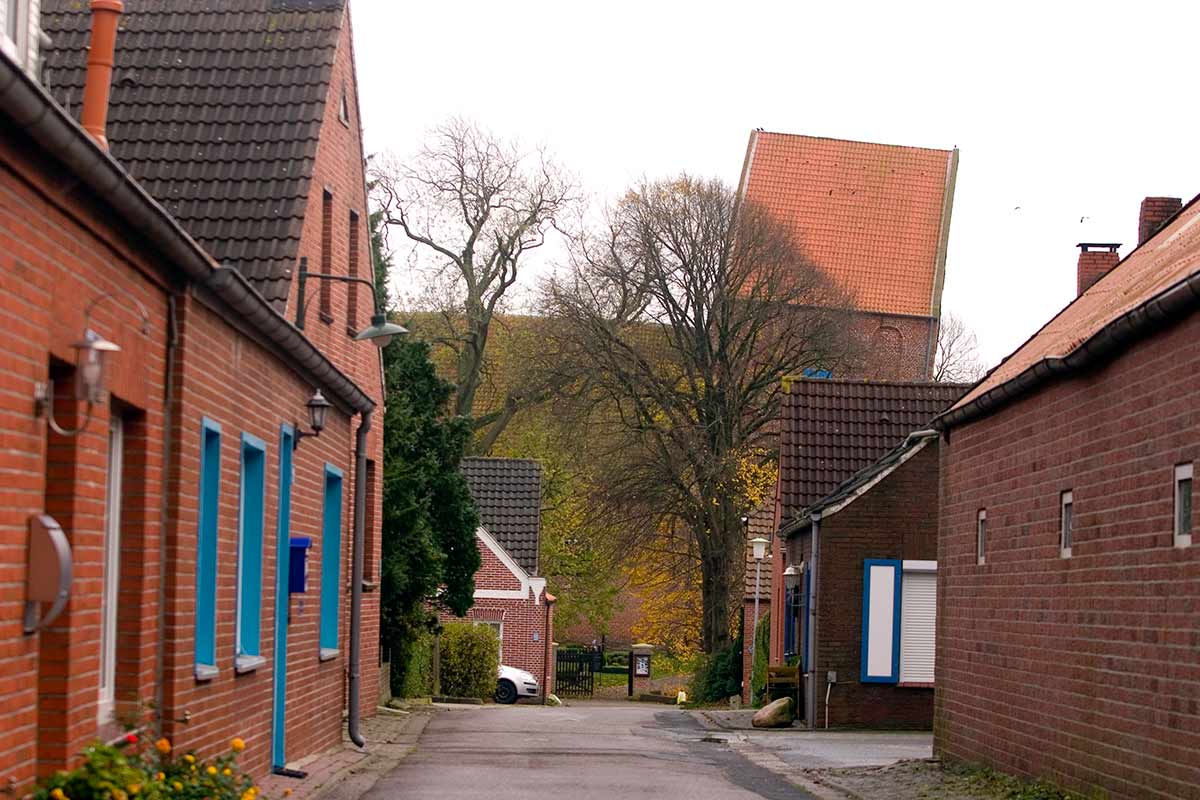
Meet Contender #1 for the title of the Most Crooked Church in Europe, and possibly the most leaning tower in Europe. According to the 2007 Guinness Book of Records it is the latter. This leaning tower of a church in East Friesia, in the province of Lower Saxony, is for me one of the most impressive because of the sheer bulk of the tower – a hefty, stout brick Gothic tower (common across northern Germany), rather than some thin, tall, spindly lighthouse. Looking at it, I’ve often wondered, ”How on earth is that still standing?”
The tower was added to the church in the 15th century, on foundations of piles of tree trunks not unlike those used in Venice. When the surrounding marshy terrain was drained in the 19th century, the oak piles began to rot, and so the tower began to subside and lean. It was stabilised in the 1980s, but it’s the most improbable lean that I’ve seen, for sure.
Getting there: Suurhusen is 4 miles north of the coastal town of Emden, and can be reached on the regular 410 bus, which takes 18 minutes. The church is a few minutes’ walk from the bus stop. It’s also an easy bike ride from Emden, or a 70-75 minute walk.
St Illtud’s Church, Caldey Island, Wales
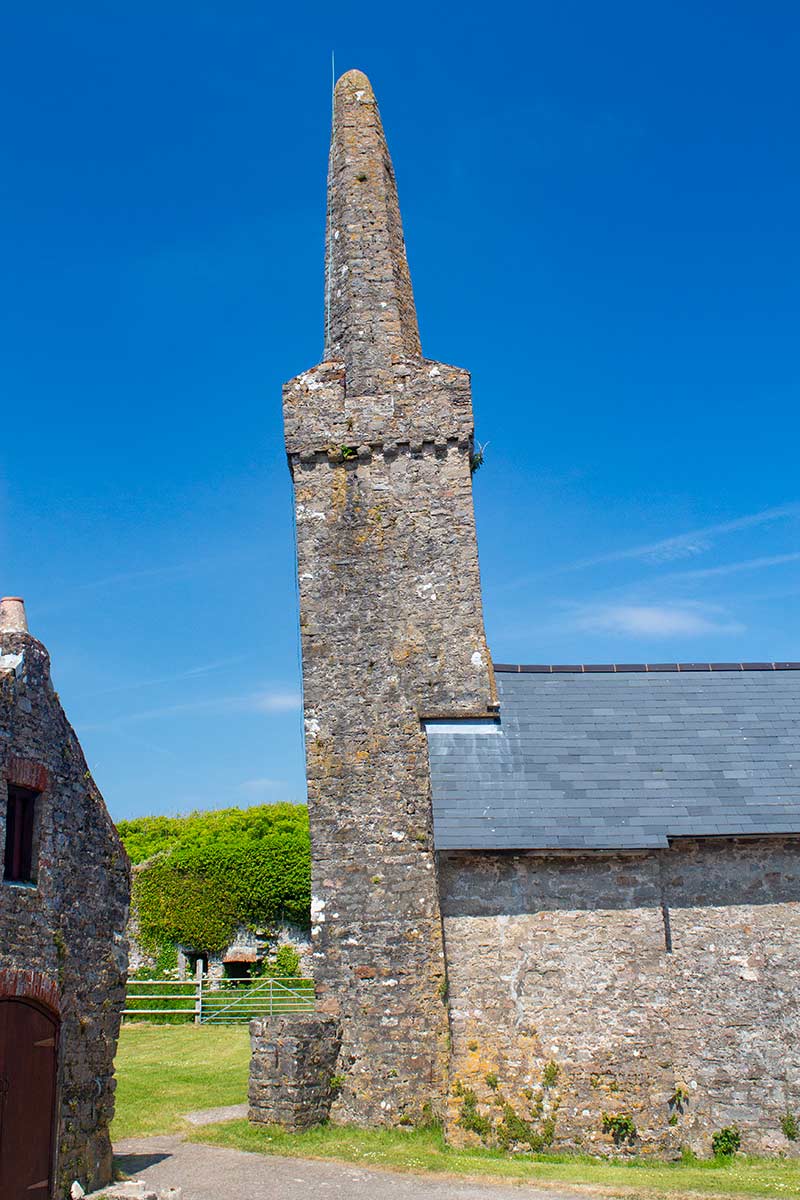

This is possibly one of the least-known leaning towers in Europe, on an island off the coast of Pembrokeshire that is only accessible for seven months a year. Caldey Island – Ynys Bŷr – was settled in the 6th century, when Pŷr (sometimes anglicised to Piro) founded a monastery there.
Apparently Pŷr’s regime was not exactly the strictest, and he is renowned for getting drunk one night and falling down one of the island’s wells. You might be forgiven for wondering if he had also been responsible for building the leaning spire of St Illtud’s Church, but he can be exonerated of that – he is believed to have died soon after being pulled out of the well, and the tower and spire were built several centuries later.
St Illtud’s is the oldest church on the island, and the oldest church in Britain where the Catholic rite is still practised. It was built in the 13th century, though its somewhat rough-hewn appearance makes it seem older, to these eyes at least. The spire leans a few degrees from the perpendicular, and this is due to subsidence rather than the shortcomings of a drunken abbot.
The interior of the church is humble and beautiful, the floor made from pebbles from the nearby seashore. There’s also a stone with an Ogham inscription from the 6th century AD. And visiting children often write prayers on slips of paper which are left on one of the windowsills for other visitors to read – a pleasure indeed.
Getting there: By boat from Tenby between Easter and October.
Where to Stay – Giltar Hotel, Tenby – superb seafront hotel overlooking Castle Beach, South Beach and St Catherine’s Island
See Also: Best Things To Do In Tenby Wales
Chesterfield Cooked Spire Church, Derbyshire, England
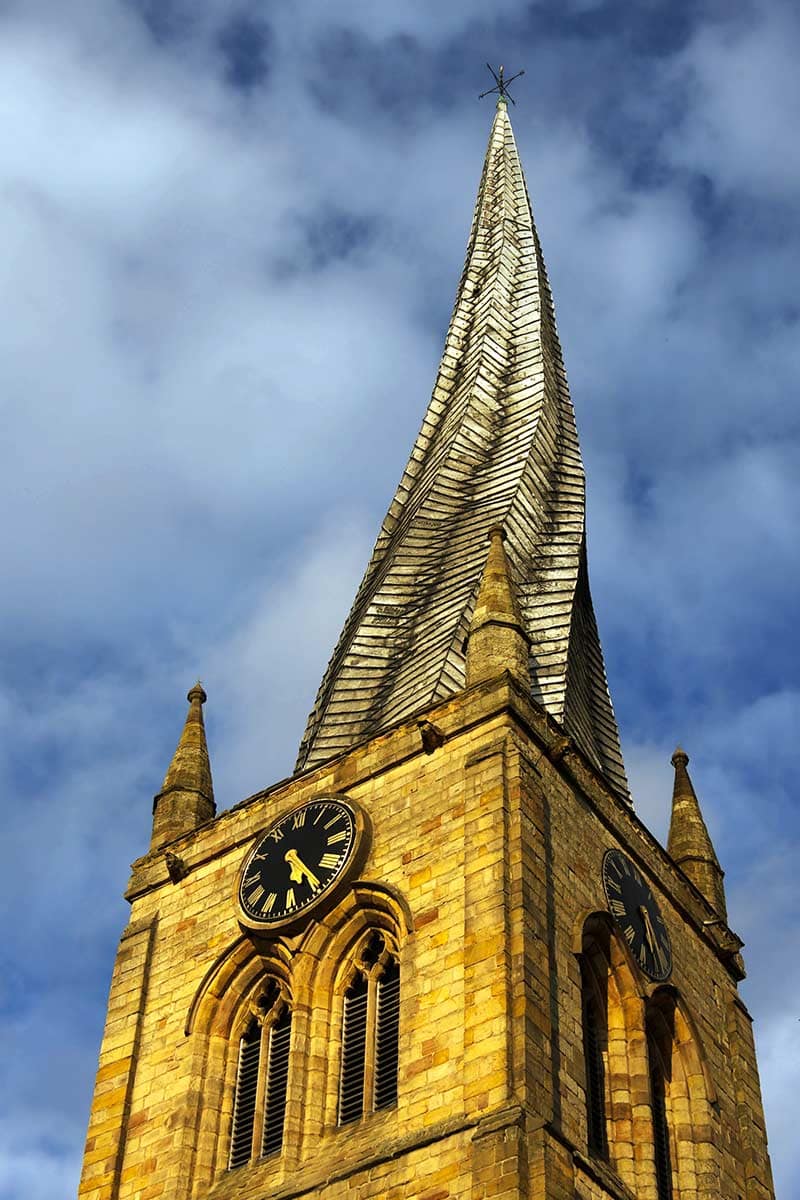
Subsidence is the most common explanation for leaning towers and crooked churches, but a little local legend is a lot more entertaining. The most popular story of the Crooked Spire is that it heard that a virgin was to be married in the church and, as this was seemingly such a rarity, it leaned in one direction to take a closer look. And got stuck.
The truth is a little more prosaic. The spire’s original wooden framework was replaced with lead tiles, and these expand in the heat. As elsewhere in the UK, the south-facing side receives far more sunlight than the northern side, so the ongoing expansion and contraction (as the temperature cools) has warped the spire over the centuries.
The Church, dedicated to St Mary and All Saints, is the largest in the county of Derbyshire – and that includes Derby Cathedral, one of the smallest cathedrals in the UK. The tower is home to a nest of peregrine falcons, and tower tours do take place once a day on Friday and Saturday afternoons. Access to the outside gallery depends on whether or not the birds are rearing their chicks at the time of your visit – if not, you can still see inside the famous crooked spire.
Getting there: Regular trains run to Chesterfield from Sheffield, Nottingham, Derby and Manchester. The church is a 500-metre walk from Chesterfield station.
Oude Kerk, Delft, Netherlands
A leaning tower at the resting place of Delft’s most famous son, Johannes Vermeer
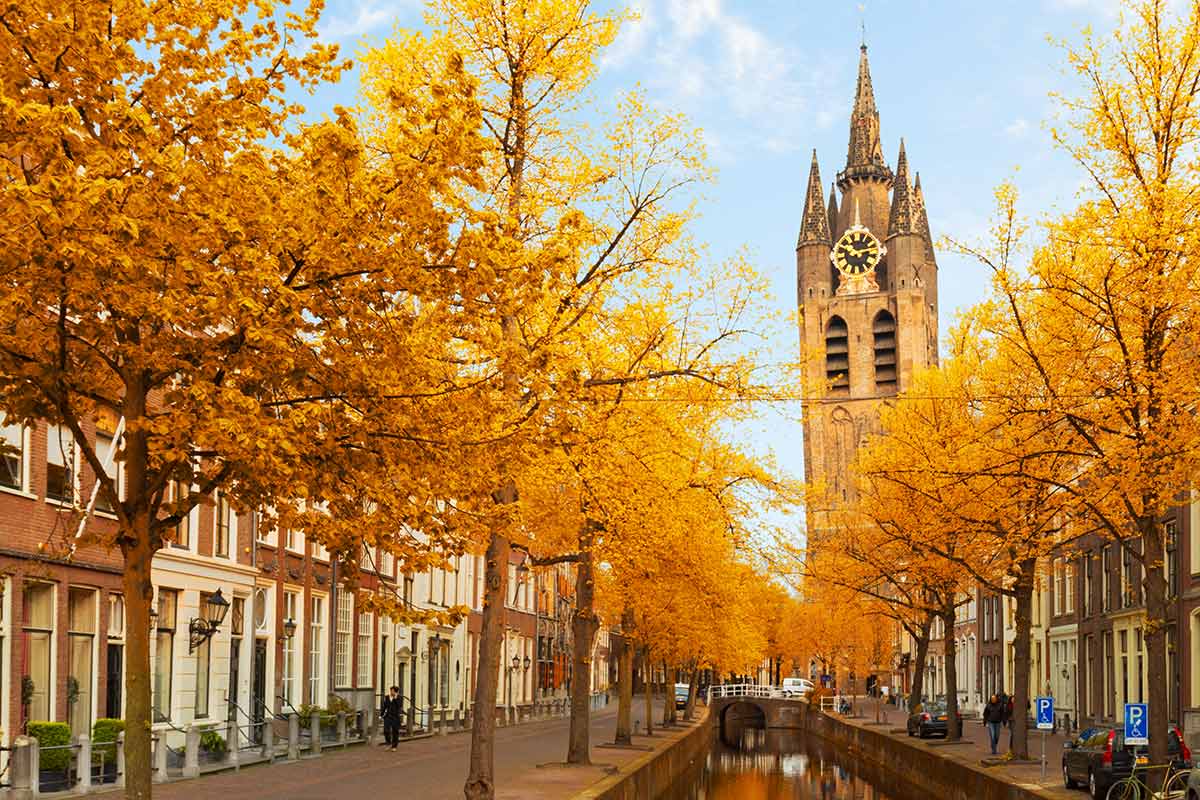
The Oude Kerk – Old Church – is one of the most famous landmarks in Delft, the city of the Johannes Vermeer, one of the great 17th-century Dutch Masters. The lean of its tower may be due to its location close to one of the city’s canals, which may have had to be rerouted slightly to accommodate the tower.
This may well have weakened the church’s foundations and caused the subsidence which made the tower lean. It’s 75 metres high, but leans around two metres from the vertical. The lean is noticeable from all angles, but most of all from further down the canal as it leans between the treetops on either side.
Many visitors come to Delft to follow in the footsteps of Johannes Vermeer, who spent his life in the town. He died in 1675 aged just 43, and was buried in the Oude Kerk the same day.
Tickets: You have to pay to visit the Oude Kerk – in combination with the nearby Nieuwe Kerk, Yoo can book your tickets to visit both churches here.
Tours: This walking tour of Delft is an excellent introduction to the city.
San Giorgio dei Greci Church, Venice
The Greek Orthodox church in Venice – and the first built in western Europe
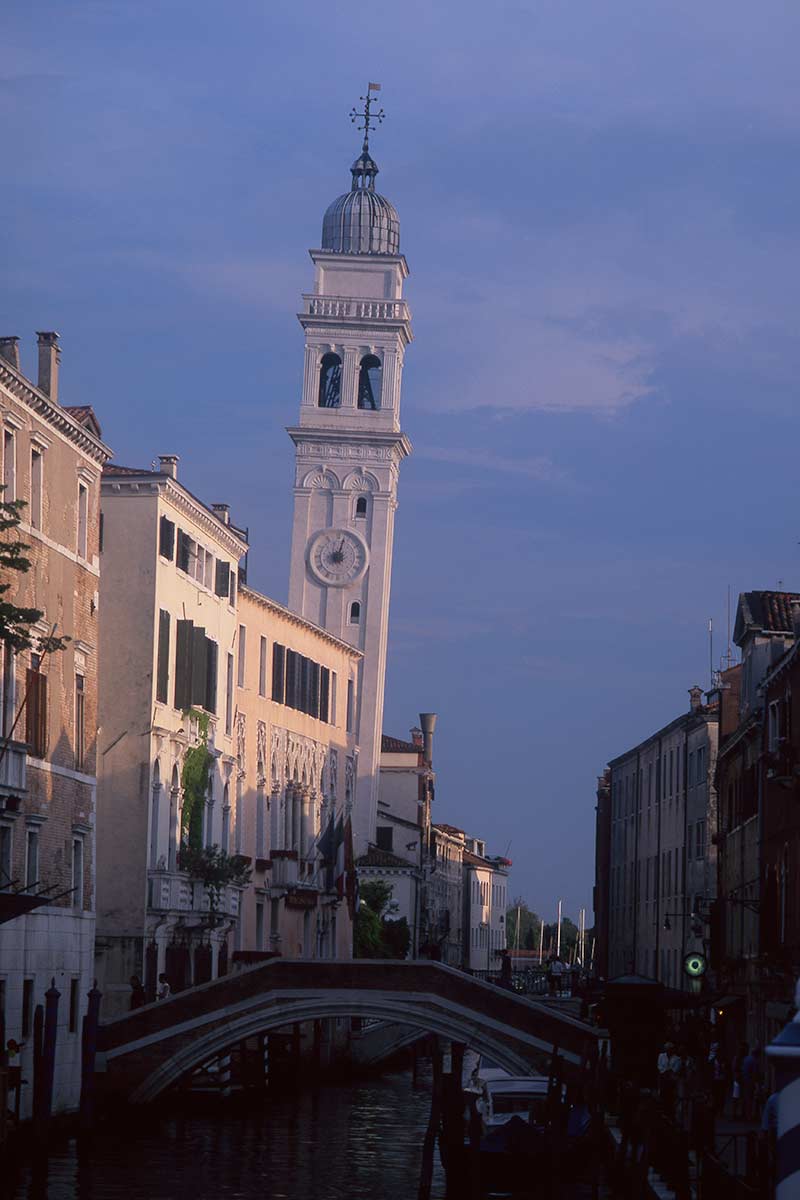
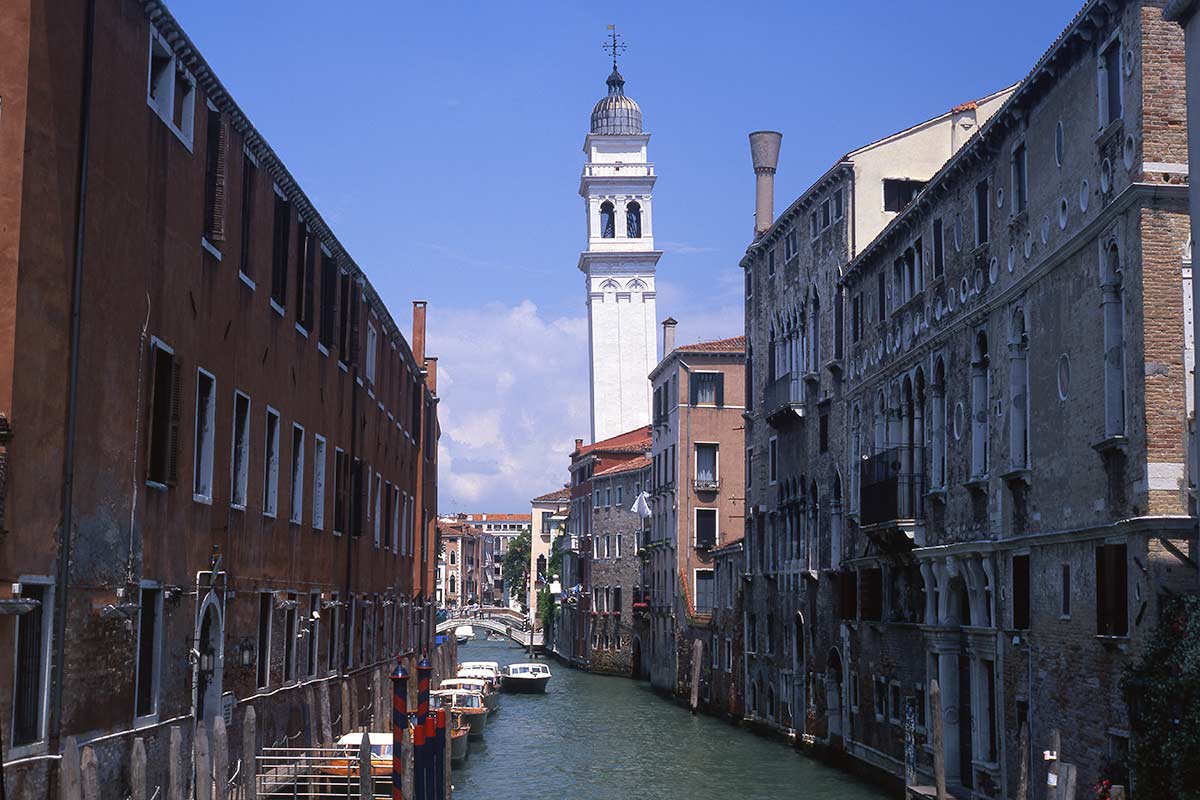
Despite centuries of contact with the Hellenic world, an Orthodox church in Venice wasn’t permitted by city authorities until 1539, when San Giorgio dei Greci – St George of the Greeks – was begun.
Its leaning tower, visible from the Riva degli Schiavoni waterfront promenade, is one of the most striking Venice landmarks. It leans westwards across the canal, the Rio dei Greci, and the tower and exterior are excellent examples of Venetian Renaissance architecture.
However, step inside and you’re in the exotic East. It’s beautifully decorated, especially with the iconostasis (screen of icons behind the high altar) by Cretan artist and iconographer Michael Damaskinos, and a 14th-century Pantocrator icon, most likely of Byzantine origin.
Getting there: Vaporetto (waterbus) to San Marco – San Zaccaria, then a short walk up Calle de la Pieta until you reach Calle dei Greci.
See Also: 14 Most Beautiful Churches In Venice
Kilmacduagh Round Tower, Galway, Ireland
Probably the oldest of leaning towers in Europe
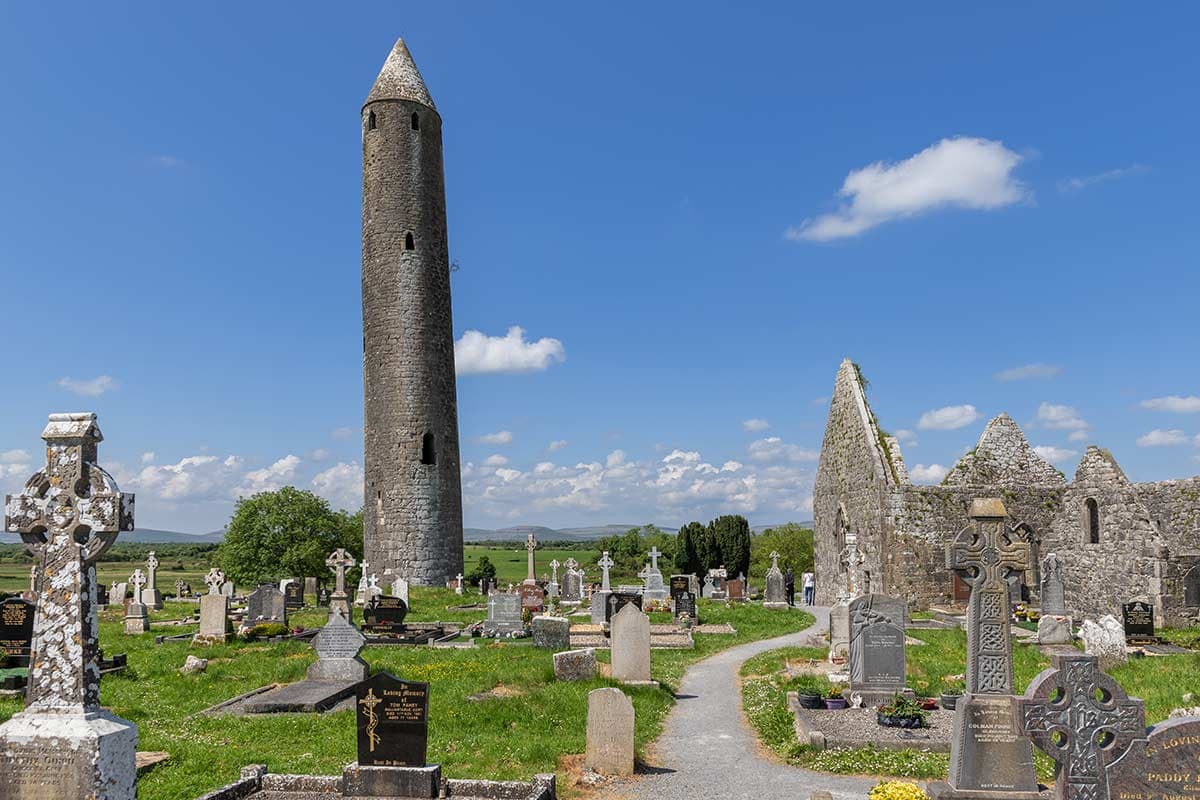
The Kilmacduagh Round Tower, which is believed to date back to the 10th century, is the only intact structure at the otherwise ruined Kilmacduagh Monastery, on the south coast of County Galway. It was founded in the 7th century AD by St Colman MacDuagh, on land given to him by his cousin close to Dunguaire Castle.
The abbey was eventually designated a Cathedral – the seat of a bishop – in the 12th century, and the complex was rebuilt in the 13th century following destruction wrought during repeated raids.
Church round towers are a mostly Irish phenomenon, and the Kilmacduagh leaning tower is the tallest surviving one, at 98 feet (30 metres) height. Like Kilmacduagh, they were mostly built in the early medieval period. This tower leans around half a metre out of alignment – not as much as some of the other leaning towers in Europe, but very noticeable.
See Also: Famous Landmarks in Ireland
St Peter’s Church, Doly, Karviná, Czech Republic
The ‘Czech Pisa’
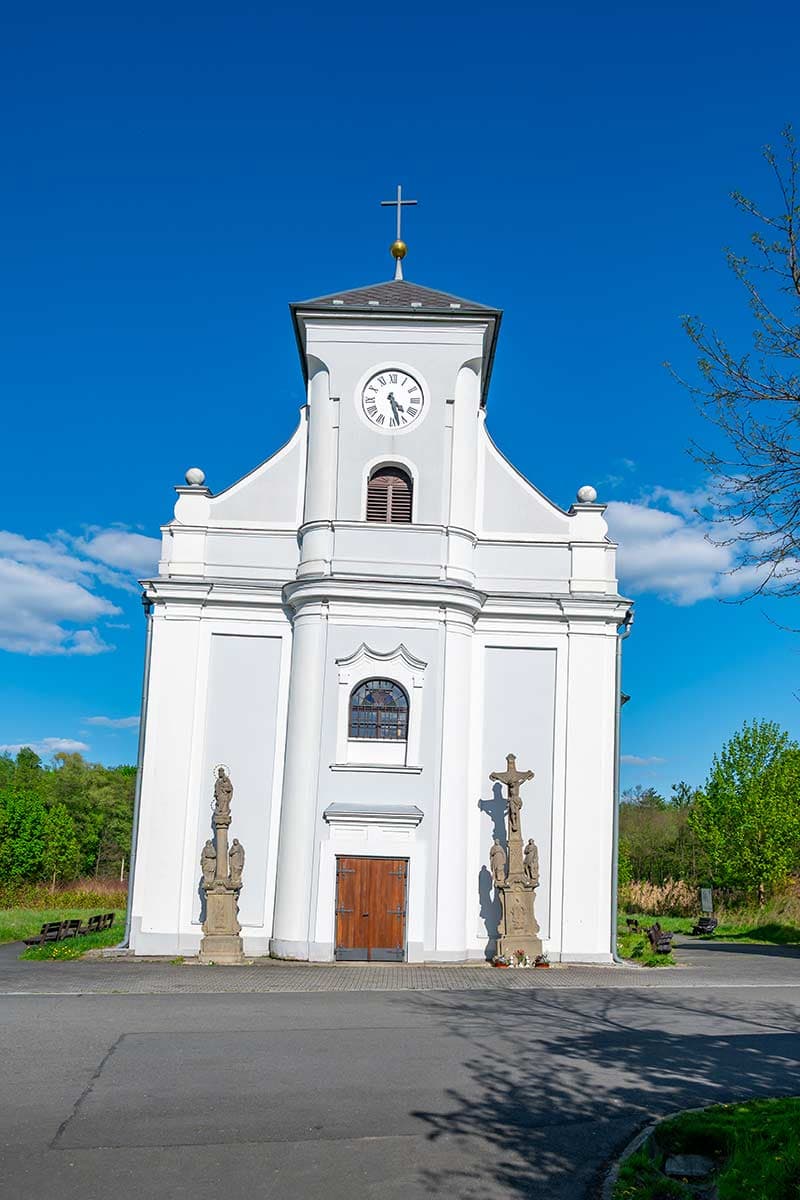
Karviná is in the heart of coal mining country in the far east of the Czech Republic, close to regional capital Ostrava and the Polish border. And it’s the underground mining that accounts for our next crooked church, the Baroque church of St Peter of Alcántara in the village of Doly, just outside Karviná.
The Czech Republic – and central Europe generally – are full of Baroque churches, built in the 17th and 18th centuries as the population (at the time part of the Habsburg Empire) gradually grew.
The church doesn’t have a tower or spire, which makes the building’s tilt all the more noticeable. It was built in 1736 on the site of an earlier wooden church, and its oldest feature is the 15th-century baptismal font. The building started to lurch to one side because of subsidence caused by mine shafts being dug underground nearby.
The church is open on weekends for paid guided tours.
Getting there: buses stop a short walk away from the church at the Šikmý kostel stop on the 531 bus route between Ostrava-Hranecnik bus station and Karviná.
St Martin’s Church, Cwmyoy, Black Mountains, Wales


This wonderful remote country church in the Vale of Ewyas is probably the most crooked building in this article. The tower is leaning in one direction, the nave another, and the chancel – the area around the altar – another again.
Walking inside is even more disconcerting, with everything on a wonk, completely off kilter. The east window of the church leans a few degrees from left to right, while the beams that support the nave’s wooden roof lurch from right to left.
I once directed a photographer on a shoot inside the church, and pointed at his spirit level – which guides you on the straightness of your horizon – and said to him, ”I don’t think you’ll be needing that in here.”
I’ve included Cwmyoy church in my Churches of the Black Mountains Itinerary, which includes four other wondrous churches, including nearby Partrishow Church and the gorgeous romantic ruin of Llanthony Priory.
Dry Doddington Church, Lincolnshire, England
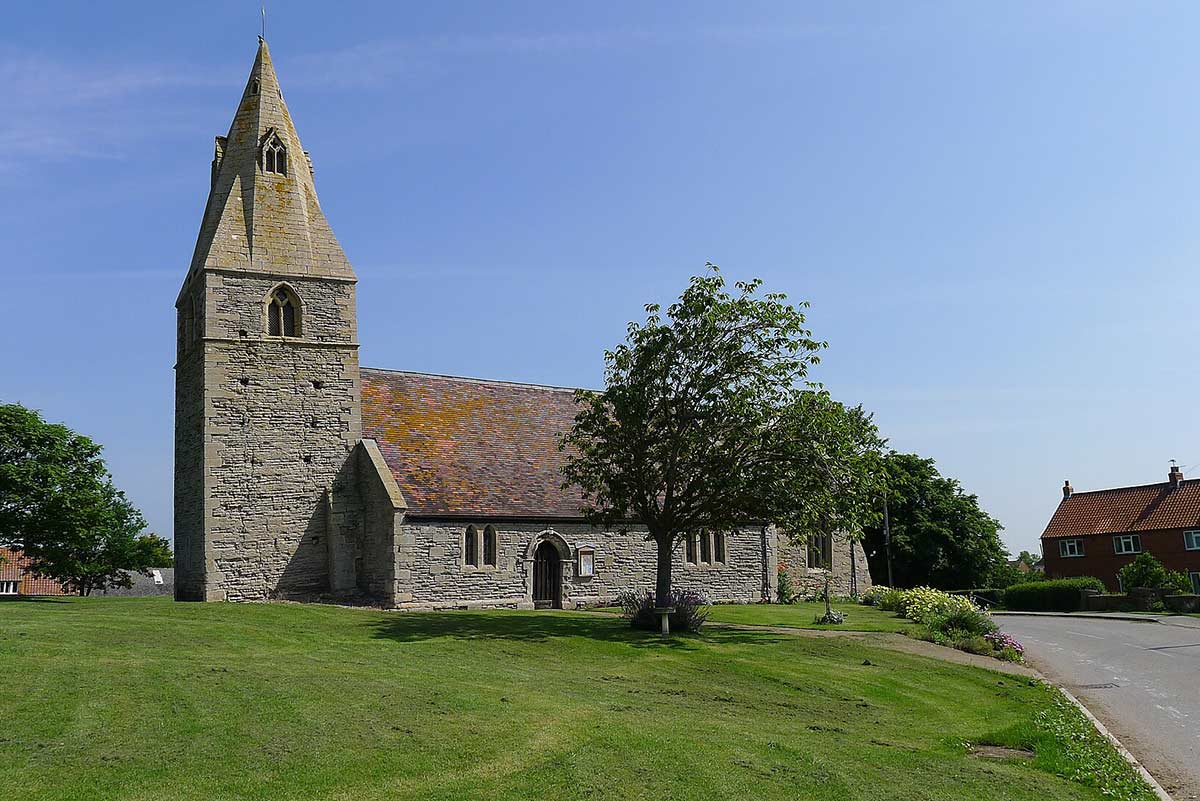
This Lincolnshire church partly inspired this article, after I came across this story on the Guardian website. The 12th-century church had a tower added in the 14th century, and it began leaning in the 19th-century – it now leans at an angle of 5.1 degrees. Stones near the foot of the tower had eroded, but correctional work had stabilised it.
The church has been in the news as it has launched a new fundraising appeal. They need to raise £100,000 to correct the church’s wonky wooden floor, which is gradually rotting away.
If you’re exploring the area by car, you’re within a short drive of two of the finest cathedrals in England, at Lincoln and Southwell, just to the northeast of Nottingham.
Getting there: The village is off the A1, midway between Grantham and Newark-on-Trent.
Duomo di Caorle, Veneto, Italy
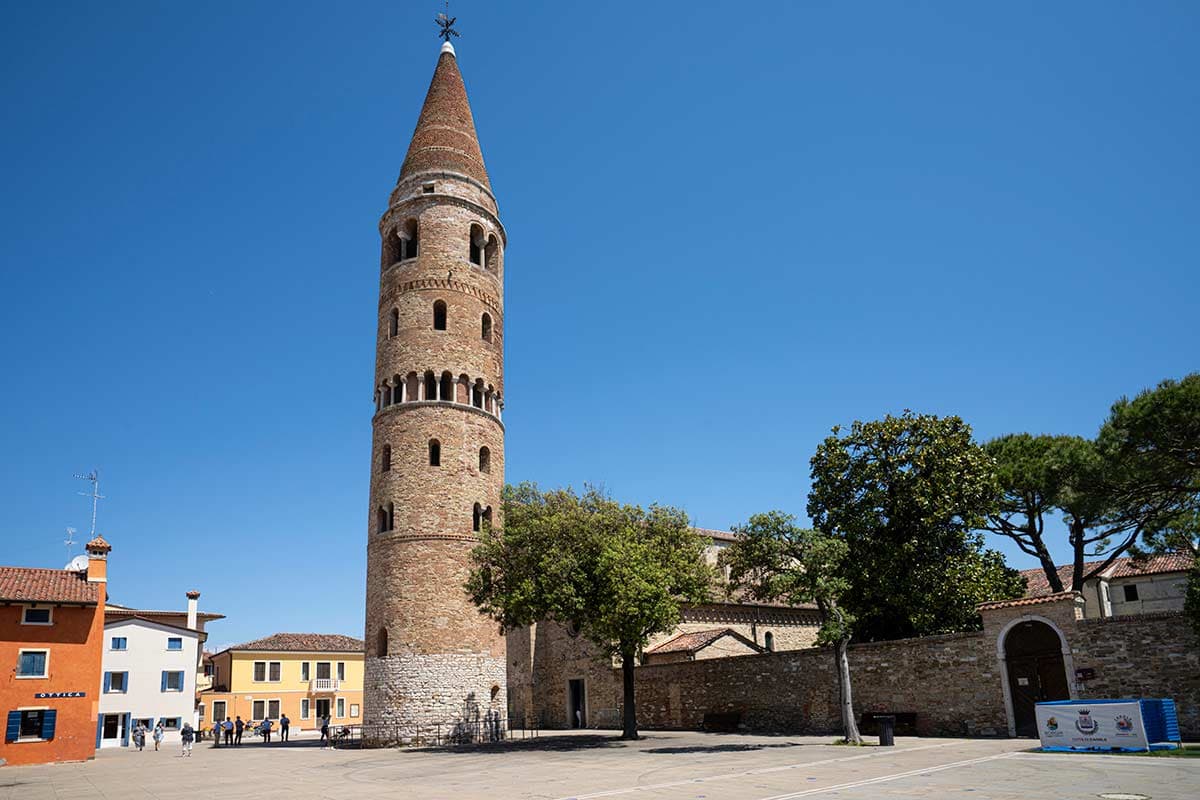
Caorle’s Romanesque Cathedral was begun in 1038, a venerable ancient church with a striking cylindrical campanile (belltower) overlooking the northern Adriatic coast.
The Duomo is full of treasures, including a Roman funerary altar that dates from the 1st century AD. If you’re heading this way on a day trip from Venice, Caorle makes a good companion to the even older Basilica at Aquileia, one of the more off the beaten path World Heritage Sites in Europe.
Caorle’s belltower is 42 metres high, and although its lean is discernible, it’s not as pronounced as some of the others featured in this article. You can climb halfway up the tower to the viewing gallery for a great view of the town, beach and Duomo.
Getting there: Caorle is to the northeast of Venice, a few miles beyond the popular resort of Lido di Jesolo. However public transport connections are not good. Trains run from San Stino di Livenza, where you alight and catch the twice-daily number 50 bus to Caorle. Driving it is much easier, taking around an hour.
The House That Moved, Exeter, England

It’s not a tower, but I decided that this fine wonky 15th-century half-timbered house in Exeter deserved an honorary inclusion in this article.
As its name suggests, the house is also remarkable for another reason. In 1961 it was moved around 200 metres to make way for a new city bypass road, and this was accomplished in a mere five hours. It often takes years of painstaking work to deconstruct and rebuild historic houses piece by piece, so this move was an amazing feat.
It’s all the more impressive when you look at the wonky top-heavy state of the house. It’s three storeys high, and each storey gets a little bigger. So the top storey juts out several feet from the ground floor, and looks as if it’s about to topple over at any moment.
Getting there: The house is on the corner of West Street, opposite St Mary Steps Church. The ground floor is now a bridal shop.
See Also: 12 Best Things To Do In Exeter
Best Leaning Towers in Europe – Final Thoughts
I hope that you’ve enjoyed this article and that you manage to see some of these other leaning towers in your travels in Europe.
For further inspiration for your travel to or around Europe, check out some of my other themed Europe travel articles here:
Most Beautiful Churches In Europe
Most Beautiful Villages In Europe
Most Beautiful Streets In Europe
Best Places To See Spring Flowers In Europe
Best Art Nouveau Cities In Europe
Best Art Nouveau Hotels In Europe
Most Beautiful Landscapes In Europe
24 Best Roman Monuments In Europe
Best Border Towns In Europe To Visit
Most Beautiful Beaches In Europe
Most Beautiful Castles In Europe
Most Beautiful Islands In Europe
Most Underrated Cities In Europe
Most Beautiful Squares In Europe