


The remaining Transporter Bridges in Europe are among the most impressive industrial heritage sites on the continent. These remarkable bridges carry a gondola – essentially a section of roadway – with vehicles across a river with wires from an upper level.
Little more than twenty were ever built, and of eight functioning transporter bridges remaining in the world, seven can be found across Europe. Three of these are in the UK, two are in northern Germany and there is one in France and the oldest of them all in Spain.
Transporter bridges were built in places where tall shipping would sometimes need to pass. They were also constructed in places where it wasn’t feasible to build long approach roads on either side, and ferries weren’t a practical solution. The bridges in this feature were all built by 1917, and with the advent of the motor car, there was little need to build more of them. Some of the transporter bridges across Europe were demolished, but these seven have been preserved, and one is a UNESCO World Heritage Site.
In this article, I describe them all and explain how to visit them. Some of them are a little off the beaten path, but if industrial heritage and history is your passion, they’re wonderful places to visit on your travels.
Vizcaya Bridge, Portugalete, Spain
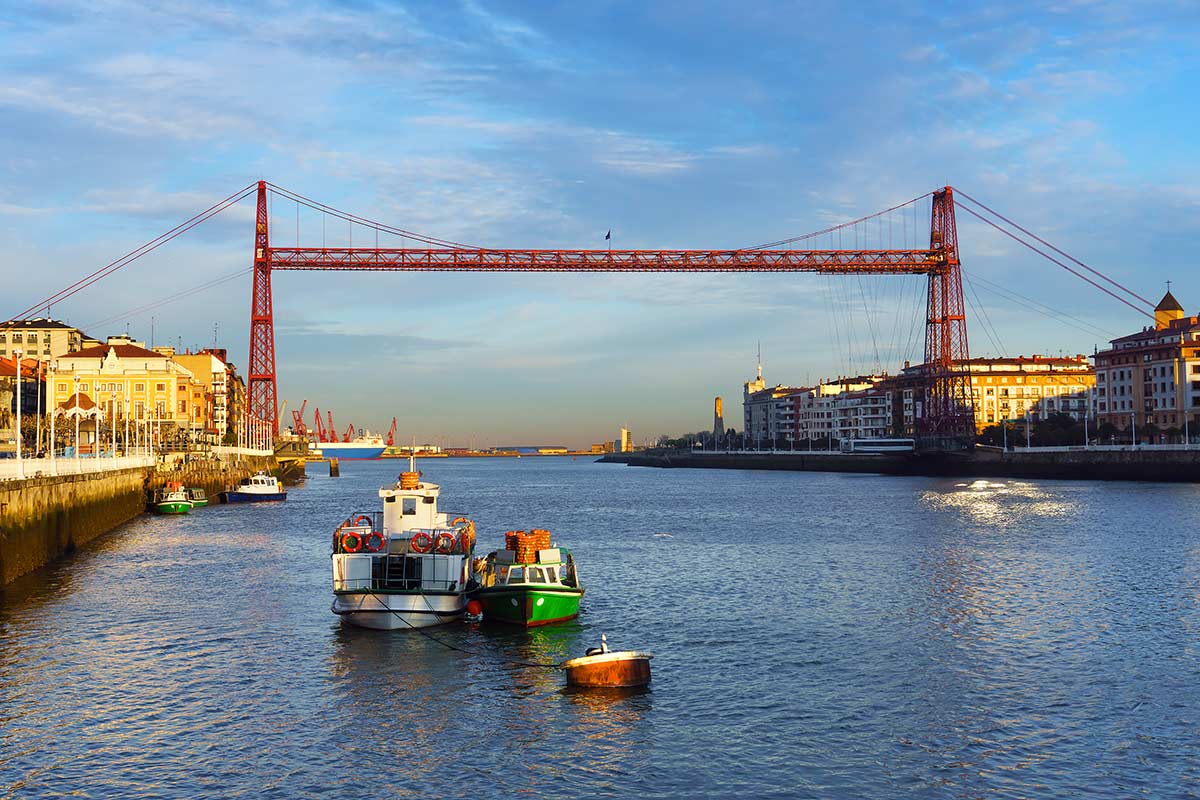

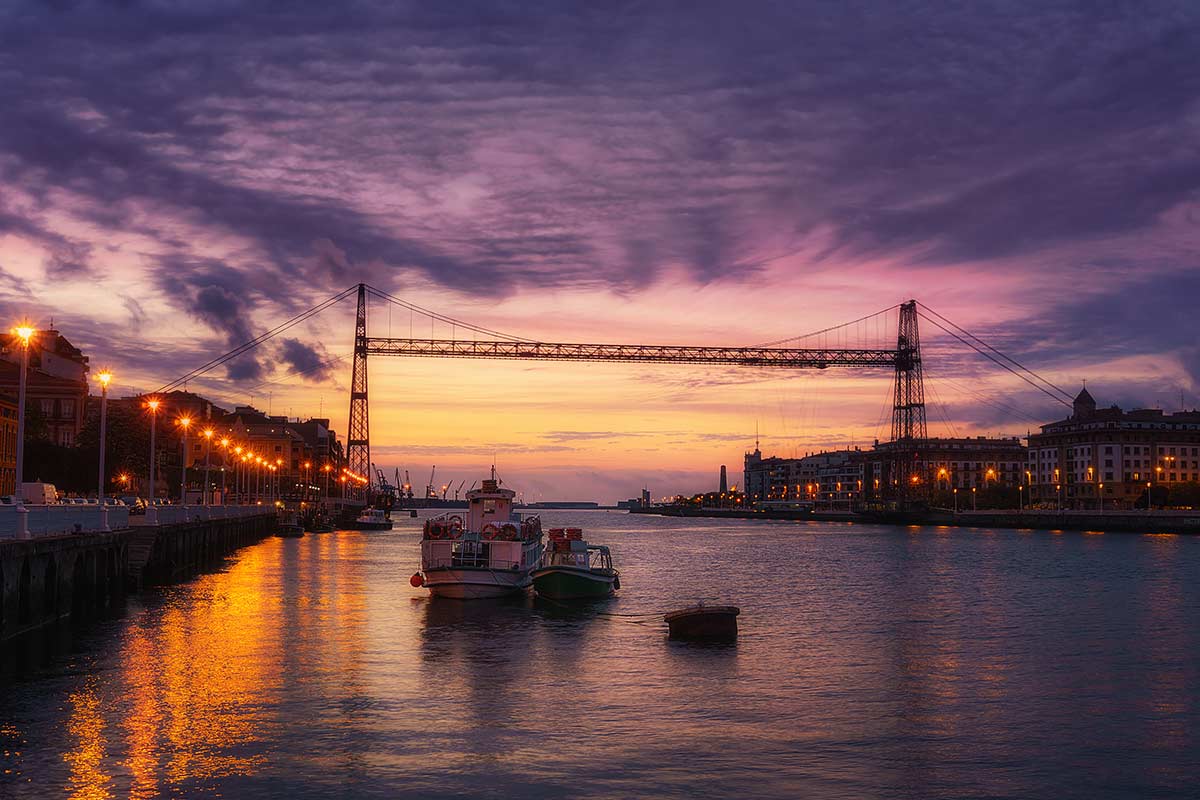
The Vizkaya Bridge (Bizkaiko Zubia in Basque), built in 1893, is the original Transporter Bridge, built to connect the towns of Ibaizabal and Getxo a few miles northwest of Bilbao, capital of the Basque Country (Euskadi). It’s the only one of the surviving seven Transporter Bridges in Europe to hold World Heritage status.
It was designed and built by Basque architect Alberto de Palacio, using technology developed by French engineer Ferdinand Arnodin involving the use of twisted steel cables.
The original Transporter Bridge isn’t the longest or tallest built (Its towers are 51 metres high) but its one of the most elegant bridges of the Industrial Revolution, and bridges in Europe still standing today. Well worth a short detour from your visit to the nearby Guggenheim in Bilbao.
Getting there: Bilbao is the nearest airport. The nearest Metro station is Areeta, on the eastern (Getxo) side of the river.
Tours: There are some great boat trips from Bilbao to Portugalete and beyond. These include:
2-hour River Nervion cruise from the city to the Bizkaia Bridge – also includes audio guide in six languages
Bilbao estuary and Abra Bay Boat Tour – goes from Bilbao city centre to the Bahia de Abra, and sometimes to the fishing port of Santurtzi
Rochefort-Martrou Transporter Bridge, Charente-Maritime, France
The sole surviving transporter bridge in France, built next to a major historic French naval port
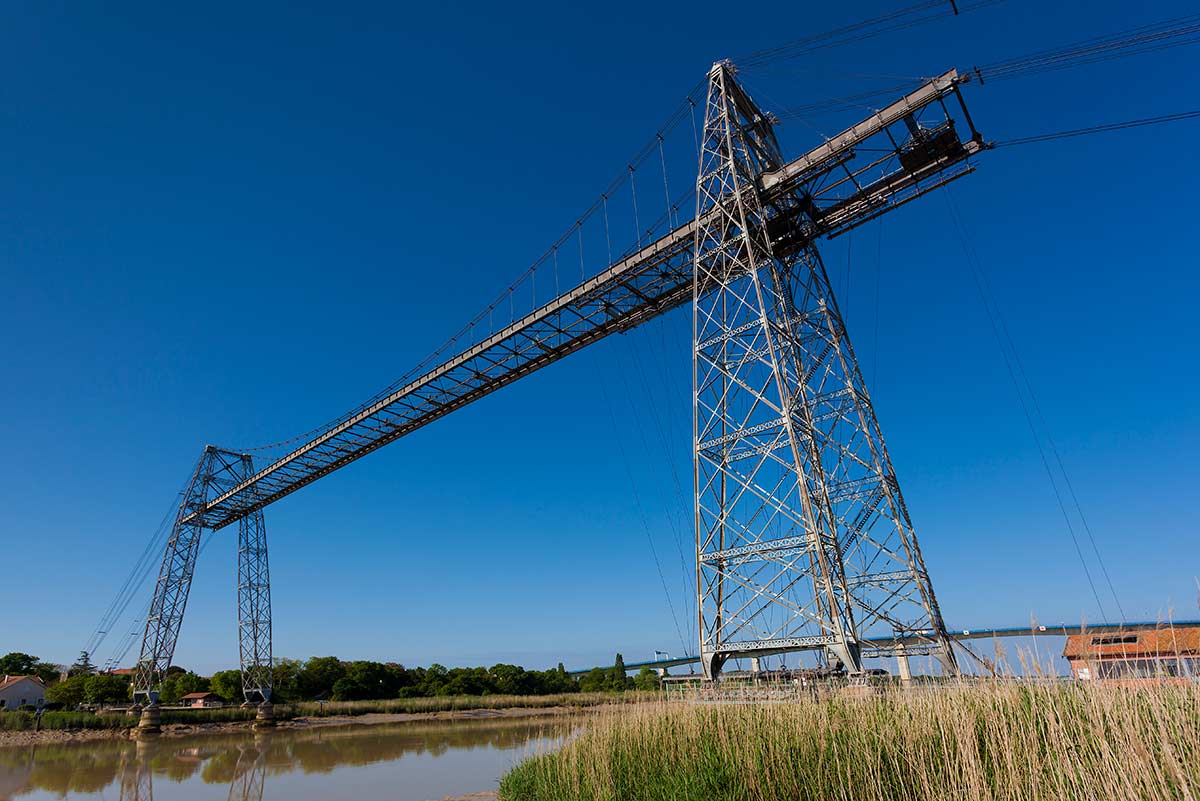
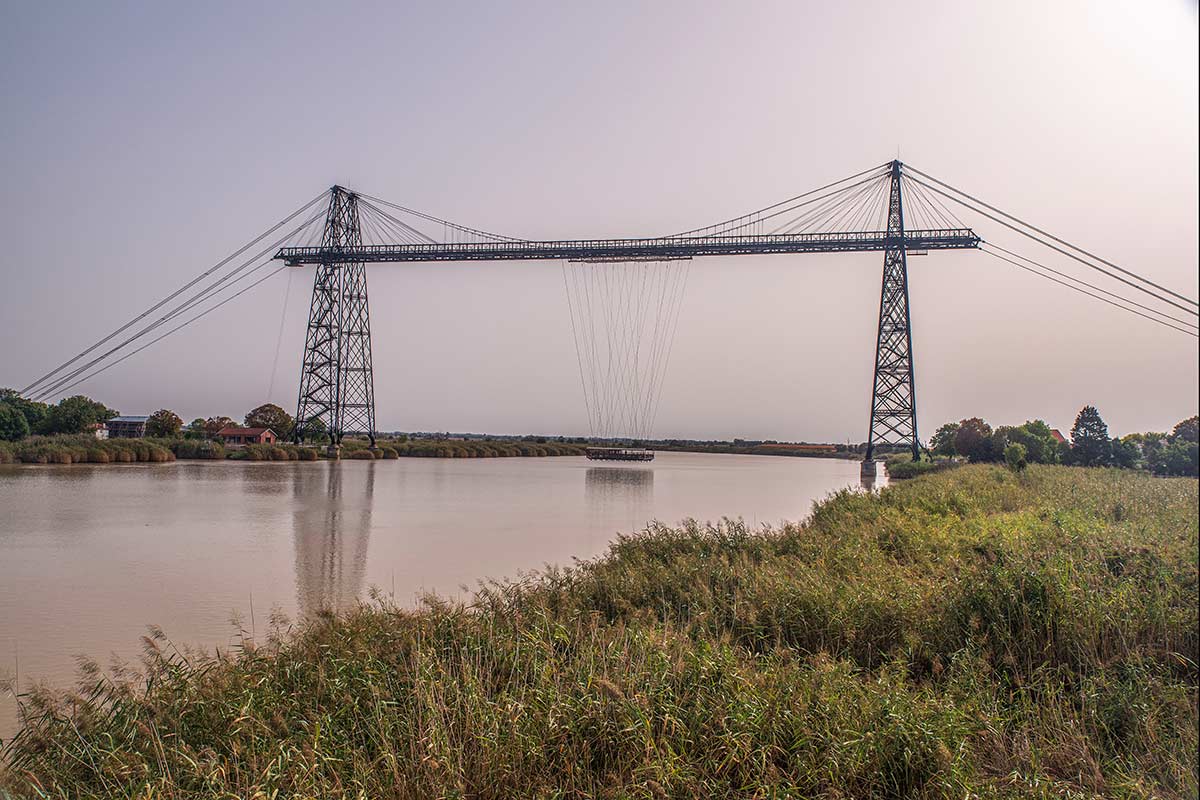
During a long minibus ride from Roscoff in Brittany to Cognac, I vividly recall doing a double take as we crossed the Charente River at Rochefort. Was I seeing things, or was this the Newport Transporter Bridge decamped to the Charente?
In those pre-internet days it took me a little while to find out that it was a case of the Newport Bridge (see the following section) being a near-replica of the Pont Transbordeur. It was designed by Ferdinand Arnodin, who contributed his expertise to the Vizcaya Bridge and designed the Transporter Bridge in Newport.
Arnodin built the Pont Transbordeur between 1898 and 1900, linking the ports of Rochefort (to the north) and Tonnay-Charente (to the south). The nacelle (gondola) originally had a capacity of 14 tons and carried pedestrian workers and horse-drawn carriages. This was increased to 16 tons during its 1930s restoration.
The Rochefort Transporter Bridge was earmarked for demolition in the 1960s because it couldn’t cope with the increasing volume of traffic. A lifting road bridge was constructed 100 metres downstream, but the Transporter Bridge was preserved due as a historical monument. The lifting bridge was later replaced by a new road bridge in 1991, and itself demolished.
It’s still open as a historical monument and visitor attraction for pedestrians and cyclists. Guided tours are available. It’s open from late March to early November, times as follows:
Mondays – 2.00 pm to 6.00 pm (to 7.00 pm July and August, and to 5.30 pm October to November)
Tuesdays to Sundays:
March to June, September – 10.00 am to 12.30 pm, then 2.00 pm to 6.00 pm
July and August – 10.00 am to 7.00 pm
October – November – 10.00 am to 12.30 pm, then 2.00 pm to 5.30 pm
Newport Transporter Bridge, Wales, UK


I grew up little more than ten miles from the Newport Transporter Bridge, one of the finest industrial landmarks in Wales. It was opened in 1906, and was designed and built by French engineer Ferdinand Arnodin.
Like Middlesbrough’s Tees Bridge (see below) it has become the city’s symbol, and it’s a magnificent structure, with towers at either end over 240 feet (73 metres) high.
The Newport Transporter Bridge ticked all the boxes for needing to be built in its location, two miles south of the city centre in the Docks area, and a huge expense would have been incurred building a road bridge in the area. The River Usk (Afon Wysg), with its huge tidal range, was also ideal terrain for this sort of bridge – at low tide, it’s a deep, wide funnel of mud.
At the time of writing, the Bridge is undergoing restoration, as is the nearby Visitor Centre. Once it’s reopened, you will be able to ride across the river on the gondola, and climb the stairs to the top level, which you can also cross. The views from there are superb.
If you’re visiting Newport, I also recommend a visit to Tredegar House, one of the finest historic houses in Wales, and the Amphitheatre and Roman Baths at Caerleon, one of the great underrated Roman monuments in Europe.
Getting there: the Transporter Bridge is either a 30-minute walk from the city centre via the not terribly salubrious suburb of Pillgwenlly (locally known as Pill) or a short bus ride on the number 40 service to Pill (alight opposite St Stephen’s Church), followed by a 5- to-10-minute walk from there to the Bridge along Alexandra Road. The Waterloo Hotel and Bistro is one of the best pubs in Newport.
Schwebefähre Oste-Hemmoor, Lower Saxony, Germany
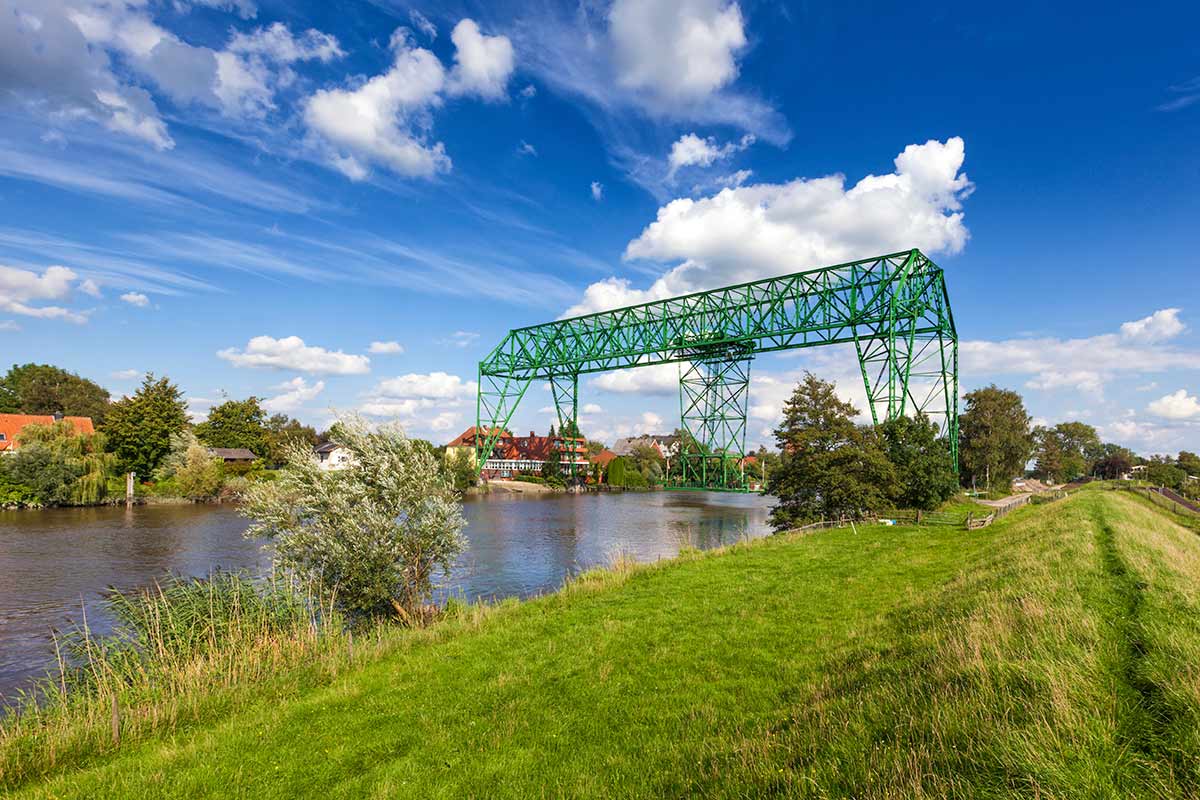
The Osten-Hemmoor Transporter Bridge was built in 1908-09 to replace a boat ferry across the Oste river in Lower Saxony, a few miles from the estuary of the River Elbe. Tidal variations had caused major problems for the ferry operation, and a transporter bridge was deemed a better solution than a more expensive swing bridge.
The Bridge continued to operate until 1974, when it was superseded and replaced by a road bridge. It was subsequently restored, and kept open as a tourist attraction over the 50 years since.
Opening times:
April – weekends 11.00 am to 3.00 pm
May to September – Fridays 11.00 am to 3.00 pm, weekends 11.00 am to 5.00 pm
Getting there: It’s a 1 hour 12 minute train ride from Hamburg Hbf to Hemmoor station – and from there it’s a further one mile (1.6km) walk to the bridge.
Tees Transporter Bridge, Middlesbrough, England, UK

The Middlesbrough Transporter Bridge is one of the icons of North East England, and the longest transporter bridge in the world. It links Middlesbrough to Port Clarence across the River Tees, with a total length of 260 metres. It is also officially part of the A178 road.
The suggestion of a transporter bridge over the Tees was mooted as early as 1872, when the owner of Hartlepool steelworks, a few miles to the north, proposed it, but nothing came of it. The Tees Transporter Bridge was finally built (by Arrol & Company, who also built the Warrington Transporter Bridge) between 1909-11 to replace two ferry services across the river.
The Bridge was partly damaged by a bomb during the Second World War, but it remained open. However, its long run of good fortune came to an end in 2019 when it was closed due to safety concerns. You can still see the Bridge but can’t climb or cross it – and this is likely to be the case until 2032.
It’s well worth visiting, especially if you’re travelling from the south towards the northeast of England. Durham Cathedral is one of the great cathedrals in England, and is only 25 miles away.
Rendsburg Transporter Bridge, Schleswig-Holstein, Germany
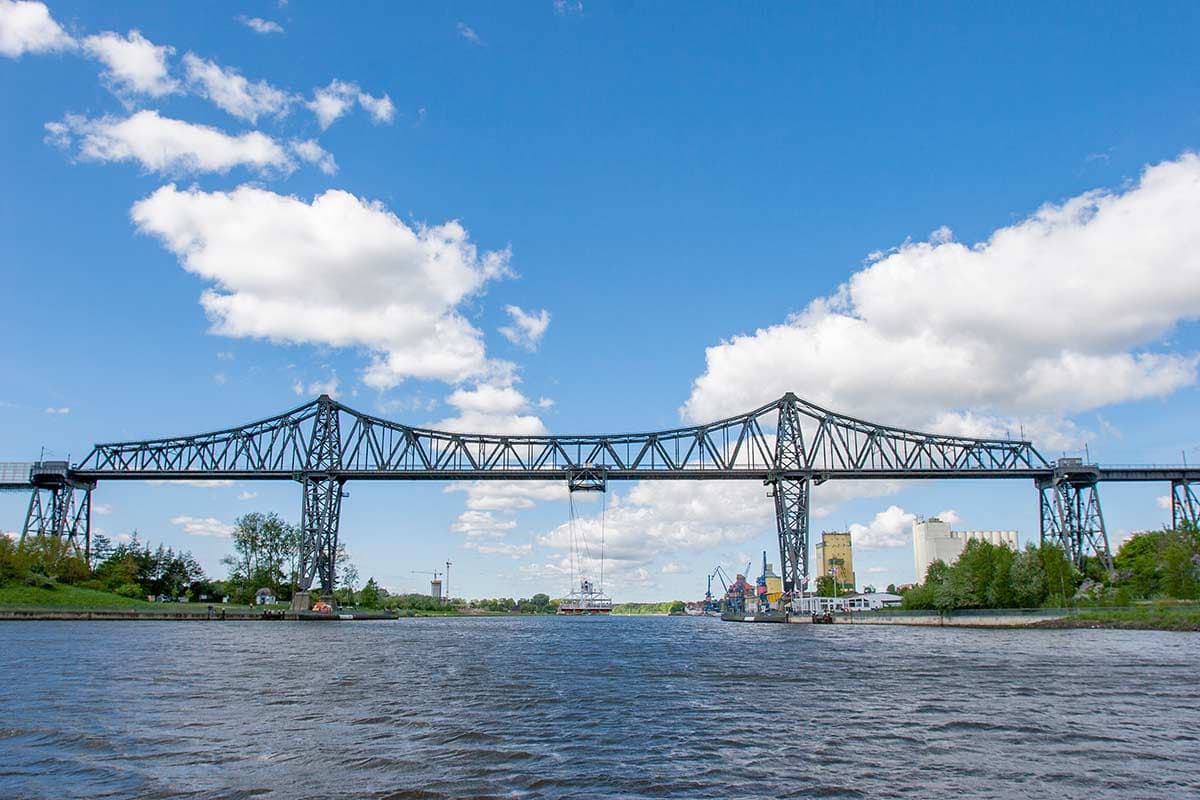

The Rendsburger Hochbrücke was built to replace two swing bridges over the Kiel Canal – which connects the Baltic and North Seas – in Schleswig-Holstein, northern Germany. It also serves as a railway viaduct. The upper level carries trains on the regional Neumünster to Flensburg line, which approach from Rendsburg station via a loop ramp, while the passenger gondola below carries pedestrians and up to four cars at a time.
The Rendsburg Transporter Bridge was built between 1911 and 1913 to a design by Friedrich Voss. Its appearance is close to that of a cantilever bridge, and its towers are 223 feet (68 metres) high.
The Rendsburg Bridge was severely damaged during a collision with a cargo ship in 2016, which destroyed the gondola. It had to be replaced, and this was completed in 2022.
Getting there: regional trains from Hamburg Hbf take 1 hour 21 minutes.
Warrington Transporter Bridge, Cheshire, England, UK

The Warrington Transporter Bridge was built in 1916-17 to connect two parts of the Joseph Crosfield & Sons soap and chemical factory on opposite sides of the River Mersey. It was designed by William Henry Hunter and William Arrol & Company built the Bridge.
It’s one of the smaller transporter bridges in Europe, 23 metres high and crossing a 61-metre span of the Mersey. It was initially built to carry trains across the river, but was later adapted to carry cars as well.
A second bridge, closer in design to the bridges at Rochefort and Newport, was built earlier than the surviving Warrington bridge, but has long since been demolished.
It’s the most difficult of the seven transporter bridges in Europe to visit, partly because it’s in a former industrial area with limited access, but some of the paths there are blocked by toxic giant hogweed in the summer months. For directions, take a look at the Friends of Warrington Transporter Bridge website.
Transporter Bridges in Europe – Final Thoughts

I hope you’ve enjoyed this article on European transporter bridges. They’re a precious part of Europe’s industrial heritage, and hopefully the current round of restorations will lead to renewed interest in them.
If you’re interested in these transporter bridges, I suggest taking a look at my article on the best industrial heritage sites in Europe to visit. I’ve also written an article on the most beautiful bridges in Europe, which focuses on popular sights such as Tower Bridge in London and the Charles Bridge in Prague.
I’ve also written numerous themed articles on places to visit in Europe, and here’s a selection for you to browse:
Most Beautiful Villages In Europe
Most Beautiful Streets In Europe
Best Places To See Spring Flowers In Europe
Best Art Nouveau Cities In Europe
16 Wonderfully Wonky Leaning Towers In Europe
Best Art Nouveau Hotels In Europe
Most Beautiful Landscapes In Europe
24 Best Roman Monuments In Europe
Best Border Towns In Europe To Visit
Most Beautiful Beaches In Europe
Most Beautiful Castles In Europe
Most Beautiful Islands In Europe
Most Underrated Cities In Europe
Most Beautiful Squares In Europe
Most Beautiful Churches In Europe