

15 Famous Landmarks in Normandy
A captivating island fortress, stunning Gothic Cathedrals, dramatic cliff scenery and the D-Day beaches. These are a few of the famous landmarks in Normandy to seek out when you visit this wondrous region of northern France.
I’ve visited Normandy many times, and seen these headline sights and many more across the region. I’ve written this article to introduce you to the headline Normandy sights, to give you an idea of the breadth and variety of places to see.
As well as describing each place, I advise on how to reach each of them, whether by public transport or car. I also suggest tours which visit each Normandy landmark, and places to stay near each of them.
I hope this article inspires you to visit this fascinating part of the world. As someone fortunate enough to have been visiting Normandy since 1982, I have to say that if you’re planning to venture beyond Paris for the first time, I can’t think of anywhere better to dip your toes than this. Enjoy.
Le Mont- Saint-Michel
Abbey-fortress island surrounded by shifting sands on the Normandy-Brittany border
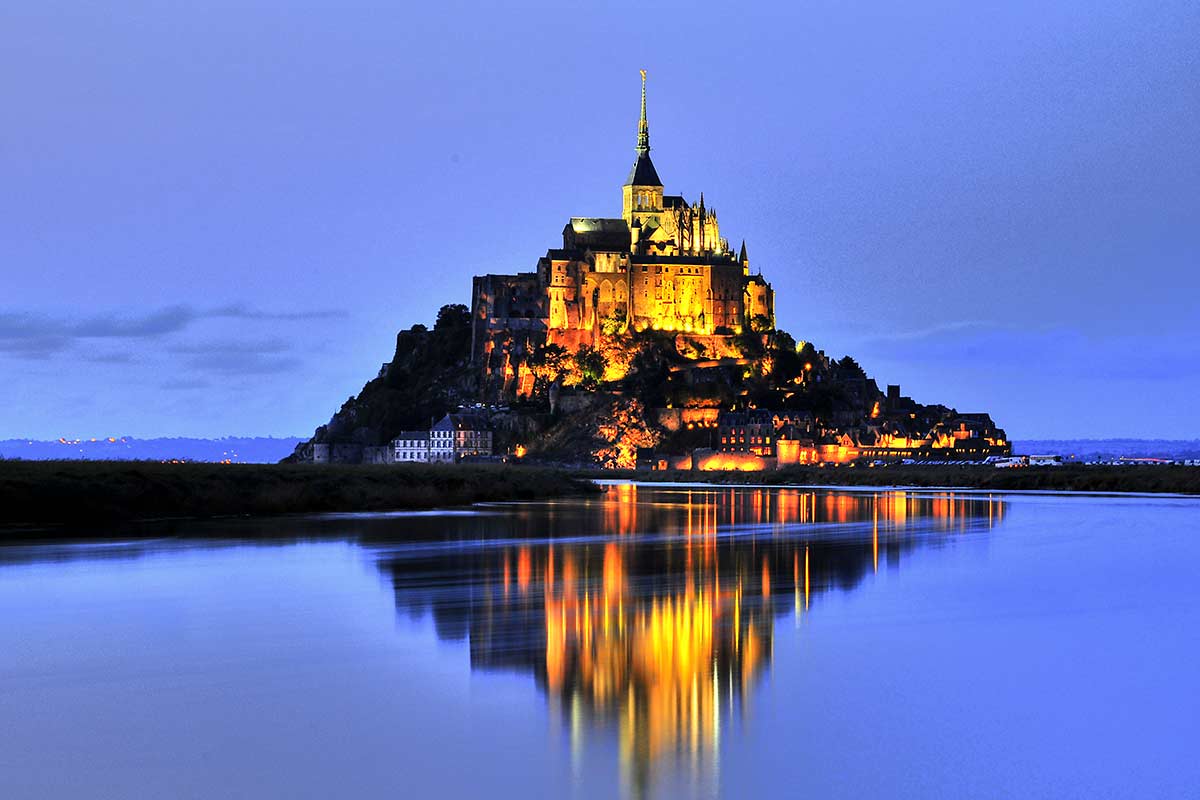

It’s the best-known landmark in Normandy, and quite possibly in the top 10 most famous landmarks in France.
This tiny tidal island sits on the historic border – the River Couesnon – between the Duchies of Normandy and Brittany. It came to prominence because St Michael the Archangel is said to have appeared three times in visions to the local bishop, Aubert of Avranches, urging him to build a church (dedicated to him) on the island.
Aubert complied, but the Normans ceded the Mont and the Cotentin Peninsula to Brittany in 867. At the time the weakened Normans were unable to defend the coastline against Viking raids, although they re-acquired the territory in 933.
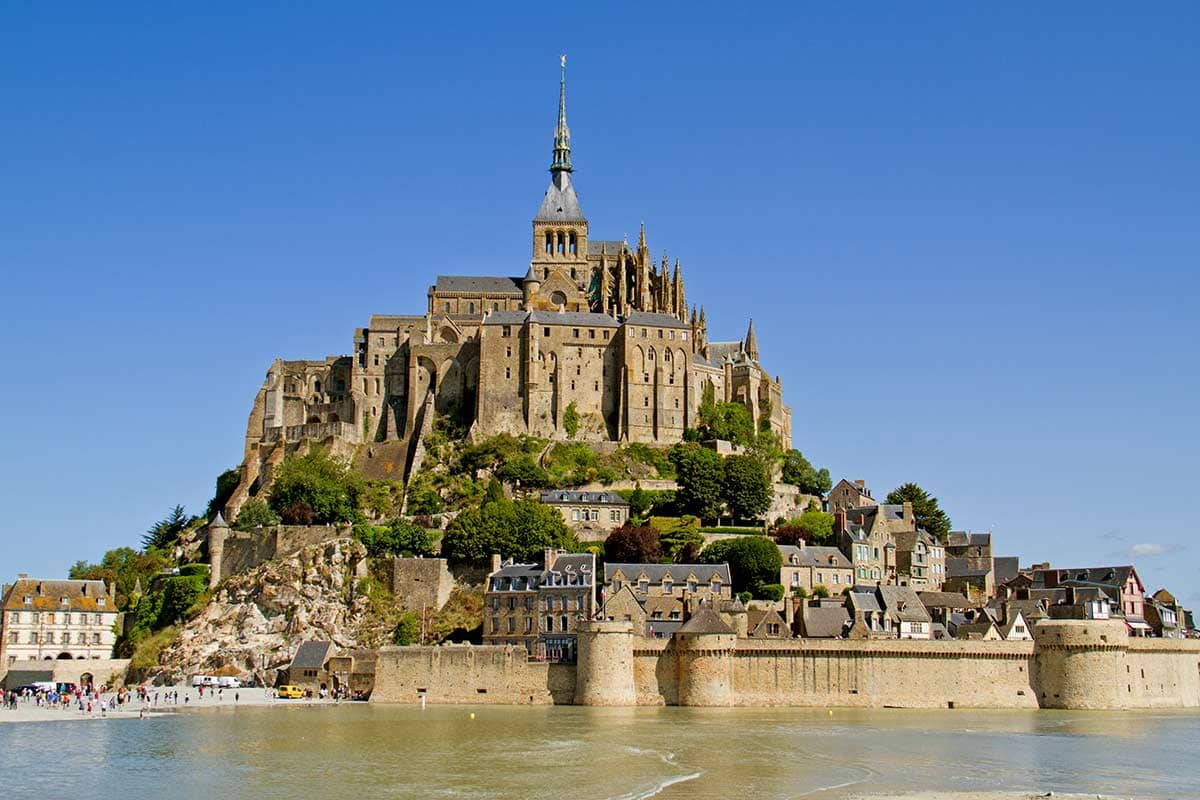
The church was built on top of the granite hill, originally in the Romanesque style, but it had to be rebuilt following severe fire damage in 1204. It was then reconstructed in the Gothic style, with its pointed arches, and the choir and apse are one of the most beautiful examples of French Gothic anywhere. The spire, the crowning feature of its instantly recognisable outline, was added in the 19th century.
The Abbey and island were also fortified, so effectively that English forces were unable to capture it during the Hundred Years War. From the time of the French revolution (late 18th century) the Mont was used as a prison, and it was used for this purpose to hold collaborators near the end of the Second World War.
Until the 2000s you could reach the Mont by a causeway, with a large (and unsightly) car park just below the entrance. This was replaced by a bridge (le Pont Passerelle) along which you can either walk or ride a free shuttle bus to the Mont. It’s an enormous improvement. Entry to the Mont is free – you only require tickets to visit the Abbey, which you can book here.
Mont Saint Michel is the most-visited place in France after Paris, so it’ll be very crowded for much of the time that you visit. If you can, try to visit in the shoulder season when the crowds are nowhere near as bad.
Getting there: You either need to drive or join a tour to visit Mont-Saint-Michel. The nearest train station is Pontorson-Mont-Saint-Michel, eight miles (13 km) south of the Mont.
Tours To Mont-Saint-Michel
This Mont St Michel tour from Paris takes you there and back, leaving you around 4 hours on the Mont – plenty to see the main sights including the Abbey. You have the option of a guided tour, audioguide or exploring by yourself while there.
This Mont-St-Michel tour from Le Havre is tailored to cruise passengers on a shore excursion, giving you 4 hours at the Mont and transport door-to-door each way.
This Mont-St-Michel day tour from Rennes also includes stops at the historic walled town of Saint-Malo and the nearby fishing port of Cancale
You could also opt for this private tour to Mont-St-Michel from Caen or Bayeux.
Rouen Cathedral
One of the great Gothic Cathedrals of France
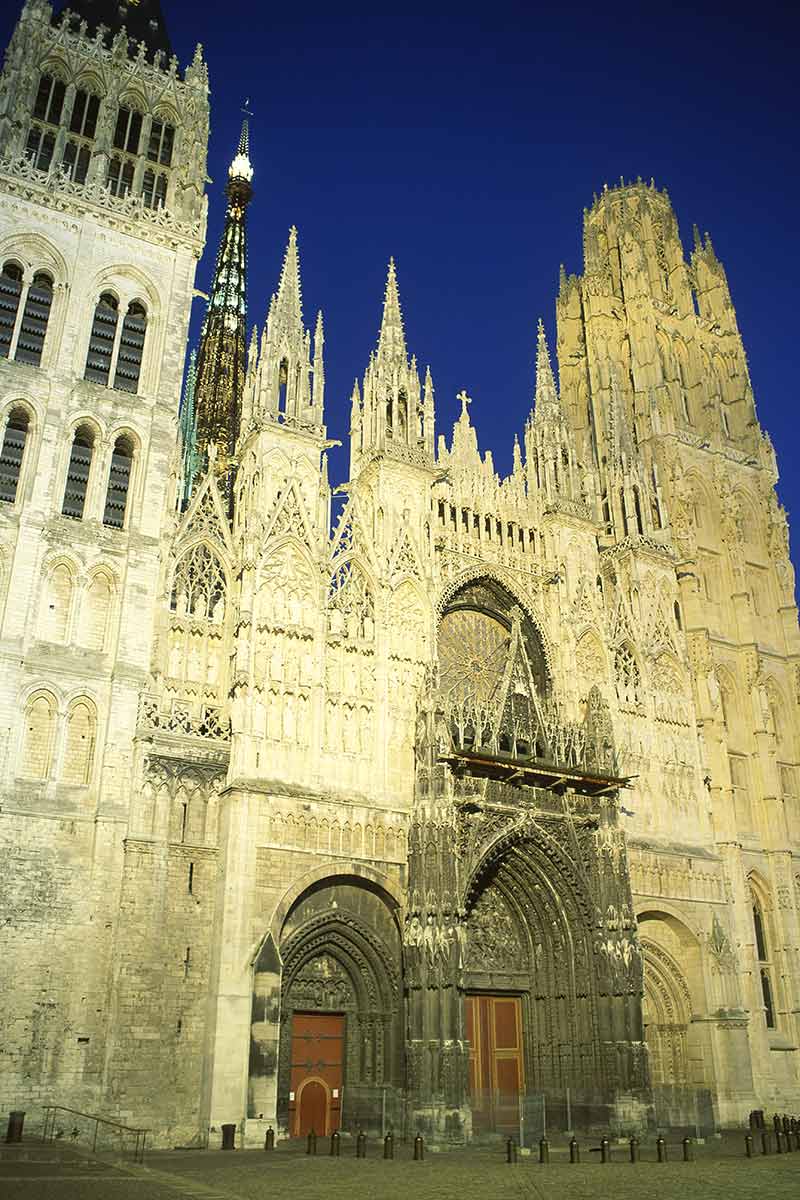


For four years – 1876 to 1880 – the spire of Rouen Cathedral was the tallest building in the world. At 495 feet (151 metres) it was eventually surpassed by the twin spires of Cologne Cathedral in Germany – also the culmination of several centuries of construction work.
There isn’t an official record for ‘most elaborate west front’ or ‘most difficult cathedral to fit in to even an ultra-wide-angle lens’ but Notre Dame de Rouen would be the undisputed holder of both.
The interior hasn’t changed a great deal (other than restoration work) from the Gothic church completed towards the end of the 13th century. However, the towers have required a vast amount of work down the centuries.
The north tower, the Tour Saint-Romain, was completed in the 12th century in the then-new Gothic style, and the south tower (Tour de Beurre – Butter Tower) was added in the 15th century in Flamboyant Gothic style.
The central spire – constructed from lead and wood – was rebuilt around 1514, during the Renaissance period. This spire eventually collapsed in 1822 after being struck by lightning – it wasn’t completed until almost 60 years later. This iron spire survived a recent fire in July 2024, mercifully avoiding the fate of the spire of Notre Dame de Paris. Parts of it are likely to be clad in scaffolding for the next few years.
The somewhat overloaded west front was the subject of Claude Monet’s study of the effects of light on the stonework. He made over thirty paintings in total, and five of these are on permanent display in the Musée d’Orsay in Paris. He mainly focused on the central part of the west front, including the rose window, and also included part of the Tour Saint-Romain on the left side of the paintings.
Tours: This introductory guided walking tour of Rouen is a great way to get your bearings in this stunning medieval city
Where To Stay: Hotel Radisson Blu, Rouen Centre – great luxury chain option next to the city’s early medieval Castle, and a few minutes’ walk from the historic centre of Rouen
See Also: 12 Wonderful Things to Do In Rouen
Quai Sainte Catherine, Honfleur
One of the most beautiful waterfronts in Europe


The Seine estuary port of Honfleur is one of the loveliest towns in Normandy, and like several other places in this article, an inspiration to the artists of the early Impressionist movement in the late 19th century.
The estuary light attracted major painters including Claude Monet, Gustave Courbet, Georges Seurat and local Eugene Boudin. They were all drawn to the row of tall, narrow slate houses on Quai Sainte Catherine, which overlooks the Old Port (Vieux Bassin) of Honfleur. I rate it one of the most beautiful streets in Europe, a great place to stop at one of the pavement cafes in the morning before the crowds arrive.
There are plenty more things to do in Honfleur, from the Eugene Boudin Museum to the small but intriguing Maritime Museum and the Church of Ste Catherine, the largest wooden church in France.
Getting there: regular buses (30 minutes) run from Le Havre.
Tours: This private day trip from Paris visits Rouen, Honfleur and the dramatic cliffs of Étretat.
Where To Stay: L’Hotel Absinthe – superb harbourside hotel in a 16th-century building with outstanding views
Cliffs of Étretat
The magnificent white cliffs of the Pays de Caux


The Côte d’Albâtre – Alabaster Coast – is one of the most beautiful coastlines in Europe. Its white chalk cliffs run continuously from close to the port of Le Havre to Le Tréport, to the north of Dieppe, a distance of around 75 miles (120 km) with a few breaks for estuaries along the way.
Much of the coastline is a continuous beauty spot, and the most spectacular point along it is at Étretat. Just southwest of the town, the Falaise d’Aval is one of the most striking sea arches in Europe, resembling a whitened elephant’s trunk being dipped into the water. Beyond this is a needle-shaped sea stack, one of several along the coastline.
Étretat is a great place for a beach or seaside holiday, and even better for coastal walks. It’s a phenomenal coastline, one of the most beautiful in Europe, and on my ‘return bucket list’ for a few days hiking those clifftop paths.
Tours: This Étretat and Honfleur day tour from Paris is a great way to see two of the most famous landmarks in Normandy if you don’t have much time available.
And this Étretat and Honfleur shore excursion from Le Havre or Rouen does the same thing, albeit with considerably less distance to travel.
Where To Stay – Dormy House – cliffside hotel with breathtaking views of the beach and sea
Abbaye aux Hommes, Caen
One of the great Norman Romanesque churches, and resting place of William the Conqueror
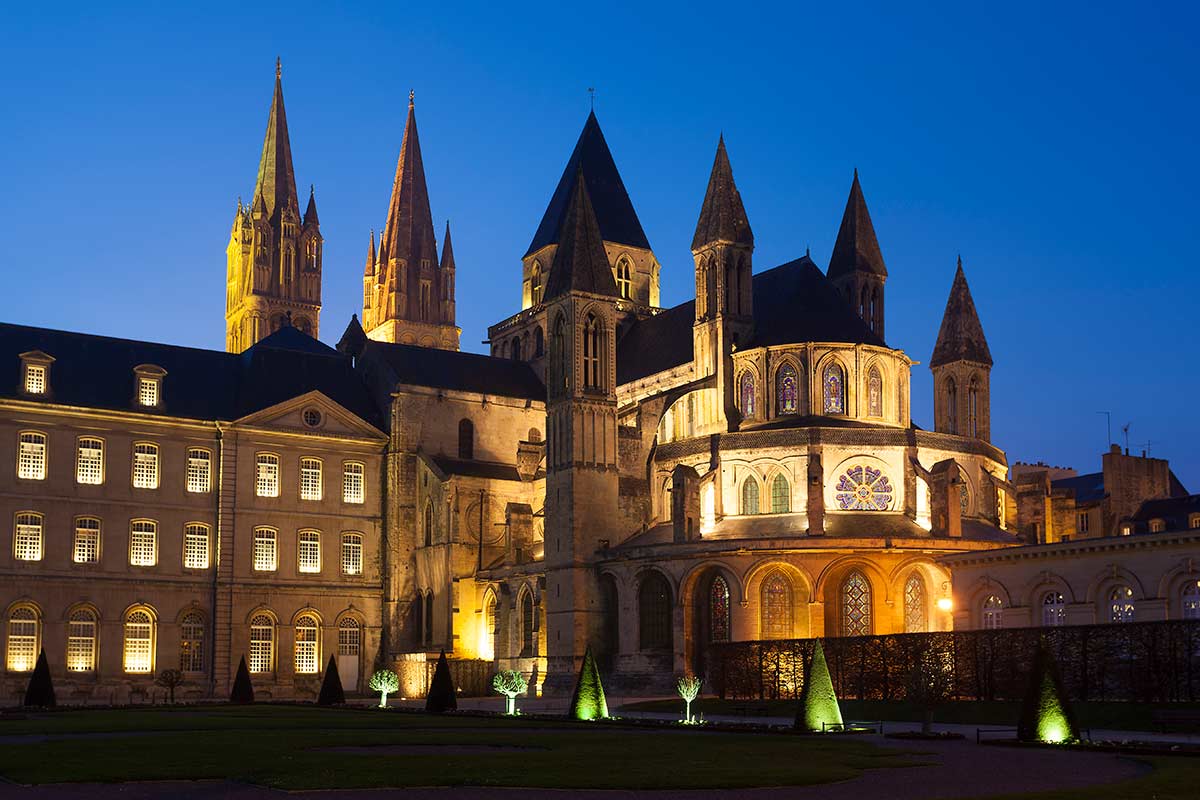
The Abbaye aux Hommes – the Abbey for Men, counterpart to the nearby Abbaye aux Dames – is one of the most impressive churches in Normandy. It was built at the behest of William the Conqueror, and begun in 1066, the same year as this Conquest of England.
Much of the church had been completed by the time of his death in 1087, and he was buried there, and his tomb remains intact. Although William didn’t manage this at his own funeral, suffering the indignity of his corpse bursting when squeezed into too small a grave, emitting a rancid stench through the church in the process. His wife Matilda died four years before him and is interred in the aforementioned Abbaye aux Dames.
The church – dedicated to Saint-Étienne (St Stephen) is more ornate outside than within. The exterior is graced with a copse of elegant spires, while the interior is more humble, highly impressive Romanesque, with a restored Gothic apse. His tomb can be found there, near the high altar.
Caen is a fascinating historic city which often gets overlooked as it’s seen as a jumping-off point for the nearby D-Day Beaches. It deserves at least a day of anyone’s time. This Caen guided walking tour gets exceptional ratings, making a great introduction to William the Conqueror’s capital of Normandy.
Mulberry Harbour, Arromanches
Prefabricated harbour that played a huge role in the D-Day landings
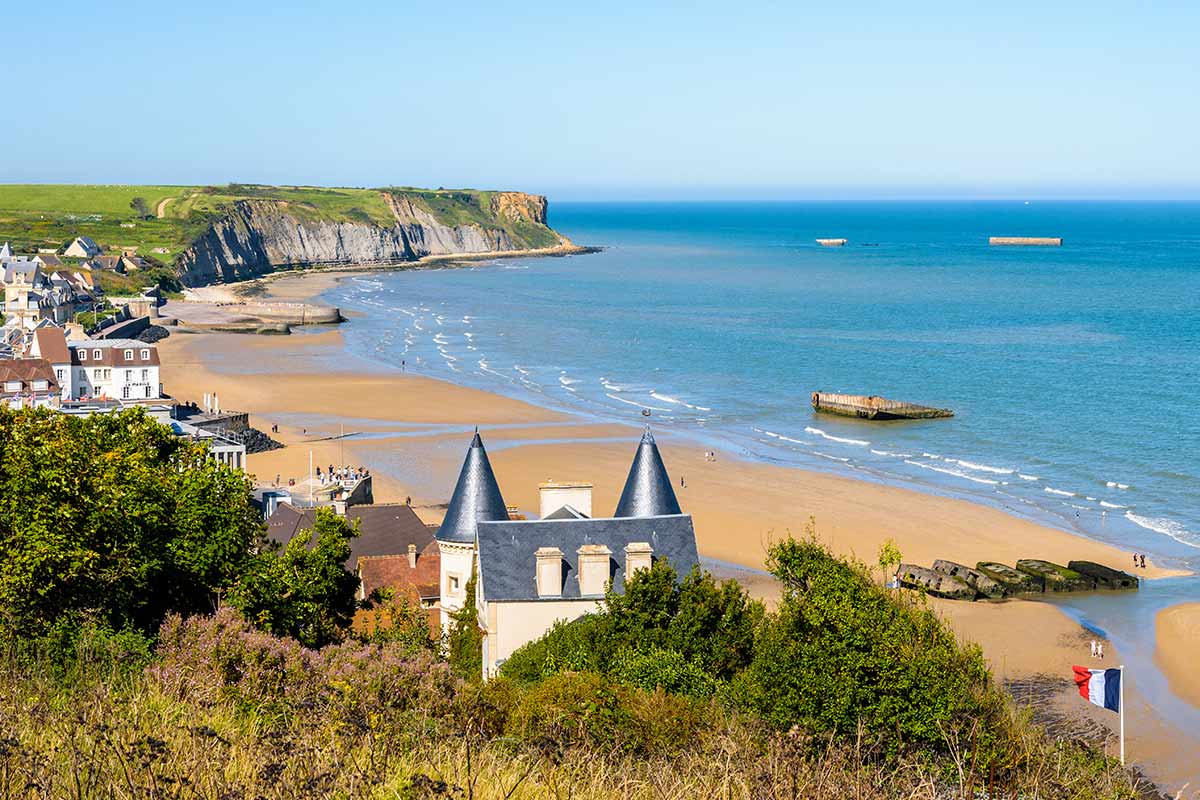
The D-Day landings that began on June 6th 1944 were the largest military maritime landings in history, and the significance of this is reflected in the recent inscription of the D-Day Beaches and Landing Sites as a UNESCO World Heritage Site in 2026.
After a raid on Dieppe in 1942, the Allies realised that they would need deep water harbours to offload their heavy cargo – troops, and also artillery and armoured vehicles. In order to accomplish this, the British set about building and bringing prefabricated harbours with them in June 1944.
Two of these ‘Mulberry Harbours’ were built – one for US troops landing at heavily-defended Omaha Beach, and the other just offshore from the town of Arromanches-les-Bains. There was relatively little combat at Arromanches, hence the ease with which the harbour was installed.
A violent storm thirteen days after D-Day destroyed most of the Omaha Beach harbour, but large sections of the Arromanches Mulberry Harbour remain, with several sections of it on the beach accessible at low tide. It soon became known as Port Winston, after British Prime Minister Churchill. For the best view of the Mulberry Harbour at Arromanches, climb the small hill at the east end of the beach.
And while there, don’t miss the D-Day Museum (Musée du Débarquement) on the seafront overlooking the beach.
Tours:
This excellent Gold Beach to Caen tour covers Arromanches, the British Memorial and Canadian War Cemetery, plus a visit to the superb Memorial de Caen.
This D-Day shore excursion from Le Havre explores the American landing sites at Omaha Beach, the American Cemetery and Pointe du Hoc.
And this D-Day beaches tour from Paris includes visits to Omaha Beach, Pointe du Hoc, the American Cemetery, Arromanches and Juno Beach.
Where To Stay: Hotel de la Marine – a great base for exploring the D-Day beaches, right on Arromanches seafront
Coutances Cathedral
One of the greatest Gothic cathedrals you’ve never heard of
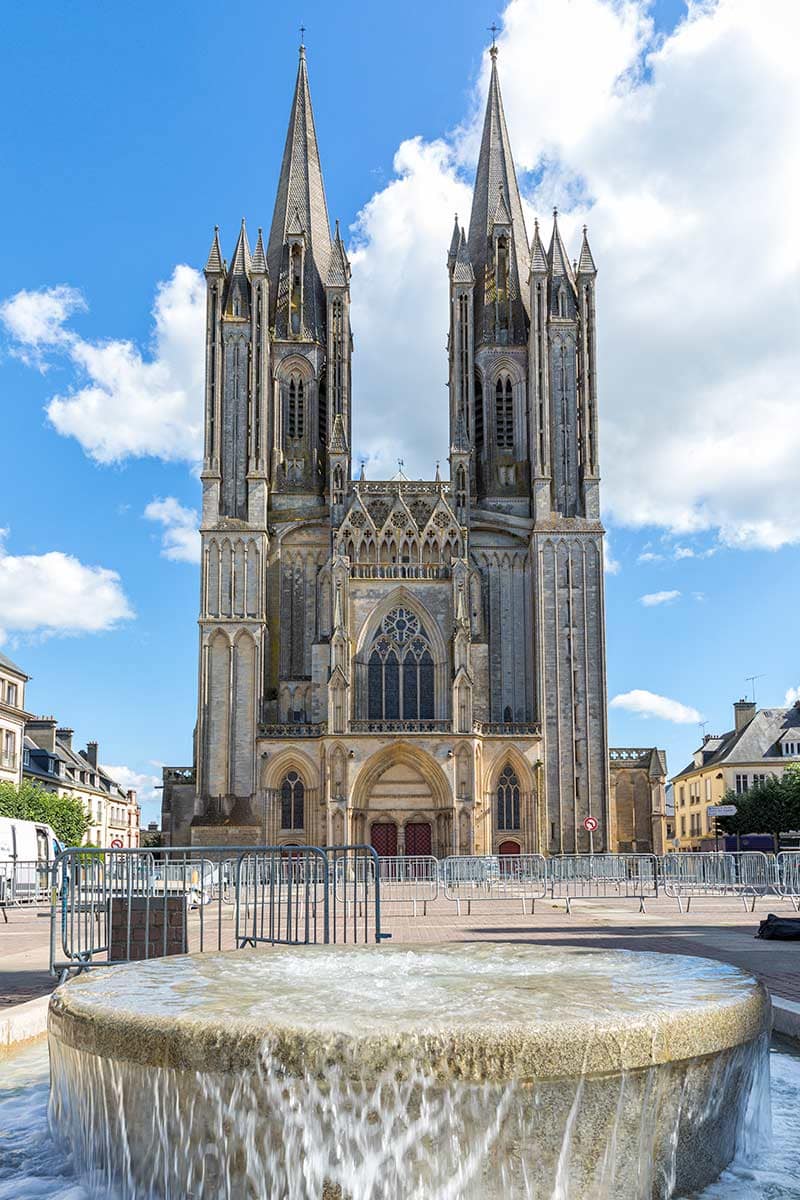
Normandy is slowly growing in popularity, but many of the places I write about here are still way off the beaten track. The superb Gothic Coutances Cathedral is one of the more surprising places that haven’t gained wider recognition.
The 295-feet west spires of Coutances Cathedral dominates the Cotentin landscape and is visible from many miles away. Some years ago a writer friend of mine on a plum job called me from the Channel Island of Jersey to ask what the vast church on the French mainland was that he could see. One glance at the map told me – it had to be Coutances.
Unusually, the Cathedral was built in one single, albeit long, phase, between 1210 and 1274. This is rare among medieval churches and cathedrals – La Sainte Chapelle in Paris is another example, albeit completed in a far shorter time frame.
It’s a stunning Cathedral, especially its west front and the clusters of smaller spires around the two main towers. The central lantern tower is also hugely impressive from outside and from within, flooding the interior with light.
The interior was recently restored, and I wonder if this project may have had an influence on that of Notre Dame de Paris. As was the case with Notre Dame, the stonework inside has been cleaned to resemble how it would have appeared when built in the 13th century, something you don’t see in many French (or other European) Cathedrals.
If you’re driving south towards Mont-Saint-Michel, this is on e of the best detours you could make along the way.
Where To Stay: Hotel La Pocatiere – friendly mid-range hotel close to the centre of Coutances, great base for exploring the surrounding area
See Also: The Best 7 Day Normandy Road Trip Itinerary
Le Volcan (the Volcano), Le Havre


Le Havre, France’s second-largest port city (after Marseille) was largely destroyed by Allied bombing during the 1944 Normandy landings and their aftermath. The city where the art genre of Impressionism was born was blitzed beyond recognition, so it had to be rebuilt.
Most of the modern city (now a UNESCO World Heritage Site) was designed by Belgian architect Auguste Perret, and some buildings were contributed by the architect of Brasilia, Oscar Niemeyer. One of the latter’s buildings is the gleaming white Volcan, now Le Havre’s most prominent concert venue and performance space.
Unlike the angular buildings and straight lines of Perret, Niemeyer’s Volcan is curved, and from a distance it looks like an upturned yoghurt pot, one of its popular nicknames. It’s only a few minutes’ walk from Le Havre’s main train station, so easy to reach if you’re passing through.
Tours: This guided Le Havre walking tour is a great introduction to the post-war city, visiting Le Volcan, Perret’s St Joseph Church and much more
Bayeux Cathedral
One of the great underrated French Cathedrals
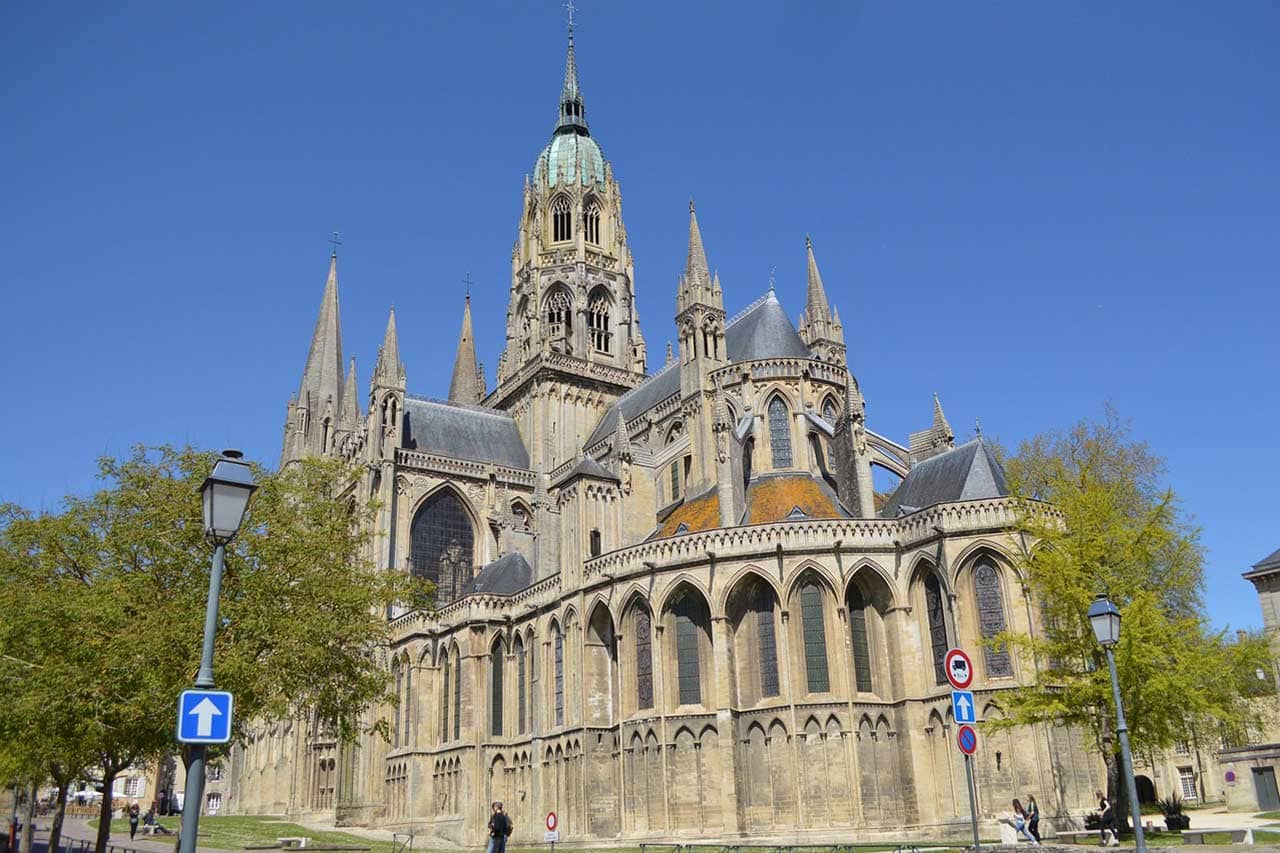
The small city of Bayeux is best-known for its wondrous 11th-century Tapestry, which depicts the events leading up to and the Battle of Hastings of 1066, in which Duke William of Normandy seizes the English throne.
More widely known as William the Conqueror (Guillaume le Conquérant in French), he was present at the consecration of the rebuilt Cathedral in 1077, and the Tapestry was hung there afterwards. The Cathedral may well have been where William’s rival to the English throne, Harold Godwinson, was made to swear an oath promising the Crown to William, an event depicted in the Tapestry.
After fire damage the Cathedral was rebuilt in the new Gothic style in the late 12th and 13th centuries, but it sustained severe damage at the hands of Calvinists towards the end of the 16th century. It wasn’t until the 1850s that a full restoration was undertaken, led by Eugene Viollet le Duc. It was only then that the domed central tower was completed.
The spires and dome of Bayeux Cathedral are visible from miles away, and during the 1944 Normandy landings the Cathedral was a useful navigation marker for Allied troops. Despite its proximity to the D-Day Beaches, the Cathedral and most of the Old Town suffered very little damage compared to nearby Caen.
Tour: This daily 2-hour guided walking tour of Bayeux is a great way to get acquainted with one of the loveliest medieval cities in France.
Where To Stay in Bayeux – Domaine de Bayeux – beautiful 18th-century house with tree-lined gardens just south of the city centre
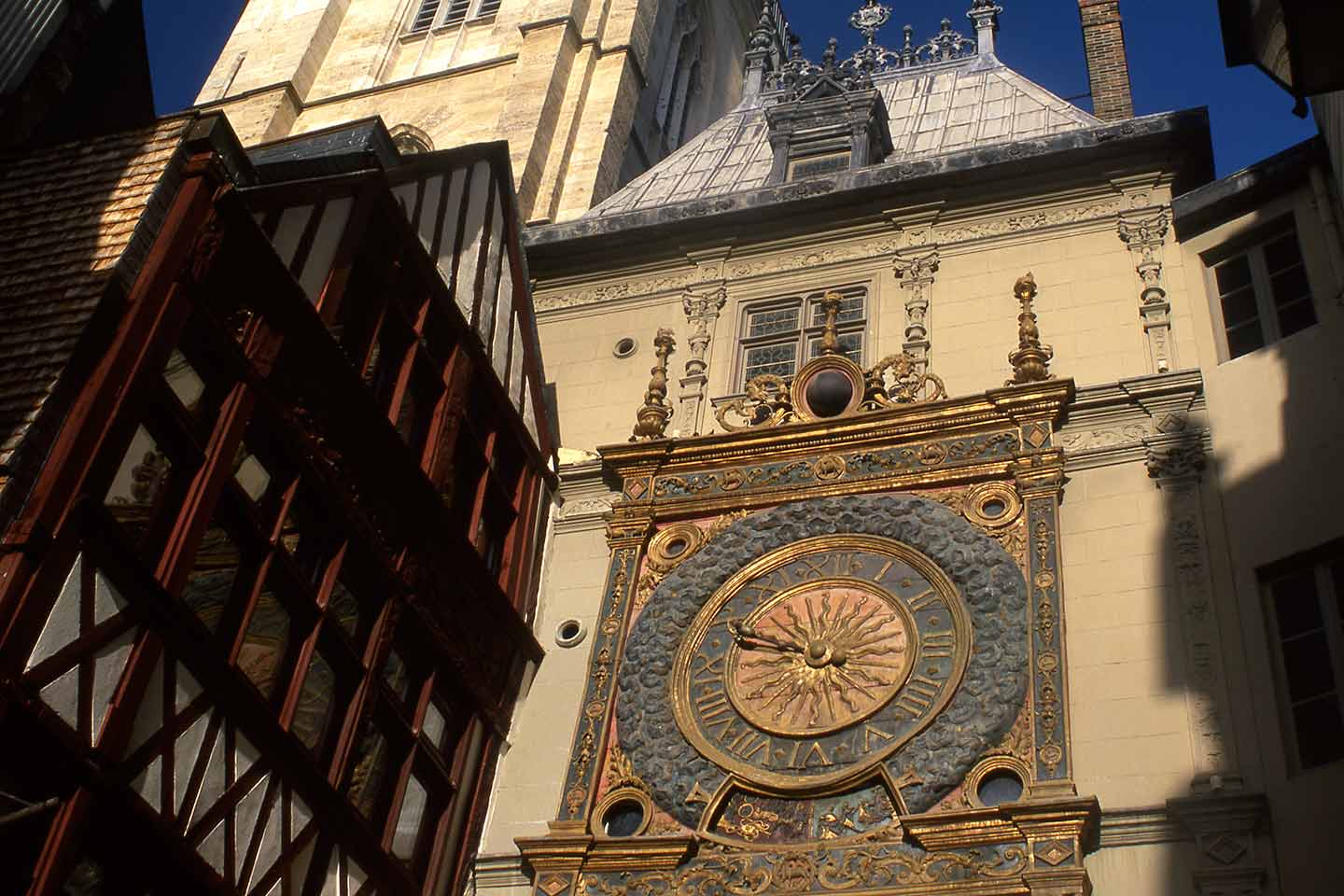
Gros Horloge, Rouen


The Gros Horloge in Rouen is one of the oldest and most beautiful astronomical clocks in Europe. Its mechanism dates back to the 14th century, and its connected to an outer face dating from around 20 years later, which graces both sides of an archway above the street below.
This building is from the Renaissance period, and the sheep depicted are a reminder that much of Rouen’s medieval wealth came from the wool trade.
The Clock is well worth a visit, which includes the interior of the clock face and the adjacent belfry, where the town’s oldest bells are stored. It’s open Tuesdays to Sundays year round (10.00 am to 1.00 pm and 2.00 pm to 7.00 pm (6.00 pm during the October to March low season).
Chateau Gaillard
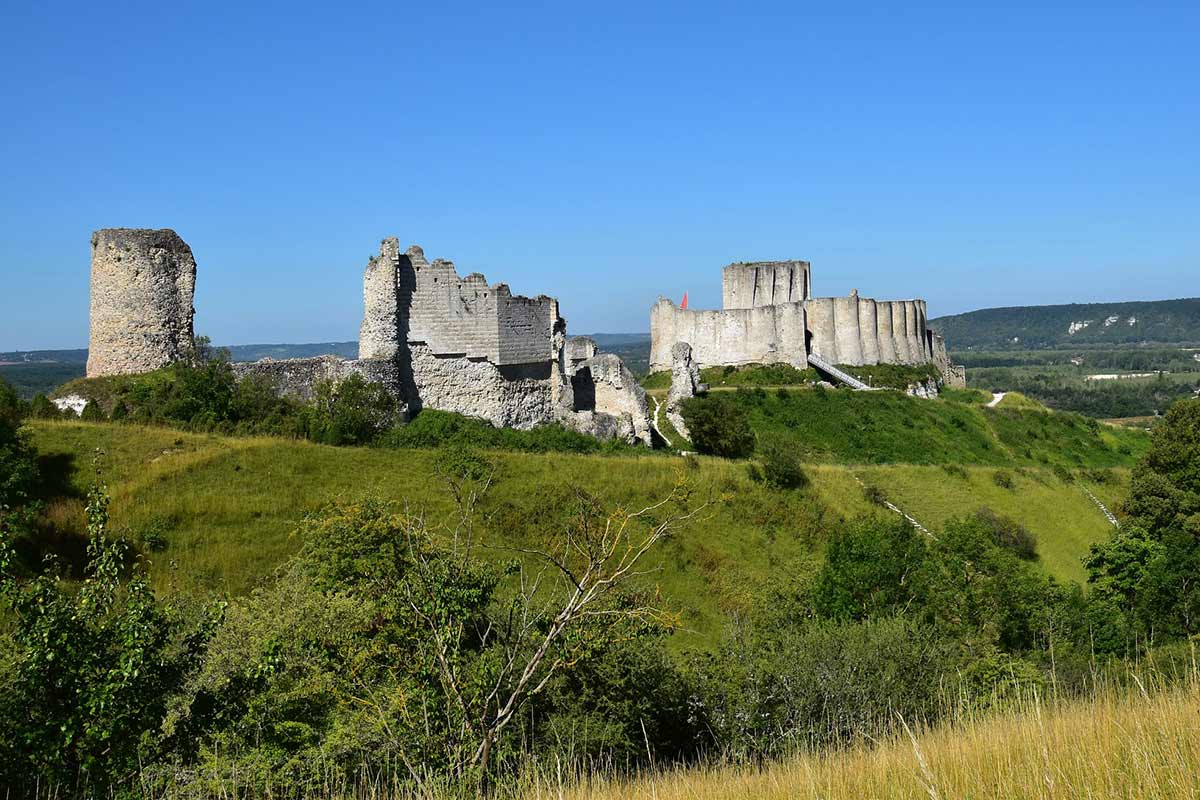
Chateau Gaillard is one of the most impressive castles in Normandy, and one of the best places to visit on the River Seine.
This formidable castle was built for Richard the Lionheart (King Richard I of England, and also Duke of Normandy) between 1196 and 1198. It’s on a hilltop overlooking the Seine, above the village of Les Andelys. It was technically advanced for its time, with the main keep (donjon) built inside another tower, the inner bailey.
Richard boasted that the castle couldn’t be captured even if its walls were made of butter. He lived at the Castle for much of the last year of his life, but died from a wound from a poisoned arrow in 1199. It was then captured during the reign of his successor to the English throne, King John, inn 1204 by forces under French King Philip II.
If travelling from Paris, you can get to Chateau Gaillard by catching the train to Vernon (as you would for Monet’s Garden in Giverny) then catching the 207 bus to Les Andelys village.
Where To Stay – La Maison Carpe Diem – lovely guesthouse in a 19th-century building in Petit Andely village, a few minutes’ walk from Chateau Gaillard
Jumièges Abbey
‘The most beautiful ruin in France’ according to Victor Hugo

This Benedictine monastery was founded in the 7th century, though the ruined Romanesque church you see today was built between 1040 and 1067. It was a renowned centre of learning, and also widely recognised for its work helping the poor.
It was damaged during the Hundred Years War, but was largely restored by the late 16th century. The French revolution meant further, more significant damage, leaving the twin west towers, part of the nave and crossing tower, part of the cloister and the ruins of some outbuildings.
There are several other fine ruined abbeys round Normandy, including nearby Saint-Wandrille and Saint-Martin-de-Boscherville, both of which are also worth a visit.
Getting there: Five buses a day run from Mont-Riboudet station (in the west of Rouen) to Jumièges. Otherwise it’s a 30-minute drive from the centre of Rouen.
Tours: This private Historic Normandy Day Tour from Rouen visits several great sitres in the countryside around Rouen, including Jumièges, the Abbey of St Georges de Boscherville, Chateau Gaillard and the gorgeous village of Le Bec-Hellouin
Parachutist, Sainte-Mère-Église
Famous mannequin tangled on a church tower
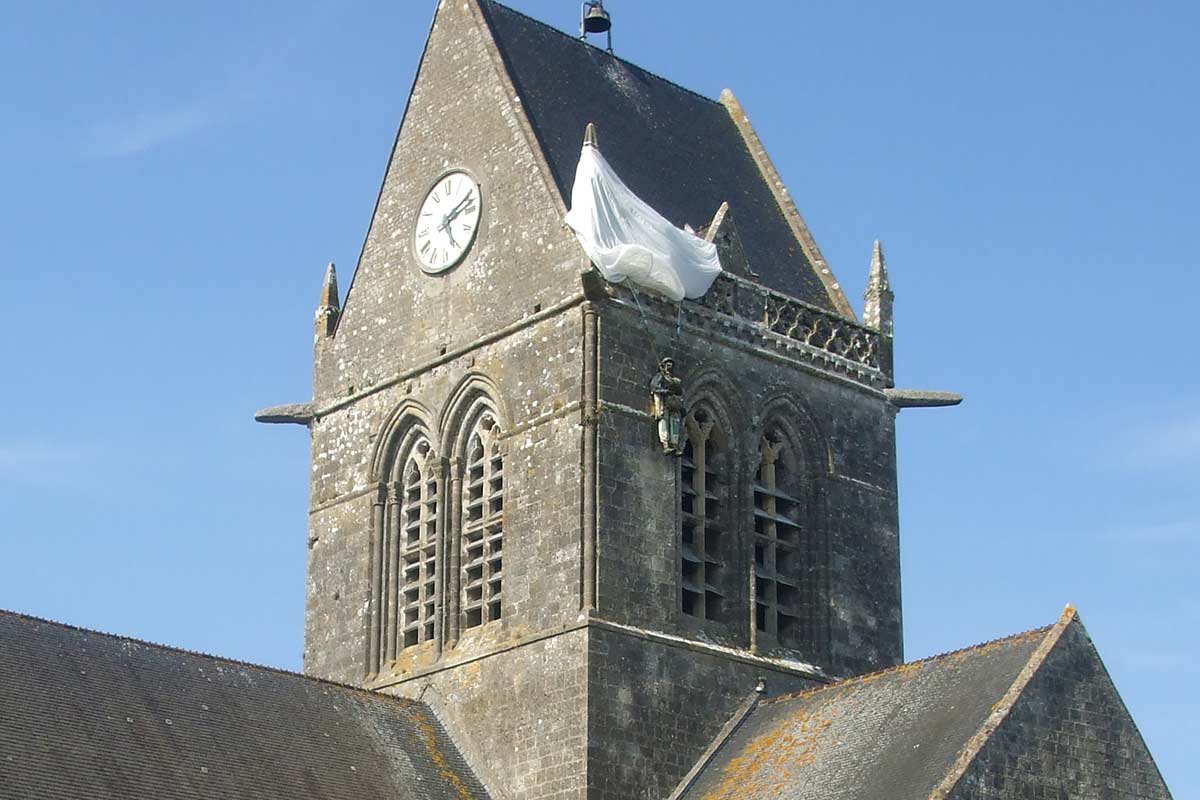
The mannequin of Private John Marvin Steele is one of the most famous D-Day sights in Normandy.
He was part of the 505th Parachute regiment of the 82nd Airborne Division, members of which were parachuted in behind German lines at the very beginning of Operation Overlord, the codename for the D-Day landings on the Normandy beaches. They parachuted in at night, a few hours before the beach landings took place, to the west of the village of Sainte-Mère-Église, which is a few miles inland from Utah Beach, where American forces would land.
Some of the parachutists were mistakenly dropped into the village, and local German forces, on alert putting out a fire in the village, were able to shoot and kill many of them. Private John Steele’s parachute was snagged in the stonework of the village’s church spire, and he dangled there, pretending to be dead, for two hours until Wehrmacht forces took him prisoner.
Steele was able to escape after a few hours’ captivity, as the German forces were preoccupied with the ongoing landings on the nearby beaches. He was able to meet with his comrades in the 505th when they attacked the village, when 11 German soldiers were killed and another 30 were captured. An essential place to visit if you’re exploring the D-Day beaches in depth, as is the Airborne Museum in the village.
Tours: This D-Day Beaches Tour from Bayeux covers the American D-Day sites including Ste- Mère-Église, Pointe du Hoc and Utah and Omaha Beaches.
And if you’re visiting the Airborne Museum in Ste- Mère-Église, you can book your tickets here.
Nez de Jobourg Headland
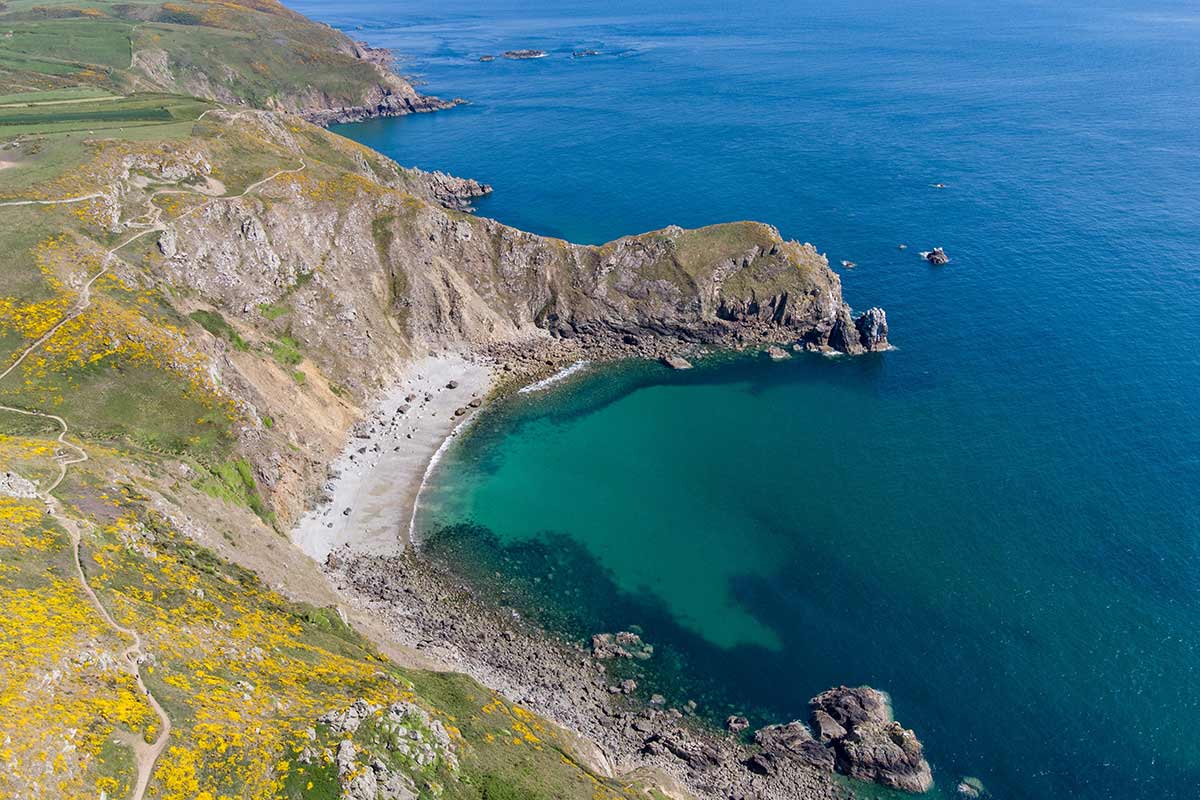
The coast of the Cotentin peninsula has never attracted large numbers of English-speaking visitors, a surprise given its location so close to the Channel Islands less than ten miles offshore.
It’s also a surprise given the beauty of much of the coastline, nowhere more so than around its northwest corner. The highlight (in more ways than one) is the Nez de Jobourg, a headland in the southwest of the Cap de la Hague peninsula, with soaring 128-metre (420 feet) high cliffs and breathtaking views.
Seabirds nest in these cliffs from May to July each year, and the Nez de Jobourg is on the ‘Sentier des Douaniers’ footpath and the long-distance GR223 trail both pass it. Along with the Côte d’Albâtre around Étretat, this is the best coastal walking in Normandy, and if you love hiking the likes of the South West Coast Path in England or the Gower or Pembrokeshire Coast Paths in Wales, you’ll adore this part of Normandy.
Pont de Normandie
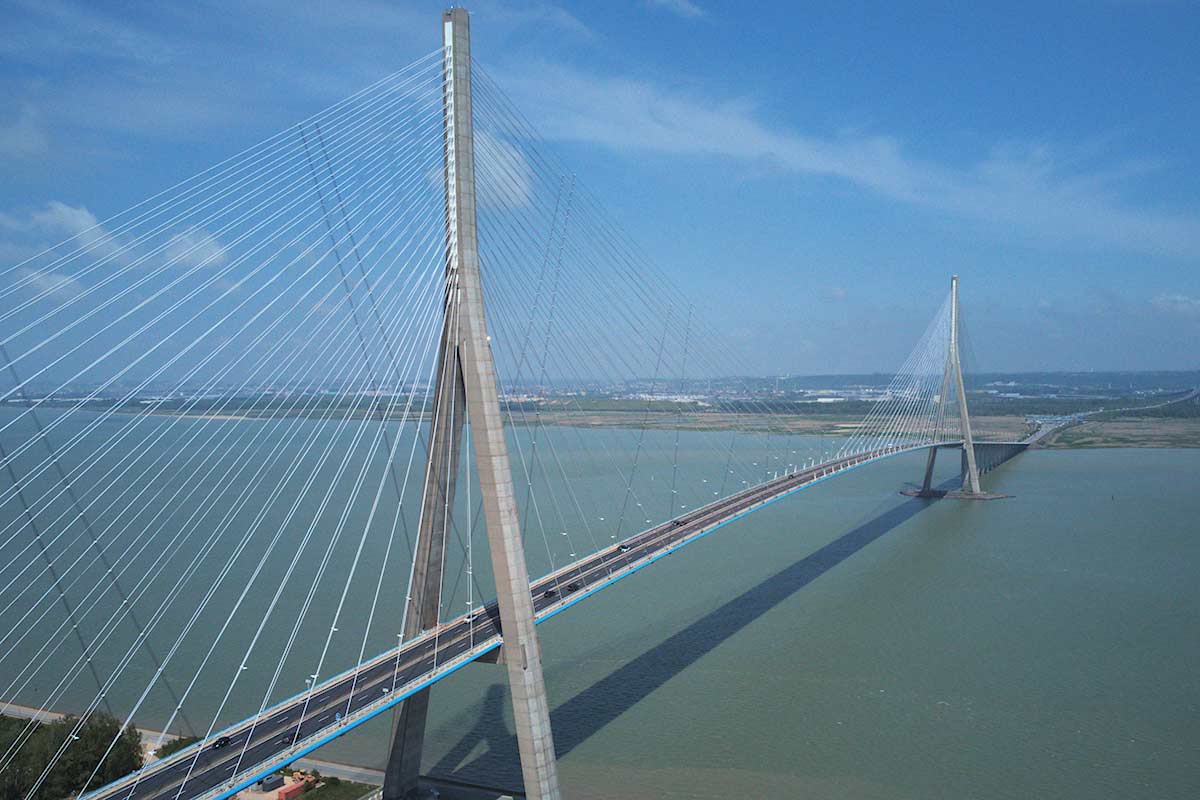
The Pont de Normandie, spanning the Seine estuary between Honfleur and Le Havre, is one of the most impressive bridges in France.
The span of the bridge is over 2.1 kilometres, and it partly superseded the Pont de Tancarville a few miles upstream. It was designed by Michel Virlogeux, who also worked on other renowned bridges in Europe including the Vasco da Gama bridge in Lisbon.
The climb from either side to the centre is surprisingly steep, and the bridge (which carries the A29 autoroute or motorway) has been used as a climb on the annual Tour de France cycle race – the result counts towards the King of the Mountains polka dot jersey competition within the race.
Tours: This Seine estuary boat trip from Honfleur harbour explores Honfleur beach, Le Havre and the Pont de Normandie up close.
Landmarks In Normandy – Final Thoughts

I hope that you’ve enjoyed this introduction to the top sights in Normandy, and that it helps inspire you to visit this gorgeous part of France.
I’ve lived in France for a few months and visited the country a great many times. Here are a few of my articles on Paris and France for you to peruse:
Discover more places to visit in France in our articles here:
- Things To Do In Rouen – Normandy’s gorgeous historic capital
- Normandy Road Trip – 7 days exploring this fascinating part of northern France
- Famous Landmarks in France – 32 must-see headline sights around la belle France
- South of France Road Trip – a 10-day circular route taking in Avignon, Arles, Albi and much more
- Icons of Paris – from the Mona Lisa to the Moulin Rouge, the Arc de Triomphe to Art Nouveau Metro signs, and many more
- Famous Churches In Paris – 22 stunning Parisian churches to seek out
- Best Eiffel Tower Views– 28 best places to see the Eiffel Tower in Paris
- Arc de Triomphe Paris – all you need to know before visiting this great Paris landmark
- Pont Alexandre III Paris – stunning Belle Epoque Parisian bridge
- Sunset in Paris – the 15 best places to see one
- La Sainte Chapelle Paris– one of the most beautiful Gothic churches ever built
- Things To Do In Albi – stunning red-brick World Heritage city with outstanding Toulouse-Lautrec Museum
- One Day In Arles – Roman monuments aplenty, and a chance to follow in the footsteps of Vincent van Gogh
- One Day In Avignon – 24 hours by the Rhone in the City of Popes
- Best Day Trips From Avignon – 14 fantastic day trips from the City of Popes