

From Budapest to the Great Hungarian Plain to the south, and upstream along the Danube to Bratislava, in this article I go in search of Ödön Lechner, the greatest architect of the Hungarian Art Nouveau movement.
In this ongoing series of articles, I follow in the footsteps of people who have had a profound impact on Europe, whether in their art, literary works, or in some cases military or political achievements.
Ödön Lechner is best known for his stunning ceramic tiled roofs, particularly the three landmark buildings that he designed in Budapest. He collaborated closely with the flourishing Zsolnay ceramic company in Pécs, and used their tiles both on roofs and as decoration on the facades of some of his buildings.
In this article I’ll show you seven of his finest buildings. Three of these are in central Budapest, and two are on the outskirts of the Hungarian capital. Another is two hours south of Budapest in the provincial city of Kecskemét, and another is in Bratislava, the capital of neighbouring Slovakia.
I’ll explain how to visit each of them, how to reach them and suggest Art Nouveau-themed tours which visit them and give you longer explanations about each building. I hope that you find it helpful, and that you get to see some of these phenomenal buildings for yourself.
Ödön Lechner – the ‘Hungarian Gaudi’
Lechner is sometimes referred to as the ‘Hungarian Gaudi’. It’s easy to see why the comparison would be made, as they are the best-known Art Nouveau architects from their respective countries, but their work was very different.
Ödön Lechner was a pioneer in the Hungarian Szecesszió (Secession) movement in the 1890s. He was strongly influenced by Hungarian and Central Asian (from where the Magyars originated a thousand years earlier) folk art, including flower motifs and patterns. He felt that there was no Hungarian national architectural style as such, and set out to create one.
In this regard, he shared similar aims to modernista architect Antoni Gaudi in Barcelona, who was influenced by Catalan nationalism, and sought to express it through his work.
The two men were contemporaries, but their careers followed different trajectories. Gaudi remained busy to the end of his life, after devoting years to his final project, the Sagrada Familia Church, before dying in 1926, being mistaken for a tramp after being run over by a tram. Lechner, meanwhile, struggled to obtain notable commissions in his later years. He died a frustrated man having fallen from favour when it came to major projects. Ironically it was only after his death that he came to be fully appreciated, and as later generations were captivated by his work and Art Nouveau returned to favour.
He may have died (in 1914) with a feeling of being thwarted, but his legacy is recognised far more widely than in his own lifetime (nowhere near as much as Gaudi, not that that matters). And his work remains on UNESCO’s books as a Tentative Bid for World Heritage statues. In my opinion he thoroughly deserves such recognition.
Where To Stay In Budapest

Four Seasons Hotel Gresham Palace – extraordinary Art Nouveau building in former insurance company office overlooking the Chain Bridge and Danube
Harmonia Palace – Historic Residence – luxury apartments in a 19th-century renaissance revival palace in Pest
Continental Hotel Budapest – stylish Art Nouveau-era hotel in the former Hungaria Bath from this period
Benczur Hotel – great 3-star hotel in a lovely quiet part of Budapest, near Heroes Square
Budapest Art Nouveau Tours And Tickets
This 3-hour Budapest Art Nouveau walking tour is an excellent starting point, covering several sights including two Lechner buildings near the Danube
This private Art Nouveau walking tour is another great option, also delving into the history of Art Nouveau in Budapest
And you can visit another Budapest Art Nouveau gem, booking your Kazinczy Street Synagogue ticket here
In Search Of Ödön Lechner – 7 Great Buildings
Museum of Applied Arts, Budapest (Iparművészeti Múzeum)
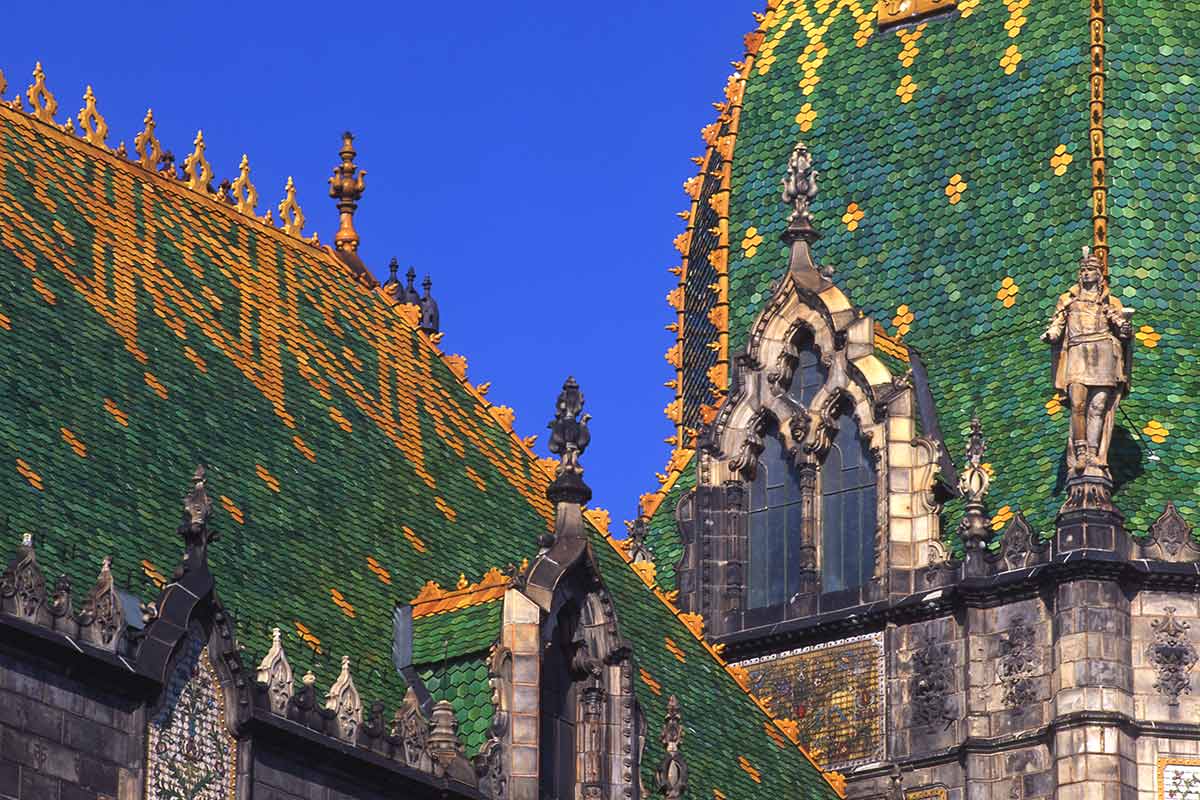
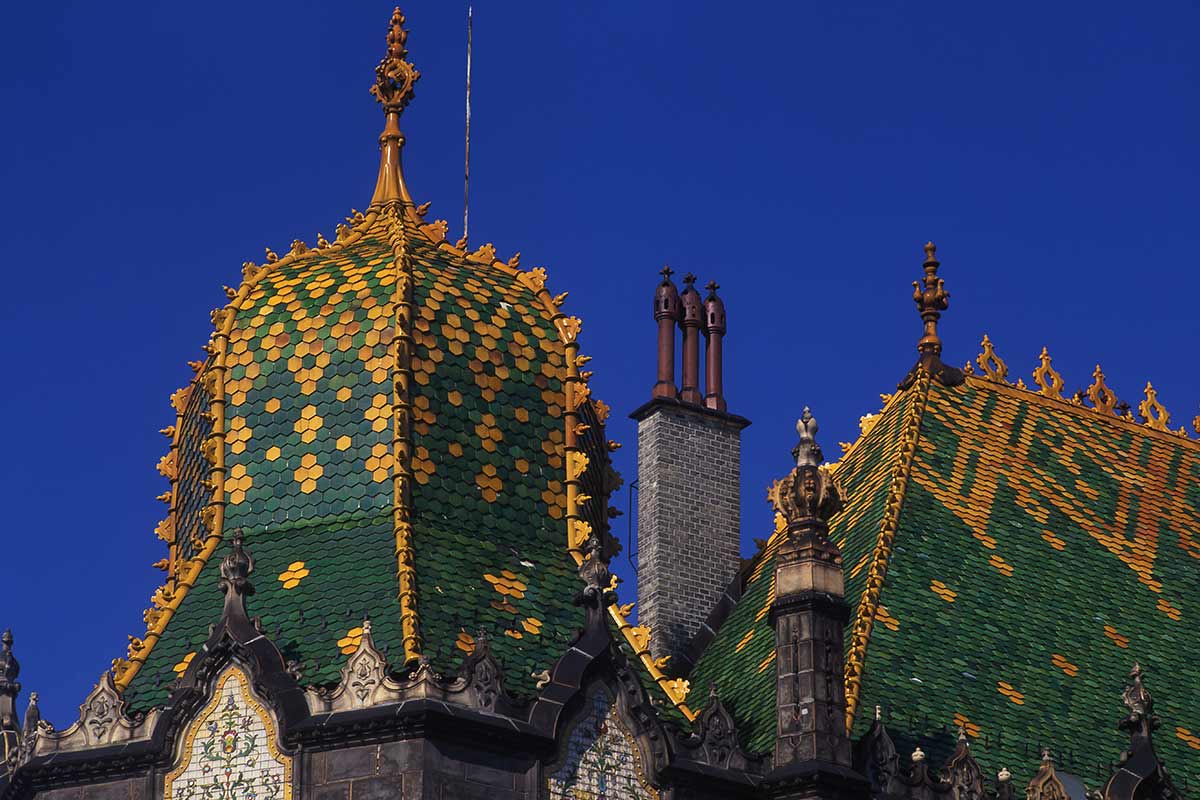
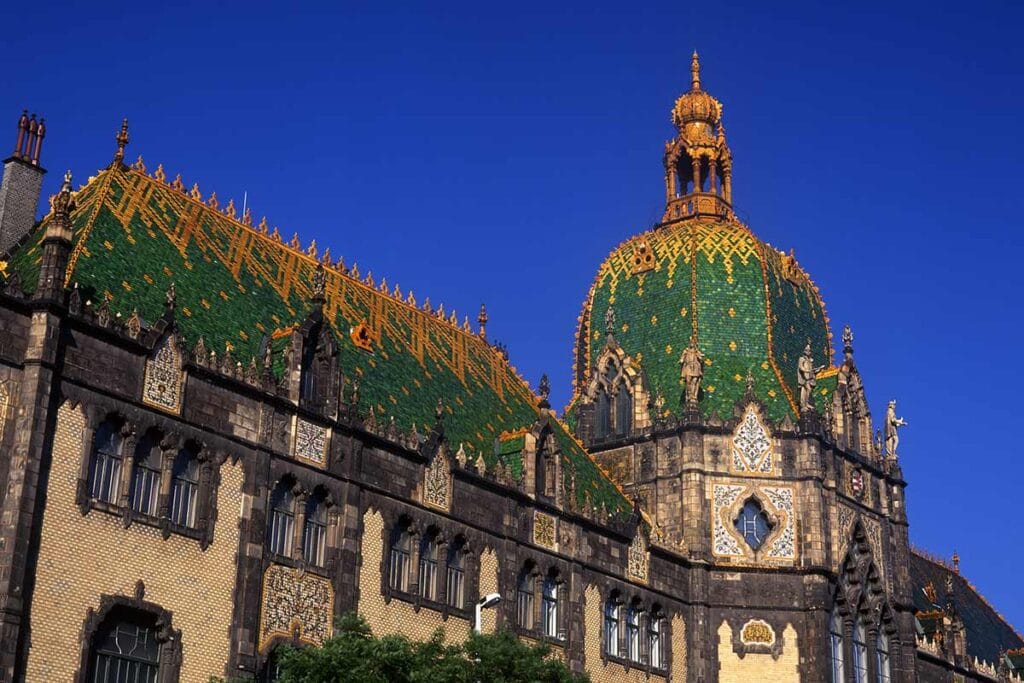
This stunning building in Pest (built between 1891 to 1896) was the first full realisation of Hungarian Art Nouveau. The façade is a mixture of brickwork and ceramic nature motifs, while the roof is a breathtaking blaze of green and gold Zsolnay terracotta tiles, a magnificent sight on a sunny Budapest morning.
The Museum – which has sadly been closed since 2018 for long-term restoration work – is Hungary’s equivalent of London’s Victoria and Albert Museum (often called the V&A), and Lechner studied ceramics there when it was known as the South Kensington Museum.
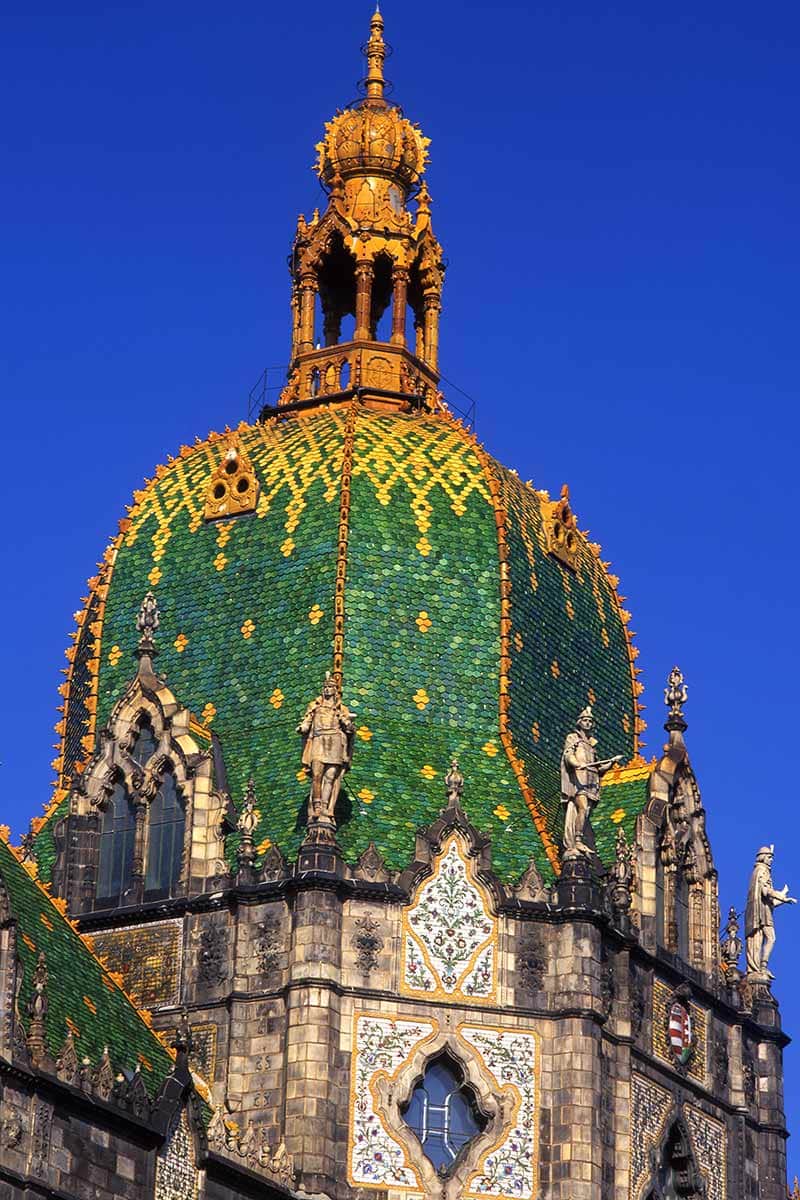
Lechner was influenced by elements of Indian and Mughal design, and this is reflected in the interior of the Applied Arts Museum, especially the decorative arches of the atrium, which resembles a Mughal palatial courtyard.
At the time of writing, the Museum is years away from opening. The lower part of the building exterior is covered with sheeting, but much of the tiled roof – for me the highlight of the building – is visible from street level. The lantern of the dome has been removed for the time being, to be replaced at some point in the future.
Getting there – Metro Line M3 to Corvin-negyed
Geological Institute, Budapest (Magyar Állami Földtani Intézet)
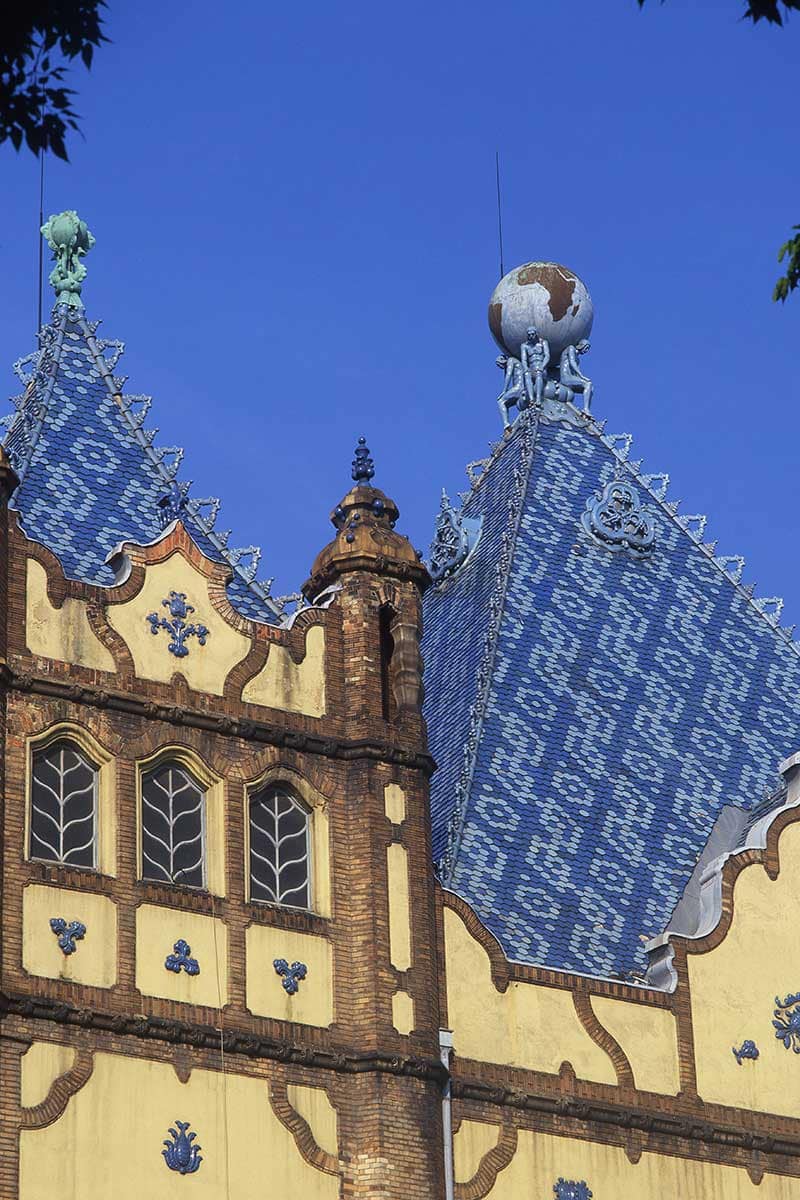
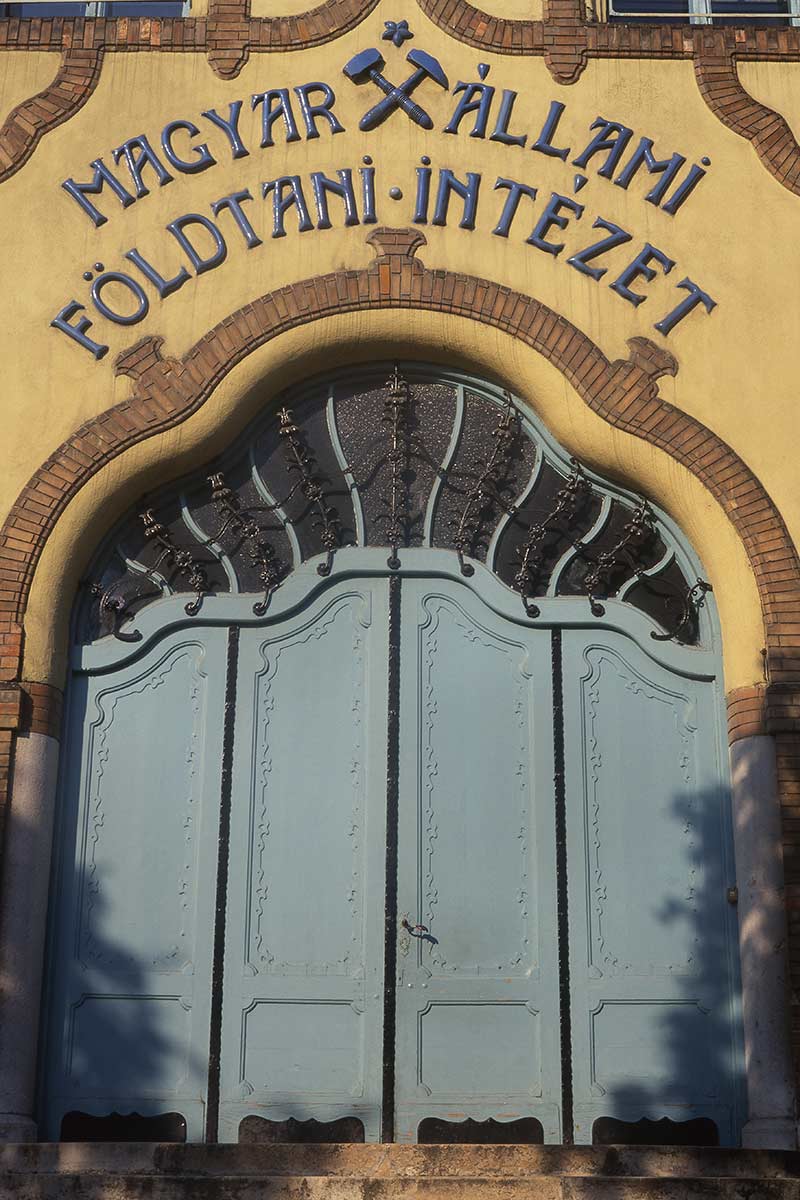
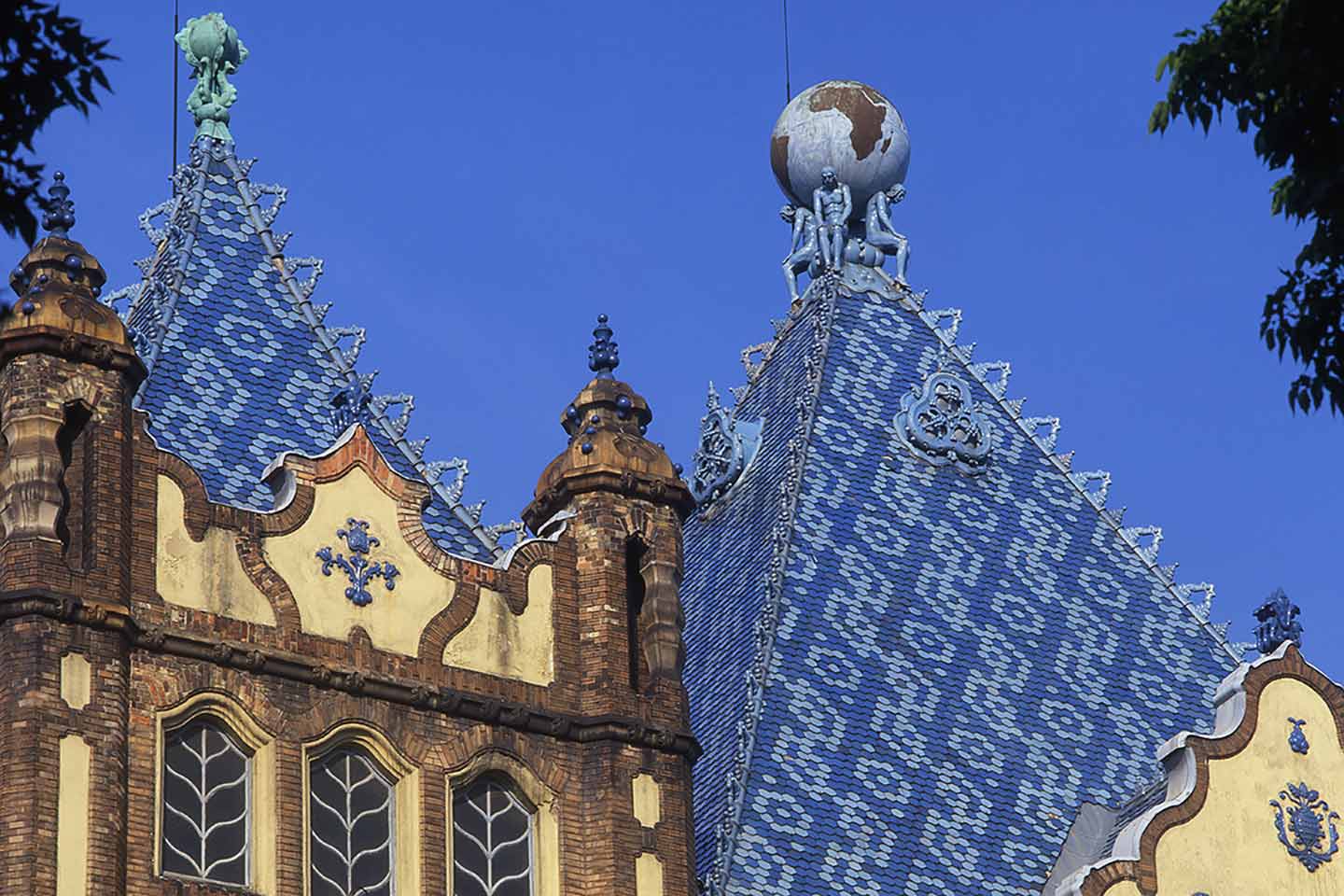
The Hungarian Geological Institute is one of the finest Art Nouveau Budapest buildings, with one of the most beautiful roofs in Europe.
Completed in1899, the building houses research rooms and the small Hungarian Geological Museum, which is usually only open on Thursdays and weekends.
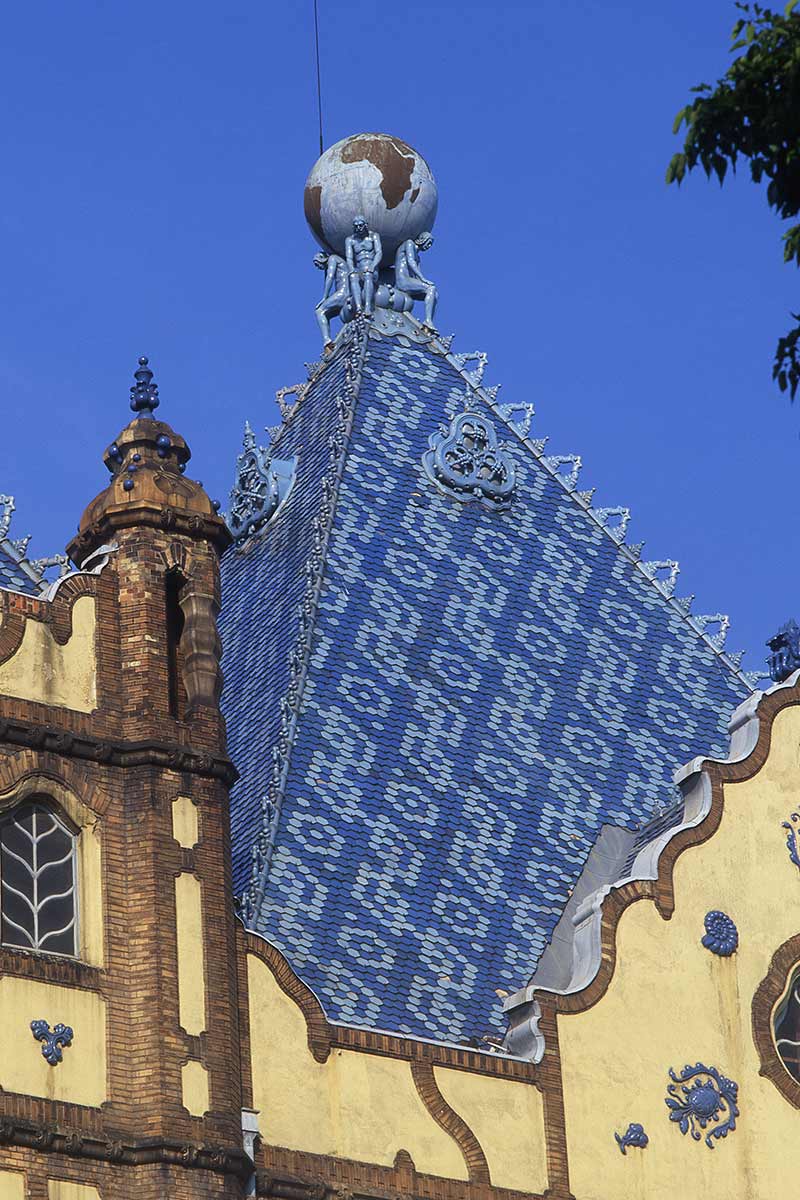
The Zsolnay tiled roof, in dark and light shades of blue, is breathtaking. It represents the ancient Tethys Ocean, which once separated the supercontinents of Gondwana (to the south) and Laurasia to the north) which formed as a result of the breakup of the landmass of Pangaea.
You can also see Lechner’s ceramic decorations on the sides of the building, including blue flower motifs and fossils.
Getting there: Metro M2 to Stadionok followed by a 10-minute walk, or a 3-minute walk from the Egressy út / Stefania út stop on the 75 trolleybus route. It’s on the northwest side of the Puskas Arena, on the south side of Stefania út.
Former Post Office Savings Bank, Budapest
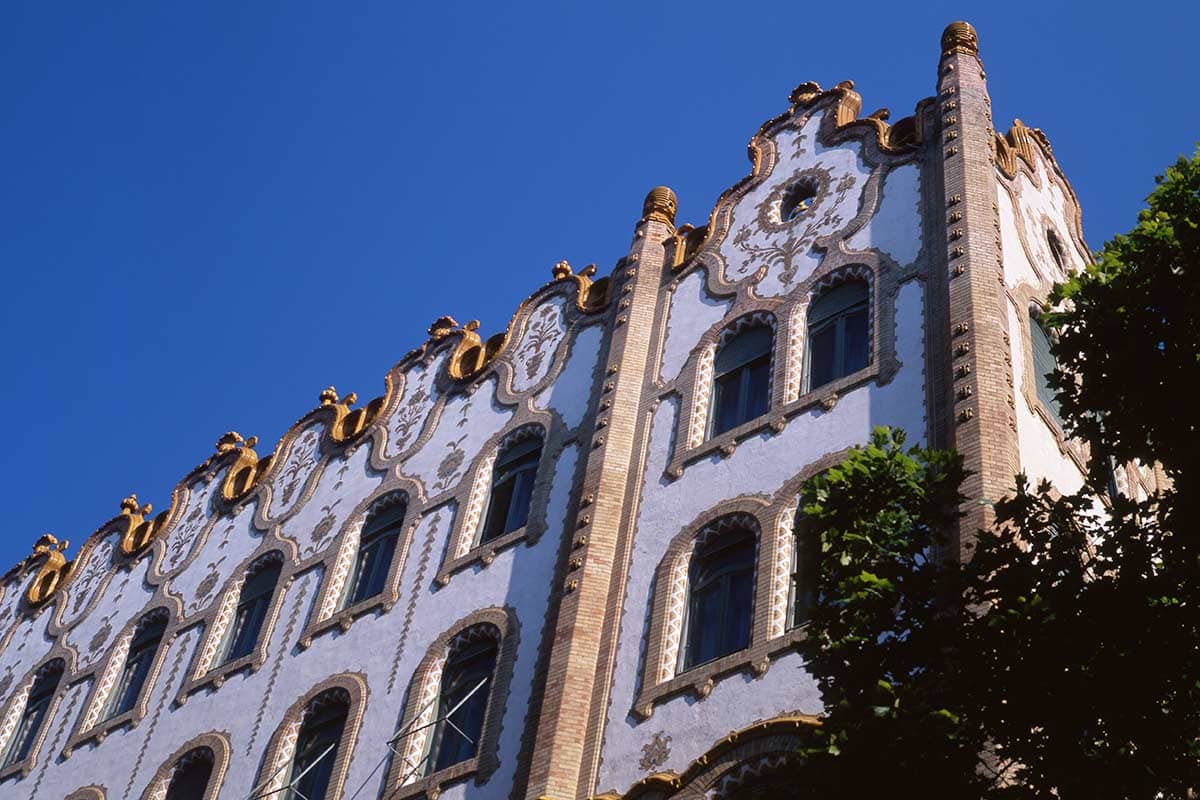
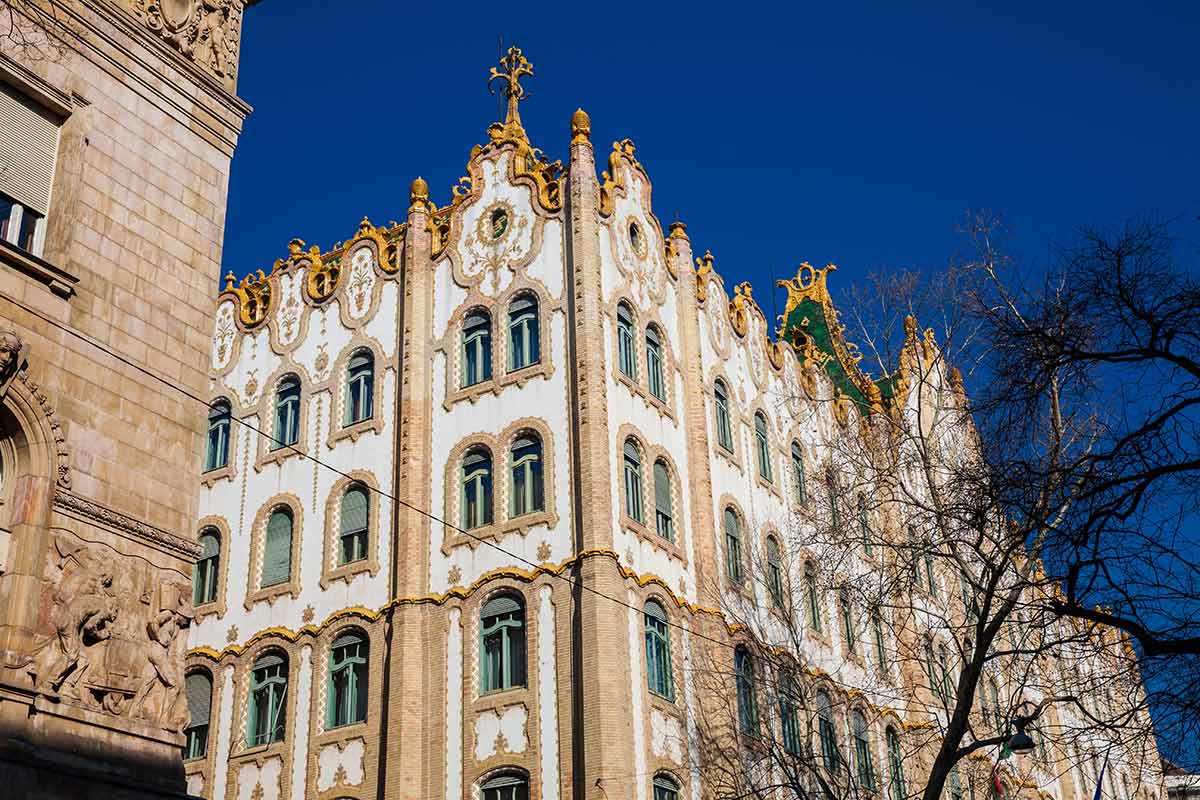
Lechner’s third major building in Budapest is the former Post Office Savings Bank on Hold utca. The building now serves as the Hungarian State Treasury.
The building, in District V on the Pest side of the city, is surprisingly difficult to view from street level. You can see a lot from there, including elaborate reliefs of flowers and plants, and six storeys up on the roof parapet, golden sculptures of beehives, birds and snakes. However, unless you walk some distance away, because of the narrow, confined nature of the street, you can’t really see the building’s crowning glory, its stunning Zsolnay tiled roof.
I think that if there’s one building in Budapest deserved a grand riverside setting, then this is it. The only way to get a clear view is from the Hotel President Budapest, just across the street from Lechner’s masterpiece. From the upper floors, restaurant and roof terrace, you get an uninterrupted view of the length of the roof and building, which is one of the finest Art Nouveau buildings in Europe.
Blue Church, Bratislava
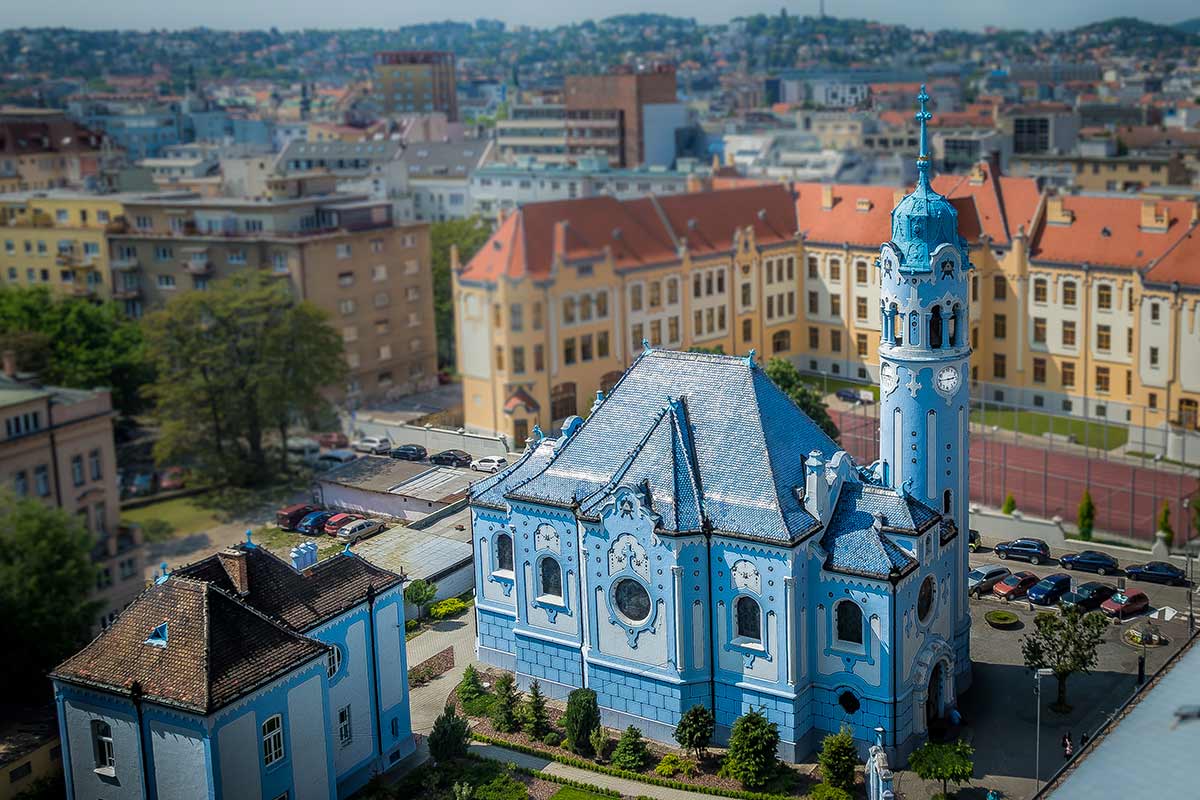
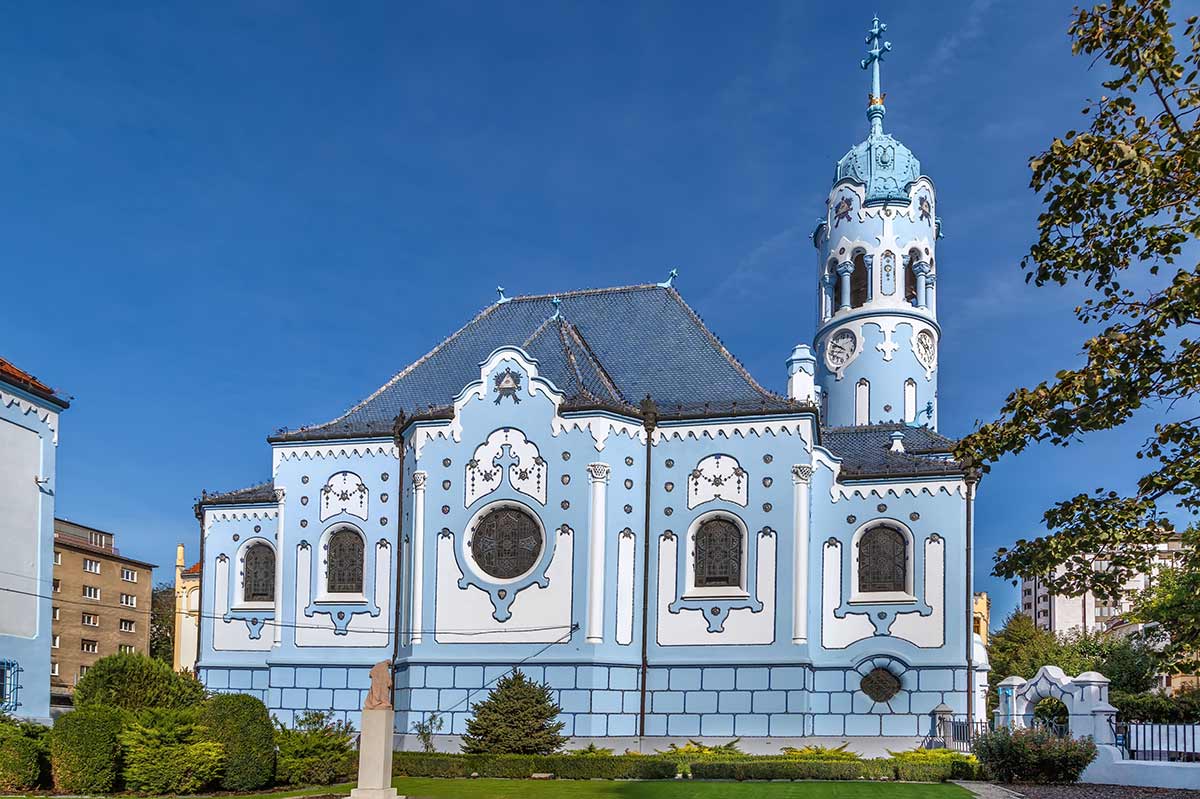
Lechner was commissioned to build a school in what was then Pressburg (Pozsony in Hungarian, Bratislava in Slovakian) which he completed between 1906 and 1908. The school, known as Gamča. Its full name is Gymnazium Grösslingova 18, and upon completion of this, he began work on what was intended to be the school’s chapel, but is now separate from the Gymnazium and a local parish church.
The Blue Church, dedicated to St Elizabeth of Hungary, is Ödön Lechner’s best-known work outside modern Hungary, a beautiful Art Nouveau church that was eventually painted in a pale blue shade.
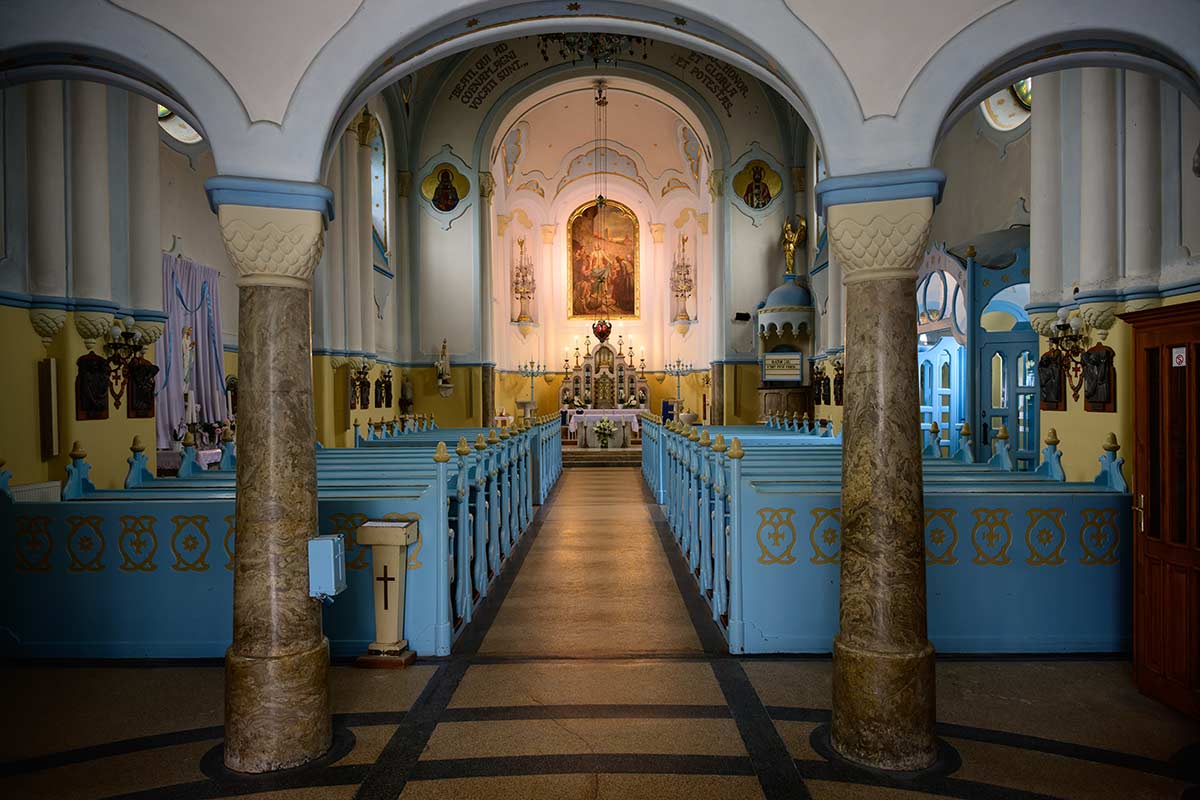
Unusually the church is oval-shaped, and many of the interior features and fittings are painted the same shade of blue including the pews, arches and main doorway.
Opening hours: The church’s opening times are limited. It’s open daily in August from 10.00 am to 7.00 pm for guided tours, but the rest of the year, it’s only open Mondays to Saturdays from 6.30 am to 7.30 am and from 5.30 pm to 7.00 pm. On Sundays it’s open longer, from 7.30 am to 12.00 pm and 5.30 pm to 7.00 pm.
Tours: This oldtimer bus tour of Bratislava is a great introduction to the city, visiting the Castle, Old Town, Blue Church and many other Bratislava sights
Where To Stay – Marrol’s Hotel – boutique luxury hotel with rooms and apartments less than five minutes’ walk from the Blue Church
City Hall, Kecskemét
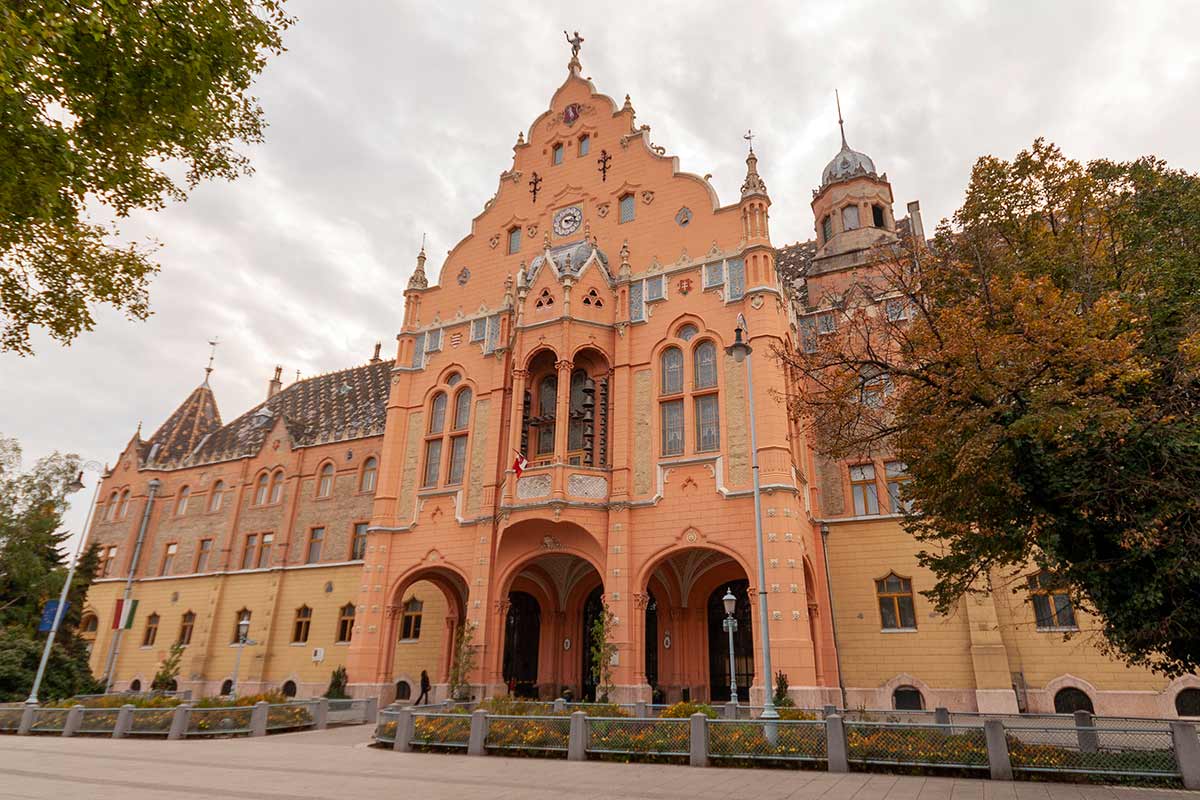
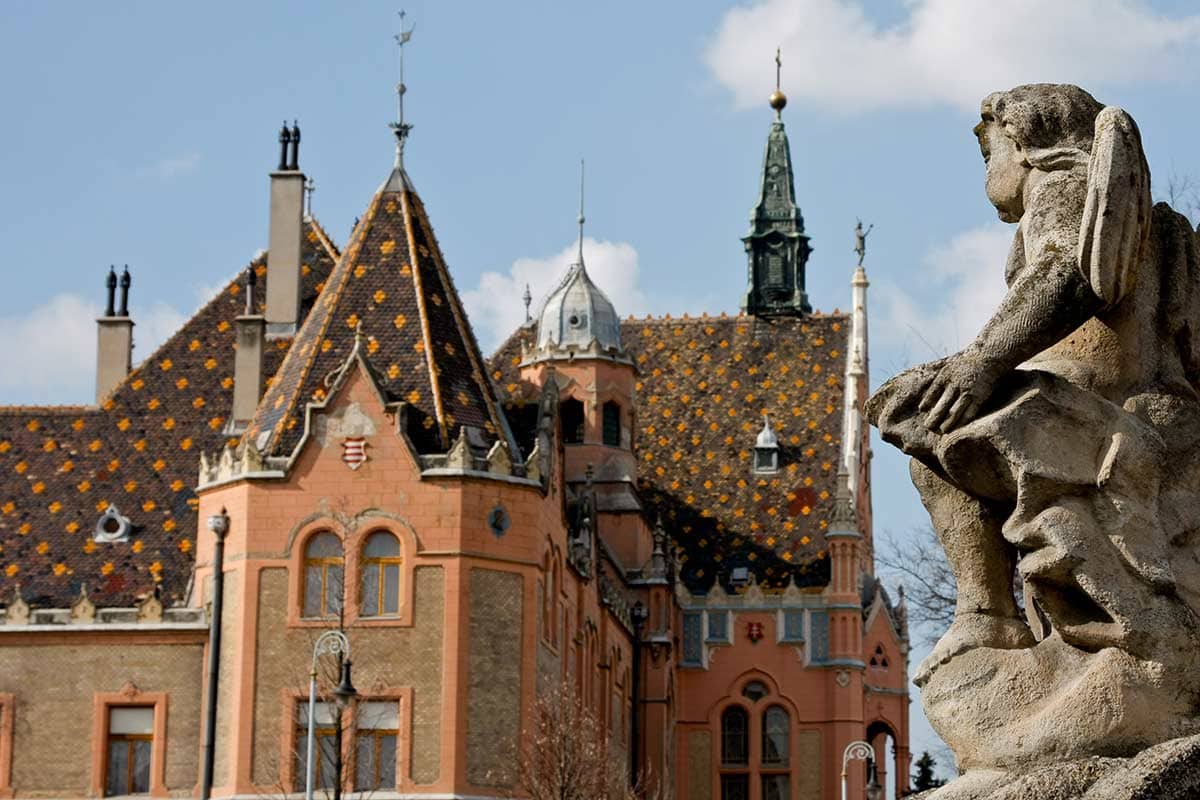
The sleepy provincial city of Kecskemét, two hours south of the capital, is one of the more intriguing day trips from Budapest, particularly if you’re a lover of Art Nouveau. The main square is home to two of the finest Art Nouveau buildings in Hungary, Lechner’s City Hall and the Cifrapalota (Ornamental Palace), the work of Géza Márkus.
The commission to design and build the City Hall was won by the partnership of Ödön Lechner (responsible for the artistic and design side of things) and Gyula Partos, the business mind of the operation.
It was built between 1893 and 1897, and had to be restored under Lechner’s direction following an earthquake in 1911.
The building is a mixture of styles – some Art Nouveau, particularly the façade direction and colourful roof tiles. And there are also older influences, possibly Renaissance, even a hint of Gothic.
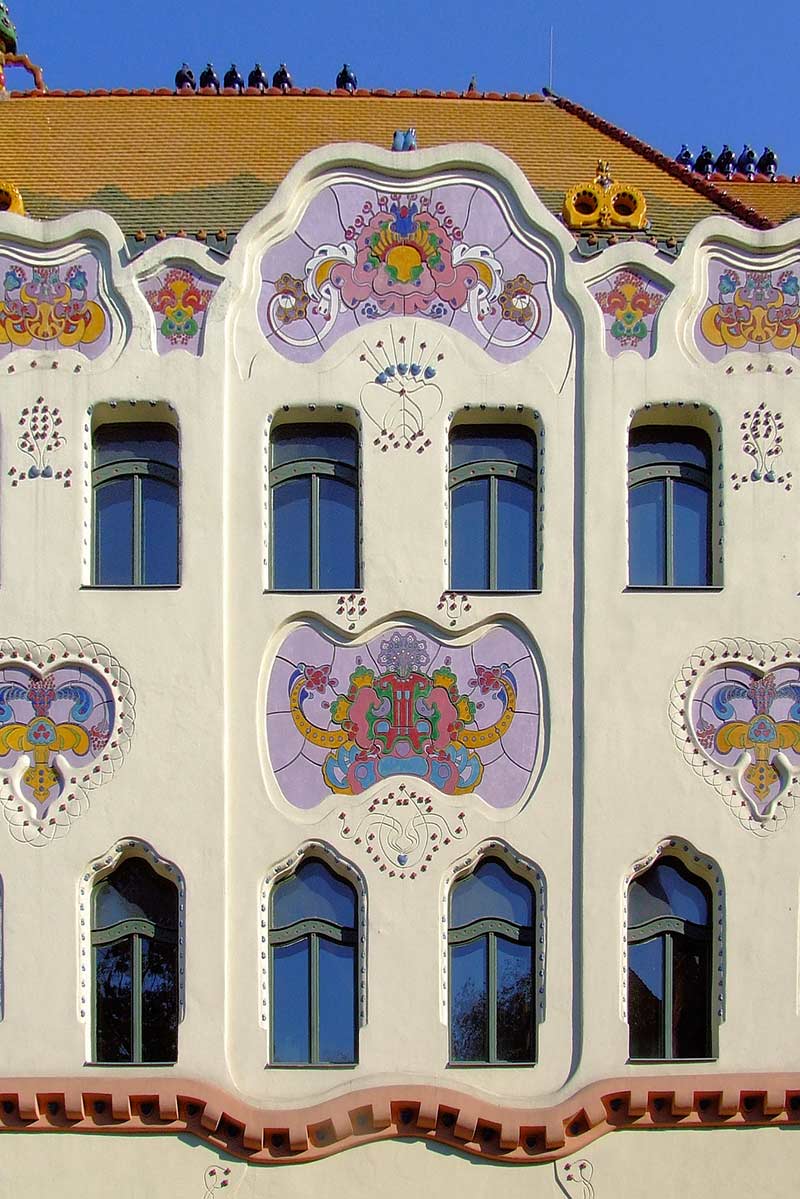
The exquisite Cifrapalota, which houses the Jozsef Katona Museum, is a two-minute walk across the square from the City Hall. It’s one of my favourite Art Nouveau buildings in the world, and I’ve promised myself I’ll return there (from my home in Australia) to photograph it properly in good weather one day. The majolica decorations on the façade are delightful, and it was worth the two-hour train trudge through the dull drizzly weather to see this magnificent building.
Getting there: It’s a 1 hour 25 minute to 2-hour journey by train from Budapest Nyugati station to Kecskemét.
St Ladislaus Church, Kőbánya, Budapest
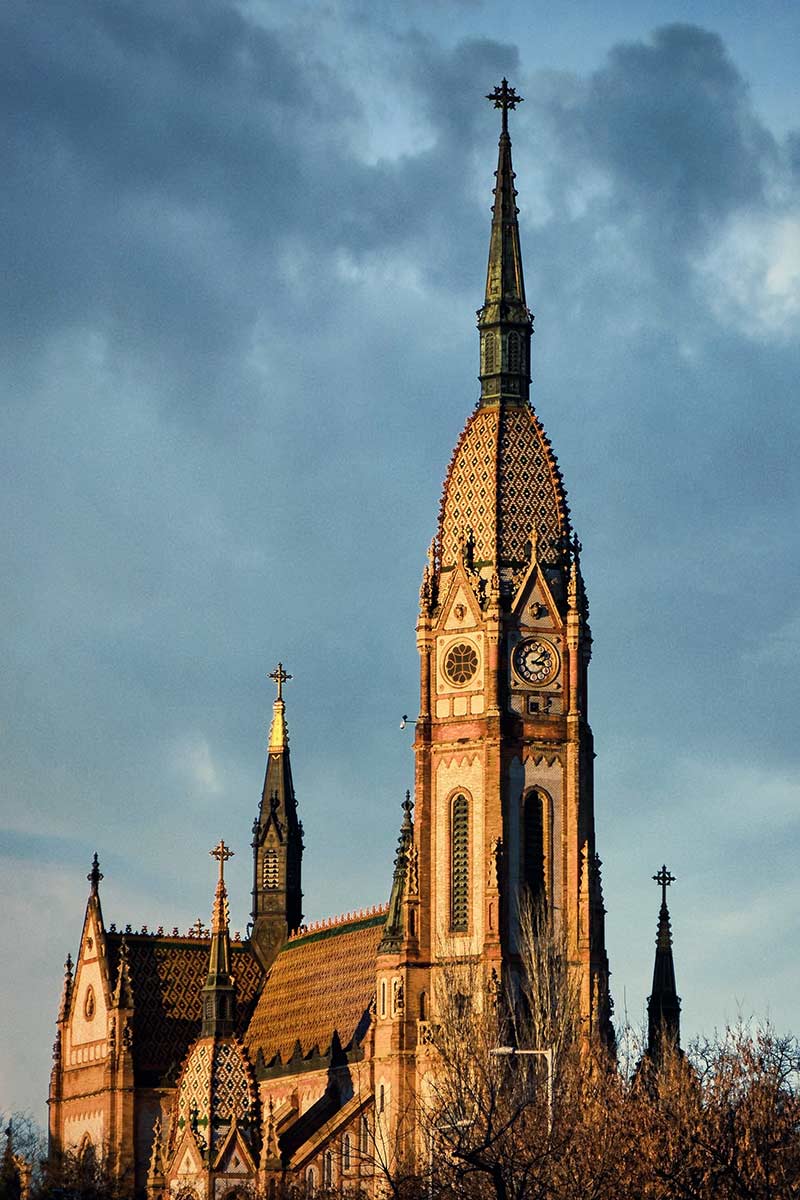
Lechner also designed another church in Budapest, in the eastern suburb of Kőbánya, close to Budapest Airport. It’s dedicated to the 12th-century soldier-king St Ladislaus (known in Hungarian as Szent Laszlo) and was completed by Lechner, who took over the project from Elek Barcza. Much of the building was completed by 1897, and it was officially opened and dedicated three years later, in 1900.
It’s built to a typical medieval Gothic plan, and at first sight appears to be a very impressive Gothic church. It’s only as you get closer that you begin to see some of Lechner’s signature features, including another gorgeous tiled roof (green, white and golden). Other Hungarian Szecesszio artists including Miksa Roth also contributed – he completed the mosaics above the main doorway and some of the stained-glass windows.
The church’s tower is one of the tallest in Hungary, at 83 metres (272 feet). Along with the City Hall in Kecskemét and the three aforementioned buildings in central Budapest, this is the last of the five Lechner buildings on the Tentative List submission to UNESCO.
Getting there: Trams 3, 28 or 62 to Szent Laszlo ter.
Schmidl Family Tomb, Kozma Street Cemetery, Budapest
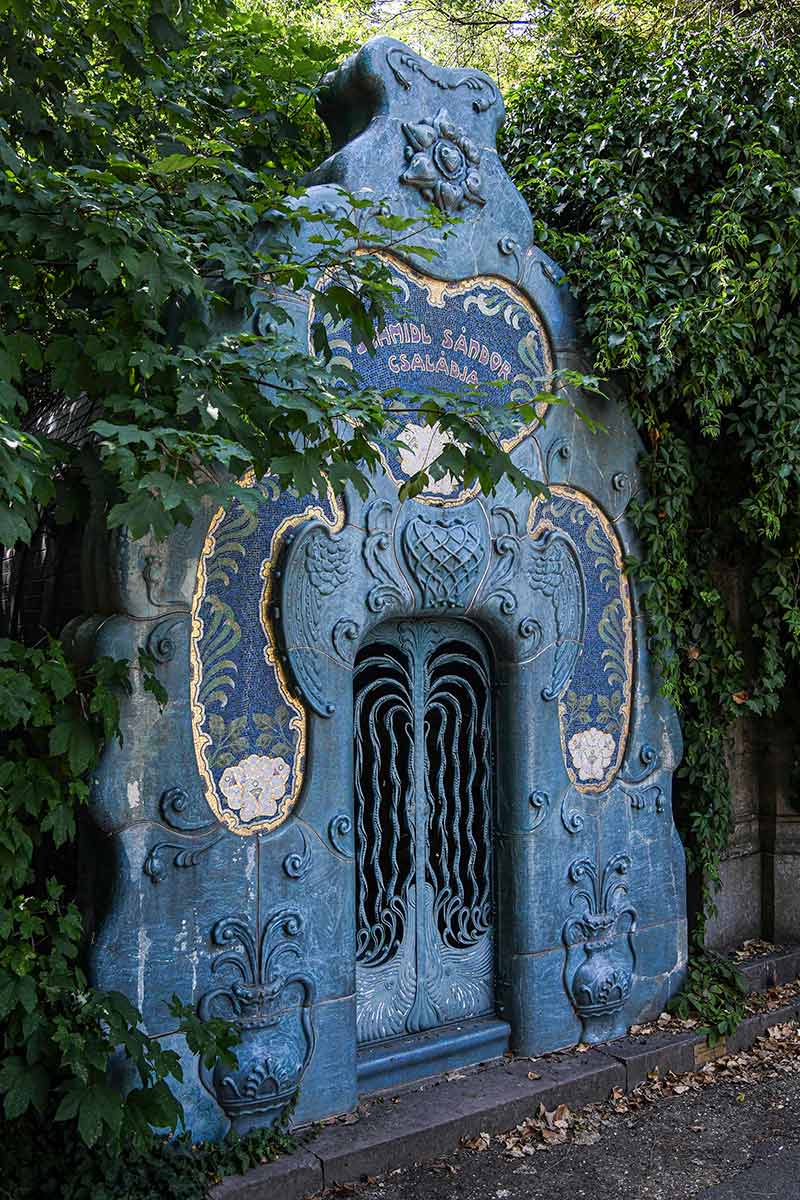
If you’re on a Lechner or Hungarian Art Nouveau pilgrimage, it makes sense to combine Szent Laszlo Church with this stunning family tomb in the nearby Jewish Cemetery.
The Schmidls were a wealthy Jewish family in Budapest, having made their fortune through their large grocery store in the city. So they could afford the very best in mausoleum materials and design. This meant turquoise ceramic tiling and mosaics, designed by Ödön Lechner and a Hungarian contemporary Hungarian artist, Bela Lajta.
It’s one of the most elaborate tombs I’ve ever seen, and the interior is as spectacular, with a partly golden mosaic depicting a tree and more floral motifs.
Take tram 28 from Szent Laszlo ter, alighting at Izraelita temető. The Schmidl Family Mausoleum is very close to the main entrance – turn right before you reach the gateway, and head for the trees to the right, no more than. 30 metres away. You’ll find the Schmidl tomb there, next to one of the pathways. It’s hard to miss as it’s the only colourful tomb in the vicinity.
In Search Of Ödön Lechner – Final Thoughts
I hope that you’ve enjoyed this article on Ödön Lechner, and that you have a chance to seek out some of his work.
I’ve written several more articles about Art Nouveau in Europe, including these Art Nouveau city guides:
11 Best Art Nouveau Hotels In Europe
For more articles on Budapest, take a look at some of these features:
Photographing Budapest – capturing the Hungarian capital at its best