


The starting point of a pilgrims’ route to Assisi, where St Francis is said to have received his stigmata – here’s my guide to the La Verna Sanctuary, Tuscany
A mountaintop retreat with astonishing sunsets where St Francis of Assisi received his stigmata, La Verna Sanctuary, Tuscany is one of the most fascinating monasteries in Italy.
Eastern Tuscany receives a trickle of visitors compared to the region’s main cities and the hilltowns around Siena, which is why this place remains so far off the beaten track. When we visited La Verna, we hadn’t researched travelling to this area – we found about it thanks to a chance conversation when visiting a friend’s vineyard. But its story sounded too intriguing to pass by, so three of us packed into a car and drove the 2 ½ hours over slow mountain roads to this remote retreat.
In this guide to visiting La Verna Sanctuary, I’ll explain its history, what there is to see, and the practicalities of getting there and places to stay. I hope you find it helpful.
What Are Stigmata
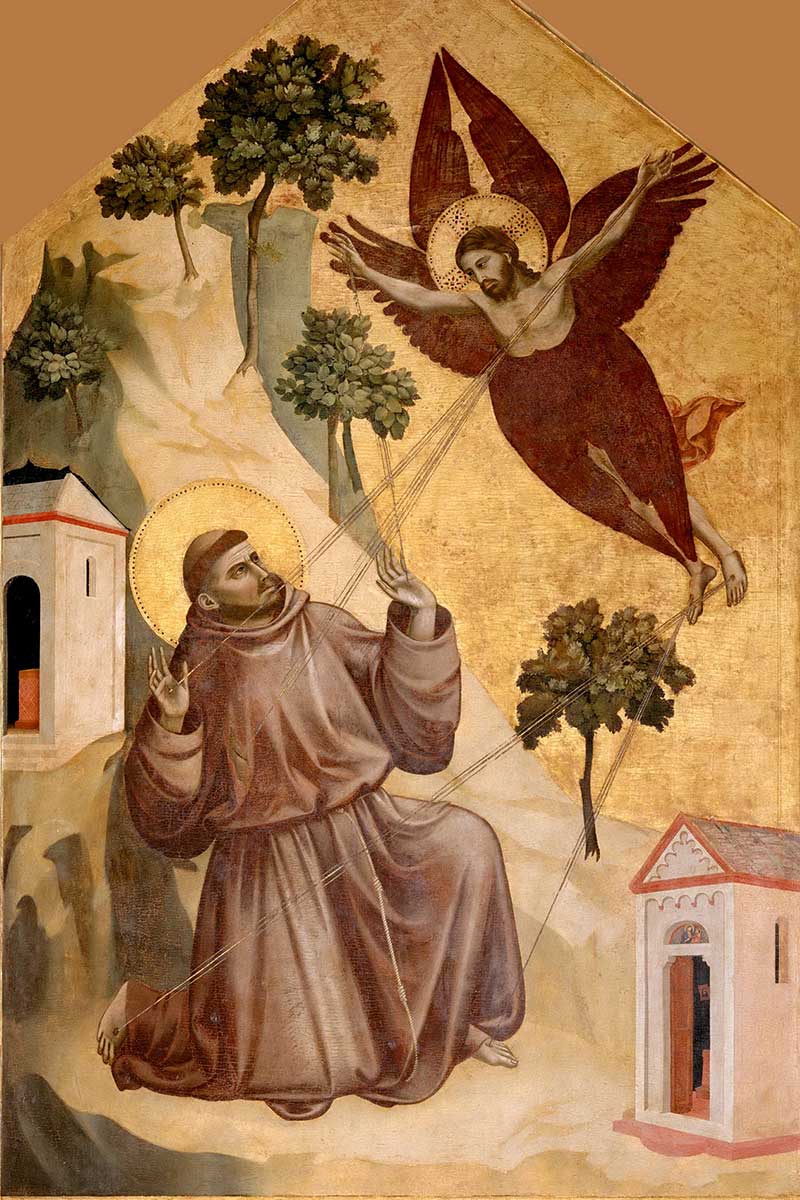
Stigmata are wounds to the hands, wrists, head, feet and back similar to the crucifixion wounds of Christ. The appearance of these wounds has often been spontaneous, and considered to be of significance, particularly among Roman Catholics.
St Francis of Assisi is the first person recorded to have received stigmata, while staying at La Verna in 1224.
St Francis At La Verna
He had spent time there on retreats over the previous decade, and on this occasion intended to stay on the mountain for a forty day fast.
He then had a vision of an angel which bore crucifixion wounds, and when the angel disappeared, Francis received the same wounds. They were believed to be a gift from God, and interpreted as a sign that he was sharing in the suffering of Christ.
Wounds described as stigmatic have healed quickly among some subsequent recipients. But this was not the case with Francis. He suffered greatly with them over the last two years of his life, and longstanding trachoma also eventually made him go blind. He may also have been suffering a form of malaria, and died within two years of receiving the wounds, in 1226.
What To See At La Verna Sanctuary, Tuscany

The Sanctuary buildings are on two levels of the mountain, with the Basilica and Chapels on the upper level and the Sasso Spicco and Chapel of the Birds lower down.
Basilica of Santa Maria Assunta
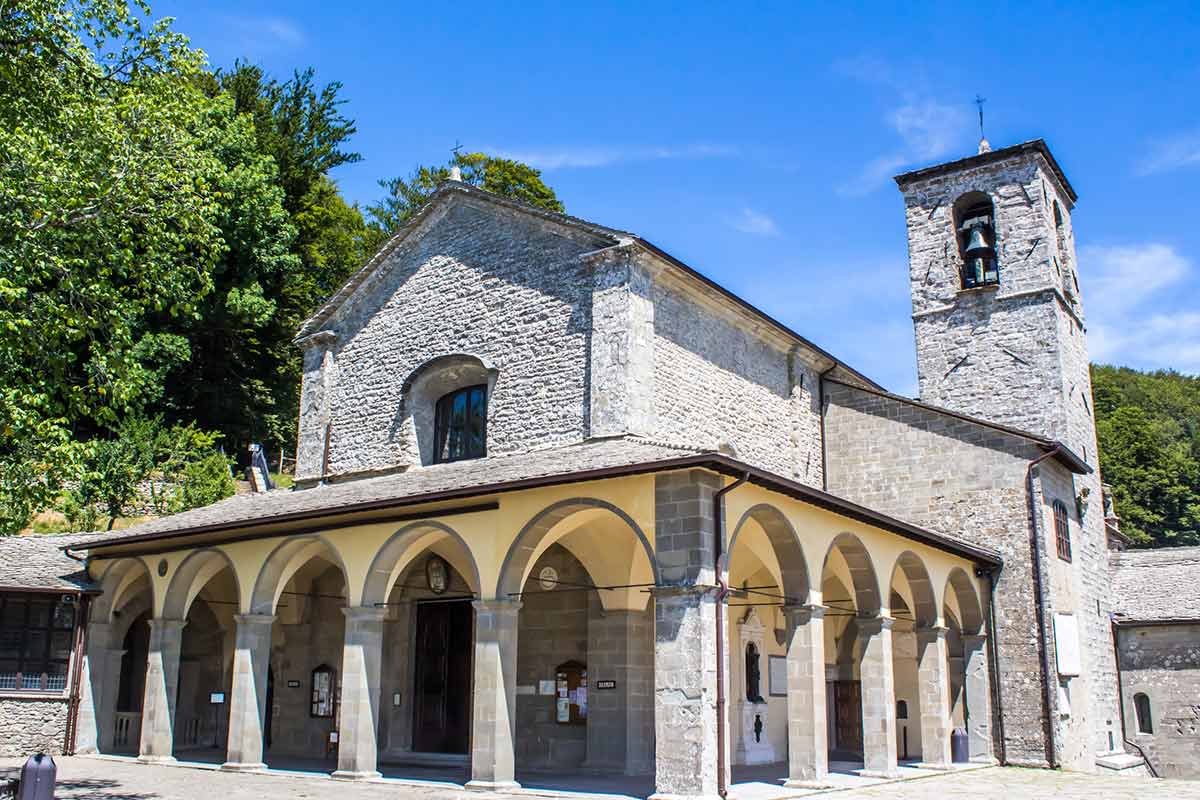
The Basilica is the largest building on the site, and dominates the main square. It’s also one of the later buildings in the complex, built around 1509, and there are a few telltale signs including the Renaissance-style colonnade around the front and south side of the church.
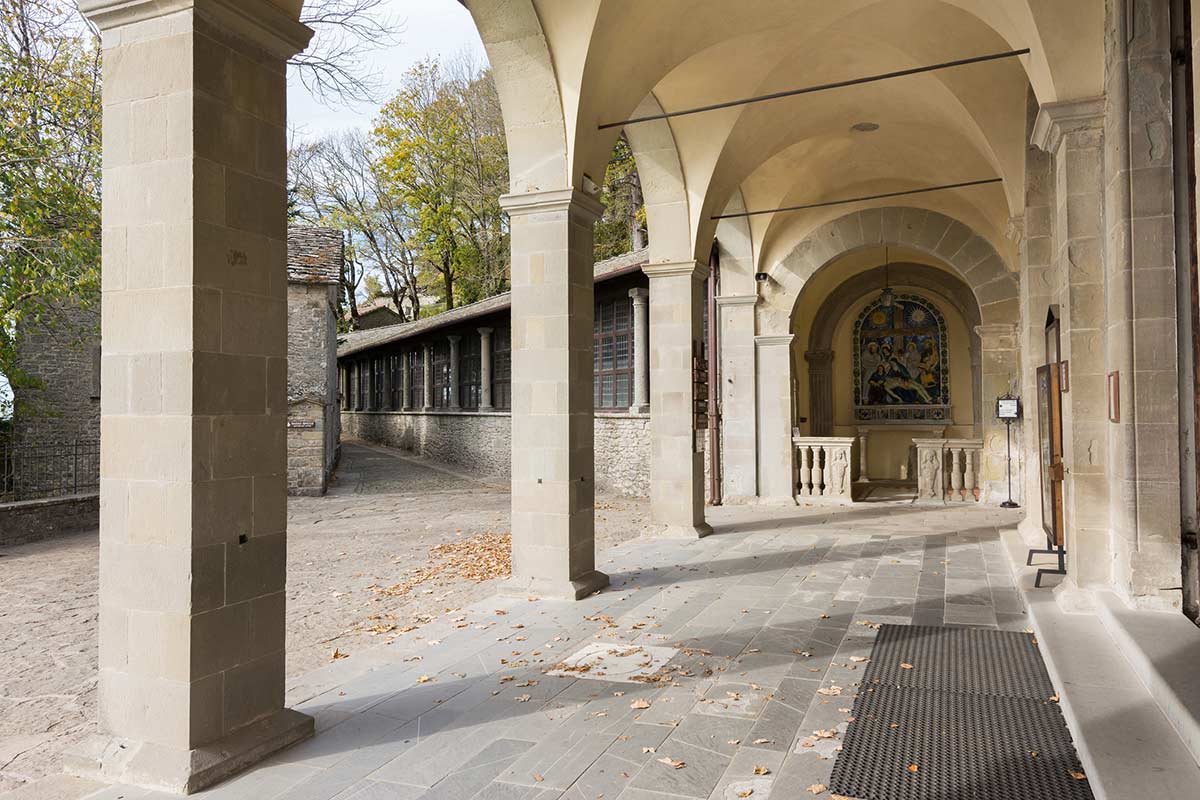
In keeping with Francis’ preference for simplicity, the interior of the church is plain and sparsely decorated, except for an elaborate altarpiece and some terracotta carvings by Andrea della Robbia and his family and workshop.
You’ll also find the small Cappella delle Reliquie (Chapel of the Relics), where some items related to St Francis, including one of his robes and some cloth with some of his blood soaked into it. There is also a whip, with which he supposedly flagellated himself. Unlike many other relics, given the remoteness of the location and contemporary documentation of the life of St Francis, there is a stronger chance than usual that these may be the real thing.
When we visited we only had around 15 minutes to look around before we were gently ushered outside for the evening service to begin!
Corridor of the Stigmata
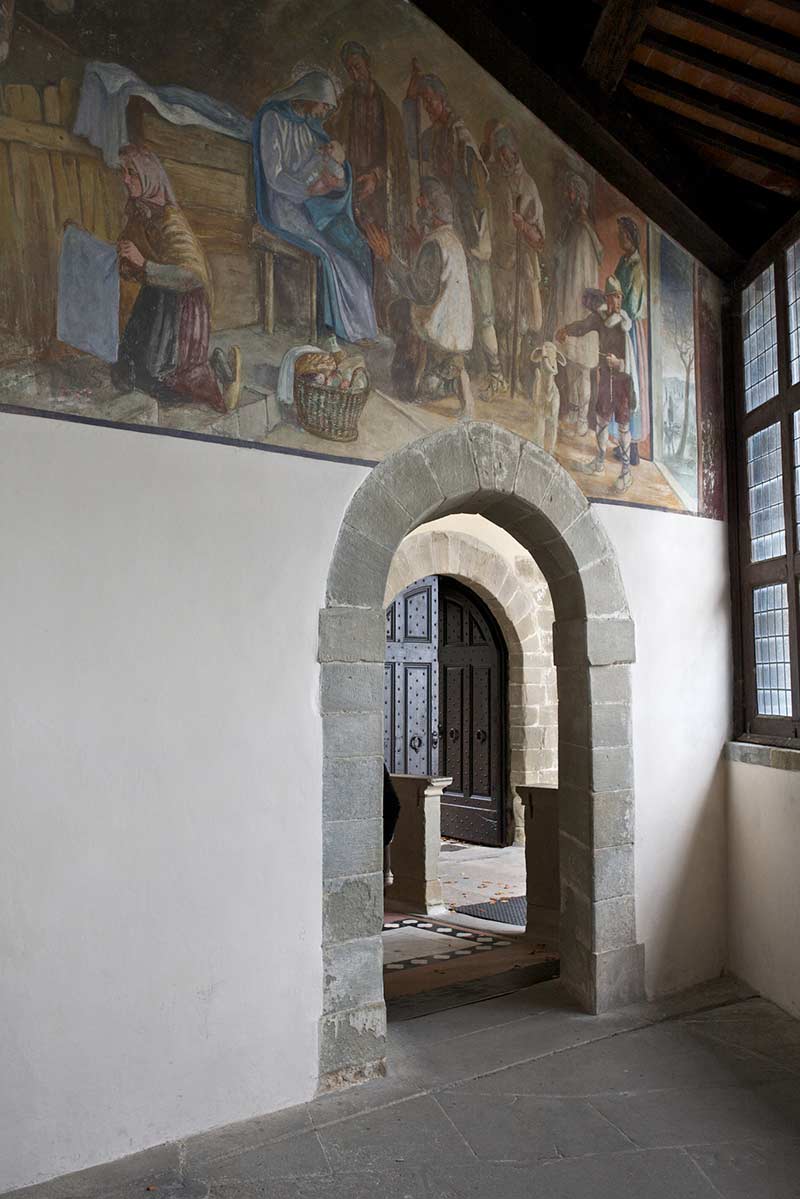
This corridor leads from the main square and Basilica to the Chapel built on the site where St Francis is said to have received his stigmata.
It was originally decorated by frescoes by Fra Emmanuel in the 17th century, but these were replaced by modern frescoes by Baccio Maria Bacci between 1929 and 1962.
Chapel of the Stigmata

This Chapel was built on what is reputedly the exact spot where Francis received his stigmata. You can’t miss the location, marked by a glass casket on the stone floor of the chapel.
The Chapel is also graced by a reredos (altarpiece) in glazed terracotta by Andrea della Robbia, the foremost sculptor of this material of the Renaissance period.
Chapel of Santa Maria degli Angeli
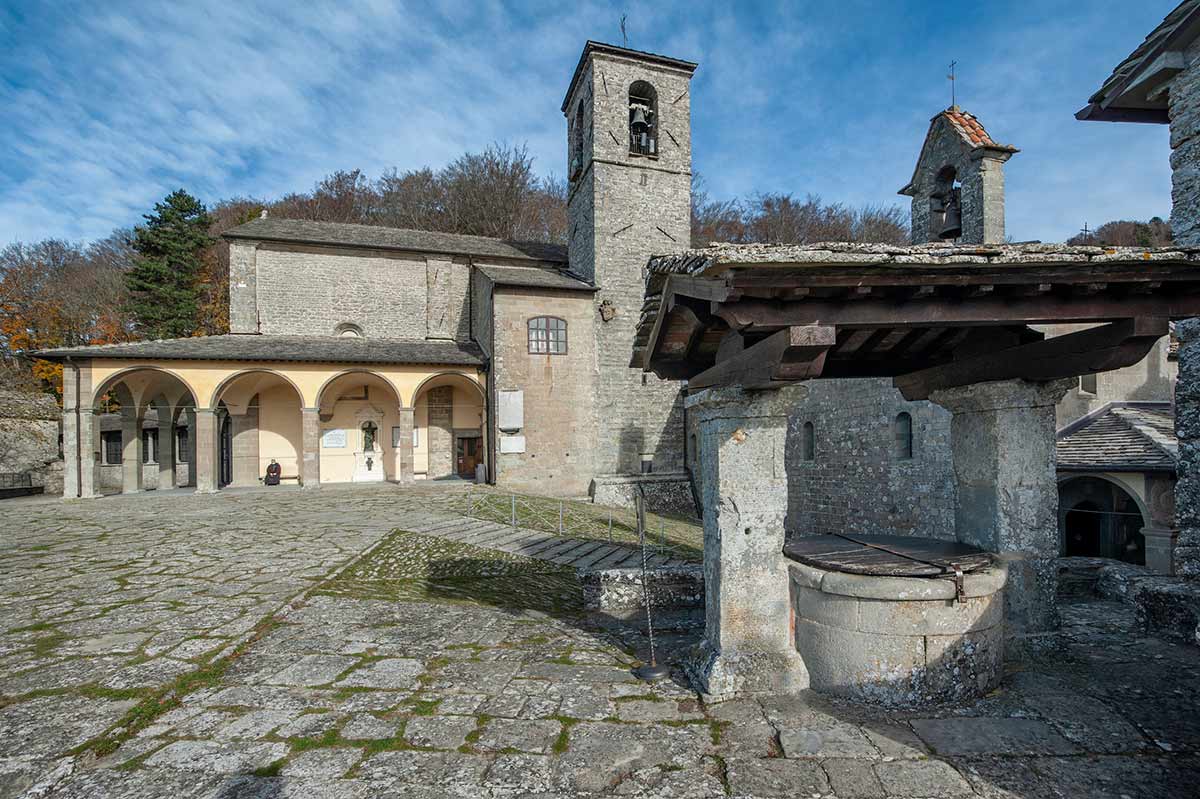
This chapel is the oldest part of the La Verna Sanctuary complex, built around 1216 under the auspices of St Francis himself. It was expanded later in the 13th century, and altered significantly over the following centuries.
Its most striking feature is the glazed terracotta altarpiece which has been attributed to Andrea della Robbia. The two reliefs either side of the partition screen are also believed to be his or his son Luca Bartolomeo’s work.
Chapel of the Birds – Cappella degli Uccelli
St Francis of Assisi is renowned as the patron saint of animals, and one episode from his time at La Verna contributed to the perception of him as close to them. According to the Life of St Francis, many birds flocked around him when he first arrived there.
This tiny chapel, off one of the footpaths between the village and monastery, was built in 1602 to commemorate this.
Cave Of St Francis
Francis slept on bare ground in a cave on the lower level of the mountain, which is accessible via a doorway and stairs from the Corridor of the Stigmata.
Another path leads down from the Stigmata Corridor to the Sasso Spicco, where Francis often meditated while staying at La Verna. A cross on the rock wall marks the location where he prayed.
Sunset from the Square
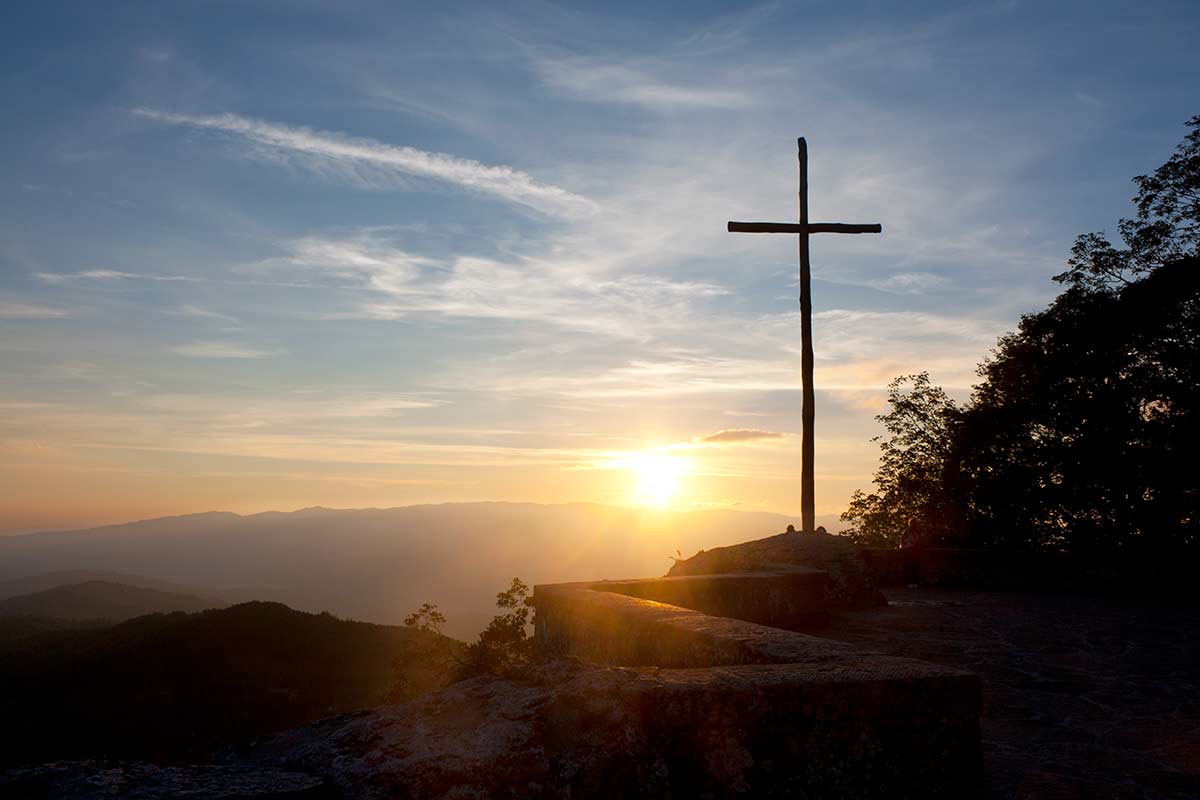
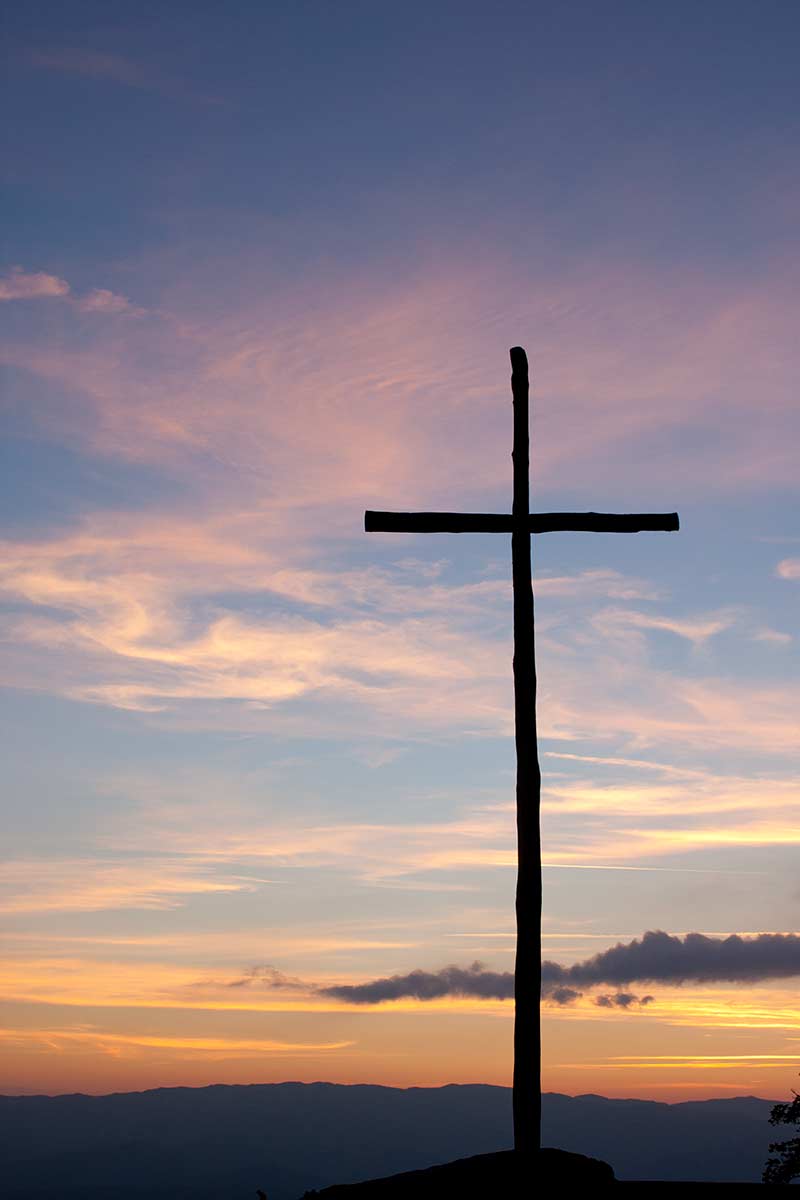
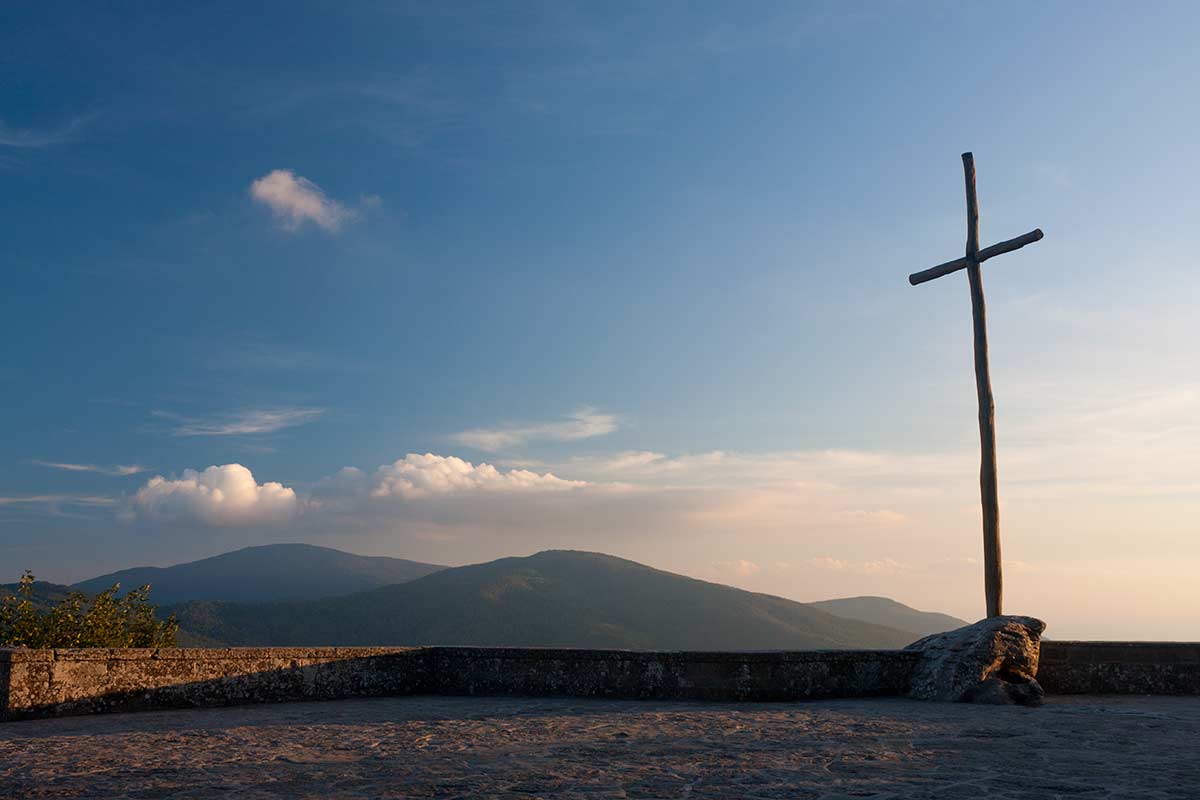
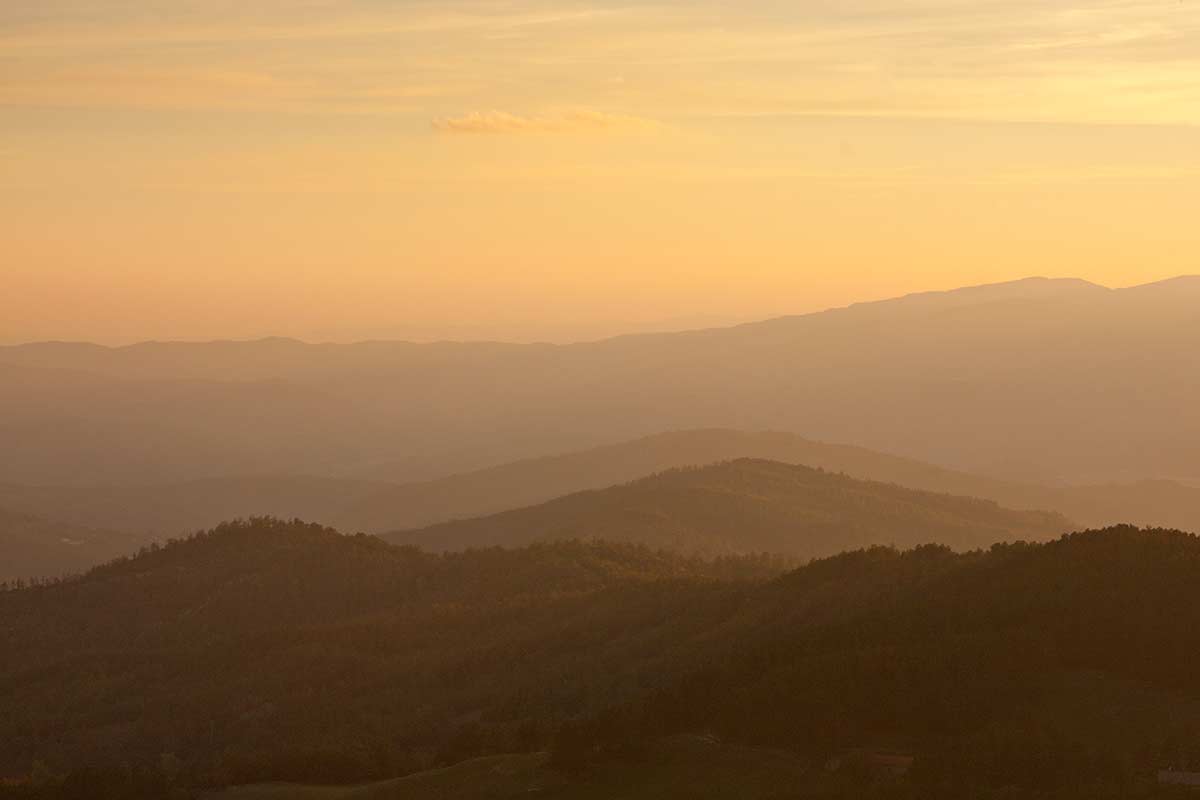
When we visited La Verna, we decided to stay to watch the sunset from the Square (Quadrante) over the hills of the Casentino Forest. There is a large wooden cross on one corner of the Square, and as the wispy clouds formed above the horizon, we knew we were going to witness something special.
We had the bonus of a perfect soundtrack to this wonderful sight, with the chants of the monks drifting through the open doors of the Basilica. It’s an incredibly peaceful place, and in my view the vantage point for one of the best sunsets in Europe.
Where Is La Verna Sanctuary In Tuscany

La Verna Sanctuary is located around 1 km north of the village of Chiusi della Verna, in the Casentino Forest National Park in Arezzo Province in northeast Tuscany. It’s close to the borders with the provinces of Emilia-Romagna to the north and Le Marche to the east.
Here are some sample distances to La Verna from the nearest major destinations:
Arezzo to La Verna – 42 km (26 miles)
Florence to La Verna – 80 km (50 miles)
Siena to La Verna – 108 km (67 miles)
Perugia to La Verna – 98 km (61 miles)
Bologna to La Verna – 174 km (108 miles)
How To Get To La Verna Sanctuary
There are two ways to get to La Verna Sanctuary. The first is by car, which we did. We were staying in the Mugello region of eastern Tuscany when we visited, which involved a long, slow, winding drive (hats off to Faye, especially the return trip in the dark). Driving gives you so much more flexibility if you’re travelling through rural Tuscany, away from the main cities and towns.
You can reach La Verna by public transport, and make it back to wherever you’re staying in a single day. Regular trains from Florence to Arezzo take as little as 30 minutes, and the Arezzo to Bibbiena service (on the Arezzo to Stia line) takes around 1 hour (give or take a few minutes either way).
From Bibbiena (stop Bibbiena Stazione) the H11 runs a few times a day to the stop at La Beccia, just before the village of Chiusi della Verna.
Where To Stay Near The Sanctuary of La Verna
You can stay in the Sanctuary if you’re happy to share a 16-bed dorm. It costs just €16 per person per night, and there are also packages for dinner only and breakfast and dinner (the latter is €38. Follow this link (in Italian only) to book.
There are several other accommodation options in and around Chiusi della Verna:
Hotel da Giovanna – popular 3-star hotel in the village below the Sanctuary
Albergo Bellavista – highly-rated two-star in the village with restaurant
Villa dei Macchini – villa in Chiusi della Verna available for a group of up to 8 people, or an apartment sleeping up to four
Castello di Valenzano – outstanding castle 20 km (13 miles) from the Sanctuary, also a short drive from Caprese Michelangelo (see below)
Onwards from La Verna
La Verna is one of the best Tuscany hidden gems, and there are more to be found in this scarcely explored corner of eastern Tuscany.
If you’re interested in Renaissance art head for Caprese Michelangelo, the birthplace of the great painter and sculptor. The house where he was born in 1475 is now a Museum dedicated to him and his early life, and the church of San Giovanni Battista where he was baptised.
La Verna is also the starting point of the northern section of the Via di Francesco, or Way of St Francis. This modern pilgrims’ route connects various sites associated with St Francis, and this 116-mile (187 km) section can take 10 or more days. Before reaching Assisi, it passes through Citerna and Gubbio, tow of the most beautiful towns in Central Italy.

If you enjoyed La Verna there are many other outstanding churches in Tuscany to visit. Take a look at my feature on the best churches in Florence to visit, and also my article on spending One Day in Pisa, home of the Leaning tower but also a superb Cathedral next door.
La Verna Sanctuary, Tuscany – Final Thoughts

I hope you have enjoyed this article, and that it opens up a whole new avenue for you. La Verna is way off the usual tourist track, and discovering it gave us immense pleasure.
Here are some more of my articles on Italy, including elsewhere inn Tuscany, Venice and Emilia Romagna.
14 Most Beautiful Churches In Venice
Things To Do In Padua–the most underrated city in Italy
Best Places To Stay In Tuscany
15 Wonderful Tuscany Hidden Gems
15 Most Beautiful Squares In Italy
Things To Do In Bologna–the fabulous food capital of Italy