


About the author: David Angel is a British photographer, writer, and historian with 30+ years of experience exploring Europe. His work is regularly featured in the BBC, the Guardian and Conde Condé Nast Traveler. He currently lives in Prague.
Welcome to my guide to the Brno Ossuary, the repository for the bones of around 50,000 citizens of the second city of the Czech Republic.
It’s a fascinating place to delve into Brno and Czech history, with the skulls and skeletons of denizens of Brno most likely spanning several centuries.
These souls would have perished from the plague, cholera, war, old age and more. And the colour of their bones often tells us how they died.
The St James Ossuary Brno is second only to the Catacombs of Paris in terms of the number of people buried there.
It was only discovered by chance during a survey in 2001, having been forgotten for over 200 years, and has now become a must-see in Brno.
My Brno Ossuary guide shows and tells you what there is to see inside. I also explain how to visit the Ossuary, including getting there on foot or by local public transport.
Some may find it confronting, while others may be intrigued at the prospect of coming face-to-face with 500 years of history.
Why Visit Brno Ossuary Czech Republic

Brno Ossuary is the second largest burial chamber of bones in Europe after the Paris Catacombs.
It holds the remains of around 50,000 people from around the Moravian city, who would have been interred there over several centuries.
It’s a fascinating insight into the history of Brno and Central Europe, one of the best-preserved examples of what was once a frequently used means of burying the dead.
The Ossuary exhibition also has some amazing artefacts, including items buried with the dead and some beautiful painted coffins dating from the 18th century.
Brno Ossuary History


The Ossuary of Brno was essentially an overflow storage space for the dead of medieval (and later) Brno.
Locals who died were initially buried in the Cemetery of St James’ Church, somewhere above and very close to the Ossuary site. The Church and Ossuary are in Brno old town.
However due to its small capacity, bodies had to be exhumed after 10 to 12 years, and the bones moved down to the Ossuary site.
We know the Cemetery existed in the early 13th century so the Ossuary would have been opened some time after this.


During the Middle Ages the bones of victims of the plague and cholera were brought to Brno Ossuary.
Soldiers killed during the Thirty Years War would also have been interred there.
The Ossuary was still being used as late as the 18th century. The entrance was paved over around 1784 and, over the ensuing years, it was forgotten by locals.
The crypt and Ossuary were reopened and rediscovered in 2001, with many of the bones covered in mud following flooding.
The site was gradually restored and remodelled over the following decade, with the bones of around 50,000 people being replaced in the underground chambers.
What To See At St James Ossuary Brno

There is a small exhibition space close to the entrance and ticket office, and this includes some golden and other precious Christian ornaments buried with the dead.
The crypt – which extends below the square and church above – is made up of three separate chambers, each including thousands of skulls and bones.
Many of the bones are stacked densely to resemble pillars, and one of the chambers is a Chapel of the Dead which reminded me of the Chapel of Bones, Evora in Portugal.
One of the most powerful images at the Brno Ossuary is the neat stack of skulls in rows in a small alcove.


Many of the bones in the Ossuary offer clues to their fate. Some of the bones have a strong yellow coloration, indicating they may have been victims of cholera.
And the bones with a red tinge would have succumbed to the bubonic plague.
Two remarkable painted coffins from the 18th century are also on display. Although the crypt was primarily used as an Ossuary, some individual burials also took place there in the years before its closure.
The Ossuary is beautifully presented, with solemn music composed specifically to accompany visits.
It’s quite different to the more famous Kutna Hora Bone Church, another Czech Republic ossuary in Eastern Bohemia. Also known as the Sedlec Ossuary, the bones in the chapel in Kutna Hora are used for decoration, including a chandelier, a coat of arms and other ornamentation.
The arrangements in the Brno Ossuary are more restrained and sober.
See Also: Chapel of Bones Evora – memento mori chapel in one of the great ancient cities of Portugal
Where Is Brno Ossuary

The Brno Ossuary is located next to St James Church (Kostel svateho Jakuba in Czech). It’s on the corner of Jakubské náměstí and Rašinova, in Brno Old Town.
It’s a three-minute walk along Rašinova from Náměstí Svobody, the city’s main square.
How To Get To Brno Ossuary

Assuming you have arrived in Brno by train, coach or bus from the airport, you’re only a short tram ride or walk from the Ossuary of St James.
Brno Station (Brno hlavní nádraží) is the hub of the Brno city transport network, with several busy tram stops around the station. Trams 4 and 9 run closest to Brno Ossuary. The stop for these is directly opposite the train station, so if you arrive by coach, you need to walk a few minutes to find the correct stop.
Tram tickets are available from machines on the platforms, or from on board the trams. The machines on the platforms are card or coin-operated- the latter take Czech crowns (koruna) only – no euros.
You only need to travel two or three stops to reach the Brno Ossuary, so a 10-minute ticket is sufficient. You can either alight at Náměstí Svobody and walk the short distance to the Ossuary (Kostnice) or continue to the Česká stop and walk back down the road from there.
The Ossuary is to the right (south) of the church, with a separate entrance. You descend a flight of steps to enter.
Brno Ossuary Photos


More Things To See In Brno

The St James Ossuary is one of several Brno underground attractions worth visiting. The closest in terms of subject matter is the Brno Capuchin Crypt, less than ten minutes’ walk away near Brno Cathedral. Here the bodies of donors to the Capuchin Convent have been preserved in glass cases. It’s not for the squeamish – many of the partly-preserved bodies seem to be frozen in an anguished last moment, contorted in a final agony.
I suggest spending at least a few hours exploring medieval Brno. Climb the Old Town Hall Tower to get your bearings, and enjoy exceptional views over the Baroque church towers, Brno Spilberk Castle and the stunning Gothic Brno Cathedral on the hill above.
Don’t miss the climb to the Cathedral of SS Peter and Paul on Petrov Hill. The exterior is 14th-century Gothic, embellished by twin spires from the 19th century. You can climb these for extraordinary views of the surrounding streets below and the landmarks of Brno.
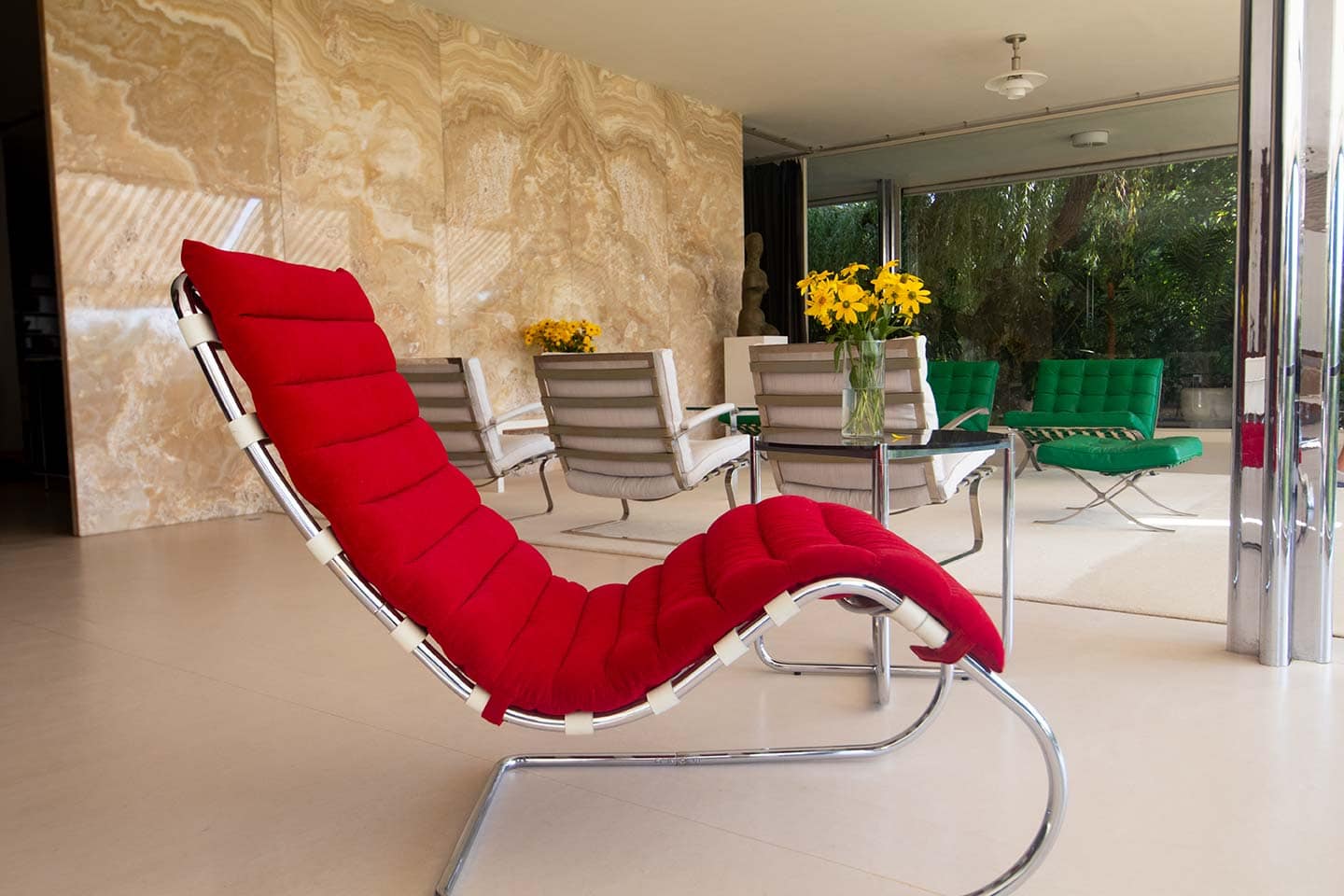
Brno also has some exceptional 20th-century architecture. There are some gorgeous flourishes of Art Nouveau, but you’ll find more in the way of Functionalist architecture from the 1920s. This reached its culmination in the World Heritage-listed Villa Tugendhat on a hill commanding an outstanding view of Brno.
Brno deserves a minimum of two or three days of your time, and the Brno City Museum in Špilberk Castle is worth an afternoon of it. While there, take time to walk some of the ramparts and climb the lookout tower for one of the finest views of Brno.
Brno Hotels – Where To Stay In Brno


We stayed four nights at the Hotel Avion, less than five minutes’ walk from the Brno Ossuary. It’s a stunning design hotel, the work of local Functionalist architect Bohuslav Fuchs. Remarkably it occupies one of the narrowest premises of any hotel in Europe, and makes amazing use of the limited space.
The Piet Mondrian-inspired colour scheme – lots of vivid reds, yellows and blues -make it funky as much as Functionalist, and it’s somewhere we’d love to return. Check out our Hotel Avion Brno review for more information.
The Grandhotel Brno is the city’s finest historic hotel. It was founded in 1870 as the Werner Hotel and hosted the likes of Emperor Franz Josef I and Thomas Edison over its 150-year history. This 4-star luxury option couldn’t be in a more convenient spot, opposite the train and bus stations and within a couple of minutes’ walk of old town Brno.
The 5-star Grandezza Hotel Luxury Palace has an amazing location on Zelny trh, the Vegetable Market, one of the finest squares in Brno. It’s an elegant early 20th century hotel and the front rooms have superb views of the Brno skyline including the Cathedral and Špilberk Castle.
Hotel Barcelo Brno Palace is another great 5-star choice, located between the Cathedral and Špilberk hills on the west side of Brno old town.
Brno Ossuary – Final Thoughts

Even if you have just one day in Brno, I’d recommend a brief visit to the Brno Ossuary. It’s close to many other Brno attractions, in the Old Town, and a visit takes around half an hour.
One of the things I like about Brno is that you’re constantly time-travelling – one moment you’re in the Middle Ages, the next the 1920s, and 5 minutes later you’re immersed in 18th-century Baroque.
The Ossuary tells a large part of the city’s story, albeit leaving much of it to your imagination. I suggest combining it with the excellent Brno City Museum in the Spilberk Castle on the hill above the Old Town.
If you’re contemplating a stay in Moravia, check out my article on the best day trips from Brno for more ideas on places to visit.
Take a look at more of our articles on Brno and South Moravia here:
- Brno Christmas Market Guide – be enchanted by the second-largest Christmas Market in the Czech Republic
- Lednice Castle – stunning 19th-century palace and part of the Lednice-Valtice World Heritage Site
- Valtice Castle – 18th-century Baroque palace of the powerful Princes of Liechtenstein
- Mikulov – gorgeous wine-producing town and Castle overlooking the border with Austria
- Telč Czech Republic – stunning World Heritage town with one of the most beautiful squares in Europe
Discover more of our articles on the Czech Republic here:
- Things To Do In Mariánské Lázně – A Splendid Bohemian Spa Town and World Heritage Site
- Best Things To Do In Český Krumlov – Possibly The Most Beautiful Town In The Czech Republic
- České Budějovice – South Bohemia’s Undiscovered Capital
- Holašovice – The Unique Folk Baroque UNESCO World Heritage Village
- Slavonice – Border Town With Incredible Renaissance Sgraffito Townhouses
David Angel is a British photographer, writer and historian. He is a European travel expert with over 30 years’ experience exploring Europe. He has a degree in History from Manchester University, and his work is regularly featured in global media including the BBC, Condé Nast Traveler, The Guardian, The Times, and The Sunday Times. David is fluent in French and Welsh, and can also converse in Italian, German, Portuguese, Spanish, Czech and Polish.