

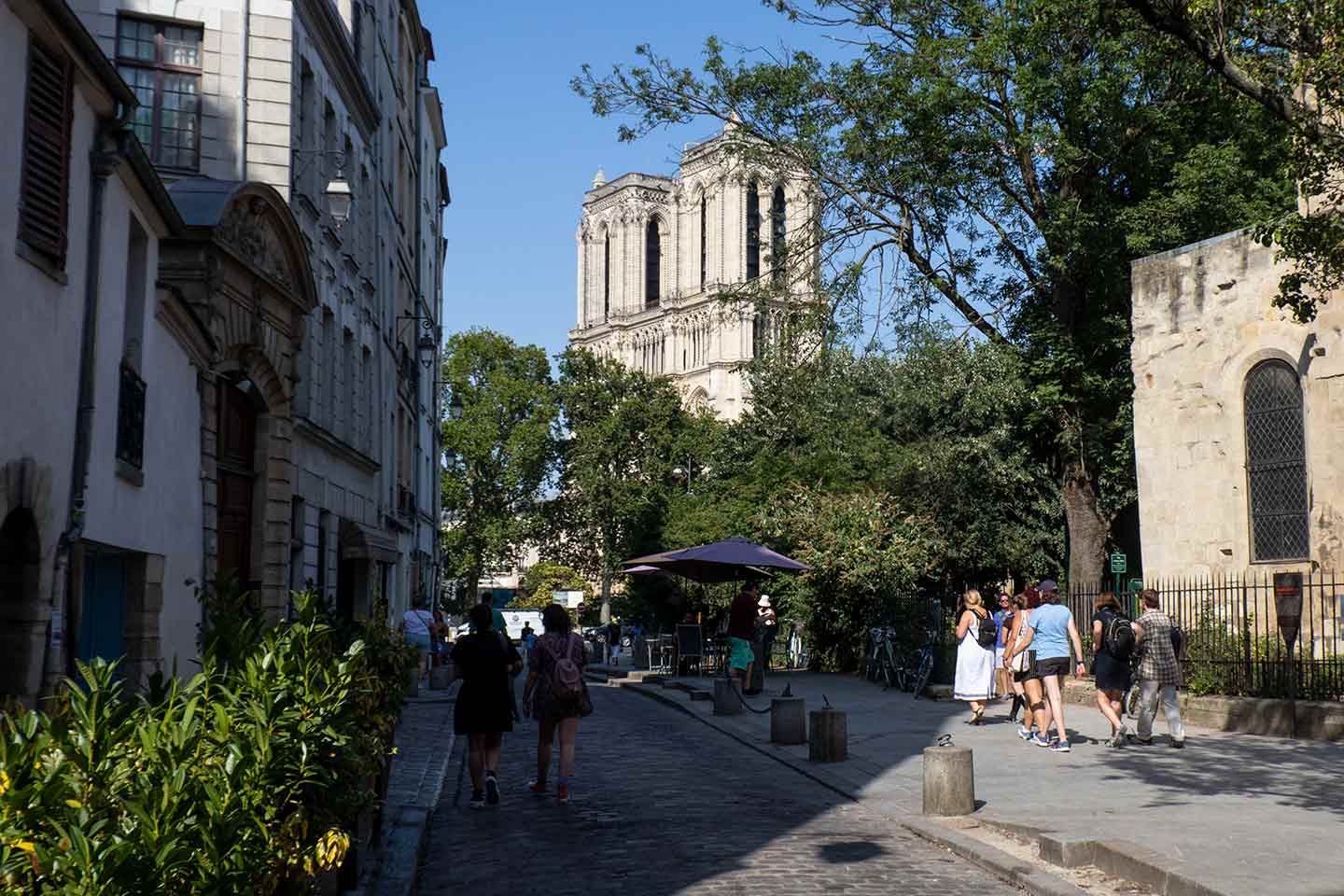
Things To Do In The Latin Quarter Paris
One of the oldest universities in the world, historic cafes frequented by great artists and intellectuals a century ago – these are among the better-known things to do in the Latin Quarter, Paris.
But there’s so much more. It’s also home to some of the finest churches in Paris, one of the city’s most beautiful parks, France’s national mausoleum and possibly the best museum focusing on the Middle Ages in the world.
Add in hundreds of great places to eat, one of the best foodie streets in Paris – not to mention the capital’s quirkiest carousel – and it’s an area where you could well while away a few days when you visit Paris.
In this guide I’ll show you the best places to see in the Latin Quarter, suggest places to eat and also places to stay in the area. I’ll also provide links for purchasing tickets or booking tours that I recommend.
I hope you find it helpful.
Where To Stay In The Latin Quarter
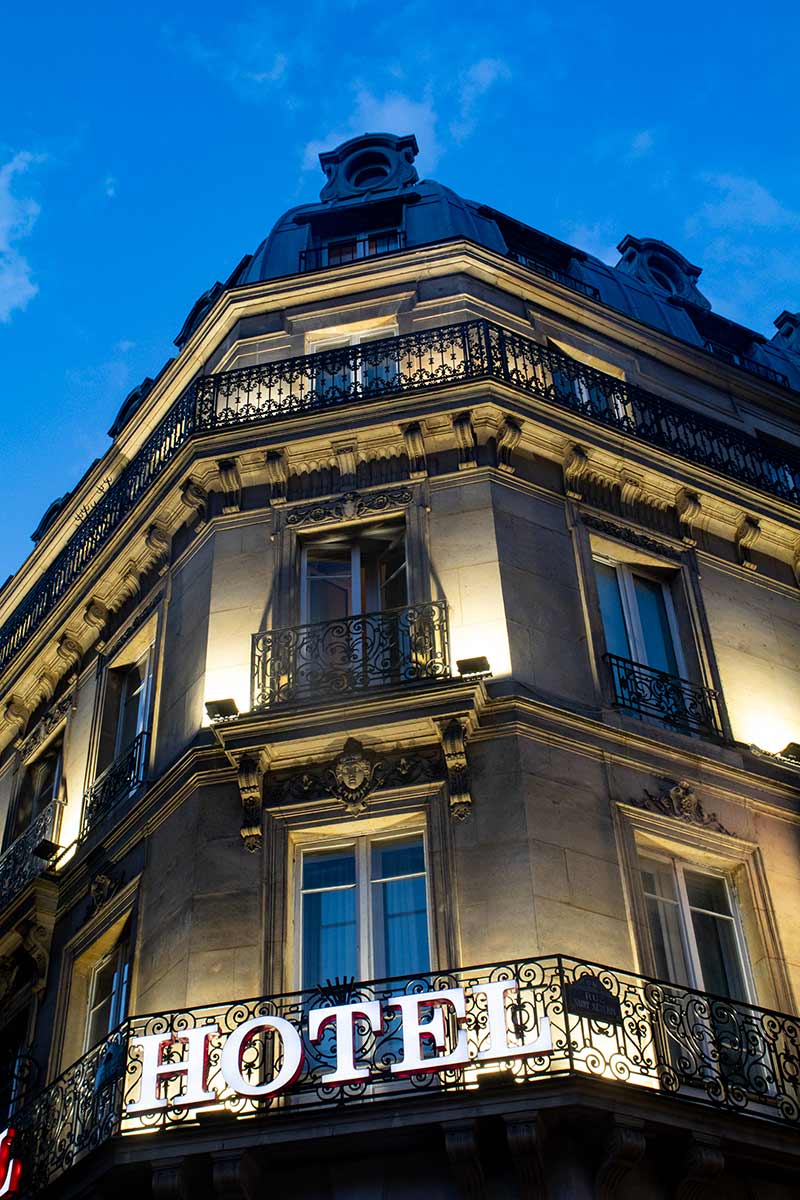
Hotel Henri IV Rive Gauche – impeccable hotel, 17th-century building, two minutes’ walk from the Seine, opposite stunning Saint-Severin Church
Les Rives de Notre Dame – lovely boutique hotel overlooking the Seine and Notre Dame
Hotel Elysa Luxembourg – beautiful 19th-century building a few steps from the Jardin du Luxembourg, excellent Metro and RER links
Hotel Cluny Square – elegant small hotel in superb location, within a few steps of the outstanding Cluny Museum
Hotel Pierre Nicole – great two-star option at the southern end of the Latin Quarter, half a mile south of the Jardin du Luxembourg
Where Is The Latin Quarter Paris?

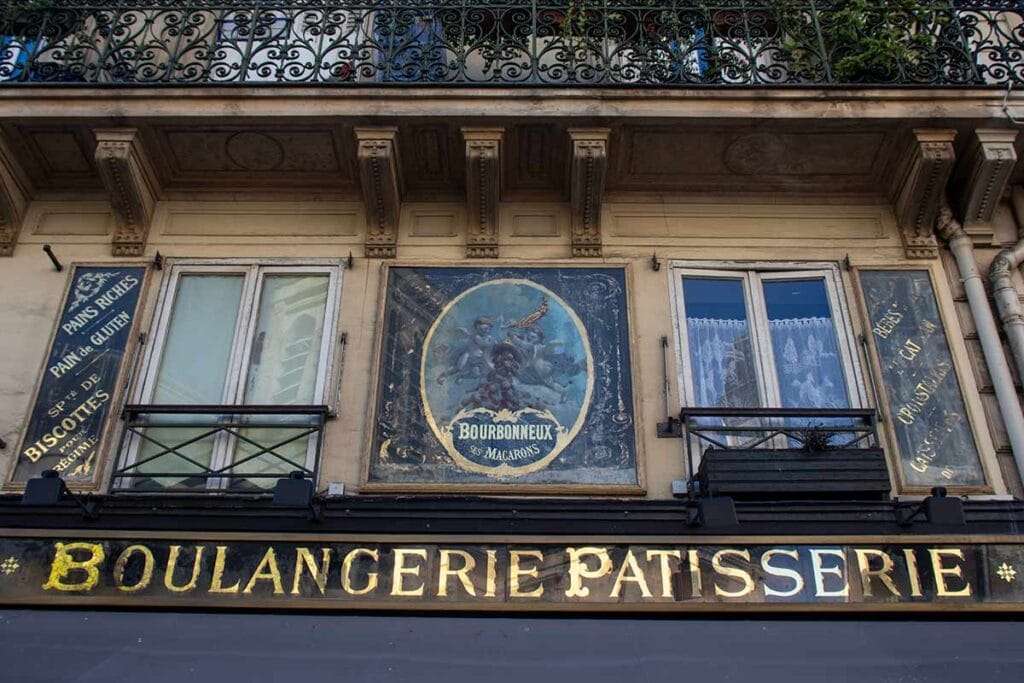
The Latin Quarter is on the Left Bank (rive gauche) of the River Seine. It’s to the south of the river, in the 5th and 6tharrondissements of the city.
It borders the Seine from the Jardin des Plantes in the east to the Pont du Carrousel (level with the Louvre) to the west. The Latin Quarter extends about a mile away from the river, to the furthest extent of the Jardin du Luxembourg park.
1. Visit the Cluny Museum
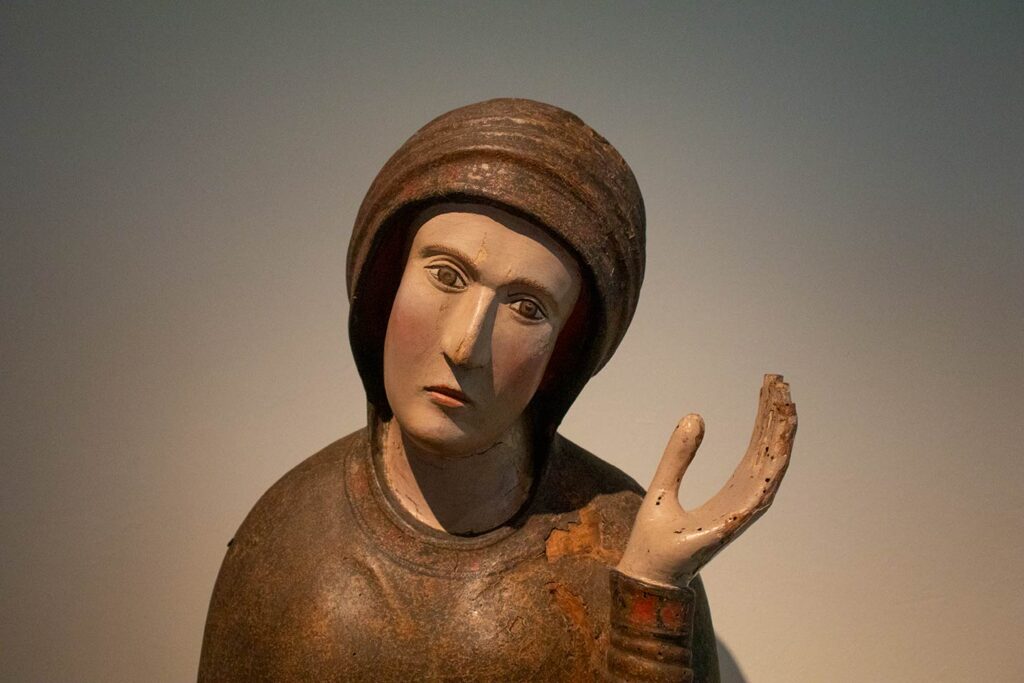
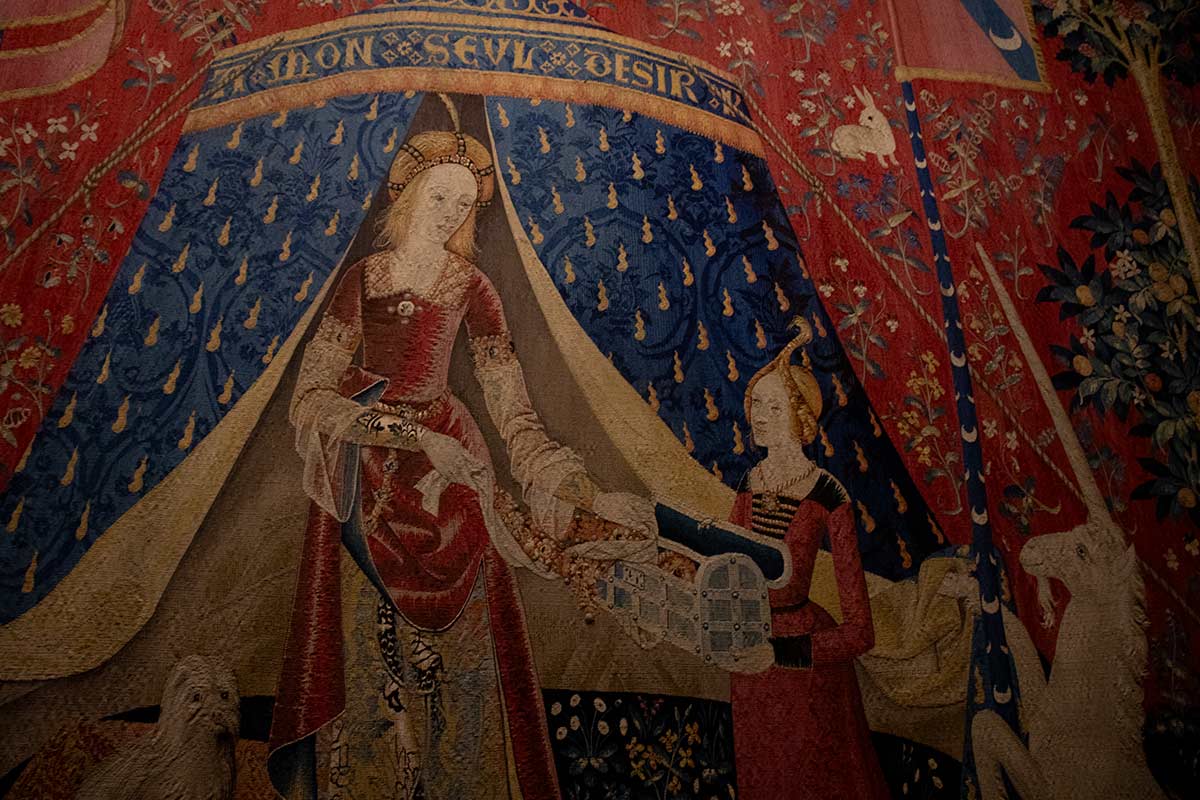
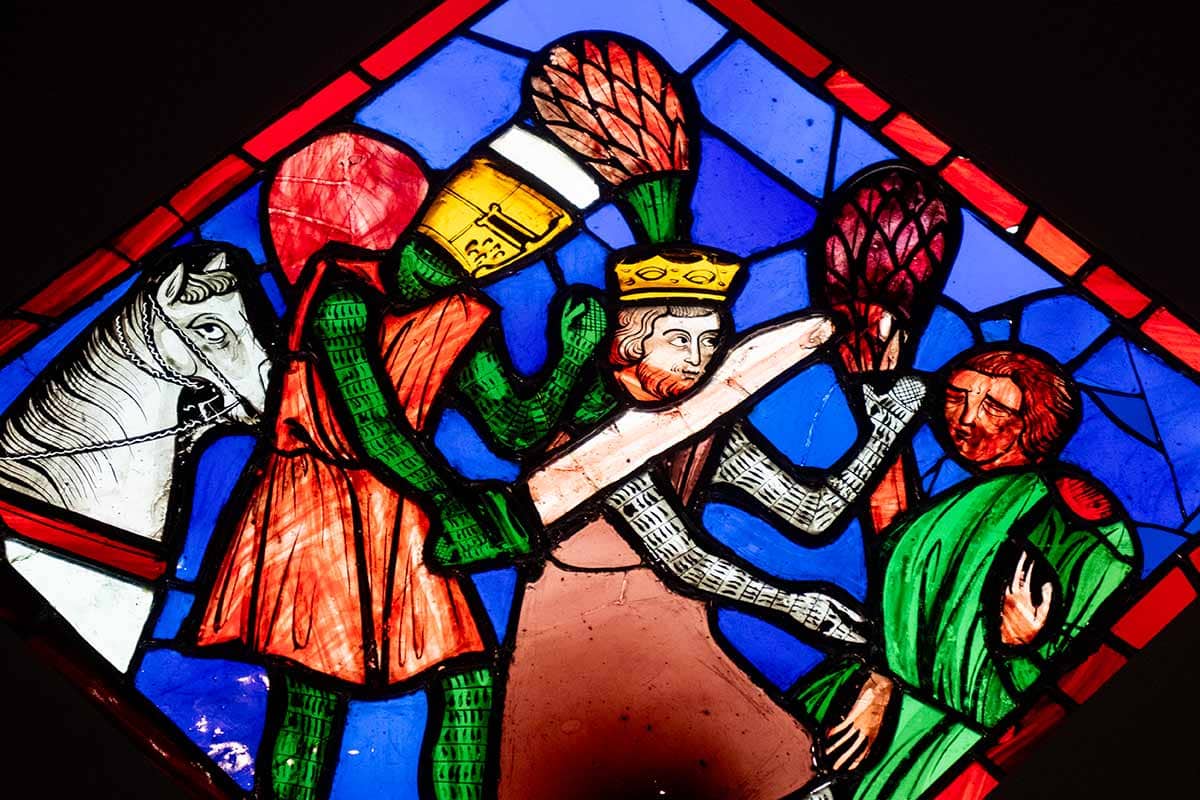
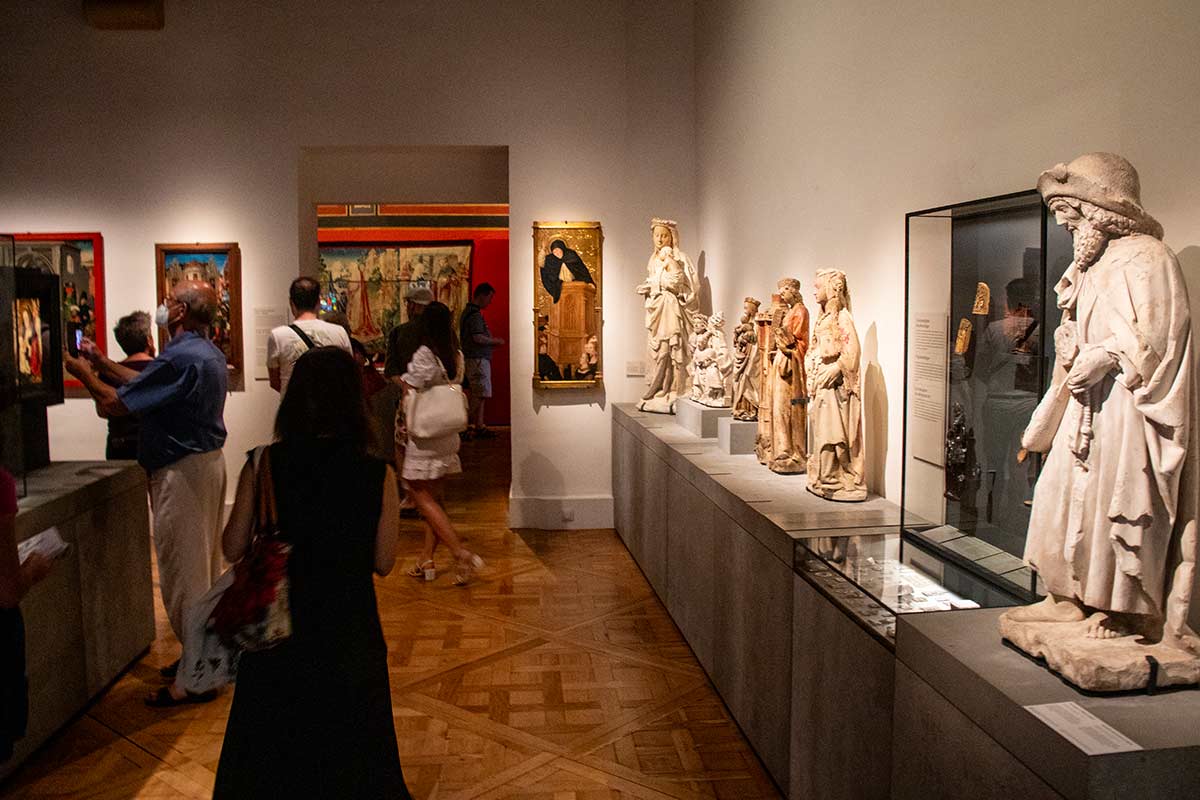
Visiting the Cluny Museum is one of the most rewarding things to do in the Latin Quarter for history lovers.
Its official name is the Musée National du Moyen Age – the National Museum of the Middle Ages – and part of it is housed in a late medieval mansion owned by the Abbots of Cluny, one of the most powerful Benedictine monasteries in France.
Its collection – some of which has been held since the 19th century – consists of an enormous range of artworks, from the famous Lady and the Unicorn tapestries to exquisite gilded and jewelled reliquaries built to hold prized holy relics.
Some of these were acquired from private collections, others rescued from churches that were eventually lost, like the superb misericords (carvings on the underside of priests’ seats) from a church in Beauvais.
Many people visit France – or indeed Paris – to explore its superb cathedrals and churches. If you’re one of thee (like me) then don’t miss this outstanding museum, which is one of my favourite museums in Paris.
Getting there: Metro line 10 to Cluny-Sorbonne
2. La Sorbonne
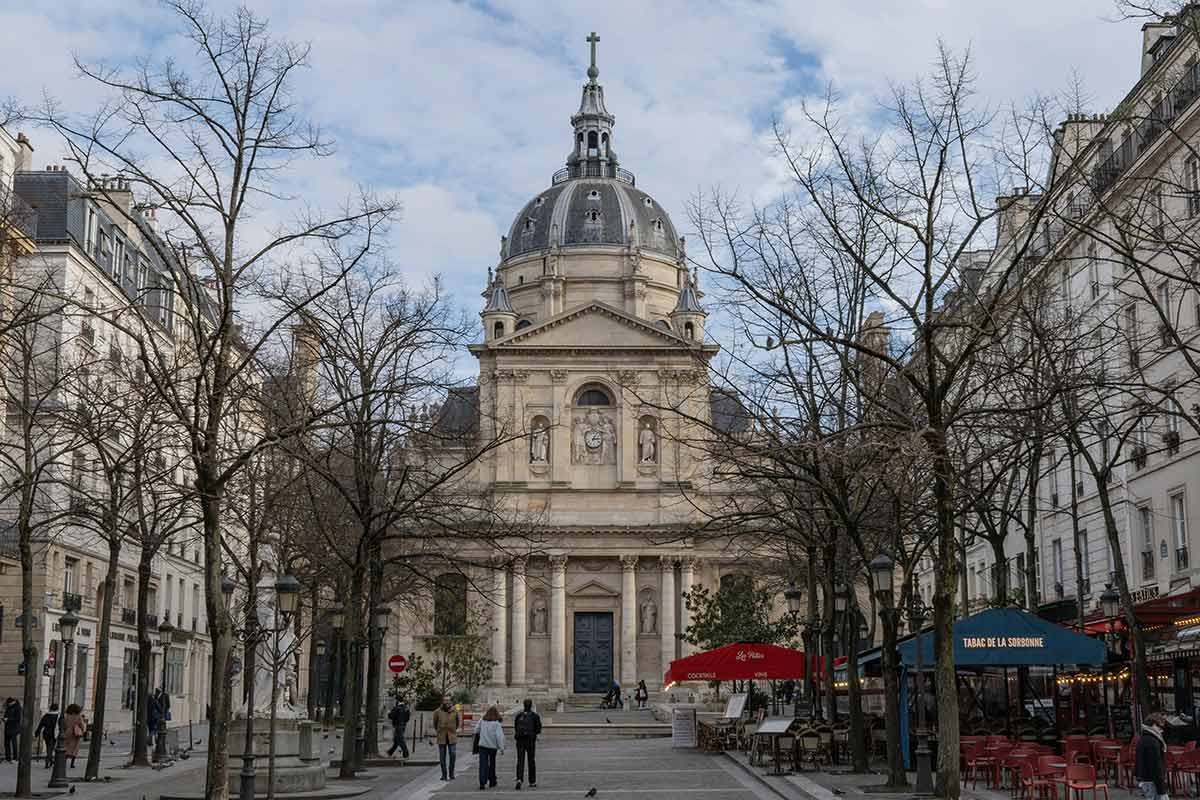
The Sorbonne is the widely used name of the former University of Paris, whose historic main administrative building (pictured above) is located on a square just off the Boulevard Saint-Michel in the Latin Quarter. Sorbonne Université was created when the University of Paris was split into multiple universities and faculties in the 1970s.
The original college was founded in 1253 by Robert le Sorbon, and after a period of decline from the late Middle Ages onwards, the Sorbonne Chapel was rebuilt under the auspices of Cardinal Richelieu, chief minister under king Louis XIII, at the same time as the reconstruction of the main building. The latter was replaced in the 1880s, with the Chapel incorporated, by Henri-Paul Nenot.
You can visit the main Sorbonne building and Chapel as part of a guided tour – follow this link on the Sorbonne website to book either individual or group tours.
Getting there: Cluny-Sorbonne (Metro line 4)
3. Saint-Germain-des-Prés Church
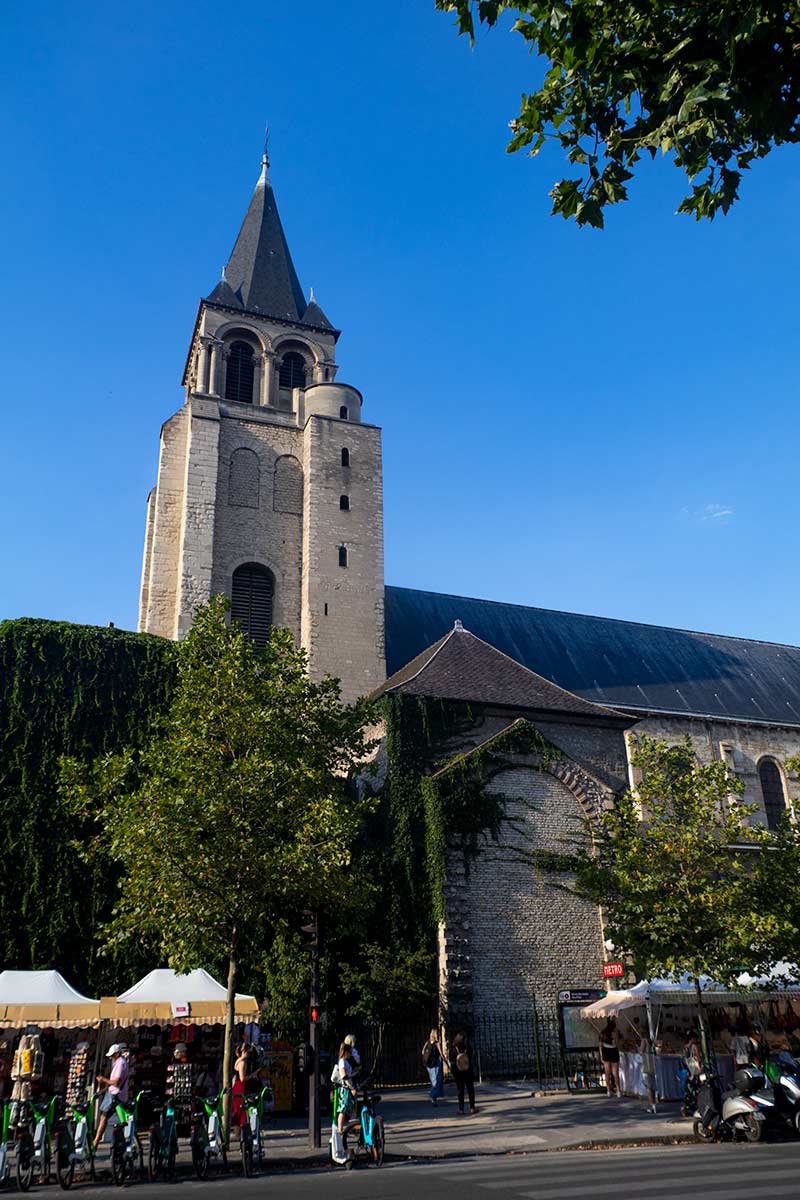
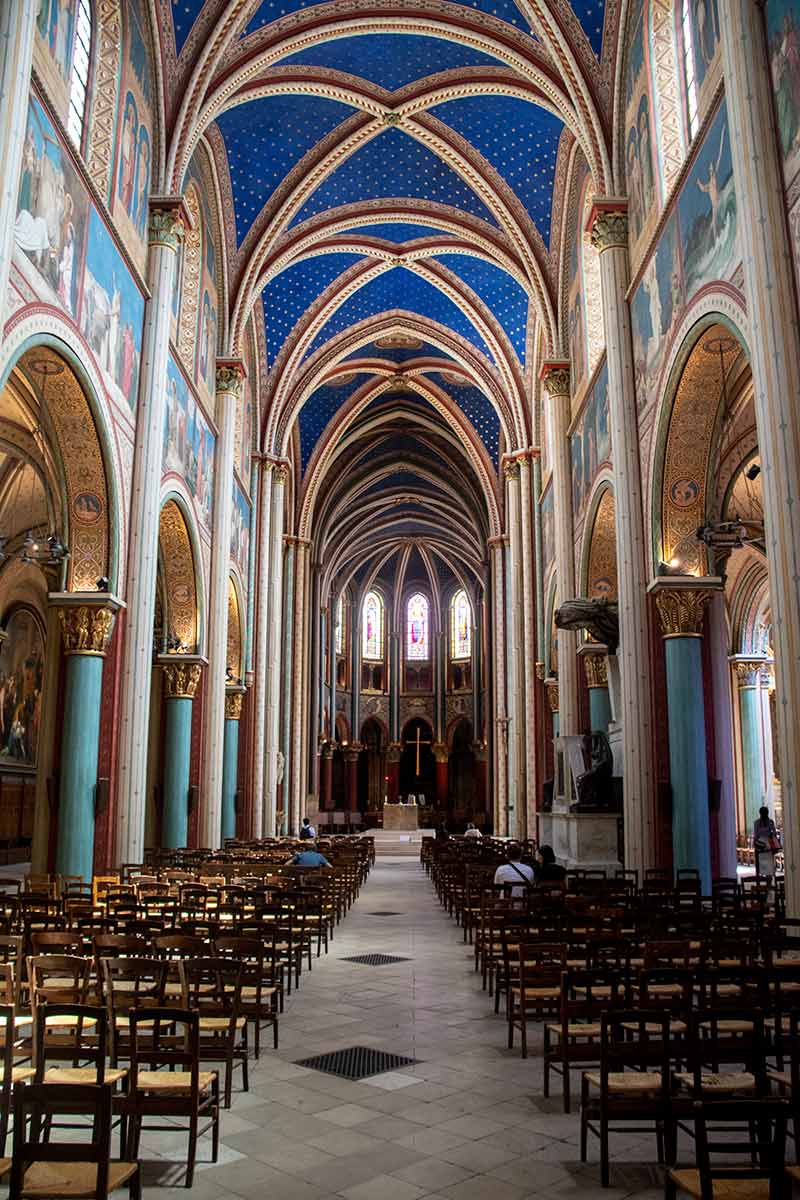
Saint-Germain-des-Prés has a strong claim to be the oldest surviving church in Paris. It was founded in the 6thcentury, and was the resting place of early Frankish kings. It was originally an Abbey, founded by Childebert I in 543 AD, in what was then countryside outside the city boundary (‘des Prés’ means ‘of the meadows’). It’s part of the Latin Quarter, but the district around the church is also known as Saint-Germain-des-Prés.
The early royal tombs were eventually moved to the Basilica of St Denis to the north of the city, but the church and abbey remained an important centre of learning. This, along with the nearby University, greatly contributed to the Latin Quarter’s rise to being one of the intellectual powerhouses of Europe.
After much destruction at the time of the French Revolution, the church was rebuilt in the 19th century. Its belltower dates from the 11th or 12th centuries, and some medieval (most likely from the 13th century) remains, but most of what we see now is a re-creation of the former church. After the 1789 Revolution many churches had their colourful decoration and artwork destroyed, so St Germain des Prés was given a huge overhaul. The nave is decorated with frescoes by Hippolyte Flandrin, showing numerous scenes from the Old Testament. I particularly love the ceiling, a deep blue with elaborately painted ribbed vaulting and twinkling golden stars.
Getting there: Saint-Germain-des-Prés (Metro line 10) or Mabillon (Metro line 4) are just across the street from the church.
4. The Literary Cafes Of Saint-Germain-des-Prés
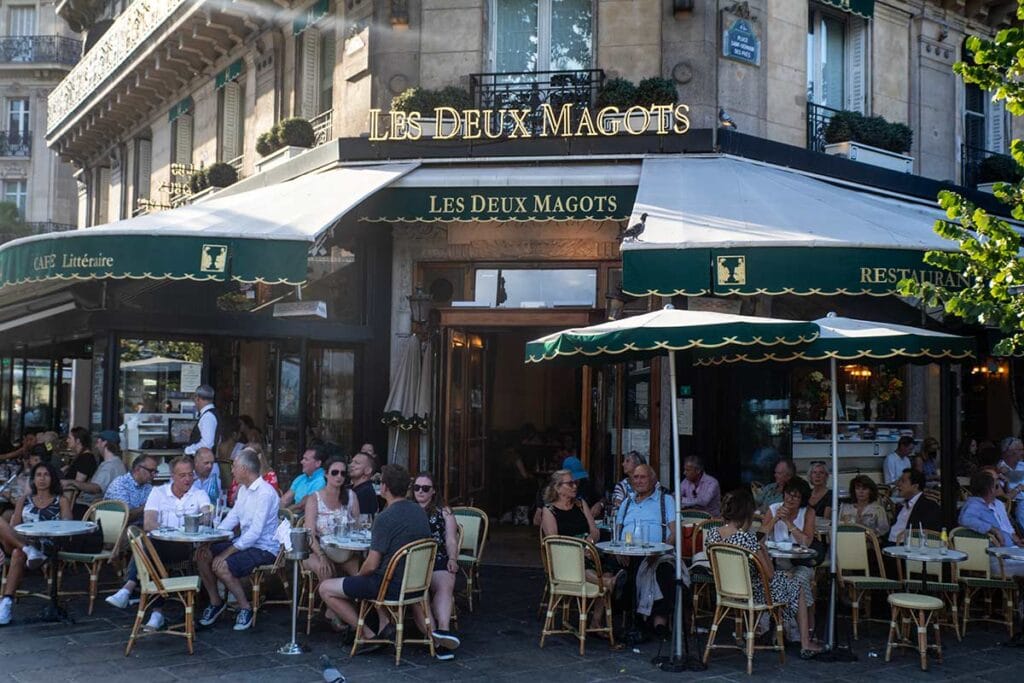
As mentioned in the section above, Saint-Germain-des-Prés attracted many artists and intellectuals – particularly in the early 20th century – and this proves a strong draw a hundred years on.
I recall my first pilgrimage to the Café Aux Deux Magots around spring of 1987, where I could pay a (frugal) homage to one of my heroes at the time, Jean-Paul Sartre. He frequented the café with his wife, Simone de Beauvoir, and other renowned patrons included fellow ‘existentialist’ author Albert Camus. The likes of Pablo Picasso, Bertolt Brecht and Ernest Hemingway were also regular customers when in town.
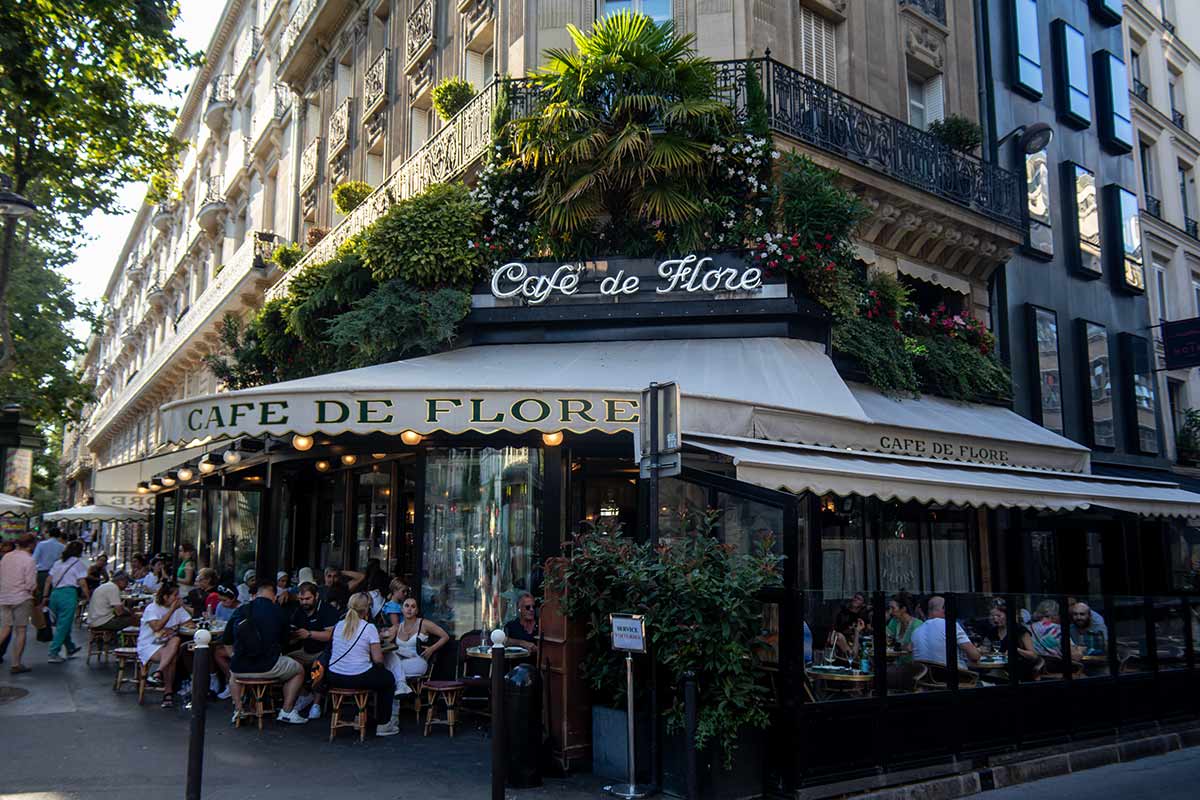
Picasso was also a regular at the Café de Flore, as were philosopher Georges Bataille and Surrealist poet Robert Desnos. Just across the Boulevard Saint-Germain, poets Paul Verlaine and Guillaume Apollinaire frequented Brasserie Lipp.
Nowadays they all milk their reputation a little, and they charge a lot for what they offer, but if you want to follow in the footsteps of someone you admire, you can expect to pay something of a premium for the privilege.
Getting there: Saint-Germain-des-Prés (Metro line 10)
5. Shop At The Bouquiniste Stalls Along The Seine
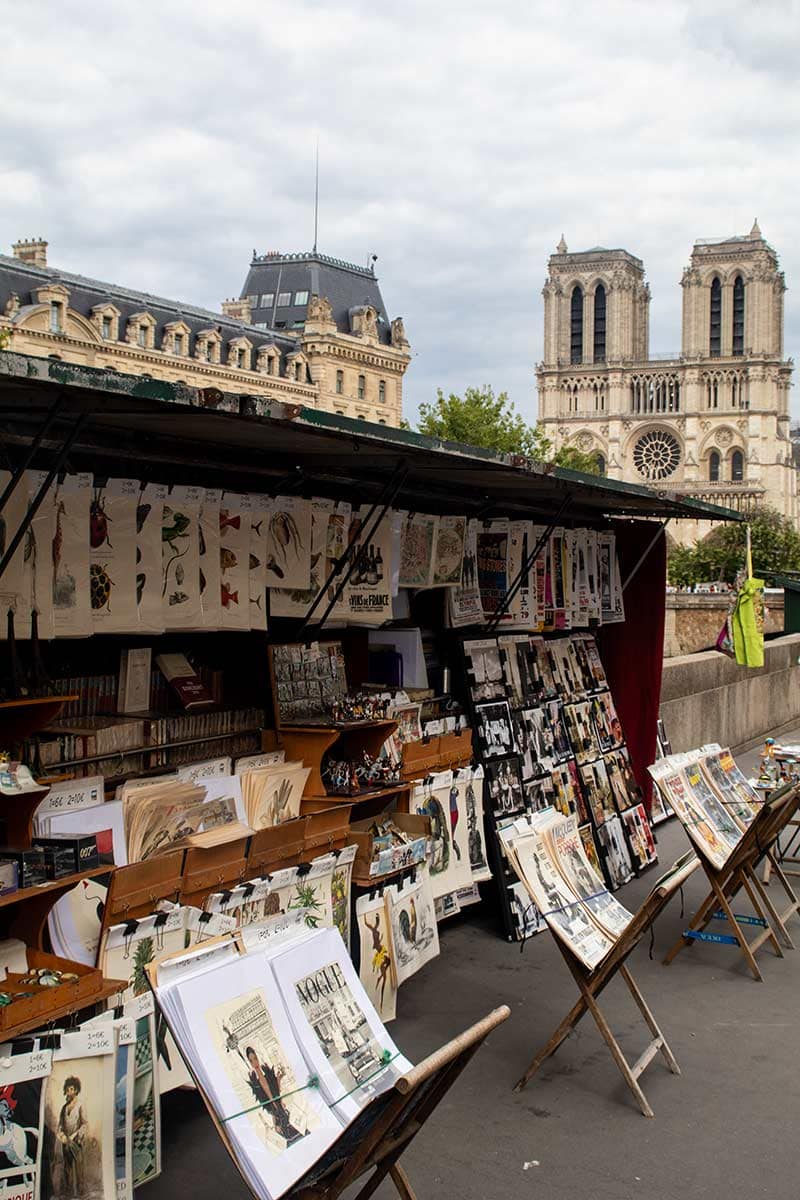
The bouquinistes or booksellers along the banks of the Seine are one of the most familiar sights in Paris. Their green box stalls stretch around 3 km (2 miles) along both banks, and on the Left Bank, which includes the Latin Quarter, they begin at the Quai de la Tournelle, opposite the Ile-Saint-Louis, and continue as far as Quai Voltaire, beyond the Pont du Carrousel and opposite the Louvre.
Stallholders originally sold books on the Pont Neuf, the oldest surviving stone bridge in Paris, but in 1756 local authorities forced them to move to the banks of the Seine instead.
The stalls – whose dimensions are fixed by law – sell a huge range of old books and artworks including vintage posters, postcards, antique maps and souvenirs including fridge magnets. If you’re looking for something quintessentially Parisian, for yourselves or as a gift, these stalls are a great place to start looking.
And the views from the quais to Notre Dame are pretty special too.
6. Saint-Séverin Church
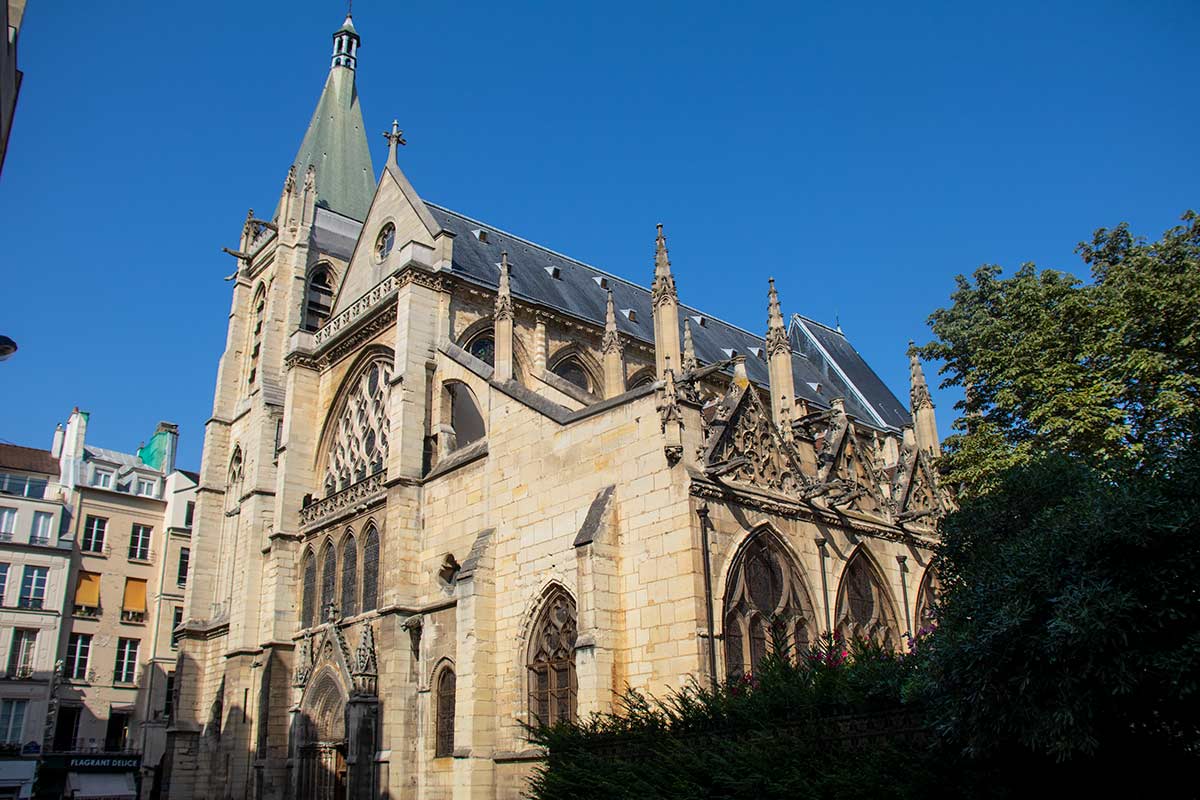
This fine Flamboyant (late Gothic) church was built to replace an earlier church in the second half of the 15th century. For centuries it served as the University of Paris’ church, so was one of the city’s wealthiest and most important churches.
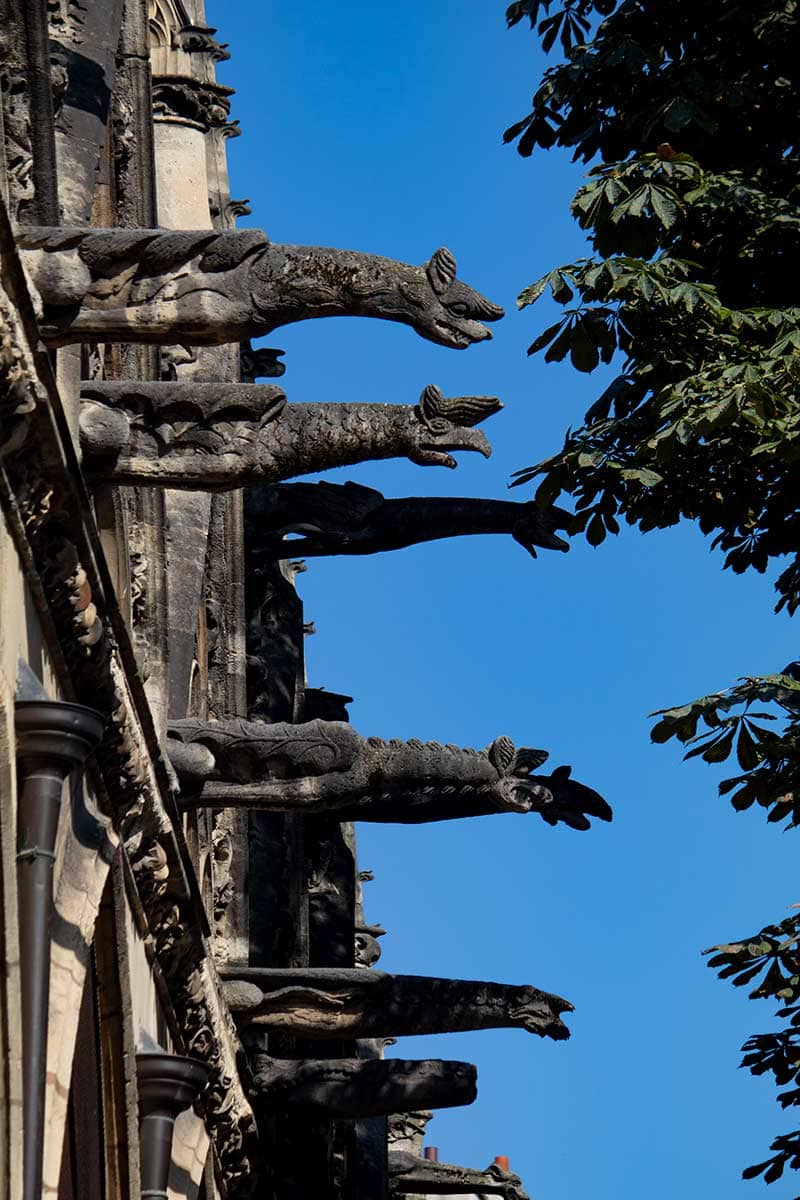
It’s one of the more ornate Gothic churches in Paris, with elaborate window tracery and a fine gaggle of gargoyles adorning the exterior. There’s also a cloister with a garden to the immediate south of the church – this used to serve as a charnel house during the Middle Ages.
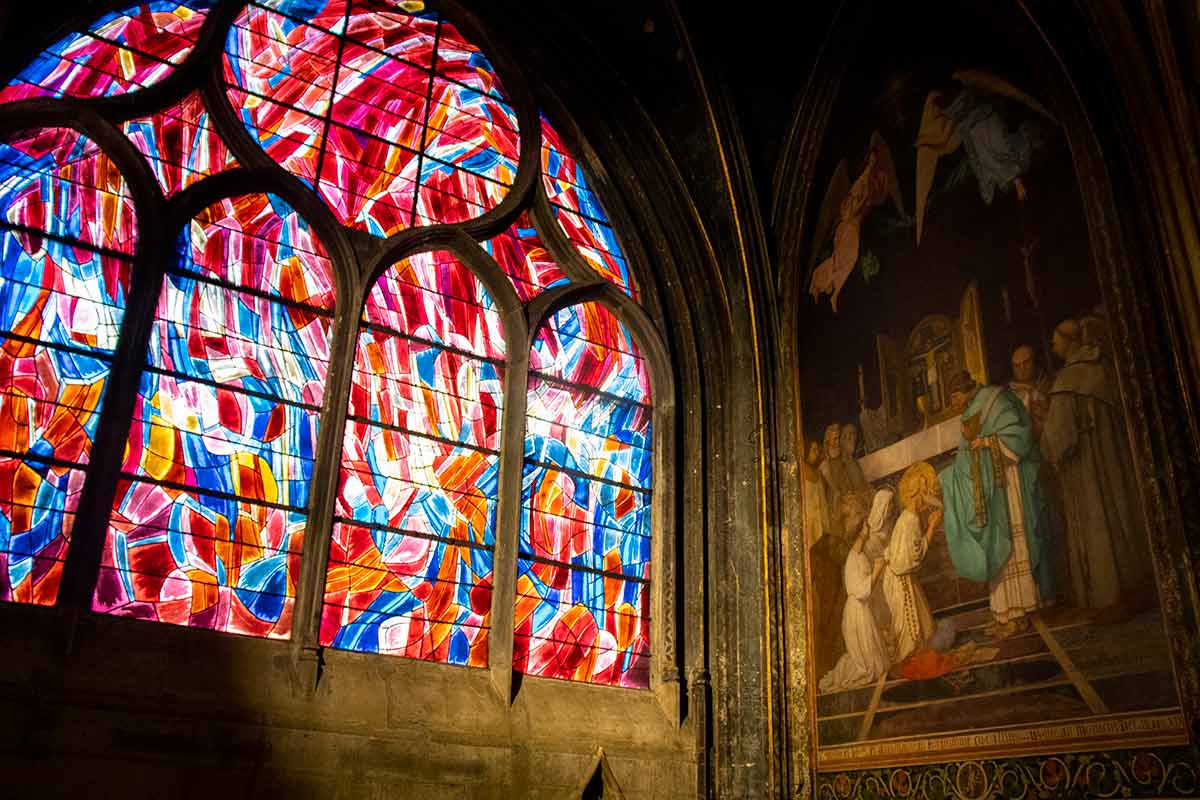
The interior of the church is also beautiful, and morning is a great time to visit to see the 20th-century stained-glass windows around the east end of the church, when sunlight floods the aisle and chapels around the high altar with glorious rich colourful light.
Getting there: St-Michel (Metro line 4 or RER Line B) or buses 47 and 87.
7. Shakespeare & Company Bookshop
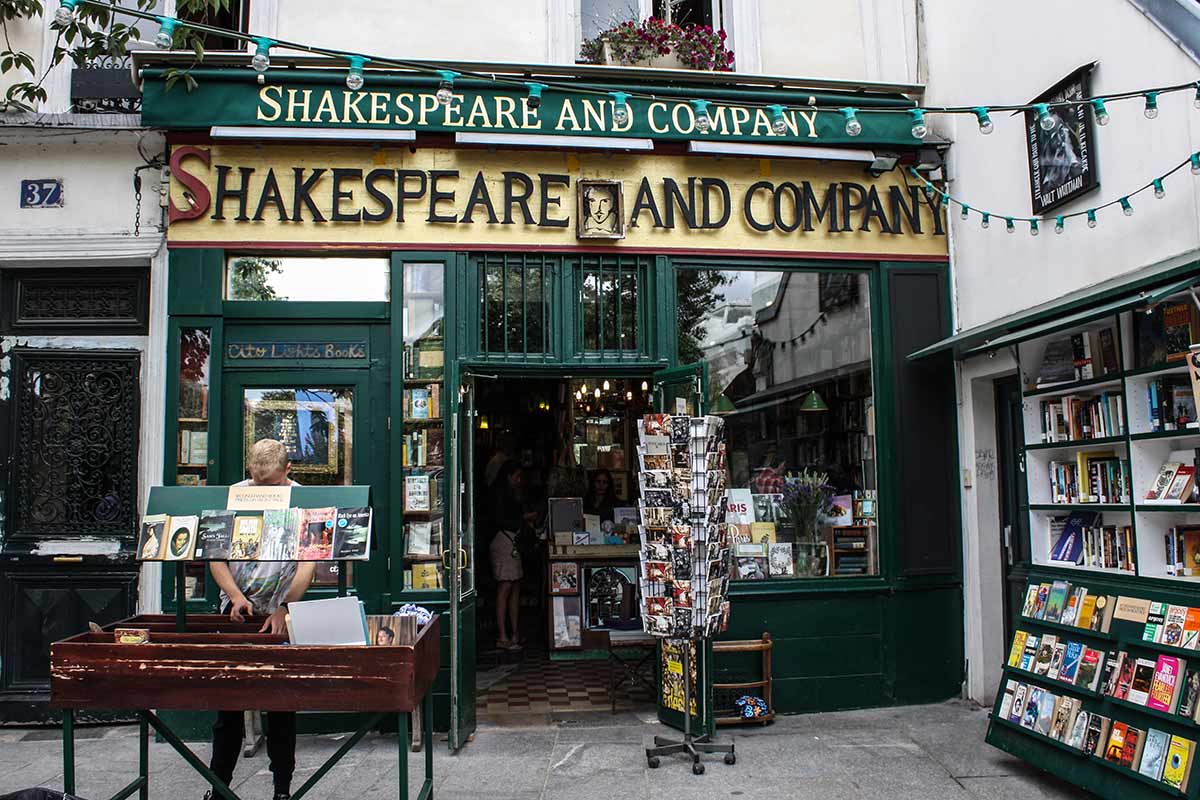
This is one of the most famous bookshops in Paris, which also become a victim of its own success in recent years.
It’s just around the corner from Saint-Julien le Pauvre church, a stone’s throw from the Seine and two minutes from Notre Dame. I remember browsing here in my afternoons off when I lived in Paris in the summer of 1992, and thought it was a wonderful quirky shop, which reminded me very much of the second-hand bookshops closer to home in Hay-on-Wye, Wales.
The shop was founded in 1951 and named after William Shakespeare in 1964 by then-owner George Whitman. And it’s still run by his daughter, Sylvia. It was always a fantastic bookshop, and drew a crowd of expat writers including Allen Ginsberg and William S Burroughs in their heydays. They even have a studio where ‘tumbleweeds’ – usually unpublished writers – can stay between a week and a month a year. They normally have to leave a one-page autobiography in lieu of payment.
The only drawback in recent years has been its popularity. When researching opening times for Saint-Julien-le-Pauvre around the corner, I noticed a very long queue reaching the church. It was over 100 metres long, and for visitors to the bookshop.
It’s wonderful that so many people want to visit a bookshop in the dumbed-down digital age, but a concern that they can’t cope with demand. The only suggestion that I can make is that you arrive at opening time (10.00 am Mondays to Saturdays) or late in the day (7.00 to 8.00 pm) to avoid the worst of the crowds.
Getting there: St-Michel (Metro line 4 or RER Line B) or buses 47 and 87.
8. Saint-Julien le Pauvre
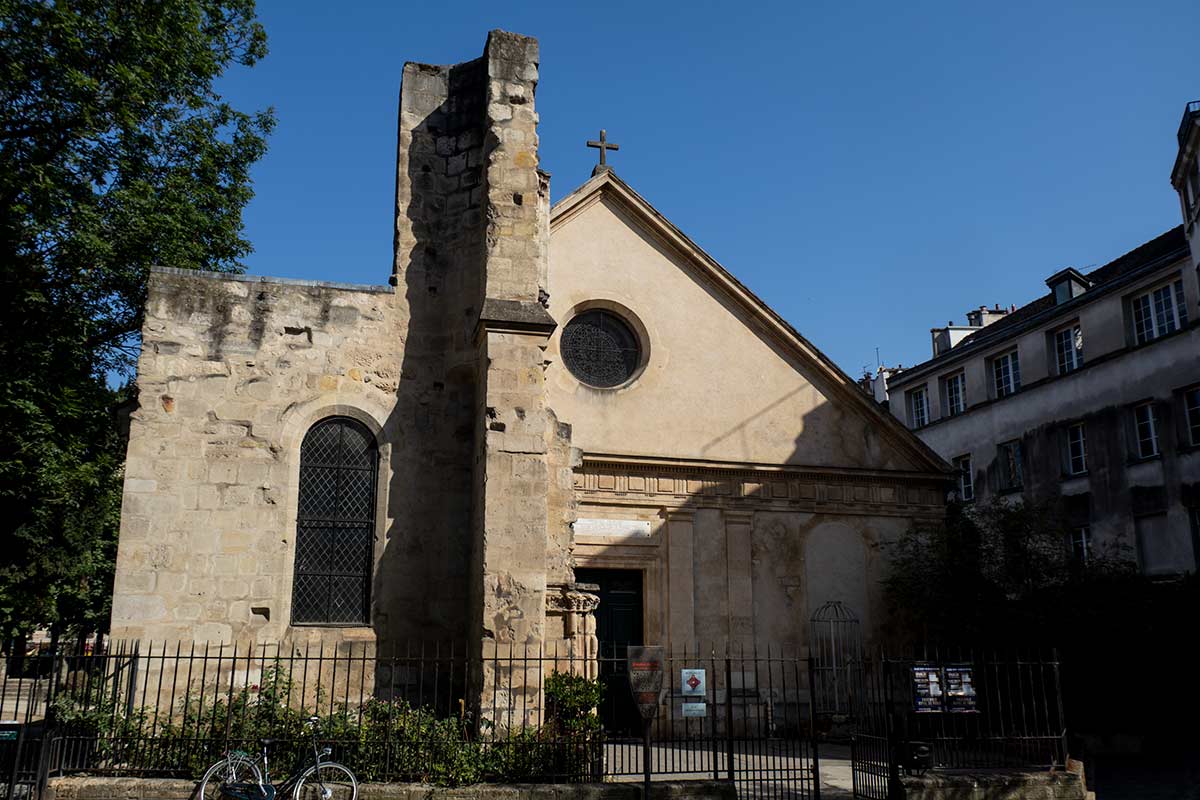
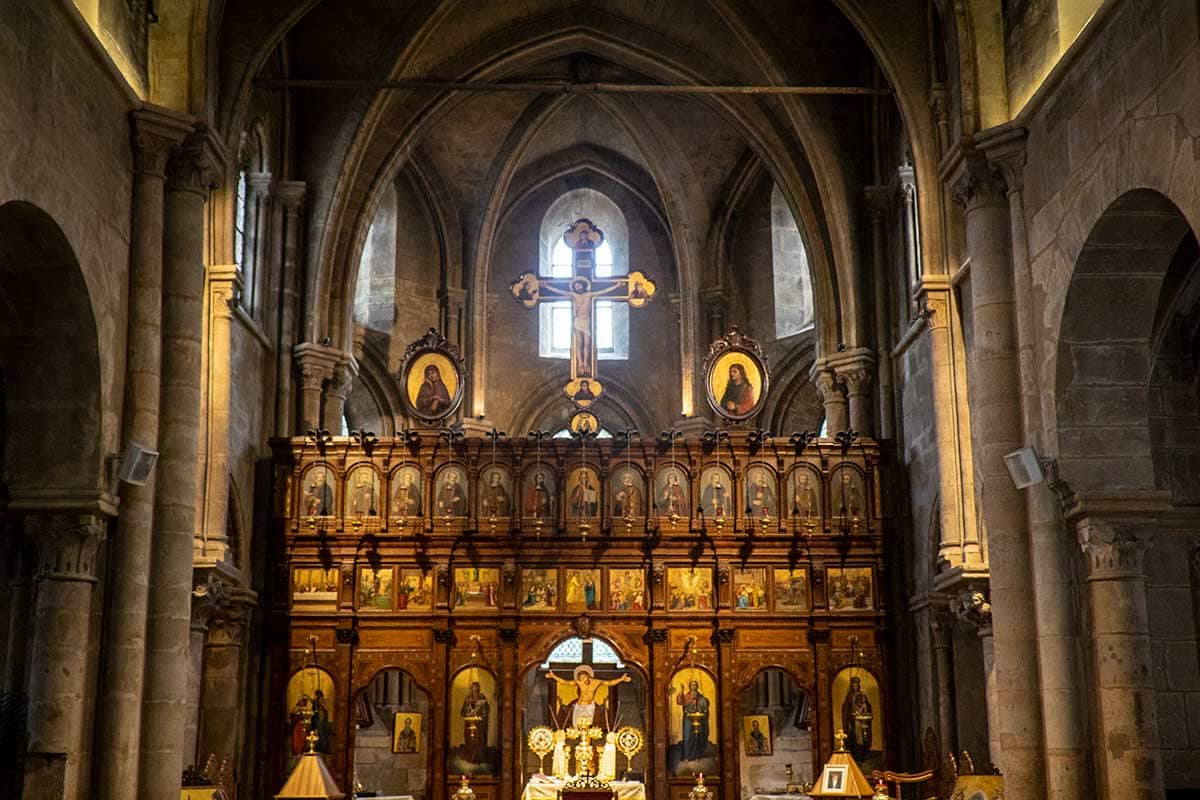
The humble 12th-century church of St Julien le Pauvre (St Julian the Poor) is at the heart of one of the most beautiful corners of Paris. This simple, mostly Romanesque church is next to a park (Square Rene Viviani, see below) with a phenomenal view of Notre Dame, and it’s also a few steps from Odette, one of the foremost patisseries in Paris.
The church isn’t open frequently. I got in for half an hour before an evening service, and it also hosts classical music concerts – if you have a ticket, you can also look around the church.
The interior may come as a surprise, as rather than finding all the features of a Roman Catholic church, the first thing you see is an iconostasis, a screen separating the nave from the chancel of the church, decorated with icons. Saint-Julien-le-Pauvre has been the parish church of the city’s Greek Melkite Catholic congregation since 1889. One of the most beautiful churches in Paris.
Getting there: St-Michel (Metro line 4 or RER Line B) or buses 47 and 87.
9. Square René Viviani
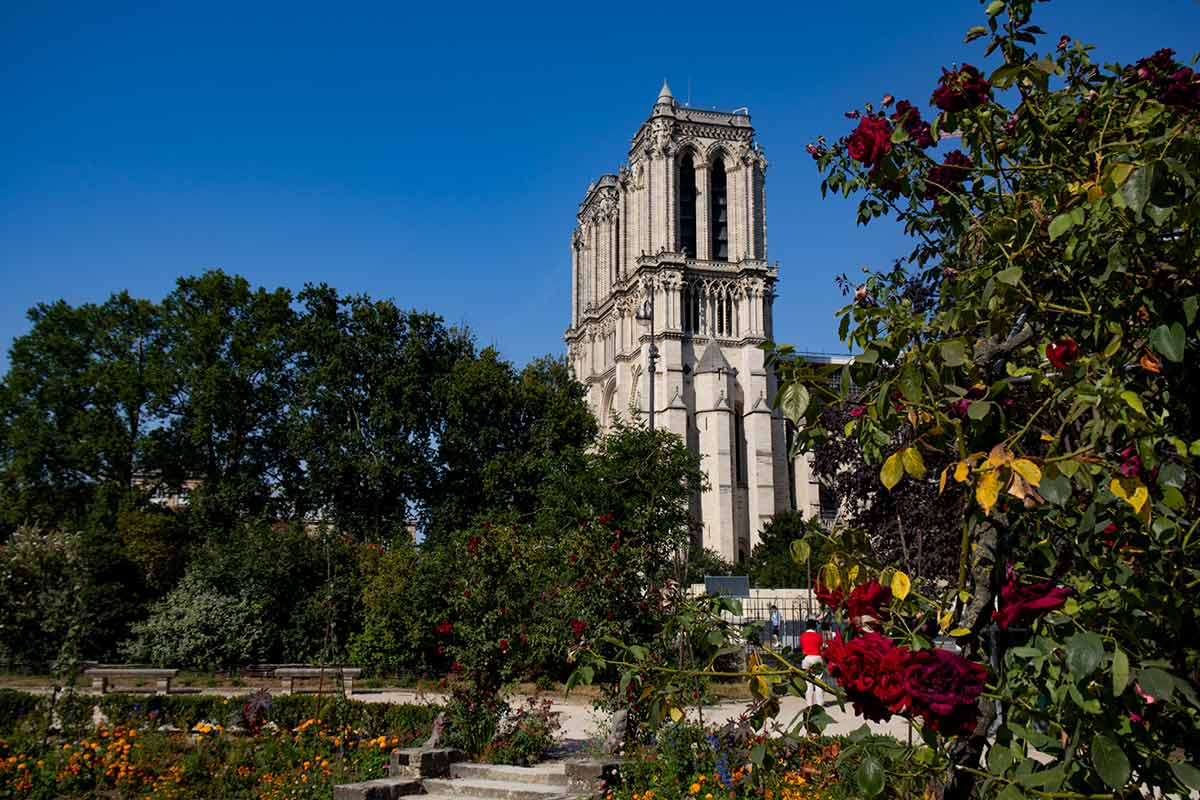
This small garden next to Saint-Julien-le-Pauvre Church is one of the loveliest parks in Paris, with one of the best views in the city – it’s right across the river from the west towers of Notre Dame.
When I lived in Paris in the 1990s this was my favourite place to sit in the shade for my lunchtime baguette, under the shade of one of the trees with the outstanding view of Notre Dame.
And one of these trees is the oldest in Paris. The seed – collected by a botanist from the Appalachian Mountains in what is now the US – was planted in 1601, and the locust tree is still going strong over 425 years later.
Getting there: St-Michel (Metro line 4 or RER Line B) or buses 47 and 87.
10. Panthéon
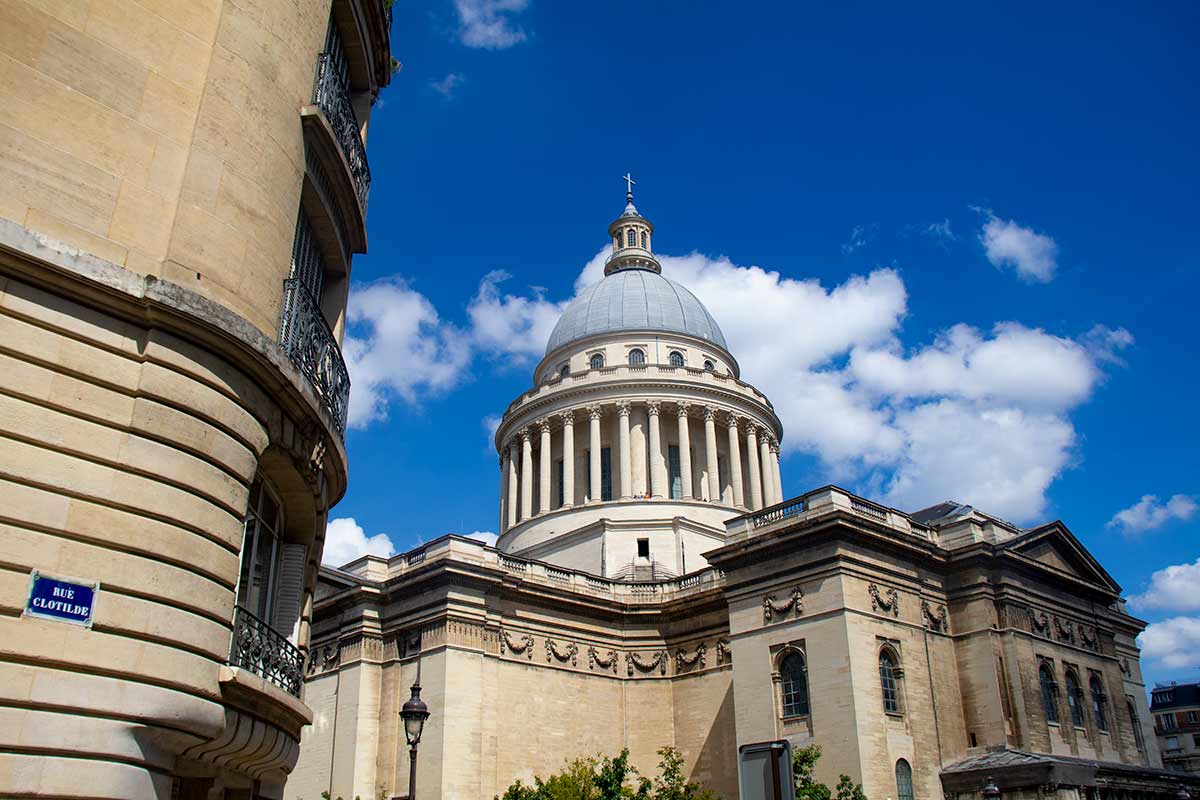
The Panthéon is one of the main things to see in the Latin Quarter. France’s national mausoleum occupies a huge former church on the summit of Montaigne-Sainte- Geneviève, a Neoclassical temple that doesn’t really get very crowded and which is a great introduction to French history, culture and literature.
The church – meant to be dedicated to the patron saint of Paris, St Geneviève – was incomplete at the time of the French Revolution of 1789, so the building was repurposed as a Temple dedicated to France and some of its greatest citizens.
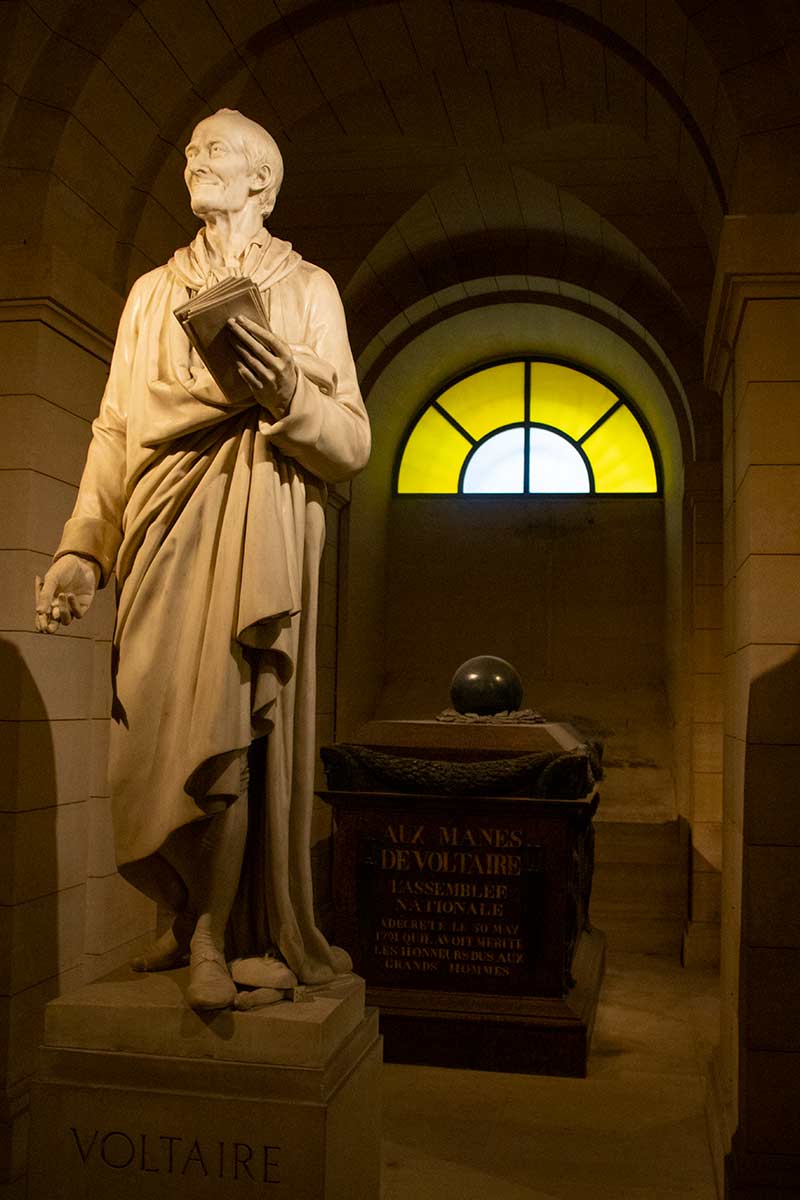
Voltaire and philosopher Jean-Jacques Rousseau are the two oldest burials in the Pantheon, having been interred there in 1791. The building was twice reconsecrated as a church during the 19th century, but it eventually reverted to the status of a Mausoleum in 1881.
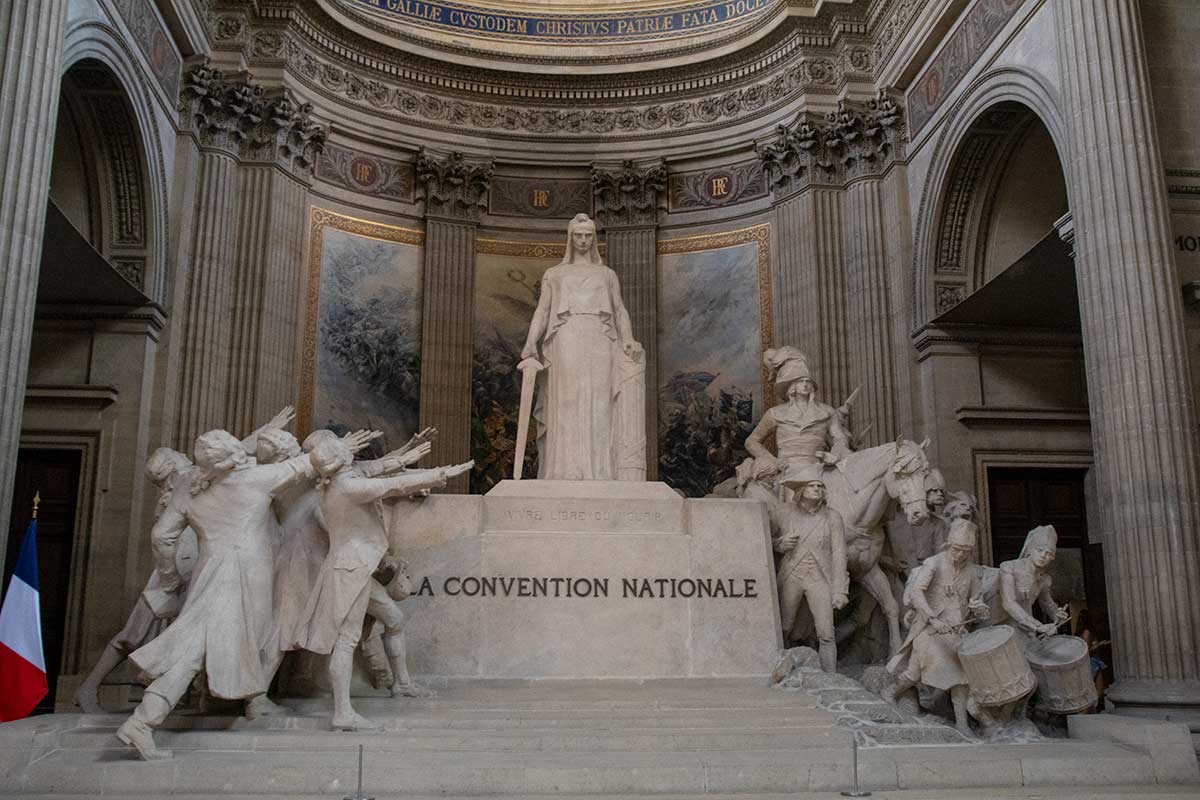
The upper part of the Pantheon resembles a church, albeit without an altar. It’s decorated with murals depicting major episodes from French history. A replica of Foucault’s Pendulum hangs from the ceiling of the dome. His original experiment was carried out there, demonstrating that the direction of the Pendulum’s swing changed as the Earth rotated.

Most of the burials are in the Pantheon crypt. Others include the likes of authors Victor Hugo, Alexandre Dumas and Emile Zola, Resistance heroes such as Jean Moulin and scientists including Marie-Sklodowska-Curie.
While there, don’t miss the climb to the viewing gallery in the dome. It comm ands some of the best views in Paris, especially one of the very best Eiffel Tower views.
You can order your Pantheon entry tickets here. Bear in mind that the dome climb costs an additional €4, which you can only pay at the start of the climb.
Getting there: Luxembourg (RER line B) is less than five minutes’ walk away.
11. Saint-Étienne-du-Mont
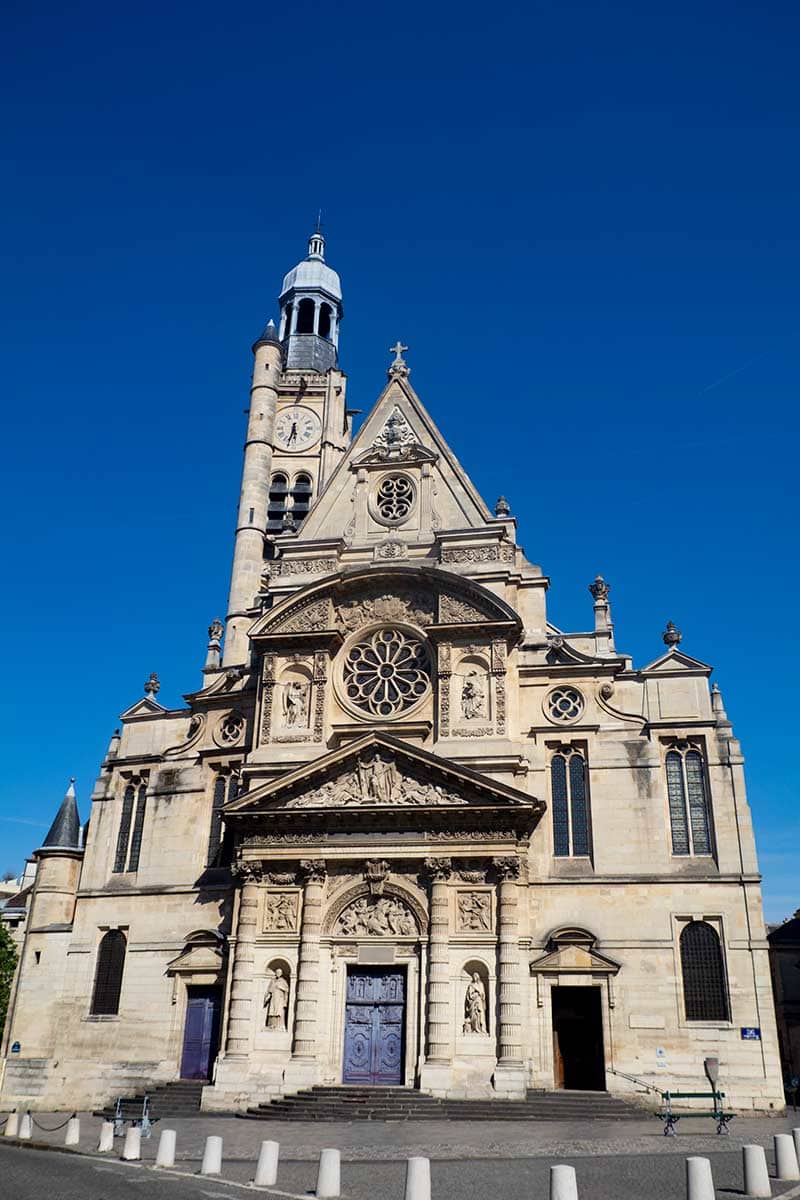
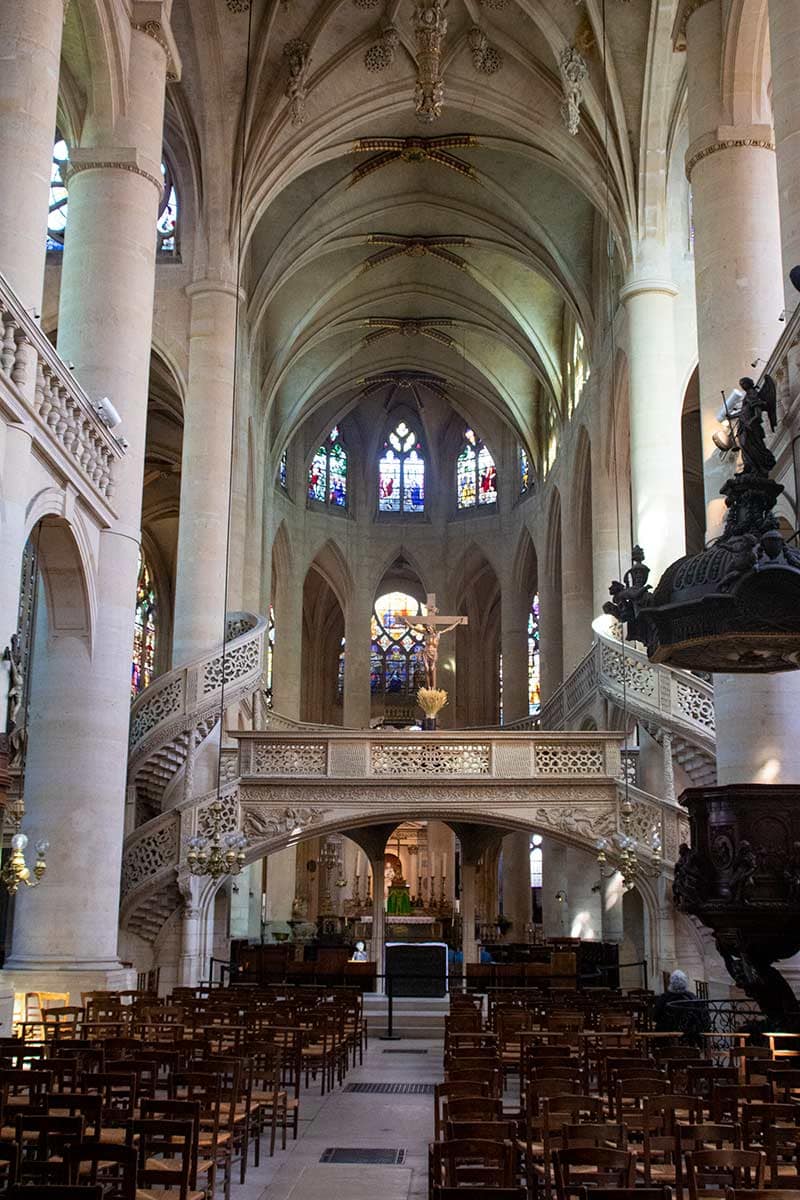
Saint-Étienne-du-Mont – St Stephen’s on the Hill – is one of the best churches in Paris to visit. Just across the square from the Panthéon, the west front of the church is captivating, a wonderful hotch-potch of styles including a Gothic period rose window and a Renaissance-era portico below. I’ve always thought it would make a wonderful chapel in for Hogwarts in the Harry Potter movies, but the church has had a starring role in another movie – Woody Allen’s Midnight in Paris.
The interior is also a bit of a jumble of architectural curiosities. The most-eye-catching of these is the jubé, the ornate stone bridge that serves the same function as wooden rood screens did in medieval churches, separating the nave (where the congregation sits) from the chancel.
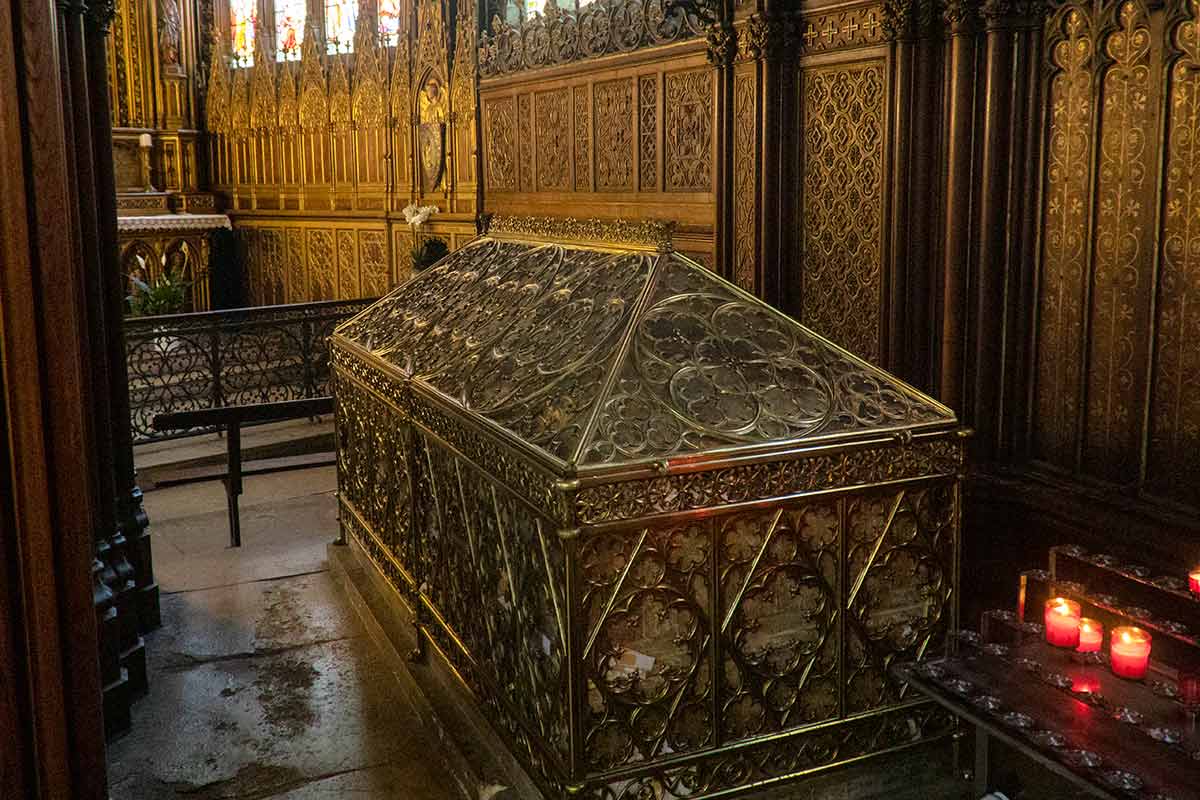
The church contains the few remaining relics of Sainte Geneviève, the 5th-century patron saint of Paris. In 451 AD, she was credited with saving the city through prayer from the forces of Attila the Hun, who attacked Orléans instead. Playwright Jean Racine and mathematician Blaise Pascal are also buried in the church.
Getting there: Metro to Cardinal Lemoine (line 10) or RER B to Luxembourg followed by a 5-minute walk
12. Place Monge Market
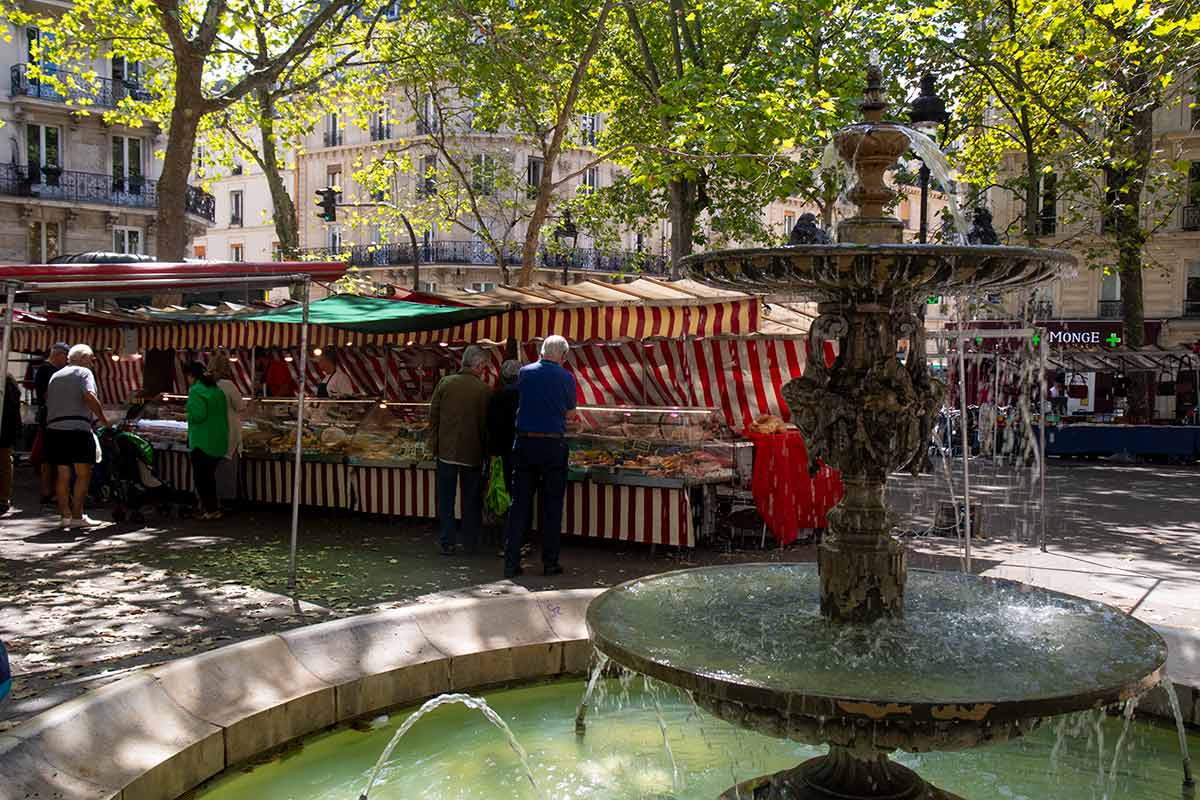
Place Monge is one of the loveliest Parisian squares, a small area surrounded by old apartment buildings with a fountain and Metro station with a couple of cafes close by.
It’s also home to one of my favourite local Parisian markets, which is open on Wednesdays, Fridays and Sundays from 7.00 am to 2.30 pm. This is where to come if you want to find some of the best fresh produce in Paris, and also to seek out artisanal producers of anything from bread to free range meat to herbs, all specialists with superb selections.
The square was built in the mid-19th century, and fans of the late, great Krzysztof Kieślowski may recognise it from several scenes in his 1991 film The Double Life of Veronique.
Getting there: Place Monge is on Metro line 7 (the pink line)
13. Jardin du Luxembourg
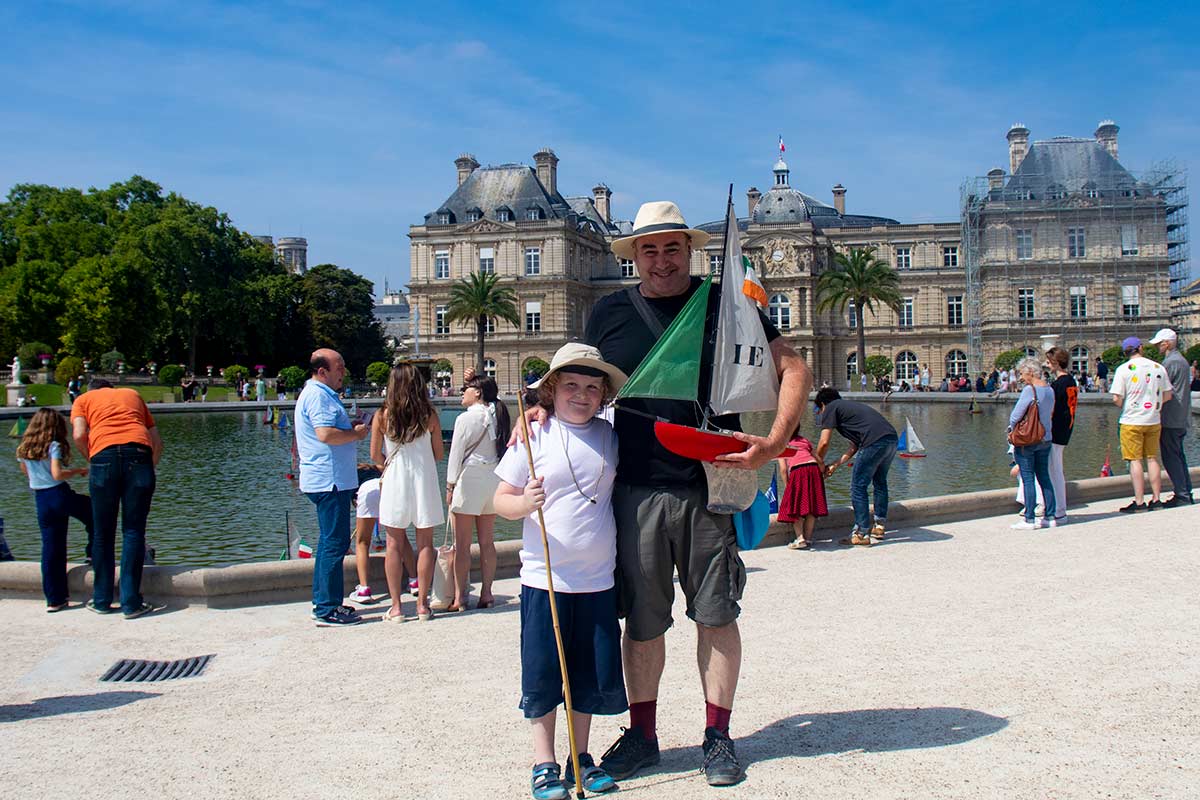
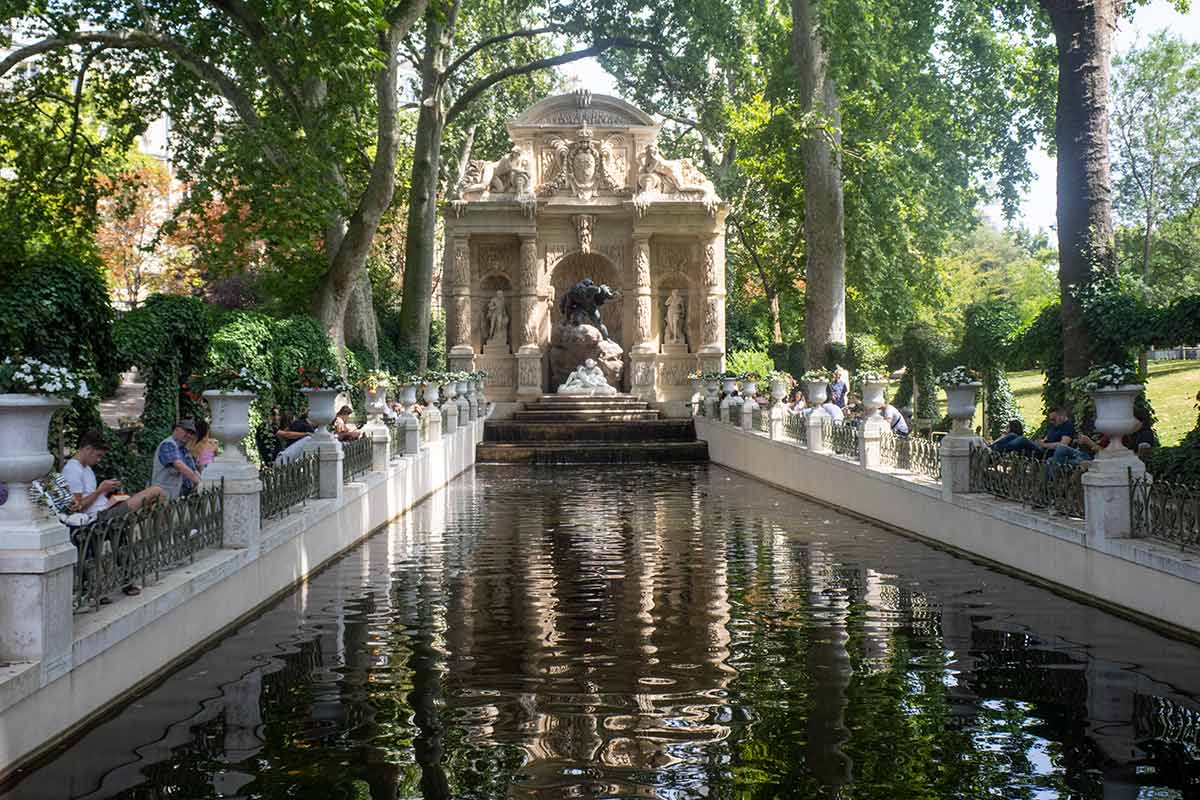
The Jardin du Luxembourg is the largest and one of the best parks in central Paris. It’s at the southern end of the Latin Quarter, close to several of the area’s main sights including the Pantheon and Saint-Sulpice (see following section) and like Place Monge is one of the best places to go in the city to savour a slice of Parisian life.
The Jardin du Luxembourg is also one of the oldest parks in Paris, founded in 1611 by Marie de Medici, widow of the assassinated French King Henri IV. She wanted to leave the Louvre and build a new palace with gardens, inspired by the Palazzo Pitti in her native Florence.
The Medici Fountain is one of the most beautiful parts of the Jardin, a late-Renaissance masterpiece completed in 16730 by Tommaso Francini. It was originally located elsewhere in the Jardin, and moved to its present location close to the Palace in the 1860s to make way for a new road to be built close by. One of the benefits of this is the lengthening of the water basin, meaning that more people can enjoy this sublime shady spot.
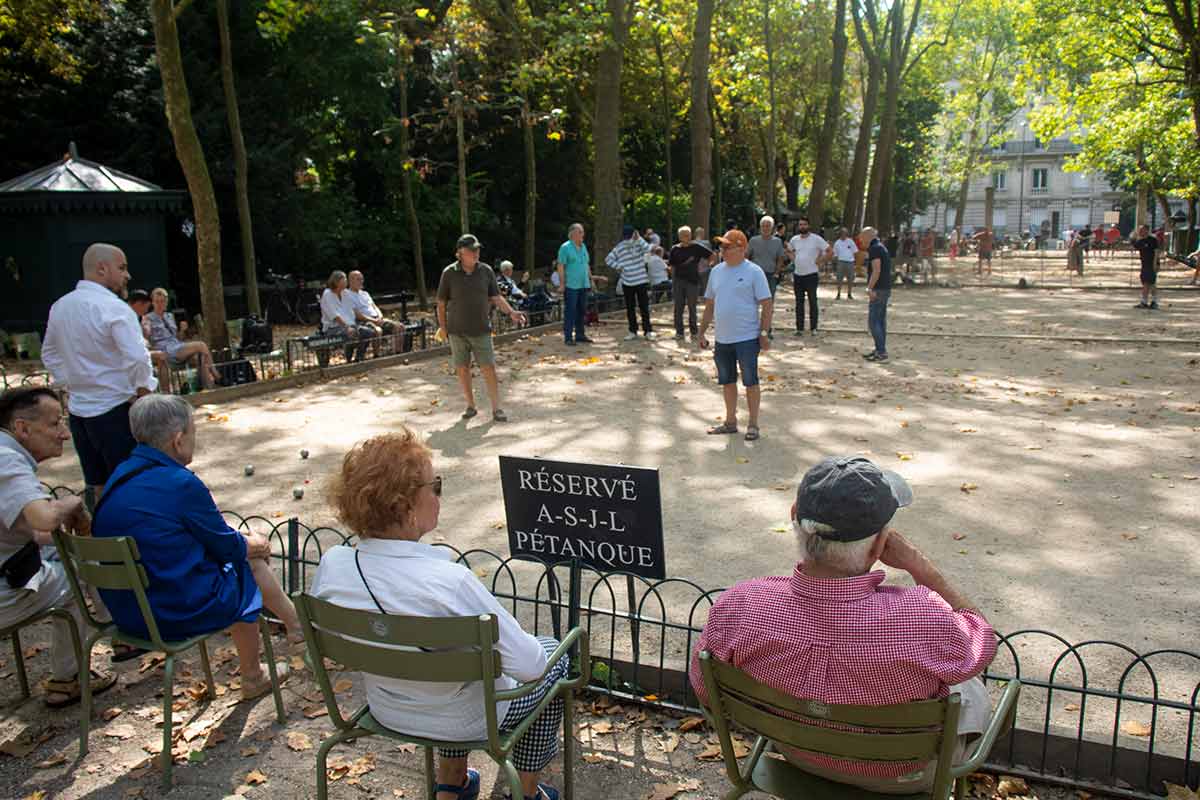
I always loved wandering the Jardin du Luxembourg by myself, commandeering one of the many green chairs around the park and watching the world go by. Explore and you’ll find one of the oldest carousels in Paris, local residents absorbed in their games of pétanque (also known as boules), and kids sailing boats in the pond in front of the Palace, something we did with Our Little Man for an hour or more.
14. Saint-Sulpice Church
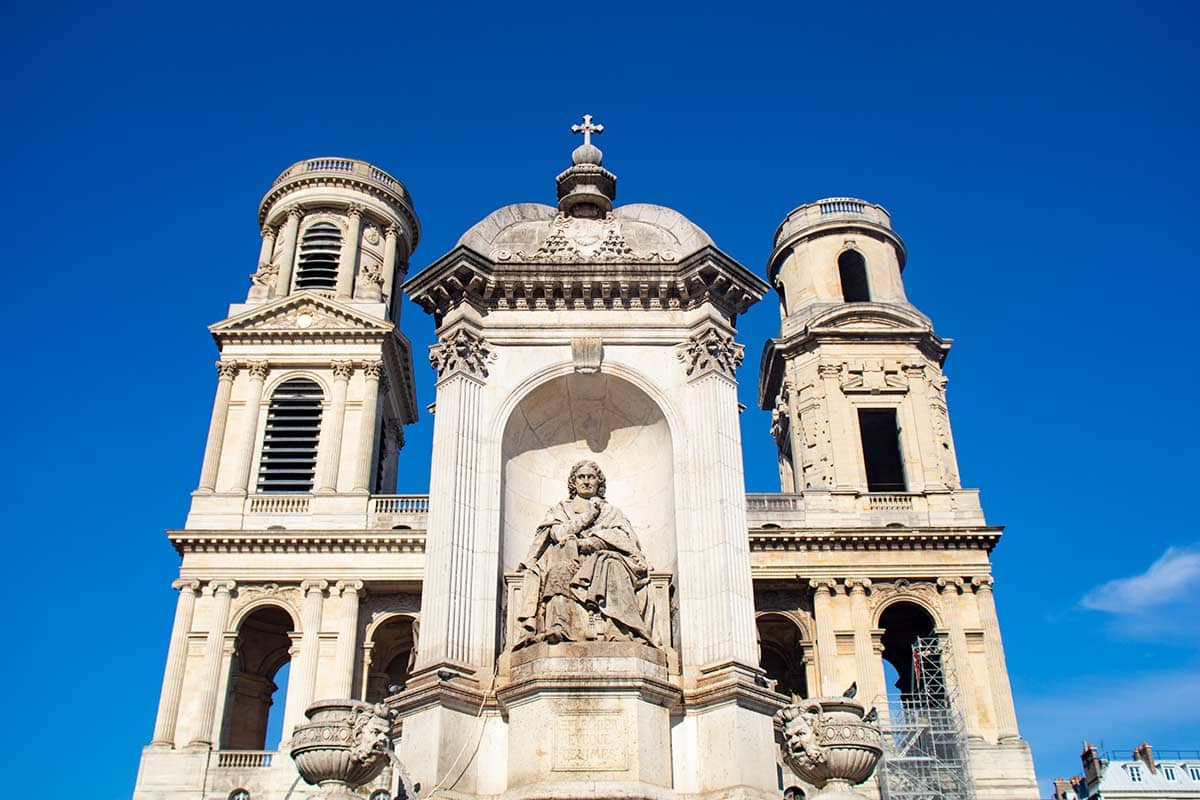
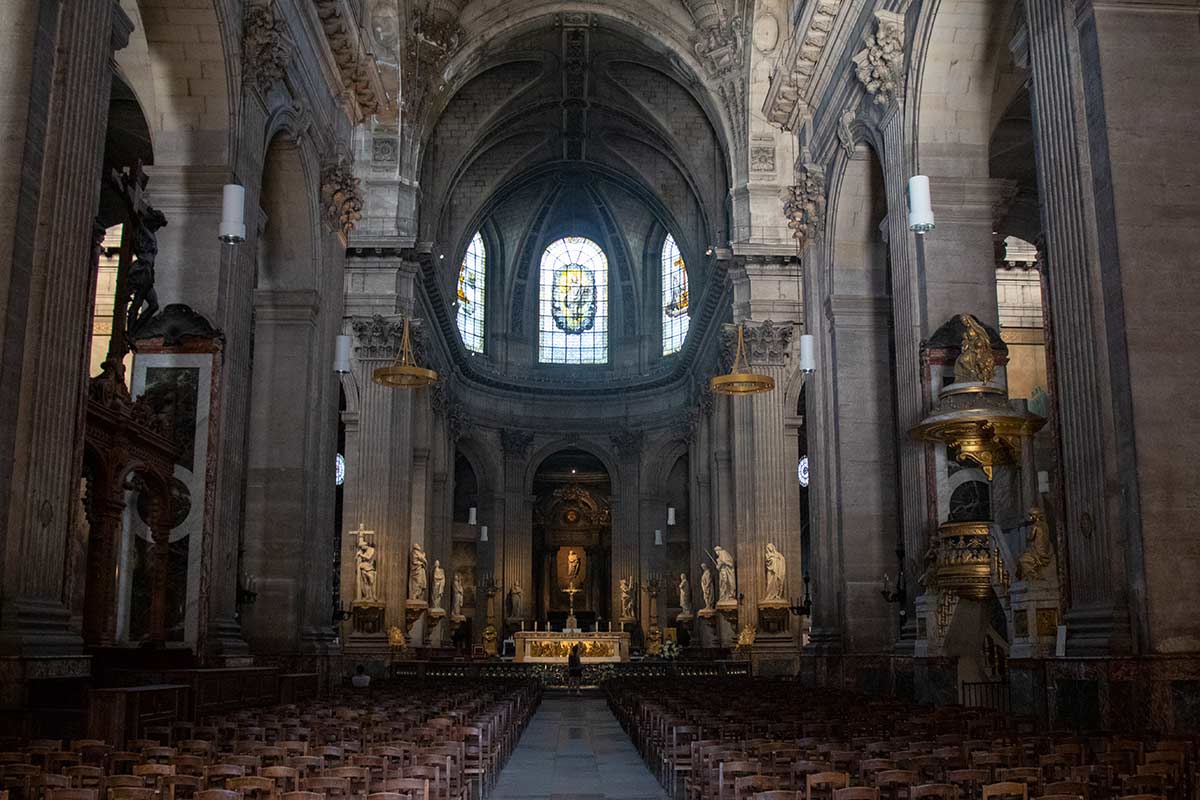
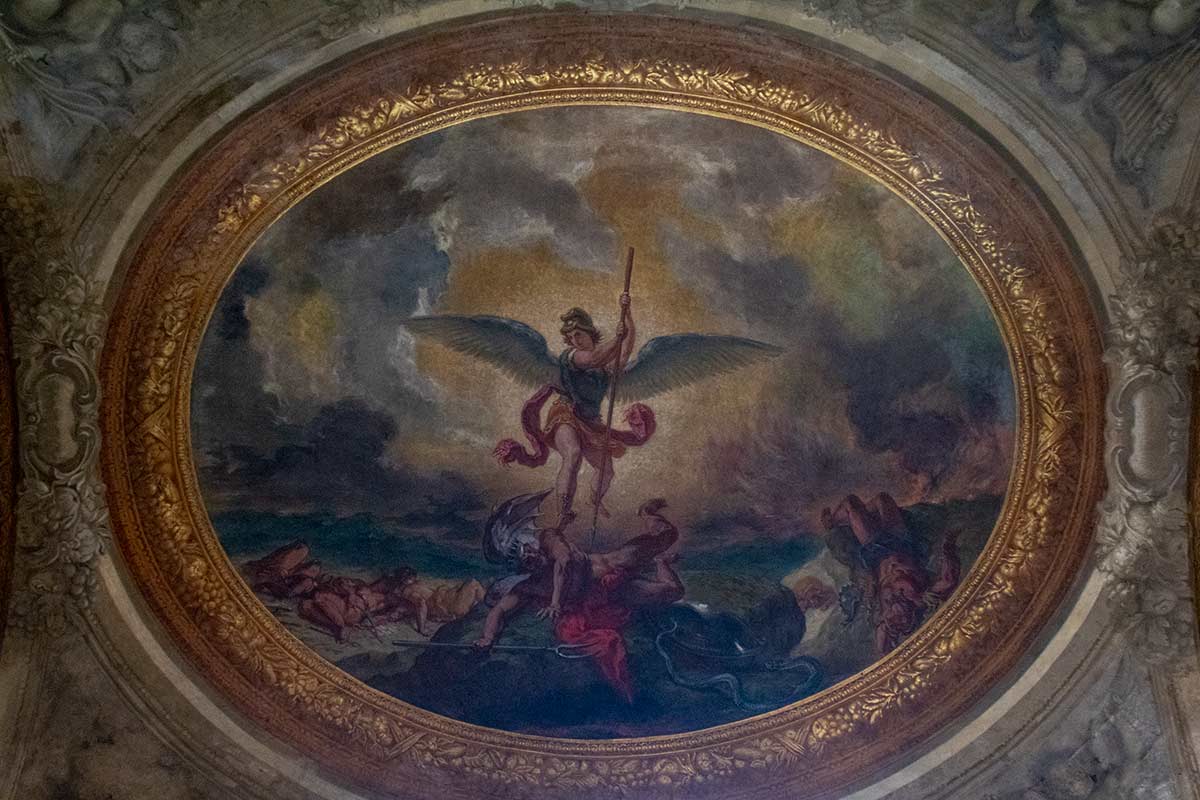
After Notre Dame, Saint-Sulpice is the second-largest church in Paris. It was decided to replace the original Romanesque church in 1646 to accommodate a larger congregation, but the rebuild turned out to be a bit of an epic, taking 224 years. But even then it wasn’t quite finished, as the lop-sided west façade hints.
It was begun in the Baroque style of the mid-17th century, and later parts of the building are closer to Neoclassical. It’s a massive, monumental church, and home to three works by Eugène Delacroix, including the ceiling fresco of St Michael Vanquishing The Devil.
Some of the 2006 Da Vinci Code movie was set in Saint-Sulpice, but church authorities refused to allow filming there. So some the interior was recreated in a studio for the purpose.
Getting there: Saint-Sulpice and Saint-Germain-des-Prés stations, both on Metro line 4, are both around 5 minutes’ walk away.
15. Roman Paris – Arènes de Lutèce
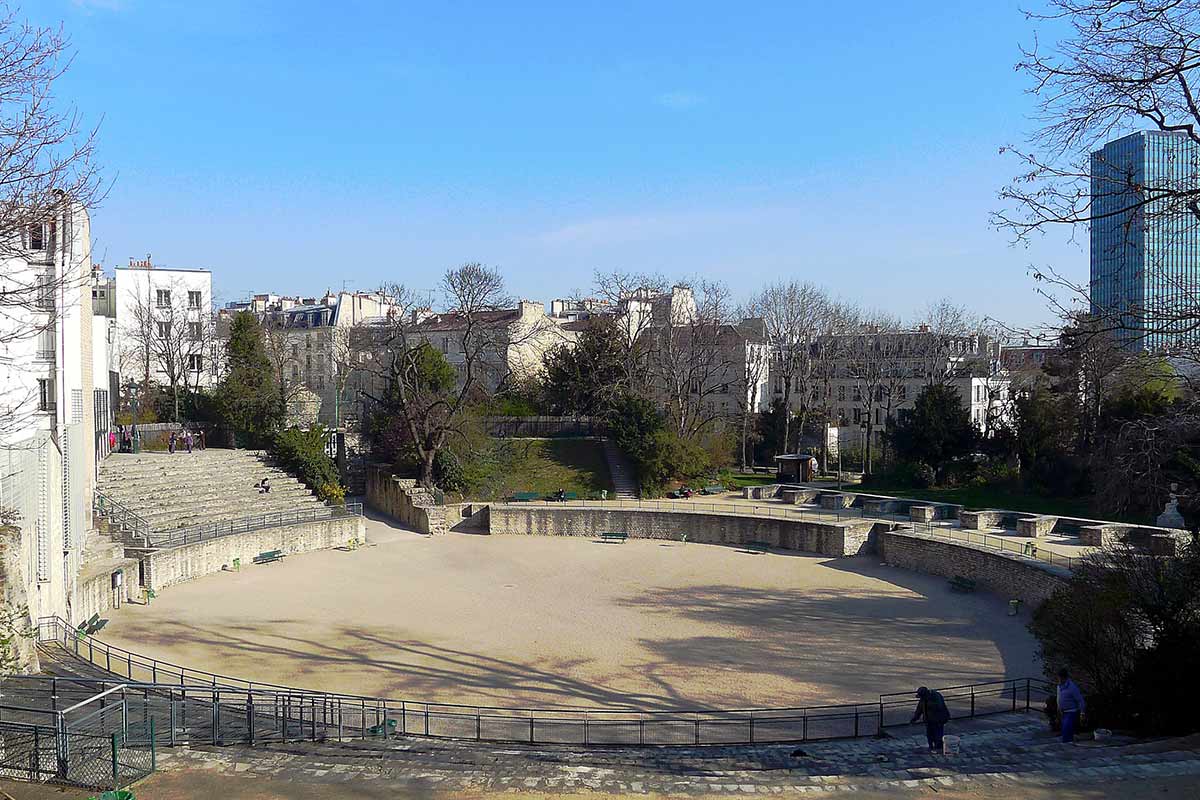
Lutetia (Lutèce) is the name for the Roman settlement in what became Paris. The Île de la Cité, immediately north of the Latin Quarter, was supposedly the first place to be settled, but archaeological remains have only been found in the Latin Quarter – at the Arènes and the nearby Thermes de Cluny, which form part of the nearby Cluny Museum.
The Arènes site was discovered in 1867, and may have held as many as 15,000 spectators. It’s possible that it would have hosted both theatrical performances and bloodier spectacles including gladiatorial contests, some with animals. It was eventually dismantled, its stones repurposed as part of a city wall towards the end of the Roman Empire. Its slightly hidden location means it’s a bit off the beaten path in Paris terms, but this was the third largest such Roman arena in France, after those at Nimes and Arles.
Part of the site has been lost, as some of the buildings on Rue Monge have been built over it. It’s now essentially a park, with kids often playing football where gladiators once fought for their lives. It’s free to visit, and usually opens at 8.00 am daily, closing before dusk.
Getting there: The Arènes are a three-minute walk north along Rue Monge from Place Monge Metro station (the pink line 7).
16. The Dodo Manège Carousel in the Jardin des Plantes
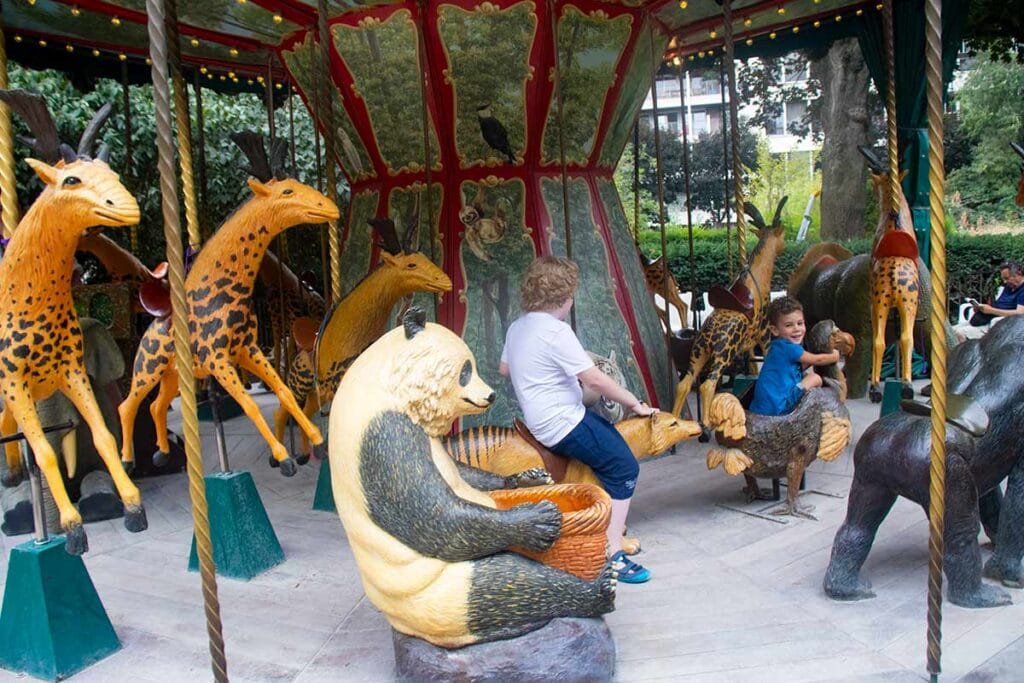
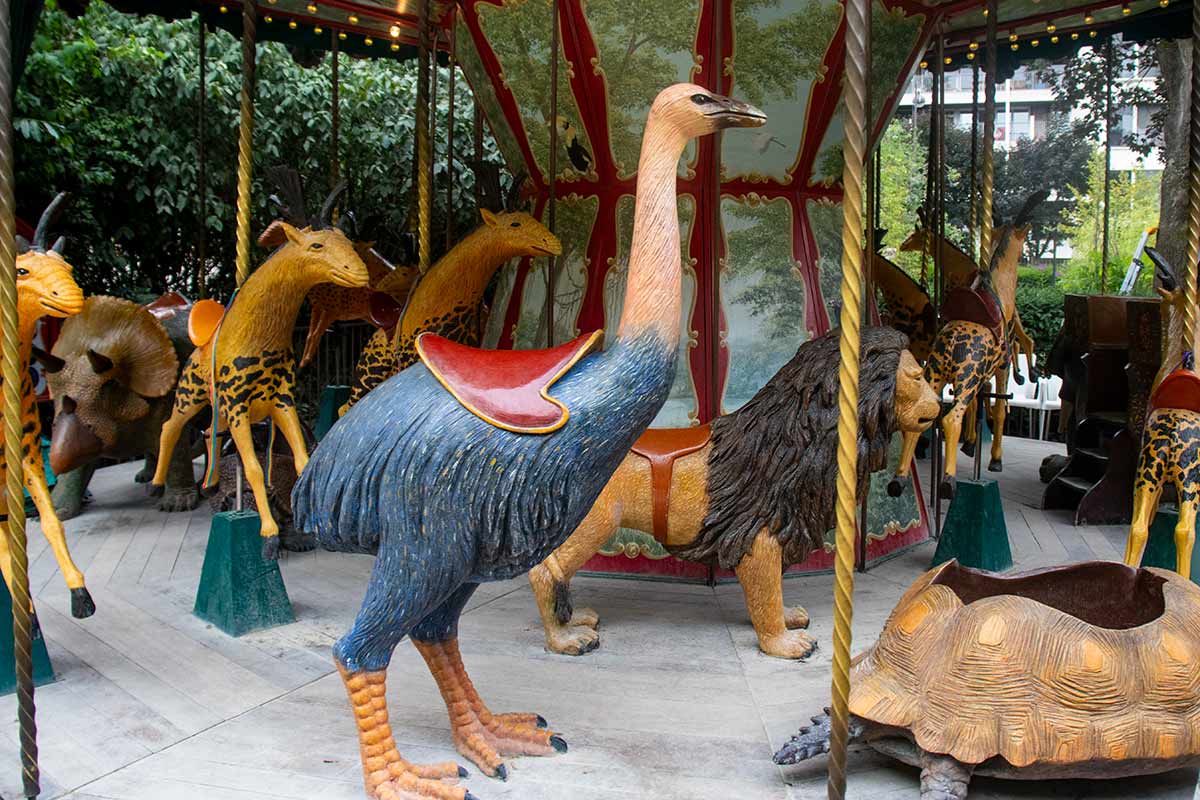
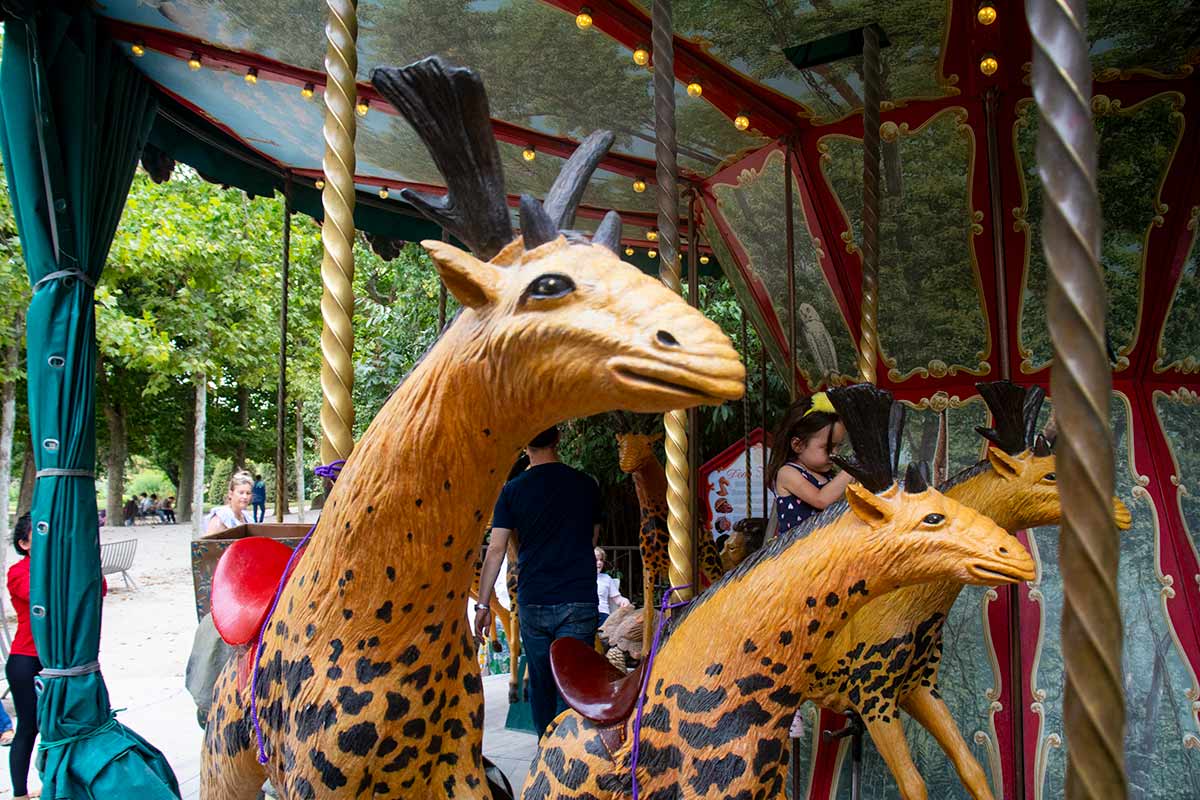
On our recent extended stay in Paris, we made a point of seeking out the best Paris carousels for our son to experience. He may well go on to be a zoologist by trade, and this carousel – dedicated to extinct and endangered animals – captivated him the most of the ten or so that we visited.
It’s in the northeast corner of the Jardin des Plantes, very close to the Galerie de Paléontologie and the Gare d’Austerlitz. Instead of riding on horses or vehicles, you ride on endangered or extinct animals – and this completely captured his imagination, and ours.
Extinct animals on the carousel include the obvious dodo and also one much closer to home for us Aussie residents and dual citizens – the thylacine, or Tasmanian tiger, which was last seen in the 1930s. When we recently saw a stuffed specimen of one in the Australian Museum in Sydney, he pointed out to me that he is one of the few people in the world to have seen this thylacine in the flesh and sat on one for a fairground ride. And right he must be too.
We were also delighted to see the sivatherium, a long-necked (I presume) ancestor of the modern giraffe, and the aepyornis, a giant bird which resembles the southern cassowary from the tropical parts of Australia.
Endangered animals represented include the mountain gorilla, elephant and giant panda, all of which are endangered due to the encroachment of humans on their habitats. The carousel was originally set up in the 1990s by a professor at the Natural History Museum who wanted to educate children and adults about the vulnerability of species to such threats.
And it helped make a passionate, committed conservationist out of our son, for sure. Hats off to you, Professor.
Getting there: Metro to Gare d’Austerlitz or a 10-minute walk from Place Monge (line 7)
17. Eat Out On Rue Mouffetard
Rue Mouffetard is one of the best streets in Paris to wander. It runs from Saint-Médard church in the south to Place de la Contrescarpe, one of the loveliest squares in Paris, around 500 metres away at its northern end. It’s halfway between the Pantheon and Rue Monge, only a three- to four-minute walk from each.
The main reason we visited Rue Mouffetard was to eat, with a huge range of bistros, cafes and patisseries to sate our varied palettes. Off the top of my head, there are Japanese, Korean, Chinese, Greek, Lebanese, Turkish, Italian and Spanish restaurants, and that’s before I even get around to the French. And of the latter, prepare to enter crêpe heaven.
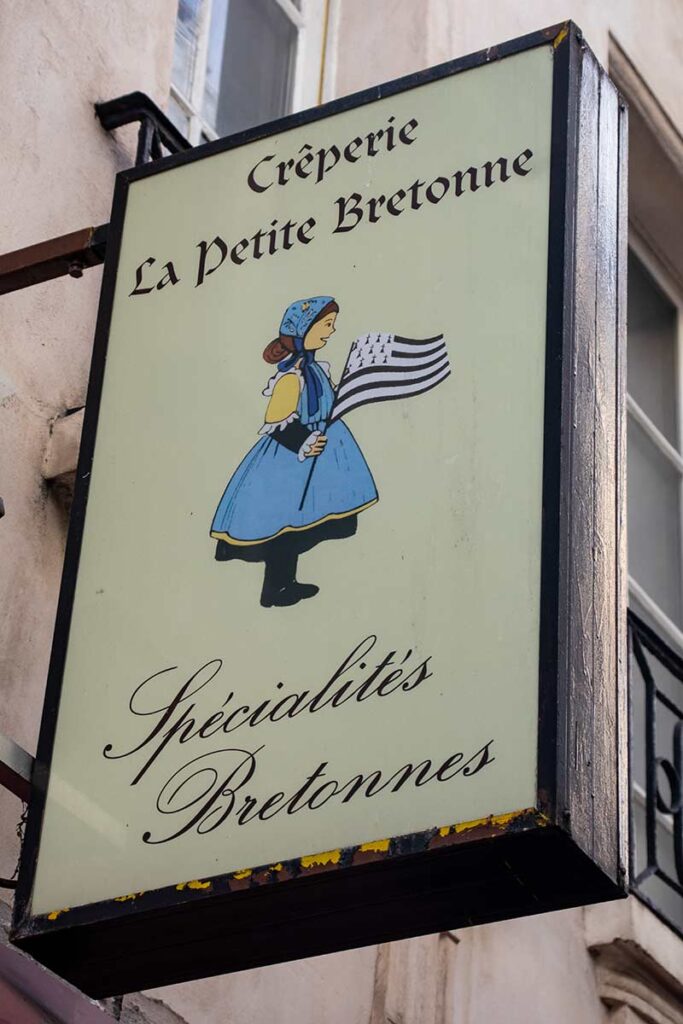
Our favourite crêperie on Rue Mouffetard is La Petite Bretonne, which serves traditional buckwheat galettes and crêpes. Faye and I went for the savoury options, while Our Little Man loved the lemon and sugar one so much that he got a second serve. If you decide to stay somewhere in The Latin Quarter – or for that matter anywhere else in Paris – you could eat out every night on Rue Mouffetard, or Place de la Contrescarpe.
Getting there: Place Monge and Censier-Daubenton, both on line 7, are the closest Metro stations.
18. Delacroix Museum
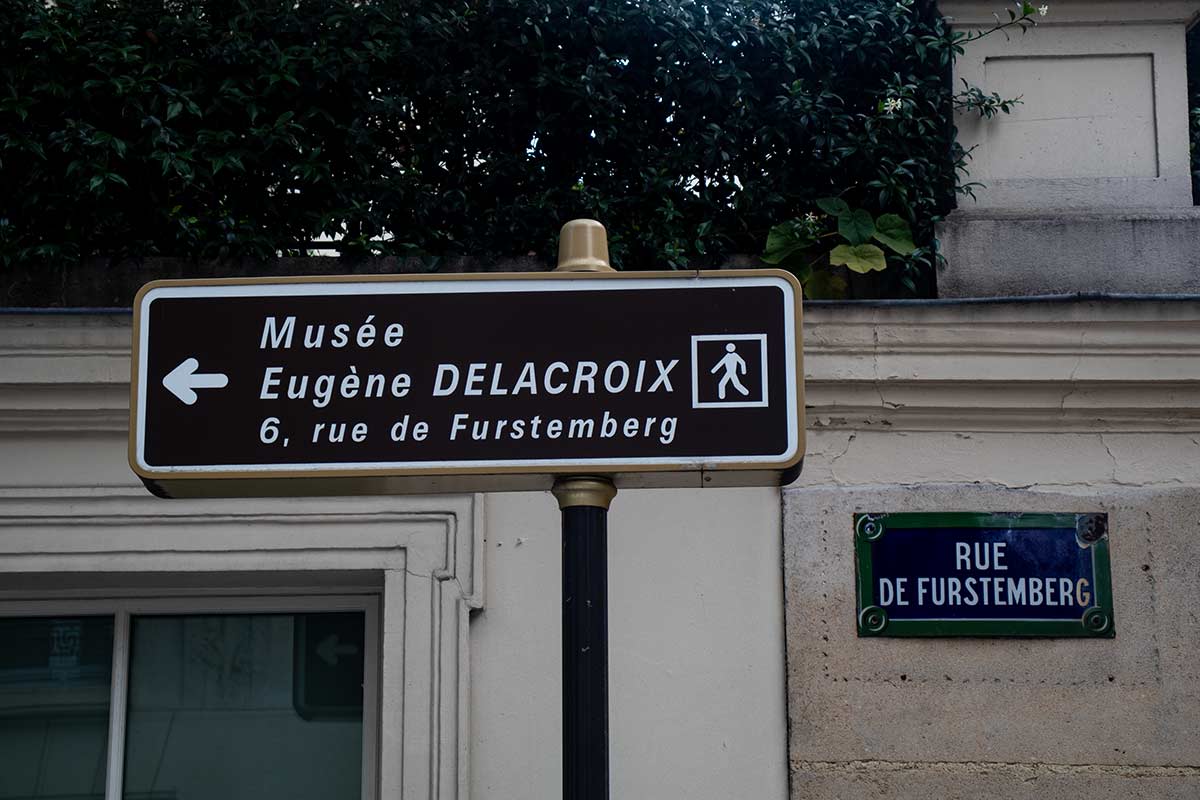
The Musée National Eugène Delacroix is one of the smaller art museums in Paris, tucked away in quiet streets just north of Saint Germain des Prés. The Museum is managed by the Louvre, where you can see his most famous work, Liberty Leading the People.
Delacroix was one of the leading Romantic painters of his time (1798-1863), and it helps if you’re familiar with some of his works for the exhibition to make sense. It’s as much about the artist as his art, with sections focusing on his influences, such as Morocco and North Africa.
No original paintings are held in the Museum, but there’s a fascinating collection of drawings, including some depicting his friends, and souvenirs he collected on his travels in North Africa. Some of his equipment is also included, such as painting tables and palettes. There are also photographs of him late in life, and some letters written by and to him – for this a knowledge of French is helpful!
If you’re a fan of Delacroix, it’s well worth an hour of your time.
Getting there: A 5-minute walk from the Pont des Arts / Quai de Conti bus stop, served by the 27 and 87, via Rue de Seine and Rue Jacob. Alternatively Mabillon (Metro line 10) is also a short walk away.
Things To Do In The Latin Quarter Paris – Final Thoughts
I hope that you’ve enjoyed this article and that it has given you some ideas and inspiration for when you next visit Paris.
I’ve gravitated to the Latin Quarter since my teens, and love wandering the backstreets and finding new places to explore 40 years on.
I’ve written numerous other articles on Paris, so feel free to browse some of them below:
General Paris Articles
Art Nouveau Paris – 12 magnificent sights not to be missed
Best Eiffel Tower Views – over 20 superb vantage points of the most famous landmark in Paris
Sunset in Paris – the best 15 places to see one
Visiting the Arc de Triomphe Paris – all you need to know before you visit one of the great monuments of Paris
Paris Carousels – the best merry-go-rounds in Paris
Statue of Liberty in Paris – seek out the replicas of Lady Liberty across the French capital
Churches In Paris
22 Famous Churches in Paris – 22 ecclesiastical wonders
La Sainte Chapelle Paris – one of the wonders of the Gothic Age
Basilica of St Denis Paris – the birthplace of Gothic architecture
Saint Germain des Pres – landmark ancient Left Bank church
Saint Etienne du Mont – stunning Latin Quarter church
Saint Sulpice Church Paris – vast Neoclassical church dominating the Latin Quarter skyline
Pantheon Paris – the resting place of many famous French luminaries
Saint-Séverin Church Paris – Left Bank Gothic wonder
St Julien Le Pauvre – humble ancient church within sight of Notre Dame
Montmartre
Abbesses Metro Station Paris – one of the most beautiful Metro stations in Paris
Rue de l’Abreuvoir – one of the most picturesque streets in Paris
Rue St Rustique Paris – ancient Parisian street in the heart of Montmartre
Sacré Coeur Basilica Paris – the white-domed symbol of Montmartre
Bridges in Paris
Famous Paris Bridges – 15 of the most beautiful bridges on the Seine
Pont Alexandre III Paris – the most flamboyant, ornate bridge in Paris
Bir-Hakeim Bridge Paris – stunning double-decker bridge near the Eiffel Tower
Pont des Arts Paris – elegant iron bridge connecting the Louvre and Institut de France
Pont Neuf Paris – the venerable oldest bridge in Paris, and sometime art installation subject
Parks in Paris
Square du Vert Galant Paris – the most romantic garden in Paris
Jardin du Luxembourg – one of the most beautiful gardens in Paris
Tuileries Garden Paris – amazing garden near the Louvre
Parc Monceau Paris – gorgeous folly-filled park near the Arc de Triomphe