

Visiting Zagreb Naïve Art Museum
Visiting Zagreb Naive Art Museum is one of the best things to do in the Croatian capital. Zagreb has several superb Museums, and this is one of a tiny number of dedicated Naïve Art Museums in the world.
The Croatian Naïve Art movement from the 1930s onwards was one of the most prominent in the world, and this Museum hosts works by all of the major artists, as well as less-known artists from rural Croatia.
In this guide I’ll explain what Naïve Art is, and show you examples of six of the most important Croatian Naïve artists. I’ll also run through the practicalities of getting to the Museum, opening hours and ticket prices, while showing you places to visit elsewhere in Zagreb, and places to stay in the city. I hope you find it enjoyable and helpful.
Where To Stay In Zagreb
Hotel Dubrovnik – just off Ban Jelacic Square, the perfect location for exploring Zagreb, with the Upper Town a short walk, bus or funicular ride away
Hotel Academia – 4-star in a great location at the northern end of Tkalciceva, Zagreb’s popular restaurant street
Hotel Park 45 – another great hotel close to Jelacic Square, near the funicular to Upper Town, or a short walk away; the trams are also very close by
What Is Naïve Art?

‘Naïve Art’ is the term used for works by an artist who hasn’t undergone formal art training, especially in the use of perspective, but also in techniques including painting people.
Naïve Artists may well have considerable grounding in the history of art – this varies from artist to artist.
The perspectives of most works of Naïve Art that I have seen are flat, with little in the use of shadow or other means of making subjects stand out from the background.
I was first introduced to Naïve Art many years ago by my wife Faye, who has long treasured her Villeroy & Boch Design Naif series of mugs. The paintings on these mugs (pictured) have a simplistic, perhaps childlike quality, and are a good example of what to expect visiting Zagreb Naïve Art Museum as they have common motifs including patterns and strong, bright colours.
The subject matter of the art also varies, from the rural landscapes of Ivan Rabuzin to the distinctive takes on famous landmarks of Emerik Fejes.
Naïve Art is not just a Croatian or European phenomenon, but a worldwide one.
Where Is Naive Art From In Croatia?

The artists exhibited in the Zagreb Naïve Art Museum were all born and lived in rural Croatia.
The village of Hlebine, in the eastern region of Slavonia, is renowned as a centre for Naïve artists, and the likes of Ivan Generalic, his son Iosip, Franjo Gazi and Franjo Mraz were all from the village.
Slavonia is the agricultural heartland of Croatia, way off the beaten path, and is one of the best unexplored regions in Europe. It borders rural southwest Hungary and northwest Serbia, which until the end of the First World War were still part of the Austro-Hungarian Habsburg Empire.
The Naïve Art Museum in Zagreb was founded in 1952 as the Peasant Art Gallery, and in 1956 it was renamed the Gallery of Primitive Art. It then became the Croatian Museum of Naïve Art in 1994.
Much of the collection on display in the Gallery dates from the first half of the 20th century, with some work from later, and Naïve Art still being produced in Croatia to this day.
6 Artists To See In Zagreb Naïve Art Museum
Ivan Rabuzin

Rabuzin (1921-2008) is among the most distinctive and recognisable Naïve artists in Croatia. Many of his works are landscapes, often with simple, rounded hills. His blue skies with white fluffy clouds often seem idealised, while his trees and flowers are intricate in detail, not unlike the pointilliste painters that preceded him in the early 20th century. I can’t help thinking that he would have been familiar with the likes of Georges Seurat, which would have influenced his work in some way.
My entry in my notebook from my visit reads ‘bulbous forested hills’ and it sums it up very well, I think.
Ivan Generalic

Generalic (1914 – 1992) is regarded as one of the founders of Croatian Naïve Art and his son Josip is another prominent figure in the medium. Ivan was born in Hlebine in 1914, and loved drawing and painting from an early age. His first works were pencil drawings on leftover paper bags, and he progressed from this to painting with oils on the back of panes of glass, and lived and painted in Paris for a year in the 1950s.
Generalic’s subject matter is among the most varied of the Croatian Naïve artists. His paintings cover aspects of peasant life from harvesting crops to festivals, and from festivals to funerals. His Deer Wedding from 1959 is regarded as one of the most famous works in the Croatian Naive Art canon.
Mirko Virius

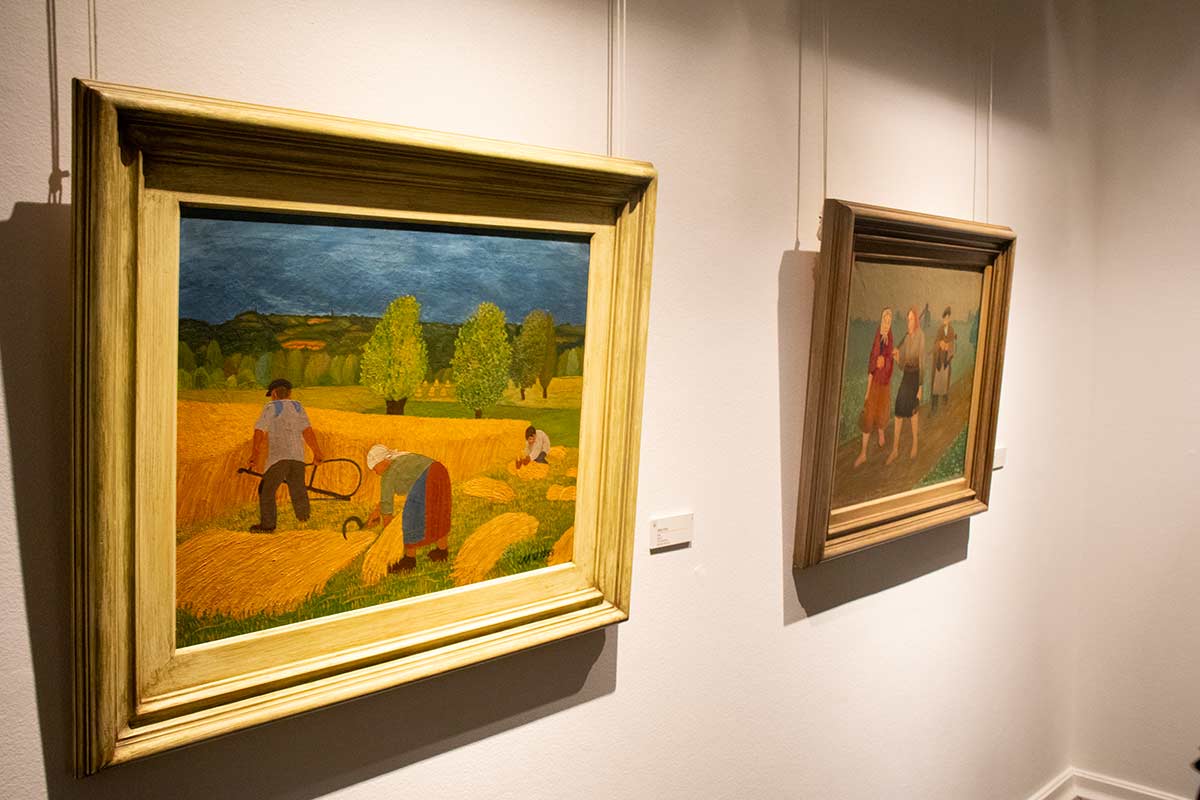
Mirko Virius (1889-1943) was, like Ivan Generalic, one of the first generation of the ‘Hlebine School’ of Naïve Art painters. He only began painting late in life, having been introduced to Generalic and contemporary Franjo Mraz in 1936. He was prolific, producing a large body of work in just three years before the outbreak of World War Two.
His paintings – some made with oils, others with watercolours – depict everyday scenes from peasant life, including some of the widespread rural poverty in Croatia. In the painting Harvest above, three workers, possibly a family, are toiling in a field, gathering the hay for the winter. You can see the sweat through the man’s clothes – this was hot, hard work.
Virius’ art career was and life were sadly cut short by the Second World War.He was a Communist, and was captured, imprisoned and eventually executed at Sajmište Nazi concentration camp in 1943.
Emerik Feješ
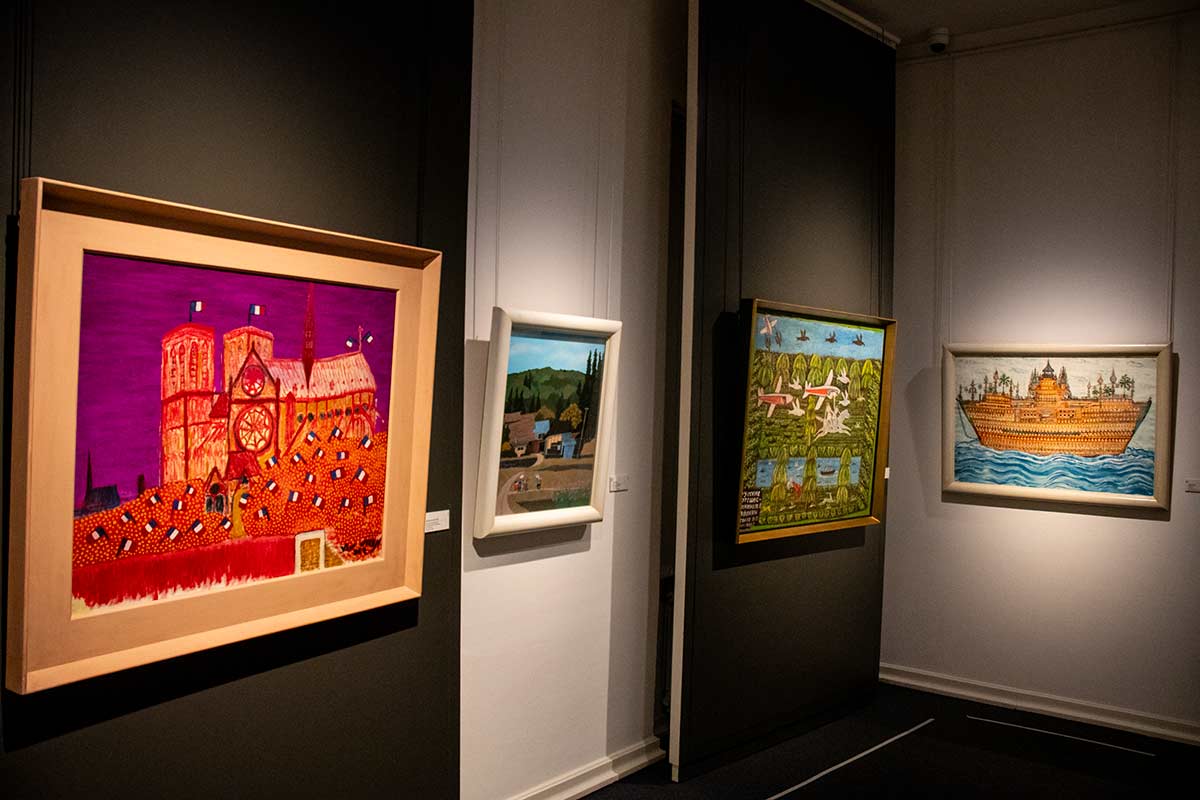
Emerik Feješ (1904-1969) is the one non-Croatian artist among my selection. He was born in Osijek, in rural eastern Slavonia, to Hungarian and Serbian parents, and they moved to Novi Sad in northern Serbia when Emerik was just five years old. For much of his adult life he made a living from making buttons and combs.
He suffered from ill-health (severe asthma and sciatica) for many years, so his movement and ability to travel was greatly restricted. He took up painting relatively late in life, approaching the age of fifty. He eventually settled on painting urban scenes, including famous landmarks from across Europe and the world, including Notre Dame de Paris (shown in my image above).
It’s unlikely visited any of the overseas locations that he painted, not that that matters. He drew inspiration from postcards and photographs in books and magazines (as so many of us do), but turned these buildings – including the Duomo in Milan, the Doge’s Palace in Venice and the Houses of Parliament in London – into his own unique creations, often more gaudily coloured and patterned than the originals.
Having learned much more about Naïve Art since my impromptu visit to the Museum in Zagreb, I’m particularly touched by the story and work of Emerik Feješ. He was confined to bed for years, barely able to get out of his own home, yet he persevered and was inspired to make these amazing artworks, embarking on a journey that has inspired many, one that I hope gave him immense solace, joy and happiness.
Slavko Stolnik
The story of Slavko Stolnik (1929-1991) is also sad and poignant. He came from a poor peasant background in a village near the northern Croatian city of Varaždin, and his family couldn’t afford to send him to school.
While living in Zagreb, he met the influential artist and teacher Krsto Hegedušic, who recognised Stolnik’s talent and taught him to paint on glass. Initially successful, he went to Paris but wasn’t able to adapt to big city life, and for years he lived as a clochard (tramp), surviving by sleeping under the bridges of the Seine.
Stolnik eventually returned to Zagreb in 1963, and his home village Donja Voca. This was the most productive period of his artistic life, and he became known for his vivid, colourful depictions of village and rural life, including the painting above, Cows Coming Home. I’ve seen this work reproduced in different colours, including a version with purple clouds.
Stolnik met a sad end in 1991, when two burglars broke into his home in Donja Voca and killed him. Many of his artworks were stolen and never recovered.
Matija Skurjeni

Matija Skurjeni (1898-1990) was born near Zagreb, and worked as a shepherd from the age of seven following the death of carpenter father in an accident. After serving in World War I (on the Russian and Italian fronts) he found work in the State Railways, where he continued in post until his retirement in 1956.
Skurjeni attended some art courses, which were geared towards the contemporary Socialist Realist style (this was when Croatia was part of Communist Yugoslavia). He took up painting full time after retiring from the State railways, working until 1975.
Of all the Croatian Naïve artists I’ve encountered, Skurjeni’s is perhaps the most varied. As well as the famous Animals painting shown above, he also depicted people, rural scenes and cityscapes in his work. Railways also feature in some of his paintings, as do symbols of (or portraits of) a Gorgon, the name of an artists’ group in Zagreb with which he had close links.
Where Is The Croatian Museum of Naïve Art

The Museum is on the historic Gornji Grad (Gradec or Upper Town) area of the city, in the Raffay Palace at Sv Cirila I Metoda 3.
Its name in Croatia is Hrvatski muzej naivne umjetnosti.
Getting There
I’ve always walked the short distance up the hill from the city centre to Gornji Grad, as the route takes you past some of the best Zagreb landmarks, including the Stone Gate and St Mark’s Church (with its stunning tiled roof). The Naïve Art Museum is only 50 metres from Markov trg, the square on which the Church is located.
You can also catch the 150 bus up the hill from Trg Bana Jelačica, the city’s main transport hub at the foot of the hill. You could alight at either Markov trg or Katarinin trg.
Tickets And Opening Hours
The Museum is open from Mondays to Saturdays from 10.00 am to 5.00 pm.
It is also open on Saturdays from 10.00 am to 2.00 pm.
Tickets cost €5.50 for adults, €3.00 for school and university students, and €10.00 for families.
Other Things To See And Do In Zagreb
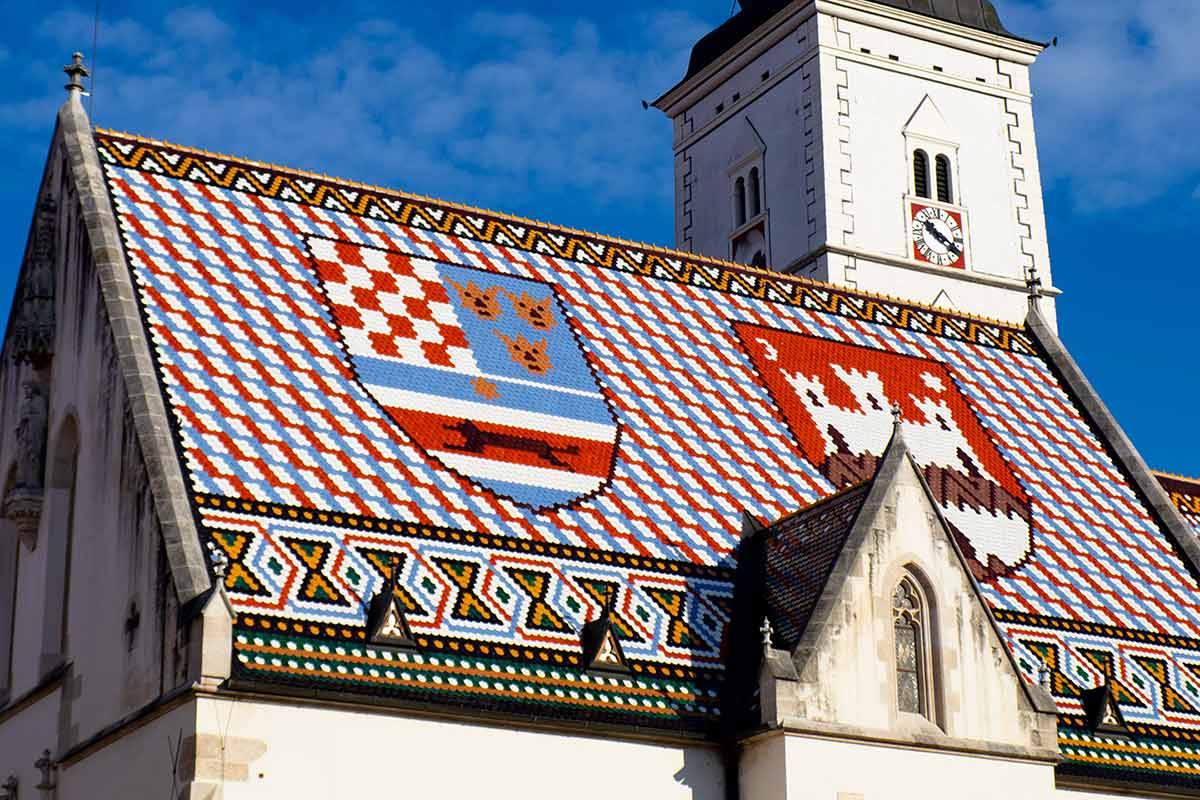

As mentioned, the Naïve Art Museum is very close to several landmarks in Zagreb. As well as St Mark’s Church, barely 50 metres away, it’s also close to the 13th-century Lotrščak Tower, which commands some of the best views of Zagreb.
The Naïve Art Museum is also close to some of Zagreb’s other best museums. The Museum of Broken Relationships, on the corner of the same street as the Naïve Art Museum,is another of the best small museums in Europe. Its quirky subject matter has brought it a lot of media attention down the years, and it’s well worth an hour or so of your time. The exhibits are objects from relationships that didn’t stay the course, which sometimes represent the breakdown, or indeed were the cause of it. Each exhibit is accompanied by a story about the object and relationship. Some are poignant, others hilarious, particularly the bike.


Just down the hill from Markov trg, the Zagreb 80s Museum is another of our favourites. It’s similar in subject matter to other museums depicting the same period (like the Retro Museum Prague and some of the DDR Museums left in the former East Germany, including those at Pirna (near Dresden) and Thale (in the Harz Mountains).
The main difference between the Zagreb 80s Museum and counterparts elsewhere is that you’re encouraged to touch and handle all the exhibits. I joked with the receptionist that there might not be much left of it after my son had finished with it, but she didn’t mind at all, saying that anything could be repaired. Not that we did break anything, of course! It’s a real nostalgia trip for those of us who grew up during the decade, and fascinating for kids (”Mama, what’s a cassette?”).


We revisited the Croatian capital to see the much-admired Zagreb Christmas Markets, which are located in parks in the lower city and around hilly Gornji Grad. They were voted the best Christmas Markets in Europe three years in a row, and I think that the city’s lower profile (compared to Prague, Vienna and some of the main German ones, such as those in Dresden and Nuremberg) has helped in this regard.
Zagreb is a beautiful city, much of it built in the Habsburg period (to the late 19th century) so there are plenty of picturesque cobbled streets and medieval buildings and churches, as well as picturesque city parks, for backdrop and atmosphere. As it’s relatively off the beaten path, it’s not swamped with crowds, nor is it exploitatively overpriced, as is the case with some of the more popular cities.
If you’re planning to pay the city a flying visit, I also recommend checking out my guides to the best landmarks in Zagreb, and spending One Day In Zagreb.
Visiting Zagreb Naïve Art Museum – Final Thoughts
I hope that you’ve enjoyed this article, and that it encourages you to visit this little gem of a Museum.
While researching this article, my eyes have been opened to a lot more Naïve Art both from elsewhere in Europe and across the world. I’ve seen a few suggestions that the Croatian Museum of Naïve Art is the only one of its kind in the world. This is not the case.
There are two small galleries in Hlebine, in the far east of Croatia, and three in France. They are:
Josip Generalic Gallery, Hlebine
International Museum of Naïve Art (Musée International d’Art Naïf), Vicq, near Paris
Anatole Jakovsky International Naïve Art Museum (Musée International d’Art Naïf Anatole Jakovsky,? Nice, France
.