

Piracy, prison, eating out, a Cathedral and the tallest skyscraper in the UK – just a few of the best things to do in Southwark, London
From climbing the sky-high Shard to delving into dungeons at the Clink Prison, and from a foodie’s paradise to two very different museum ships, there are some fantastic things to do in Southwark, London.
Southwark is on the South Bank of the Thames, between Bankside and Bermondsey. For centuries it was under the control of the Bishops of Winchester, and it operated to a different set of rules to the rest of London. It was the sleazy underbelly of London, with prostitutes and brothels (known as stew houses) allowed to ply their trade, and the Bishops even allowed bear baiting there!
Southwark had a bawdy reputation, yet was the starting point of the journey for pilgrims in Geoffrey Chaucer’s Canterbury Tales. Two centuries later, it was home to Shakespeare’s famous Globe Theatre, which was recreated next to the Thames in 1997.
In this article, I’ll show these many different sides of Southwark, and cover the practicalities of visiting each attraction and site. I’ll also explain how to get to Southwark, suggest guided tours where appropriate, and advise you on the best places to stay in the area. I hope you enjoy it!
Walking Tours In Southwark
In an area like Southwark that’s so rich in history, it’s easy to walk right past somewhere of great significance, not knowing anything about it. Which is where a local walking tour comes in useful.
This Booze, Brothels and the bard walking tour explores the many sights and stories of Southwark, exploring the area that was the underbelly of medieval London for two hours.
And this London Ghost Tour starts across the river in the City of London, crossing the Millennium Bridge to the Globe Theatre and the Clink.
Things To Do In Southwark
The View From The Shard
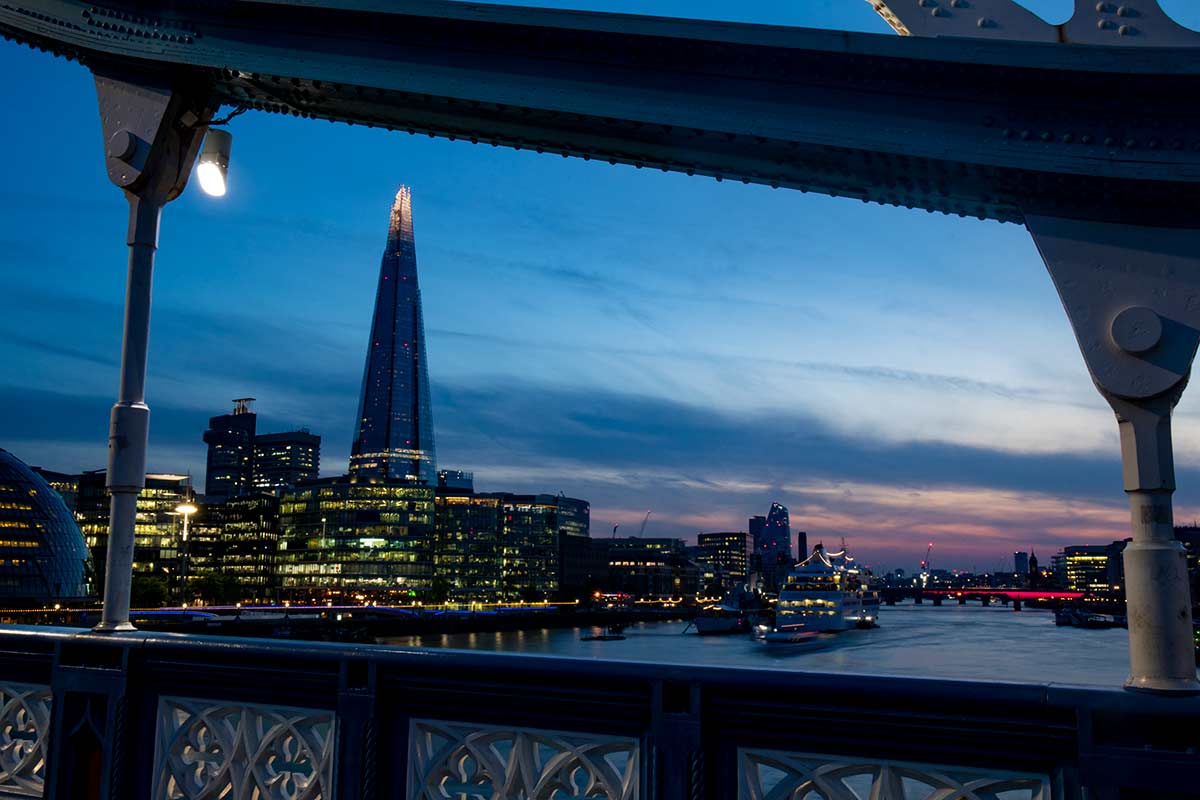
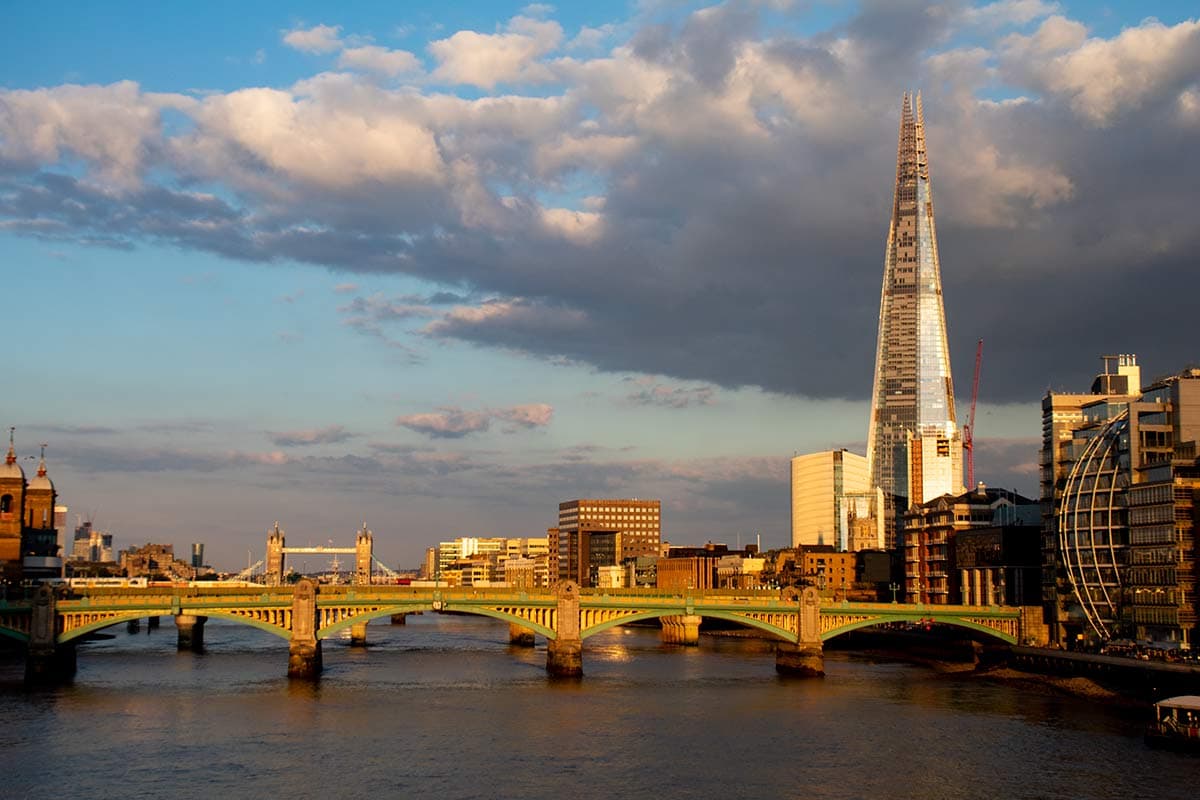
The Shard, the tallest skyscraper in the UK, is one of the most famous buildings in London. And since it opened in 2012, taking an elevator to the open-air (and glassed-in) viewing gallery on the 72nd floor has become one of the most popular tourist rites of passage in London.
The overall viewing area is spread over three floors, with interior views on the 68th and 69th floors. You usually need to book your View from the Shard tickets days in advance, especially if you’re hoping to watch the sunset from there.
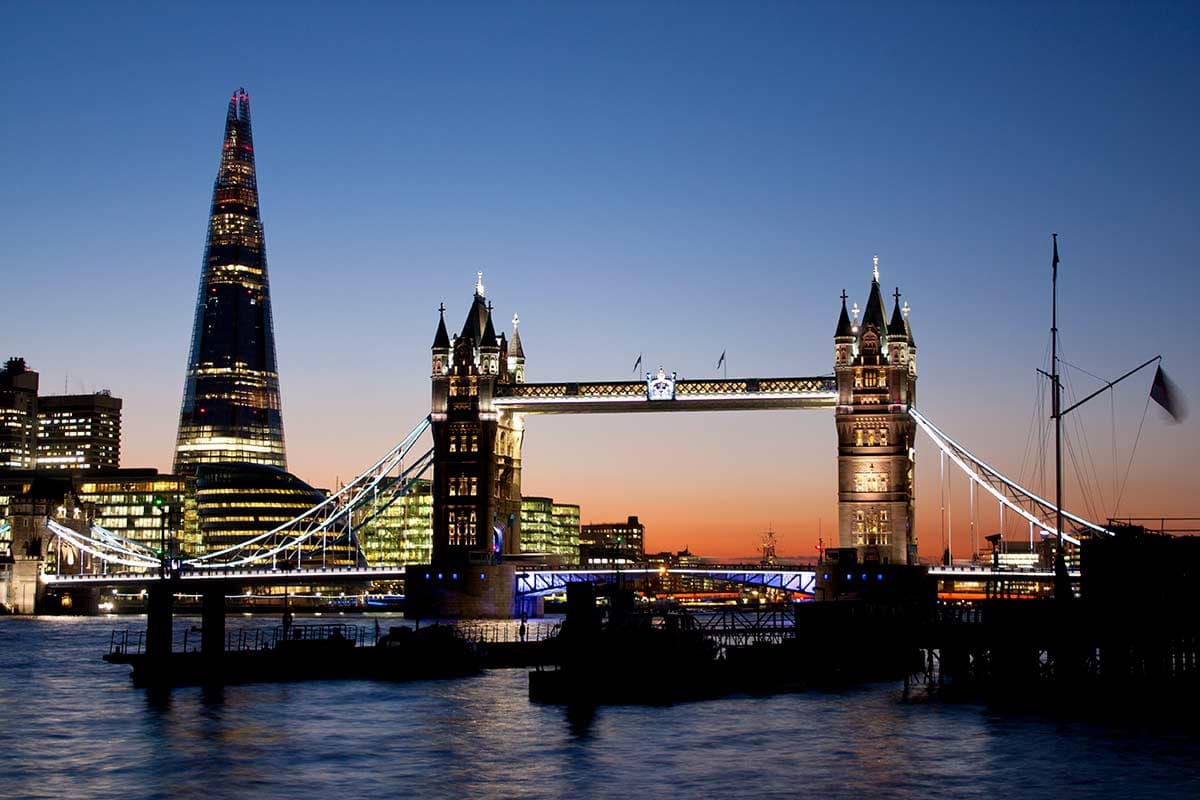
The view from there is superb, but not necessarily ideal for photography. You are around 800 feet (245 metres) above ground level on floor 72, so even iconic landmarks such as Tower Bridge and St Paul’s Cathedral look tiny from there. I tend to find that, if you’re seeking high vantage points when photographing London, lower buildings work better – including the Oxo Tower Bar and the One New Change rooftop bar opposite St Paul’s Cathedral.
That said, visiting The Shard is a great experience, a real once-in-a-lifetime bucket list thing to do. You can enjoy the View from The Shard with a glass of champagne, and there aren’t too many places in the world (Paris, Bangkok, Sydney, New York…) where you can savour a place like this.
Borough Market
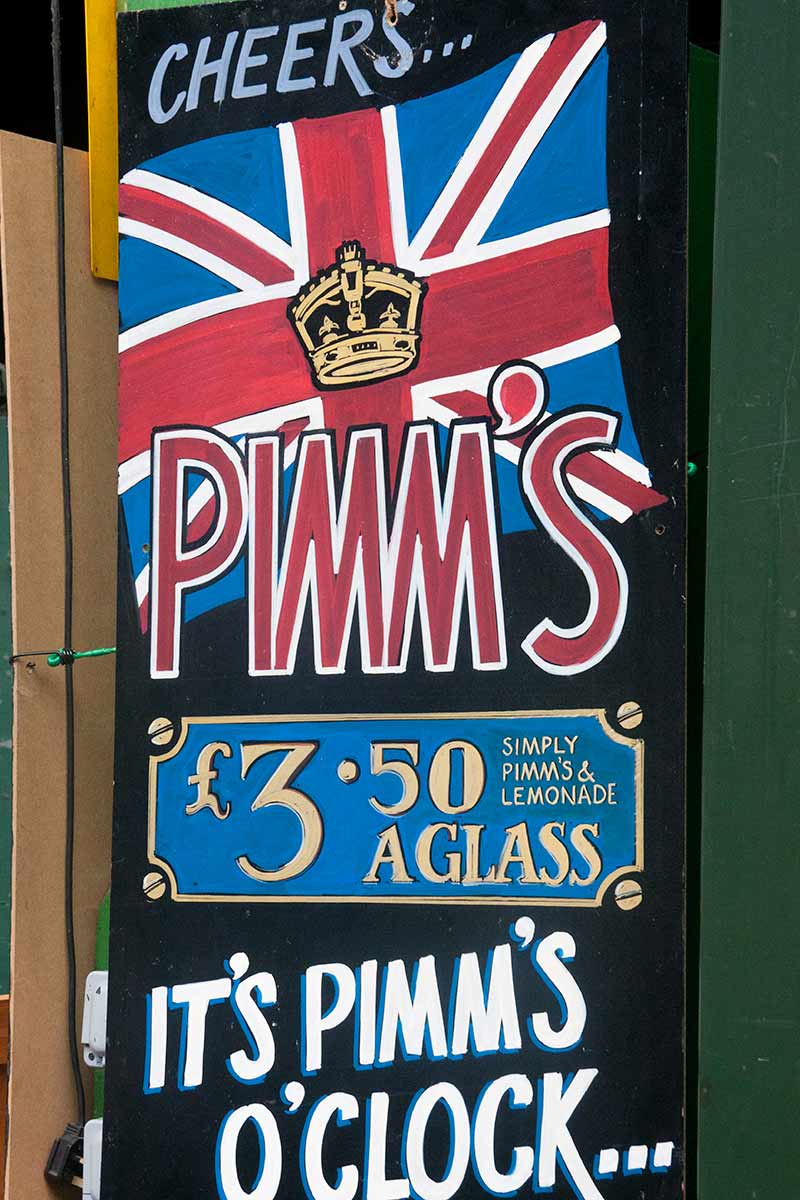
Borough Market – a few steps from Southwark Cathedral and London Bridge – has changed enormously from when I first set foot there in the early ‘90s. Back then it was a bit of a locals’ secret, with a few fantastic stalls from far and wide. Now it’s one of the most popular foodies’ places to visit in London.
It’s still wonderful, just different and more commercialised. The range of food is wondrous – from Iranian stews (the fesenjun is one of the best things you’ll eat in your life) to Cypriot street food to seafood from Dorset to a Jewish bakery. It’s a fantastic place to visit.
We always just followed our noses, and would come away well fed and laden with treat to take home. My favourite stall was little more than a table, with a lady from Grenada selling delicious-beyond-words nutmeg jam. I haven’t seen her for a few years now, and hope someone steps in to fill the gap.
You could easily spend hours, even days here. There’s also the option of a Borough Market guided tour, with six tastings plus a drink and dessert.
Southwark Cathedral
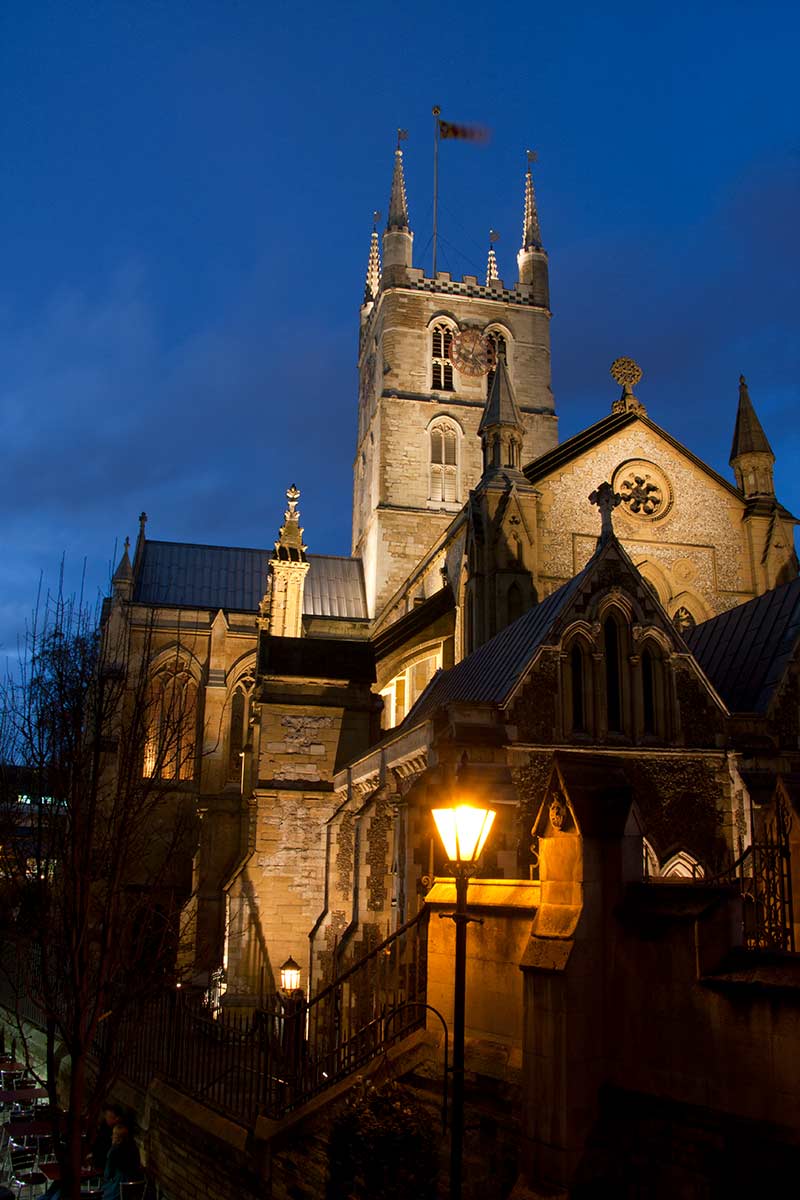
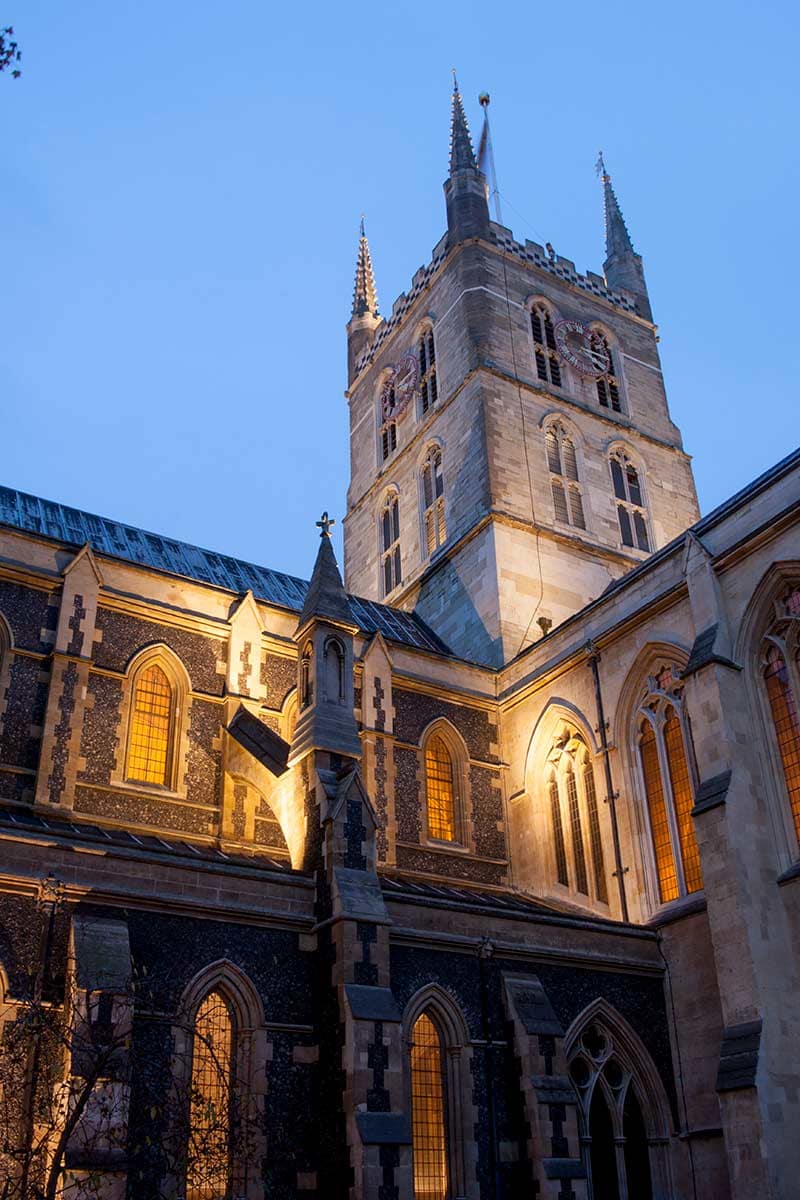
Southwark Cathedral is one of the finest churches in London, one of two Anglican Cathedrals (along with St Paul’s, just across the Thames to the north). Formerly the priory – and later – parish of St Saviour and St Mary Overie, it became a Cathedral in 1905.
It’s nowhere near as widely known as St Paul’s and Westminster Abbey, and all the better for it. It’s a mainly Gothic church, built between the 13th and 15th centuries, which was largely rebuilt in the 19th century and restored following wartime damage in the 20th century. It was originally connected to the Bishops of Winchester, whose Palace was next door, and about whom you will learn more later in the article.
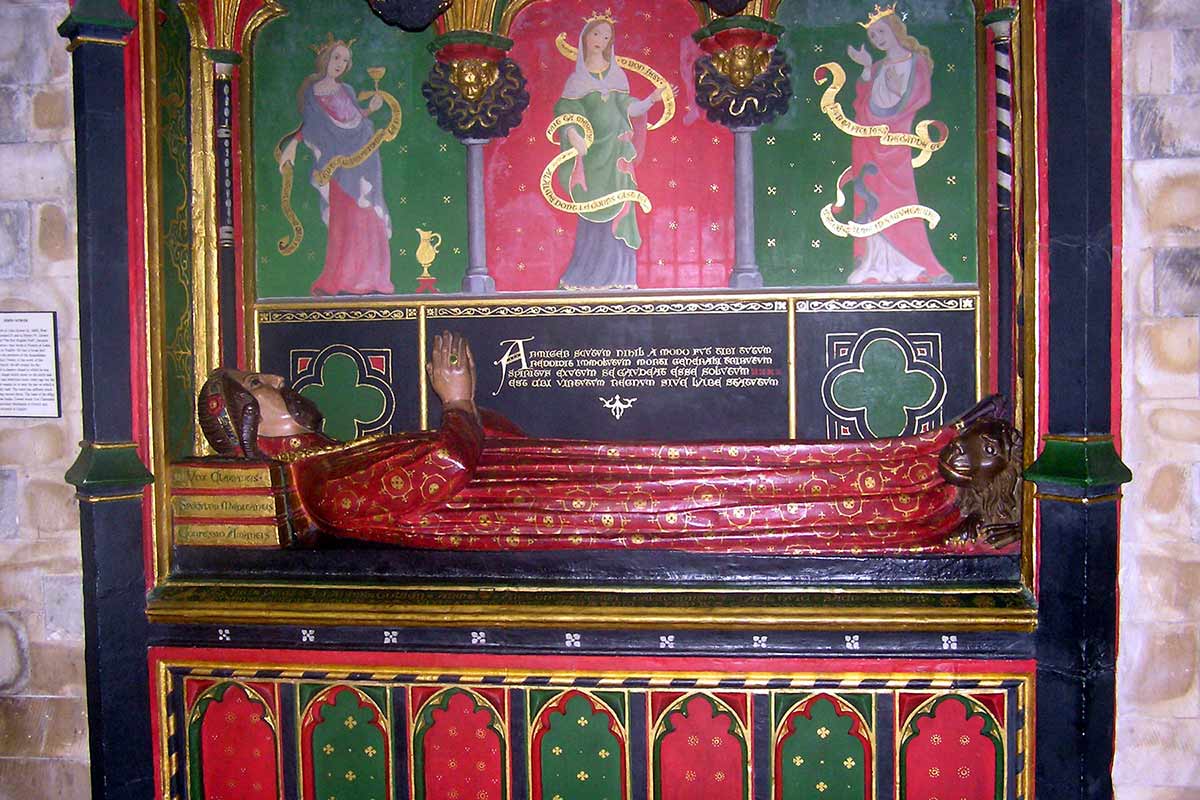
It’s one of the most welcoming churches I’ve ever visited in the UK, and there’s also plenty to see inside. Many mention the unmarked grave of Edmund Shakespeare, brother of William, but the standout monument in the Cathedral is the remarkable 15th-century polychrome tomb of poet John Gower. The main altarpiece is also one of the finest in England (along with the Great Screen in Winchester), and the statues are relatively recent (19th and 20th century) replacements of the long-lost originals.
Southwark Cathedral is also becoming well-known thanks to its resident cats. It is now the territory of Hodge, who was preceded by the wonderfully named Doorkins Magnificat, who passed to the feline afterlife in 2020. A corbel on the exterior of the Cathedral commemorates her.
The Golden Hinde


Visiting the Golden Hinde, especially with kids, is great fun. The ship is a replica of Sir Francis Drake’s 16th-century ship which was the first English ship to sail around the world. Not that Drake was focusing too much on that at the time he was preoccupied with plundering Spanish (and occasionally Portuguese) ships off the coasts of the Americas and robbing them of their booty.
The Devon-born sailor was effectively a state-sponsored pirate, his orders unofficial but verbal, to harass and capture as much Spanish treasure as possible. The £600,000 he robbed at the time is estimated to be worth up to £5 million in today’s money.
As you’d observe when visiting, the Golden Hinde was a small, compact ship, and it only had a crew of around 80. And they wouldn’t have exactly been towering giants – the average height in the 1580s was around 5’6”(168 cm), so when you head down below deck, don’t forget to duck (or in my case, resort to an ungainly crawl).
My son and all the other kids visiting had one thing on their mind – the (not exactly hidden) chest of treasure, which delighted them all when they finally chanced upon it. A wonderful hour of time travel and escapism was had by us both.
Shakespeare’s Globe Theatre

On the invisible border with Bankside, this re-creation of Shakespeare’s famous 16th-century theatre is a must for anyone with an interest in the Bard or late medieval London history.
The original theatre site (230 metres away on Park Street) has long since been built over, and the present theatre is a replica of the first Globe, where Shakespeare’s plays would have been performed during his lifetime. The original Globe burned down in 1613 due to a mishap with a cannon during a performance. It was replaced by a second theatre, which in turn was closed in 1642 along with other London theatres.
There are two theatres in the current Shakespeare’s Globe complex, including the famous circular theatre with galleries. It was built like this so that the whole audience was close to the action on the stage. Performances are held in the o, as the Globe is known, between April and October. Over the winter months performances take place in the other theatre, the candlelit Sam Wanamaker Playhouse.
Guided tours also run throughout the year – and you can book your Shakespeare’s Globe tour here.
The George Inn

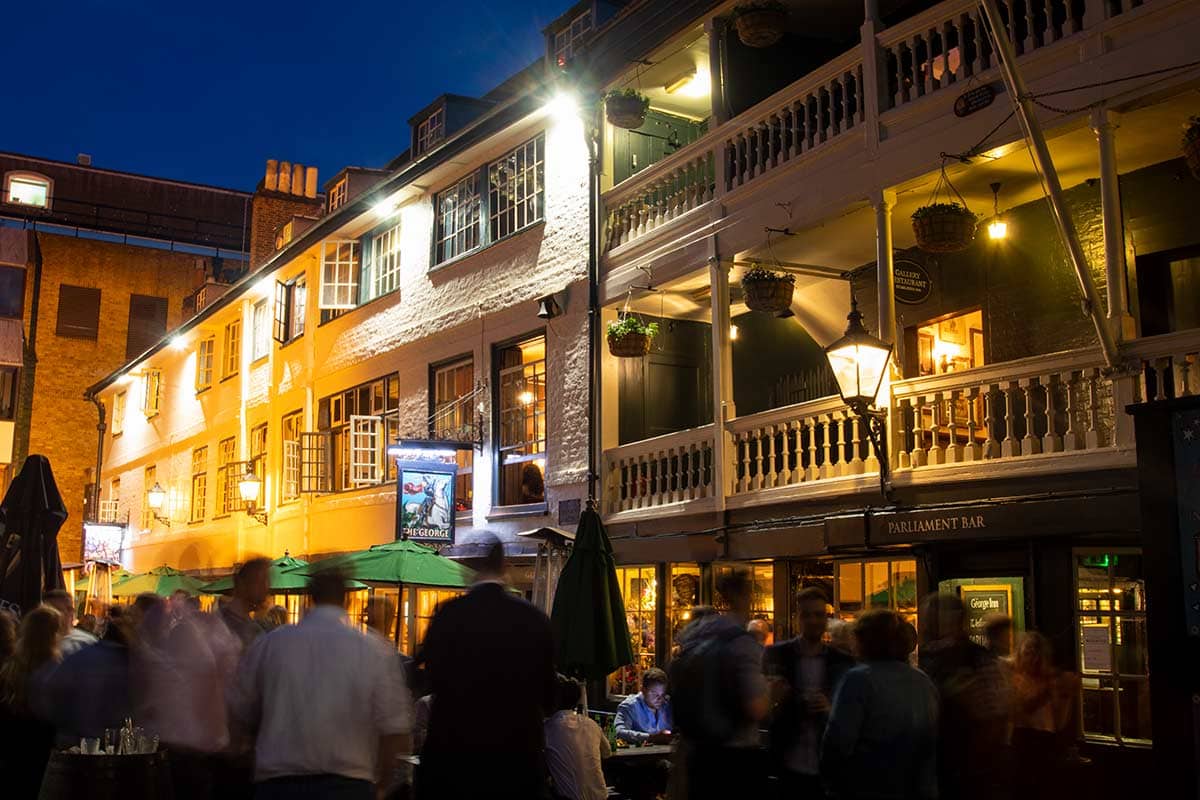
After the Anchor Inn (a short walk away in Bankside), the oldest surviving pub in Southwark is the superb George Inn, hidden away in a courtyard off Borough High Street.
As well as being one of the oldest pubs in London, it’s the only galleried inn left in the capital. The coaching inn was rebuilt in 1677 following a fire which destroyed the original and much of the surrounding area. The Tabard Inn (see below) was its near neighbour until its demolition in 1873.
The George – formerly known as The George and Dragon – is divided into two bars (Parliament Bar and Middle Bar) and a restaurant. Charles Dickens was a frequent visitor to the Middle Bar, and The George is mentioned in Little Dorrit, part of which is set in Southwark.
The Inn is owned by the National Trust, and managed by the Greene King brewery, If you plan to eat there, book ahead.
The Old Operating Theatre Museum and Herb Garret


Possibly my favourite small museum in London, this extraordinary hidden museum takes you back 200 years in medical history to a time of amputations without anaesthetic, and a herb garret full of all kinds of potions and tinctures tried out on the poor patients of St Thomas’s Hospital.
The Old Operating Theatre was opened in 1822 and was in service for around 40 years until its closure in 1862. It was then boarded up and sealed off near the top of a church tower, and it lay undiscovered until 1956. It’s the only surviving operating theatre from the early 19th century anywhere in Europe, and operations were performed there while being observed by students crammed into the semicircular galleries overlooking the operating table.
Both ether and chloroform were eventually used as anaesthetic, but getting the dosage right was critical – too much chloroform could kill a patient, and a safe method to ascertain the correct dosage wasn’t worked out until the late 1850s.
The Herb Garret in the church tower is fascinating, and many visitors spend more time there than in the Operating Theatre. Many cures were derived from herbs, plants and sometimes animals – which all still provide the medical world with possible treatments to this day. An absolutely fascinating place.
See Also: Visiting The Old Operating Theatre London – A Complete Guide
Visit HMS Belfast


HMS Belfast is one of the best World War 2 sites in London, a cruiser that saw action from the Arctic to Australia during the 1939-45 conflict. It was also one of the support vessels that took part in the 1944 D-Day landings in Normandy.
The ship – which served until 1963 – is moored between London Bridge and Tower Bridge, almost in the shadow of The Shard. You can explore all nine decks, from the claustrophobic, couldn’t-swing-a-cat-in-it engine room to the captain’s chair on the bridge, and the outer decks where you get fabulous views of many famous London landmarks.
While the outside deck views are phenomenal, it’s downstairs below deck, in the bowels of the warship, that is most striking. Living conditions for the crew were incredibly cramped, with tiny bunks crammed together, and places such as the games room and kitchen recreated with mannequins – the pervasive smell of cooked Spam also wafts from the latter room.
The most immersive part of the visit is when the noise of the engine is simulated – it’s extremely loud, and I don’t know how the crew could bear it for long periods. The one element that isn’t recreated is the heat that would have been generated on board during hot weather. The Arctic missions weren’t exactly light relief – the ship struck a mine during its first tour of duty there – but the colder weather would have given the crew some respite!
See Also: Visiting HMS Belfast London – One Of The Best Museum Warships In The World
Explore the Clink Museum
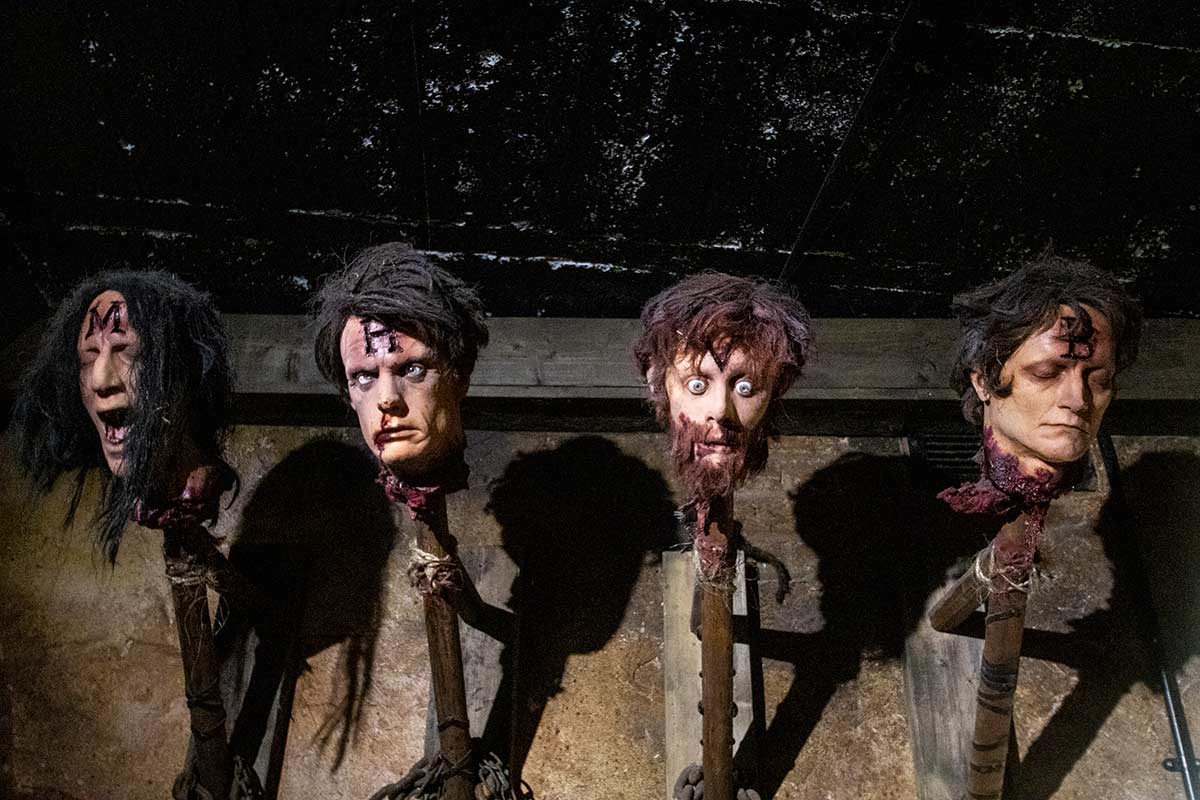
The Clink was a dreaded – and dreadful – medieval prison owned by the Bishops of Winchester during the Middle Ages. Many other prisons – especially in Britain – are generically referred to as ‘clink’ or ‘the clink’ – and the prison on this site was in use between 1144 and 1780.
The prison’s story is told through a series of grim tableaux of mannequins and figure in various stages of discomfort, distress and misery. Much is made of the awful conditions prisoners would have had to endure – life was tough enough outside if you were free, but if you were incarcerated, often chained up and immobile, each day would have been desperately hard.
Some of the grisly models are fantastic. We weren’t entirely sure about taking my son to the Clink but, after reading numerous forums, we opted to do so (he was five at the time). He adores history, and the Horrible Histories books and TV series, which are very much along the same lines, fascinate him. So I’m sure that we made the right decision in taking him.
The stories of the many prisoners are fascinating. They ranged from petty criminals and drunkards to debtors and people persecuted for their religious beliefs. Among these were the Pilgrims who sailed across the Atlantic in 1620, settling in Plymouth, Massachusetts.
See Also: Visiting the Clink Museum London – one of London’s best history museums for kids
Discover the Site Of Chaucer’s Tabard Inn
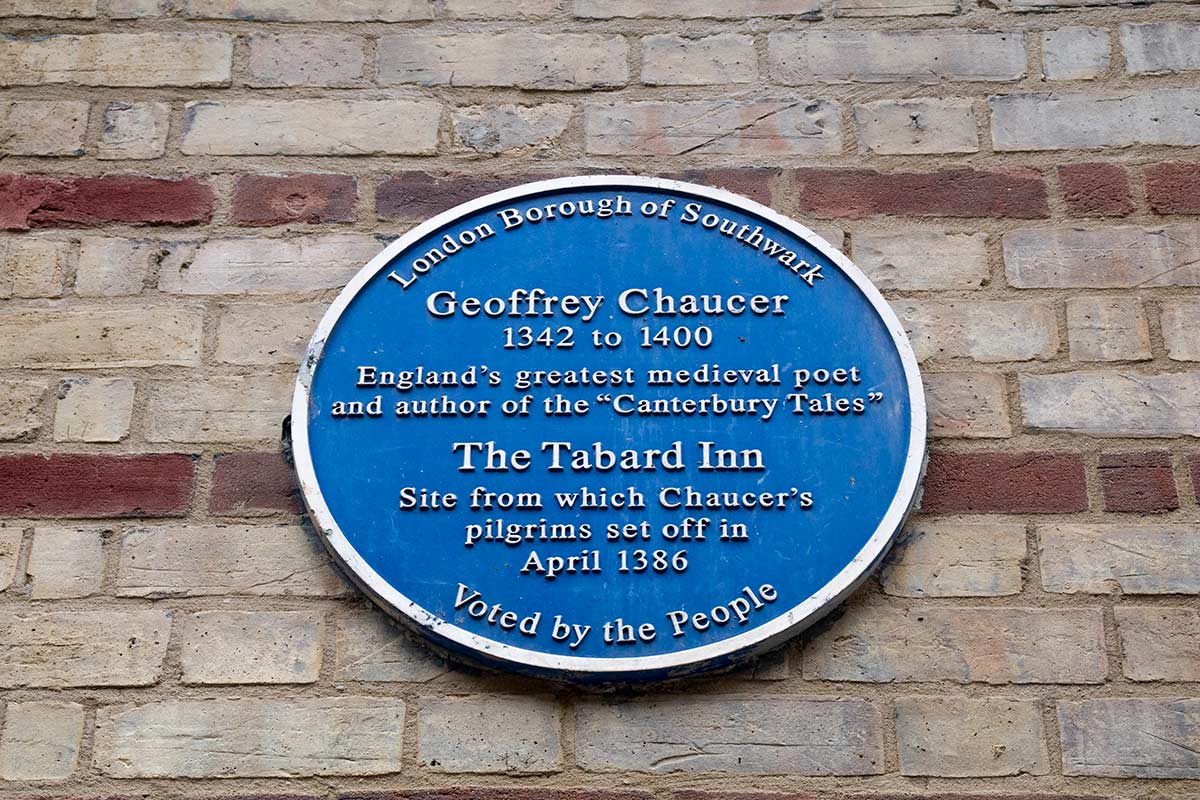
The pilgrims of Geoffrey Chaucer’s Canterbury Tales set out on their journeys from the Tabard Inn in Southwark. Founded in 1307, Chaucer’s pilgrims set off from the Tabard in the 1380s to visit the Shrine of St Thomas a Becket in Canterbury Cathedral, 60 miles to the southeast.
Southwark was to 14th-century London what Soho and the West End have been over the last century or so – the place to go in the metropolis for entertainment. This often included more than a little drunkenness, debauchery and licentiousness, in which pilgrims would often indulge.
The Tabard Inn was eventually demolished in 1873, but it is commemorated by the blue plaque pictured above. It’s in Talbot Yard, just off the east side of Borough High Street.
Cross Bones Graveyard
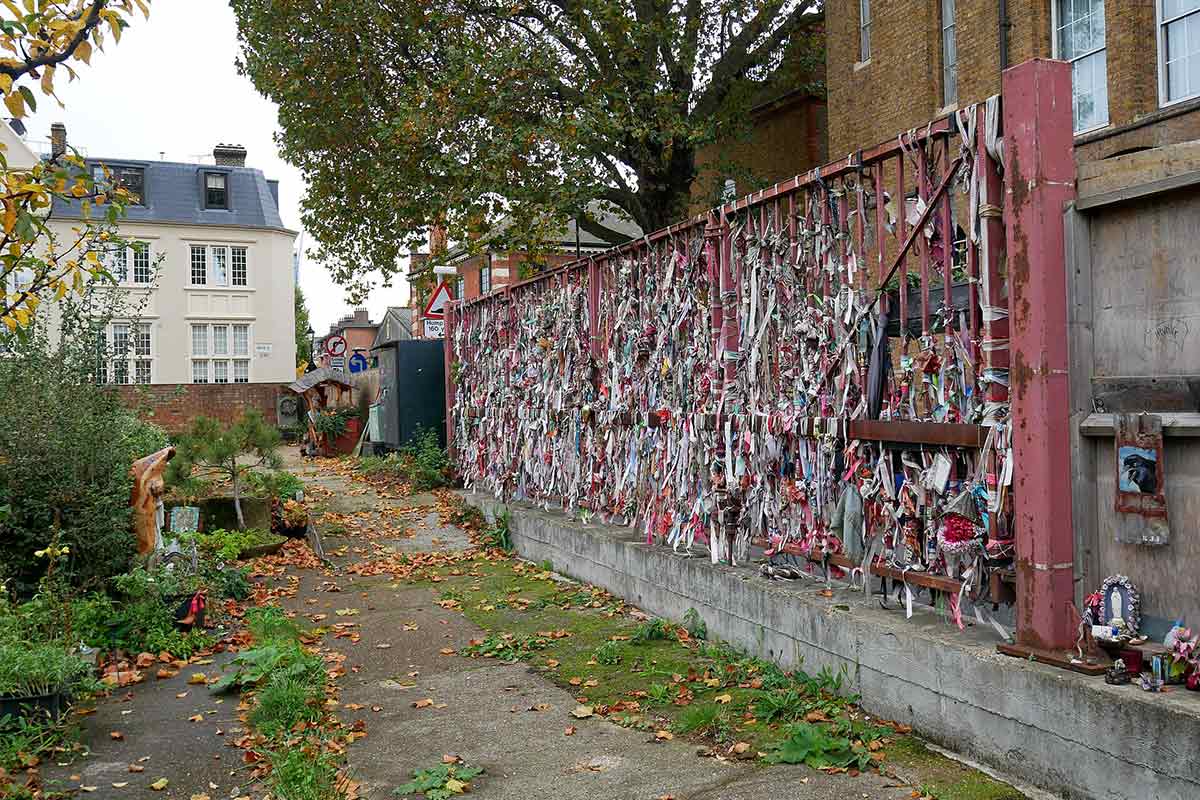
Medieval Southwark wasn’t subject to some of the restrictions of the City of London (just across the Thames and London Bridge) because it came under the jurisdiction of the Bishops of Winchester. They owned an area of land in Southwark which included their palace, the notorious Clink prison, and an area in which brothels and prostitutes were allowed to operate. Theatres – including Shakespeare’s Globe – were also permitted there.
Cross Bones Graveyard is was never consecrated. From the 17th century onwards It was used as a burial space for local unmarried women who worked as prostitutes. They were known locally as ‘Winchester Geese’ after the Bishop landowners. They were excluded from the usual Christian burial rites, treated with the same lack of dignity in death as they were in life.
By the late 18th century part of Southwark had turned into a slum, and the burial ground was also used as a paupers’ cemetery. It was closed in 1853, and eventually built over.
The land was excavated in the 1990s, and it was found that many of the women buried there were pregnant at the time of their deaths, and that many infants were also interred there. A successful campaign ensured that the burial ground was preserved, and a plaque commemorating The Outcast Dead was put in place by Southwark Council. It’s heartening to see that many people care for these impoverished souls nearly 200 years after they died.
Getting there: The entrance to Cross Bones Graveyard is on Redcross Way, off the western side of Borough High Street, a five-minute walk from the Tabard Inn plaque.
Eat Out At Vinegar Yard
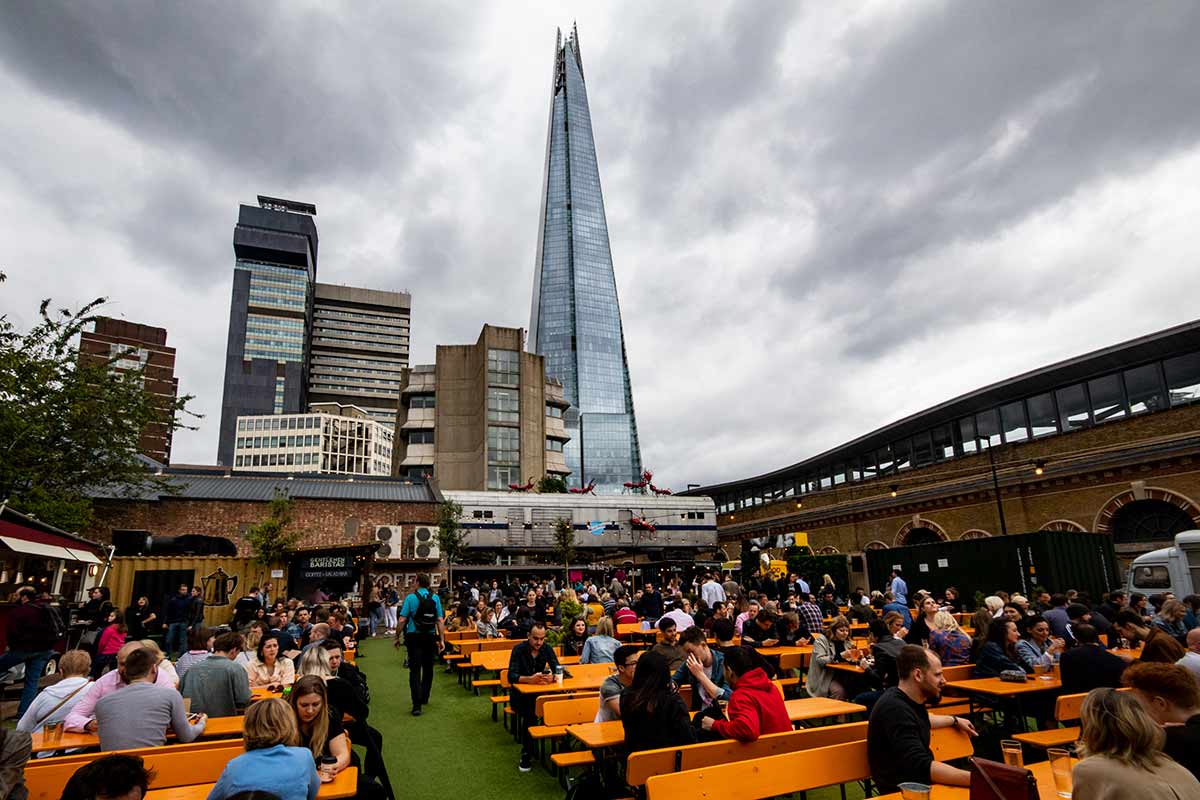
If you’re thinking of branching out beyond Borough Market in search of food, I recommend Vinegar Yard. It’s a few minutes’ walk away on the opposite (Shard) side of Borough High Street, at the far end of St Thomas’s Street.
There’s some great Asian street food, Japanese chicken, Indian-inspired burgers, tacos and a pizzeria. There are also several bars, and a flea market open on weekends. The food stalls are open Wednesdays to Saturdays only, and closed the rest of the week.
How To Get To Southwark London

Southwark is very easy to reach from elsewhere in London.
The local mainline train station is London Bridge – just avoid weekday rush hour as the station is jammed with thousands of commuters.
It’s also on the Northern Line (Bank branch) of the Tube (London Underground).
And if you’re travelling from across the river, buses 21, 35, 47 and 133 all stop at London Bridge stop Y.
Everywhere I’ve written about in the article is within a ten-minute walk of this stop or London. Bridge station.
Hotels In Southwark London
***** – Shangri-La at The Shard – London’s tallest building is home to London’s highest hotel – five-star luxury and stunning views from every room
**** – Hilton London Tower Bridge – great reliable option very close to the Thames, HMS Belfast, The Shard and Tower Bridge
**** – London Bridge Hotel – boutique in dependent hotel, in perfect location close to The Shard, and across the street from Borough Market and Southwark Cathedral
*** – ibis Styles London Southwark – one of the best mid-range options in the area, a short walk from Shakespeare’s Globe and Borough Market
Things To Do In Southwark, London – Final Thoughts
I hope you’ve enjoyed this article. I’ve written separate features on some of the individual attractions, and you can read about these if you follow the links in the relevant section of the article.
I used to live in London and have visited the city countless times, so have written extensively about it. Here is a selection of London articles which I hope will provide you with further inspiration:
16 Famous Statues In London Not To Miss
34 Famous Streets In London To Explore
16 Old Streets In London – London’s Oldest Streets
25 Most Beautiful Churches in London To Visit
12 Fascinating World War 2 Sites In London To Visit
Visiting The Churchill War Rooms London
Where To Find The Best Red Telephone Boxes In London
Visiting Westminster Abbey – London’s Astounding Royal Church
15 Best Things To Do In West London
Marc Bolan Shrine London – the shrine to the late, great T Rex singer
Visiting The Golden Hinde London – on board Sir Francis Drake’s recreated pirate ship
Visiting the London Museum of Water and Steam – outstanding industrial history, brilliantly presented for kids
Sunrise In London – 10 Best Places To See It
Sunsets In London – The Best 20 Locations